Shop Therapy: How to soothe a gearhead’s nerves

There are times when I feel very edgy and restless, but this was especially true for me last week. I think it was because I was incapacitated due to a back injury, and have been unable to do so many car-related tasks. Driving and wrenching under the hood were out of the question for a while, and it was depressing. I do hope you forgive me for my lack of blog updates.

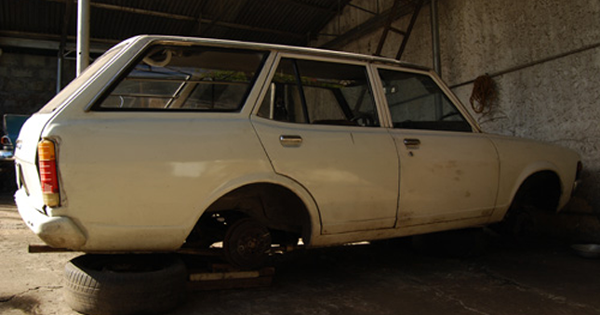
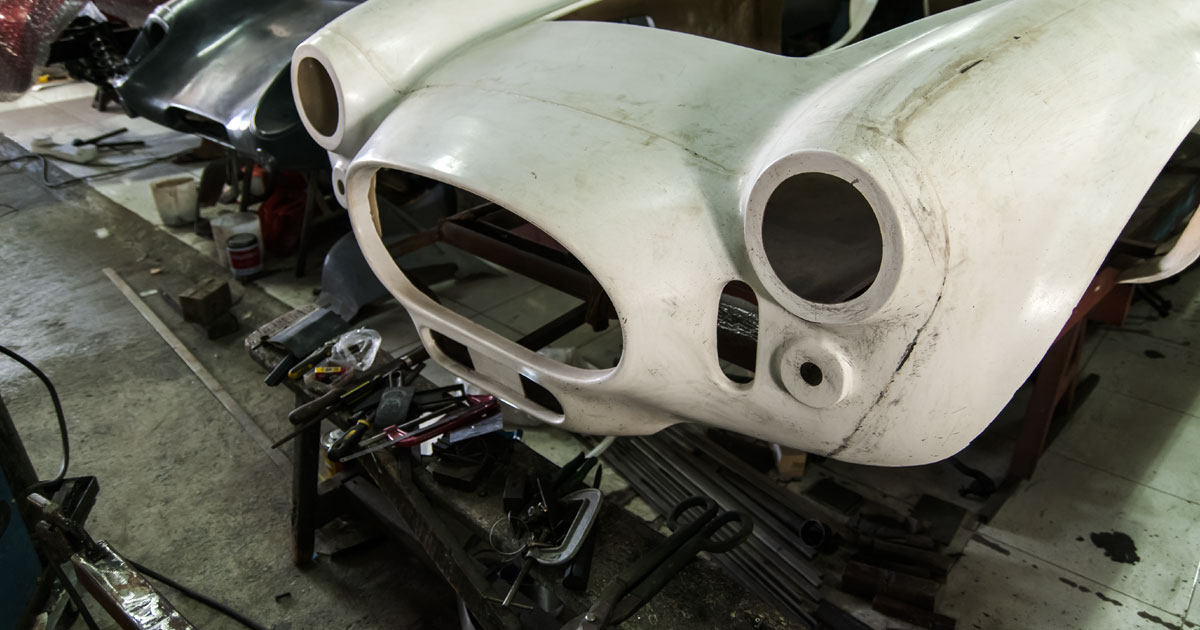
But as soon as I got back on my feet, I knew had to get back into my usual routine. I decided to bring the wagon to the shop for some long-overdue repairs last Saturday, and what I knew all along was once again reinforced: spending time at the talyer is one of best ways for me to relax.

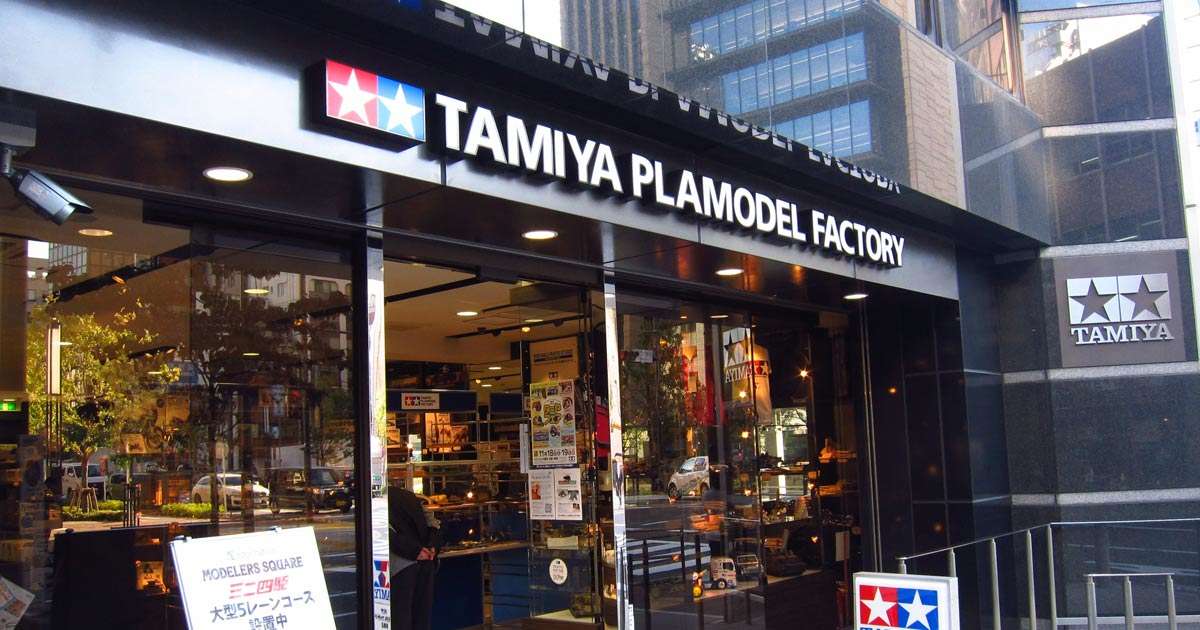
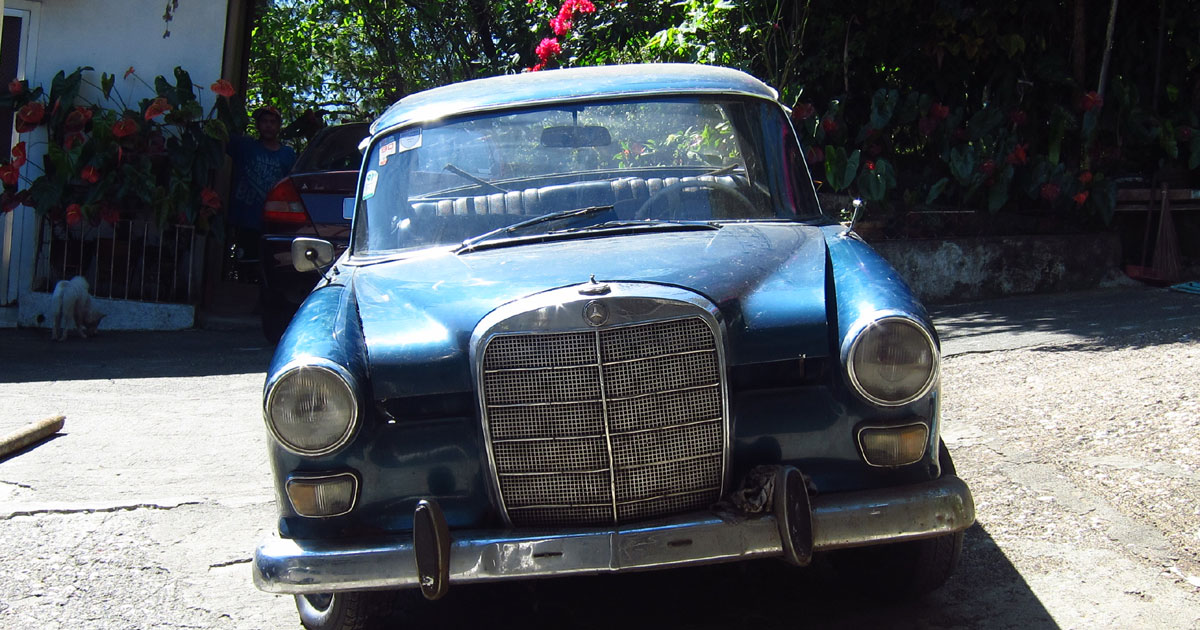
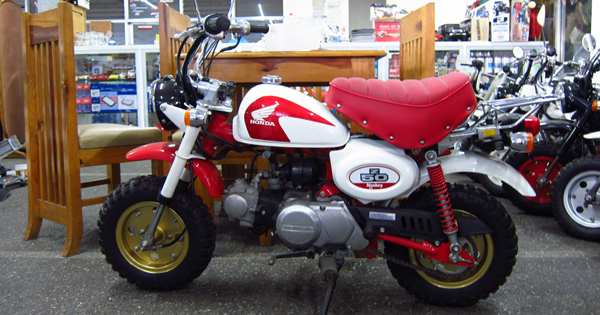
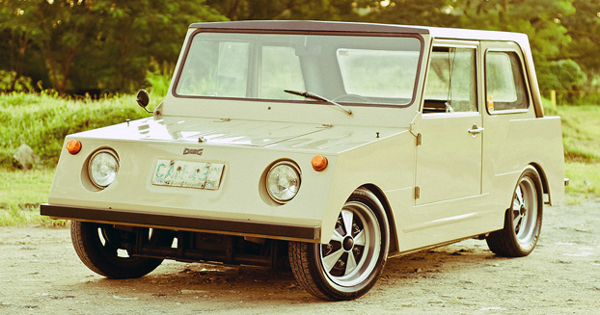
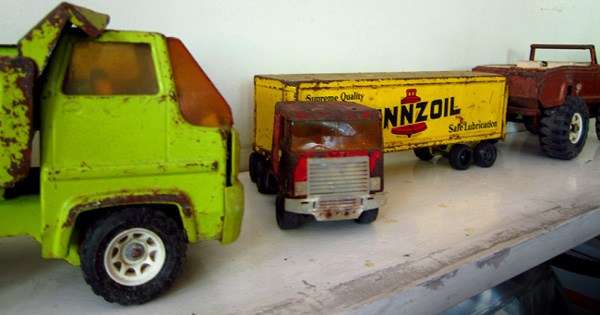
To break from the usual posts, here are some photos that I took while I was having my dad’s wagon repaired. I felt so calm while in the middle of this messy workspace, but at the same time I felt my spirit recharging. I guess that is what it is like when you have a carburetor-fed heart.


Look at that smile on my face. Man, I love working on my cars. Do you guys enjoy working on your rides, too?

Posted in Uncategorized | 8 Comments

This month in Top Gear’s Old School section

We have a very special car featured in Top Gear’s pages this month, and it belongs to Peter Smith. He drives a 1946 MG TC, and he has some really interesting stories to share about driving his historic automobile. Trust us, Peter isn’t afraid to pile on the kilometers with his priceless classic.

Peter wrote to us quite some time ago, so it was good to finally get together for a photo shoot. I usually invite some of my old-schooler buddies to drop by during these shoots for a little Top Gear ‘EB’.

The fellow on the left is Aries Ramos, who drives a sweet little Mazda Miata. He’s in our Show-Off page this month, too. On the right is Steven Flor. We featured his Datsun Fairlady way back in 2010. Steven and Peter are good buddies who share a passion for open-top motoring. It was a a pleasure hanging out with these fine gentlemen. I’m looking forward to meeting them again this month.

I had to snap this because we had three timeless roadsters in one shot. The ’40s, ’60s, and ’90s are represented nicely by these really cool automobiles. It is amazing how the fundamentals of this fantastic roadster platform haven’t changed much.

To get the whole story and to see some great photos of Peter’s  TC and Aries’s Miata,  do check out the latest issue of Top Gear Philippines.

Here’s a small teaser for what’s in store in these coming months.

This is an interesting mix. Let’s keep our old cars on the road! Thanks for reading!

Posted in Uncategorized | Tagged , , , , , , | 6 Comments

Nissan Historics Part 4: One last look at the Zama Garage

Let’s kick off this last installment with some vintage Skylines. These cars are indeed legendary, with a massive following worldwide. Now I don’t claim to be an expert on this model, but these are the ancestors of some of the most sophisticated Japanese sports cars the world has ever seen.

This blue 1962 Prince Skyline Sports Coupe that is resting on jack stands for maintenance is extremely rare. Only 60 units were manufactured of this body type. This model was designed by Italian coach-builder Giovanni Michelotti, and if you look closely, you can see how some of his design cues still carry on in the current GT-R.

Here’s a closer look of a gold one parked at the main entrance of the garage. It is immaculate. Though it only packs an OHV four-cylinder motor, it was a step toward  more power and performance.

This is one of those cars that I can’t stop looking at. Even I find this angle fascinating. Have I already said that I’m a big fan of fender mirrors?

Look at the subtle ornamentation of its grille. They really don’t make cars like they used to. Now let us take a look at some newer and more powerful Skylines.

The 1969 2000GT-R Skyline is considered to be the Holy Grail in the entire history of the model range. Here are two in red and silver.

Its heart is a high-performance DOHC 24-valve engine that is good for 160hp. This car is famous for its top speed of 200kph.

Japanese-car enthusiasts will kill for a chance to own either of these ‘Hakosuka’ Skylines.

Here’s a shot of the interior…

…and  its stock hubcaps. Now we can move on to some Skyline track monsters.

The blue and silver 1969 GT-R race car comes from a family of Skylines that dominated the Japanese racing circuit, with 50 victories over the span of two years.  It is no wonder that this model will forever be adored by Japanese racing fans.

This one looks so different with all of the trim pieces removed. I am sure that a set of mouldings for these cars will cost a small fortune.

This Kenmerei or ‘Ken & Mary’ Skyline GT-R was never raced, as it was a demo car for the 1972 Tokyo Motor Show.

Fender flares and wide-lipped RS Watanabe magnesium wheels. This combination is period correct, and looks perfect on this car. Now let’s move on to a different breed of racing machine.

Behold the ‘super-silhouette’ racers of the ’80s. These cars (except for the one in the middle) are the inspiration for that crazy ‘kyusha’ style that is famous in Japan. There is a whole subculture that worships this style.

Check out the tail and the lip of this 1983 Central 20 racing Team Bluebird. Driven by H. Yanagida, this car won two titles.

And for an idea of how wild its bodywork is, check it out from this angle. The super-silhouette class is known as such because of its unique regulations. Anything could be done to the bodywork, as long as the car still had the basic ‘silhouette’ of the original model. Engine-wise, as long the racer used the same block as the production car, engineers could do anything. Turbochargers were the norm, and some motors generated close to 600hp—this was more than what F1 cars were creating at the time. This was exciting, and racing was intense.

This is the Impul-Hoshino Silvia driven by K. Hoshino. It is like an F1 machine underneath, with a body on top. Hoshino would later move on to become a popular aftermarket performance parts supplier.

Hoshino owns a company that makes alloy wheels to this day. In old-school circles his design is quite popular. The alloys mounted on this car are the Hoshino style.

Good luck finding a set this wide in Banawe, though. Back then, it wasn’t how tall your mags were, it was how wide. These race cars probably had something to do with the trend. Next up are some smaller competition cars that pack some serious racing engines.

This Sunny competition car won the TS Race of the 1973 Japan Grand Prix. Its 1600cc LZ engine packs 200 horses that peak at 9,400rpm, all thanks to the addition of a bolt-on twin-cam head. Nissan developed this car to topple Toyota’s twin-cam 1600 Celica GT and Corolla Sprinter/Levin Trueno—models that dominated the series at the time.

This is the 1972 Sunny that was used as a test mule by the racing arm of the Nissan factory. Do you like the apron spoiler?

This 1976 Cherry looks the part of a racer, but it was only used for demonstration purposes. At this point Nissan took a hiatus from racing. Now let’s move on to some roadsters.

This 1959 Datsun Sports is the predecessor of the Fairlady roadster. I love how you can see its resemblance with the newer models.

This LHD unit was marketed in the US, and it was quite successful there.

Here’s nice example of a 1968 Fairlady 2000. Under its hood is a 1982cc motor that is good for 124hp.

It looks gorgeous from the rear. You can tell that there is a bit of British influence, particularly from the MG brand. However, Nissan added its own design flavor, and the result is pure eye candy.

The name ‘Fairlady’ was coined by Nissan’s then-president Kastsuji Kawamata. While he was in the US, he was moved by a very popular musical called My Fair Lady. He hoped Nissan’s little sports car would be successful for many years, just like the Broadway hit. Thus, the Fairlady badge was born. The name was first used in 1961.

I think that whatever the car was called, it would have still sold very well. In fact, the Fairlady is an integral part of Japan’s sports car history.

Here’s a red 1968 USDM Fairlady.

And a shot of its worn-out interior.

I didn’t know it at the time, but there is something very special about that little roadster on the left. I couldn’t stop snapping pictures of it, even if I didn’t know anything about it. I am sure that my pals Steven Flor and Peter Smith will appreciate this fine bit of machinery.

After doing some research, it turns out that this particular Fairlady was the winner of its class during the very first Japanese Grand Prix, held in May, 1963. The Suzuka Circuit had just been completed and 200,000 people were in attendance for its inaugural race.

This 1500cc Fairlady, driven by a G. Tahara, was entered in the sports car race, class B-II (with displacements ranging from 1300- to 2500cc). After qualifying third, it managed to win, beating Triumphs, MGBs, and Fiats. This was a momentous occasion, as Japanese vehicles were finally seen as equals. No wonder there was good energy emanating from this priceless Fairlady.

Look at how the wheels tuck neatly into the rear arches. I don’t know about what you guys think, but steel rims really work well with this car.

No wonder this baby is displayed prominently. And let’s not forget that it is in perfect running condition.

Here’s a shot of the dashboard. I can only imagine what it is like to drive the first winner of the First Japanese Grand Prix. Look! The keys are in the ignition.

Well, this wraps the virtual tour of the Zama Garage. Due to the sheer number of cars, it would have been impossible to document them all for you here. But who knows? I might be able to visit the place again and take photos of the cars that I missed.

There is more old-school goodness to come, mostly from our shores this time. Oh, and by the way: Should any of you be interested, there will be a very big old-schooler meet in Banawe, Quezon City, March 10, 6pm onwards. It should be interesting. See you there!


Posted in Uncategorized | Tagged , , , , , , , , , , , , , | 2 Comments

Nissan Historics Part 3: Rally domination and badass 240Zs


Nissan has deep roots in motorsports, but the company’s presence wasn’t only limited to smooth race tracks. Clocking the fastest time on what can hardly even be considered a ‘road’ has its own appeal. I am a rally fan boy, so seeing a group of works cars got my pulse racing.

Get close and you can smell the oil and fuel fumes. You can also feel that there is something special about these cars because of their historical significance. Imagine the kind of work that went into the creation of each of them, as well as the stories behind their development. I’m sure that the stories from the actual rally stages would fill books, too.

What a lineup. Let’s take a look at the older models.

This is a Bluebird that competed in the 1966 East African Safari Rally. It was the first Japanese car to win in its class, so we can say that this car is pretty much priceless. Under its hood is a 1.3-liter engine.

There is something about steel wheels and hand-painted lettering that looks so good to me. Also notice how none of the wear and battle damage was touched up. This approach ensures that the cars maintain their unique character. Every scratch and dent has a story, after all. The folks who curate the Zama Garage know and appreciate this.

This is a Bluebird that has a very strong following worldwide. More popularly known as the 510, this car’s design was heavily influenced by BMW’s 2002. When rigid axles and leaf springs were the norm in entry-level sedans, the 510 was instead fitted with a fully independent rear suspension. This meant excellent handling prowess. Too bad this car was never sold in the Philippines. This particular 510 SSS was the overall winner of the 18th African Safari Rally in 1970. It was also a class and team category champion.

Isn’t this beautiful? Boxy lines, a tall greenhouse, and small alloys really do it for me. This is the way to set up an old-school car.

That appears to be a huge dent on the rear quarter panel. African rallies are known to be very demanding, so no car ever finishes unscathed—if it even finishes at all. Note the grab handles mounted on the trunk lid and the ‘steps’ above the bumper. The navigator uses these for leverage if ever the car gets stuck in the mud. He frees the car by making the rear suspension bounce up and down while the driver applies power. At times when traction is at zero, the co-driver will hop onto the back to add weight over the rear axle. I do not envy the job.

Even the front fender has a giant ‘love’ mark.

This Violet (otherwise known as the Stanza) was the winner of the Southern Cross Rally in 1978. I would love to own a set of those Cibie fog lamps.

This one won the same event in 1977. A twin-cam 16-valve engine (built specifically by Nissan for rallying) can be found under its hood.

This Number 7 Group 4 car won the 29th Safari Rally in 1981. It was the first Nissan to win three championships in a row. There is no doubt that Nissan dominated its class during this time period.

Now we move on to my dream old-school ride: the 240Z. This particular car was the overall winner of the 19th Safari Rally in 1971. In Japan this model was known as the Fairlady Z. I prefer that name, actually.

This damage must have come from a heavy hit. When this car was actively competing it was known for its toughness. The Z looks very sleek, but in reality it is quite a heavy car. This was no doubt an advantage when it came to being able to withstand a bad crash.

Check out how the fog lamp cowls are bolted onto the hood. I love seeing custom work like that on these old rally cars. Nissan also had a reputation for paying attention to even the smallest details on its rally cars.

This car has so much character. This is pure automotive attitude.

You can’t see them too well here, but the tailpipes have built-in guards that keep the pipes from being blocked should the driver back into some mud. See? Attention to even the smallest details.

Check out the sponsorship logos. These old fonts really rock. It also helps that I am a huge fan of Seiko watches. This car is fantastic!

One more shot of the baddest racing Fairlady Z I have ever seen.

There was one more Z sporting the same livery, but it wasn’t as successful on the icy roads of the Monte Carlo Rally. Co-driver was  Jean Todt.

I hope that this entry gave you all a decent vintage rally fix. My apologies for any comments that do not get published on time. This blog gets ridiculous amounts of spam, and sometimes your messages gets mixed in with the spam folder. I have to figure out how to remedy the problem.

There is more to come, so do keep logging on! Again, thanks for reading!

Posted in Uncategorized | Tagged , , , , , , , , , , | 6 Comments

Nissan historics Part 2: True racing pedigree and the ’60s Japan Grand Prix racers

Because of the sheer number of cars in the Zama Garage, it’s easy to get distracted. But things start to cook when you delve deeper into what is on display. It is then that you realize how priceless a lot of these cars are. These three beauties caught my eye, and I instantly felt that there was something special about each of them.

This is a row of Japanese Grand Prix racers from the ’60s. The series should not be confused with the Formula 1 round with the same name. Japan had its own Grand Prix, and it was held from 1963 to 1969.

Each car here is in working condition, and boy do they look like they mean business. These were obviously the inspiration for the original Speed Racer cartoon. Race cars were much sexier back then, don’t you agree?

The white car is the R381, winner of the 1968 Japan Grand Prix. The yellow car is the R382, which also won the Grand Prix in 1969. The blue and silver car, designated as the R383, didn’t get a chance to race in 1970 because of the cancellation of the Japan Grand Prix. The engine is said to produce 700hp, though.

Get close enough and you can smell the oil, fuel and burnt rubber. And let’s not forget that each of these cars has a story to tell. Call me crazy, but I also felt the spirit of the ’60s. I got goosebumps by just standing within close proximity of these Grand Prix racers.

The artistry and engineering of these machines is amazing. Look at the bends of the 1969 R382’s exhaust manifolds and how they extend beyond the bodywork.

Air is fed to the V12 via six dual-carburetors. I should have asked the curator to fire up this motor. I regret not having done so, because they probably would have accommodated my request. Damn! This engine is an all-Nissan unit.

The older R381 has a more conservative V8 setup, but it is no less sexy. Imagine driving a carbureted race car with its exposed engine right behind your head. That’s my idea of automotive bliss. Those red covers are used to keep debris from falling into the intake while the car is in storage. By the way, the engine is a Chevrolet unit that Nissan reluctantly had to use. The Japanese company was still in the process of developing its own race engines in 1968.

I don’t think it can get any more basic than this. It would be a dream come true for me pilot a bare-bones Grand Prix racer.

Here’s a shot of the R381’s wings and deep-dish magnesium wheels. Those wings are famous because the left and right side moved independently. The R381 is known as the “Monster Bird”.

Parked beside the Grand Prix cars is the 1967 R380-II. It is one of the very first sports cars to be made by Nissan, under the Nissan name. If you look closely at its nose, you will see that its emblem still has traces of the Prince Motor Company’s original crest. I found this out because the head of Nismo was present during our visit, and he knows the history and story behind almost every single race car on display. The man has a very cool job. The R380-II set numerous Japanese speed records.

Here’s a parting shot of the R383’s rear end.

Thanks for all of the comments and for checking out this blog. This feature is only the tip of the iceberg. There is so much more Nissan historic goodness at the Zama Garage, so do keep logging on. More cool posts to come!

Posted in Uncategorized | 3 Comments