
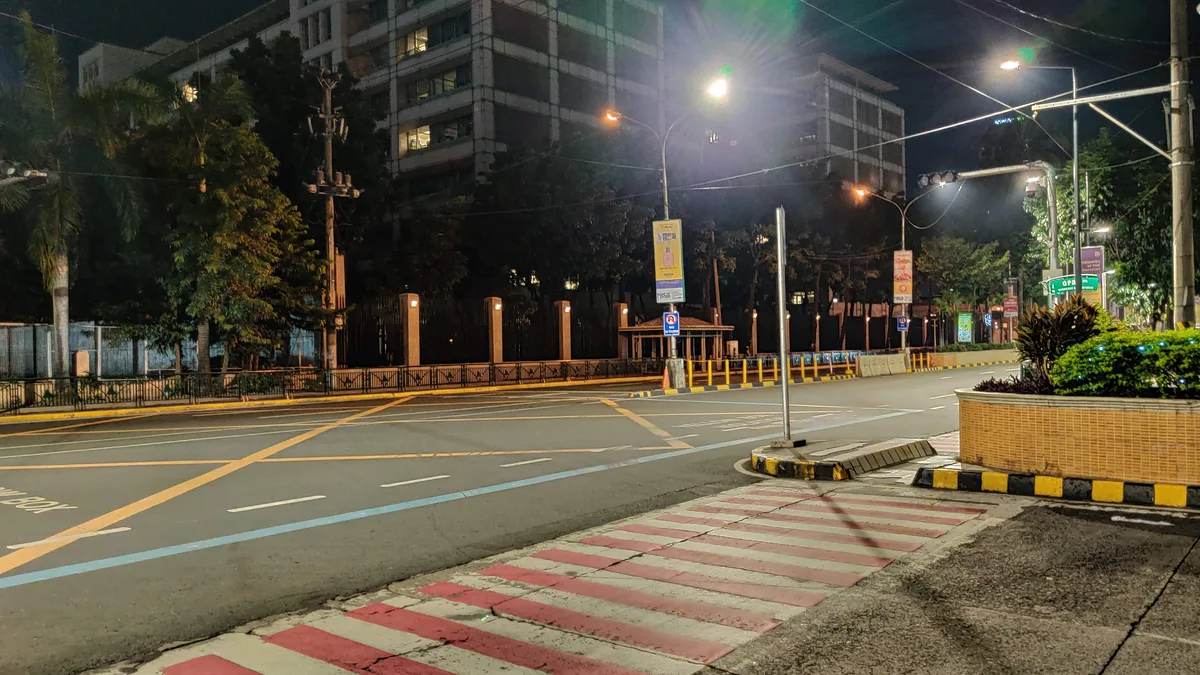
It is election season again, and that means one thing: checkpoints. While these are fixtures of the times, many are confused and intimidated when the ones manning the checkpoints ask you to open your trunk or your glovebox, or even ask you to step out of the car to be frisked.
In this, ahem, CarLaw discussion (CarLaw because my name is Carlo and I write about the law; we’re so witty I know), we will tackle your rights when it comes to checkpoints. The dos, the don’ts, and everything in between.
As a caveat, we will not go into the legitimacy of the checkpoint itself, as these are particular to the agency manning the checkpoint. So the rules would be different should these be manned by police, Comelec, or even local LGUs.
That being said, let’s say you are driving along with your significant other, and you see a checkpoint ahead manned by government agents. They flag you down, and ask you to roll down your window to check your car. What do you do? Based on our legal knowledge we’ll do our best to guide you through this situation.
Oh, and this applies to motorcycle riders as well.
Be calm and respectful
The first thing you should remember is that you should remain calm. A checkpoint is generally routine, and normally the result of official operations. I put an emphasis on ‘official,’ because we live in uncertain times, and a group can easily impersonate police officers or other agents and put up a ‘checkpoint’ for nefarious purposes.
Assuming that this is an official checkpoint, however, it is important to be respectful. Yes, you may be aware of your rights (thanks to this article), but that does not give you the green light to harass those who are probably armed, and are really just doing their jobs.
Can they open your trunk/topbox/glove box?
So the police officer has greeted you and he/she is indeed a bona fide police officer, he/she then asks you to open your trunk for an inspection. Should you?
Article III, Section 2 of the 1987 Philippine Constitution is clear: “The right of the people to be secure in their persons, houses, papers, and effects against unreasonable searches and seizures of whatever nature and for any purpose shall be inviolable, and no search warrant or warrant of arrest shall issue except upon probable cause to be determined personally by the judge after examination under oath or affirmation of the complainant and the witnesses he may produce, and particularly describing the place to be searched and the persons or things to be seized.”
This is the basic and general rule. However, as all things in law, general rules are meant to have exceptions, and the case of Lopena v. People discussed the different rulings and exceptions to the above rule, which includes the following exceptions relevant to a checkpoint: Seizure of evidence in ‘plain view,’ search of a moving vehicle, and a warrantless search with consent.
So let us discuss each of these in turn.
For the first exception, it is the easiest, and for some, the most unfortunate. Plain view means that the evidence/contraband is literally able to be seen through visual means. Meaning if the police officer sees your gun or other illegal item on the seat beside you, this is fair game for a seizure and can be used against you in a court of law.
For the second exception, this one is a bit more complicated, and has been the subject of multiple cases to reach the Supreme Court over the years. The Court discussed in Cabales v. CA the pertinent rules regarding the search of a moving vehicle. Just because there exists a moving vehicle, this does not mean that it can be searched without the existence of probable cause.
The Court held that probable cause is “a reasonable ground of suspicion supported by circumstances sufficiently strong in themselves to warrant a cautious man to believe that the person accused is guilty of the offense with which he is charged.”
This means that unless the police officer has a reasonable ground, based on his personal knowledge, to suspect that a crime was committed and you are probably guilty, he may not search your vehicle beyond a mere visual inspection.
That means that unless probable cause exists, you should not open your trunk, your glovebox, your topbox, or any other compartment that is not in plain view. You should (politely) tell them that you are aware of your rights, and that you do not consent to the search.
This is important because of the third exception: a consented warrantless search. If you open your trunk on command, it may show that you have consented, and that means that if contraband is found, this has now become a valid consented warrantless search.
Basically, be firm but respectful, and if you are pushed or pressured and you are unsure, please call a lawyer. He or she would be in the best position to defend your rights when it comes to what could easily be an unlawful search that can land you in hot water, or worse, make you the victim of planted evidence.
Fruit of the poisonous tree
Thankfully, there is some light at the end of the tunnel. If you were subjected to an illicit search, these would be inadmissible as evidence against you. The Court held in Lopena v. People that, consistent with Art. III, Sec. 3(2) of the Constitution, “any evidence obtained in violation of the right against unreasonable searches and seizure shall be inadmissible for any purpose in any proceeding.”
This is what we call the fruit of the poisonous tree doctrine. This doctrine stems (pun intended) from the analogy of the unreasonable search being the poisonous tree, and the evidence gathered from it, its fruits. These fruits are inadmissible for any purpose and in any proceeding, meaning that even if the contraband was in your possession, you cannot be prosecuted for it or any crime linked to it. This is provided that the search was indeed unreasonable and in violation of your constitutional rights.
Does not apply to malls and private establishments
Of course, this wouldn’t be a CarLaw article if we didn’t have even more exceptions and caveats. These rules only apply to searches and checkpoints conducted by government agents. It does not apply when security guards ask you to open your trunk at malls or hotels. These are private establishments, and they have all the right to refuse entry to those who refuse to abide by their rules.
Constitutional rights are in place to protect the citizens against actions done by its government, and does not, as a general rule, cover the acts of private individuals or entities. Stay calm, know your rights, and be firm in knowing when to exercise them.
We hope you learned something from this. And if you have any other law-related questions, you may send us a message through our social media channels or fire us an email, and we would be more than happy to give our two cents.