
When the current iteration of Geely first landed in the Philippines way back in 2019, it was a bit of a shock. Putting aside any, um, geopolitical matters, the first products it sold here were quite a revelation. The Coolray and the Azkarra weren’t just good for Chinese cars—they were genuinely competent and competitive.
A few more models have arrived since, namely, the popular Okavango, the Emgand sedan, and the affordable GX3 Pro. The thing is, there hasn’t been a full model change in the last five years.
OTHER STORIES YOU MIGHT HAVE MISSED:
Adrian Newey is reportedly set to leave Red Bull Racing due to Horner controversy
Summer or not, here’s why you should never leave kids and pets unattended in cars
That begs the question: What’s next for Geely? Well, in China, the brand is bustling with development.
Over there, Geely is so much more than the lone sedan and crossovers we get back home. For starters, it owns several marques aside from Lynk & Co—there’s also Geometry, Galaxy Polestar, Zeekr, Livan, Radar, the list goes on. And let’s not forget about its partnership with Volvo.
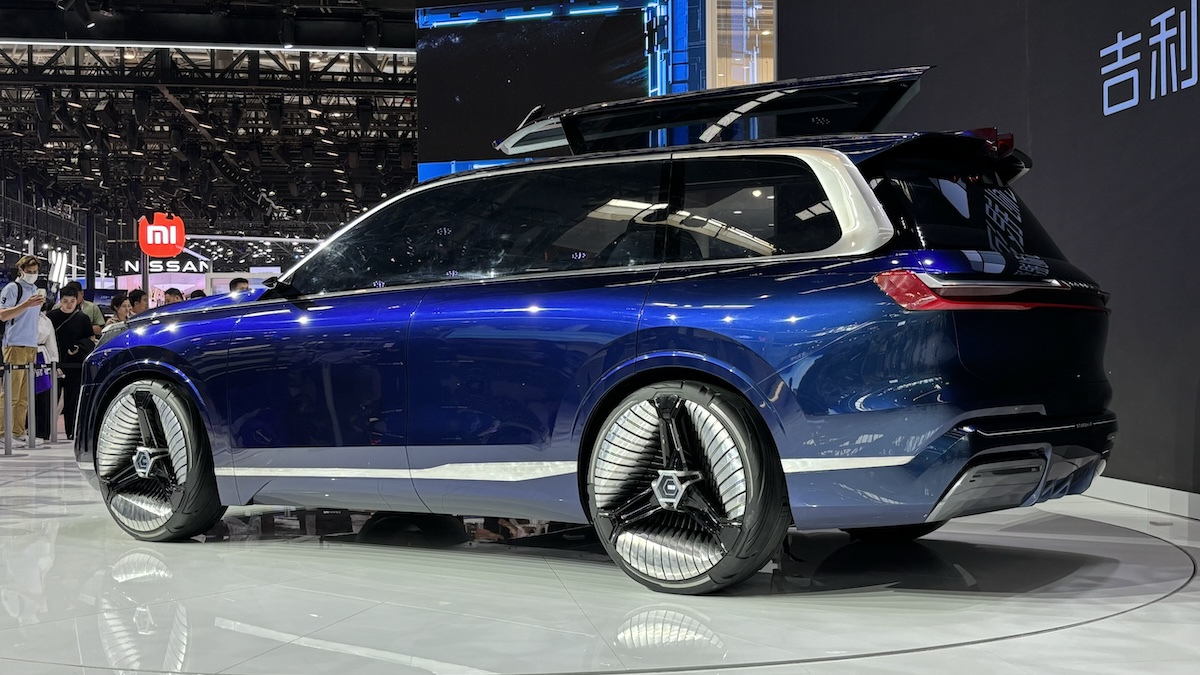
But it’s Galaxy we’re focusing on this time around. Galaxy isn’t a separate brand per se. It’s more an extension of Geely’s lineup that caters to the premium electrified and pure-electric vehicle market. It also (somewhat) serves as the test bed for new technologies that will eventually make its way to standard (and more affordable) Geely models.
Currently, Galaxy has three models on offer. It kicks off with the L6, a (not so) compact sedan that boasts Geely’s latest advancements in plug-in hybrid tech. We’re looking at something that can do at least 1,000km on a single fill-up. Up next is the L7, a compact crossover that also gets plug-in hybrid propulsion. But it’s the flagship E8 that serves as Geely Galaxy’s technical showcase in battery electric powertrains.
Seeing these in person during Auto China 2024, one can’t help but be impressed. These are absolutely like the ones back home, and it would be great to see the style, design, and tech eventually trickle down the more familiar models. But checking out these Galaxy cars isn’t the only reason we went to China. See, Geely launched something big during the show—literally and figuratively.

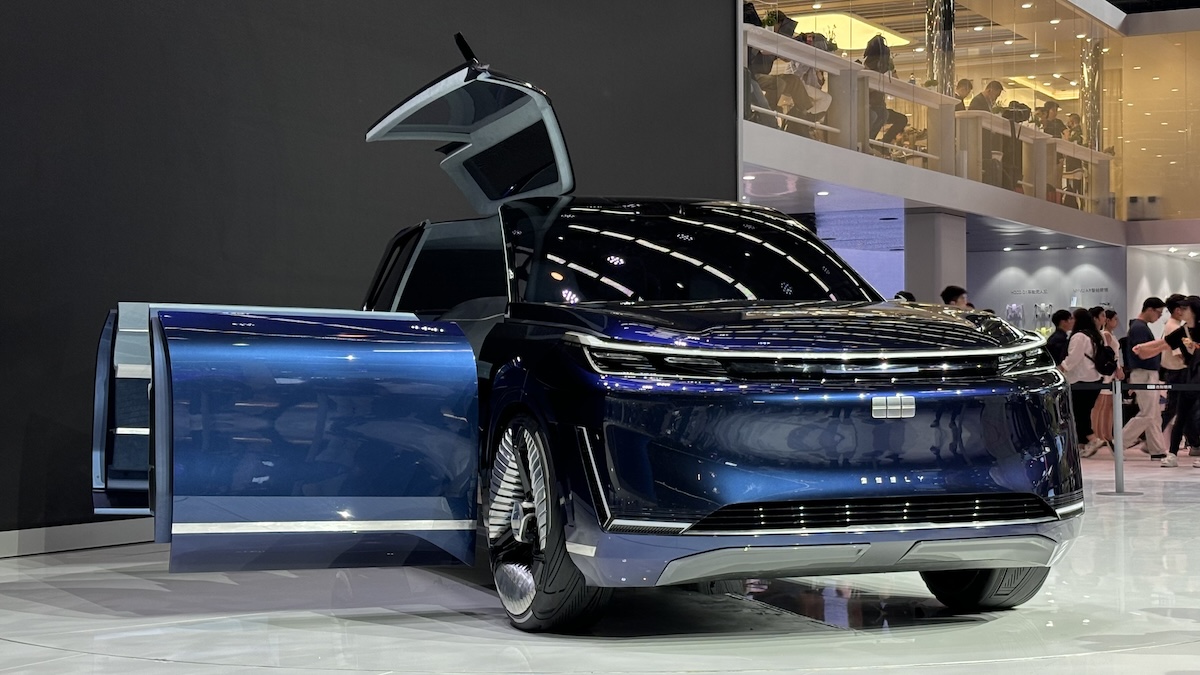
Normally, concept cars have a whiff of ‘flight of fantasy,’ but the Geely Galaxy Starship (yes, that’s its name) is something different. It’s more than a concept—it’s the company’s blueprint in the next couple of years. Underneath the flashy gullwing/coach doors and glitzy interior is a platform that could radically change the trajectory of the brand. A vessel that could take the brand to new heights, not just in electrification but also in user experience.
Dubbed the GEA Global Intelligent New Energy Architecture, it’s the world’s first four-in-one AI intelligent architecture, claims Geely. What does that mean? In essence, it’s one platform that supports pure electric, hybrid, range-extender, and even green methanol options. With this, there’s no need to develop one separate platform from another to fit in certain kinds of powertrain systems.
The production version of the Starship will feature all those technologies and debut the AI Digital Chassis. It’s more than just active suspension, claims Geely. It has the ability to ‘read’ the road ahead and make near-real-time adjustments to the suspension from damper rates, ride height, and even steering assistance.
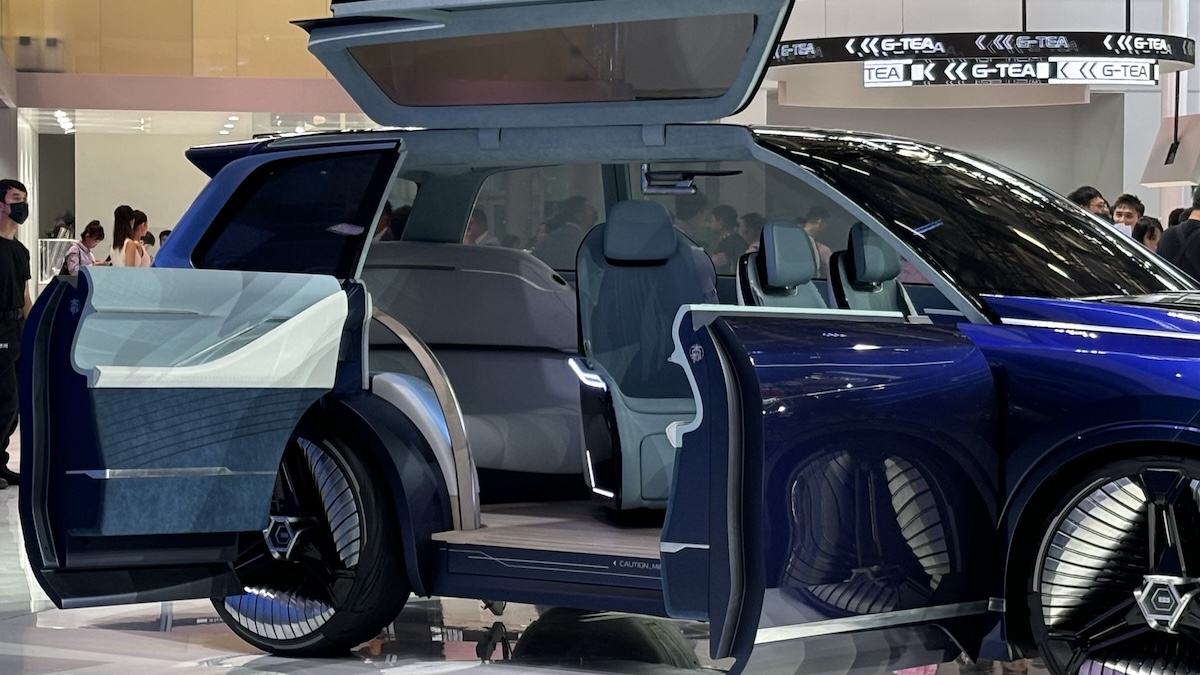
Then there’s hybrid system. Surprisingly, the Starship, at least in concept form, isn’t a pure electric vehicle. A bit of a surprise given the Chinese auto industry’s push for battery power. It seems Geely understands that other parts of the world simply can’t go pure-electric due to infrastructure, hence the new platform for—in this case—plug-in hybrids.
Breakthroughs in software and hardware mean it’s one of the lightest and most efficient electrified platforms out there, at least according to the automaker. There’s less dependence on silicon carbide, all while increasing power density and thermal efficiency. The result is a range of over 2,000km and fuel consumption of 50km/L…in heavy traffic.
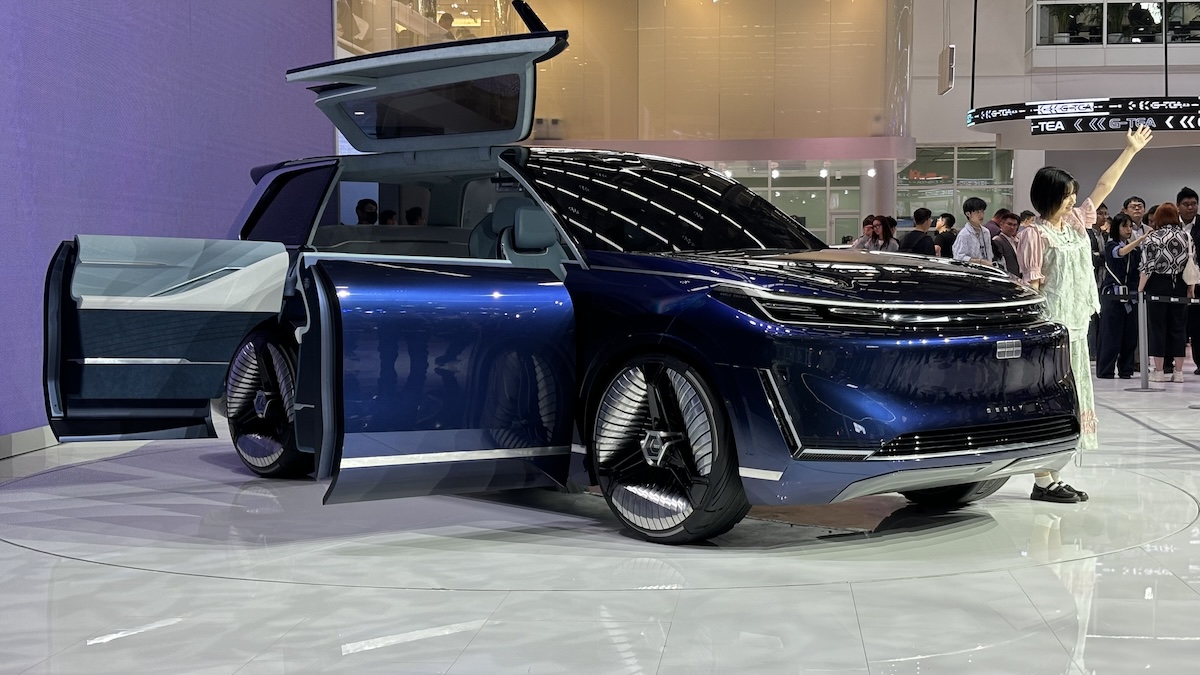
Okay, these are all claims for now and it’s understandable to be skeptical. But if Geely manages to nail it, it could change the way the company builds its vehicles. Not only that, it also has the potential to revolutionize powertrains, especially if it finds a way to make the technology more affordable and accessible. It might even still be relevant in the next few decades—something automakers have been aiming at in this age of electrification.
It’s a long road ahead for Geely with this technology, but one can’t help but give them a pat on the back for making this bold first step.