How much do airport taxis normally charge in the Philippines? Here’s a tip: If you’re paying more to get from the airport to your hotel in Manila than your actual round-trip flight ticket, you’ve likely been scammed.
As reported by Inquirer.net, the Land Transportation Franchising and Regulatory Board (LTFRB) is currently investigating a video circulating online where an airport taxi driver allegedly charged two Taiwanese tourists as much as P10,000 (almost $200) for a 10-minute ride from Terminal 3 to Terminal 4.
The viral video posted on Facebook showed a taxi driver pulling out a laminated card labeled ‘Airport-Accredited Regular Taxi Service Meter Rate,’ which even included the logos of the Department of Tourism (DOT) and the Ninoy Aquino International Airport (NAIA) to appear legit.
According to the fake laminated card, this is the cost of traveling around the city:
- Terminal 1 – P11,500
- Terminal 2 – P12,000
- Terminal 3 – P13,500
- Terminal 4 – P10,300
- Any part of Metro Manila – P10,300
- All hotels in Metro Manila and all bus terminals in Metro Manila – P9,700
Oh, and those exorbitant rates are supposedly charged per passenger. To add insult to injury, the card had a note below warning passengers to: “Follow airport policy. Disobeying airport policy is punishable by Philippnine law. (Good as original receipts.)”
Taxi scams are not new and are not limited to the Philippine setting. Transport-related scams exist around the world, and foreigners who have just arrived and are not familiar with local currency are easy prey, especially during the peak holiday season.
If you’re a local, you’ll likely know when you’re being overcharged. Here’s how foreigners and international travelers, who are more likely to be scammed, can protect themselves.
Tips to avoid getting scammed by taxi drivers at the airport
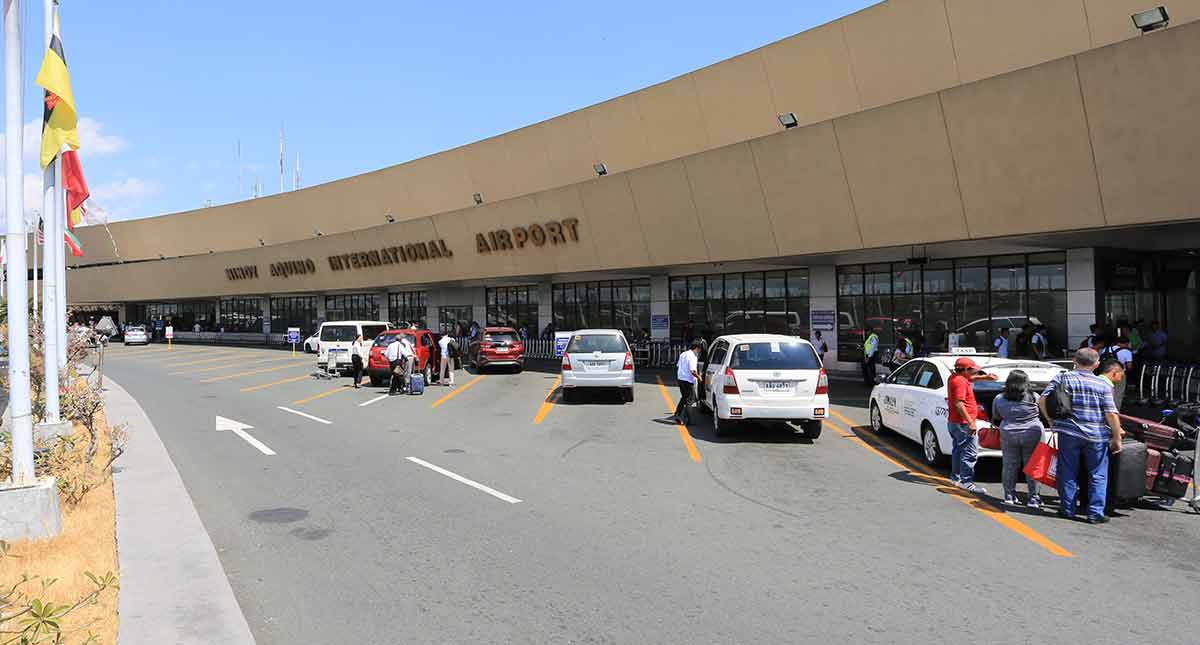
1) Be aware of the common types of taxi scams.
Be cautious when accepting rides (not just in the airport but anywhere in the Philippines) in vehicles that do not have official markings and a working meter. Sometimes, taxi drivers may say that they are using another car, as their regular taxi is at a shop, but be wary as these could be operated by scammers pretending to be taxi drivers.
Some taxi drivers will try to convince passengers that they are operating under an official “fixed rate” for their journey, which is often much higher than the actual fare. If you’re handed a rate card that lists fees in the thousands of pesos per passenger, avoid these at all costs. FYI, taxis are supposed to charge for the ride regardless of the number of passengers and not per head.
Other taxi drivers will purposely take the longest routes possible to inflate the fare or may not turn on the meter to charge you what they want. They may say they’re doing this because traffic is too heavy, or to fool you into thinking that your destination is far from the airport. In addition, there are drivers who might claim not to have change when you get to your destination and will accept all your money, saying the extra amount is a tip.
Some taxis could also be using meters that are flawed or tampered with mechanical or electronic cheating devices that makes the meter run fast. Pay attention if the numbers seem to jump too fast or if the driver is clicking a switch hidden somewhere.
Another warning sign you should watch out for is if the taxi name, plate number, and operator contact number are erased inside the cab, so you can’t get their details easily.
2) Know what the official types of taxis are and the appropriate fare.
There are three different types of taxis that you can find at Manila airports, namely: Coupon Taxis, Yellow-Metered Airport Taxis, and Regular White Taxis.
Traditionally, the most expensive option is the Coupon Taxis, which charges a fixed government-approved rate depending on the zone of the passenger’s drop-off point. This can range anywhere from P330 to P440 for Makati or P610 to P940 for Quezon City.
The Yellow-Metered Airport Taxis are the second most expensive option and use a taximeter to charge your fare. The flagdown rate of P75 covers the first 500 meters traveled, plus P4 for every succeeding 300 meters and P4 for every two minutes of waiting time. From the airport, expect to pay around P200 to P300 for a short trip to Makati City, depending on the traffic.
Regular White Taxis are the cheapest and should go by the metered fare. Flagdown rates start at P45, with an additional P13.50 for every succeeding kilometer traveled and P2 per minute of travel time. A short ride from the airport to Makati should be more or less P200 if there’s no traffic.
Read Top Gear’s full guide to the NAIA Airport here, which details all the costs and other transport options.
3) Track your route using GoogleMaps or a navigation app.
The Ninoy Aquino International Airport or the Manila Airport (MNL) is located on the border between Pasay and Parañaque, which is just 12.7km from the city center. Traveling by taxi from the airport shouldn’t take more than 30 minutes (in normal traffic conditions) to get to hotels in the Makati and Bonifacio Global City areas. However, traffic is notoriously bad during the holiday season, so it’s possible to take hours on the road even for short distances.
To ensure you are traveling the most direct route possible, use a GPS or map app to track your journey. Research the best route beforehand and how long it normally takes to get there. Let the driver know you are tracking the journey using an app.
4) Always carry small bills in the local currency.
Most taxi drivers in the Philippines prefer to use local currency. For reference, Philippine banknotes come in P20, P50, P100, P500, and P1,000 denominations, while coins come in P20, P10, P5, and P1 (as well as 25, five, and one centavo coins).
Passengers should always have smaller bills (in the P20, P50, and P100 denominations) before boarding a taxi. Paying with large denominations (like P500 and P1,000) will make it easier for drivers to say that they don’t have change. Upon arriving at the airport, it’s best to change foreign money into local currency and ask to include some smaller bills. If you need to break large bills, get change by buying food or items at a convenience store first.
Generally, if you’re traveling around Manila, you can expect to pay in the hundreds for taxis, not in the thousands. Politely ask for change if the driver doesn’t offer it at first. Coins and smaller bills in the P20-P50 range are acceptable as tips, while anything over P100 would be considered generous.
5) Book trips via ride-hailing apps instead.
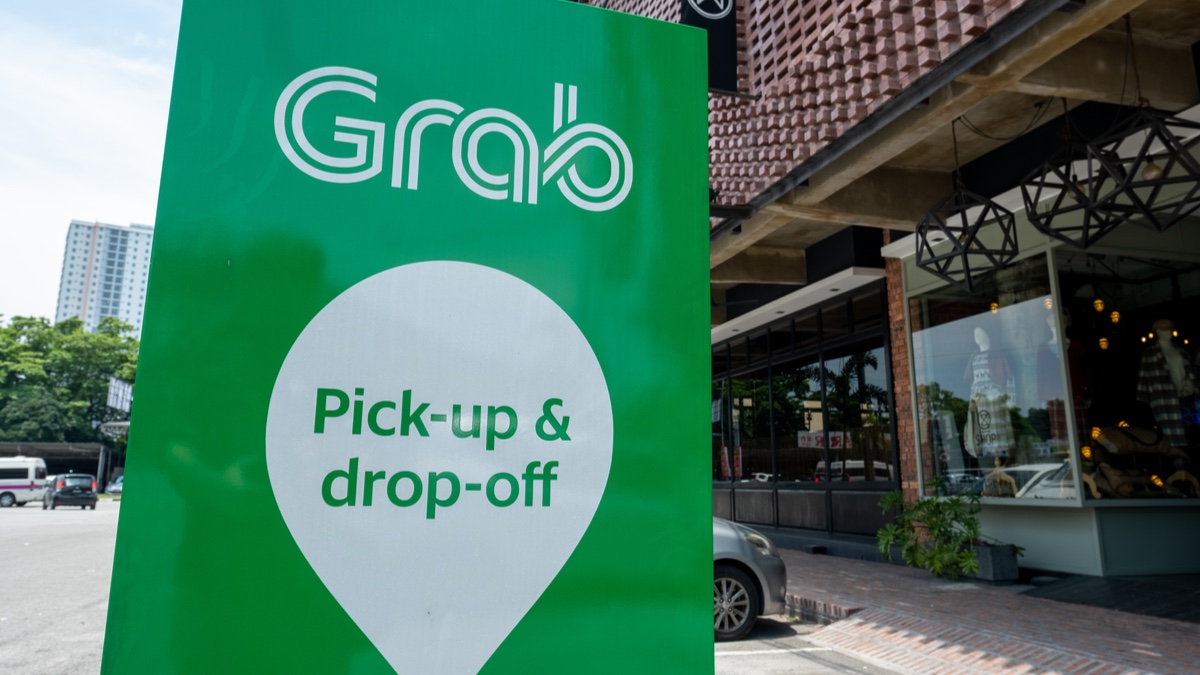
Those who want to to avoid all the difficulties of dealing with possible taxi scams can book car rides on ride-hailing apps like Grab (which has a GrabCar and GrabTaxi option) and JoyRide to and from the airport through the use of mobile apps. Here, the fares are disclosed upfront and will stay fixed no matter how long the trip takes. You also get a copy of a digital receipt for easier tracking of expenses.
Ride-hailing apps are very helpful since you can pinpoint the exact drop-off point without having to instruct drivers verbally and make use of cashless payments. Because of the high demand, the cost can be more expensive than taking regular taxis and it can be hard to book during rush hour, but at least you get the peace of mind, can track your location, and don’t have to verbally negotiate with the driver.
In case you don’t have a lot of luggage and are traveling alone, it’s also possible to book motorcycle taxis like Angkas, JoyRide, and MoveIt to get to and from the airport. The fares are also disclosed at once via the app and can be paid by cash or online methods.
6) Take the premium point-to-point (P2P) airport shuttle.

If you don’t want to ride a taxi (or can’t book one), another option is to make use of the airport P2P service between NAIA and other key points in the metro and try to ride from there, which might be cheaper for single passengers. The regular fare for a one-way ride from NAIA to Robinsons Galleria costs P150, while the fare from NAIA to Araneta Center Cubao is P200 per passenger, as of December 2023. Unfortunately, these operate at a fixed schedule, so it’s not always the most convenient option if you’re in a rush, or if your flight arrives at odd hours.
7) Ask your hotel for an airport pickup or transfer.
If you’re staying in a hotel in hotel in Manila, a good way to get to and from the airport is to arrange a private transfer through your hotel. Check if your chosen accommodation offers airport transfer services. Some hotels offer pickup and drop-off services for a more comfortable and safe journey. Some hotels offer this as a complimentary service, while others may charge an additional fee. You can also book private transfers to and from the airport to popular destinations in the city like Makati, Quezon City, Mall of Asia, and even Tagaytay via the booking app Klook.
Safety reminders to avoid taxi scams
A decade ago, the Philippine National Police (PNP) released the following safety tips to prevent the public from falling prey to taxi scams in Metro Manila, which various embassies still use in their precautions for travelers.
- Do not enter a taxi if there is anyone other than the driver inside.
- Once inside a taxi, check if the doors can be locked from the inside, otherwise you’re vulnerable when the taxi stops in traffic.
- Ride in the backseat or check the backseat to make sure that no one is hiding on the floor, between the seats.
- Ensure that the doors can be opened from the inside and its inside door handles are functional.
- Request the driver that the meter be used as there are some instances when a taxi driver might request for a fixed rate instead of using the meter which is illegal. If the driver says that the meter isn’t working or offer any other excuse, don’t get in the cab. If you’re already inside, ask the driver to stop and get out of the vehicle.
- Take a mental note of the license plate number. Always take note of the taxi name, operator phone numbers, plate number, and if possible, take note of the taxi driver’s name and face. It is recommended that you send these bits of information to a friend or relative.
- Once inside the taxi, conspicuously text the number of the taxi to someone or at least pretend to do so. Remember to text back your contact when you have arrived safely.
- If the driver is unwilling to comply with your requests, it is best to wait for another cab.
What are the penalties for taxis that overcharge passengers?
The LTFRB is reminding drivers and operators to comply with fare guidelines, as those caught overcharging passengers could be fined or have their permit to operate revoked.
According to Joint Administrative Order (JAO) No. 2014-01, “refusal to render service to the public or convey passenger to destination” as well as “overcharging of fare” can be subjected to fines ranging from P5,000 to P15,000 and cancellation of their Certificate of Public Conveyance (CPC) for taxi drivers.
Operating taxis with “fast, tampered, defective taximeters or operating without or with an old seal taximeter” and “tampered, broken, joined, reconnected, fake or altered sealing wire” carries the same penalties.
- First offense – fine of P5,000
- Second offense – fine of P10,000 and impounding of thirty (30) days
- Third and subsequent offenses – fine of P15,000 and cancellation of CPC where the unit is authorized
What should you do if you’ve been scammed by a taxi?
Before taking a ride, always take note of the taxi name, operator phone numbers, plate number, and if possible, take note of the taxi driver’s name and face. Send this information to a friend or relative.
If your driver says that the meter isn’t working or offers other excuses, don’t get in the cab. If any time you notice that the meter is going way too fast, ask to stop and get out of the taxi. If possible, take photos and video of the incident as proof in reporting.
You can report the incident to the LTFRB by texting the taxi’s name and plate number. According to LTFRB, their hotline number (1342) is open 24/7. You can also try to report the details through other channels.
- Call the LTFRB trunkline: 1342
- Send messages through Viber: (0917) 550-1342 and (0998) 550-1342.
- Call 459-2129
- Send an e-mail: complaint.ltfrb.gov.ph@gmail.com or ncr@ltfrb.gov.ph
- Call the Public Assistance & Complaint Desk: (02) 8925-7366
- Admin Office: (02) 8925-7367
- Office of the Regional Director: (02) 8926-6346 or (0906) 463-7034
- Records Section: (02) 8929-6789