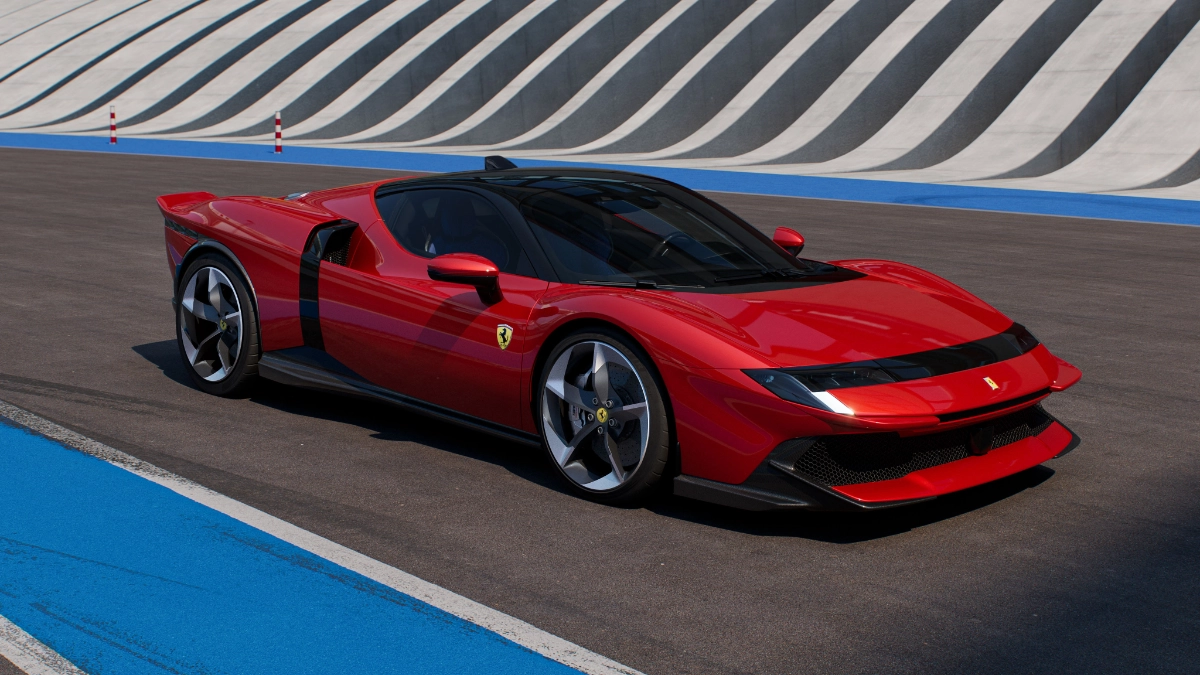
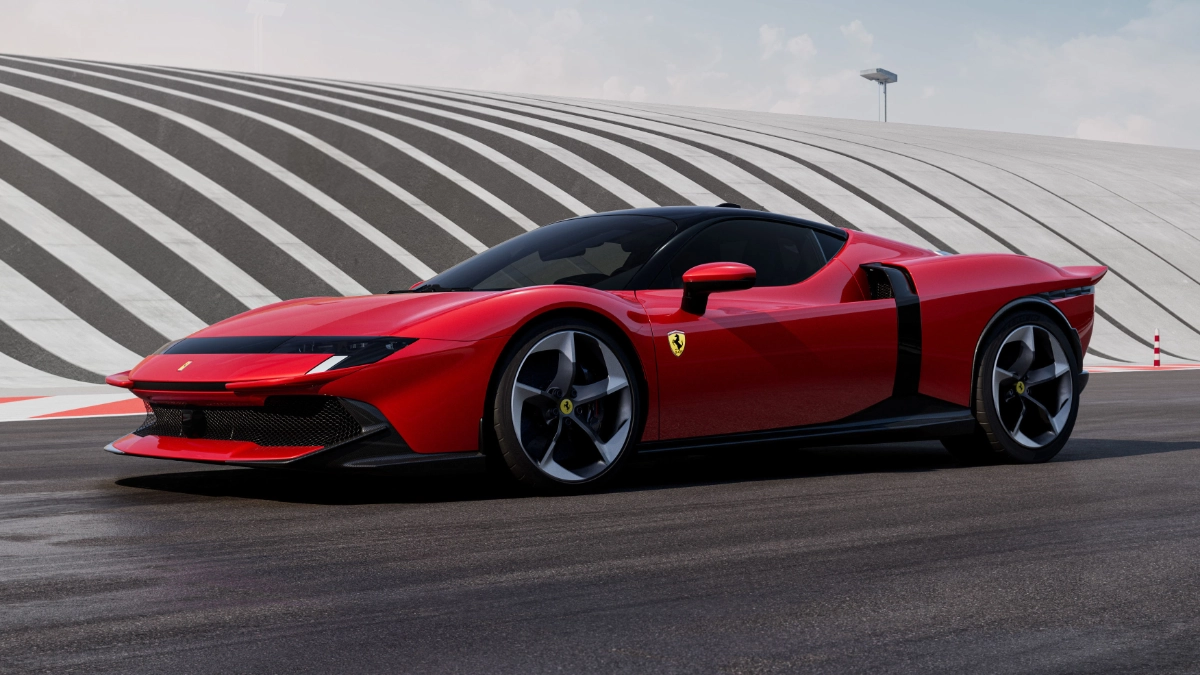
This is the Ferrari 849 Testarossa, a replacement for the only slightly sub-hypercar that is/was the Ferrari SF90. And it’s got quite a lot going on under that new skin, although one suspects that Ferrari’s relentless application of marginal gains is meant to distract from the fact that, at its core, this is an SF90 Evo rather than a completely new thing. At least in terms of hardware.
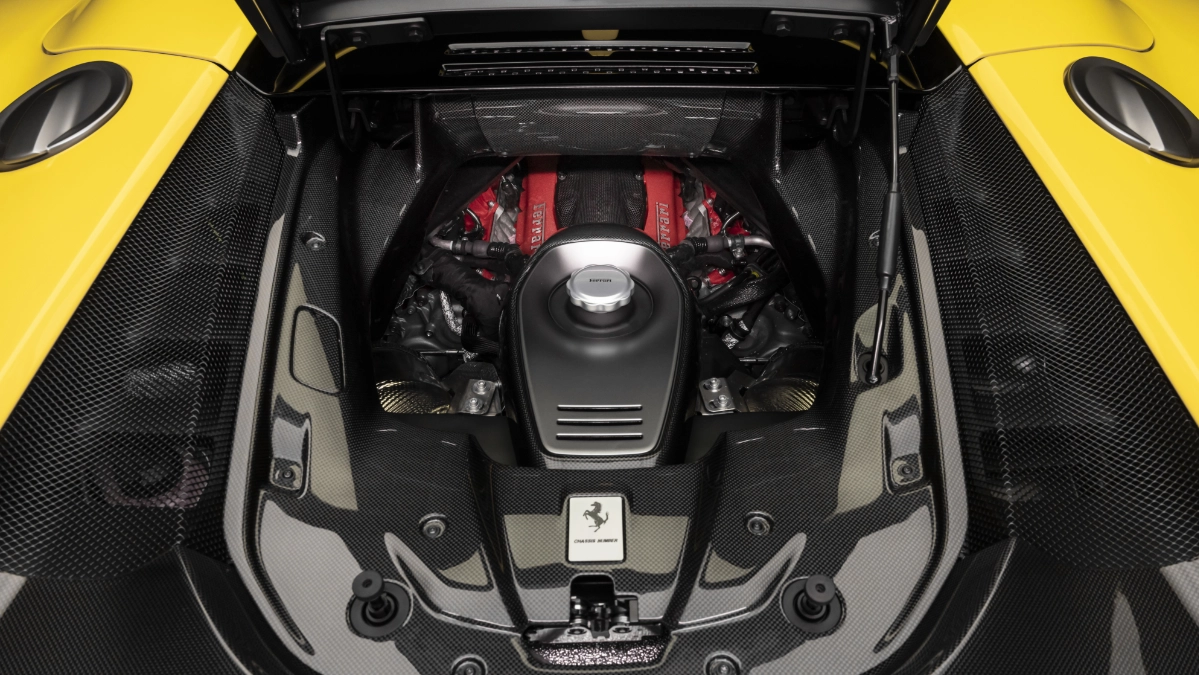
Mainly because at its heart is the same 4.0-liter V8 with two turbos, supplemented by a trifecta of e-motors—one of which offers support to the rear axle, the other two managing a front wheel each, giving both all-wheel drive and torque-vectoring capabilities as per the forebear. There’s some 50-odd horsepower more than before, all carved from the internal combustion engine—mainly because the electric horsepower is limited to the 217hp possible from the small lithium-ion 7.45kWh battery. Velocity curbed by the lack of available volts.
So there are bigger turbos with low-friction bearings from the F80, chunkier intercoolers, new cylinder heads to go with the bigger blowers, a different block, intake plenums, valvetrain, and fuel rail. Oh, and titanium fastenings and bits nicked from the 296 GT3 to make sure it actually doesn’t weigh any more than an SF90.
OTHER STORIES YOU MIGHT HAVE MISSED:
The Mercedes-Benz GLC Electric looks like, er, this
The new Porsche 911 Turbo S accelerates as fast as a Bugatti
All that drives through the same eight-speed F1-style paddleshifted ’box, although as ever it’s purportedly faster, better and more emotional than ever before, the car louder and more sonorous in all modes and especially on the overrun. Which sounds interesting both metaphorically and literally, but we need to drive it to make sure.
Still, the power uplift and lack of added weight mean that it’s pretty quick: 0-100kph in 2.25sec, 0-200kph in 6.3sec. That’s a bit of a neck-breaker by anyone’s standards. And it’ll go around corners, too. According to Ferrari, it’s already posted a Fiorano laptime of 1min17.5sec, meaning it’s about 1.5sec faster than the SF90 and only about a fifth of a second off the SF90 XX. Not too shabby.
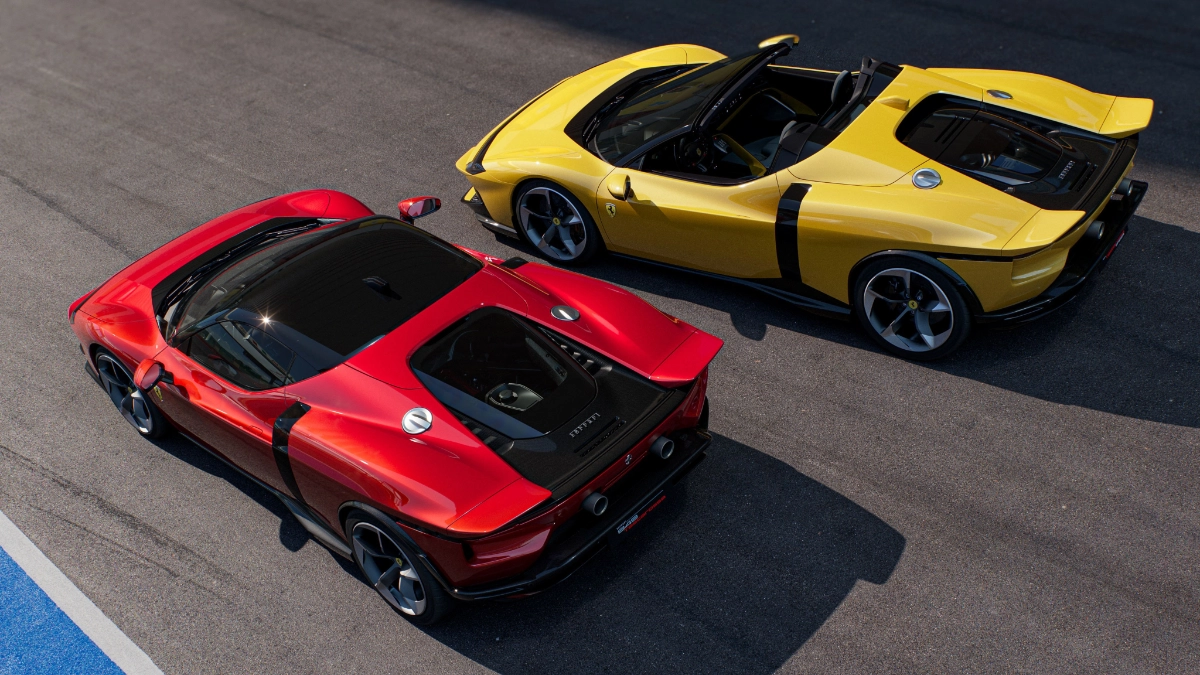
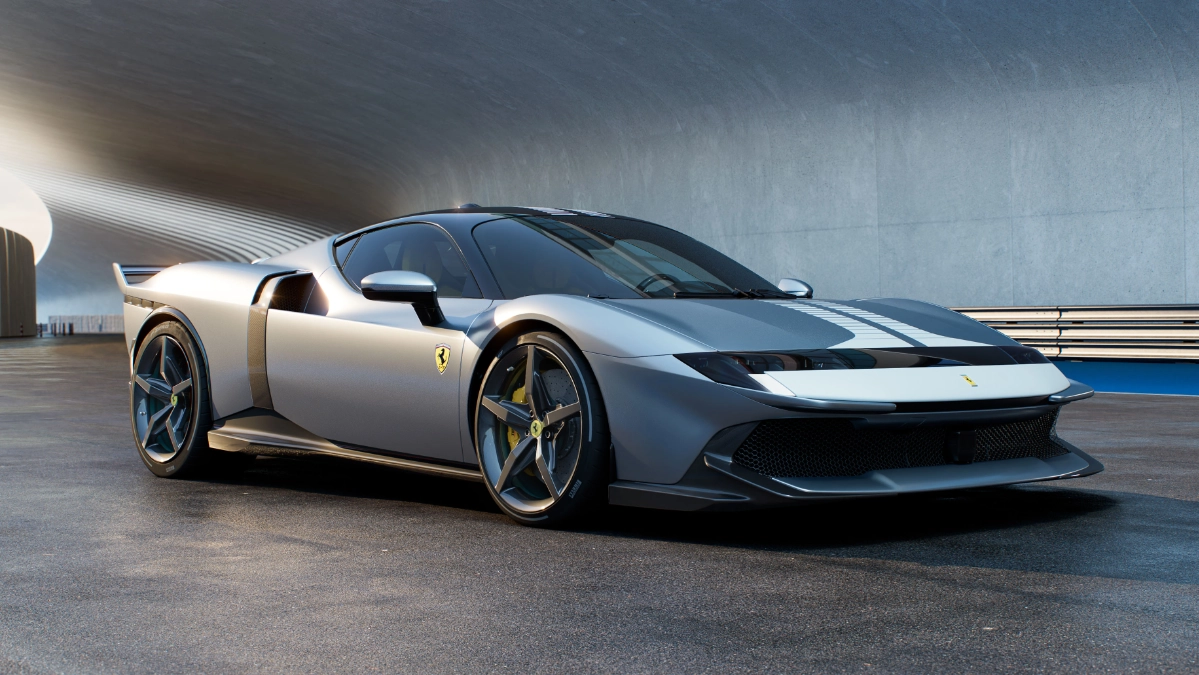
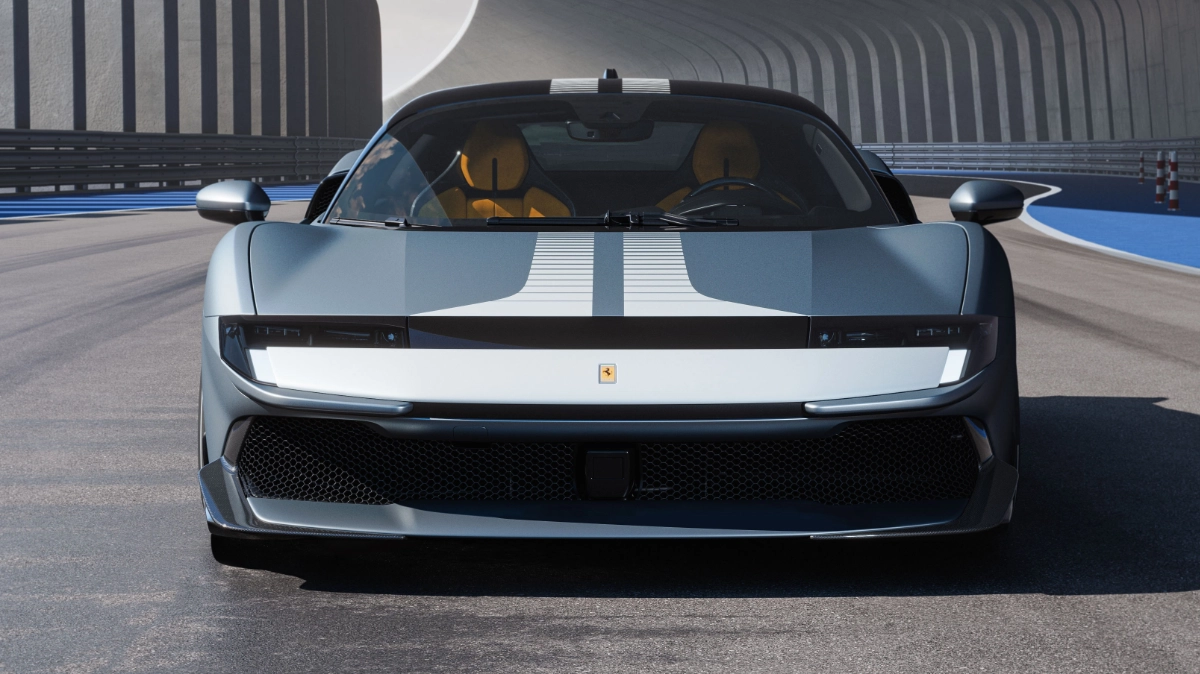
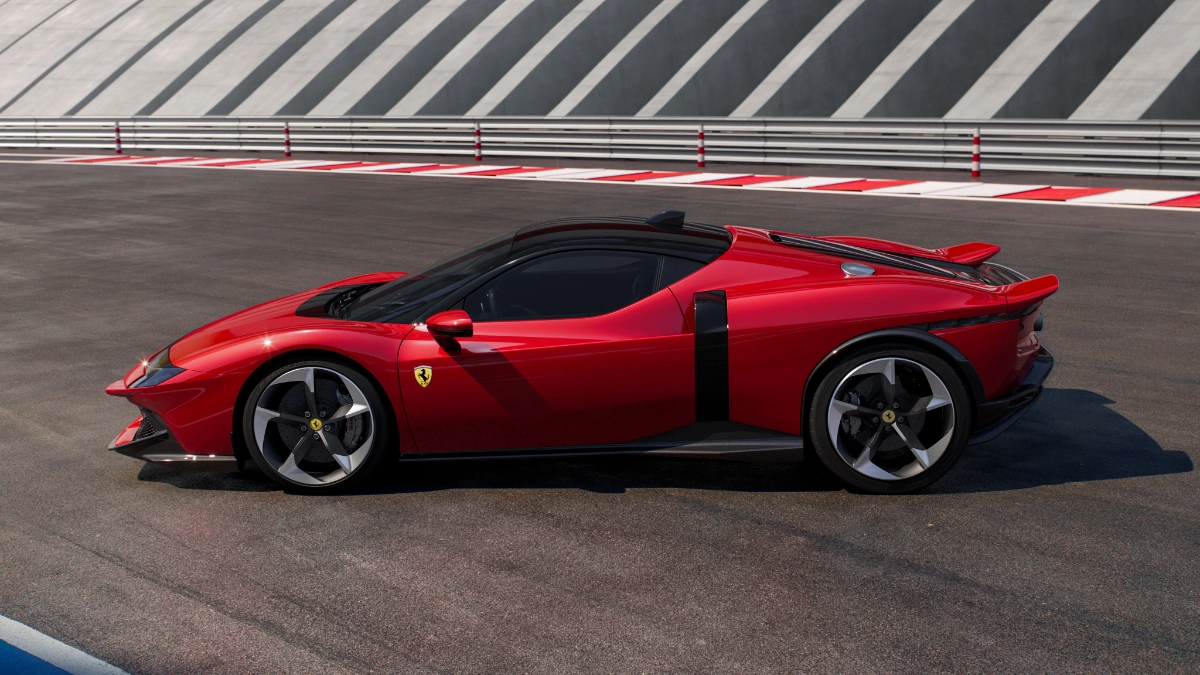
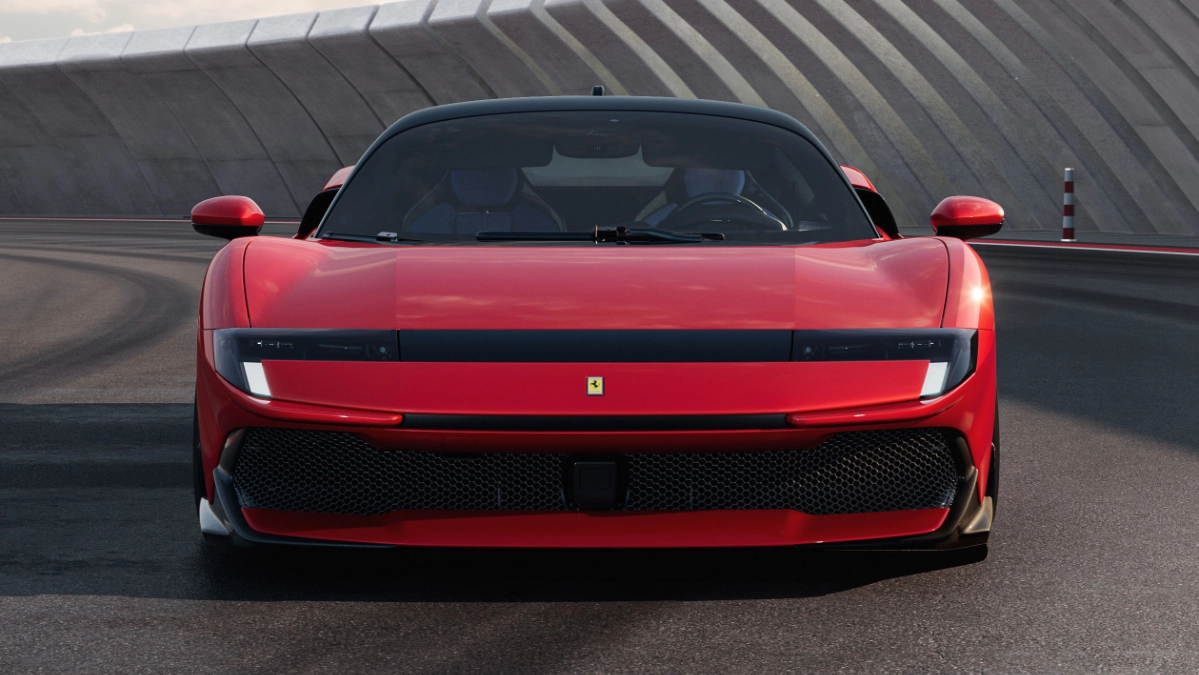
And it looks good. Or terrible, according to some in the Top Gear office. Still, shades of F80, Daytona, or even—in the ghost of Ferraris past—the 308. Bits of stylised racing car, volumes that speak of shape defined by aero. The front is double-tiered, featuring aero flicks that look like bumper overriders on the top section—divisive but interesting. The lower area widens the car visually, and there’s a tornado’s worth of vortex generators under the front to play with the aero profile.
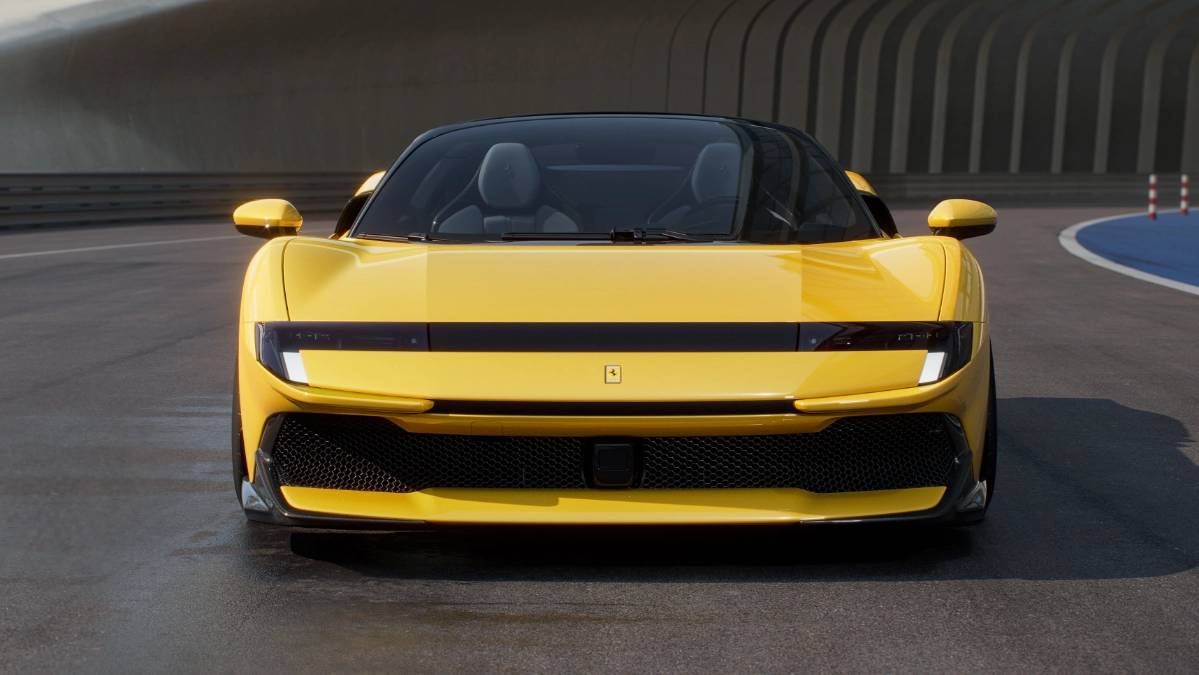
The black horizontal mask that includes the headlights gives it a contemporary and familial Ferrari feel, and the shapes and volumes seem to have a touch of the 1970s about them, without falling too harshly into imitation or flat-out copying. It looks much more resolved in the metal, by the way, and smaller than you think. Or at least more comfortably-sized.
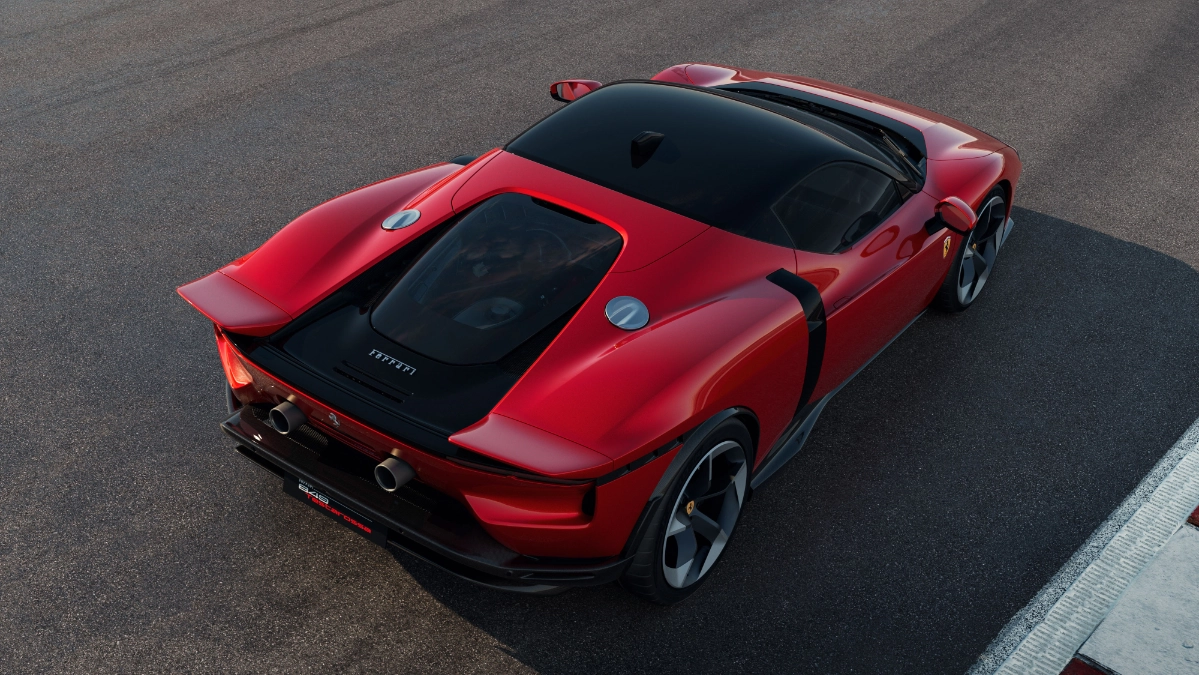
Then there’s the side profile that features a deep channel carved into the door top that serves the big openings aft of the windows. They’re the channels that feed those bigger intercoolers, necessary because if you make more power, you generate more heat. More heat means more cooling. Apparently, the Testarossa requires 15% more cooling than the SF90, and produces 25kg more downforce—415kg at 249kph. Which is respectable rather than groundbreaking.
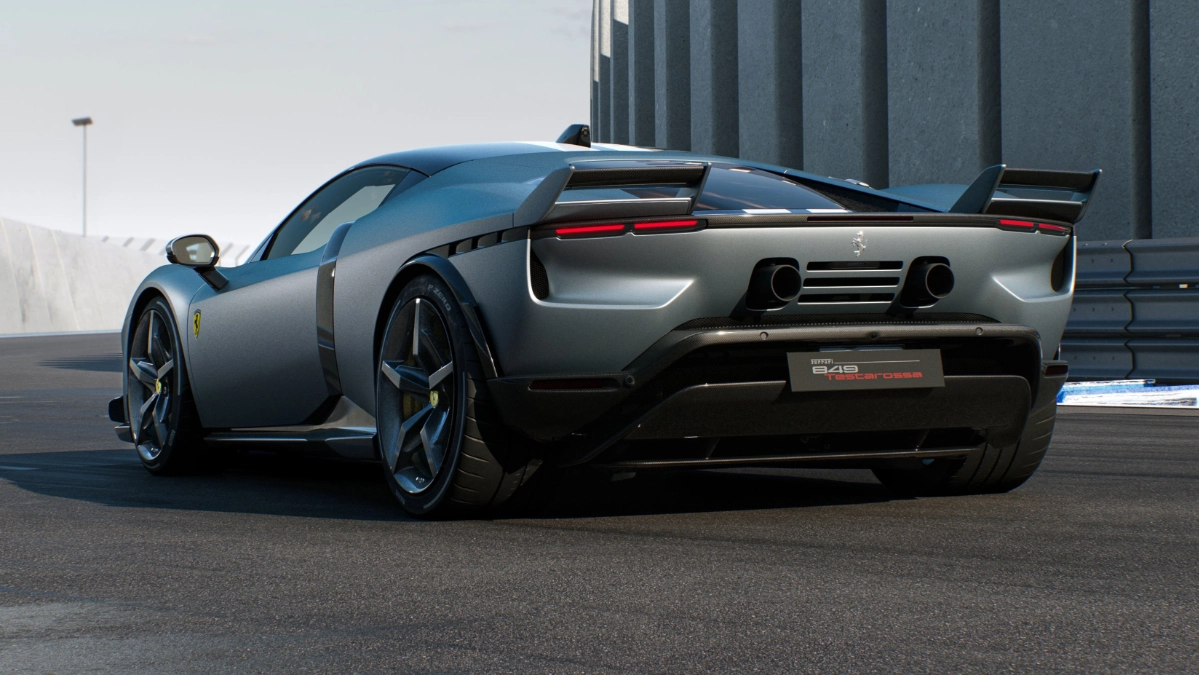
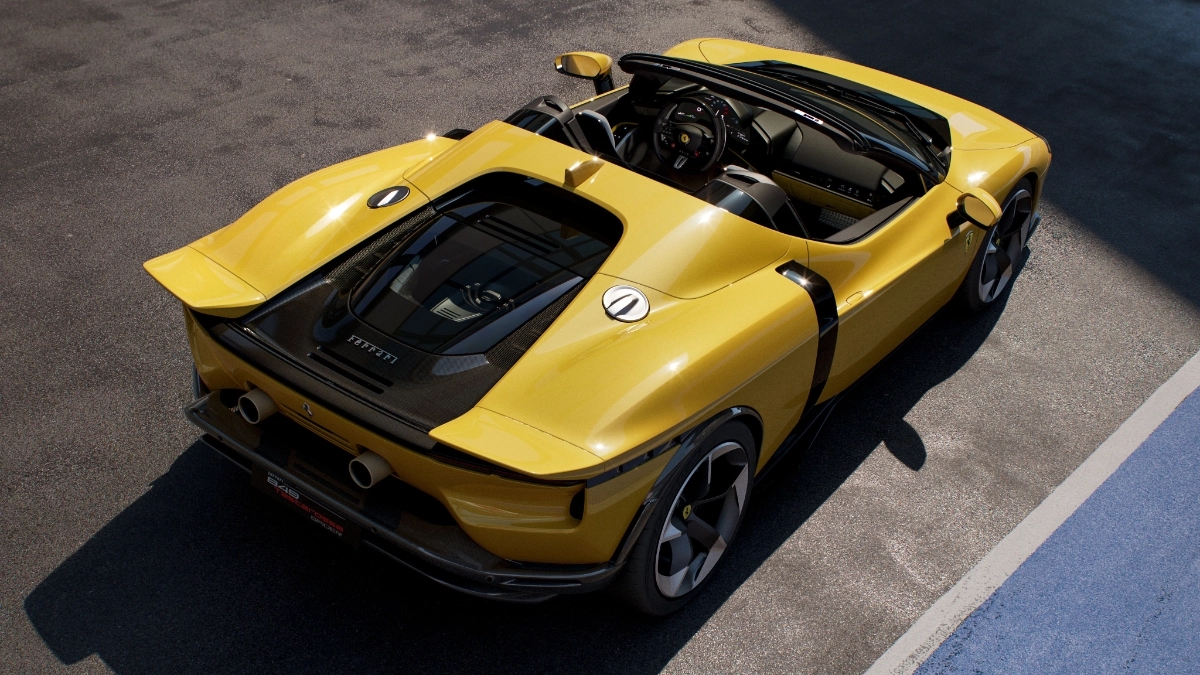
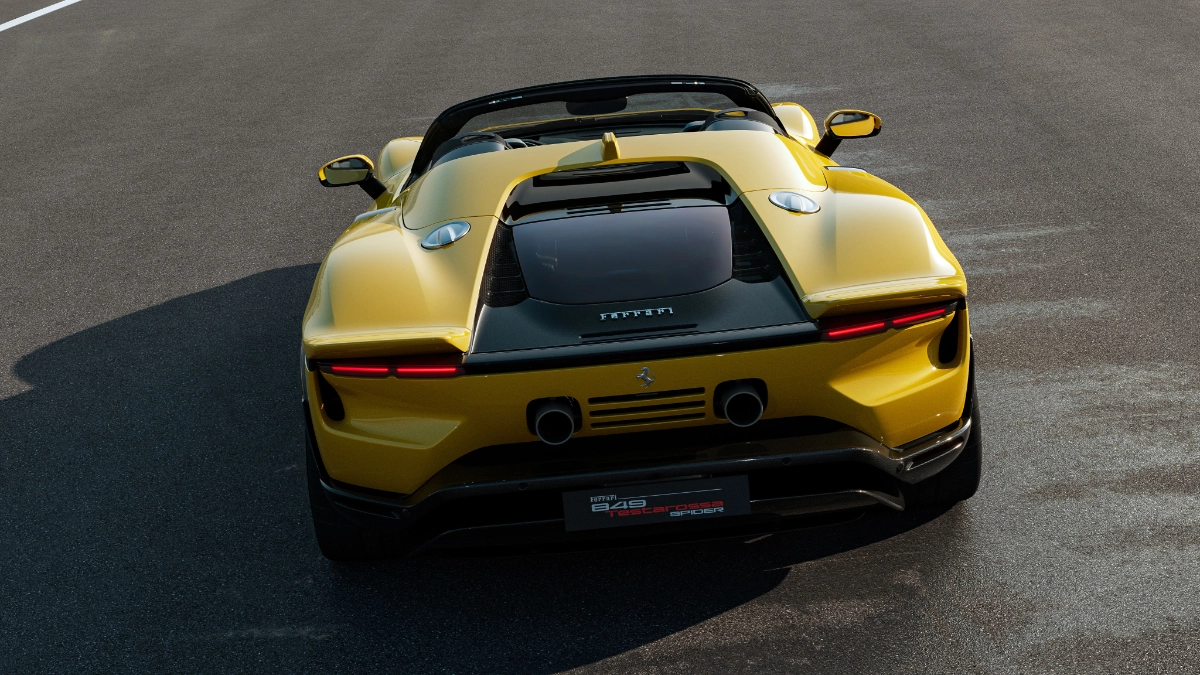
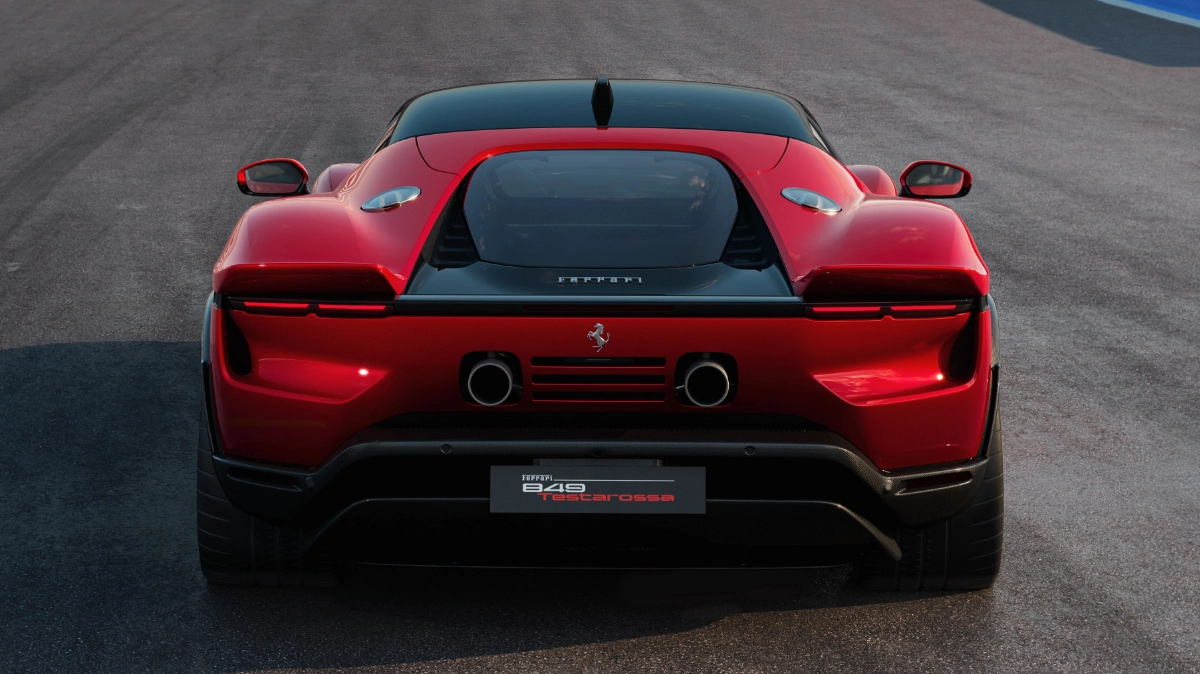
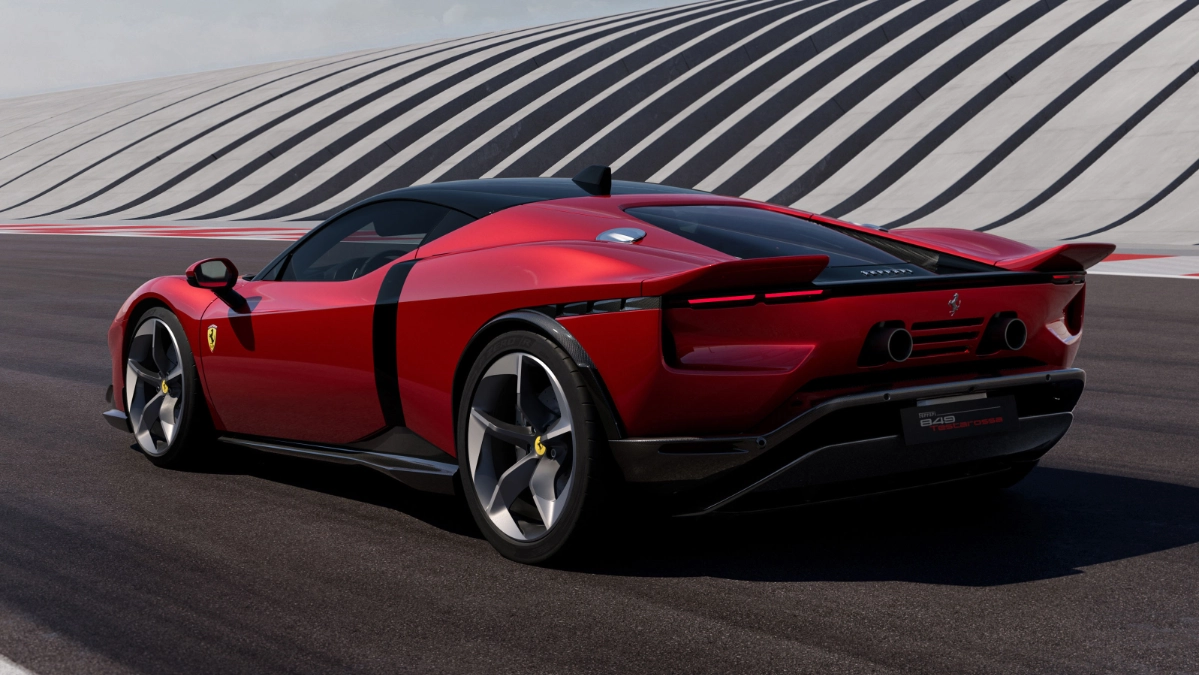
But the biggest news is probably the ‘twin-tail’ rear. Almost pontoon-like rear arches that feed into a pair of static winglets, technically part of the rear bumpers, believe it or not, themselves supplemented by an active central section which pops up when high(er) downforce is required. Twin Inconel exhausts sit below that central section, and there are Venturis and the usual skirted and vented bits that flush high-pressure from wheelarches and the underneath of the car. It’s a confident-looking thing, and it’s definitely got much more attitude than the SF90, which tended to look a little underwhelming from some angles. Supercar mid.
It should be daily drivable, too. You’d think well over 1,000hp might be a little tricky, but you can ease around on pure electric motivation (25km of e-only range), or work through the usual modes from settled to scary. And you’ll have help: Deep breath, this thing has Side Slip Control version 9.0, advanced traction control to go with the eDiff, SCM, FDE 2.0 EPS, ABS Evo, and FIVE.
Now, FIVE is a really interesting bit, because it’s an estimation system that can model dynamic behavior in real time—basically creating a digital twin of the car as it goes through a corner. It stands for Ferrari Integrated Vehicle Estimator, and it’s a serious bit of kit. Merge that with Ferrari’s ABS Evo system, and you’ve got a car that can think and predict its own way through a curve and adjust to suit via the torque vectoring and ABS module. Apparently, it all feels natural. We shall see. As with the SF90, over about 209kph, it becomes RWD only. But the overload of electronic help is probably the only way you can manage more than 1,000hp in a roadcar that’s still even vaguely drivable day-to-day.
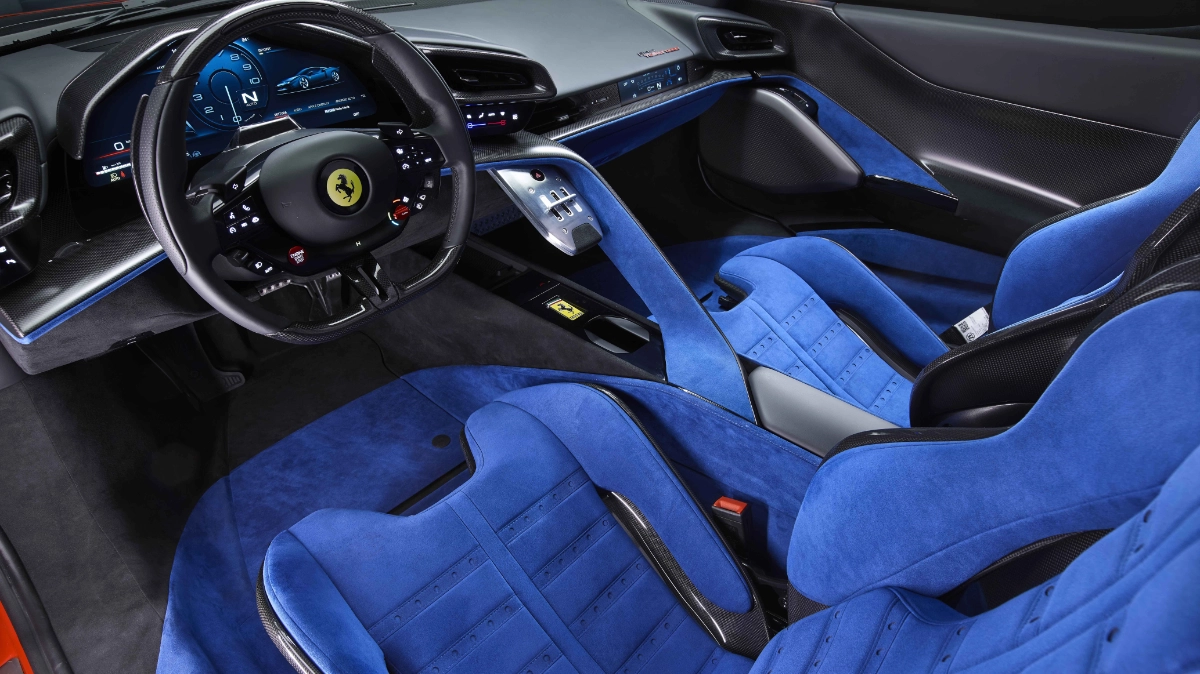
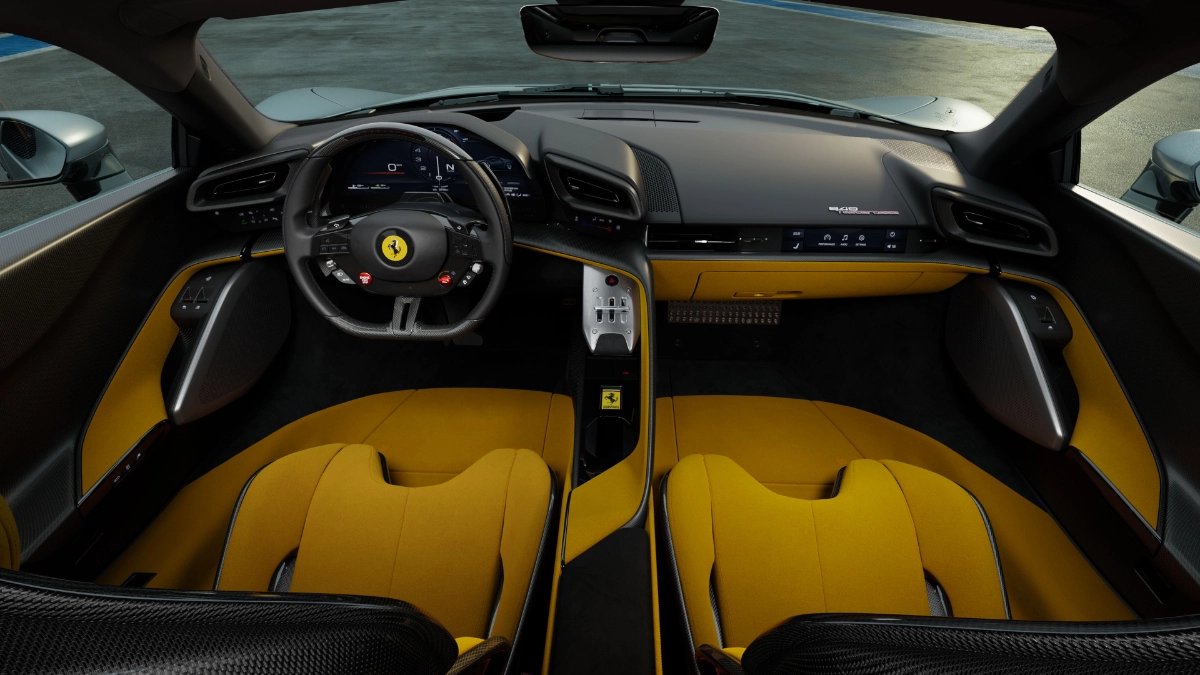
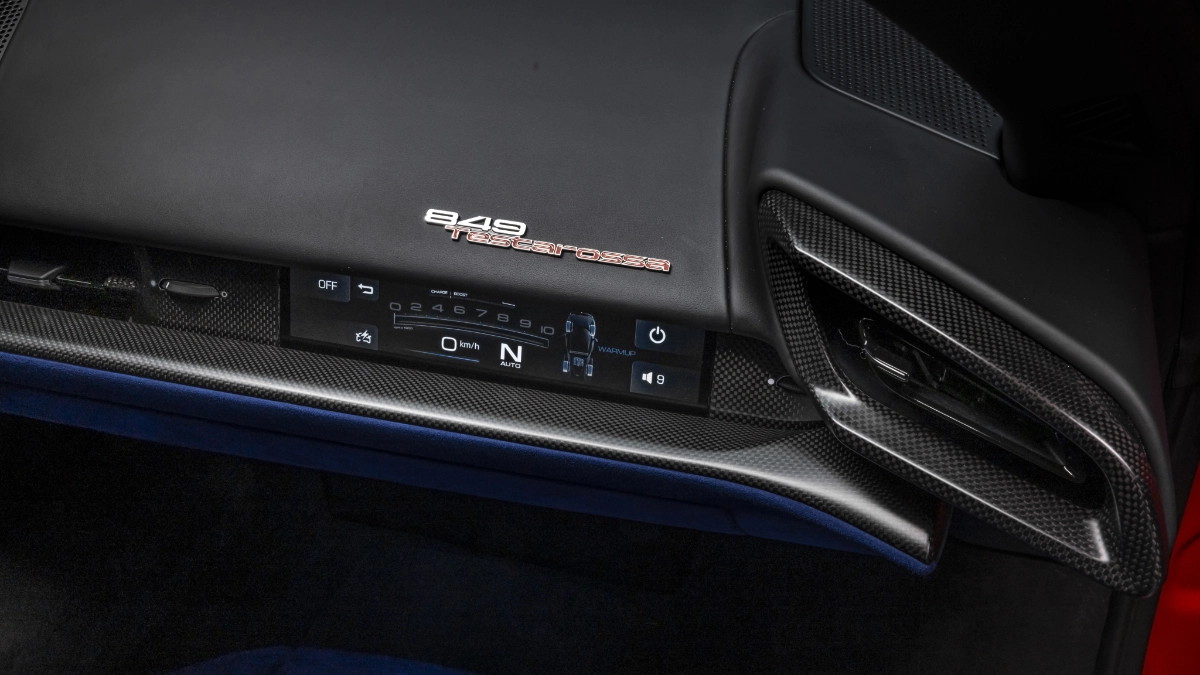
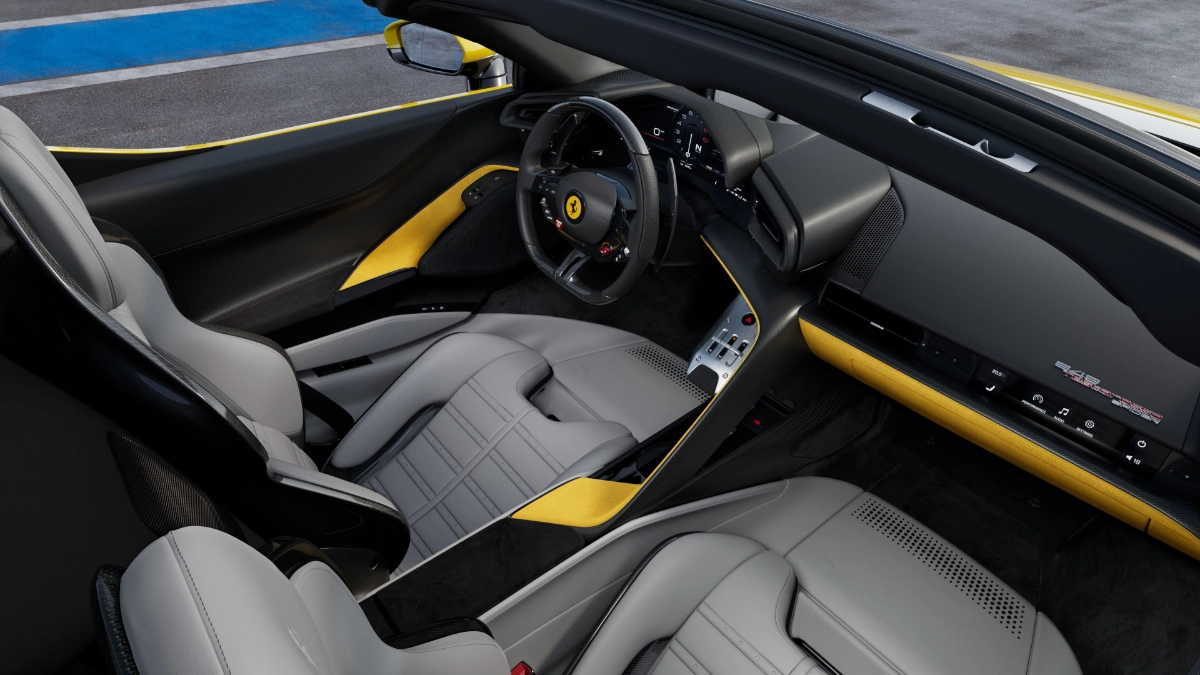
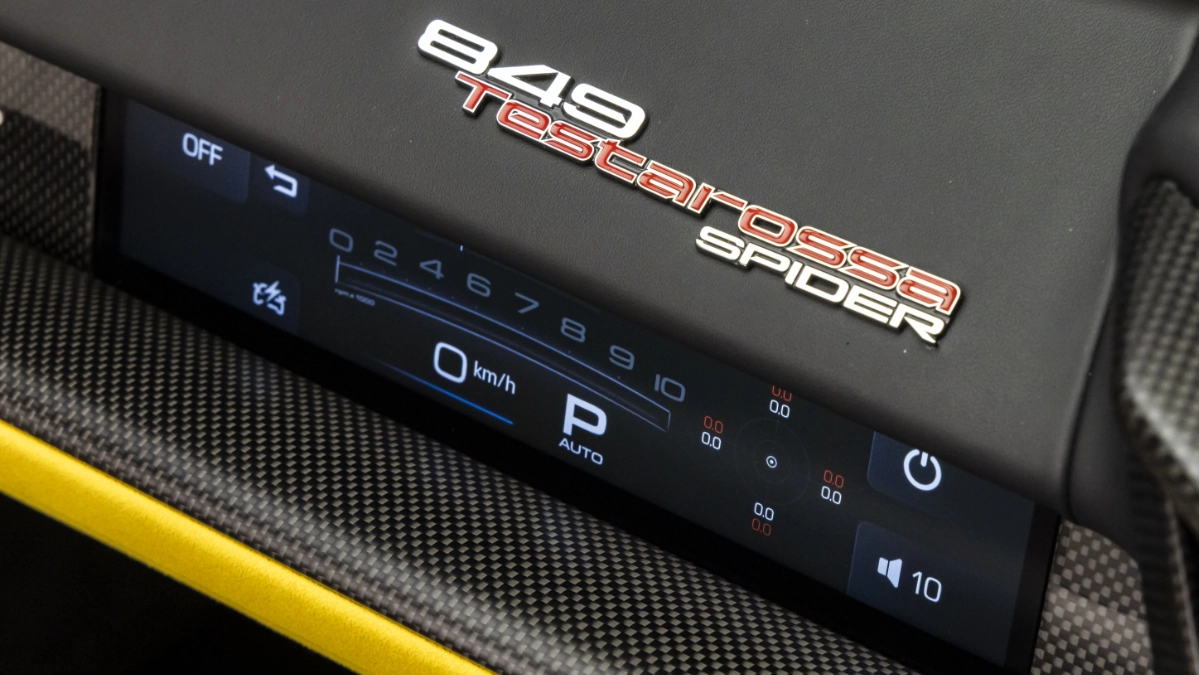
The inside is refreshed and comfortable, pared back and now featuring a proper start button and switches on the steering wheel. There are still haptics on the bottom sides of the binnacle, but they seem to work well—and no, it’s not any more practical than before—but Ferrari says that if you need that, buy an Amalfi.
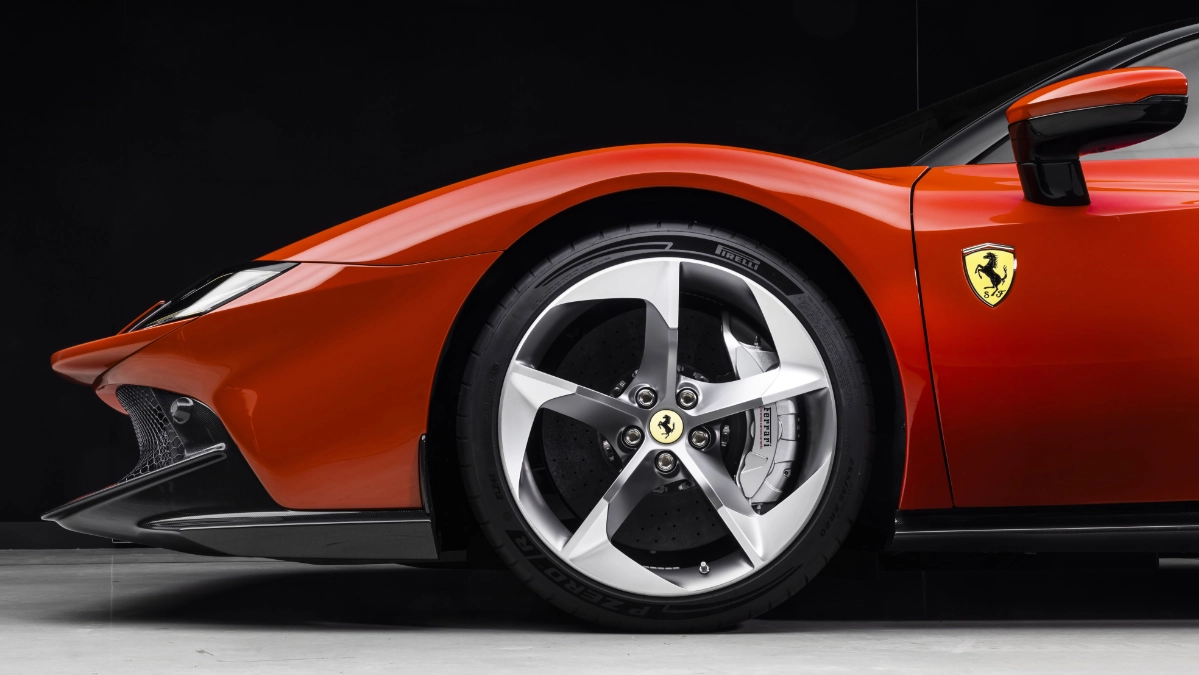
Other stuff? If you want the fastest version, then you’ll need the Assetto Fiorano just like the SF90—something you have to spec from build, rather than an options package. That features more aggressive nose flicks and double height twin tail elements at the back, single-phase Multimatic suspension that’s more racy (although it does come with a nose lift this time), loads of carbonfibre bits for a 30kg weight reduction, including wheels and lightweight tubular seats, specific Michelin Cup2 tires, and a mountain of other stuff. That costs roughly €45,500 (around P3.04 million) all-in.
The Spider also arrives at the same time, featuring a folding metal hardtop and a 90kg weight penalty, though you can also order that with the Assetto Fiorano package to lighten it up a little. You’re looking at €460,000 (around P30.76 million) for the Coupe, €500,000 (around P33.43 million) for the Spider, while the Assetto Fiorano package costs €52,500 (around P3.51 million) for both.
So what do we think? Well, when the SF90 appeared back in 2019, it was a bit of a game-changer. A plug-in hybrid supercar that featured both triple e-motors and a ferocious V8, it was something we’d not seen before and sat somewhere in a new niche between super and hypercar. But now there are other drivetrains crowding the space. There’s the Lamborghini Revuelto with a 6.5-liter V12 and three e-motors, the Aston Martin Valhalla incoming with virtually the same specs as the 849 Testarossa. Will the next-generation Ferrari still be a class leader five years on? We’ll have to wait to drive it to find out. But on the basis of this first look, it’s in with a fighting chance.
More photos of the Ferrari 849 Testarossa:
NOTE: This story first appeared on TopGear.com. Minor edits have been made.