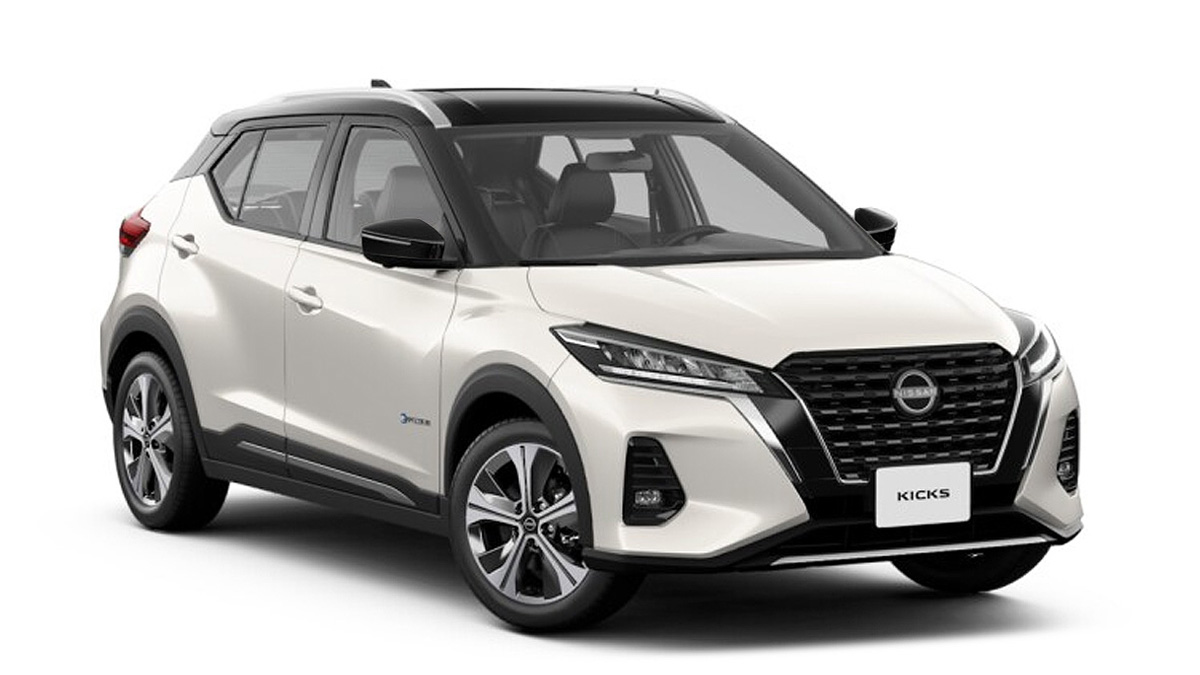
When the Nissan Kicks e-Power arrived and we started writing about it, we were initially confused about its classification. The Kicks is a crossover with a gasoline-powered engine and an electric motor. But unlike typical hybrid vehicles, the engine is not connected to the drivetrain. Instead, the ICE acts like a generator that powers a small battery, which in turn feeds current to an electric motor.
So it’s not a hybrid as we typically know it since it only has one source of propulsion. But it’s not an EV since it has no charging plug, and the tiny battery installed was not designed to power the Kicks for long distances.
Our first thought was, if Nissan installed a Chademo charging receptacle and a bigger battery, it would be a plug-in hybrid vehicle (PHEV) and make our lives as writers much easier. And that would make it more versatile for the motoring public, of course. That’s also important.
OTHER STORIES YOU MIGHT HAVE MISSED:
Nissan cuts Leaf SRP down to just P1.998-M
Gogoro to officially become available in PH by Q4 2023
Of course we didn’t wonder for long, and we knew with 100% certainty why the Kicks is what it is—cost. Adding a bigger battery would add to the cost of manufacturing, and then increase the Kicks’ SRP, thereby diluting its value proposition. But until today, we were never able to verify our theory.
We attended a roundtable media presscon at Nissan Quezon Avenue presided over by top Nissan executives: Isao Sekiguchi, president of Nissan ASEAN; Junichi Endo, senior vice president for M&S Japan-ASEAN; and senior vice-president for Global Product Strategy and Product Planning Ivan Espinosa. We’re particularly fond of product planners here in Top Gear.
Georges Ramirez of C! Magazine asked about making the Kicks a PHEV, and Espinosa confirmed that it’s a cost concern brought about by including a bigger battery. We asked a follow-up question: Yes it will be more expensive, but by how much?

Nissan’s Mexican SVP estimated that an EV battery adds about $140 per kWh to a vehicle’s cost. To give a vehicle respectable range, it needs about 25kWh of battery installed. For context, a Nissan Leaf has a 40kWh battery that gives it up to 311km of range. So to put a 25kWh battery in the Kicks would theoretically add about $3,500 (P195,000) to the cost. And that’s still without the expense of the Chademo charging plug and reconfiguring the Kicks to accommodate a big battery inside.
Adding P200,000 to the Kicks SRP will certainly affect its sales. A big part of the Kicks’ appeal is its price point. And in any case, it’s a unique enough vehicle on its own. You have the smoothness of an electric motor without the range anxiety of an EV.
Do you want a Kicks PHEV or do you prefer it the way it is?