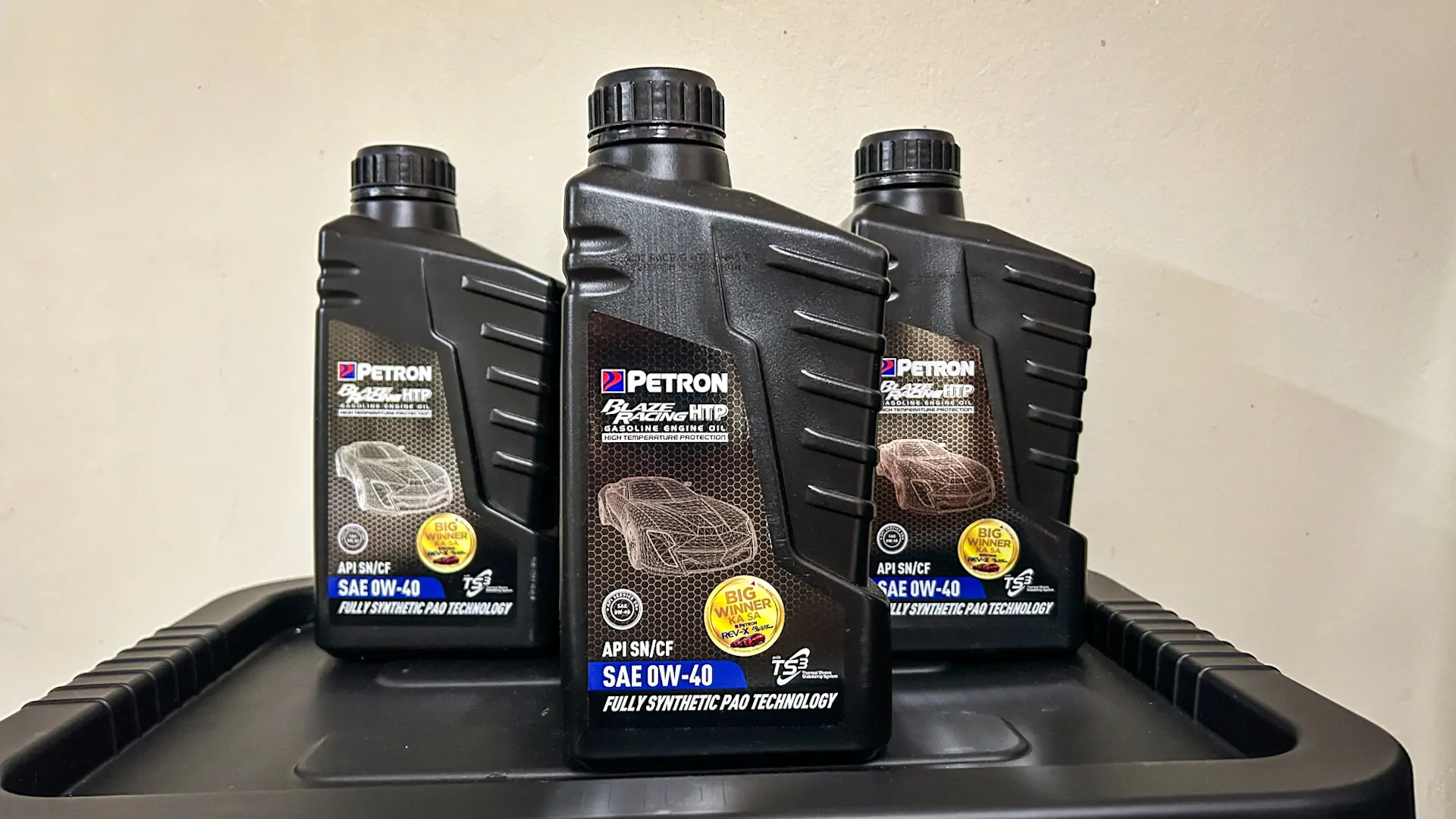
Oils do more than just lubricate our cars’ engines—they help protect all the internal components and keep the powertrain running as smoothly as possible. This is the reason an oil change is one of the most basic yet important procedures that need to be regularly done on our vehicles to keep them in topnotch shape.
But more than lubrication and protection, did you know that engine oils also play a big factor in terms of fuel efficiency? In the recently held JAMA Lube Oil Seminar 2025 held by the Japan Automobile Manufacturers Association (JAMA) and hosted by Petron Corporation, experts from across the industry and from global markets came together to discuss just that.

Experts during the event highlighted that 0W-8, 0W-16, and 0W-20 oils can help enhance fuel economy by up to 3%. In the long run, these savings can add up. In addition, the ultra-low viscosity oils could help reduce carbon emissions. In Japan, the reduction in CO2 emissions amounts to 373,000 tons annually. Meanwhile, in Indonesia, studies have shown that there’s potential to cut carbon emissions by 258,000 tons per year for currently in-use vehicles and 11,700 tons for new vehicles. JAMA and Petron see this shift to low-viscosity oils as something the Philippines can adopt in the future to curb pollution and improve air quality in highly congested cities.
OTHER STORIES YOU MIGHT HAVE MISSED:
If the Mitsubishi Pajero Evolution made a comeback, would it look like this?
Honda Connect users can avail of a free 50-point vehicle checkup
The JAMA Lube Oil Seminar also highlighted the new lubricant formations being developed for different types of vehicles, including motorcycles and hybrid or fully electric vehicles. The needs vary from one vehicle to another, so manufacturers are now looking for ways to optimize their engine oils.
At the end of the day, motorists are still advised to follow manufacturer-recommended specs when choosing engine oils. However, at the same time, JAMA and Petron are emphasizing the importance of investing in high-quality lubricants, reiterating the long-term effects in terms of engine life, fuel economy, and carbon emissions.
Petron’s press release reads: “Before your next oil change, keep in mind that the right lubricant can enhance your vehicle’s performance and save you money in the long run. Filipino motorists are encouraged to switch to high-quality, globally certified lubricants to experience better efficiency, longer engine life, and a reduced carbon footprint.”