
According to Lamborghini, barking supercars and super-assertive SUVs can, over the next few years, cut their environmental footprint. By 40%, when you account for their whole life cycle.
The plan involves not just cutting the CO2 from driving the cars—and guess what, electricity plays a big role—but also, where possible, in the manufacturing. That includes renewables and energy efficiency both at the famous plant in Sant’Agata, and down the chain of suppliers. For instance, shifting the cars to the dealers has often been done by airfreight, but is now more often ship and rail. Everything helps.
Well, that was the announcement. But hidden in the maths is an acknowledgment that because of the energy in making batteries, the manufacturing footprint per car will actually rise. More on that later—first, you want to know about the actual cars, so here’s the official launch plan.
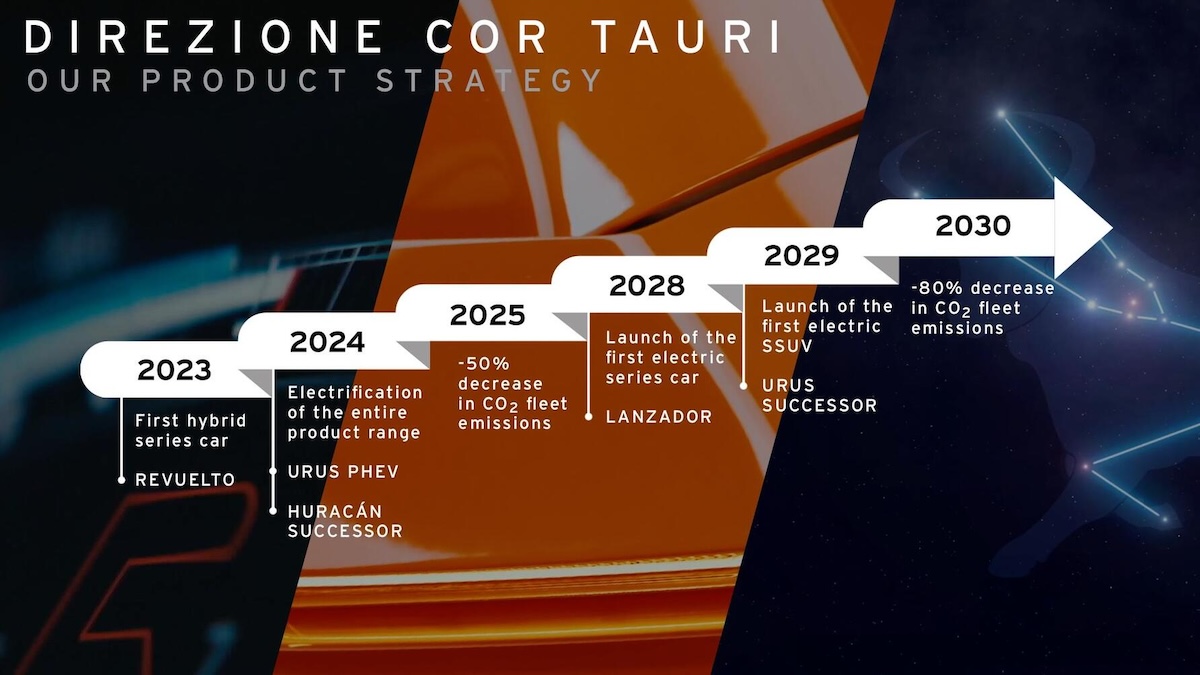
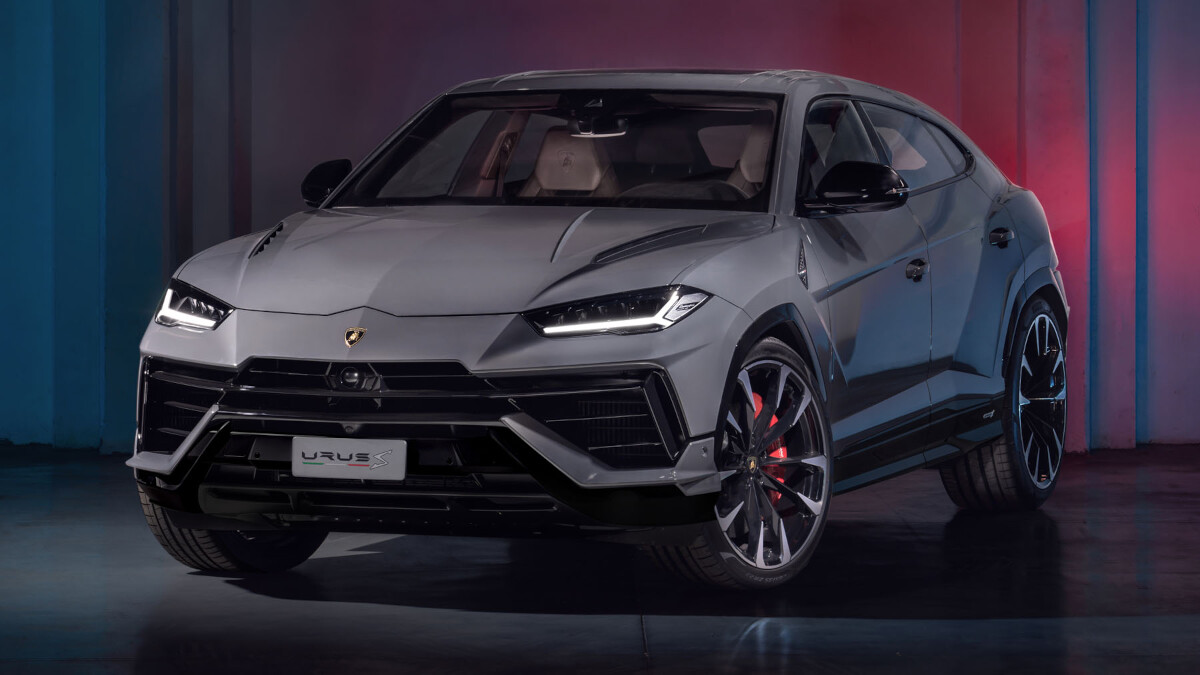
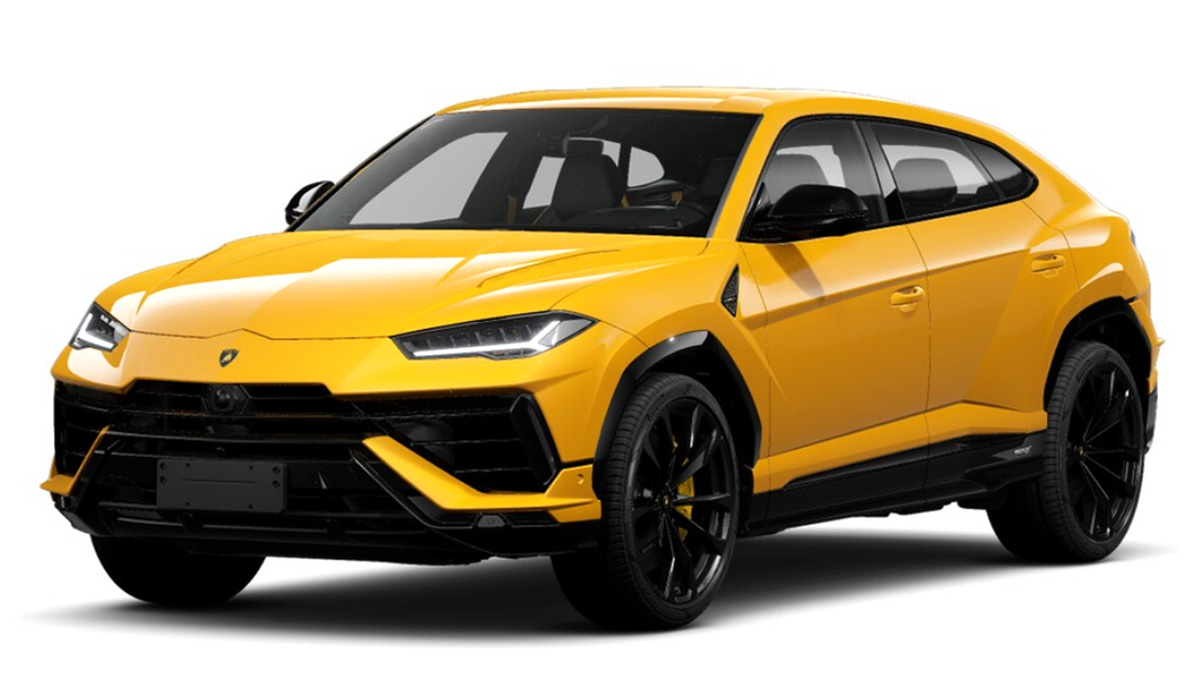
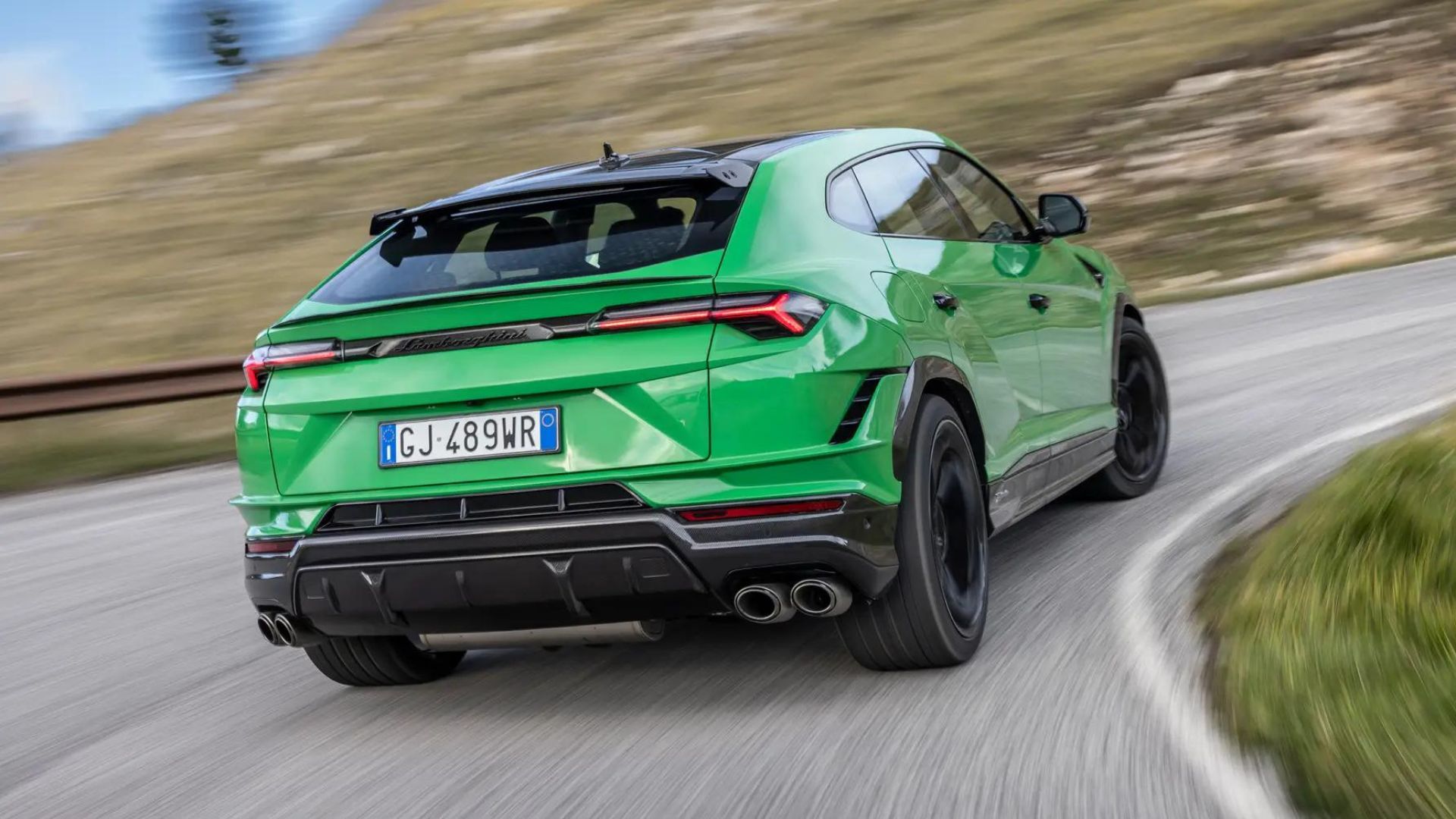
Following the (slightly) plug-in hybrid Revuelto hypercar of last year, we’ll shortly see a plug-in hybrid Urus. This will doubtless have a bigger battery than the Revuelto, aimed at longer EV-only running and a big slash in fuel consumption and CO2 emissions. Also this year, the Huracan supercar’s successor will appear. That, too, is a plug-in hybrid, which means that by 2025, the plug-in elements of these three cars will halve the fleet average CO2 emissions from 2021’s level.
OTHER STORIES YOU MIGHT HAVE MISSED:
The new Ranger MS-RT is Ford’s ‘ultimate street truck’
Toyota GR86 to get a four-door version?
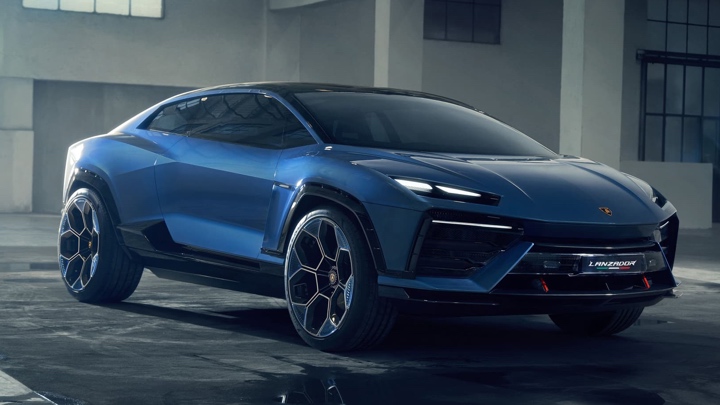
In 2028, the fully-electric Lanzador will launch. That’s Lamborghini’s slightly tall four-seater. Its design mixes samples of crossover, supercar, and 2+2 coupe. The look of last year’s concept car—not to mention its spec list of twin-motor power, four-wheel drive, air suspension, and active aero—got us properly excited. And as concept cars go, it’s not a million miles from reality.
Once the Lanzador has landed, Lamborghini will for the first time have a four-model range, where none are just limited-edition versions of another. (Or was there a year in the late ’70s when they made the last of the Uraccos and the first of the Silhouettes, plus the Countach and the Espada? Hard to tell—the place was such a shambles then.)
Moving on...in 2029, after 12 years in production, the Urus gets replaced. That, too, will be all-electric.
Adding electrification to any Lamborghini will make it faster, CEO Stefan Winkelmann has told me: “There is one prerequisite. Customers all want the new cars to be more performing than the current ones. We have to keep that promise. Performance in multiple ways.”
Electrification means that for 2030 versus 2021, driving emissions will be down by 80%. That’s WLTP numbers, which assume the grid is zero-carbon (it will be close by then) and that you plug in your PHEV frequently. Plenty of scope for asterisks and disclaimers here, then.
A little more math now. For almost any car, the lifetime emissions from driving is many times more than the emissions from manufacture. At least five times for EVs, and around eight times for internal-combustion-powered cars. So that’s the important bit to cut. Even so, manufacturing CO2 does matter. Indeed, for a car that’s never driven at all, it’s the entirety of the car’s lifetime CO2. So, I asked Lamborghini what lifetime mileage they are assuming for the ‘40% cut by 2030’ calculation.
It’s not the standard 125,000 miles (roughly 201,170km) that the wider VW Group uses in life-cycle calculations, but about 90,000 miles (almost 145,000km). In other words, for Lamborghini, manufacturing emissions make up a larger portion of lifetime emissions than they do for a normal car.
Which is why full-lifetime emissions are projected to fall by only 40% while driving emissions are projected to fall by 80%. What’s happening in this sum is that in the switch to battery cars, manufacturing emissions will rise.
This is the same for all manufacturers, but where cars use big batteries and are driven little over their lifetime, a cut of more than 40% is hard to achieve. Smaller batteries and longer lifetime mileages enable bigger proportional cuts.
Lamborghini thinks it’s important to cut its footprint, even when and where it’s not being forced to by law. Winkelmann said that public opinion matters: “Our customers know what type of world we are living in. They need to get a thumbs-up when they drive by. It’s even more important what the non-buyers are saying than what the buyers are saying.”
NOTE: This article first appeared on TopGear.com. Minor edits have been made.