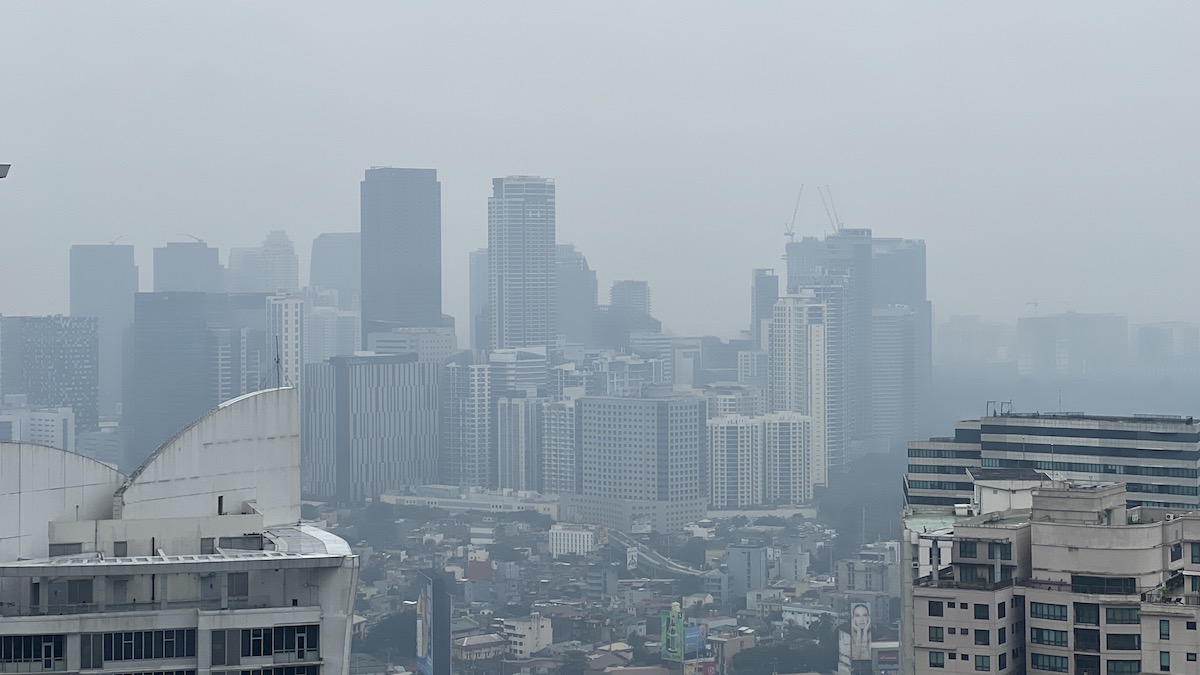
This morning, you may have seen a number of warnings and advisories from the Metropolitan Manila Development Authority (MMDA) and various local government units following the observation of volcanic smog or vog over Taal Volcano. This has led to class suspensions in some cities within the capital region.
But the Philippine Institute of Volcanology and Seismology (Phivolcs) says that the gray skies blanketing parts of Metro Manila are not related to Taal vog, and the Environmental Management Bureau of the Department of Energy and Natural Resources (DENR-EMB) says that something else is causing the phenomenon.
OTHER STORIES YOU MIGHT HAVE MISSED:
Volcanic ash: What it does to you and your car, and how to stay safe on the road
Via Cosmo.ph: Here’s what to do when there’s a volcanic smog alert
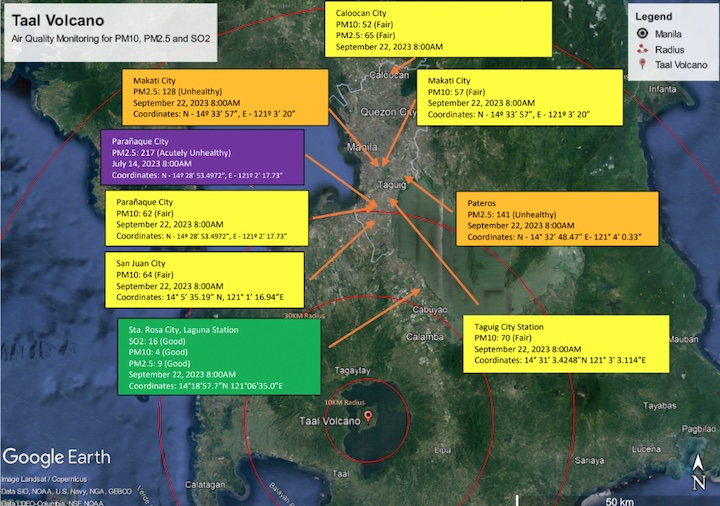
In its September 22 bulletin, the DENR-EMB noted an uptick in particulate matter (PM) levels in some parts of Metro Manila. Air quality measurements show an increase in PM 2.5 (2.5 micrometers or smaller) in Makati City, Pateros, and especially Parañaque City, where it has reached “acutely unhealthy” levels.
“Sources of PM emissions are from mobile (transport), area, and stationary sources,” according to the bulletin. “However, this occurrence may primarily be attributed to emissions from heavy vehicular traffic especially during rush hour (7-9am and 4-7pm).”
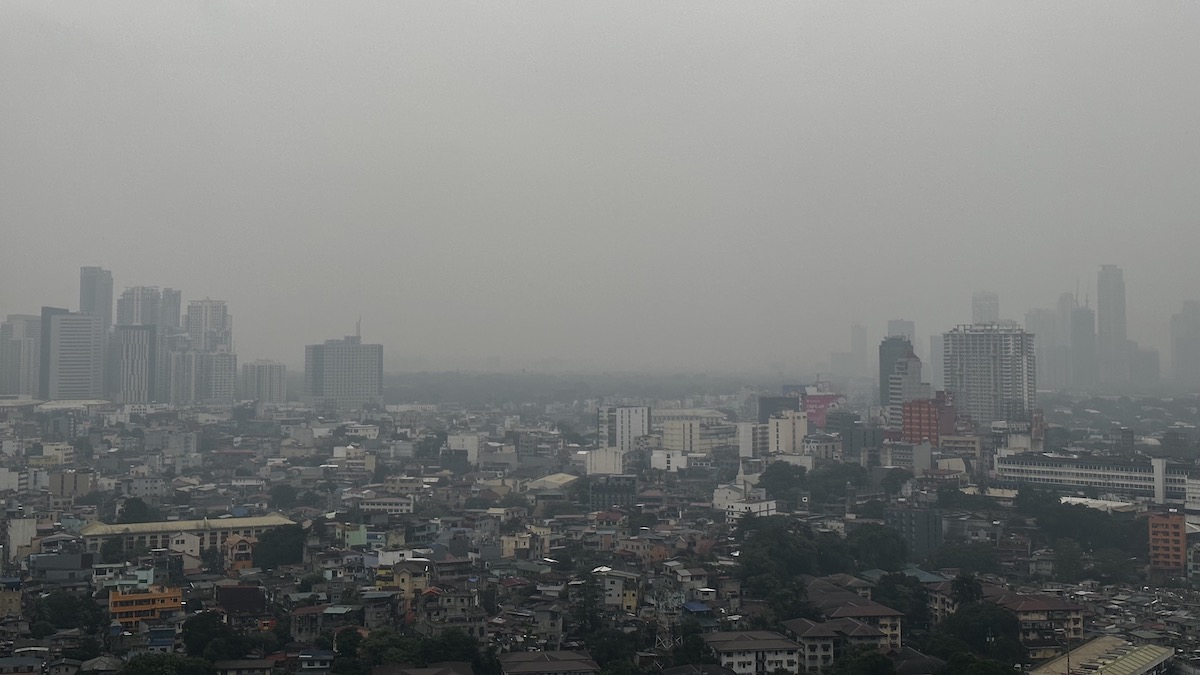
The Philippine Atmospheric, Geophysical, and Astronomical Services Administration (PAGASA), meanwhile, attributed the phenomenon to thermal inversion.
“The meteorological conditions this morning (NCR, Calabarzon, and some parts of Central Luzon) is conducive for haze or smog formation,” the agency said. “This occurs when very small particles get trapped close to the surface due to the presence of a thermal inversion, high humidity, and calm wind conditions. These floating minute particles in the air could be from smoke, pollutants, or volcanic aerosols.
“Thermal inversion occurs when layers of the atmosphere don’t mix, causing aerosols to get trapped.
“Usually, the inversion disappears later in the day as heat from the sun allows the mixing of the air, allowing the aerosols to disperse. However, cloudy conditions may reduce surface heating, allowing the haze to persist.”
Gray Metro Manila skies: Vog, fog, smog, or haze?
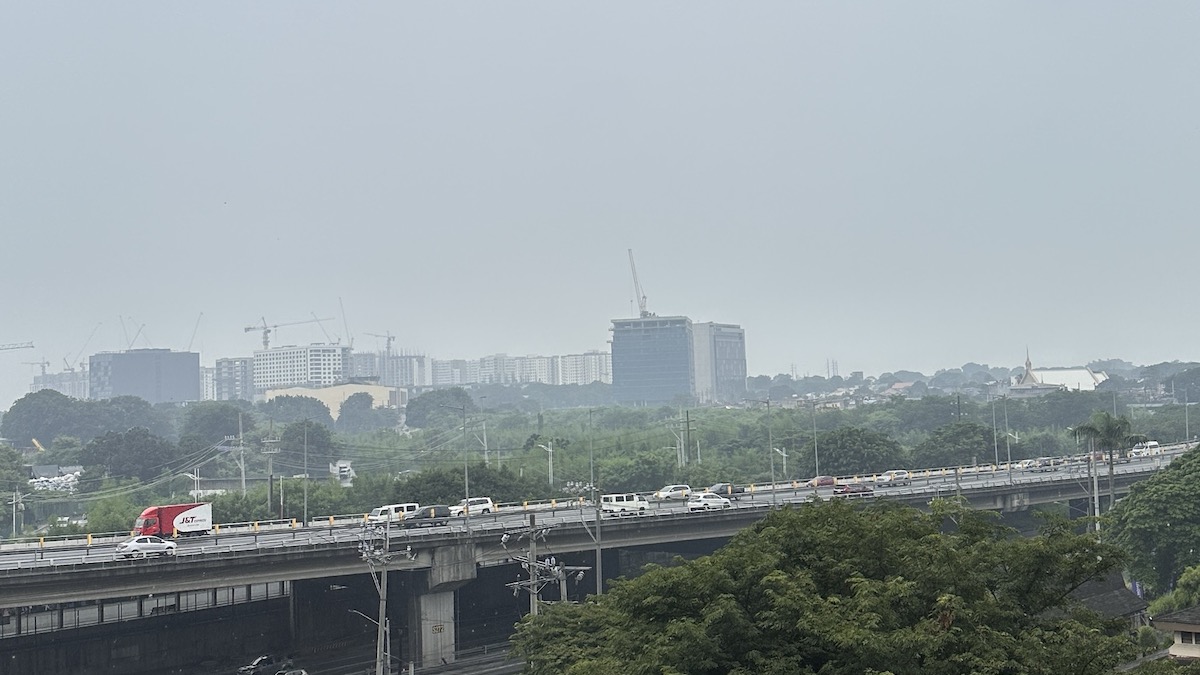
Neither agency has identified exactly what this meteorological occurrence is, and PAGASA’s statement included the terms ‘haze,’ ‘smog,’ and ‘volcanic aerosols.’
Certainly, this is not fog, which is formed when water vapor condenses and creates tiny water droplets that become suspended in the air. It’s much denser than mist and can severely hamper visibility. Vog or volcanic smog, meanwhile, contains aerosoles and volcanic gases like sulfur dioxide.
Haze occurs when air pollutants interact with sunlight, absorbing or scattering the light and affecting the color and clarity of the environment as seen by the naked eye. Finally, smog is particulate matter and ground-level ozone, which is formed when carbon-containing compounds react with nitrogen oxides.
A couple of weeks ago, PAGASA said haze was the cause of gray Metro Manila skies that road users were posting about on social media. That same week, the MMDA reported that 193 vehicles failed its roadside emissions test in August, out of a total 314 vehicles tested. That’s a failure rate of 61%.
Given the worsening traffic congestion lately, it’s plain to see that increased vehicular emissions is the main culprit for the heavily polluted air we’re breathing. If, based on the MMDA’s roadside emissions testing, more than half of those vehicles sitting in gridlock are emitting more fumes than they ought to, then we can expect these gloomy conditions to persist long after