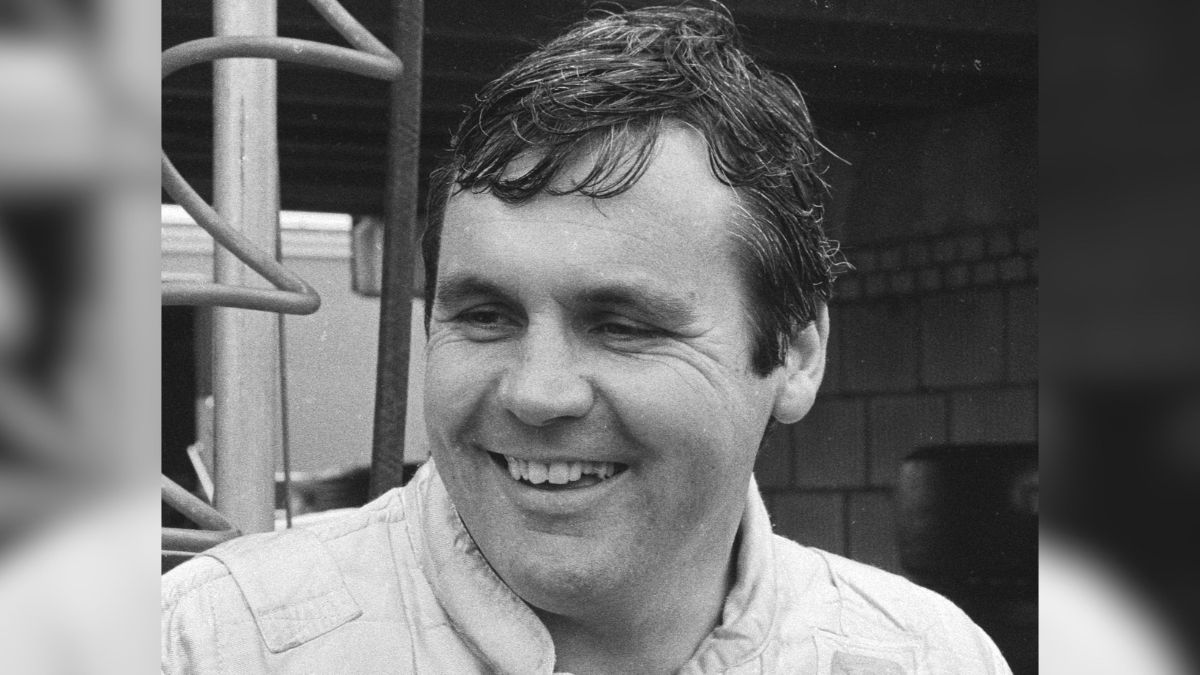
The Formula 1 drivers’ championship is not an easy thing to win. Since modern F1 began in 1950, only 36 different individuals have achieved it. In 1980, it was Alan Jones who took the honors—the archetypal no-nonsense Australian who raced with the requisite skill, bravery, and attitude.
Jones was campaigning the Williams FW07B, the car that helped vault Frank Williams’ team to the top tier of F1. He was the first of Williams’ seven world champion drivers and won five races in his title-winning year, scoring a further three podium finishes.
This made Jones the first Australian to win the driver’s title since Jack Brabham in 1966, and he remains the last Aussie to have done so.
Jones, who died last week aged 80, had been battling cancer. “I am deeply saddened by the passing of Alan Jones, a true great of our sport and an extraordinary racer,” said Stefano Domenicali, Formula 1 president and CEO. “Alan was a formidable competitor, a natural leader and an icon who inspired generations of fans, particularly in his beloved Australia.”
Alan Jones was born in Melbourne on November 2, 1946. He inherited the racing bug from his father Stan, who was a highly successful amateur driver in Australia and New Zealand during the ’50s, having competed at the highest level in a Maserati 250F. Alan had his start in motorsports hill-climbing a Mini, but later moved to the UK to advance his career. Money was invariably tight, and in addition to taking part in local racing series, Jones and his first wife ran a boarding house in Ealing.
But he was soon working his way up through the ranks of British F3 and Formula Atlantic, before making his F1 debut driving a Hesketh for Harry Stiller in the 1975 Spanish GP. It would be the first of 116 F1 races. When Rolf Stommelen was injured in that traumatic race, Jones was drafted in to replace him, racing for Graham Hill.
The following year he raced for another British F1 world champion, John Surtees, but he didn’t enjoy his time competing for either of these rather irascible characters. In 1977, he replaced Tom Pryce at the Shadow F1 team, following his unspeakable death in that year’s South African GP, and went on to win the Austrian GP and finish seventh in the championship.

OTHER STORIES YOU MIGHT HAVE MISSED:
Auto Salon 2026: BanaweBoy’s ‘Pizza Planet’ Hilux takes us back to simpler times
BYD Cars PH adds a second variant to the Sealion 6 DM-i lineup; prices start at P1.548-M
Jones was now on the racing world’s radar. He had the F1 equivalent of a royal appointment with Enzo Ferrari in 1977, but the Old Man elected to sign Gilles Villeneuve instead. That led to one of the great associations in motorsport history, but it also left the Australian free to sign with the Williams F1 team, thus creating one of the other defining driver-team partnerships of the era. Williams and his technical director Patrick Head were a tough double act—the very definition of old school.
Jones finished 11th in the 1978 season for Williams, although it’s worth noting that he was also racing for the Haas-Hall team in the North American Can-Am series that same year—and won it. The advent of the highly competitive ground-effect Williams FW07 saw him take four wins in 1979 and a third-place finish in the F1 championship. In 1980, the momentum continued: Jones won five races and scored podium finishes in all but one of the other nine rounds, edging his teammate Nelson Piquet to win the driver’s title.
He finished third in his title-defense year, eclipsed on this occasion by new teammate Carlos Reutemann, with both Williams drivers beaten by Piquet, now at Brabham. Jones won two races that year, both in the US: the season-ending round at Caesar’s Palace in Las Vegas would be his last, for he announced his retirement from F1.
In a 2012 interview, Jones noted that Ferrari had approached him about joining the team following the death of Gilles Villeneuve at Zolder in 1982. He was back in Australia by then and enjoying life, but given that Ferrari would go on to win the constructors’ title in 1983, his disinterest was likely something he later rued.
He did, however, make a one-off return for Arrows at the non-championship 1983 Long Beach GP. He qualified 12th but retired after 58 laps, suffering from fatigue. A comeback with the newly created Team Haas occurred in 1985, but the Lola THL1 didn’t debut until the Italian GP in September and was fearfully underpowered. Jones qualified the car in 25th place, 9.85sec off pole-sitter Ayrton Senna. The team ran out of money the following year, and Jones was out of F1 for good.
But he raced at Le Mans, kept his hand in racing successfully in touring cars, and finished third in the Bathurst 1000 in 1988. By then, he had also become a much-loved F1 pundit for Australia’s Channel Nine television, sometimes working alongside British GP bike racing world champion Barry Sheene. Big personalities, both, and an entertaining and forthright duo.
“AJ was a man’s man and he was great fun to be with,” Sir Frank Williams later noted. “He never needed propping up mentally because he was a very determined and bullish character. He didn’t need any babysitting or handholding, and that’s the way it should be. It shouldn’t be necessary for me to ask a driver if he is happy or he needs his underwear changed.”
Jones observed that “Frank is the best bloke I ever drove for, because he was such a great motivator. He could make you walk over broken glass.”
Says my friend Mark Hughes, perhaps the most astute F1 observer of them all, Jones was “strong like an ox, psychologically more airtight than anyone who’s ever climbed into a race car, and the most aggressive wheel-to-wheel racer who scared the living daylights out of rivals.”
Alan Jones was a tough competitor to the end. We send our condolences to his wife and family.
NOTE: This article first appeared on TopGear.com. Minor edits have been made.