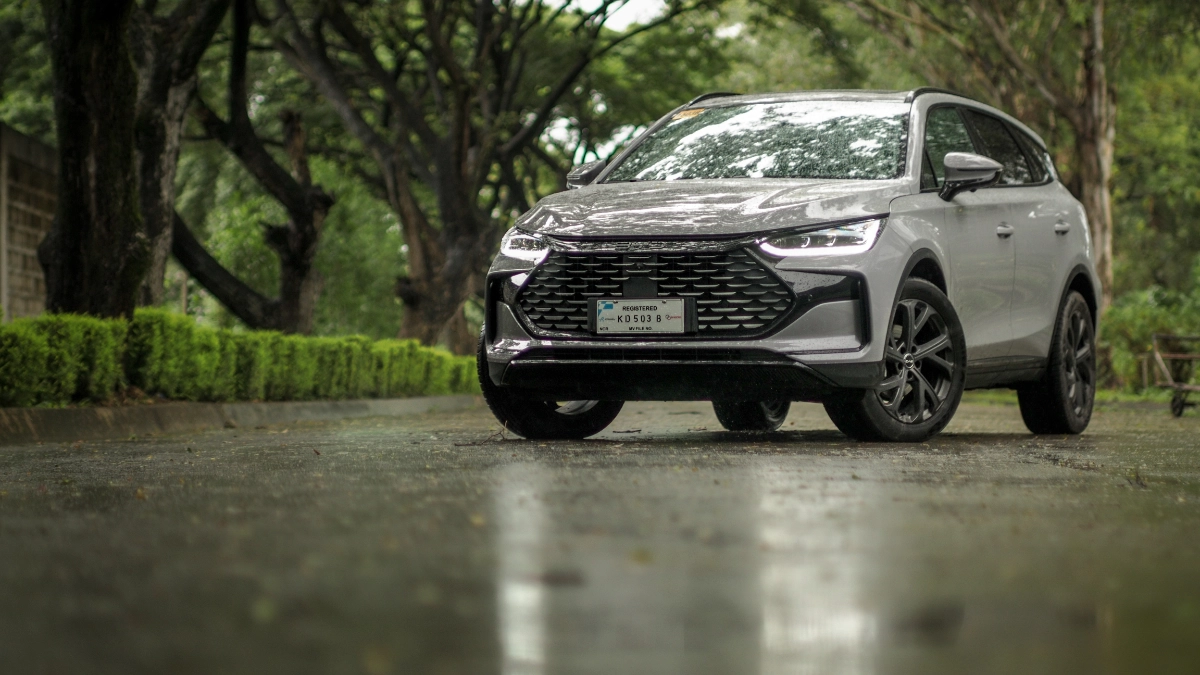

Since I last drove the original hybrid BYD Tang, we’ve had two presidents, a pandemic, a changing of the guard at BYD Philippines, and a virtual explosion of hybrid and electric vehicle sales in this country. Where that old Tang featured a Porsche Cayenne beating performance mated to middling design and a rather dated take on luxury, the new BYD has perfected the art of designing and building car interiors. There is nothing here that immediately screams “Chinese car!” Not the material selection, not the fit and finish, not the design choices. But has the Tang lost its soul? And does it still feel premium even in this relatively stripped-down single-motor front-wheel drive format?
Styling
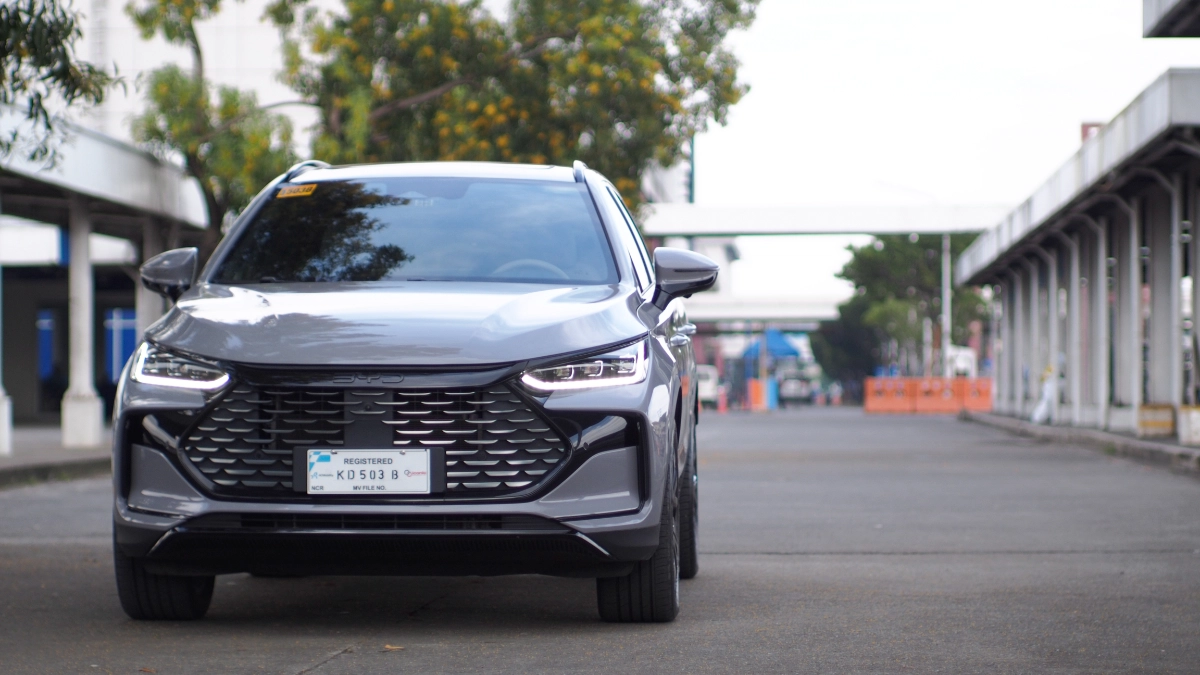
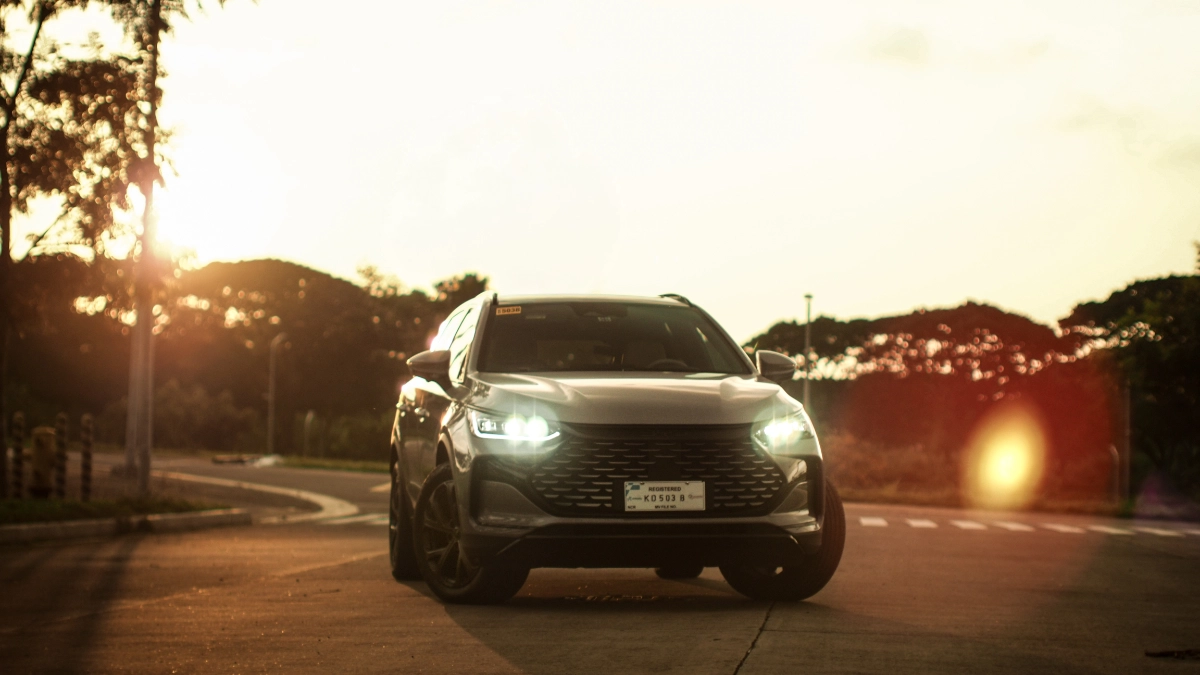
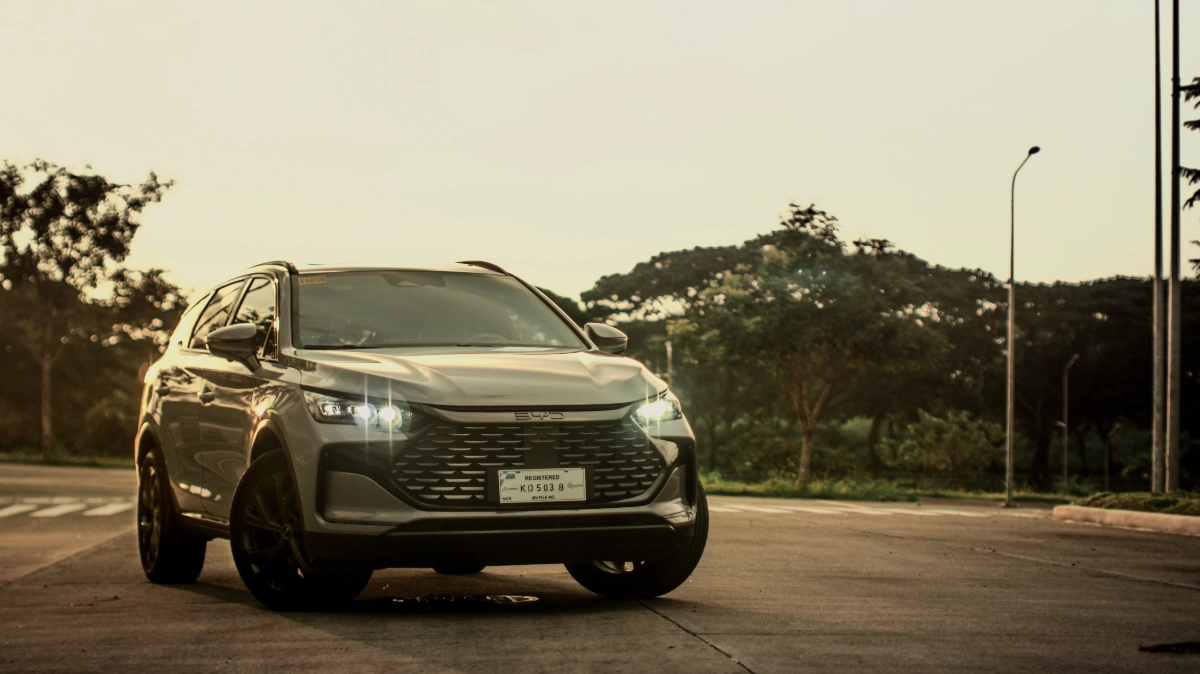
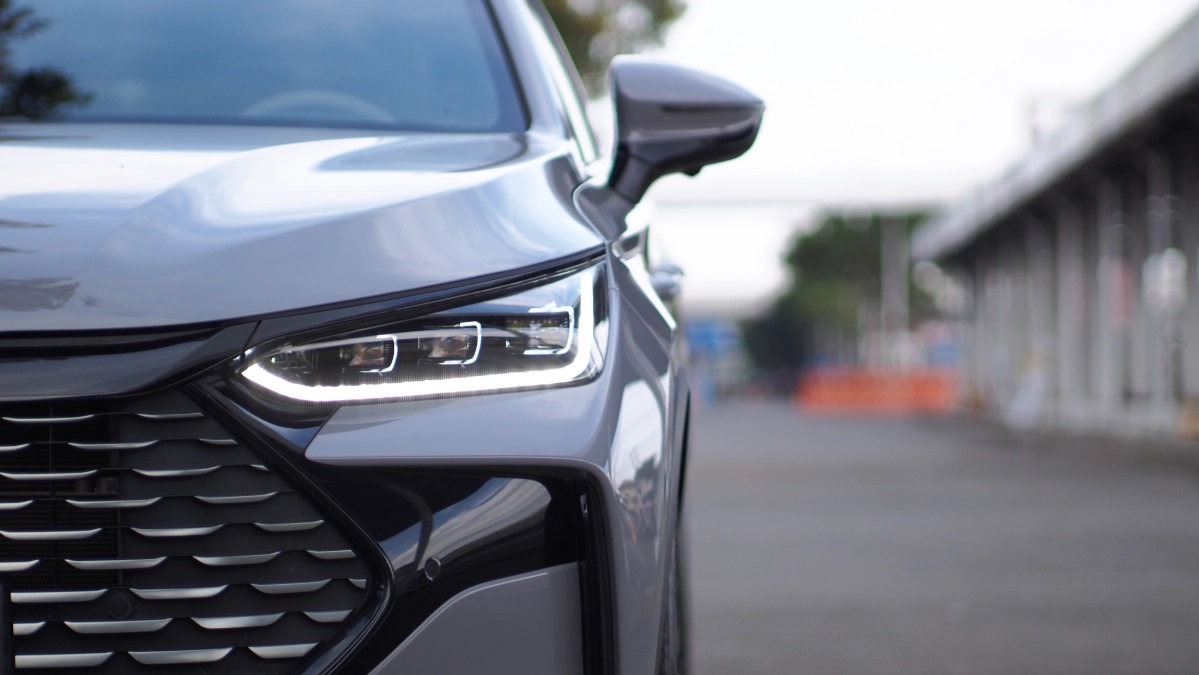
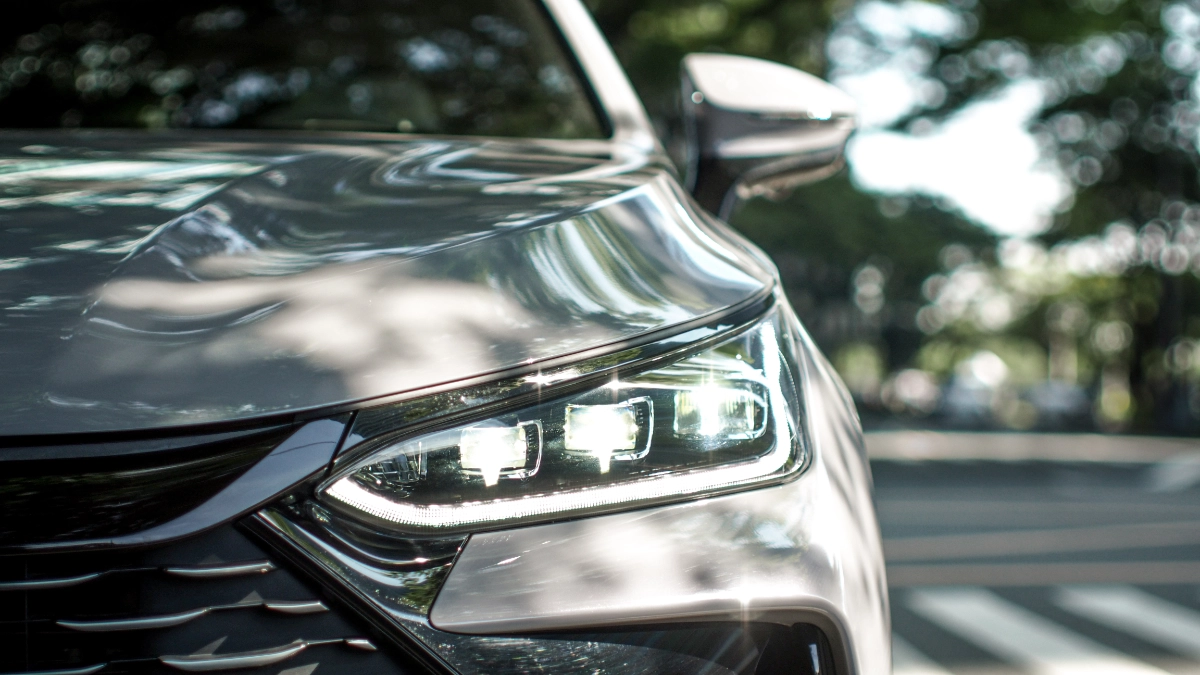
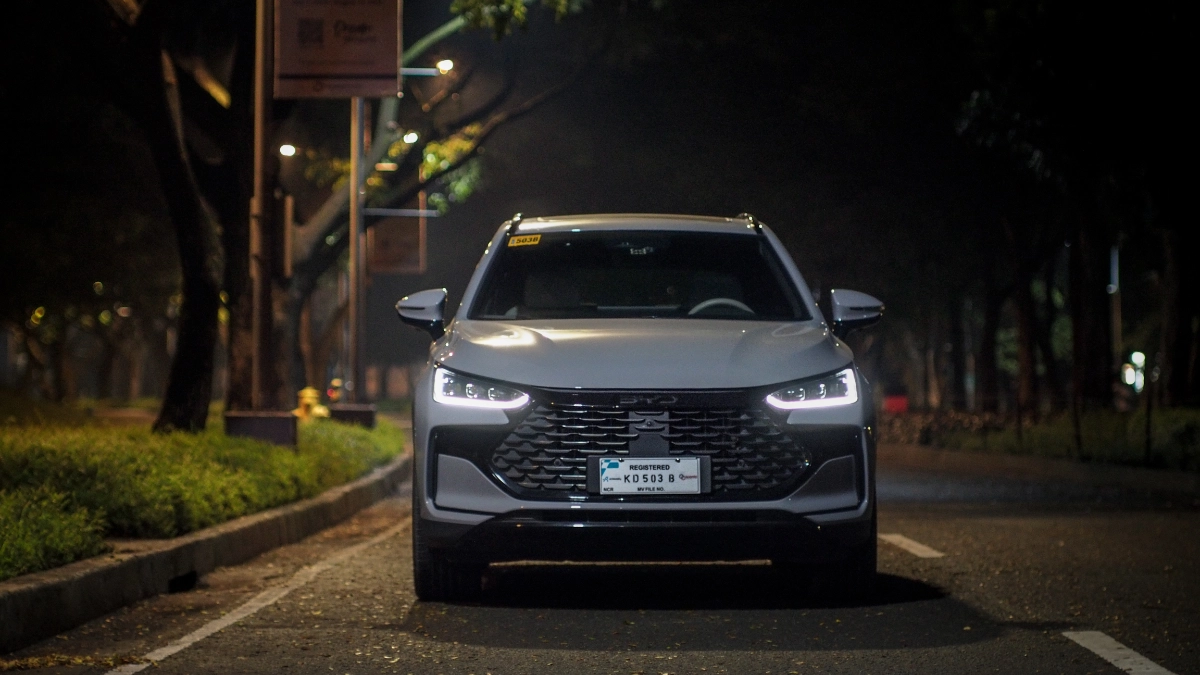
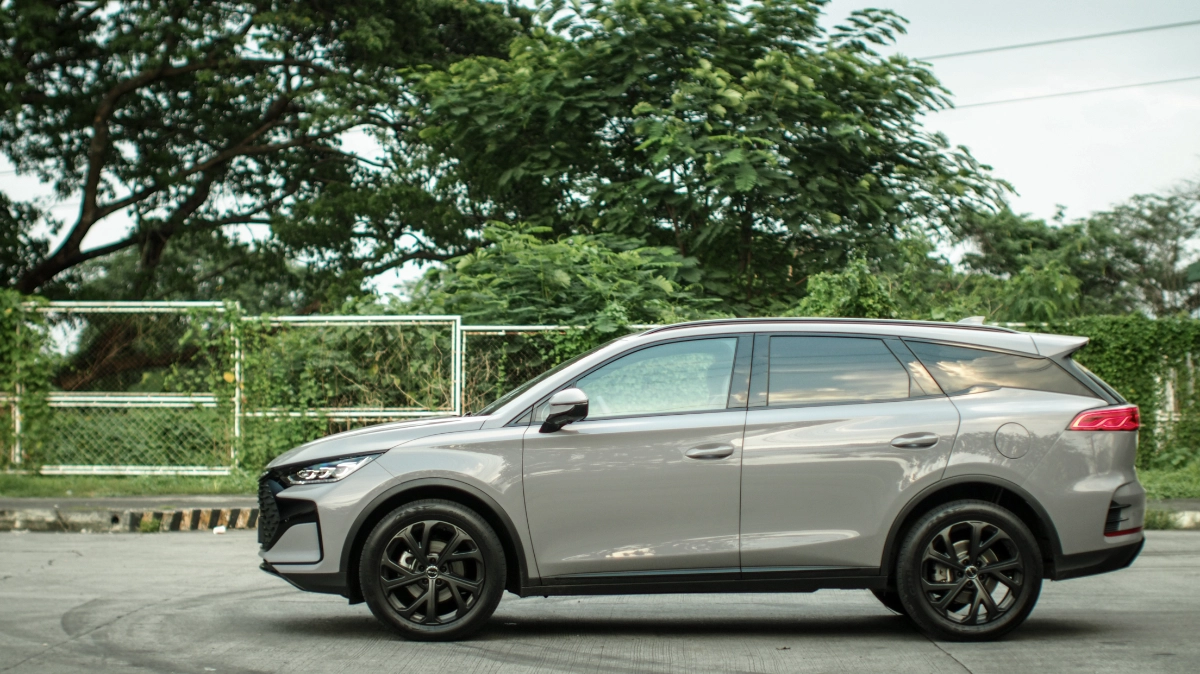
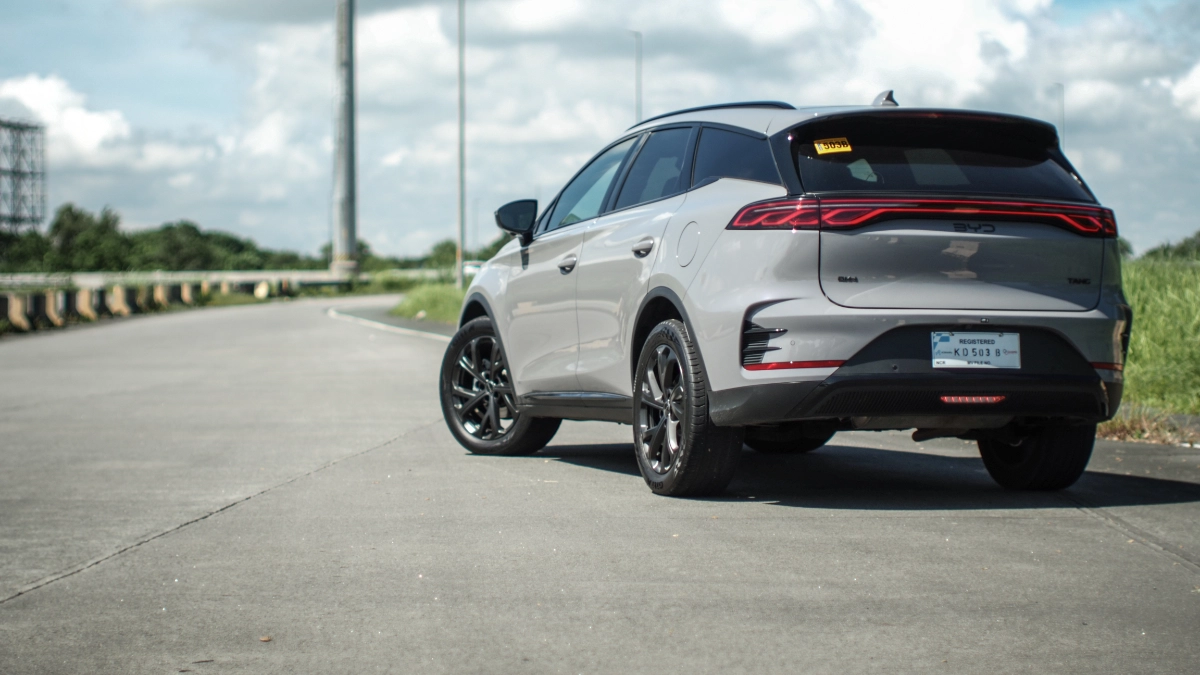
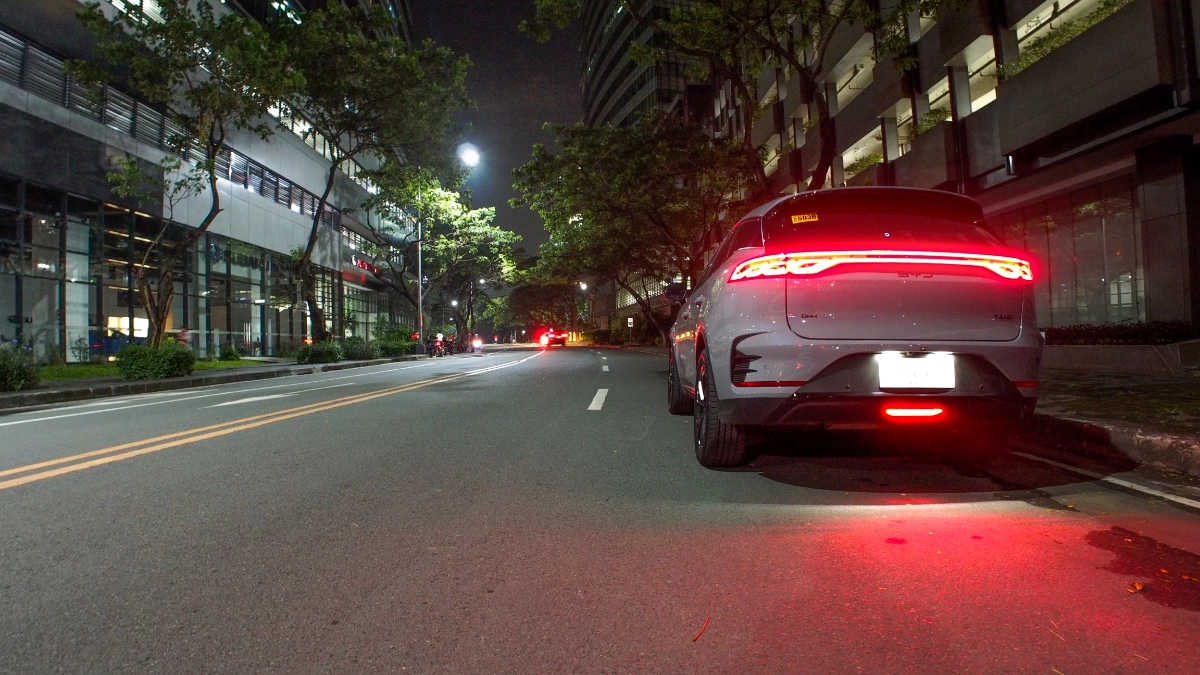
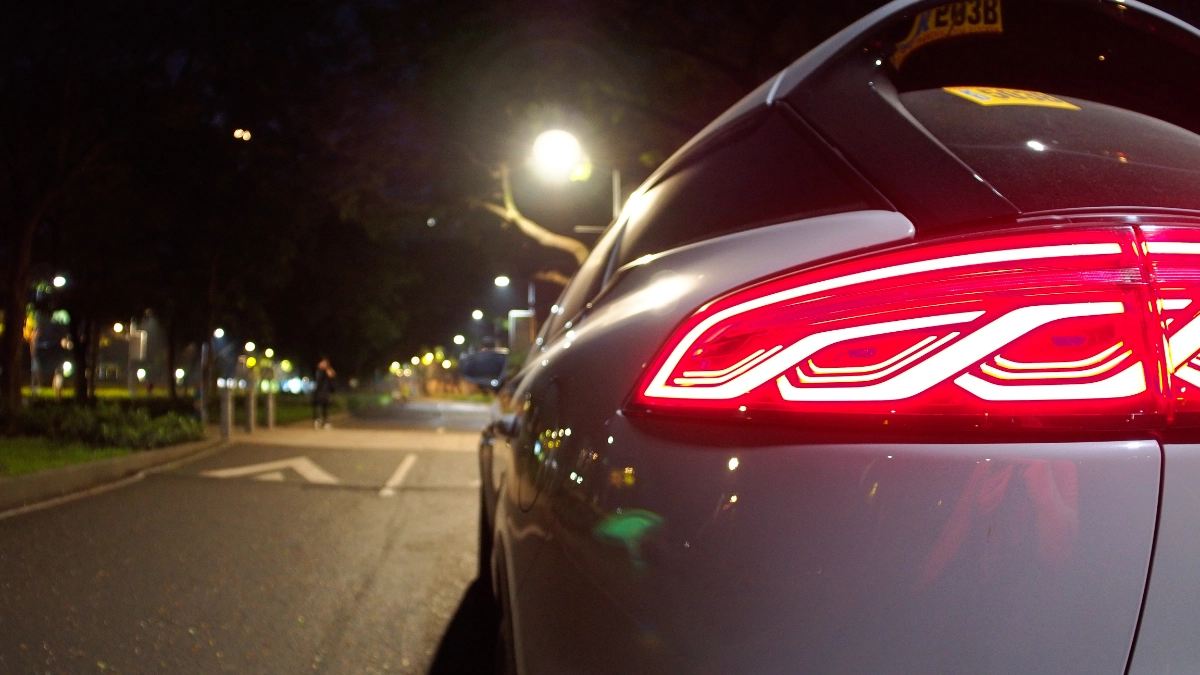
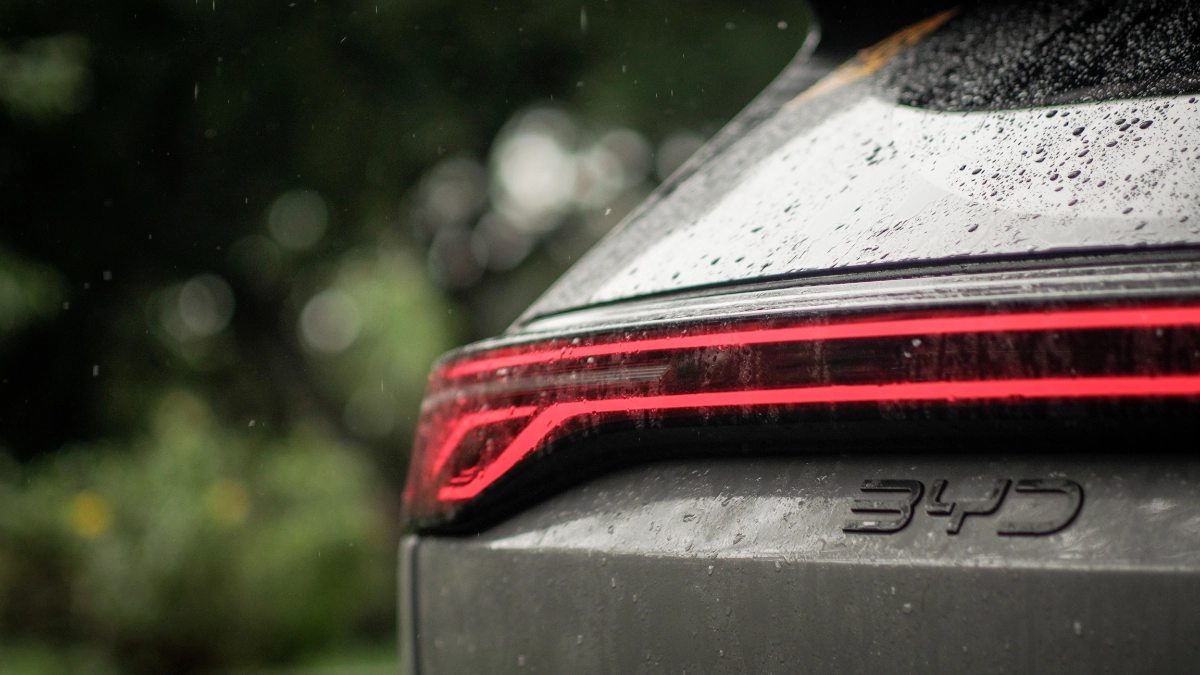
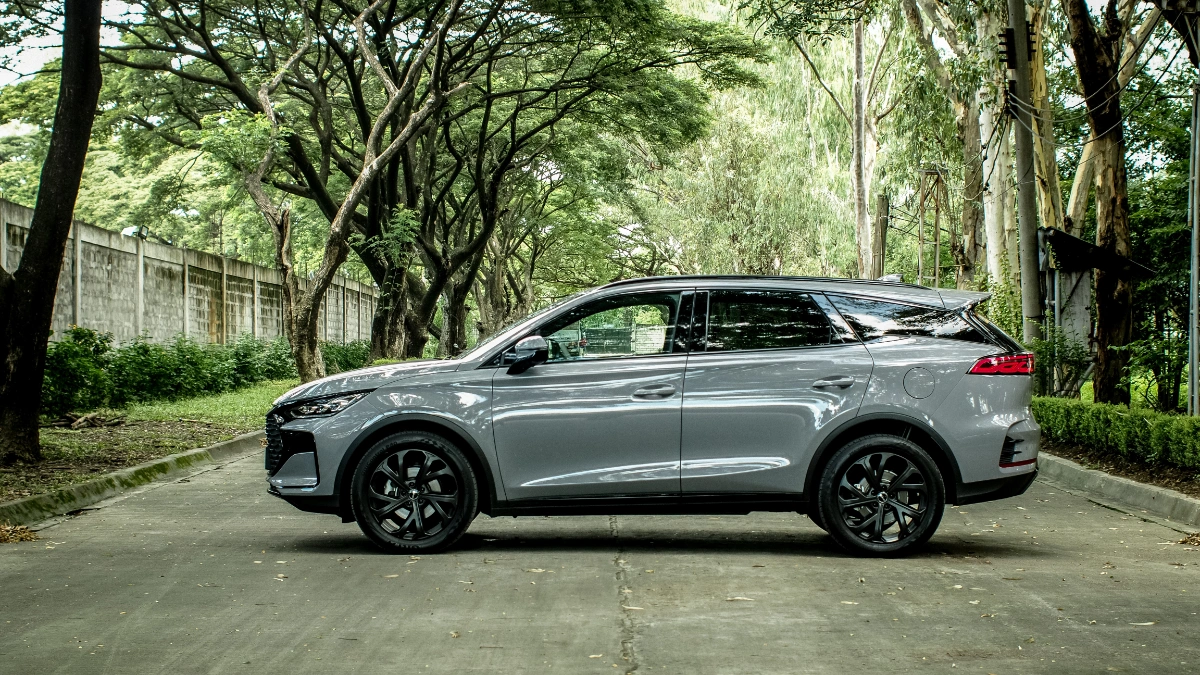
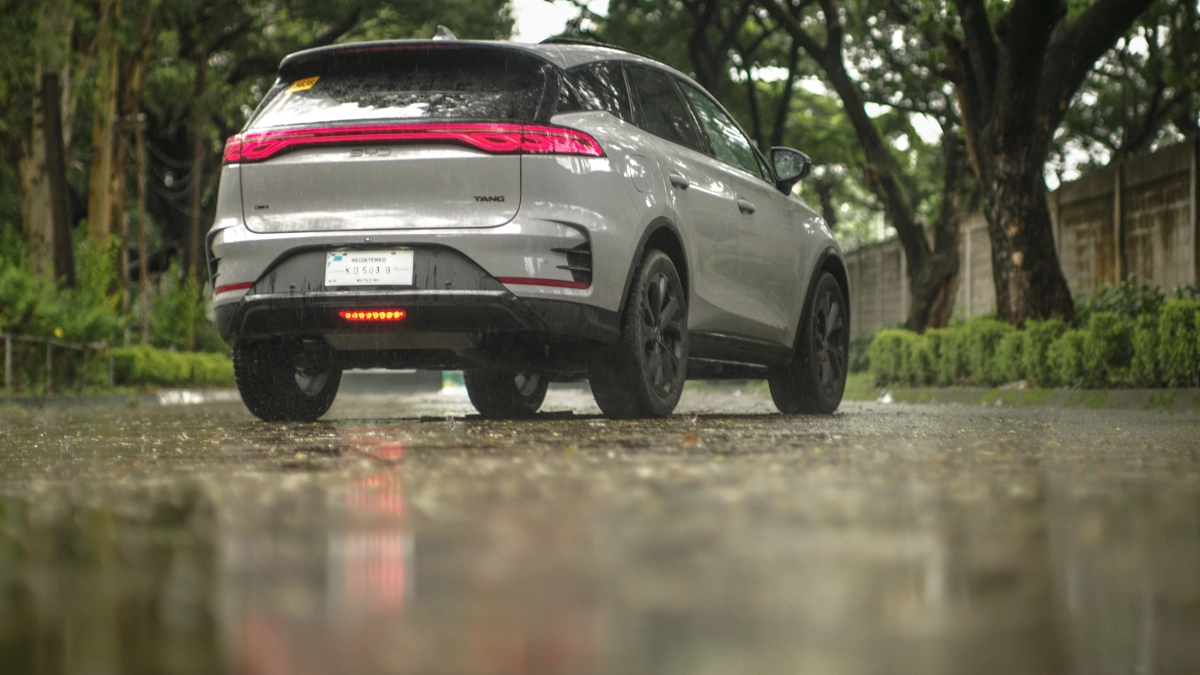
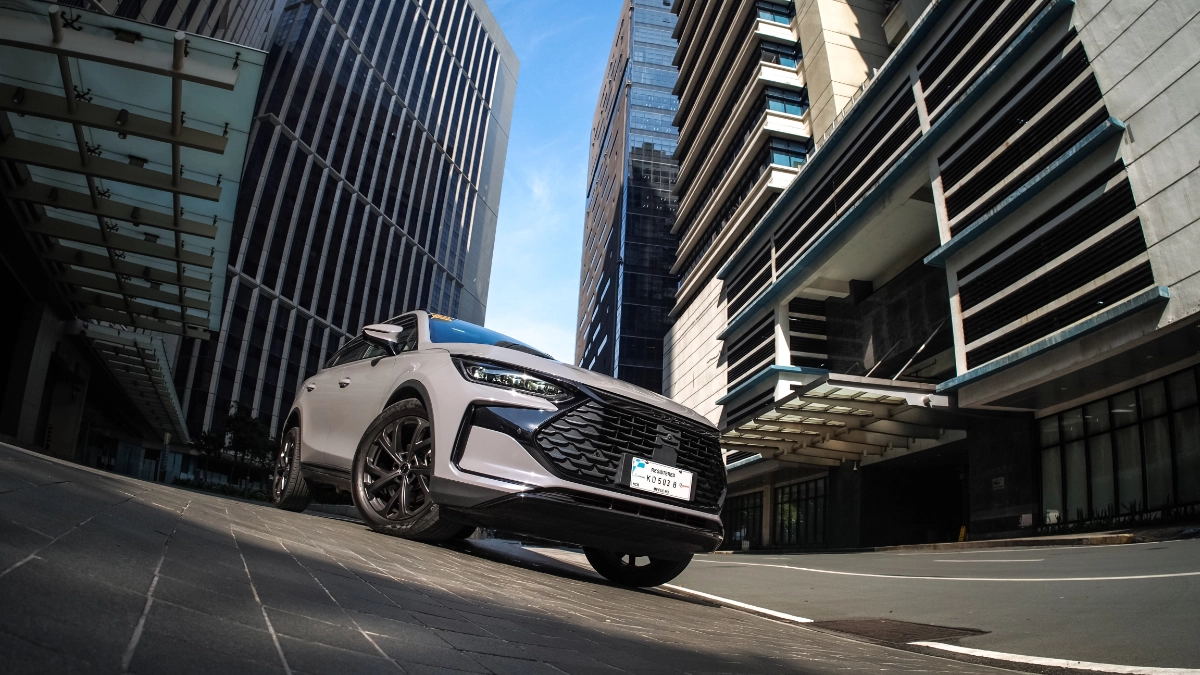
While BYD does have a distinct look, there’s no denying the smooth-faced Ocean design language is a bit too safe. Compared to the austere lines of the Ocean series and the Tang EV, the new Tang DM-i stands out with its sportier dragon-inspired styling. The flanks still feature the clean clinical lines of the more expensive EV variant, but the blacked-out trim and aggressive sporting grille give it the air of a completely different model.
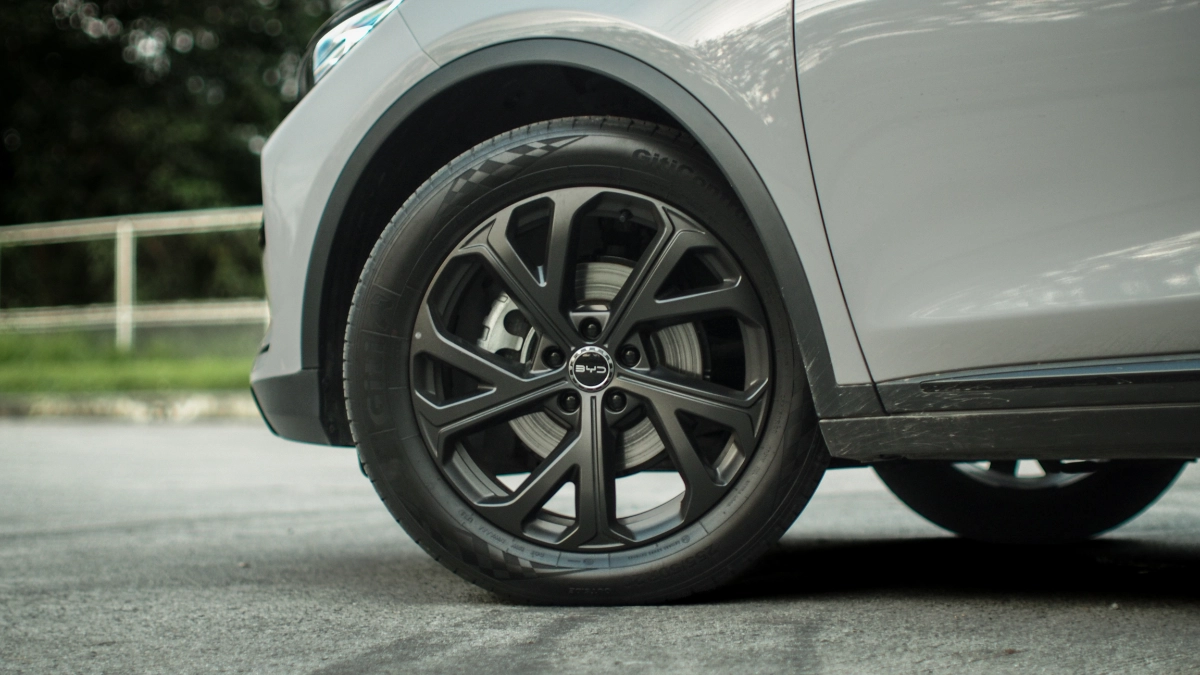
It’s certainly sportier looking than the EV, yes, but the dark trim and aggressive kit could use some color for definition. Piano black looks nice when clean, but it’s too easy to scuff up compared to flatter black surfacing. Maybe red pinstriping or a little chrome highlighting to make them pop more. As it is, it all blends together a bit too much—and seen against the wrong background—makes this big seven-seater look smaller than it really is. Take note, those asymmetric Y-spoke wheels are not 18s, they’re actually huge 20-inch alloys!
ALSO READ:
BYD could be working on an entry-level compact pickup truck
BYD’s Yangwang U9 sets the ’Ring record for production EVs
Interior
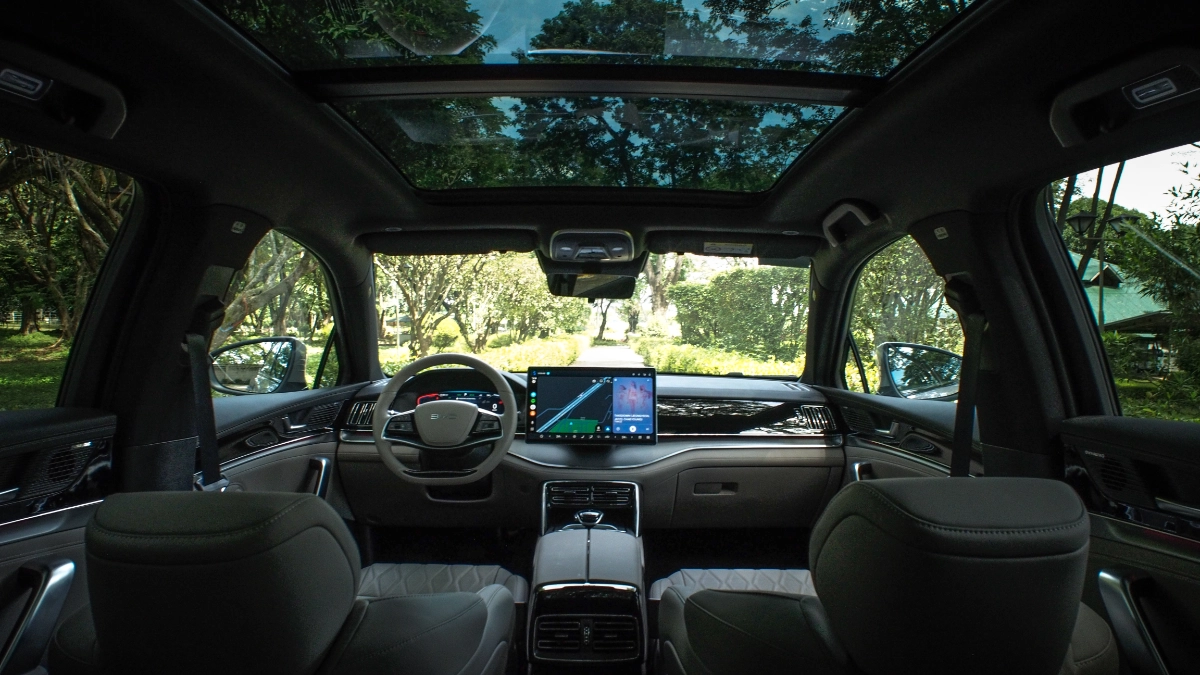
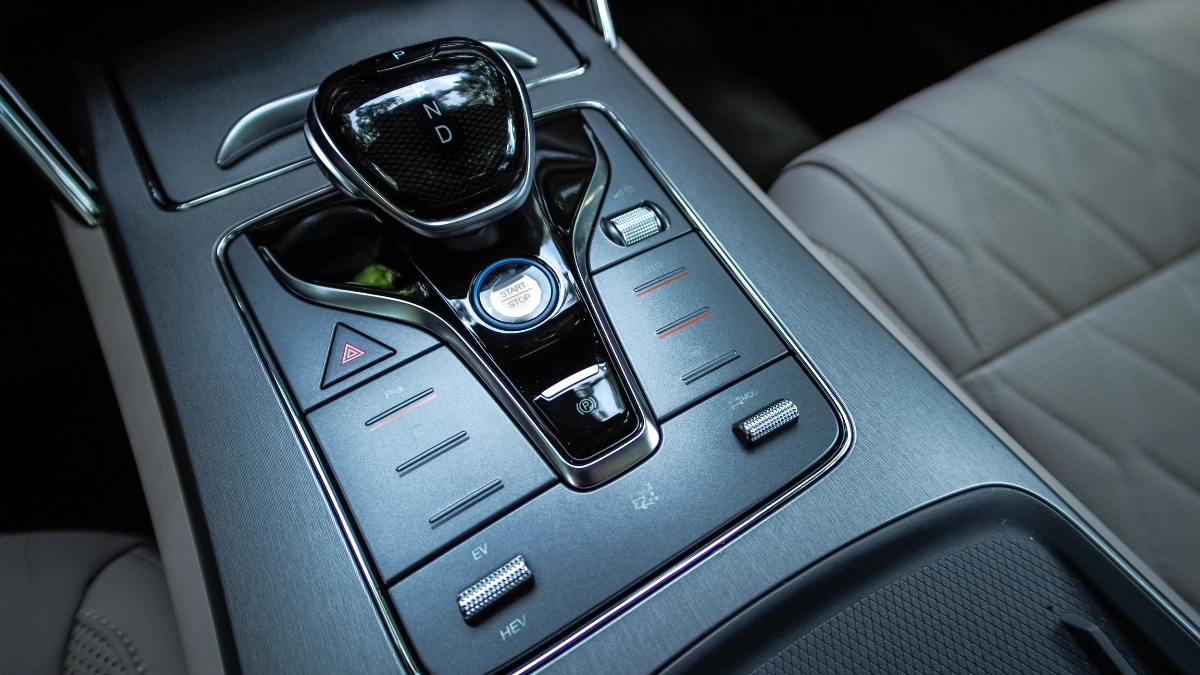
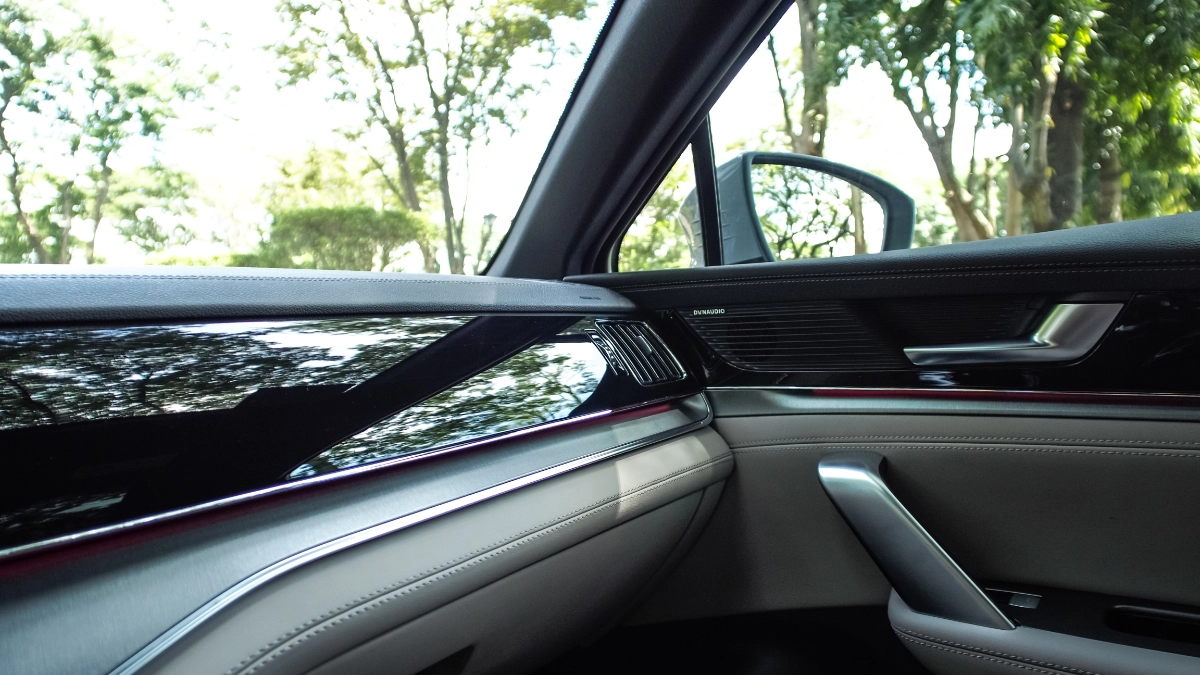
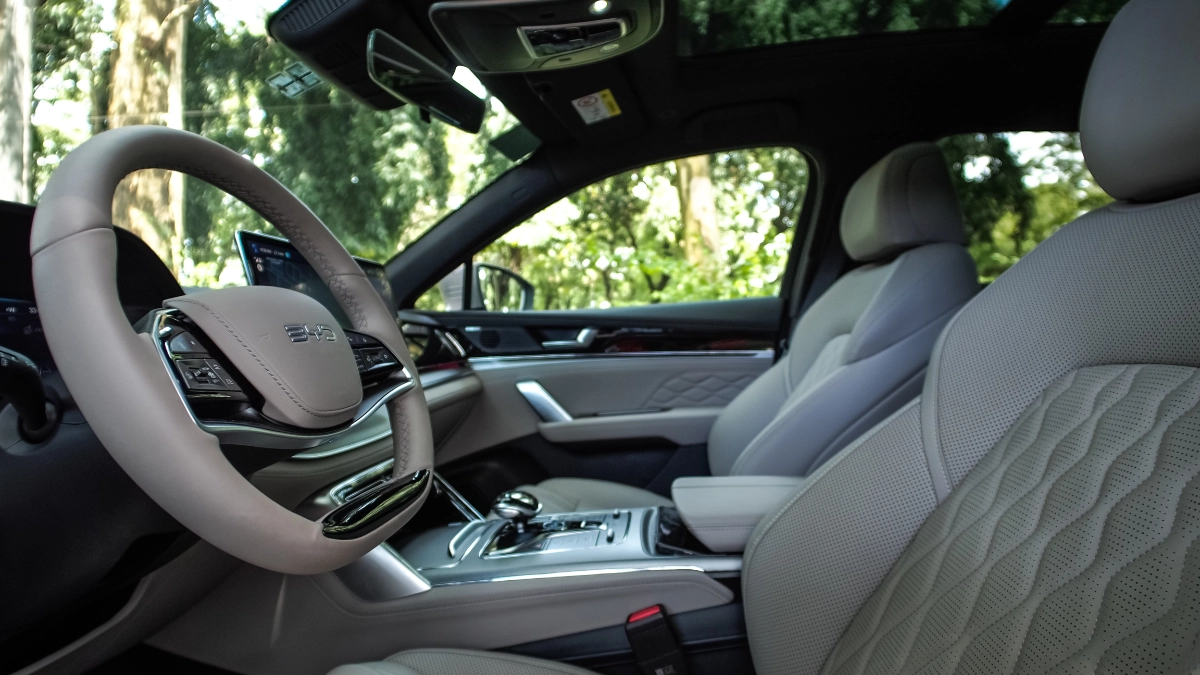
Make no mistake, this is a big crossover SUV. The cabin is wide and expansive, with the obligatory giant dual-pane sunroof letting in lots of light. Underneath, you find a well-designed cabin covered in a pleasing array of textures and surfacing, including brushed steel and chrome colored plastics. Granted, you still get some of that piano black plastic in here, but less of it than on the outside. The light colored stitched leather is a nice touch, but will definitely require regular cleaning. And with so much of it on the doors and wheel, you will want to be careful with any sharp-edged jewelry or watches! The dashboard still features the wave-like design cues of the Ocean series cars, feeling like an enlarged SeaLion 6 interior, down to the stacked louver air vents, but simplifies the touchpoints for a more upmarket feel. There’s less clutter—the front cupholders are hidden under a lid, and the cellphone pocket is tucked under the center armrest. All connectivity and charging points are hidden in the console box, which is relatively long and deep. The rear charging points are also covered by a lid to keep dirt out. Important, given they’re right on the floor.
The seats are wide and comfortable, and the front buckets provide good side bolstering—a necessity given the power on tap here. Perhaps the only ergonomic complaint I can lodge against this car is the lack of adjustable lumbar support. I guess there are no overweight
Chinese drivers? Still, they’re comfortable on long trips, and you get both heating and cooling in the front row.
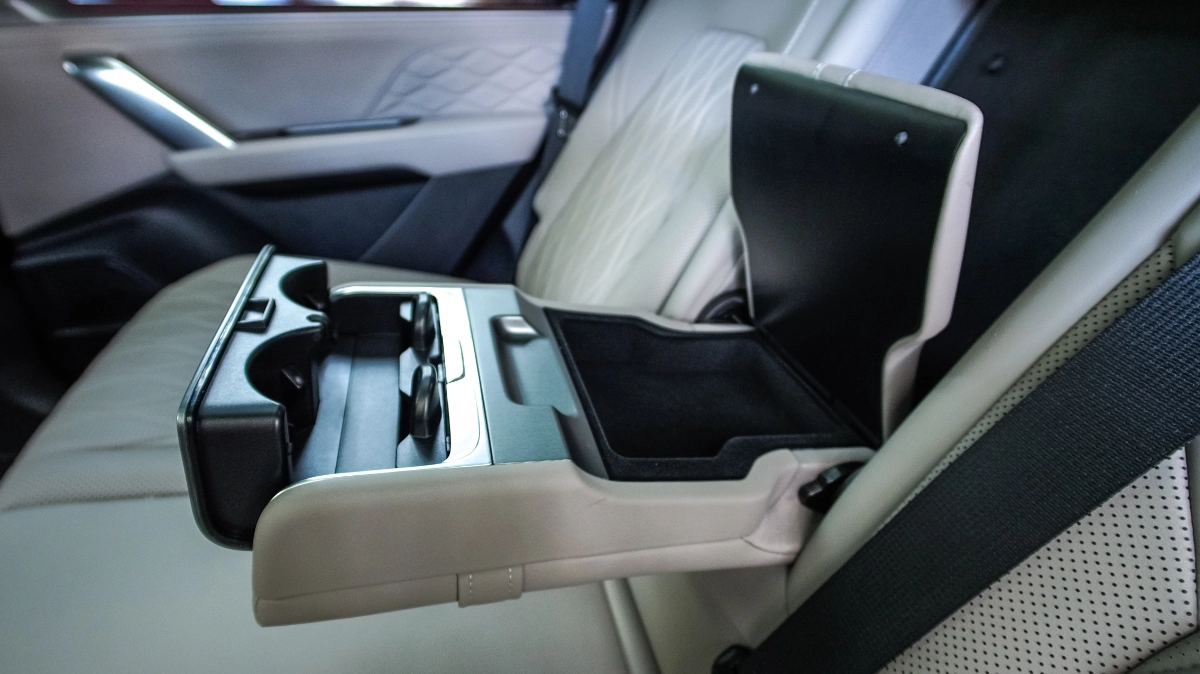
The second row features AC vents and charging ports. Again, those ports are right on the floor. Thankfully, the AC vents are not. There’s a wide fold-down center armrest featuring flip-out cupholders and a lidded bin perfect for hiding—and forgetting—stray keys, cellphones, and wallets. The seats are firm but reasonably pliant, have a good amount of recline, and slide back and forth a considerable amount. You will need to slide them forward a lot in order to access the third row.
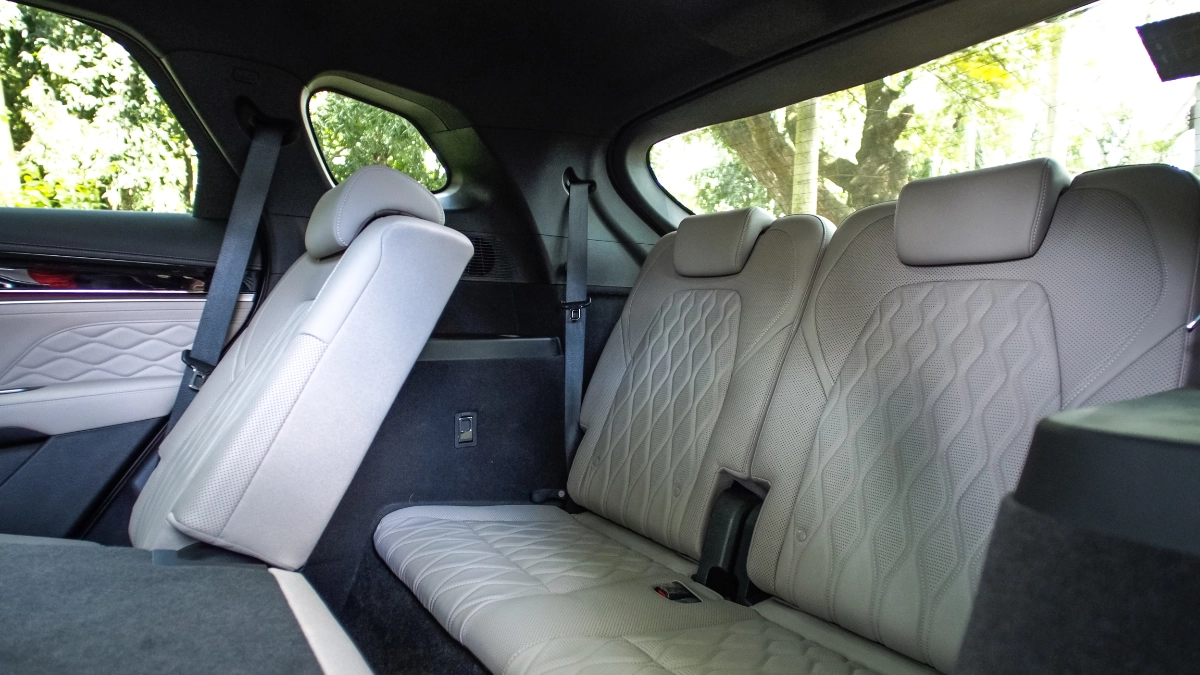
The third row has well-shaped seats, with good headroom, but legroom is tight until you slide the second row forward. The cladding over the wheel wells is a bit too high to make good armrests. There’s enough space here to keep kids comfortable, but not enough to make them want to stay on prolonged trips. Also, there are no dedicated third-row AC vents, making it stuffy on hot days, unless the AC is cranked way up.
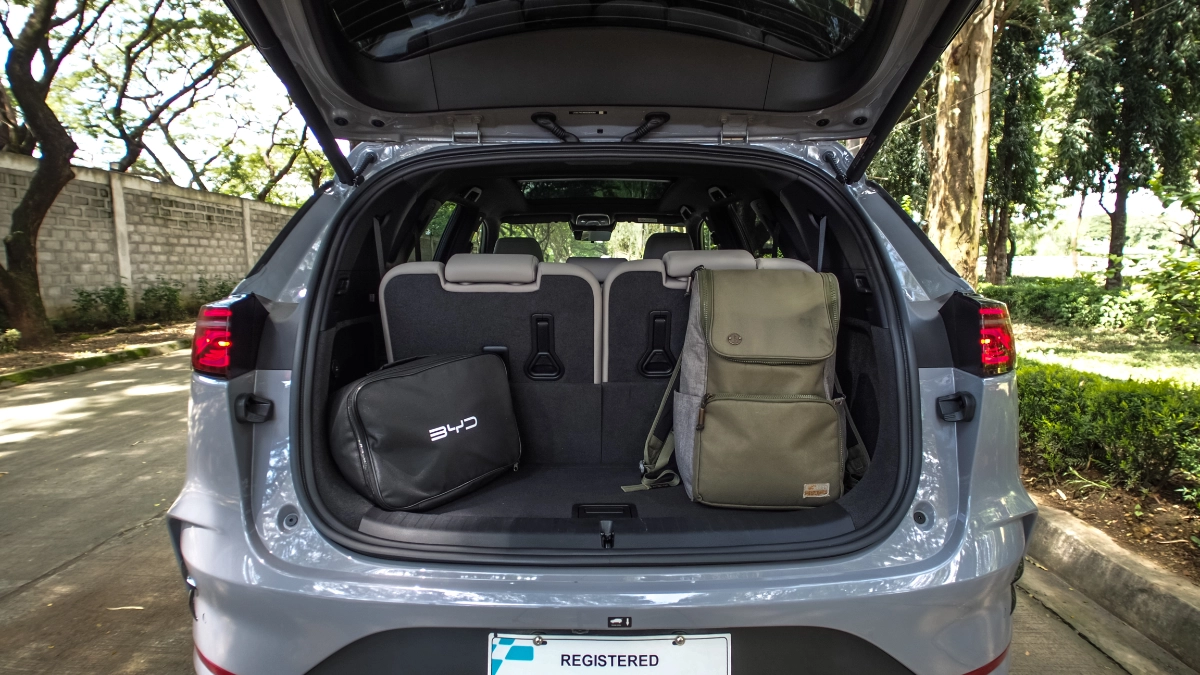
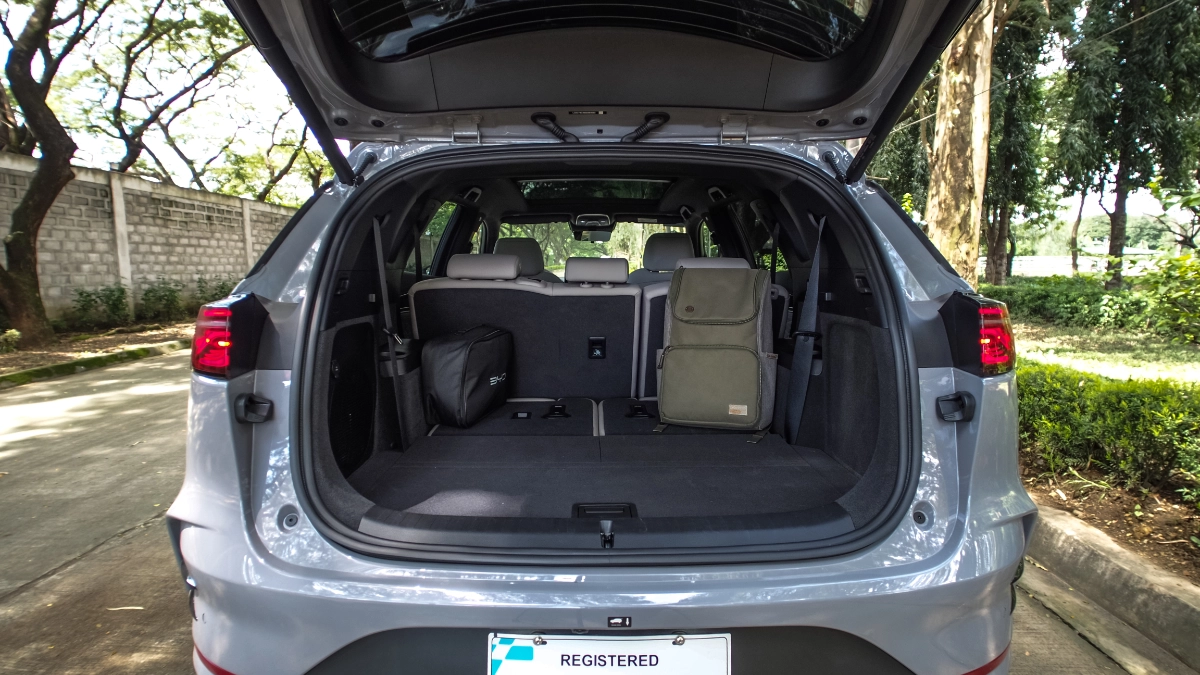
Underneath the automatic tailgate, you find 235 liters of cargo space. Enough for light groceries and soft overnight bags for four. Fold down the third row using pull handles magnetically latched to the seat backs, and you get a fairly impressive 940 liters. Expandable to 1,655 liters with the second row folded, but we doubt any owners will need to go that far.
Powertrain performance
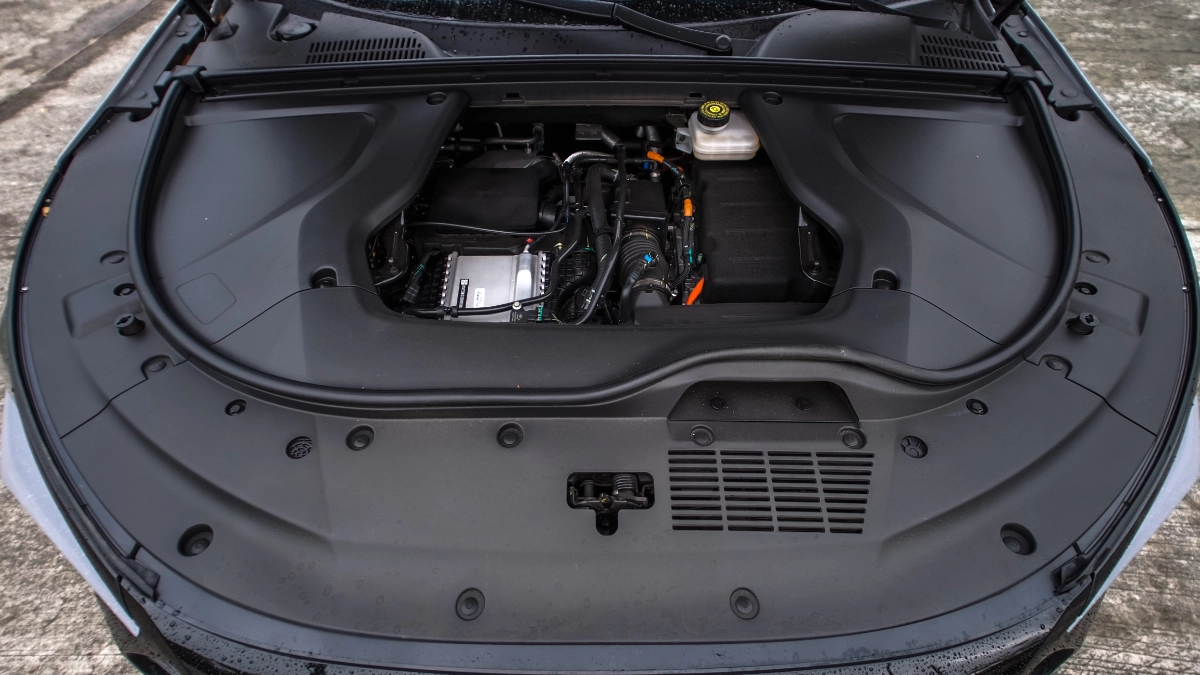
We doubt owners will ever use the Tang’s full power, either. The single electric motor delivers 267 hp to the front wheels only. Two driven wheels and 240hp less than the AWD variant, but still good for 0-100kph in a tested 6.9sec in Sport mode. Quicker than the conservative 7.5sec claimed. BYD gives you a cheeky race timer to check your times, but it is fairly optimistic compared to a professional GPS timer. At full send, the power tugs the nose back and forth over road imperfections, the traction control working overtime to reign in torque steer. As a bonus, the gasoline generator roars to life halfway down the dragstrip to supplement the power from the battery. Not really necessary, but it certainly adds to the experience. The AWD may be much quicker, but this is a fair bit more dramatic.
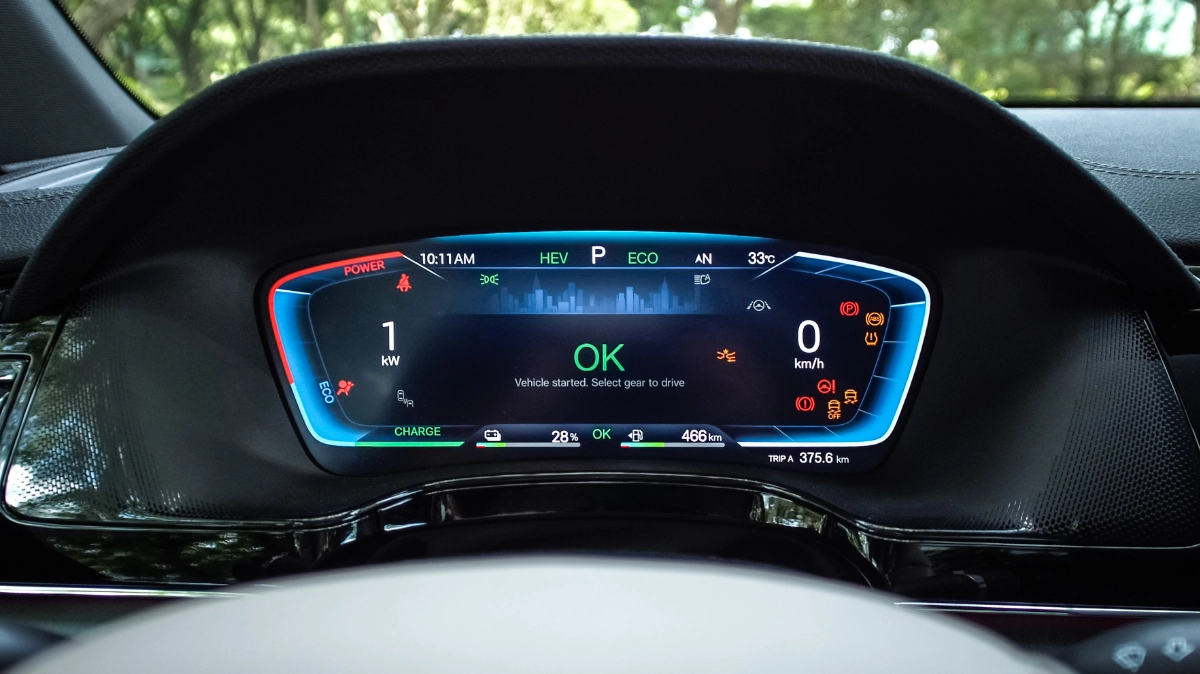
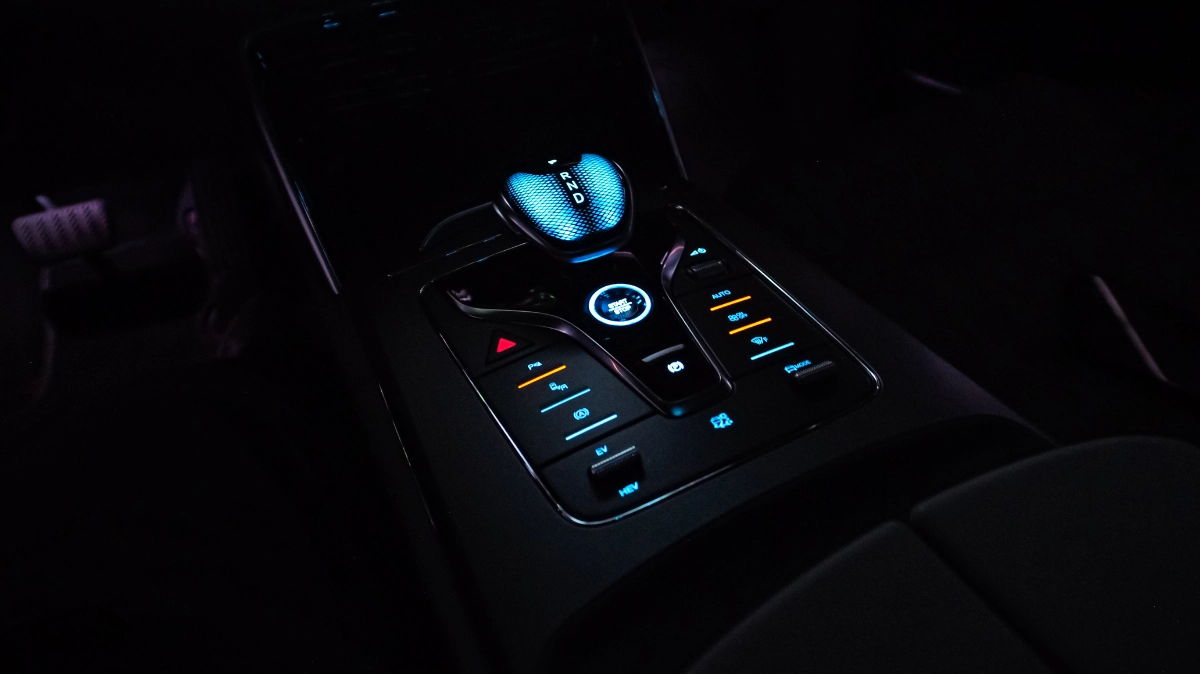
At saner speeds, power delivery is smooth. Accelerator pedal calibration is perfectly judged in both Sport and Eco modes, and it's easy to drive in as relaxed or as hurried a manner as you want. There’s a claimed 110km range from the 21.5kW battery, in EV mode. Given our tested 6km/kW average efficiency, 4.5km/kW in mixed urban conditions, and 7-8km/kW highway, the math checks out. That said, once you get down to the last 20% or 20km of range, the 1.5-liter turbocharged generator kicks in automatically to keep the battery within its safe range. The generator’s response curve is aggressive, and you can gain 5-10% battery even over a short drive, to keep it in the optimum 20-70% charge window. It’s hard to measure gasoline-only fuel efficiency. The onboard computer calculates this by subtracting generated charge from fuel consumption, but this doesn’t necessarily add up until you’ve used up the charge generated.
Near as we can figure, the Tang DM-i does 13km/L in mixed conditions—including a few bouts of heavy EDSA traffic—in hybrid mode. Which means 680km from the 53-liter tank. Provincial driving stretches that out to over 800km, making that over 1,000km total range entirely believable on long road trips with conscientious driving.
Ride and handling
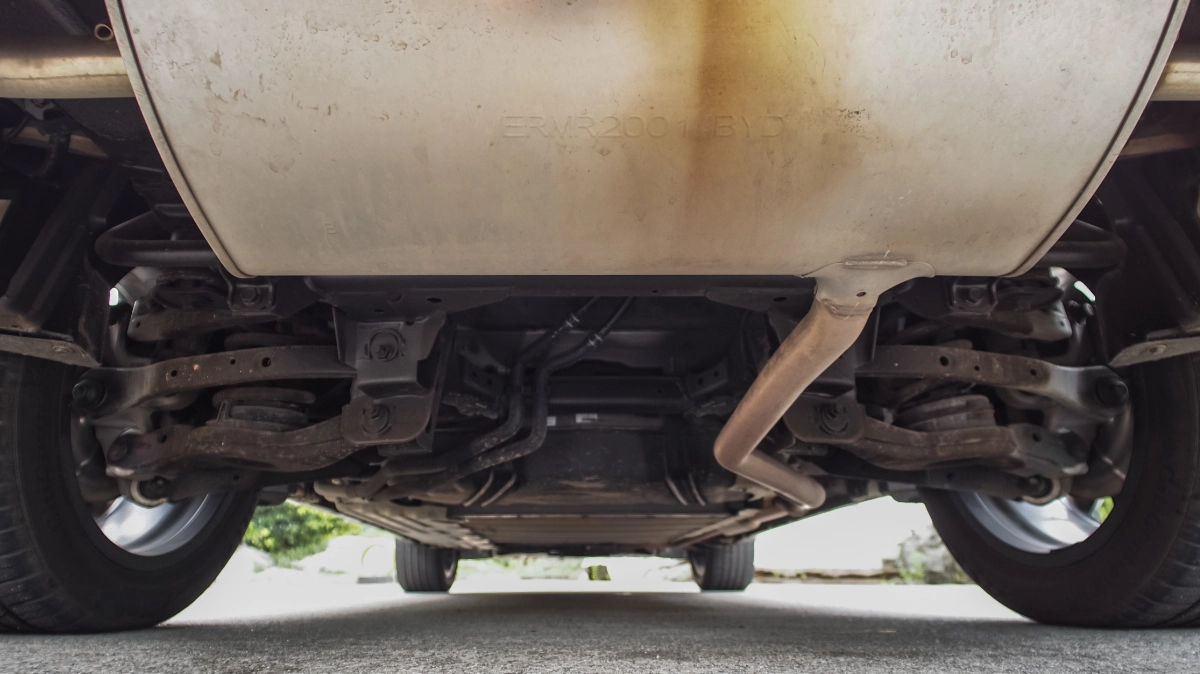
Of course, this isn’t a car that necessarily encourages conscientious driving. It’s big, it’s brash, it’s powerful, and it feels a lot like a tall sports sedan. In Sport mode, it feels light and on its toes, the electronic stability control tucking the nose into every corner, pushing the rear end to follow. There are multiple drive modes, but you can also custom-assign drive mode, brake regeneration levels, and steering weight—just not all in the same menu. Either way, this Tang is a lot better to drive than the AWD, if only for the fact that it’s much lighter. GitiContact tires prove surprisingly competent. Unexpected, but it’s nice to know that China’s favorite tire brand actually does make premium tires. There’s a decent amount of feedback through the steering wheel—or what passes for it in this age of electric assist. Another small surprise. Sound insulation is good for the most part, except over certain surfaces, and you really do appreciate the lack of noise when running in full EV mode. In HEV mode, engine noise is noticeable, but is less intrusive than in gasoline one crossovers, thanks in part to the massive muffler resonator hanging under the rear bumper.
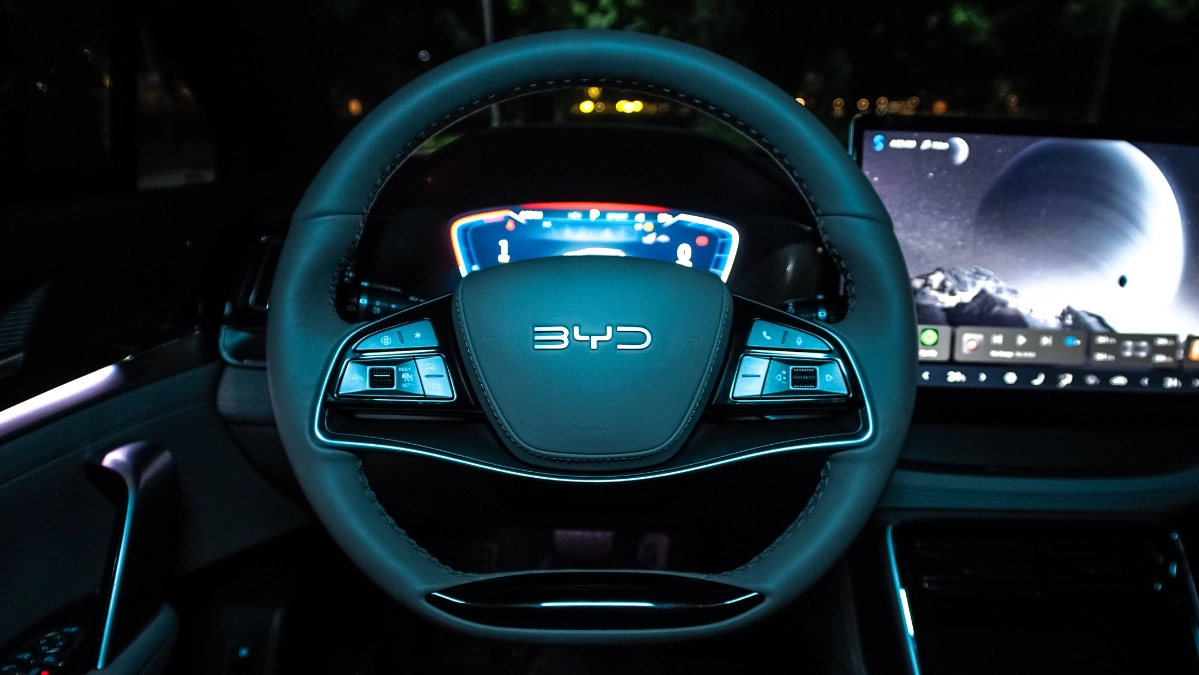
When you so choose, you can cede control to BYD’s Level 2 driving assists. They handle high-speed curves and traffic easily, and the adaptive cruise is selectable at city speeds and active until you come to a full stop. Not that you’ll want it in traffic—acceleration can be aggressive when the lane ahead suddenly clears. Manually driven, the Tang isn’t all that intimidating in the urban snarl, except when trying to execute tight turns. Here, you appreciate BYD’s ever-present 360 cameras, which also work on the highway at night, giving you an extra layer of security against idiot motorists running blinding LEDs. That said, those cameras feel a bit inadequate when trying to edge the extra-wide Tang up against the curb when street parking. You don't feel that width much when driving, but it makes you want to fold the mirrors up when parked to keep passing trucks from knocking them off.
Extra features
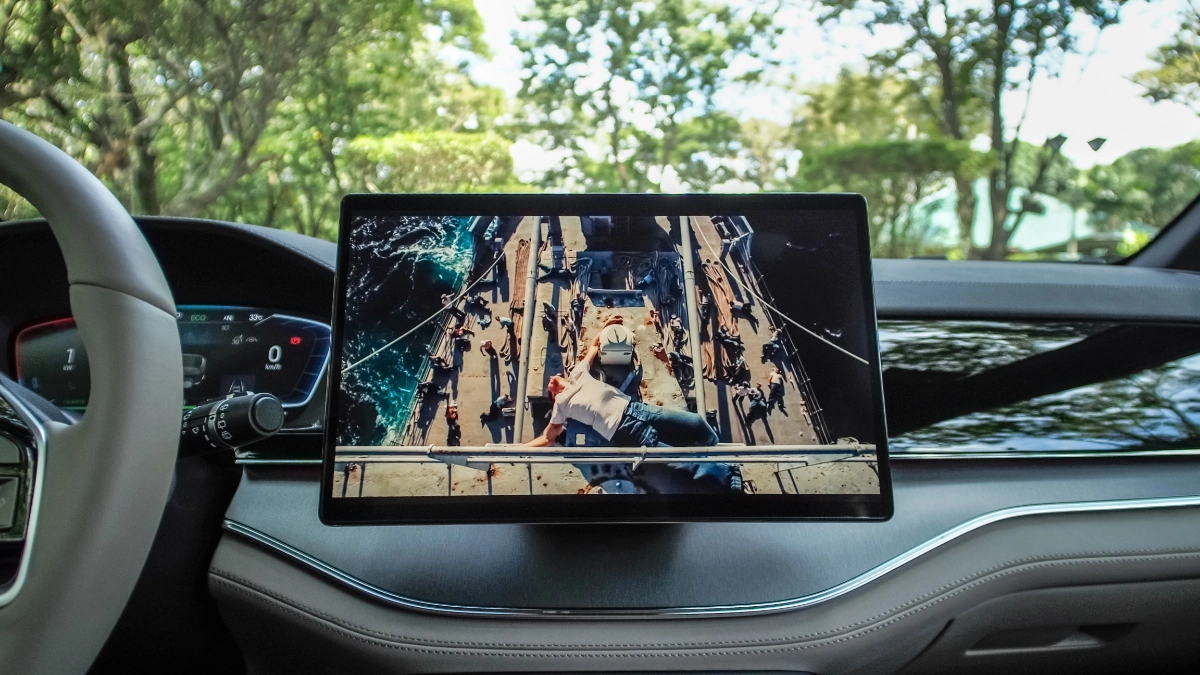
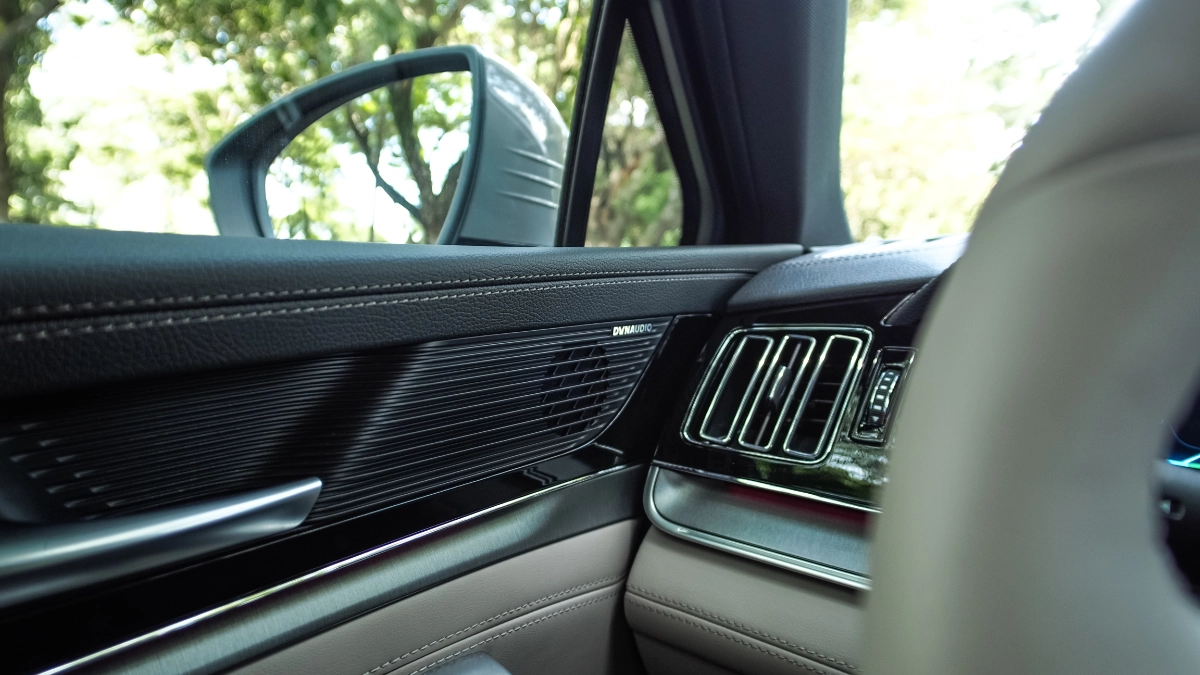
The car is keenly aware of this danger, too, and you get warnings of oncoming traffic when opening the doors. So doors closed while you wait for the kids to finish practice, or your significant other to pick up groceries—for the eternal driver de pamilya, BYD provides a dizzying array of distractions to keep them entertained. The 15.6-inch infotainment center features mobile and wireless connectivity, BYD Cloud Services and customer assistance, as well as built-in apps like “Calm Music” radio, a games center—featuring that perennial time waster: 2048—and YouTube. In full HD glory. You can log into your personal account to watch YouTube Premium movies in full DynAudio surround sound, which has a decent range and good clarity. It’s still no Mazda Bose, but that matters little when you’re enjoying a full air-conditioned theater experience without using a drop of gas. You can’t play videos—either via internet or USB—while moving, but there’s wireless Android Auto and Apple CarPlay for Waze and Spotify. There’s also built-in Spotify, allowing you access to your library even without your phone. Other niceties include three USB-C and one USB-A charging ports, two 12V sockets, and a 50W wireless charging pad tucked under the center armrest. Unventilated, though, so your phone will get hot if left there too long.

Look closely, and you find some cost-cutting versus the flagship Tang EV. You get fewer LED mood lights in the cabin, and the big screen no longer swivels into portrait mode to allow you to stack navigation, entertainment, and car setting apps. Helps prevent driver distraction, I suppose. The bigger deletions are the adjustable leg rests and lumbar support, as well as the seat massager functions. Not something you’d miss if you didn’t know they were there in the first place, but it certainly brings the feel down from luxury to merely premium.
Verdict
But premium may just be enough for buyers trading up from a Sealion 6 or looking for an alternative to the common diesel SUV. It’s crazy to see old-school diesels receiving ASEAN Free Trade tax breaks costing more than a fire-breathing hybrid-electric premium crossover, but here we are. BYD has done its homework here: Decontenting the Tang DM-i enough for competitive pricing while keeping enough features to make it feel more special than its diesel competitors. At a price that severely undercuts its natural competitors as well, namely the Kia Sorento and Hyundai Santa Fe turbo-hybrids. If you’re not looking at hybrids, the Mazda CX-9 is, of course, an option, and is still unparalleled in terms of luxury and quality, but priced much closer to the Tang EV. As is the Santa Fe hybrid. Only the Sorento is close to the Tang DM-i, but that's assuming you’re buying the stripped-down EX variant.
At the price BYD is asking for the DM-i, there really isn’t much in the way of loaded seven-seat SUVs with this level of power and tech—Chinese or otherwise. Even slightly watered down, the Tang is a premium performance bargain, giving you a heady blend of sports sedan-like performance and seven-seater comfort.
SPECS: 2026 BYD Tang DM-i
Price: P2,098,000
Powertrain: 1.5-liter turbocharged generator + single electric motor
Power: 267hp
Torque: 315Nm
Layout: Front-wheel drive
Seating: Seven
Score: 9/10
More photos of the 2026 BYD Tang DM-i