
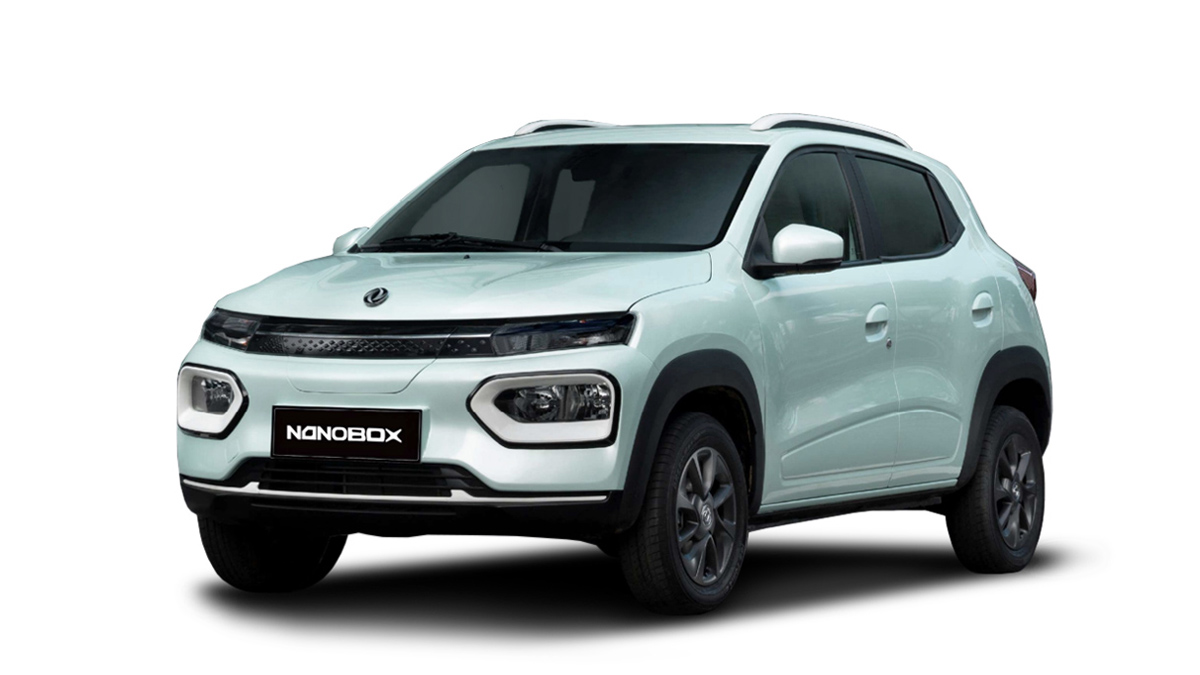
With each new EV launch or announcement, I often wonder: “Are we really saving the planet by replacing expensive gas-guzzlers with even more expensive electric cars with batteries that weigh as much as a Toyota Wigo?” The answer is multifaceted and nuanced, and quite hard to understand. But what isn’t hard to understand is that this Dongfeng Nanobox is the lightest, most economical highway-capable four-seater vehicle I have ever driven. Bar none. And it even has air-conditioning.
But is it a viable replacement for your current car? Well—yes, and no. Let me explain.
Styling
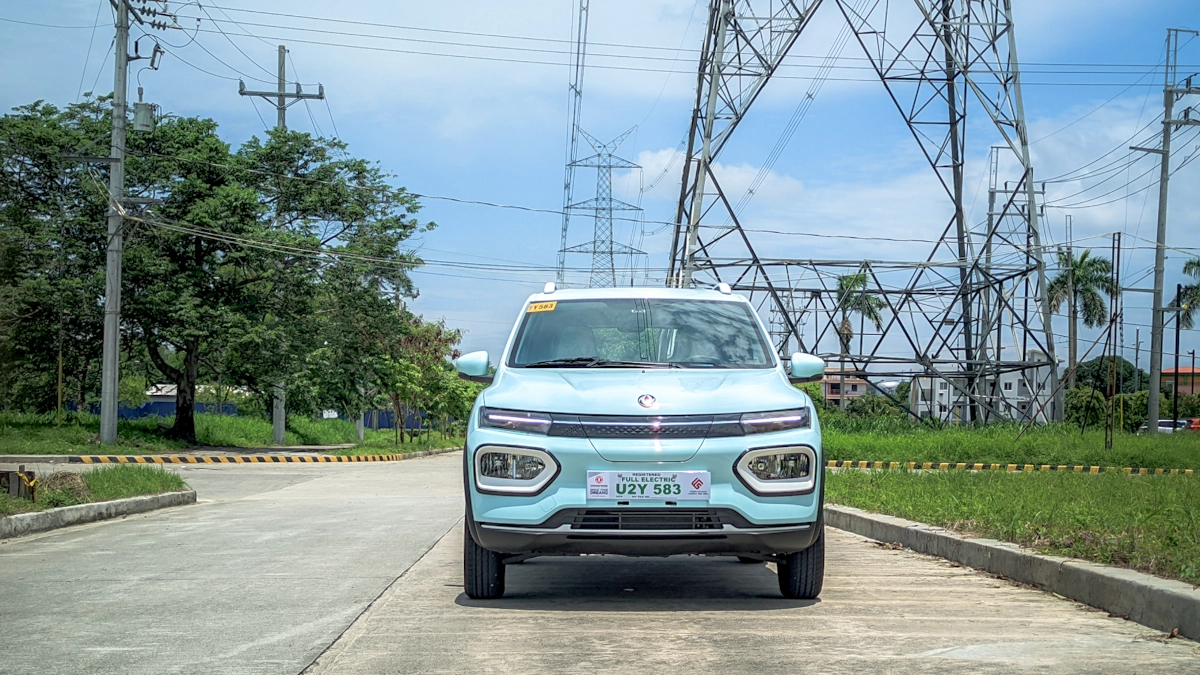
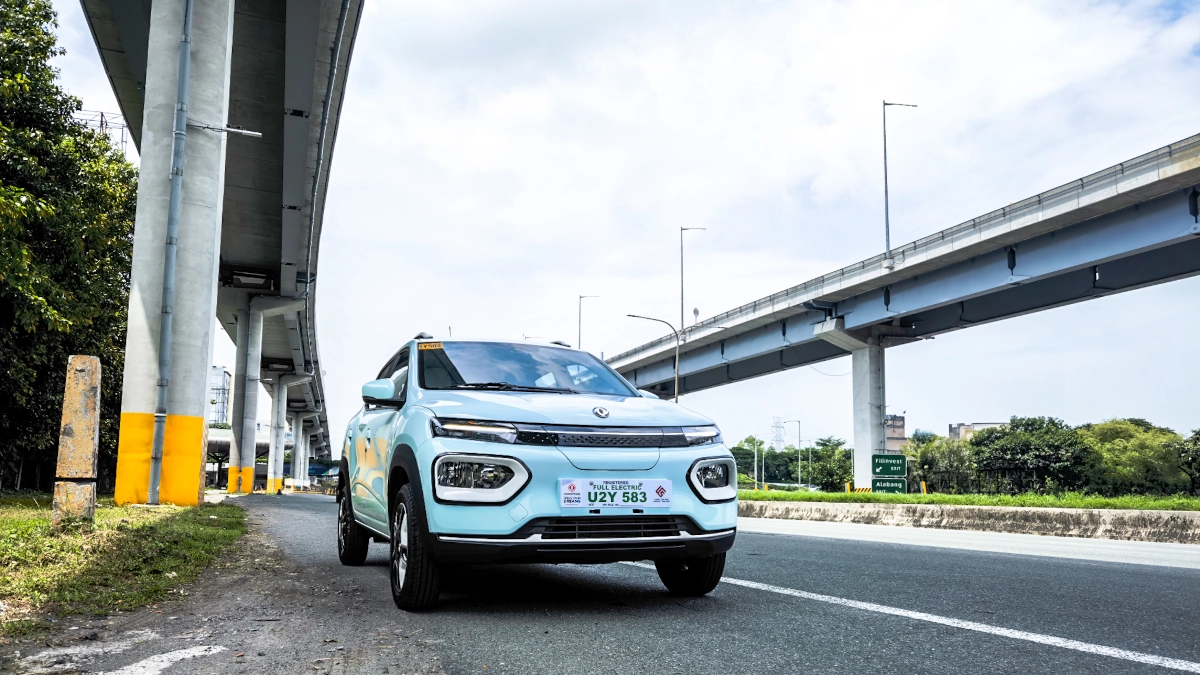
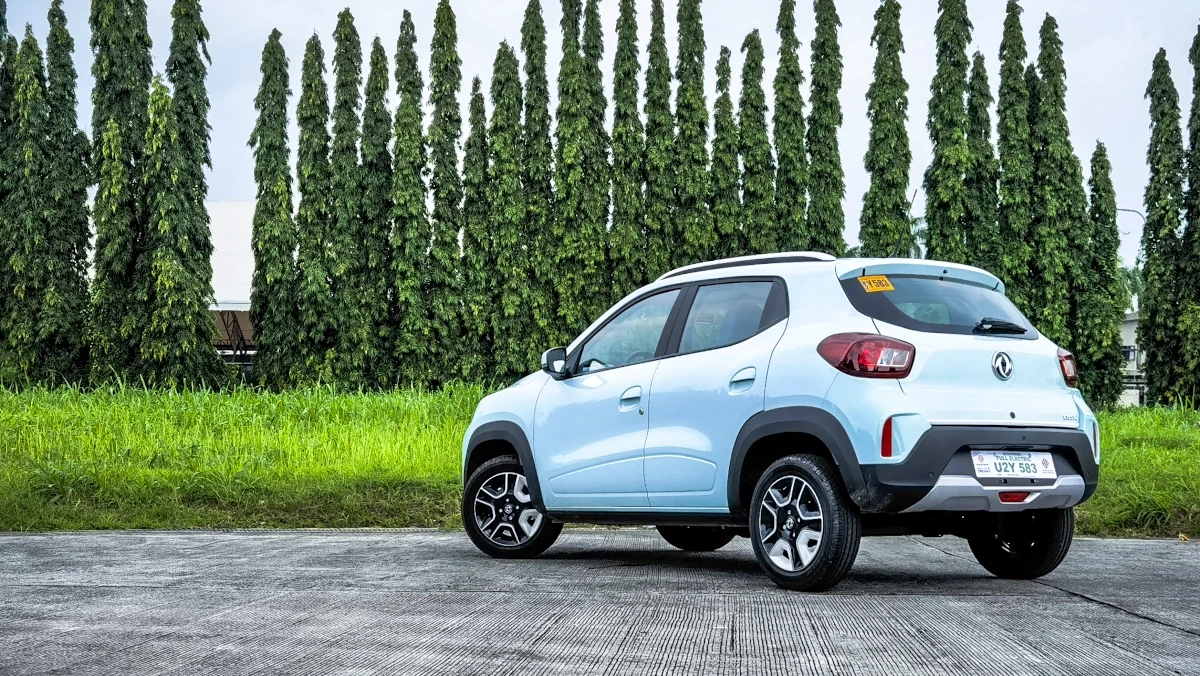
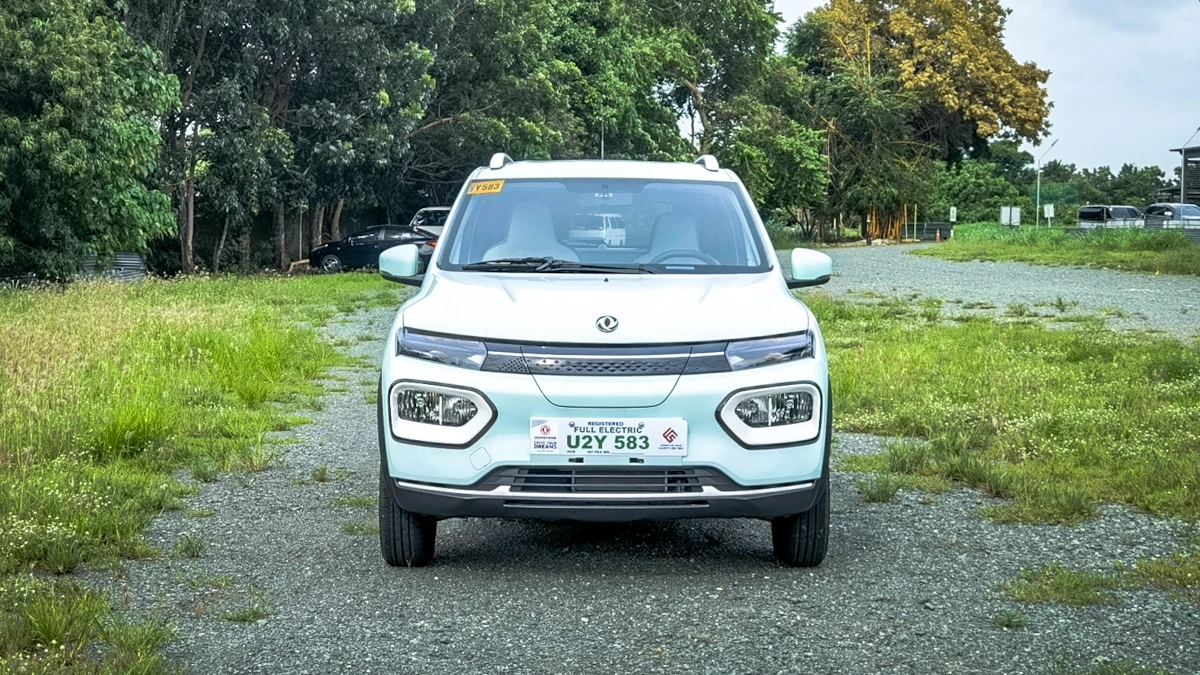
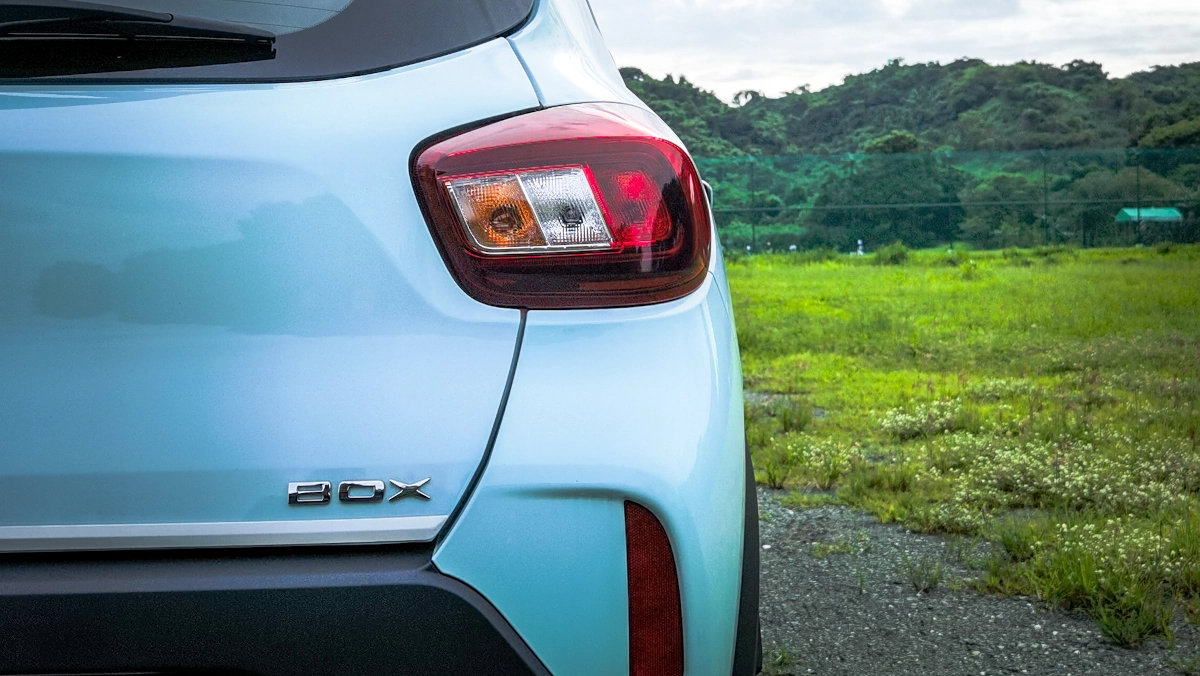
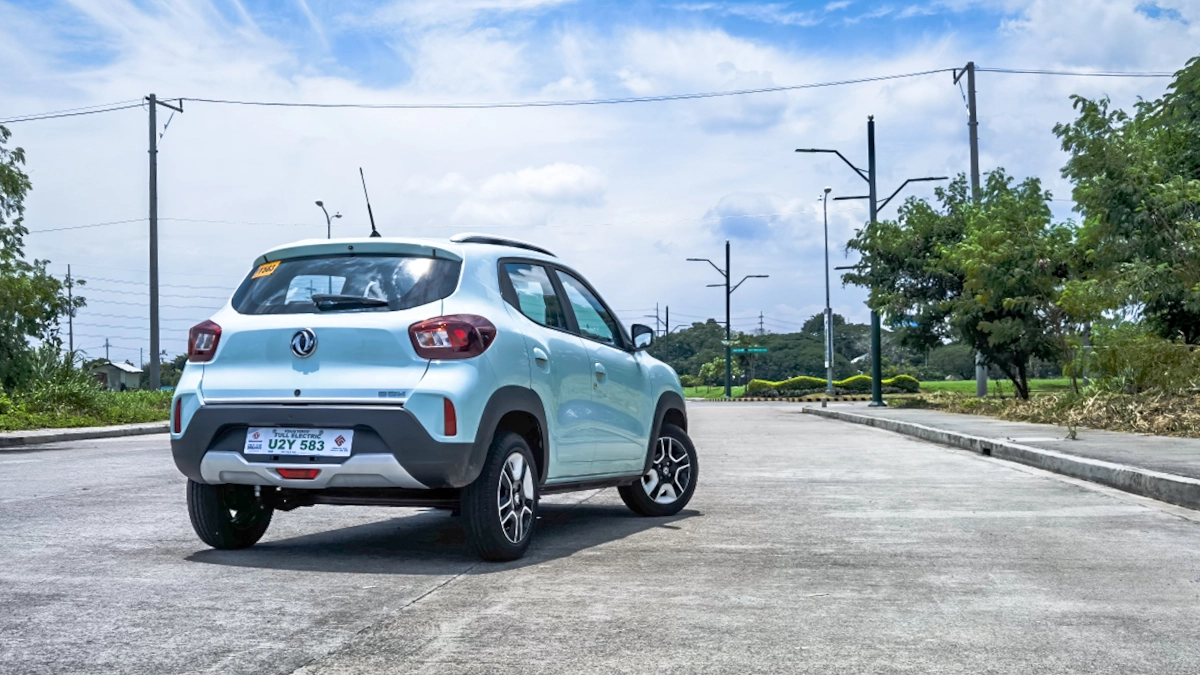
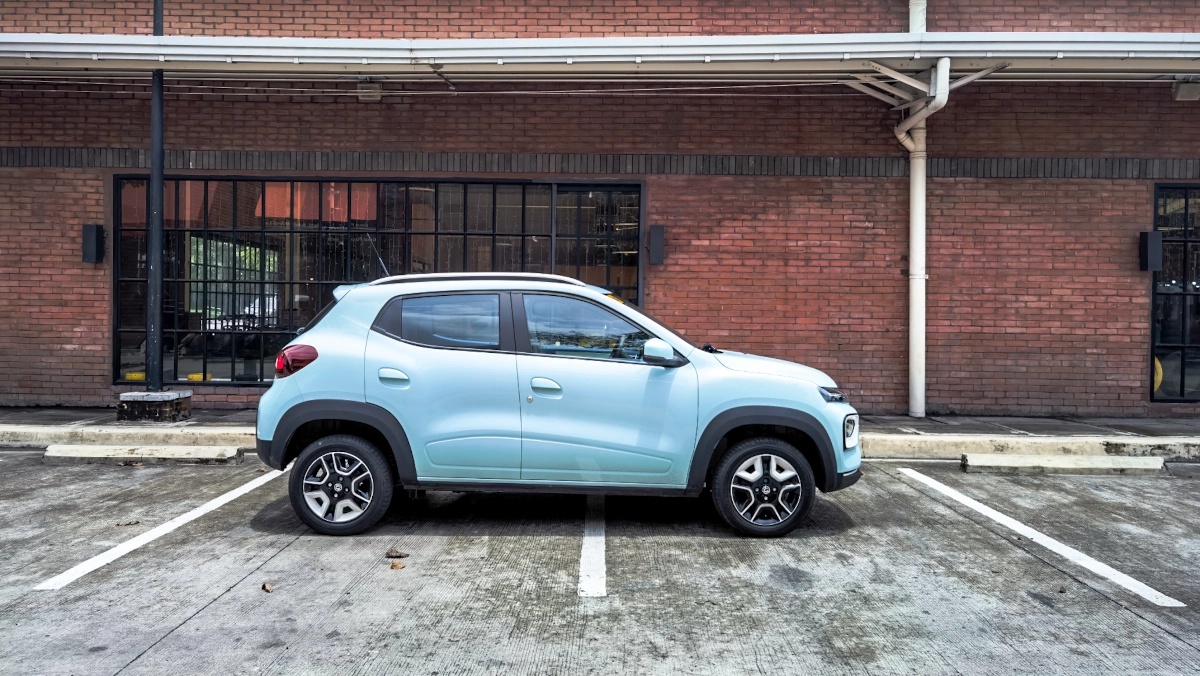
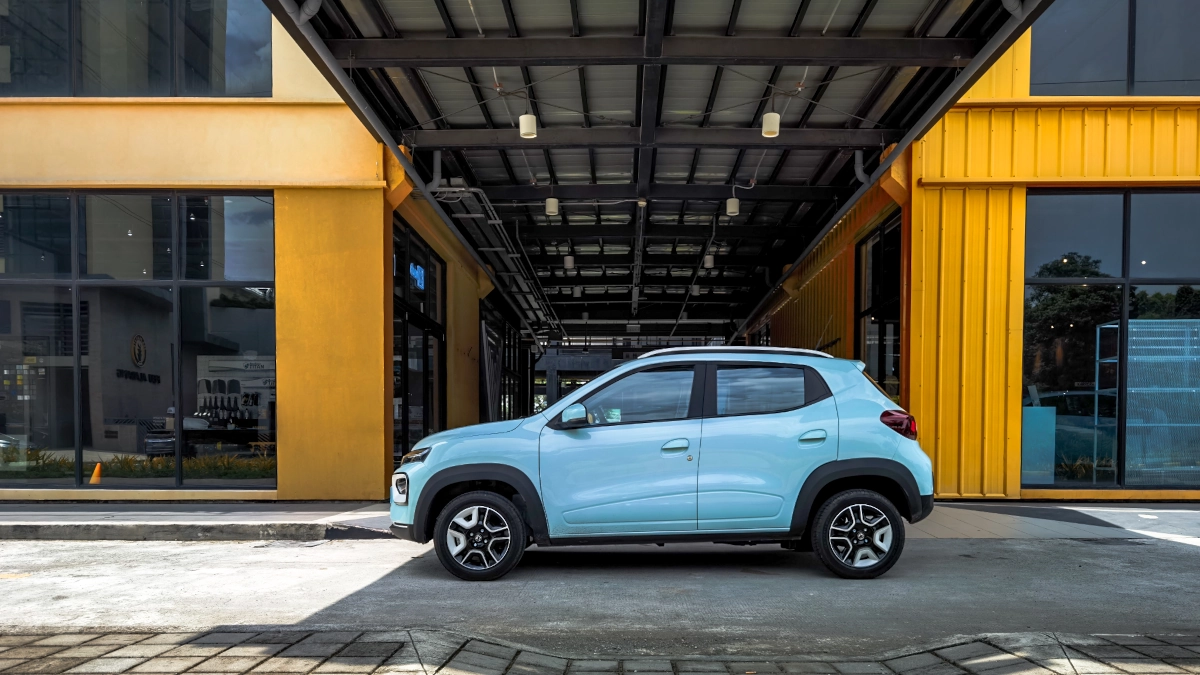
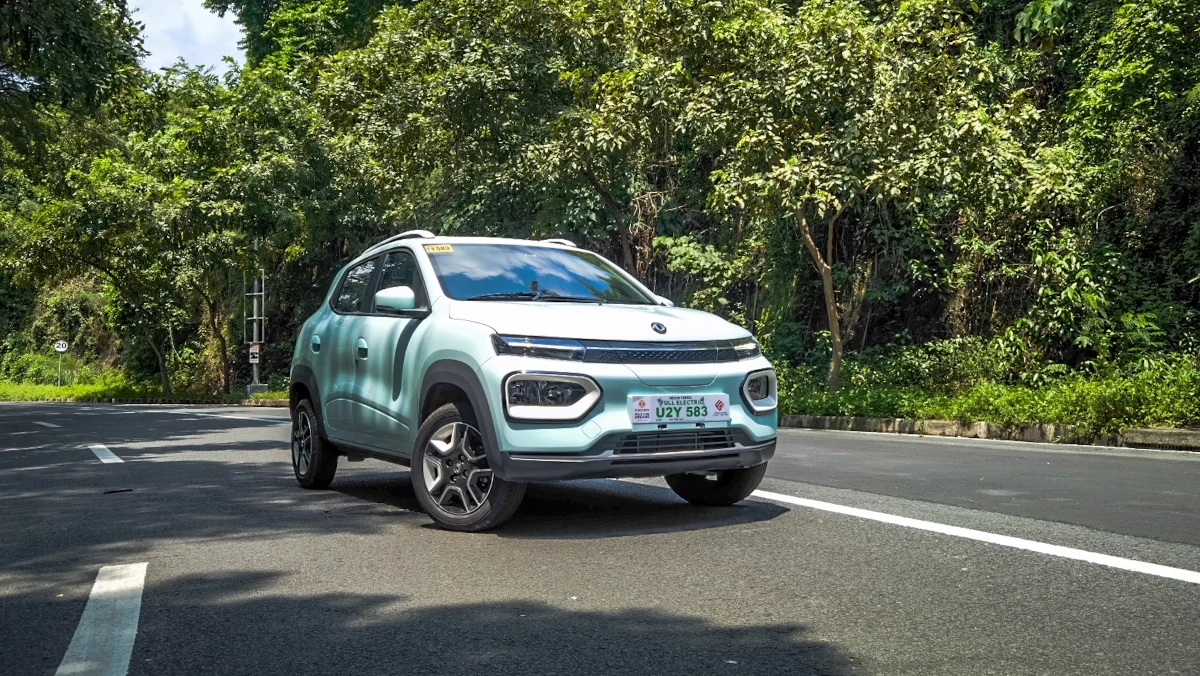
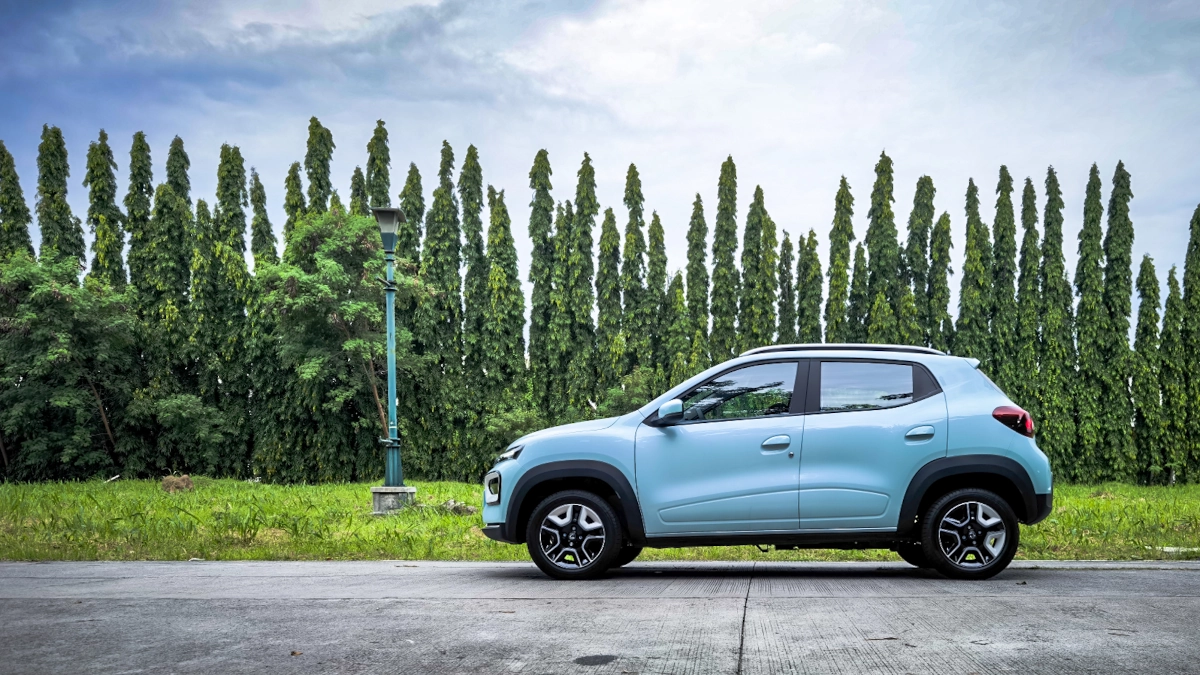
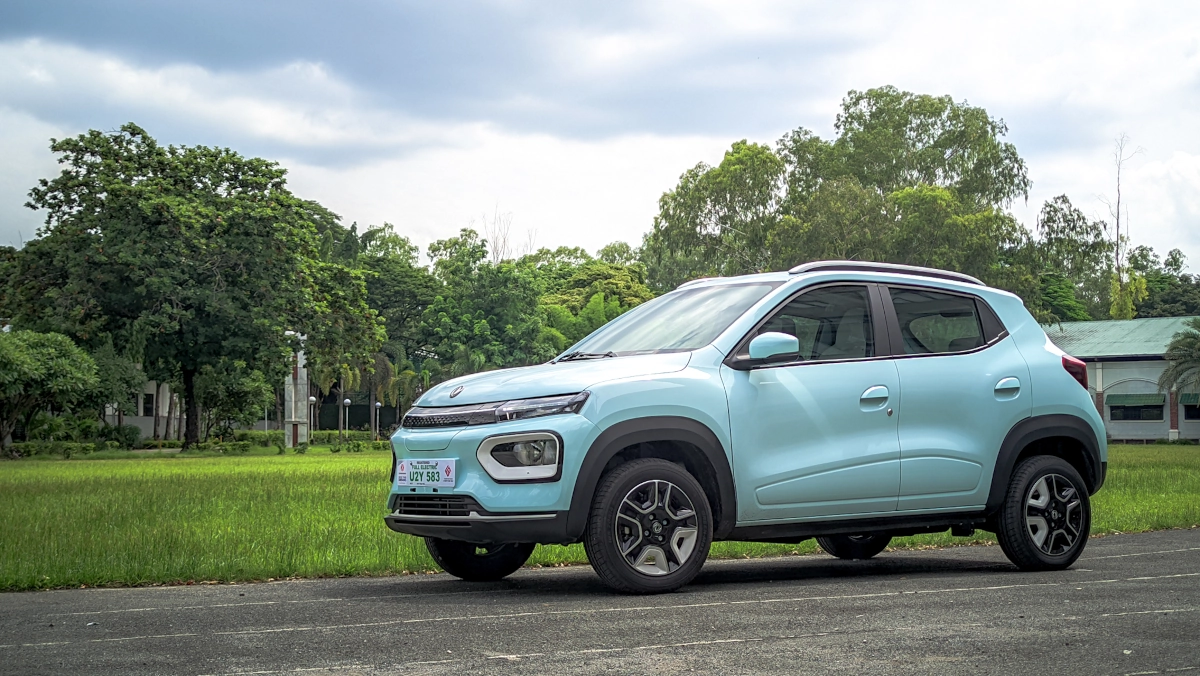
Given Dongfeng’s expertise lies more in commercial trucks than microcars, the Nanobox is actually a joint venture with Renault, which provided Dongfeng the chassis of the Renault Kwid. Refitted with Dongfeng’s EV hardware, it is sold by Renault as the Dacia Spring in Europe and the Nanobox elsewhere. The side profile, with its trapezoidal cutaway and high-set rear, is directly lifted from the original Kwid, but the Nanobox features a more distinctive grill-less fascia and double-stacked lights.
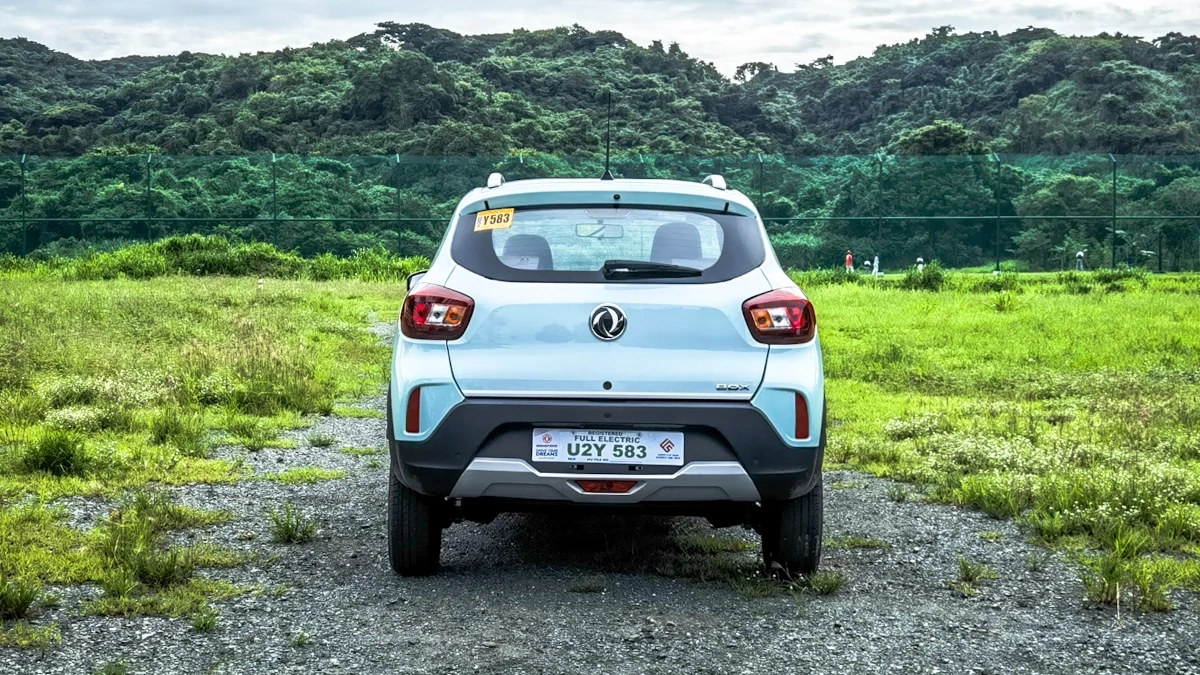
The car is unashamed of its lightweight construction, with plenty of brightly colored exterior plastics and black fender liner to protect the body from small scrapes. There’s a lot of visible cost-cutting here—the headlights are old-school halogen reflectors instead of LEDs, and there’s only a single exterior keyhole on the driver’s side, a tiny stubby pushbutton for the trunk release, a single windshield washer nozzle up front, and a single front wiper, to boot. The complex dual-arm wiper assembly is arguably more complicated than two single-arm wipers but apparently saves a lot of space. Asymmetric two-tone wheels that further accentuate the car’s cutesy looks, while plastic-covered roof rails and a stubby radio antenna make it look like nothing more than a giant remote-controlled toy.
Interior
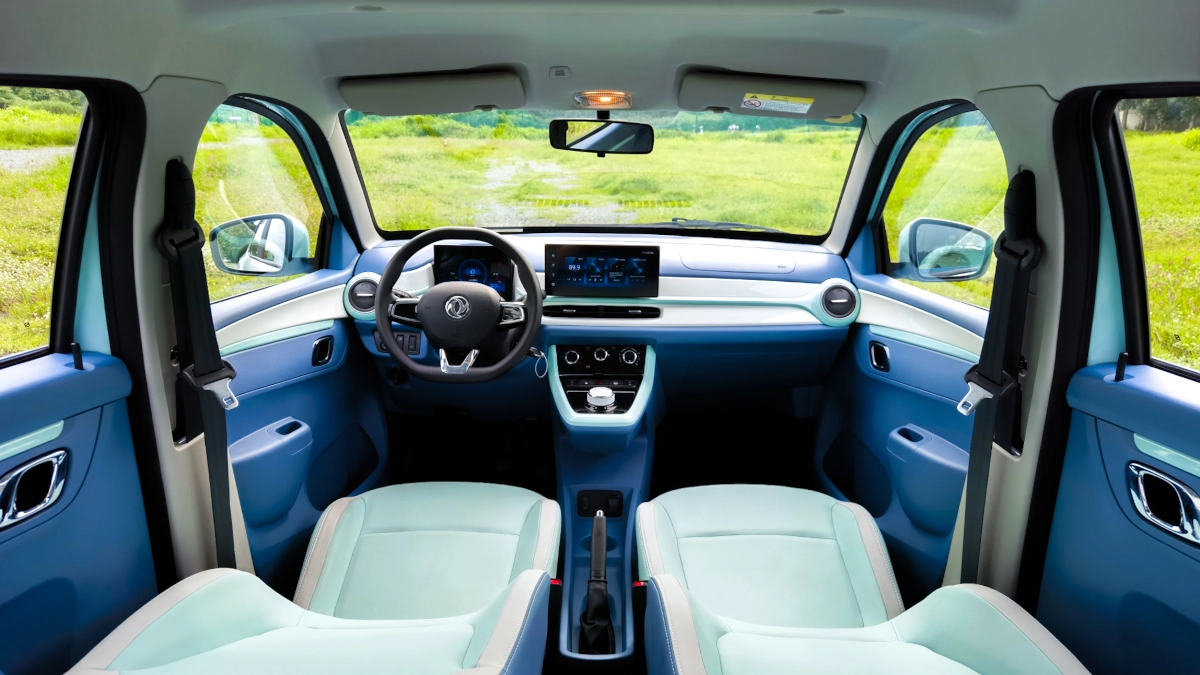
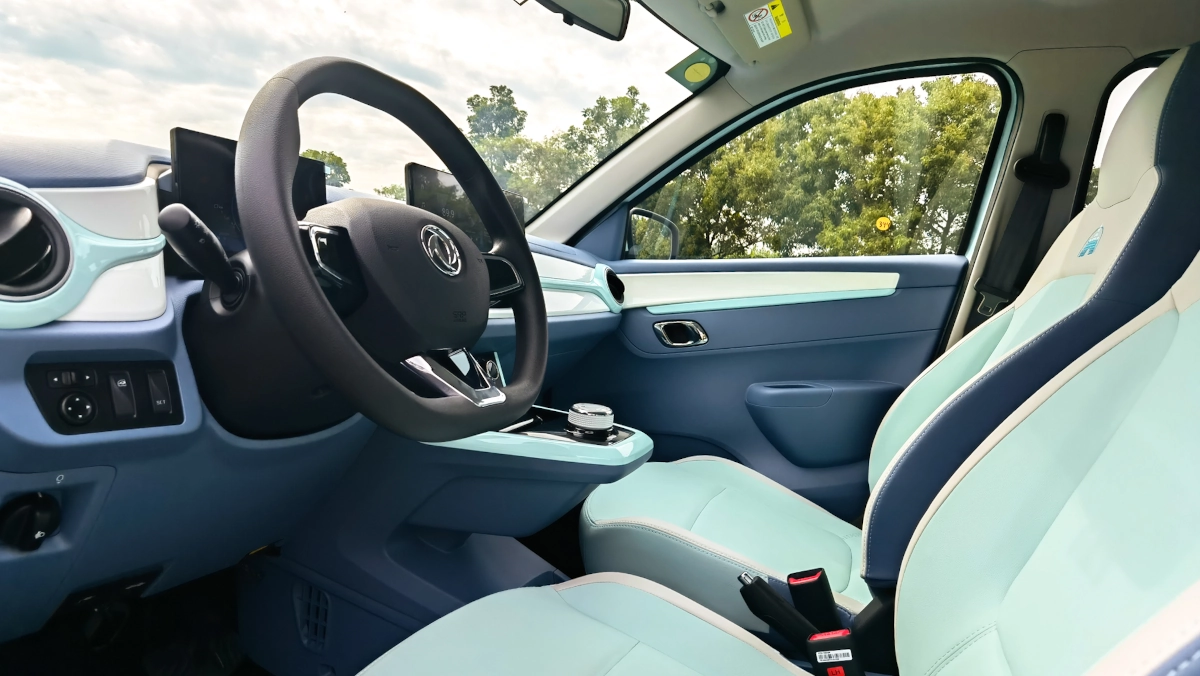
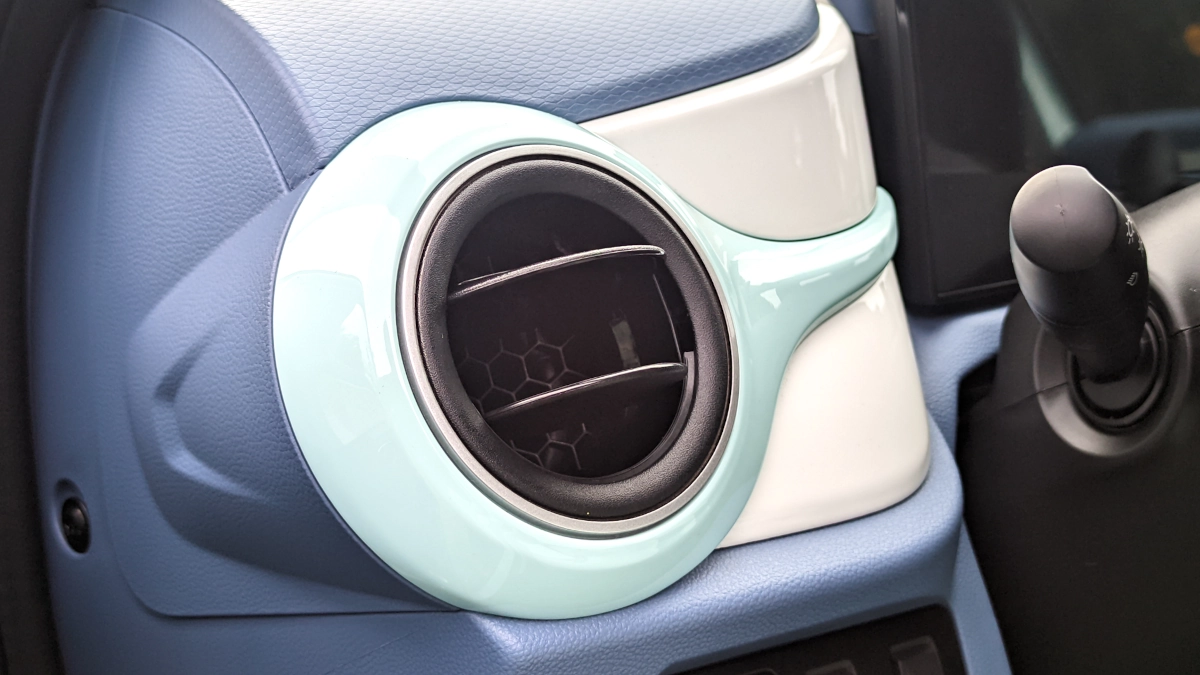
The interior of the Nanobox is, well, colorful. I imagine this is what a toy car’s interior would look like if scaled up to semi-full size. There are brightly colored hard plastics everywhere, in six different colors and textures, ranging from glossy black to refrigerator white to pebbled blue. Don’t expect multi-colored LED mood lighting at this price point. All you get is a single incandescent chiclet light on the ceiling.
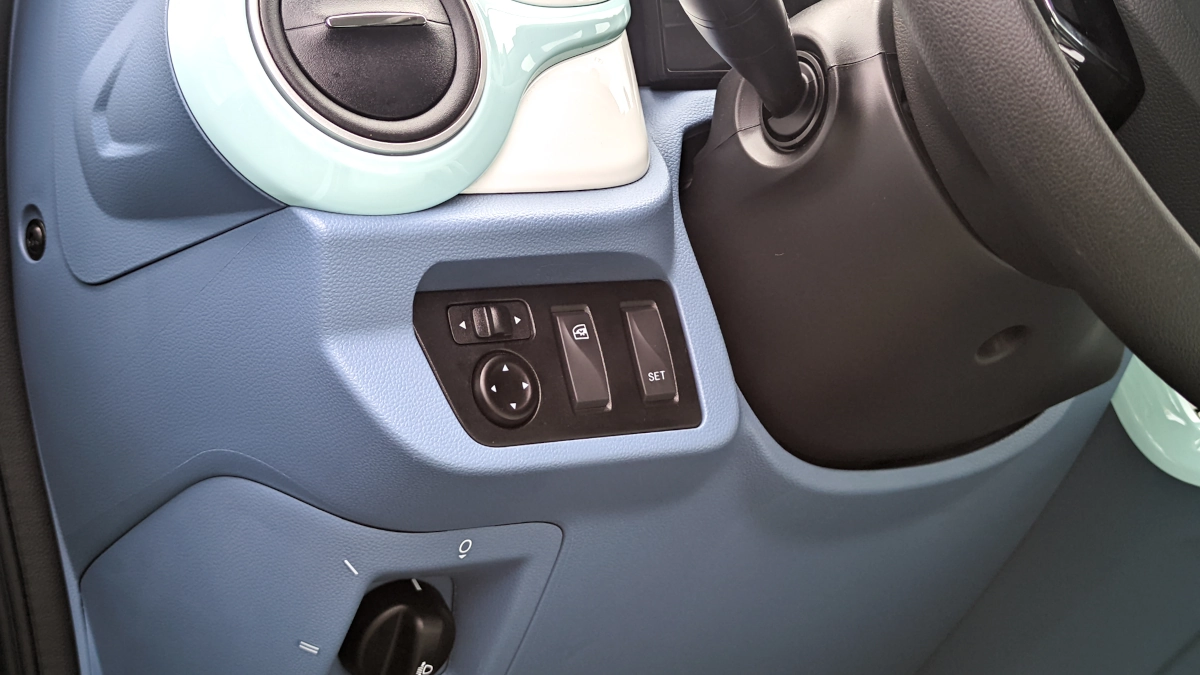
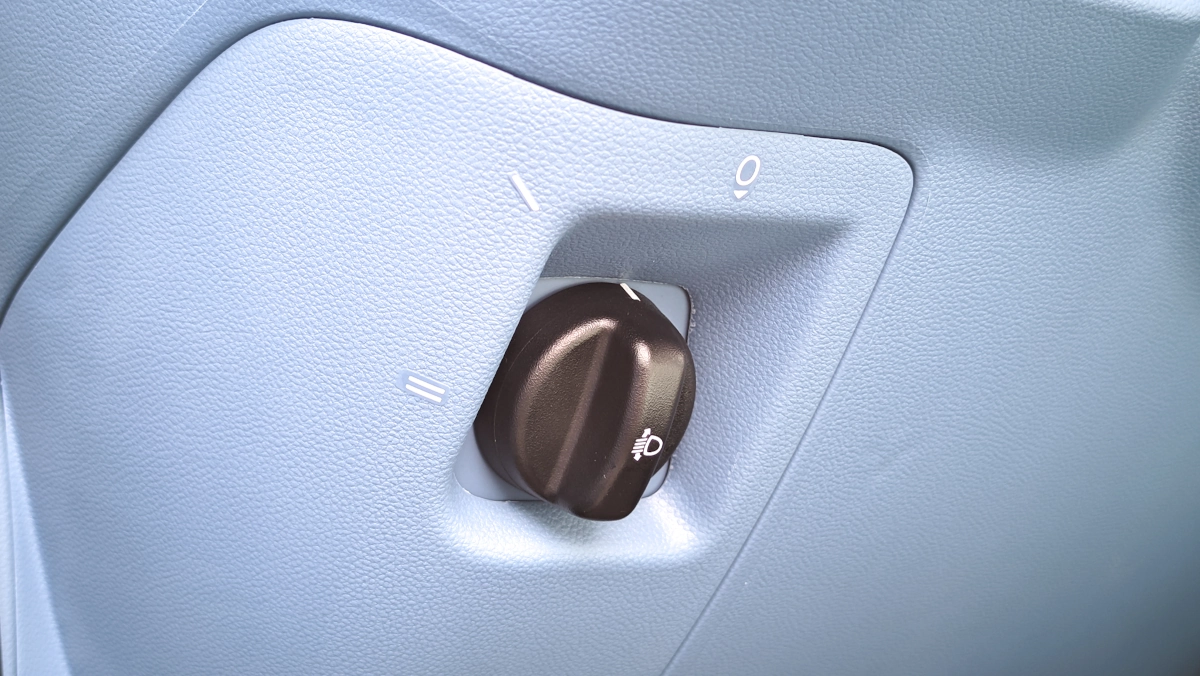
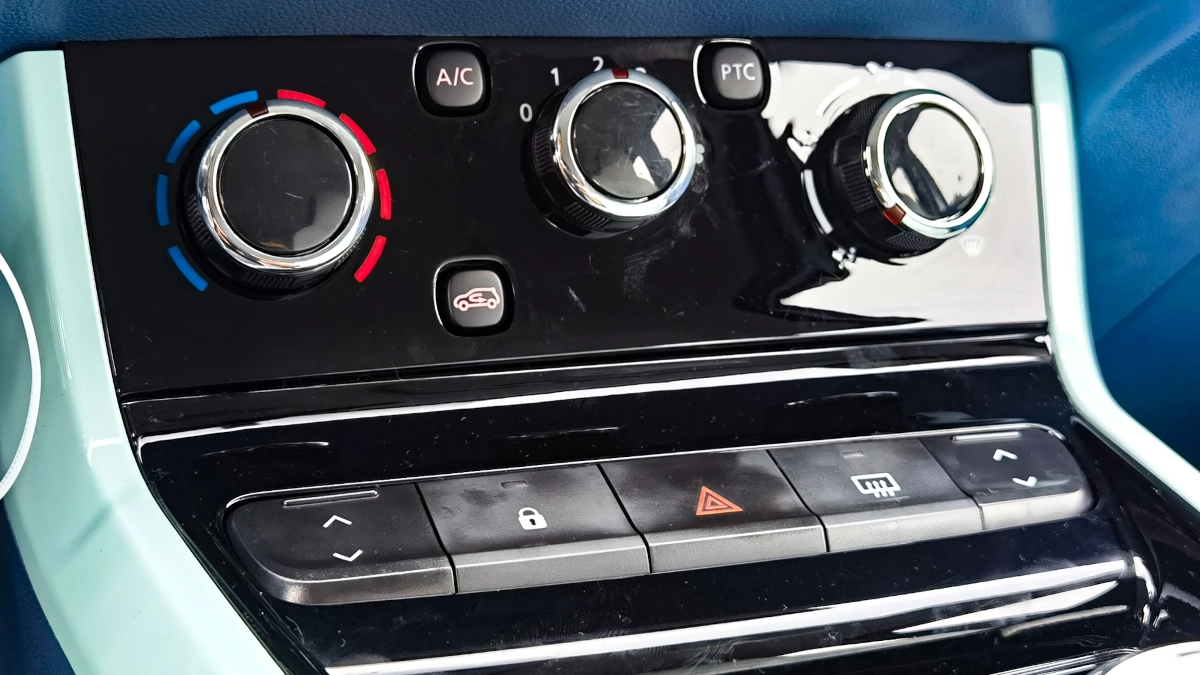
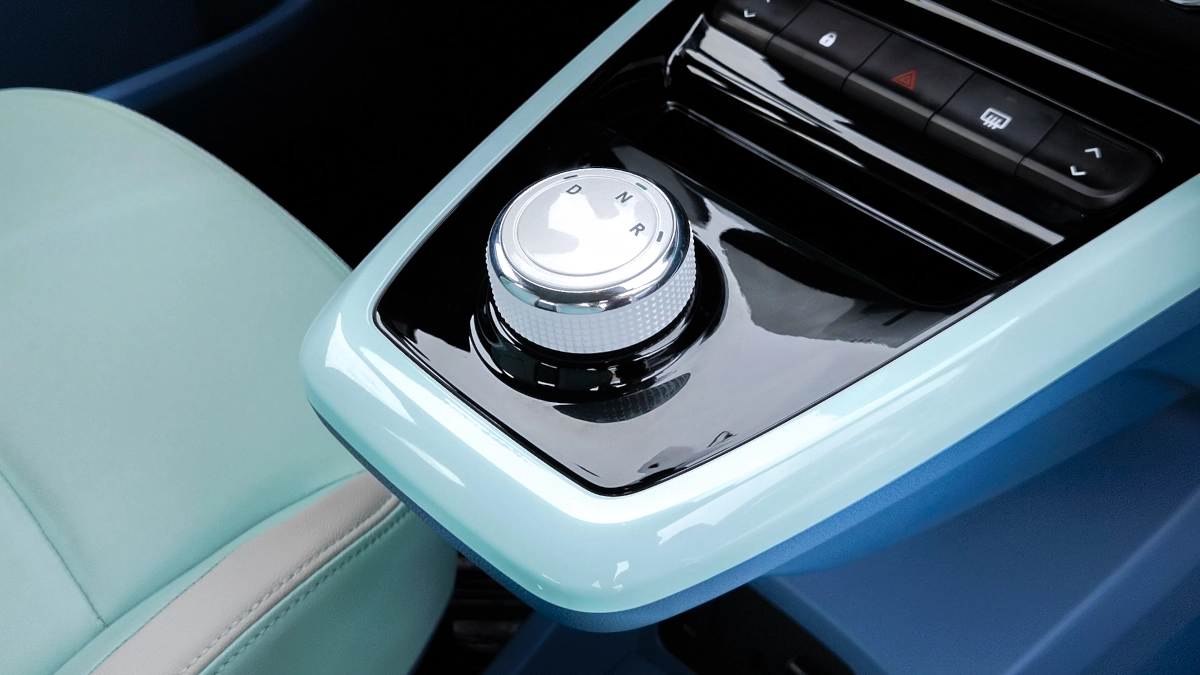
The dashboard sits high and out of the way, but given the small size of the car, the raised center console still rubs against your knees. There’s a slanted pocket on that console for cards and cellphones, but nowhere really to lay one flat or even on its side. There’s a single floor-level cupholder in front of the handbrake, but given the tight space, it’s hard to reach. Ergonomically, the Nanobox is, well, weird. Window and lock controls sit on the center console to free up space on the door cards, but the rear doors have stubby little pull-up door locks that are hard to grip. There’s a dial that allows you to select between Drive, Reverse, and Neutral, but there’s no Park position. You have to remember to pull up the handbrake for that. There’s an Eco button, but it’s on the floor under the console, where 99% of owners will never see it.
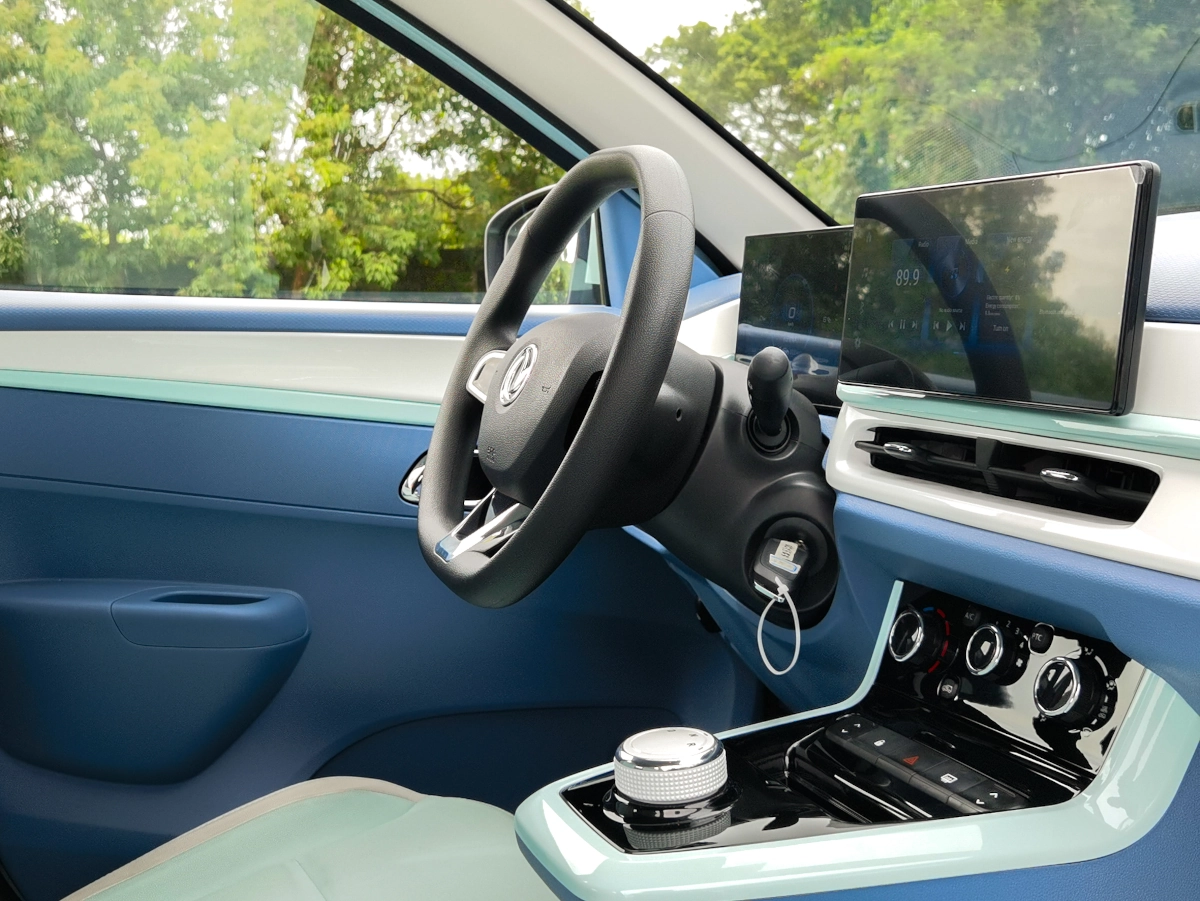
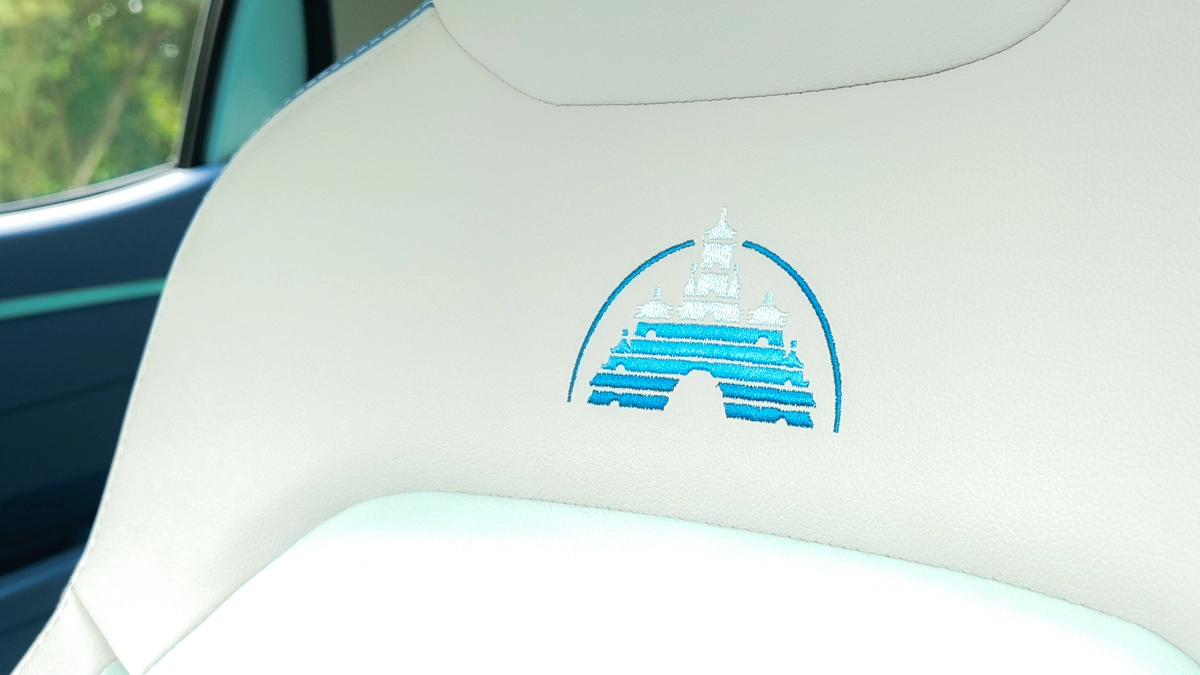
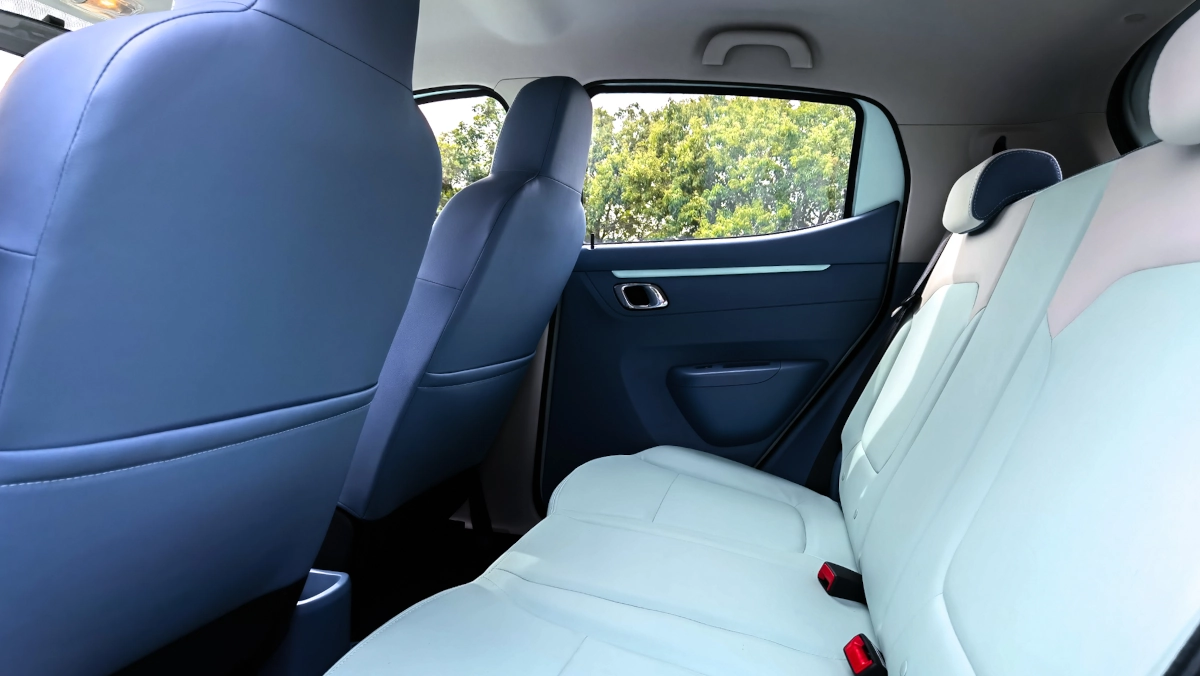
The seats are covered in leatherette color-keyed to the exterior, with cyan and white inserts bordered by dark blue. And yes, they are as hard to keep clean as they seem. The cushions are quite firm, but lack a bit in thigh support. The rear bench only features two seatbelts, so no center passenger. Well, not legally. Headroom and elbow room are passable, but the bulky front seats limit rear legroom. If you’re the standard Filipino 5’4”, you can work around that, but only very tiny or very tolerant rear passengers will be able to sit behind a 5’10” driver.
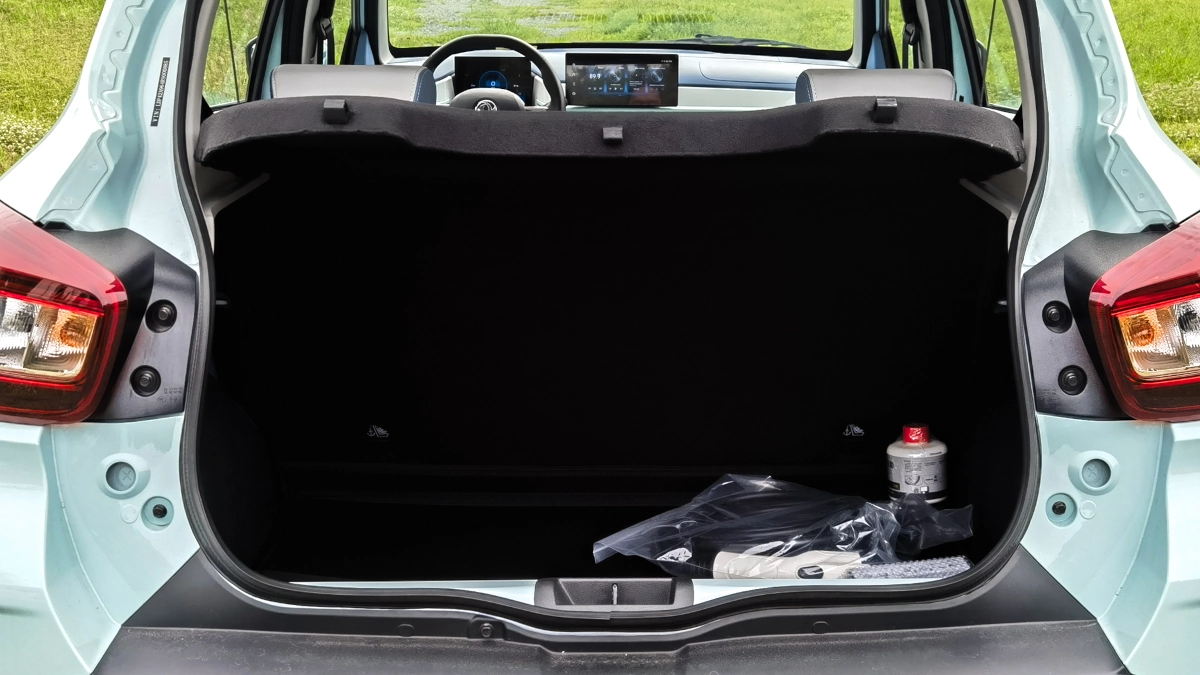
Cargo space is surprisingly adequate. The trunk has a 300-liter capacity on paper, and while it doesn’t look that much bigger than the ones on the Wigo and Mirage, it certainly doesn’t feel any smaller. The floor is nice and flat, with little intrusion from the wheel arches or seats. The tonneau cover is sturdy and useful as an extra shelf to boot. The only issue here is that the loading lip is rather high up, and you’ve got a tire-inflation kit and charger sitting on the floor of the trunk. Because the Nanobox lacks the large underfloor storage of its more traditional competitors.
Performance
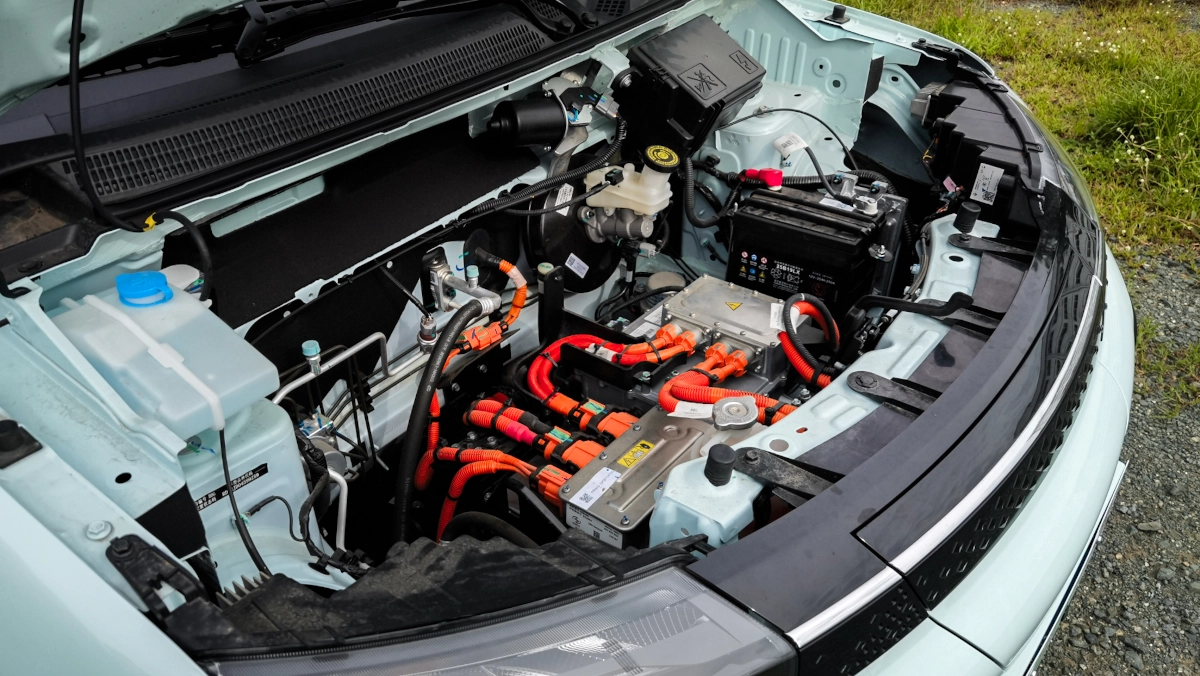
It also lacks the gasoline engine of more conventional competitors. Instead, the Nanobox has an engine bay full of bright orange high voltage wiring, charge controllers and inverters. And underneath that confusing spaghettiwork, sitting at the bottom of the bay, is a tiny 45-horsepower electric motor. It’s mated to a single-speed transmission and is good for 0-60kph in under 6 seconds, and 0-100kph in a more leisurely 29 seconds. After 80kph, the motor is producing more noise than acceleration. Which is saying something, because it doesn’t produce a whole lot of noise. Press the hidden Eco button and the car actively dissuades you from trying to get past that 80kph to preserve battery charge.
That battery sits snugly where the Kwid’s gas tank used to go, without requiring extra cutting into the floor or superstructure. It holds around 28.9kW/h of charge and can fast charge from 30-80% in just 30 minutes, at about 30kW/h. Not that I was able to test this. The only Level 3 chargers down south are at Shell, which doesn’t allow GBT adapters for Chinese vehicles. As such, most customers will be limited to Level 2 public charging at the mall.
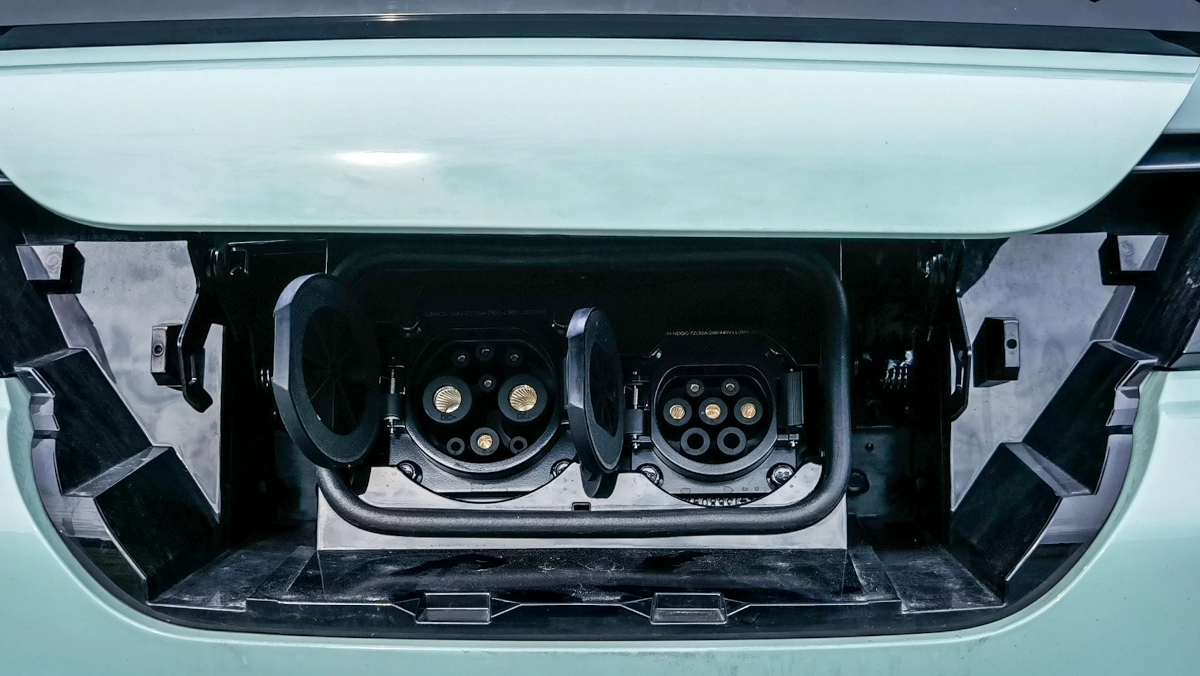
The Nanobox comes with an emergency charger that plugs into AC outlets, allowing 3-5kWh charging, which fills the tiny battery in six hours. Dongfeng claims 330km per charge, but in real-world use, with AC, that’s closer to 250km. Still mighty impressive. While most EV crossovers struggle to get more than 4km/kWh in traffic, the Nano does 7-8km/kWh, and up to 12-13km/kWh on the highway. On one particular late-night drive, I managed to eke out nearly 18km/kWh, simply by driving conservatively and rolling down my windows instead of using the AC. This is potentially more frugal than an e-trike.
Ride and handling
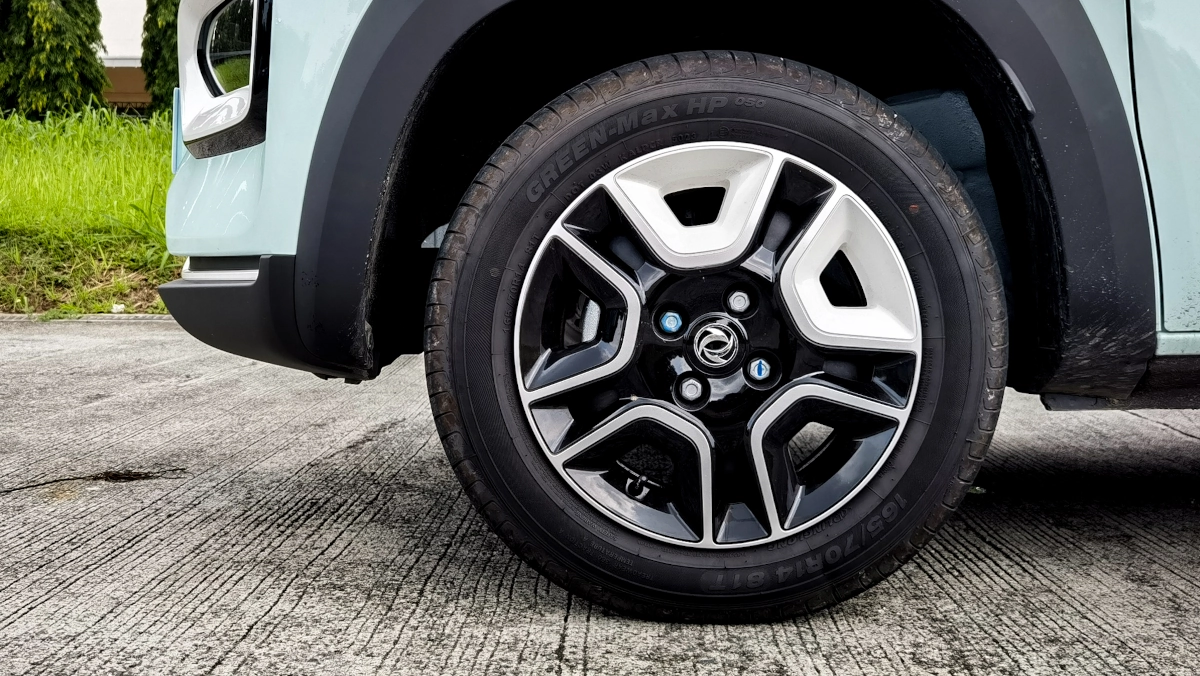
The Nanobox certainly drives nicer than an e-trike. Granted, it isn’t as refined as bigger EVs or more mainstream cars, but it is surprisingly sure-footed, if a bit stiff. The 165/70 R14 GreenMax HP eco-tires are rock hard and feel skittish over rough surfaces, but they provide decent grip and low rolling resistance. The steering is disconcertingly light, and you need to concentrate to maintain a straight trajectory on the bumpier parts of the expressway. While the Nano is a hundred kilograms heavier than a Mirage, it still gets knocked around by wind gusts at speed. But it is so narrow that you aren’t likely to get into trouble for wandering in your lane. The cabin is relatively quiet at speed, thanks to good suspension isolation and clean aerodynamics, though there’s quite a bit of outside sound leakage through the door seals, especially in traffic.
That said, the Nano is pure joy to drive around in traffic. It’s easy to thread between lanes, and the relatively tall seating position gives you a good view of the space around you. Granted, the tiny side mirrors and flimsy rear-view mirror don’t give you much coverage, but you don’t need all that much here. Thankfully, the single rear parking camera has an astoundingly wide field of view, allowing you to see cross traffic when backing out into the street.
Extra features
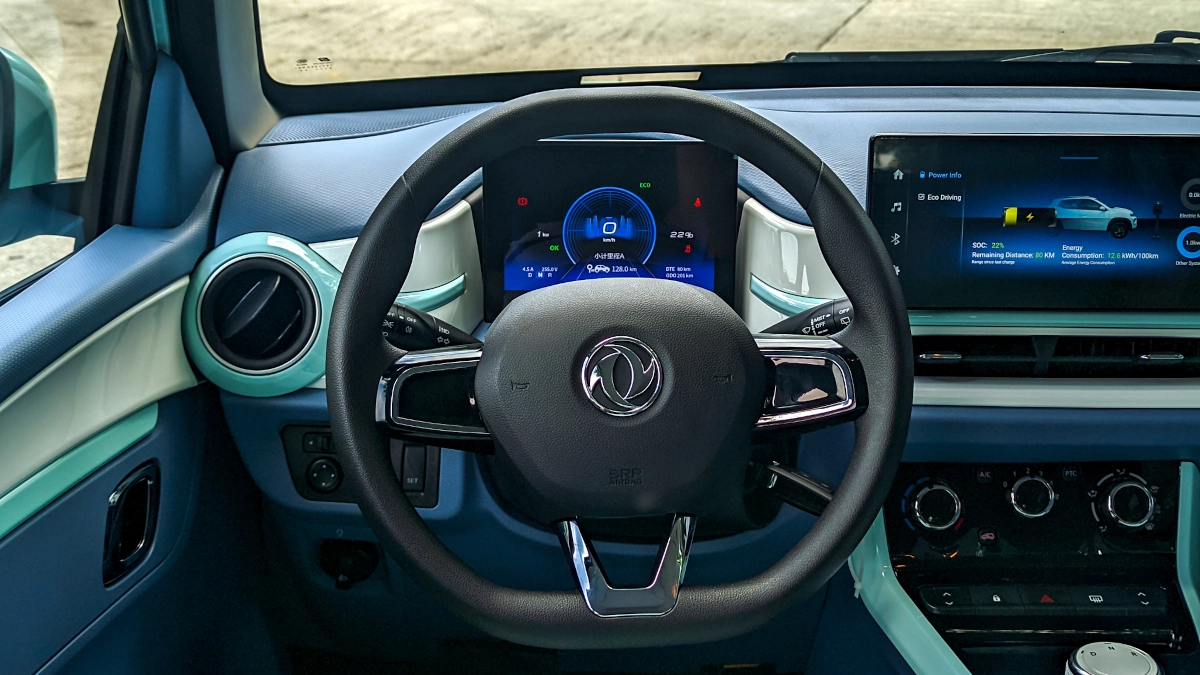
And that’s about all you get for driver aids. There’s ABS, yes, and rear ISOFIX/LATCH mounts for child seats, but little else. You do get a few creature comforts here: that center infotainment screen features eco-driving and charging displays, and allows Bluetooth integration, but with only two dash-mounted speakers, sound quality is... serviceable at best. There’s remote locking, but it’s not automatic, and you still need to insert a physical key in the ignition switch. A strangely anachronistic touch for a modern electric car.
Verdict
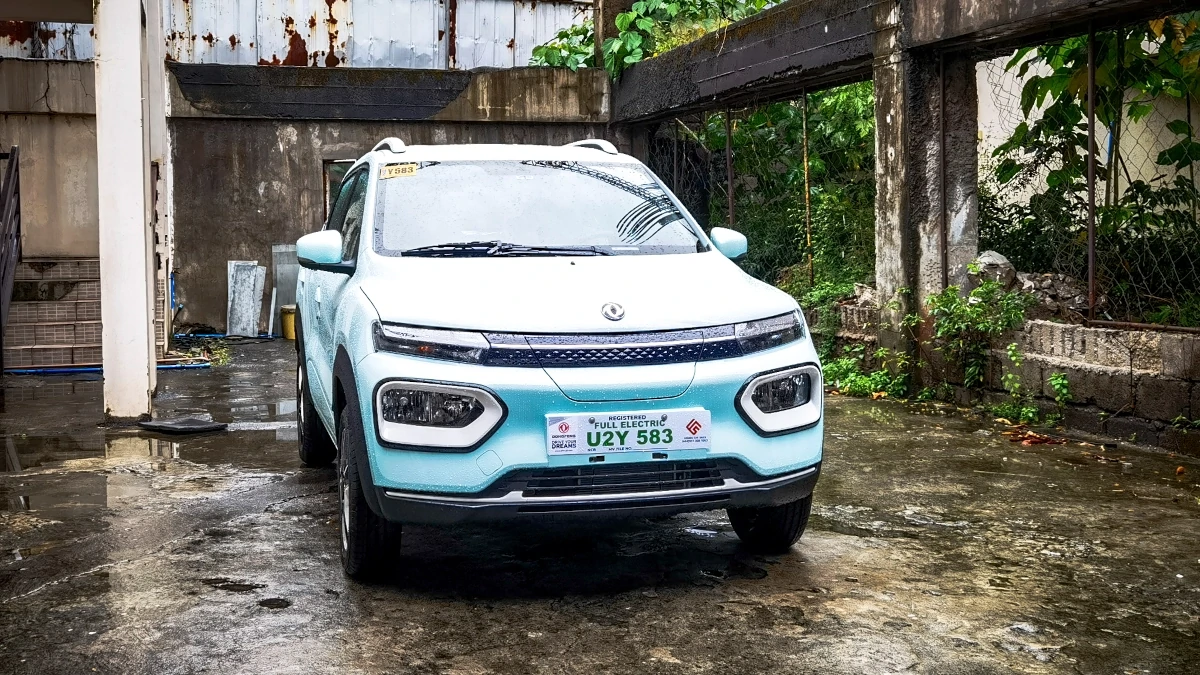
But these compromises help keep the price low. At just P888,000, the Nanobox is the cheapest four-seat EV on the market—well, cheapest where passengers aren’t forced to contort themselves to slide into the rear seat. And arguably the most frugal highway-capable one, to boot. While it might not sell in the same volumes as BYD’s more mainstream offerings, it has a small but growing online following, with active user groups and fan clubs.
It may not be the most high-tech of EVs, but simplicity plays in its favor. It feels just like a regular commuter car with a battery in place of a fuel tank, and the simplicity of the execution should, hopefully, mean less headache when it comes time to replace said battery as well. As to how much that replacement will cost, only time will tell, but with running costs of around a peso per kilometer, your potential savings over 100,000 to 200,000 kilometers versus gasoline-powered competitors are big enough, potentially, to pay for another car at the end of your warranty.
For the cost-conscious commuter, there are few brand-new options as practical as this. But with newer small EVs coming out with more space at slightly higher prices, the Nanobox will be facing a tough market in the year ahead.
SPECS: Dongfeng Nanobox 2025
Price: P888,000
Motor: Permanent-magnet synchronous
Power: 44hp
Torque: 125Nm
Transmission: Single-speed automatic
Drive layout: FWD
Estimated range: 351km
Seating: 4
Score: 6/10
More photos of the Dongfeng Nanobox EV 2025: