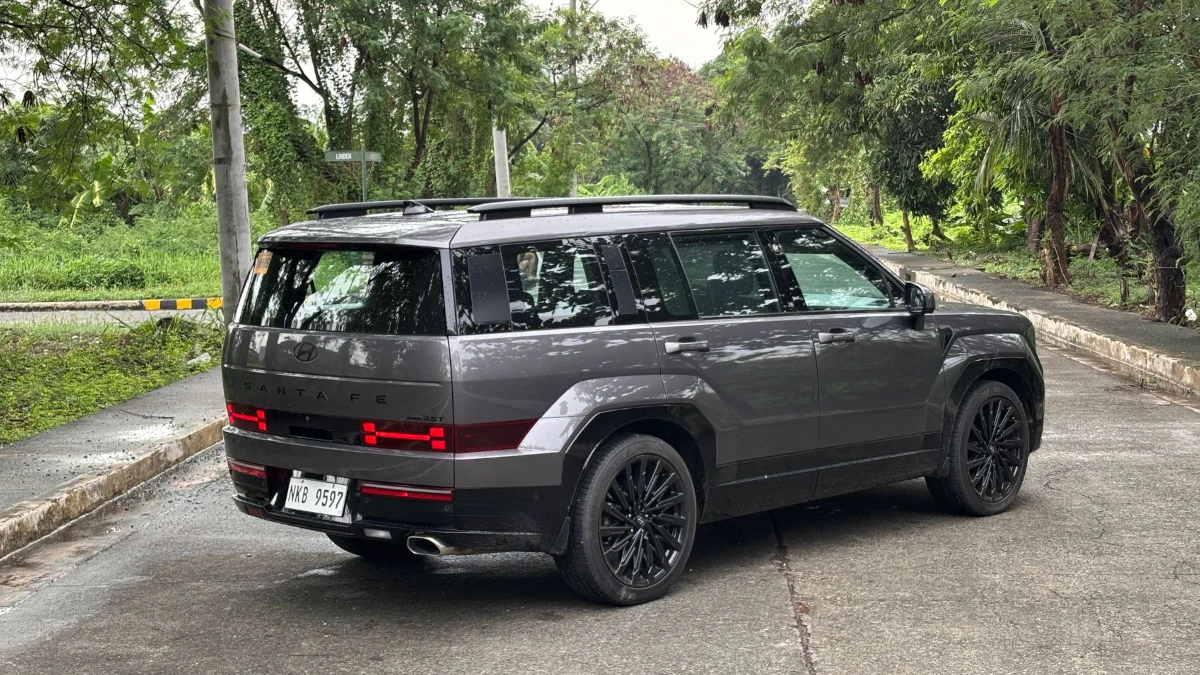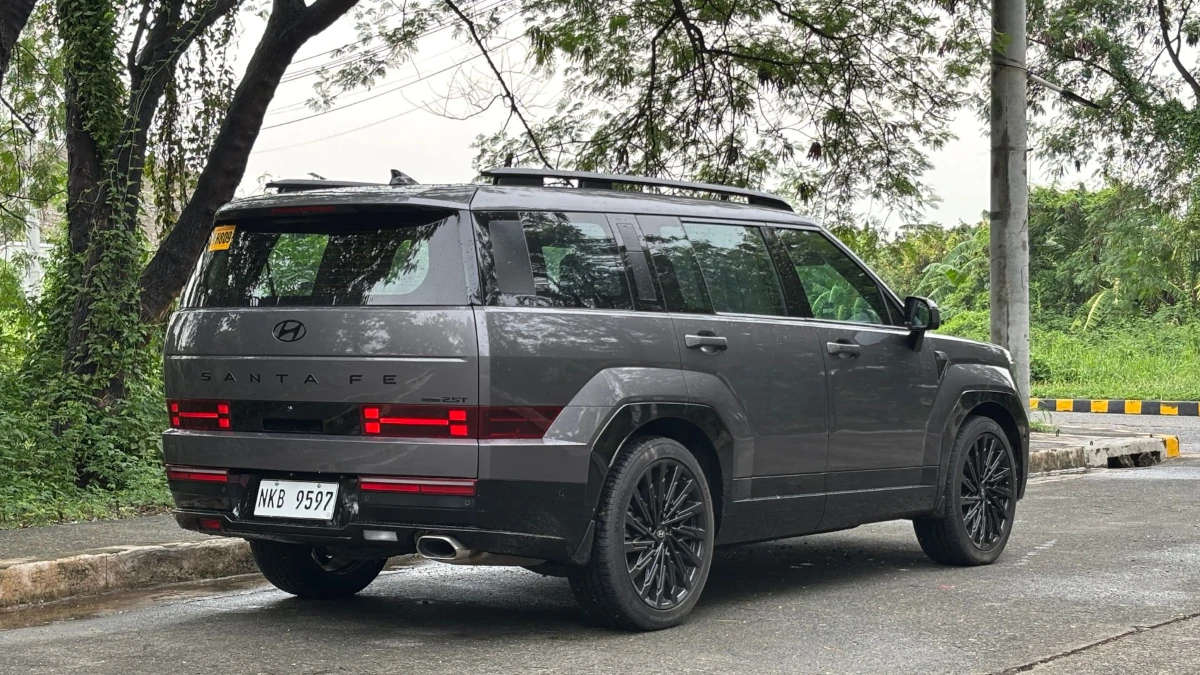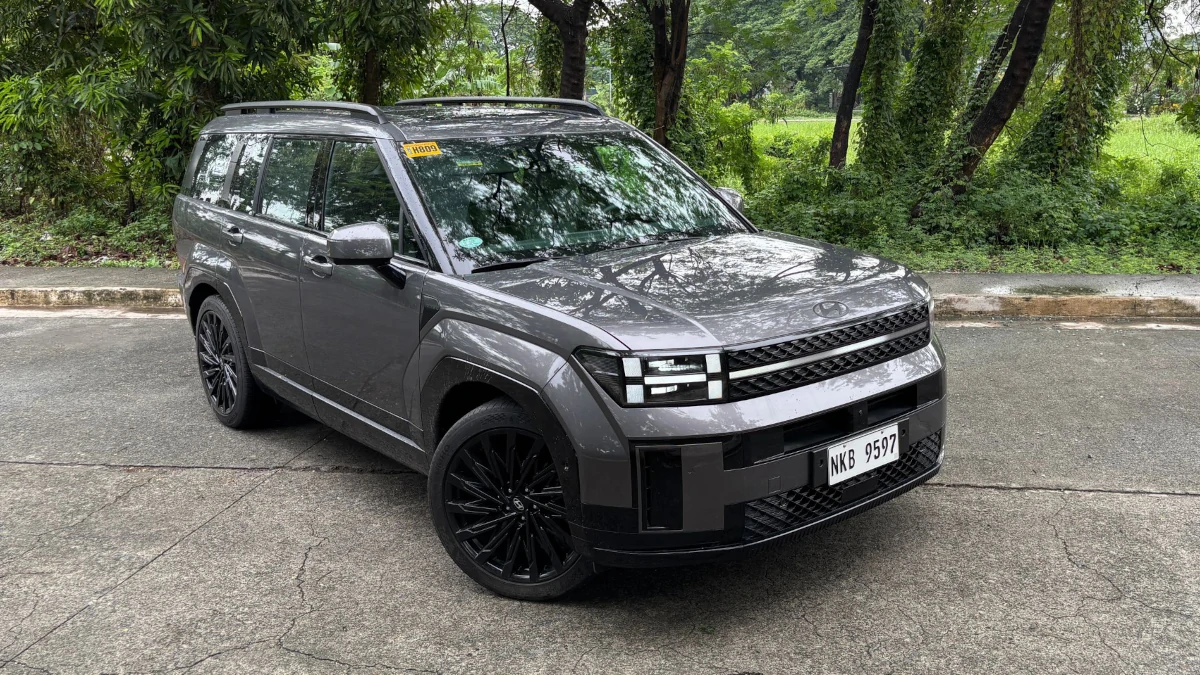
There’s no shortage of SUVs with controversial rear ends. There’s the Mitsubishi Montero Sport with its intriguing tail lights, the Land Rover Discovery featuring its asymmetrical tailgate, and the topic of this little feature, the Hyundai Santa Fe.
Oh how we remembered the reactions of the global automotive press when it was first revealed. The boxy aesthetic looked great…until you got to the rear. Still, the polarizing bum hasn’t exactly hindered sales. If anything, we’re seeing a good number of these on the road.
It’s been a while since the redesigned Santa Fe hit local showrooms. With that, we reckon it’s a good time to revisit the boxy (and controversially styled) SUV. Surely, there’s a reason why people are buying it, and it’s probably beyond the looks.
OTHER STORIES YOU MIGHT HAVE MISSED:
The Ford Ranger Super Duty has a whopping payload of up to 1,982kg
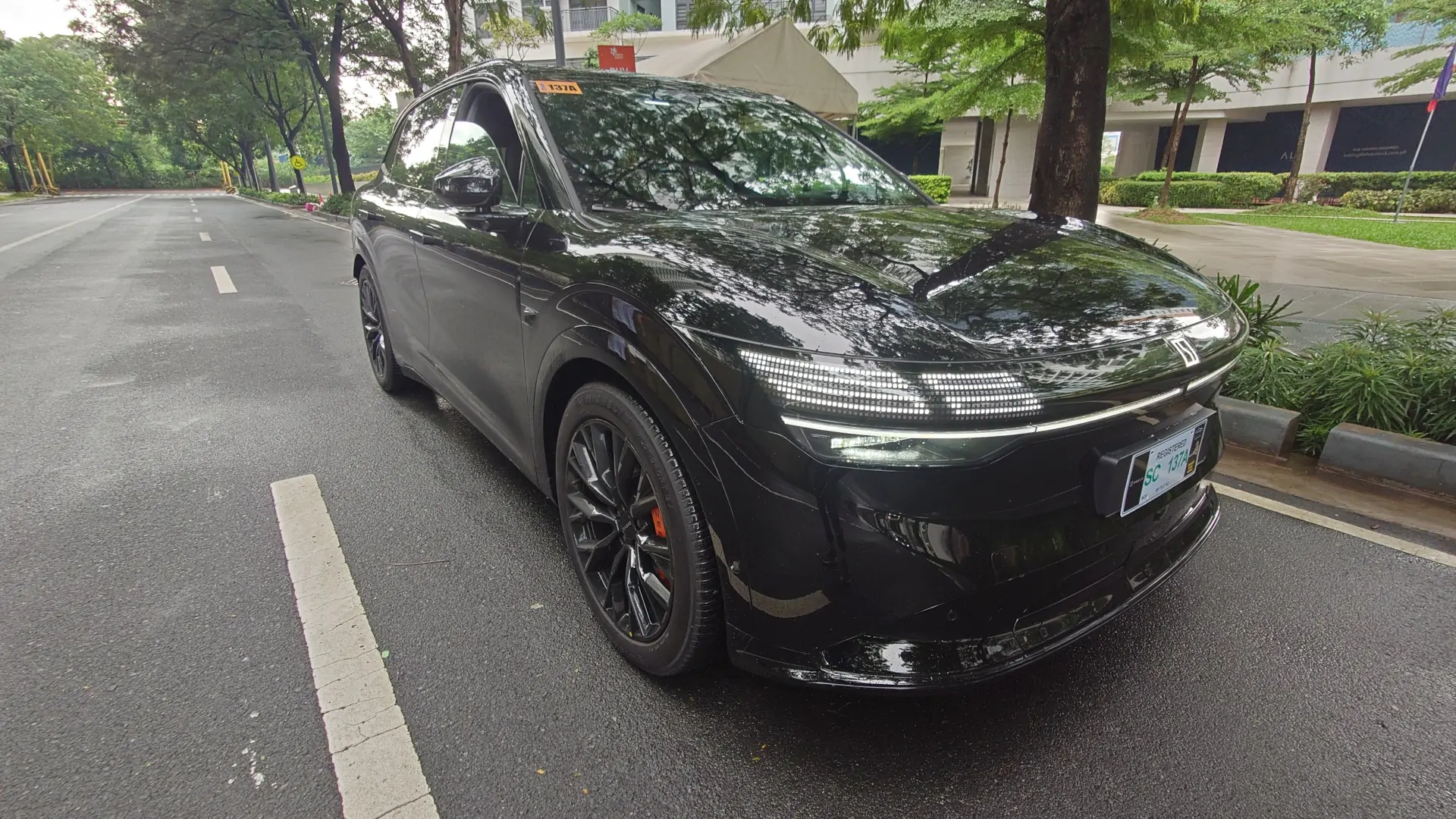
First impressions: The Zeekr 7X luxury midsize SUV is worth checking out
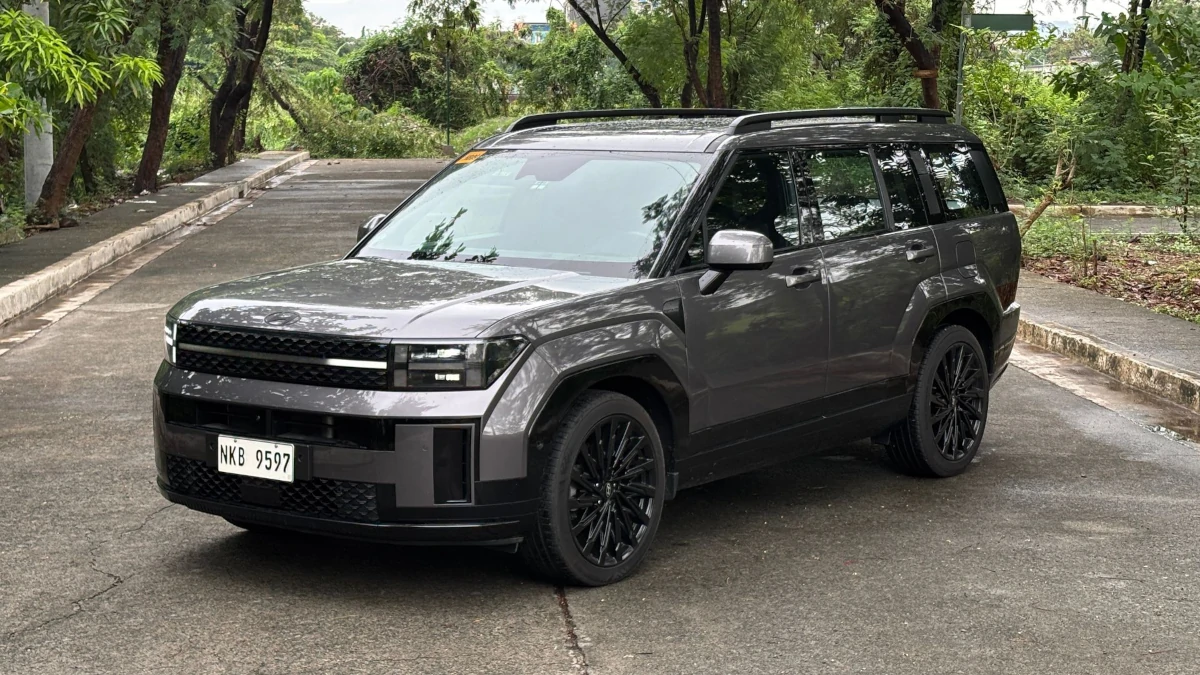
And just to make things more interesting, this writer will be taking a different angle on the Hyundai Santa Fe. As it’s an SUV, it should be a great family car, right? Well, we’re here to tell you that it’s a triumph of function over form.
Polarizing is better than bland
It seems that Hyundai gives its design department a whole lot of free rein. Yes, they still follow design languages, but it’s almost like none of their cars look identical to each other. They don’t do ‘sausages cut in different lengths’ over there (looking at you, Germany), giving the range better distinction.
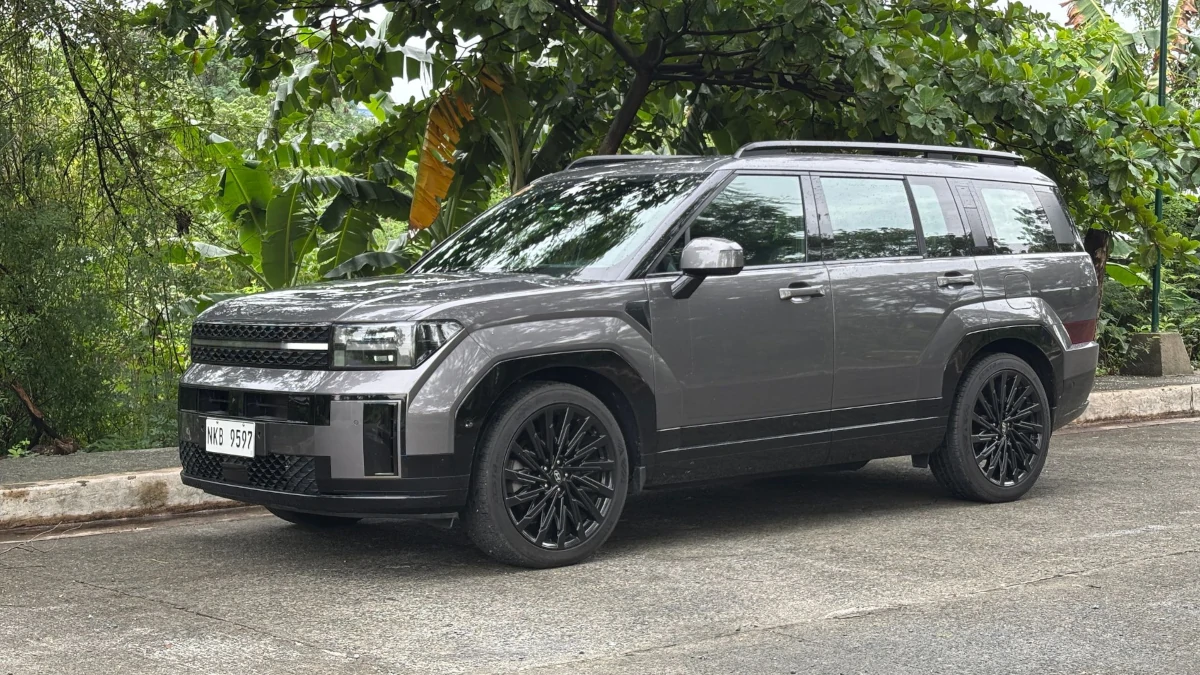
When you take a look at the Hyundai SUV lineup, you can easily tell one model from another. As for the Santa Fe, you definitely won’t mistake it for a Tucson or a Palisade. Okay, maybe a couple of things are inspired from a certain English automaker’s boxy 4x4, but we wouldn’t call it (totally) derivative.
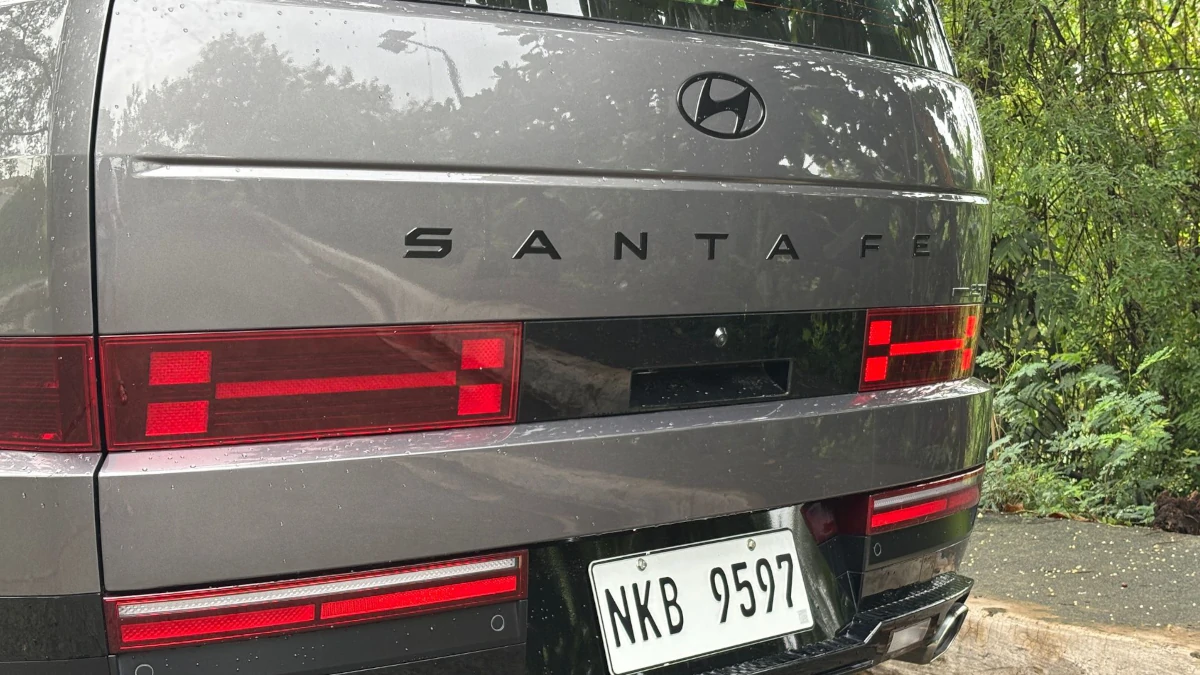
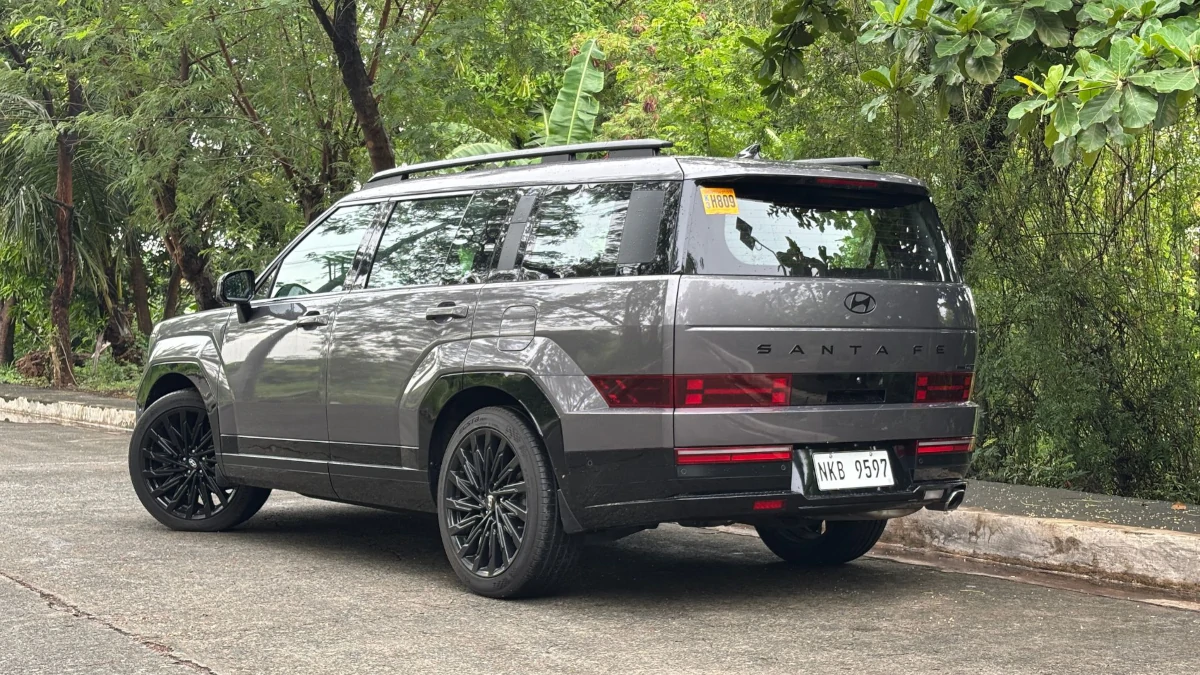
Then we get to the rear end. It’s either you like it or you don’t, there is no in-between. Hyundai does get points for at least making it look unique. In a world where every car is starting to look like one generic mold, you can’t deny that it stands out. Plus, there’s a huge benefit for having such a boxy rear end, which brings us nearly to our next point.
Boxy is best for space
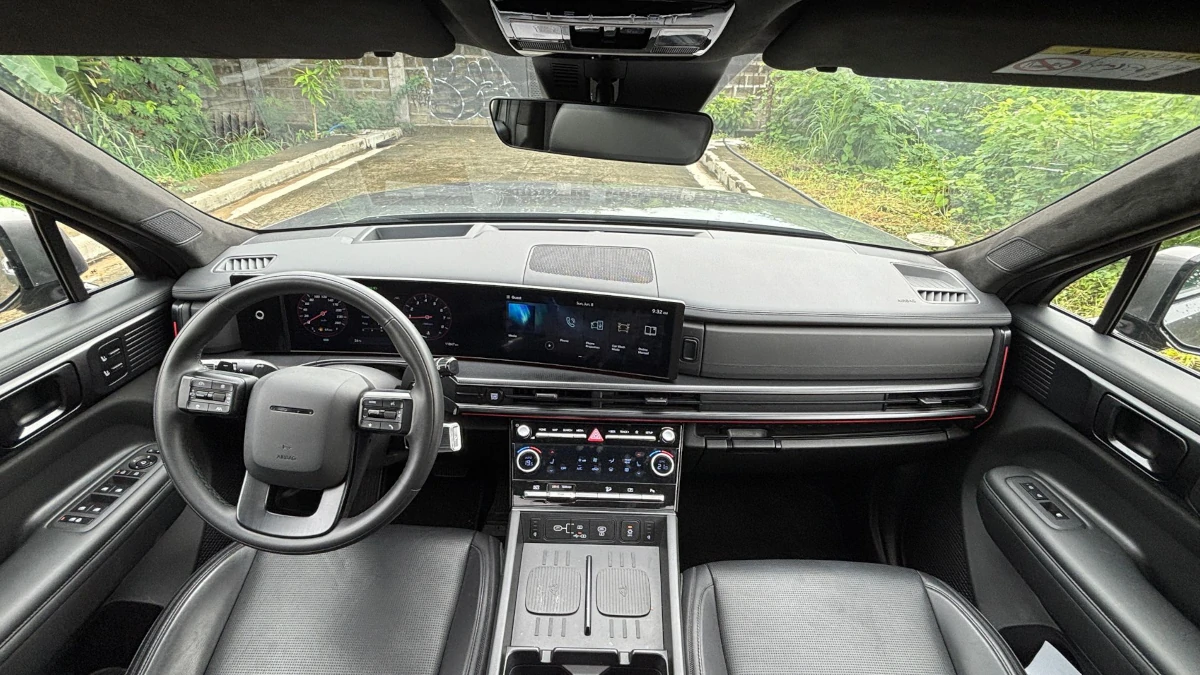
There’s a good reason why boxes are squared off: it maximizes volume on the inside. Every square inch is usable, and every corner can be utilized. You can say the same about the Santa Fe because it really makes the most of its already generous dimensions.
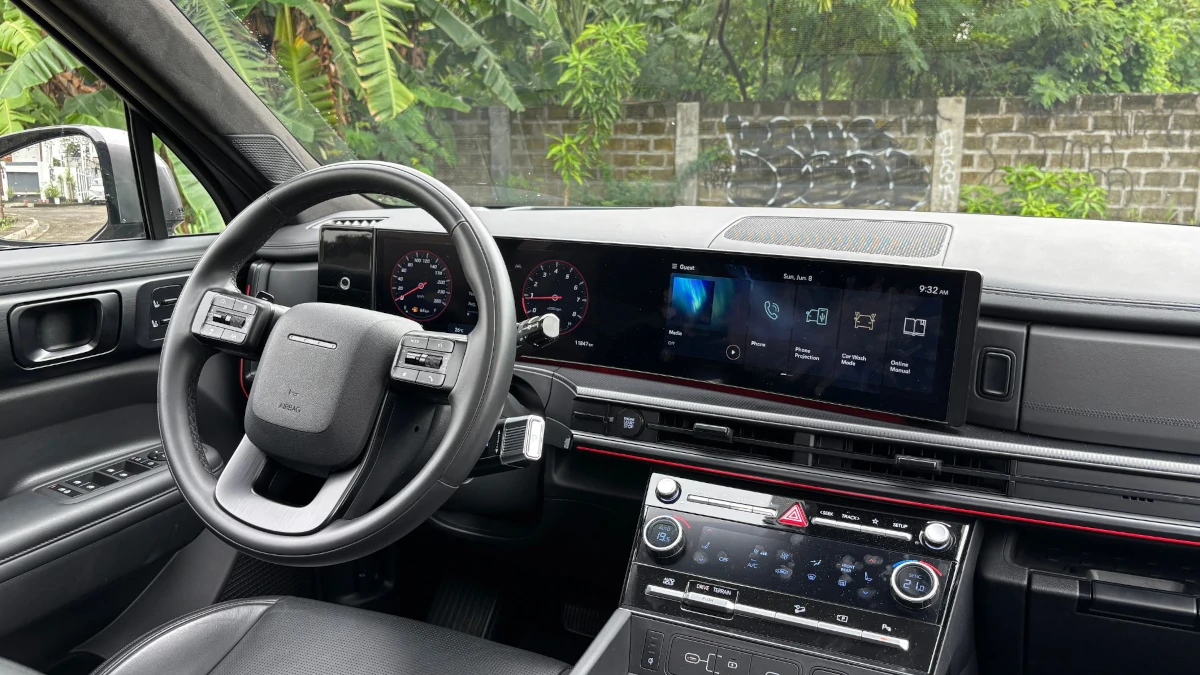
The result is acres of passenger room, and just as important, cargo space. And because sides are relatively flat, the seats can be made even wider, especially the second row. It also allowed the folks from Hyundai to add a wide center console that’s home to a pair of wireless charging pads, a massive console box, and even another tray below the console.
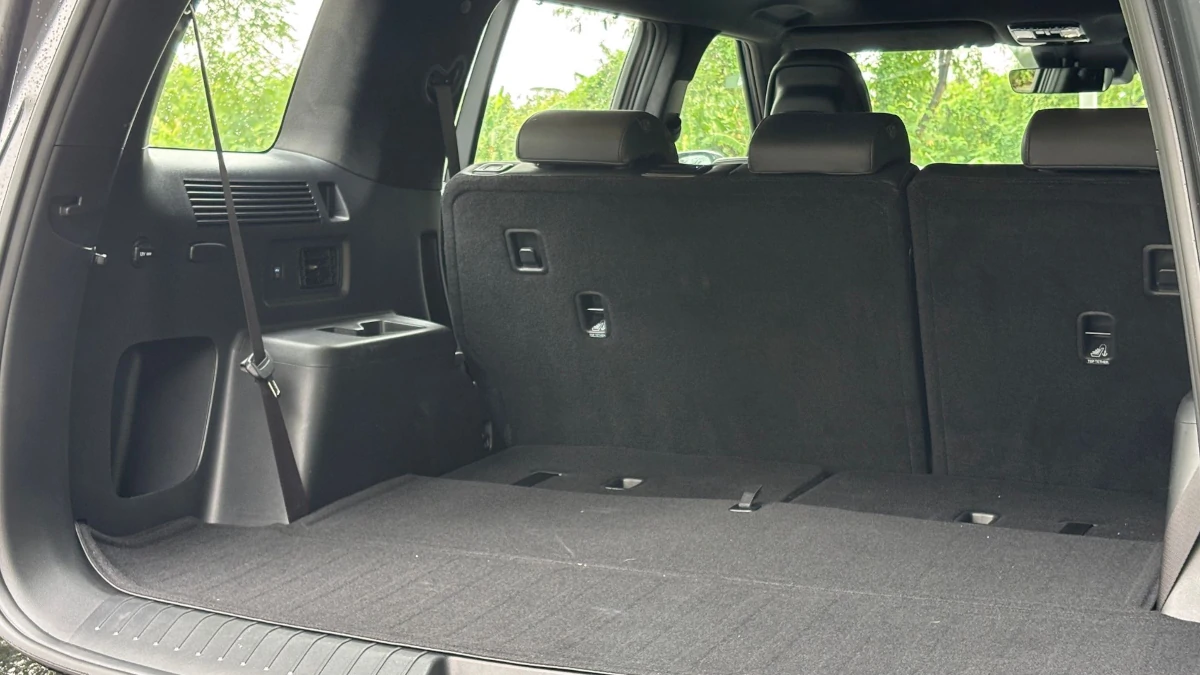
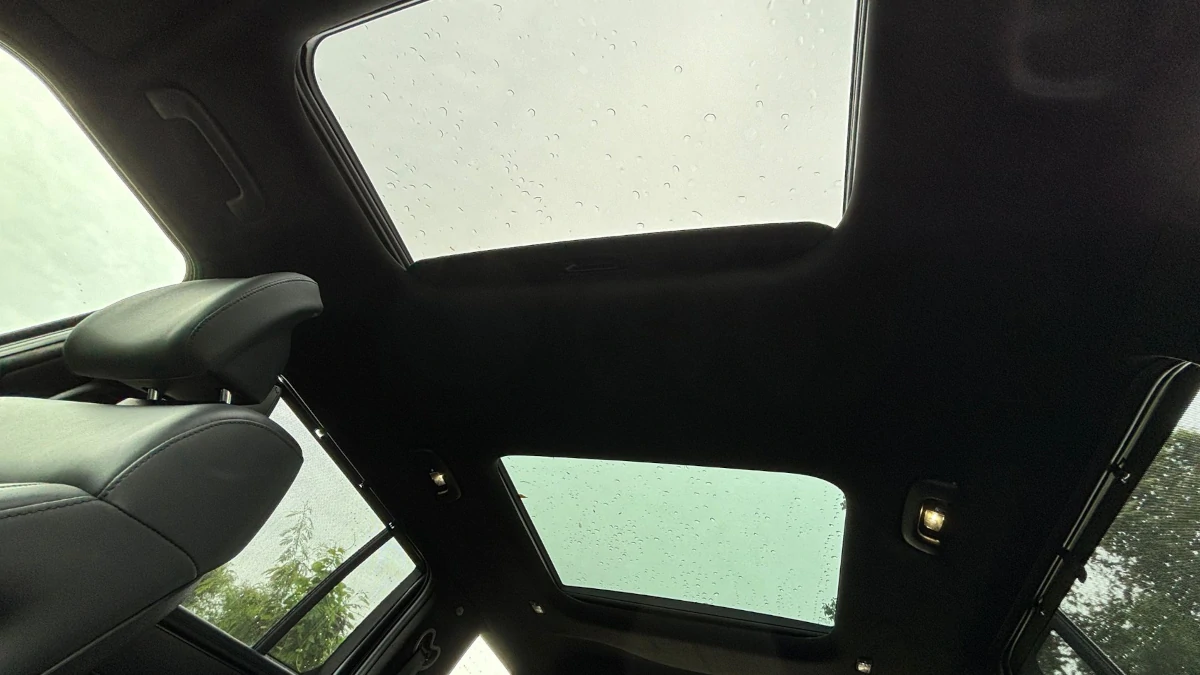
Not only is there legroom for days, there’s absolutely no issues with hip and shoulder room inside the Santa Fe. Headroom? You can practically wear a chef’s hat in there, even with two sunroofs. Yes, two.
But the best part has to be the cargo area. The near vertical tailgate means you can stack tall items even by towards the outer edges. The floor itself is a nice, square space, so you don’t have to play tailgate Tetris when loading in items.
Surprise and delight
But parents will probably like several of the Santa Fe’s surprise and delight features. For starters, the squared-off door openings make putting in children in child seats much easier. There’s a lesser risk of accidentally bopping your kid’s head, for instance, and the wide opening means buckling in child seats is so much more convenient.
Of course, there are ISOFIX child seat mounts, but the power front seat adjusters on the side bolsters are great for those who need more room. For those who have bulky child seats, it’s a huge plus, especially for rearward-facing seats. The kids will also like the panoramic roof specifically for the second and third row, letting in more light into the cabin.
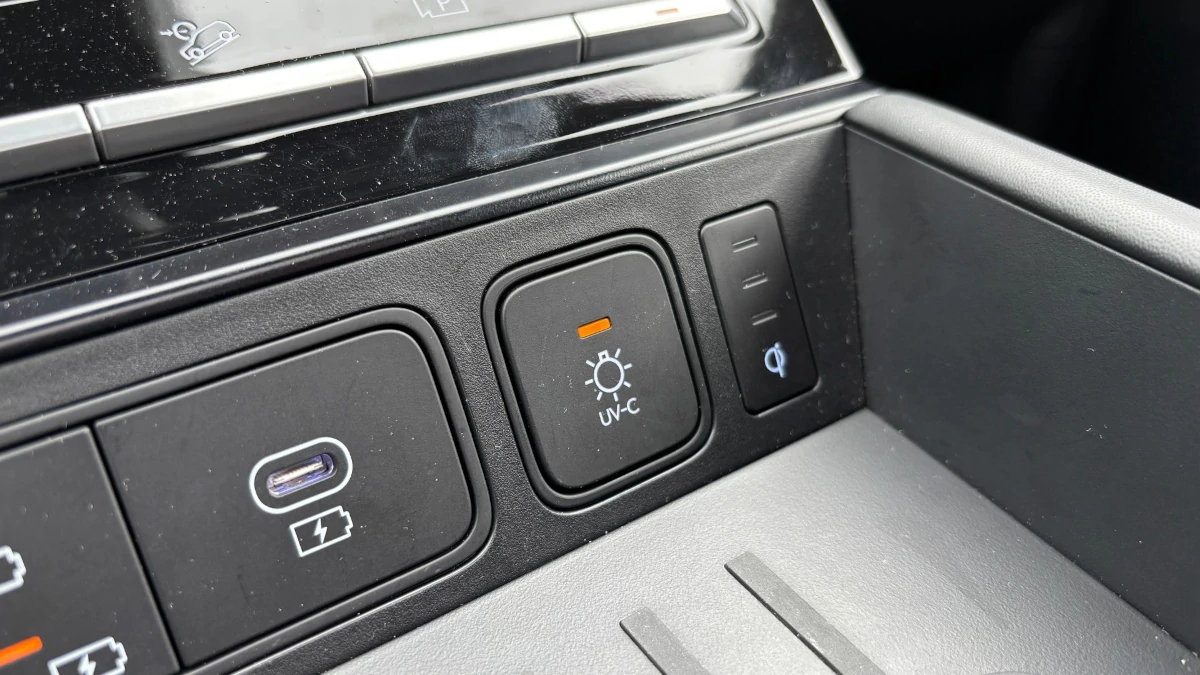
Did we mention it comes with a UV disinfection system? It’s something that should come in handy, especially when your children reach their ‘put anything in their mouth’ stage. You can stick a couple of your kid’s toys in there, but we wouldn’t advise using it as a bottle sterilizer, though. Still, a neat feature, we say.
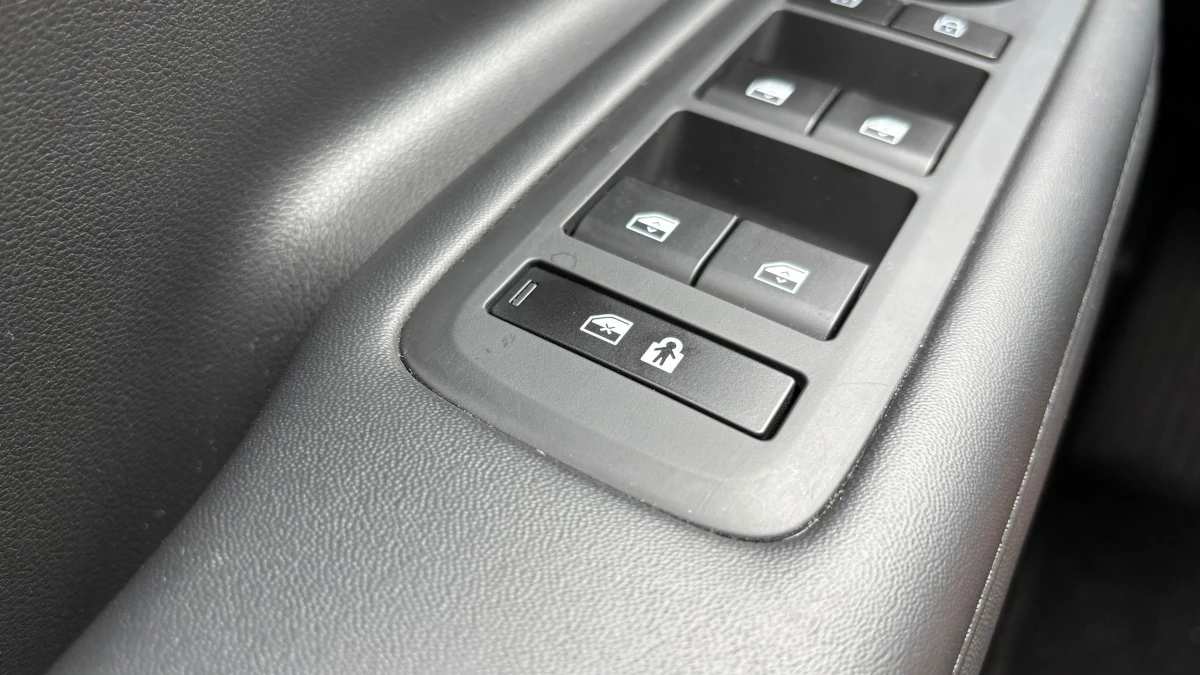
But perhaps our favorite feature is a seemingly innocent little button, but a godsend for parents. For the most part, child door locks are a tab on the rear doors, but that’s not the case in the Santa Fe. Here, it’s a button on the driver’s side panel, meaning there’s no need to go to the rear doors to lock it (or unlock it) manually. Seriously, why won’t more automakers do that?
Speaking of features we wished were on more cars, the center console box opens either forwards of backwards, so the driver no longer has to fumble around the cubby if anyone from the back needs something from there. Oh, and the side traffic warning system is a plus, too, preventing cases of opening the door into an erring motorcyclist that’s lane splitting against the sidewalk.
A few downsides…
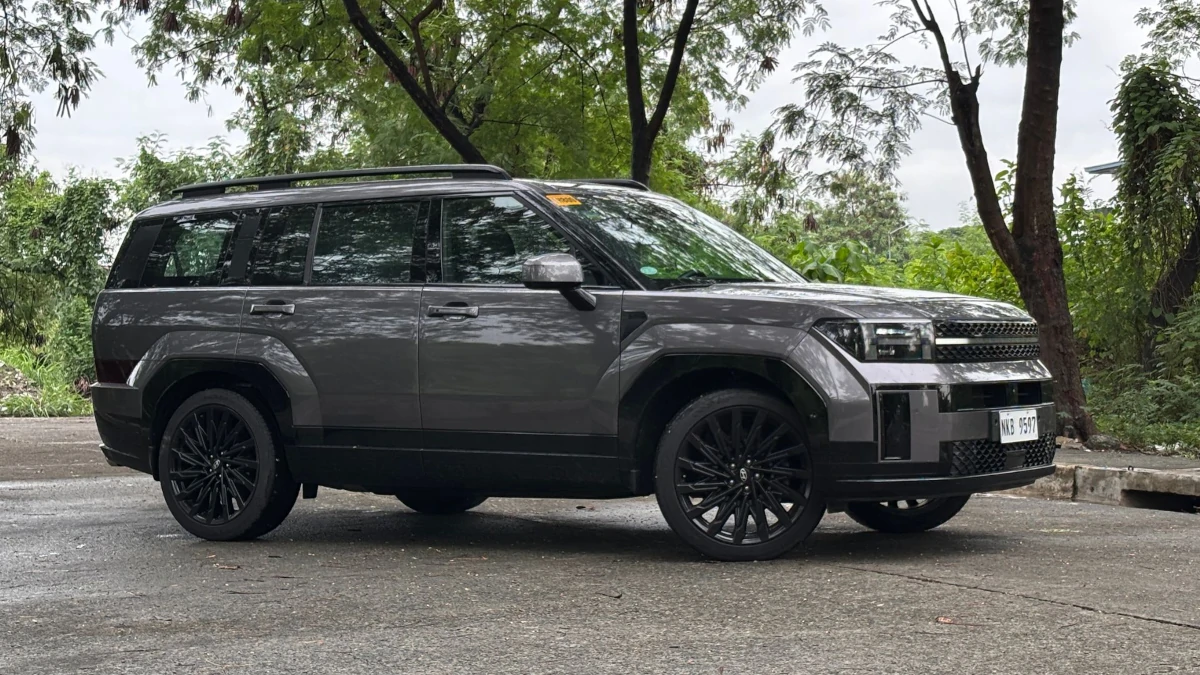
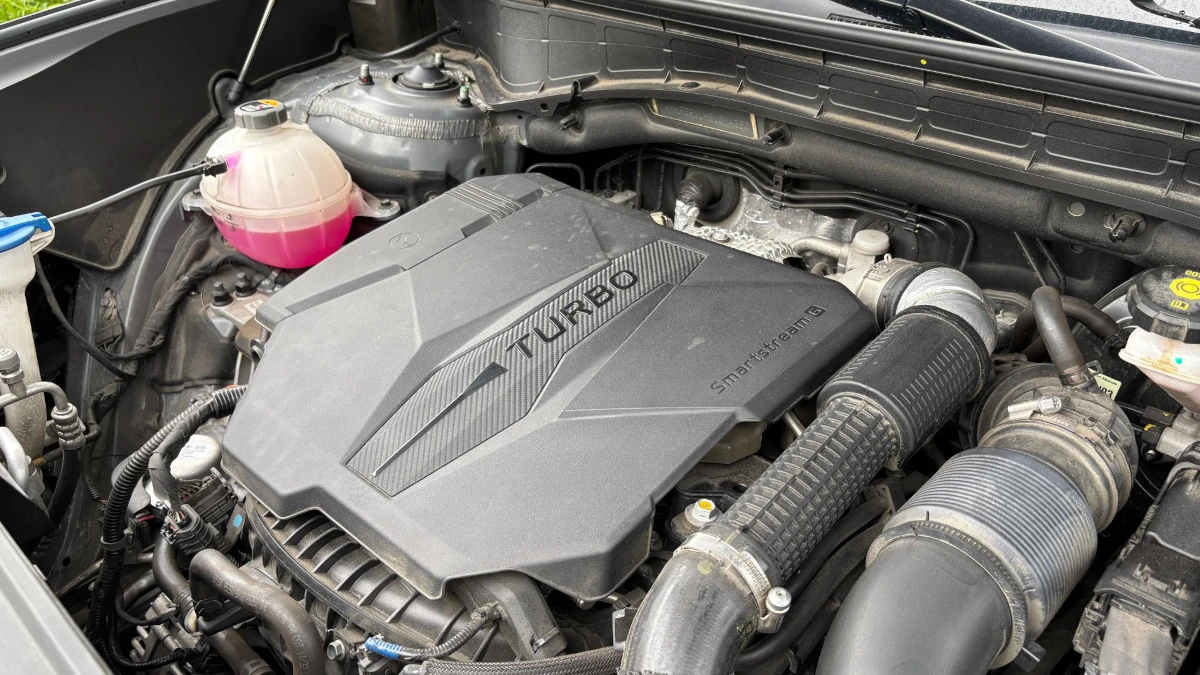
Convinced? Well, there are a few things you need to know before you make that final decision. The tester we got came with a 2.5-liter turbo that makes 277hp and 422Nm. It’s strong and punchy, but also quite thirsty. We’re looking at about 4.5km/L in extreme traffic, and you’ll be happy to get 6km/L around the city. On the highway, 13km/L seems to be the most realistic figure you’ll get. You’ll be lucky to get 400km from the tank if you drive it strictly around the city.
Another thing we noted was the ride. It’s on the firm side, and the massive 21-inch alloys don’t help matters. Okay, it’s not pickup/truck-based SUV stiff, but we were expecting it to be a little more forgiving and compliant given its market positioning. It’s noticeable, especially from the back seats, but thankfully, it’s not carsick-inducing.
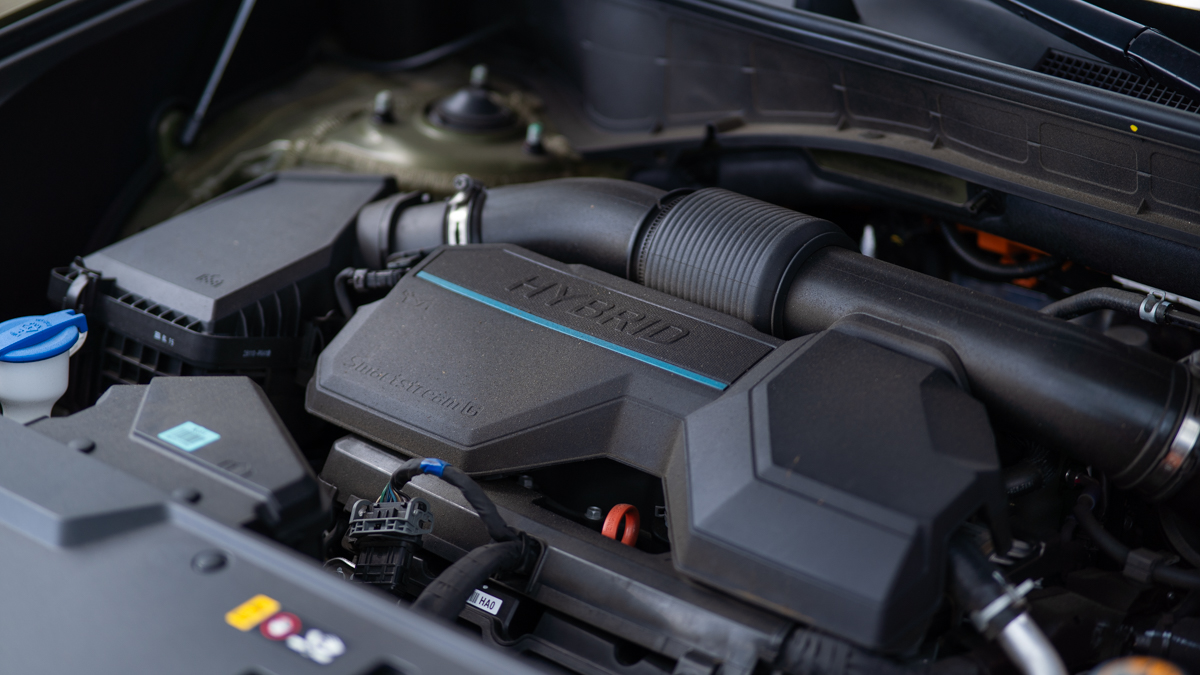
There is a way around those two cons, though. In this case, we recommend going straight for the hybrid model since its electric motors help eliminate most of the body movements. Plus, the hybrid version rides on smaller 20-inch wheels so there’s more give between road and tire. Also, it’s so much easier on gas thanks to a 1.6 turbo mated to a single electric motor that makes 232hp and 367Nm. Granted, it’s P200,000 more than the Calligraphy 2.5T AWD and makes less power, but we’re willing to pay more for a softer ride and far superior economy.
You can also go lower down the ladder and go for the GLS AWD. You lose the turbo, so that might help fuel economy matters, and it rides on smaller wheels compared to our test unit. For those curious, it uses a 2.5-liter mill that’s good for 191hp and 246Nm. It’s also nearly P600,000 less than the 2.5T Calligraphy. That’s something to consider.
…But a solid package overall
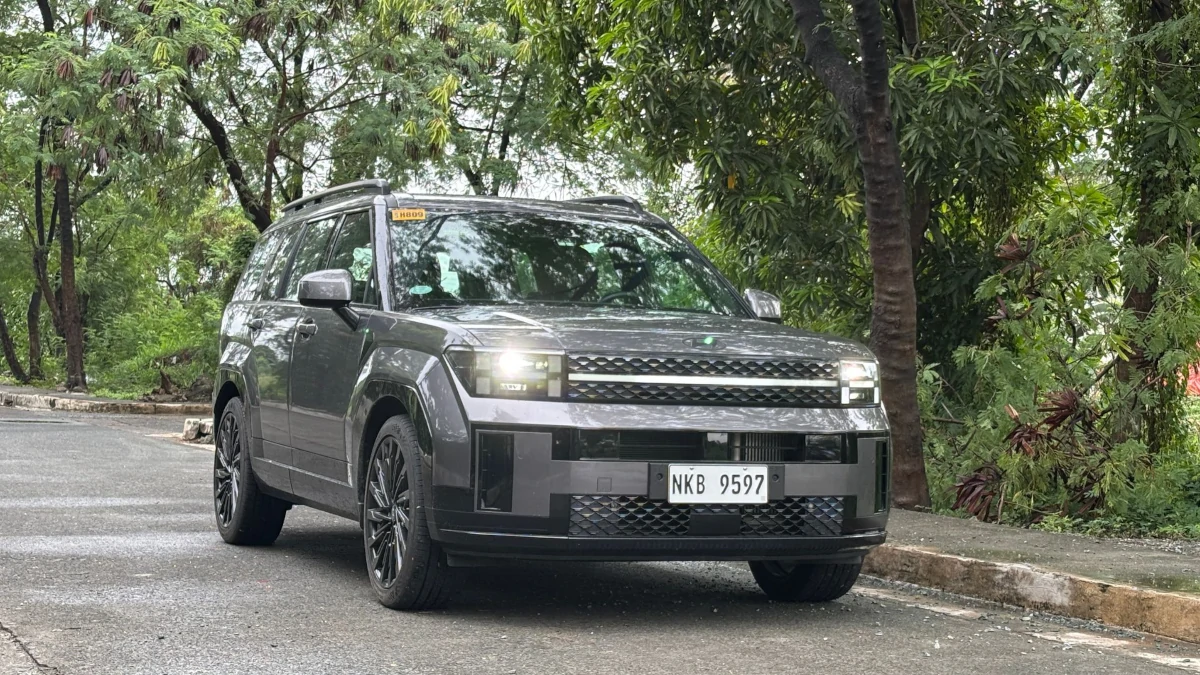
It’s not perfect, but there’s a lot to like about the Santa Fe. Sure, the styling is love/hate, but we like the fact that Hyundai is being daring. But, if anything, this SUV is a triumph of function over form. There’s loads of space, it’s immensely flexible, and the interior packaging is hard to beat in its segment.
From a parent’s point of view, it ticks all the right boxes, and the surprise and delight features are something moms and dads will appreciate. We really can’t get over the clever child lock mechanism. It’s simple but makes oh, so much sense.
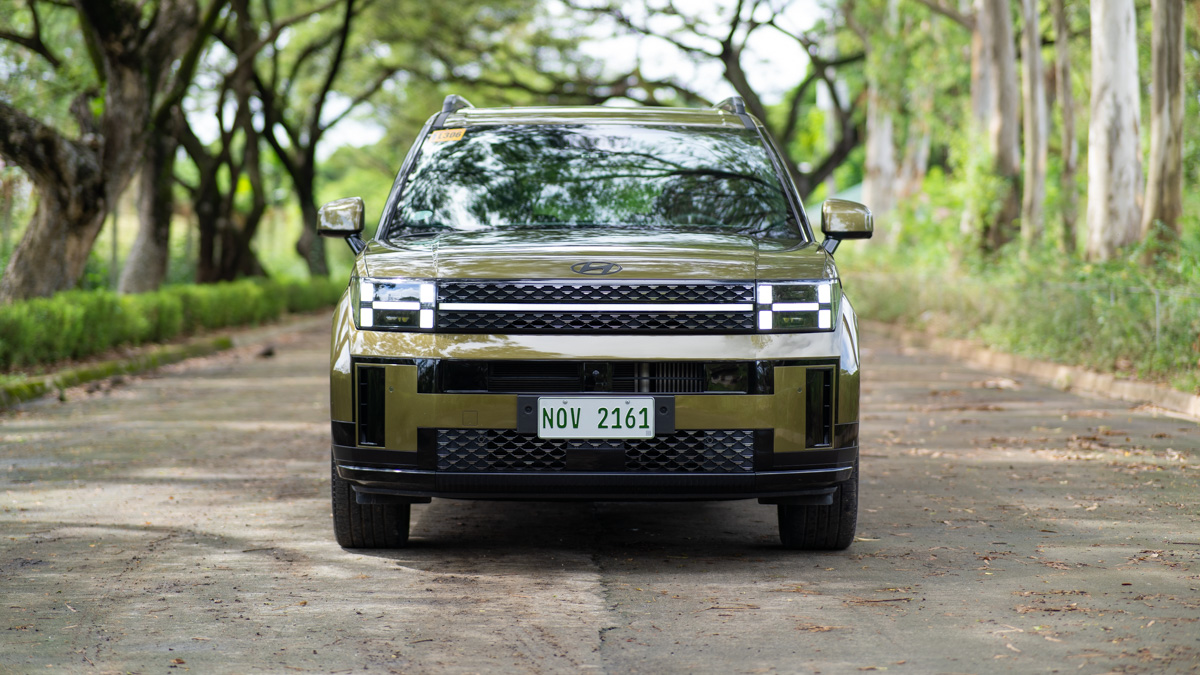
The turbocharged all-wheel drive test unit we had rung in at P3,100,000, while the hybrid retails for P3,330,000. We wouldn’t call that affordable by any means, but the lineup kicks off at P2,410,000 for the base 2WD model. For those who really insist on all-wheel drive, the GLS AWD is yours for P2,540,000.
Our pick of the range? It’s a tough one. We’d love to try out the GLS AWD as it seems to offer the best value, but it’s the hybrid that’s hitting all the right notes for us. Okay, it’s the most expensive, but the combination of utility, practicality, and efficiency makes it a tempting proposition for those who have over P3-M to burn for a relatively large SUV.
More photos of the Hyundai Santa Fe: