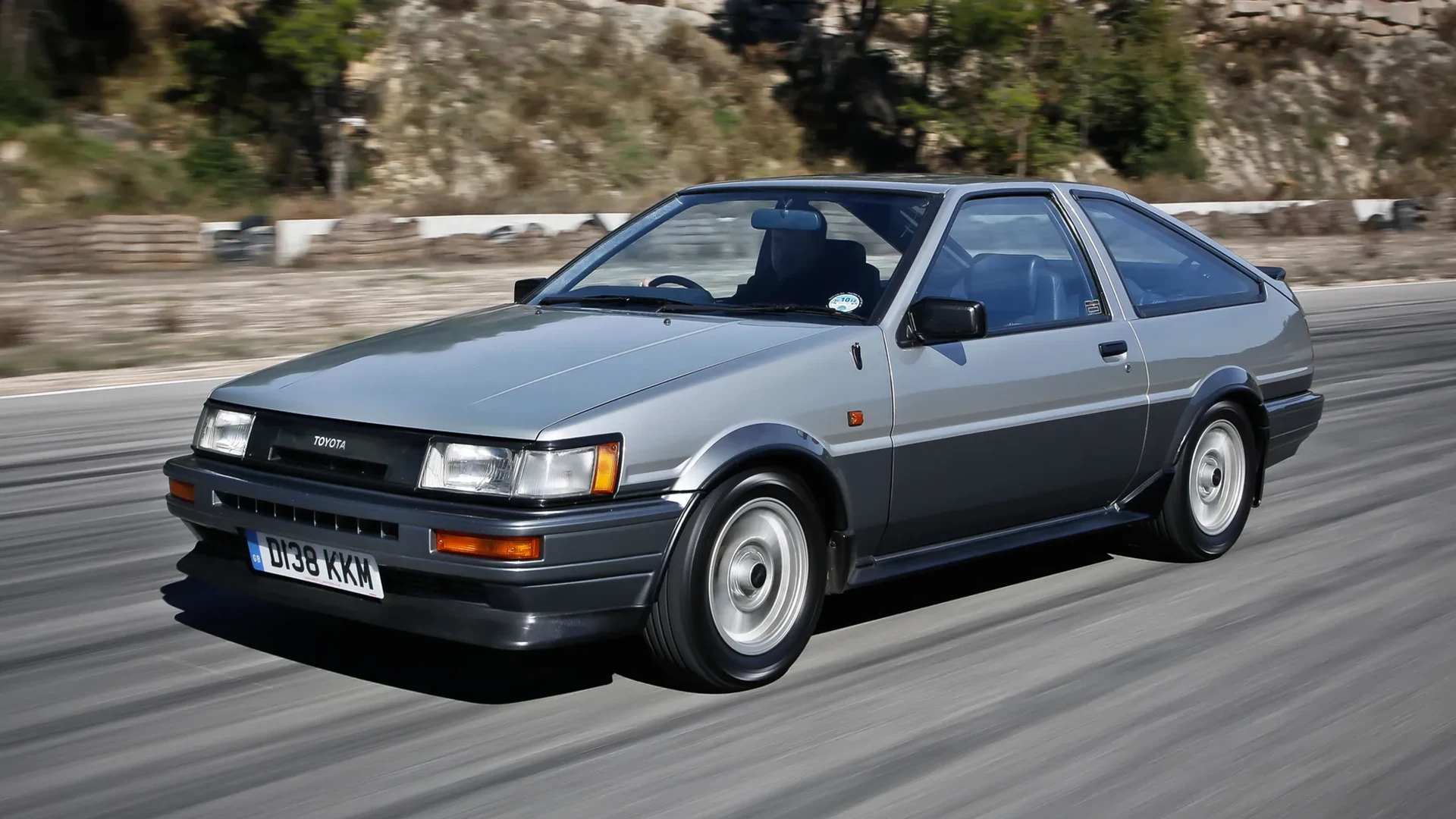

Ah the little legend that was the AE86?
Oh yes, this is a car that’s steeped in narrative, some of which is fable. At the time of launch, it wasn’t actually seen as very important, at least not in the UK.
Some context. Back then, 1985, most of Toyota’s range was dynamically pretty ropey, especially the high-selling but low-excitement Corolla itself. Up to then, the Corolla was rear-drive and crude, a feeble competitor to the Mk2 VW Golf.
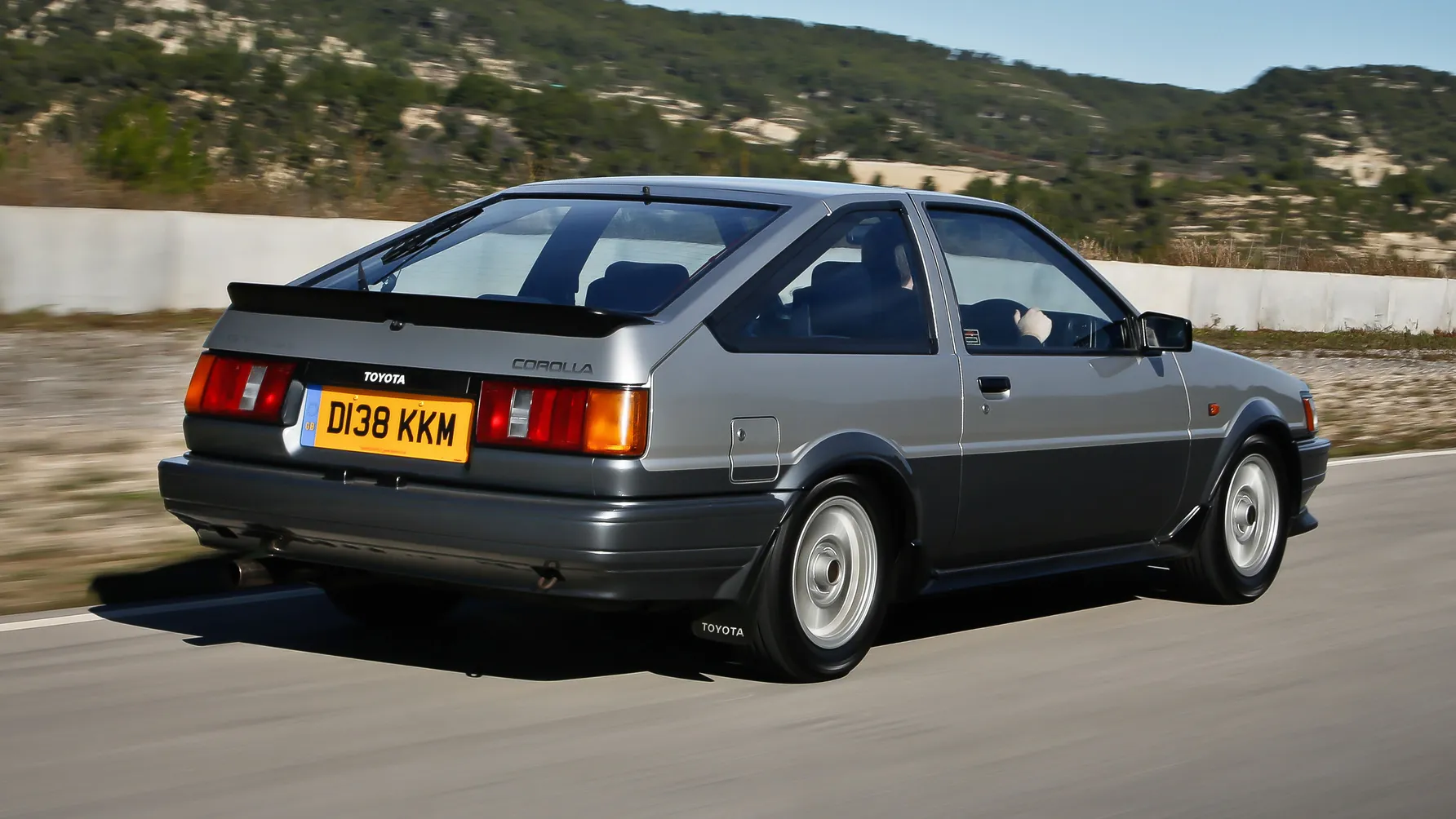
At that point the Corolla went front-drive. Except…a posse of Japanese engineers wanted to keep RWD for the sporty Corolla coupes. So they did, using the floorpan of the outgoing hatch and saloon.
So the car forever known by its codename, AE86, was launched in Japan in 1983. Hachi-roku? Eight-six in Japanese, simple as.
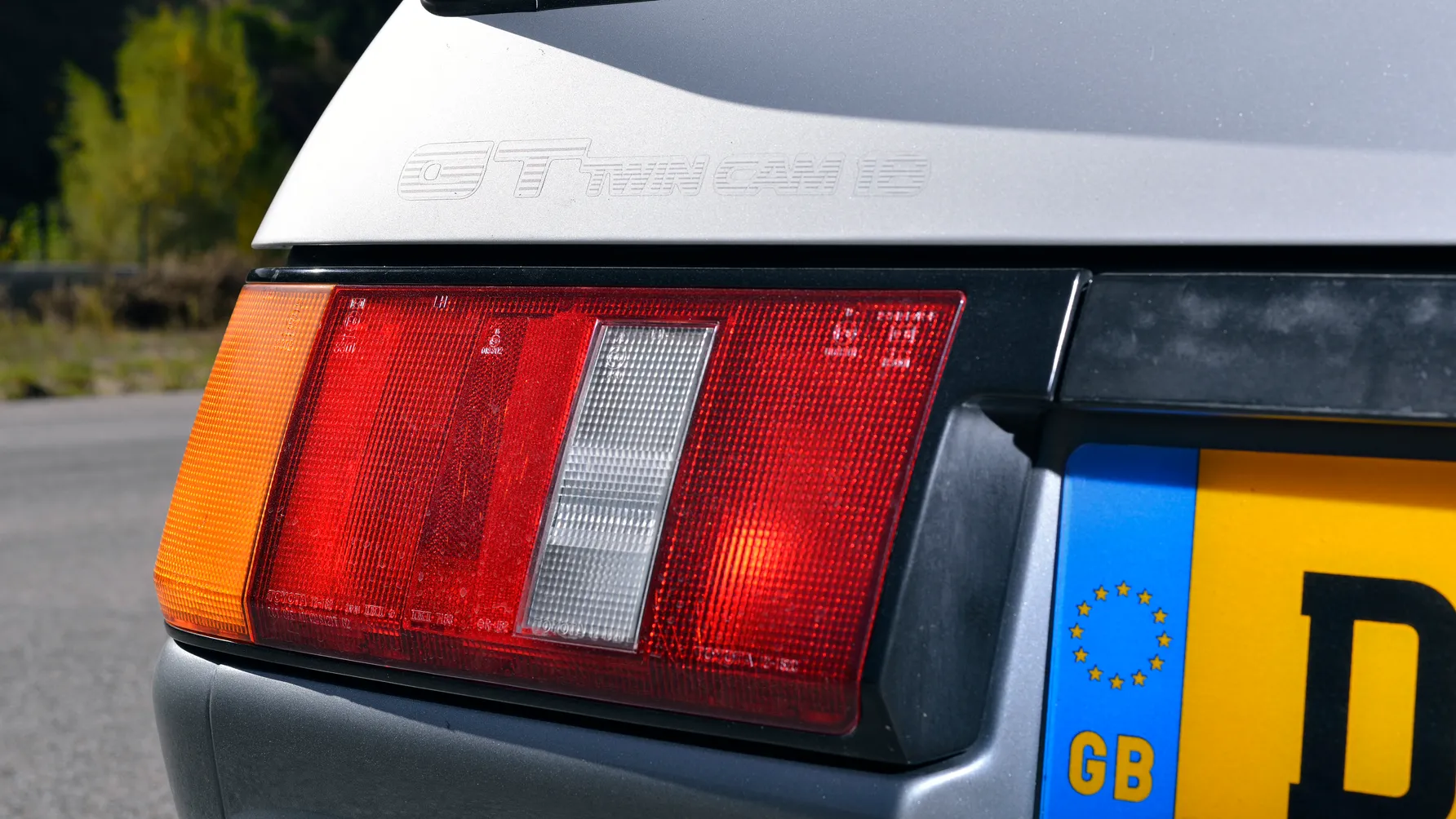
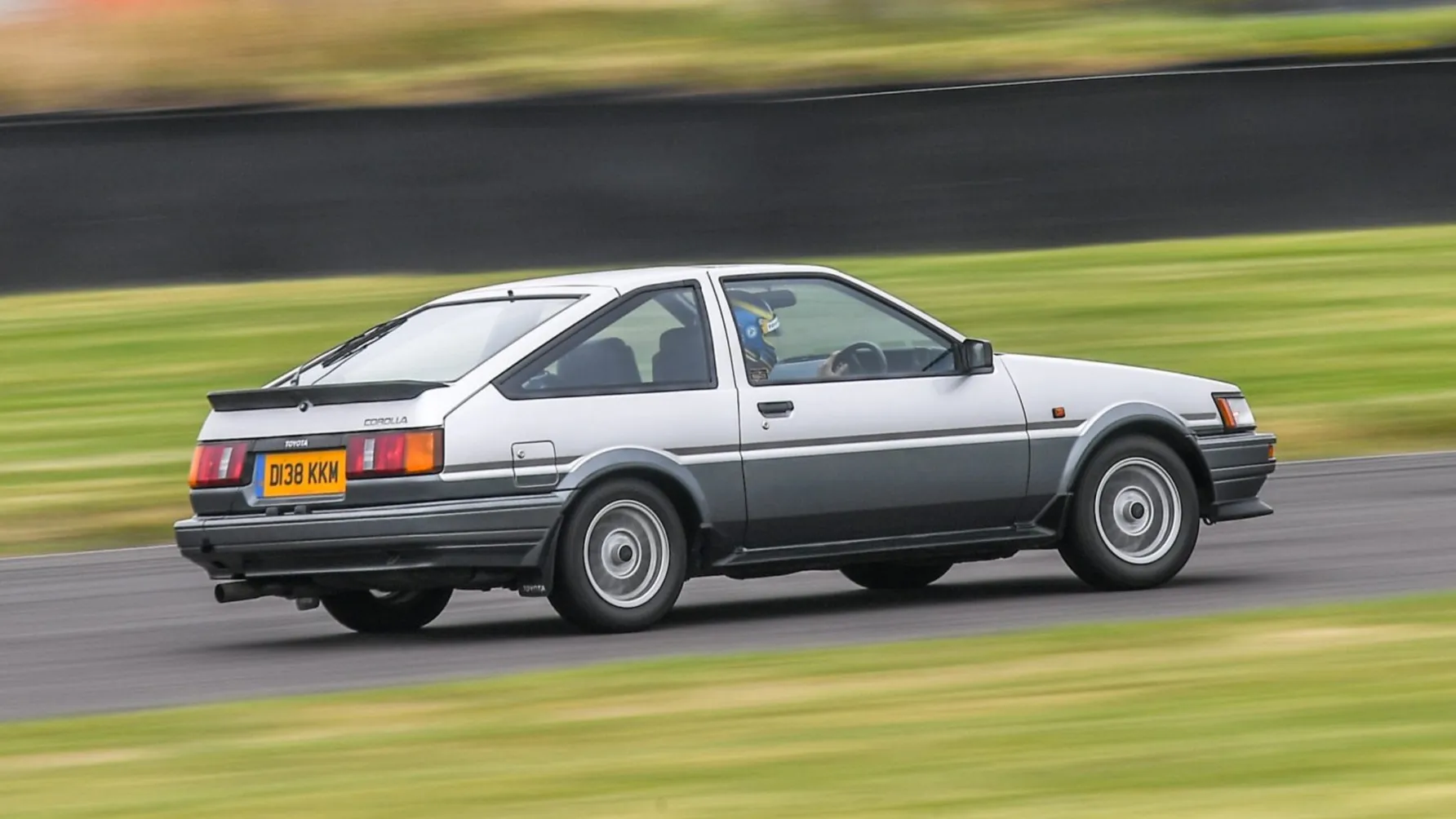
In Japan it was sold through two of Toyota’s dealer chains. Hence two names, and two designs. The Corolla Levin GT was the one we got two years later. The Sprinter Trueno had pop-up headlights. Both could be had as a three-box two-door or a fastback hatch. In Britain they got only one of the four: the hatch Levin design.
OK, so why the adulation now for a car that was basically outdated at launch?
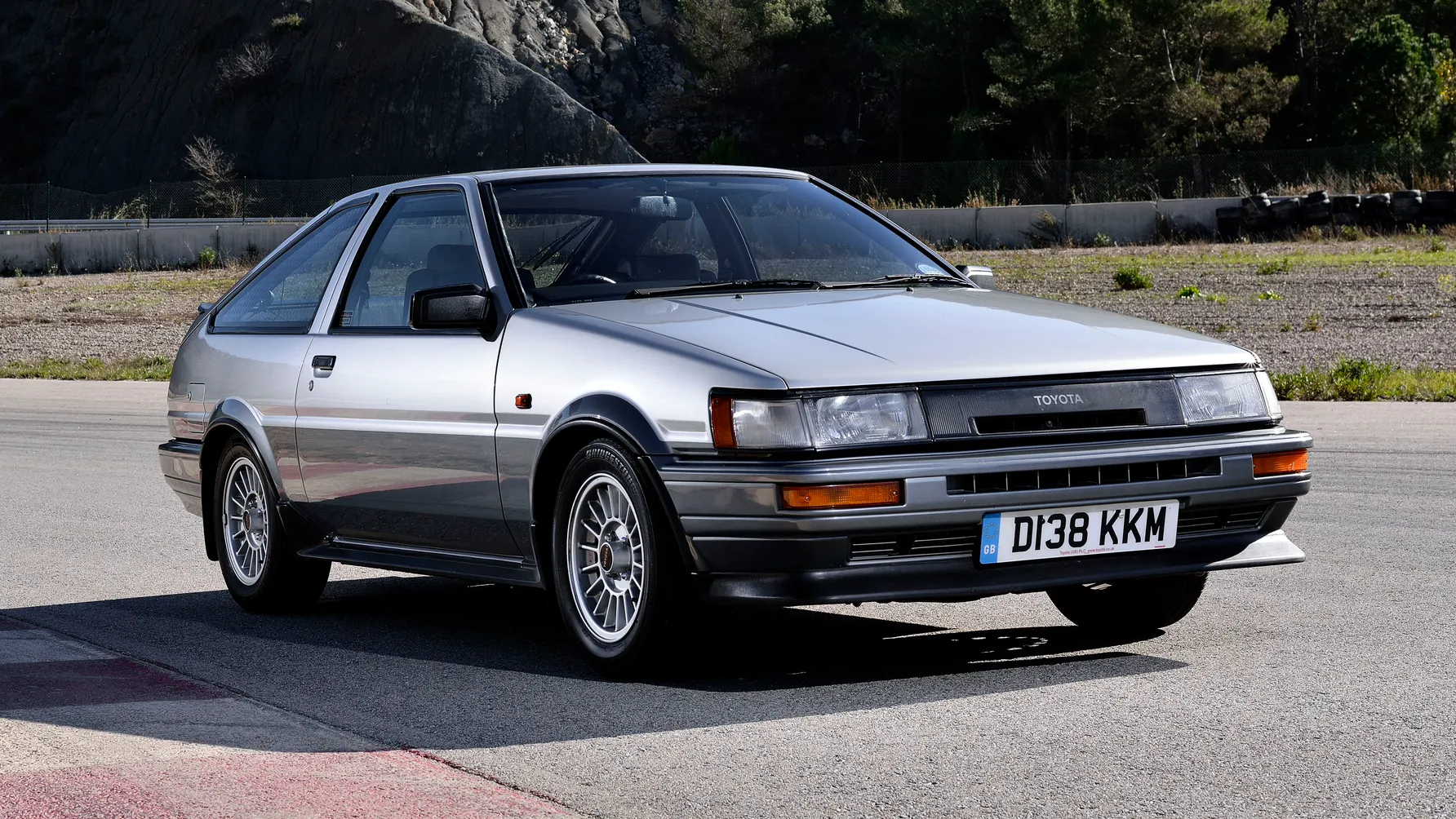
Because it was a pure old-fashioned driver’s format for relatively small money. In the UK it was called Corolla GT Coupe and cost £8,799 (around P702,000 at the time of writing)—just 10% more than a Golf GTI.
Its 1.6-litre twin-cam engine was a high-revving delight. Known to its cult followers by the codename 4AGE, its cylinder head was designed by longtime Toyota partner Yamaha. Beware imports—in most markets there was a dull 1.5 single-cam; don’t get one of those by accident. They were the AE85.
Anyway, in Japan, drivers found its rear-drive chassis was a hoot for oversteer, and a culture sprang up of illicit night climbs up hairpinny mountain roads. From which sprang the track-based sport of drifting. This was basically the drift motherlode.
A decade later the Initial D manga was first drawn, a hugely successful series featuring the fictional Takumi Fujiwara, who sharpens his drift skills in his Dad’s AE86 delivering, of all things, tofu, and soon defeats big shots on the mountain races. That spawned animated films and went ’round the world.
In Britain, Toyota did its bit in the mid-’80s by running a works AE86 for Chris Hodgetts to win the BTCC. He beat BMW M3s and Sierra Cosworths, but not by actually crossing the line first. The class regs were byzantine and suited the Toyota well.
It certainly did the business commercially, shifting more than 360,000 copies. Yet very few were bought anywhere other than Japan. The UK total was just 2,717 by the time it was stopped in 1987. A brief career.
Perhaps the keystone moment in its anointing as one of the classics is that Toyota reprised the numerals for the GT86 and GR86, cars that honourably inherit the DNA.
So, a 2+2 RWD coupe.
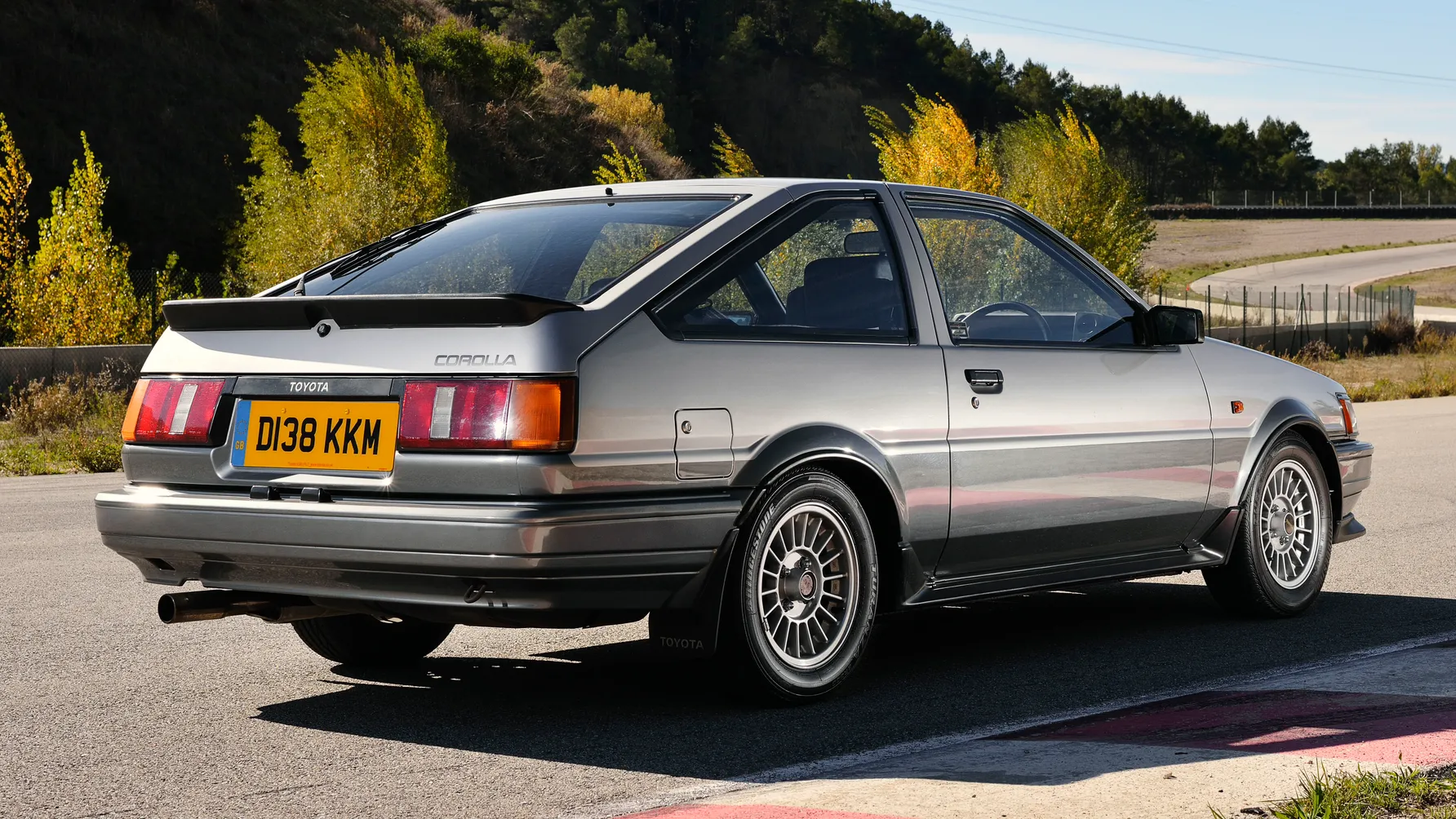
Those hold-out Toyota engineers had a point. One of them, Nobuaki Katayama, later became chief engineer of the first and very sophisticated 1999 Lexus IS200, the straight-six one with excellent chronometer instruments, and he explicitly declared drifting his own AE86 had been his influence.
So the AE86 got a crisply tuned 1.6-litre 16-valve engine with variable induction and 123hp—an exotic spec for the era—and four-link location for its live rear axle. A limited-slip diff was optional, again a sign of a car likely to be driven hard with oversteer on its mind. Steering was rack and pinion. It weighed under 1,000kg.
Lots of 1980 Japanese square edges going on there.
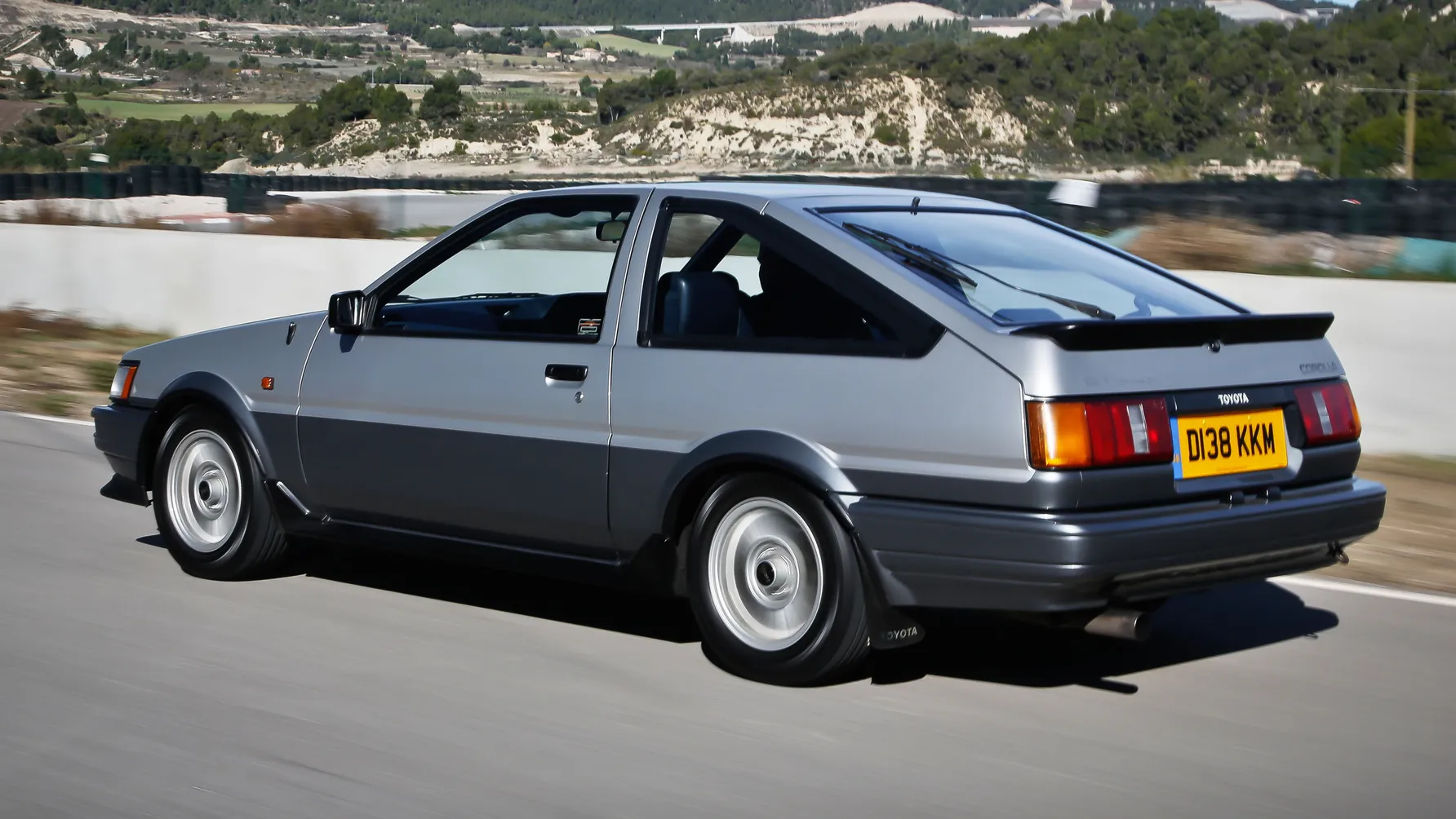
The AE86’s stylist is quoted as saying he wanted a Porsche 928 style without the curves. Which is like saying you want an A380 without the wings.
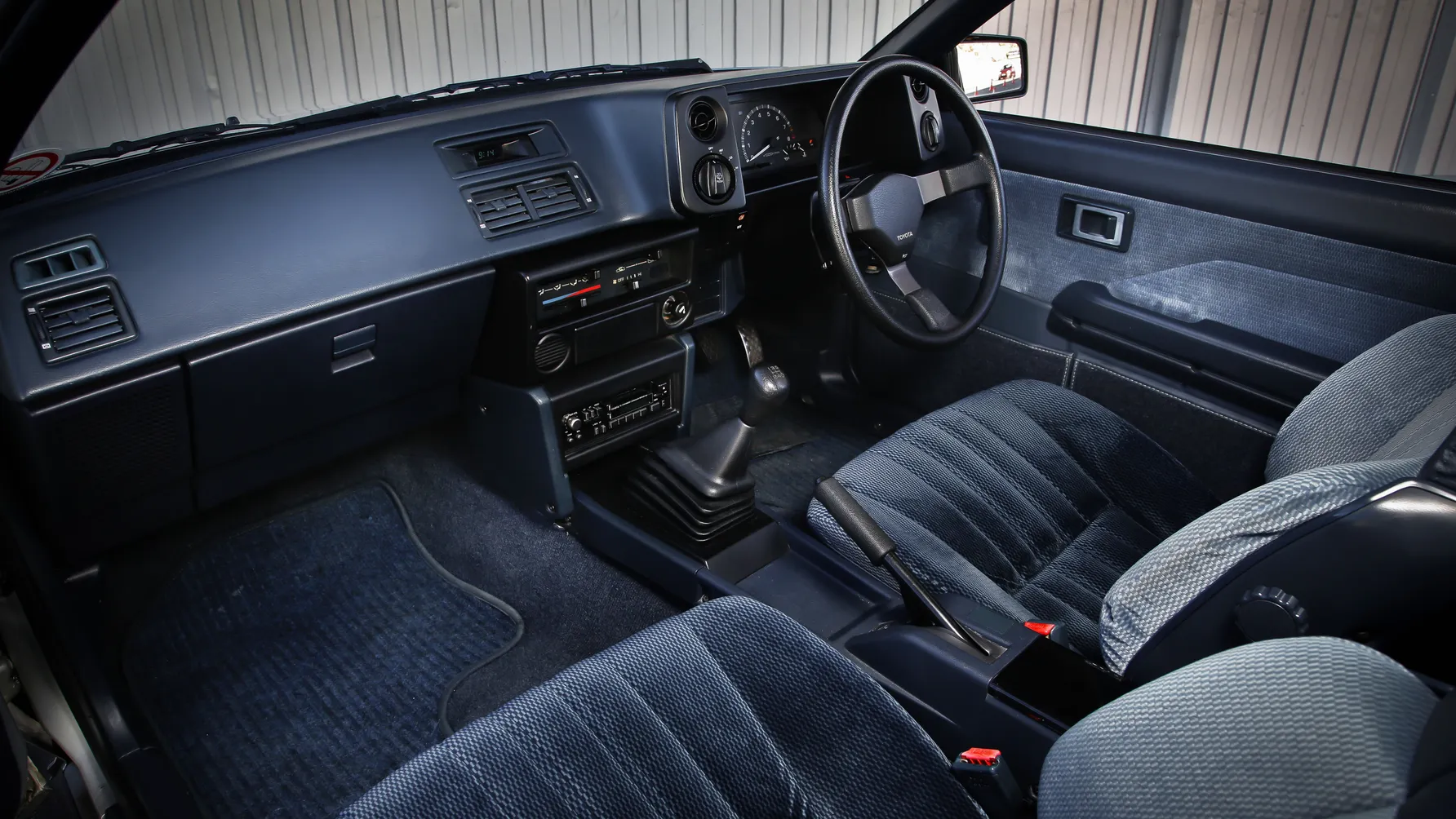
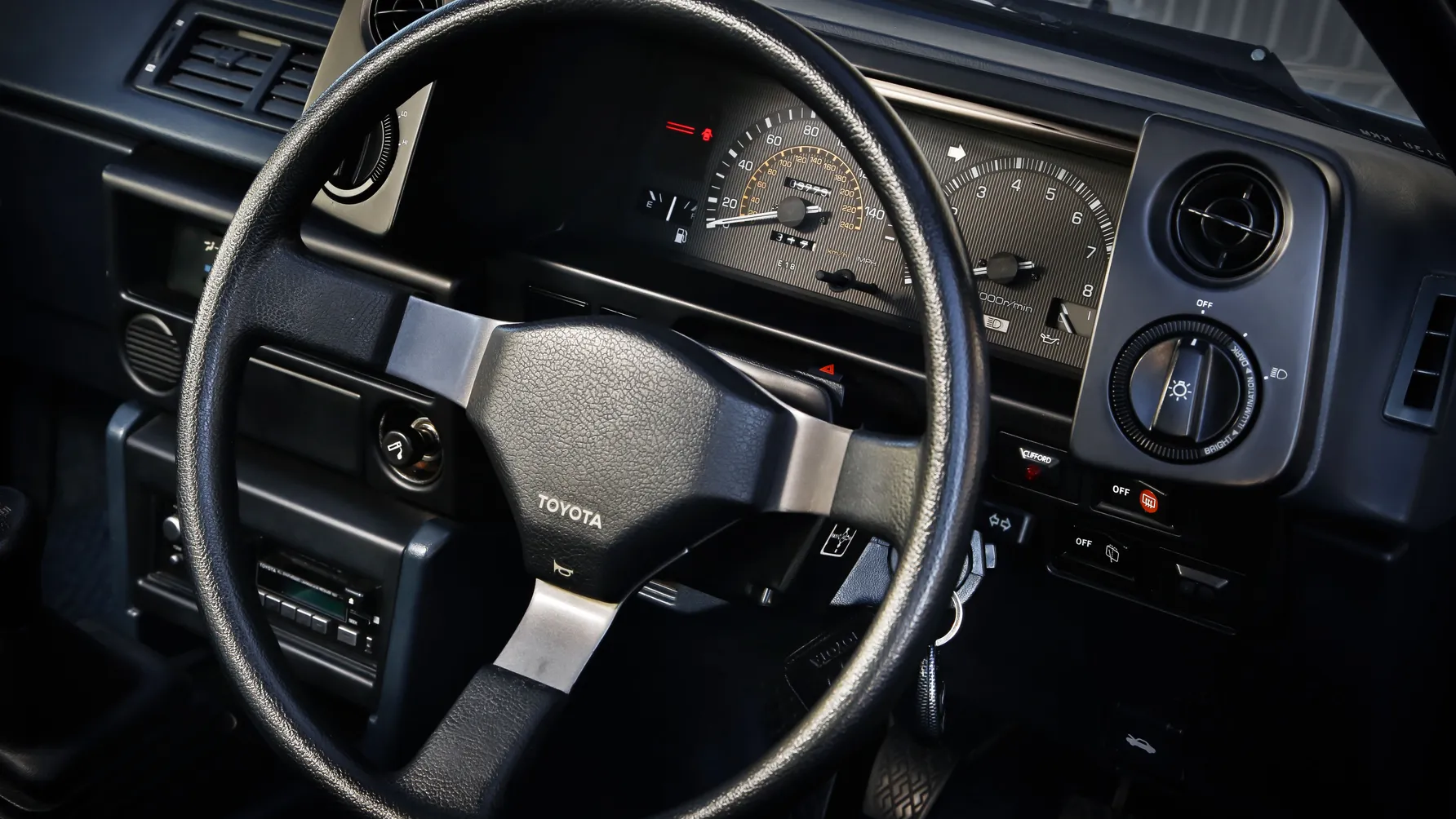
The interior is as boxy as the cereal aisle, but fabulously clear and easy to operate, with terrific visibility too. Lights and wipers have big twist knobs handily mounted right in the binnacle. The surprisingly supportive seats have height adjustment for the driver’s side. Hope you like blue velour. And blue carpet. And a blue dash.
Right. Can we get going?
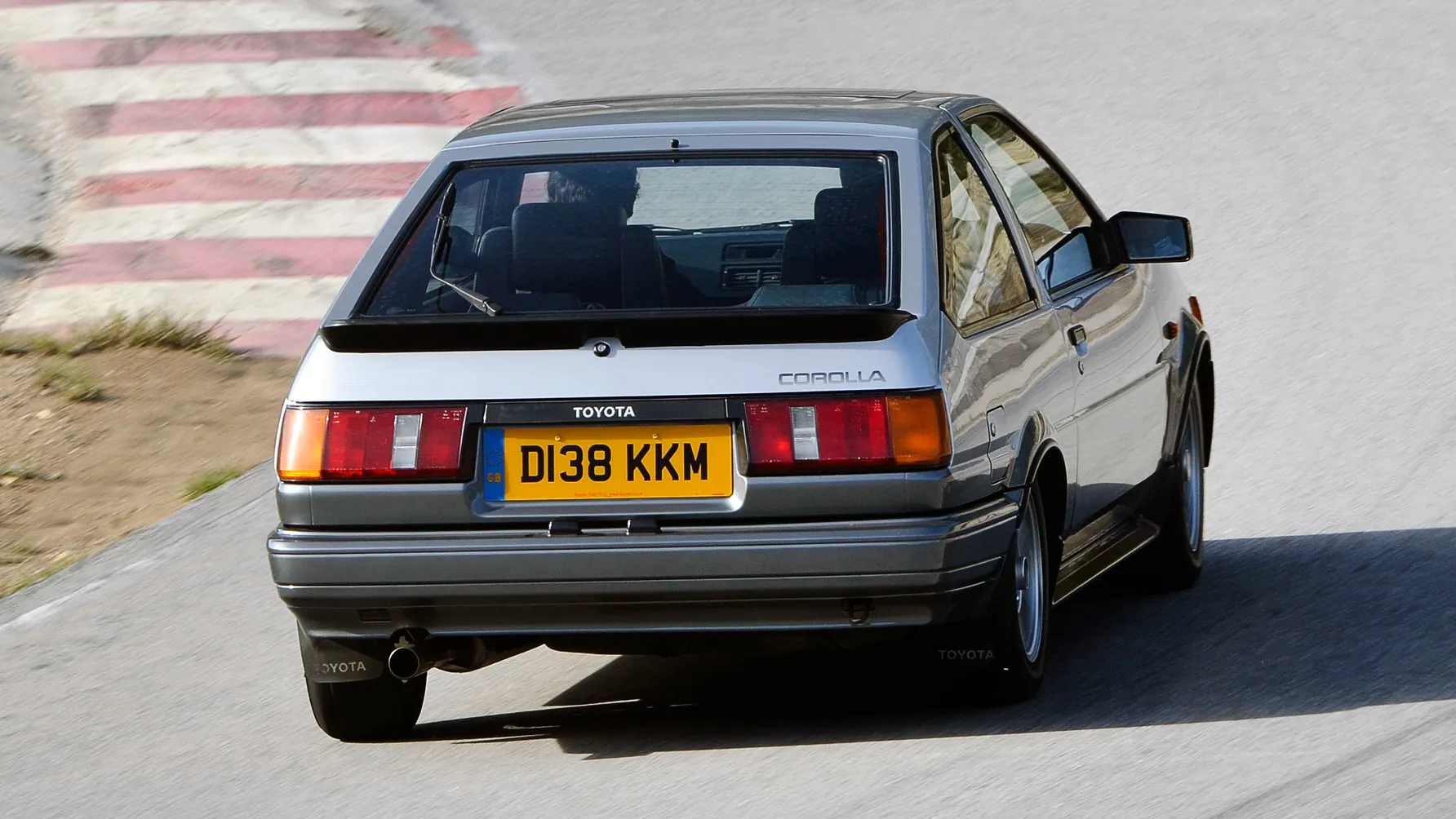
All the controls—steering, gears, pedal—are extremely light, as was the Japanese way. Once you’ve got the oil temp gauge up into its travel and stretch the engine, it’s a honey. It revs keenly to 4,500rpm or so, and then takes on a sterner voice and force as it swings to the 7,600rpm line on the big tacho. It’s 8.3sec for 0-100kph.
There isn’t much torque though—just 145Nm, and you had to travel beyond 5,000rpm to get it. So it takes commitment and low gears to get those rear wheels to lose traction. The gearbox is your friend. Low-effort but precise. Longer in travel than an MX-5 but still an easy stir.
Now, the particular example in these photos belongs to Toyota UK and it has period mods. It starts with an Apexi induction kit, and the exhaust side has manifold and full stainless piping from Janspeed. They probably do more for noise (loud-to-boomy at times) than power.
But isn’t the legend built on corners?
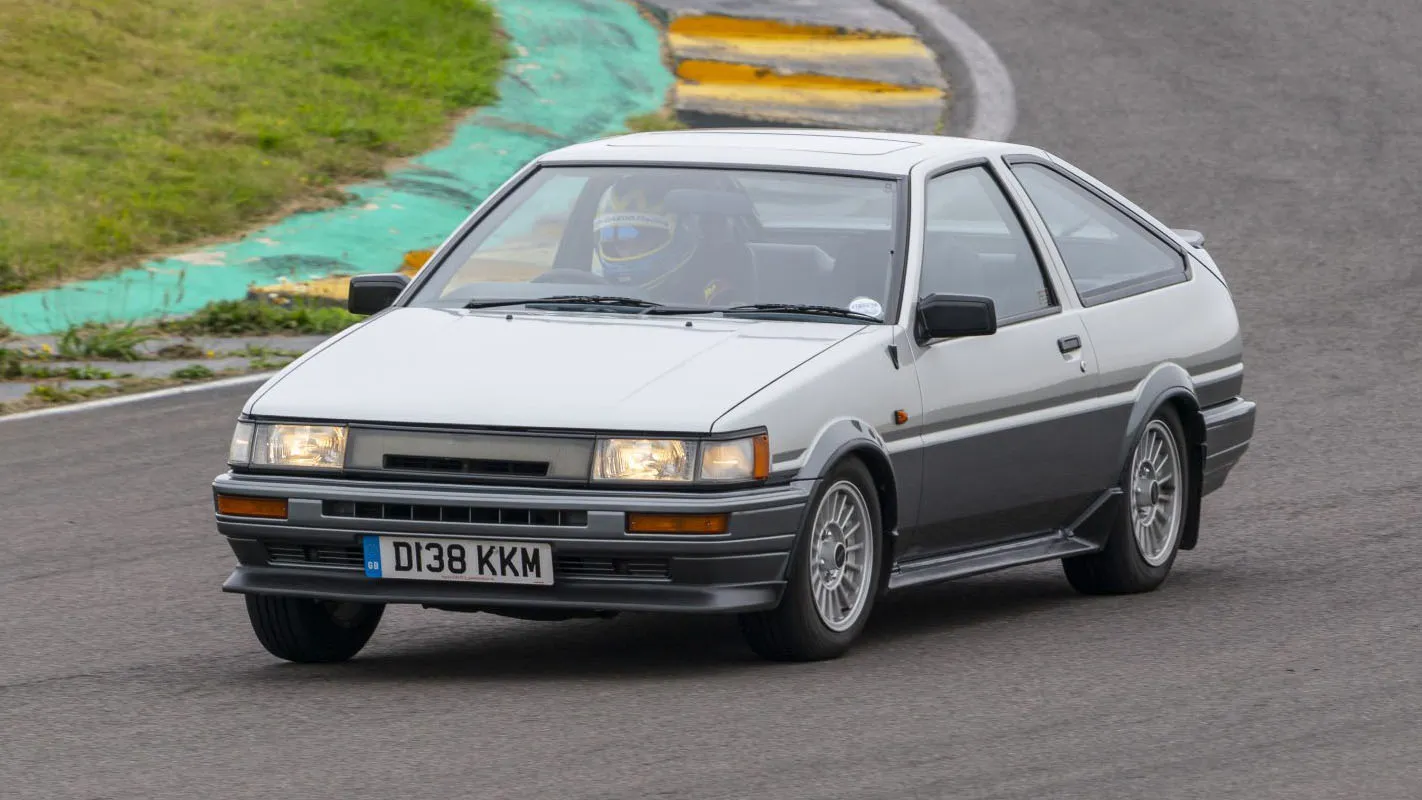
Ah, well here they come. Squeeze the brakes and find a pedal that sinks a long way and takes more than an instant to bite. But losing speed in a car this light isn’t a big issue.
Then turn the big plastic-rimmed wheel and…maybe wonder what all the fuss is about.
For a start, the steering is very low geared. Lots of twirling needed. The car rolls into a bend, soft and a bit wallowy. If you’ve gone in hard, it’ll probably be roll oversteer that you’re getting, the tail swinging out and frankly a bit messy to collect up.
If you’re neater in the way in and want a power-induced slide, this car isn’t really up for it because it doesn’t have the LSD option, so just spins the inside rear wheel.
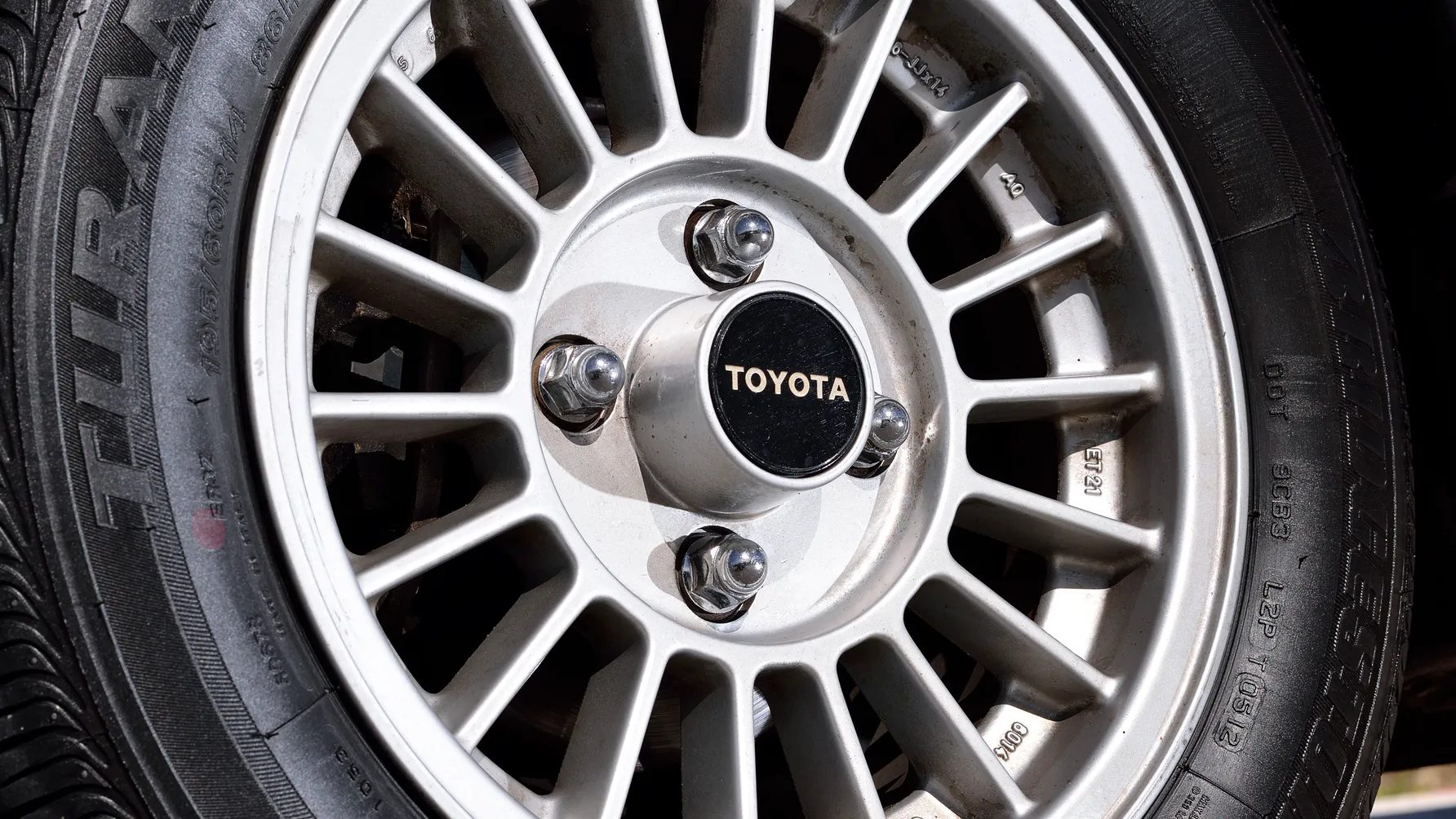
Like the engine, this car’s chassis has period mods. It’s lowered, on stiffer springs with firmer anti-roll bars. There’s also a strut brace, which ought to improve steering precision. So imagine how soft—soggy even—it must have been when new, at least by modern standards. A new GT86 is far firmer and sharper than even this modified AE86.
Oh. That’s torn it.
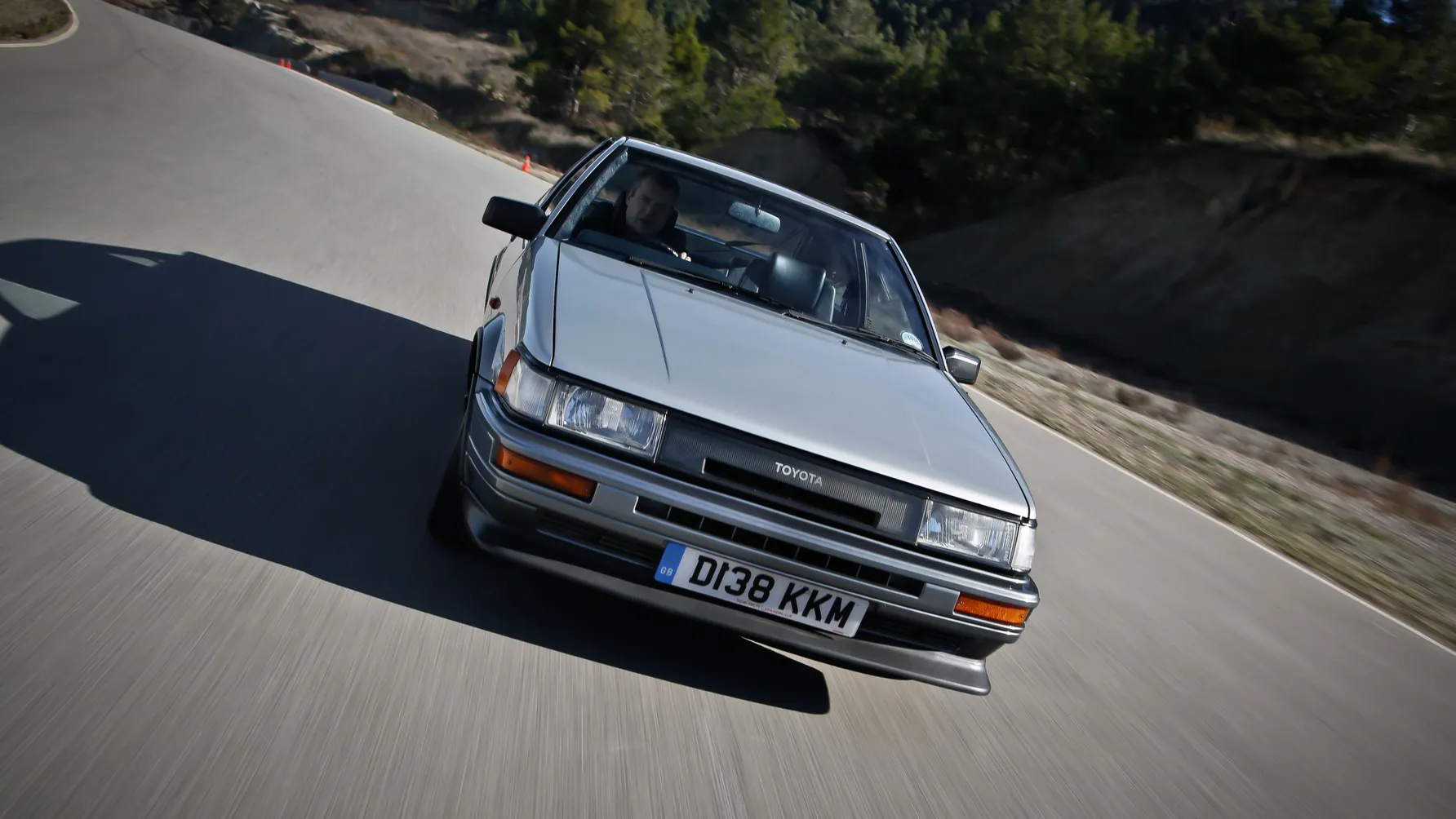
Look, I was testing it on a track, and deliberately trying to make it act like the legend says it should. On the road, the sweet engine, tactile gearbox and accurate engaging steering will be huge boons. The soft suspension swallows bumps, at least until the live axle shudders with its unsprung mass.
In other words, drive it as if you like it, rather than like you’re torturing it. Then it becomes a harmonious period piece. You have to work with it, moving with its rising and falling, anticipating its rolling.
But the AE86 of your imagination exists only in your imagination. And in the hands of the generations of modifiers who’ve transmogrified it with huge power and bone-hard suspension and welded-up diffs.
Sadly, it’s largely an academic discussion. Even Toyota doesn’t have an unmodified car to witness the original. You’ll grow old and grey looking for one.
NOTE: This article first appeared on TopGear.com. Minor edits have been made.