
Volvo has been steadily electrifying its lineup, and sooner rather than later, there’ll only be electrified models in the Philippine market. One of those battery-powered cars is the C40 Recharge, of which I was recently handed the keys to try it out.
I reviewed the XC90 just a little while ago, and it really impressed me. But that was a more…traditional type of Volvo—it was a gasoline-powered SUV. My teammate Anton Andres, meanwhile, got the EX30 right before that, and it wasn’t quite as good. That was why I came into this review with a little more caution, because while I knew Volvos were good, the electric models have yet to truly prove themselves.
ALSO READ:
Review: Hyundai Ioniq 5 Long Range 2WD
Review: 2025 Kia EV9 GT-Line AWD
Styling
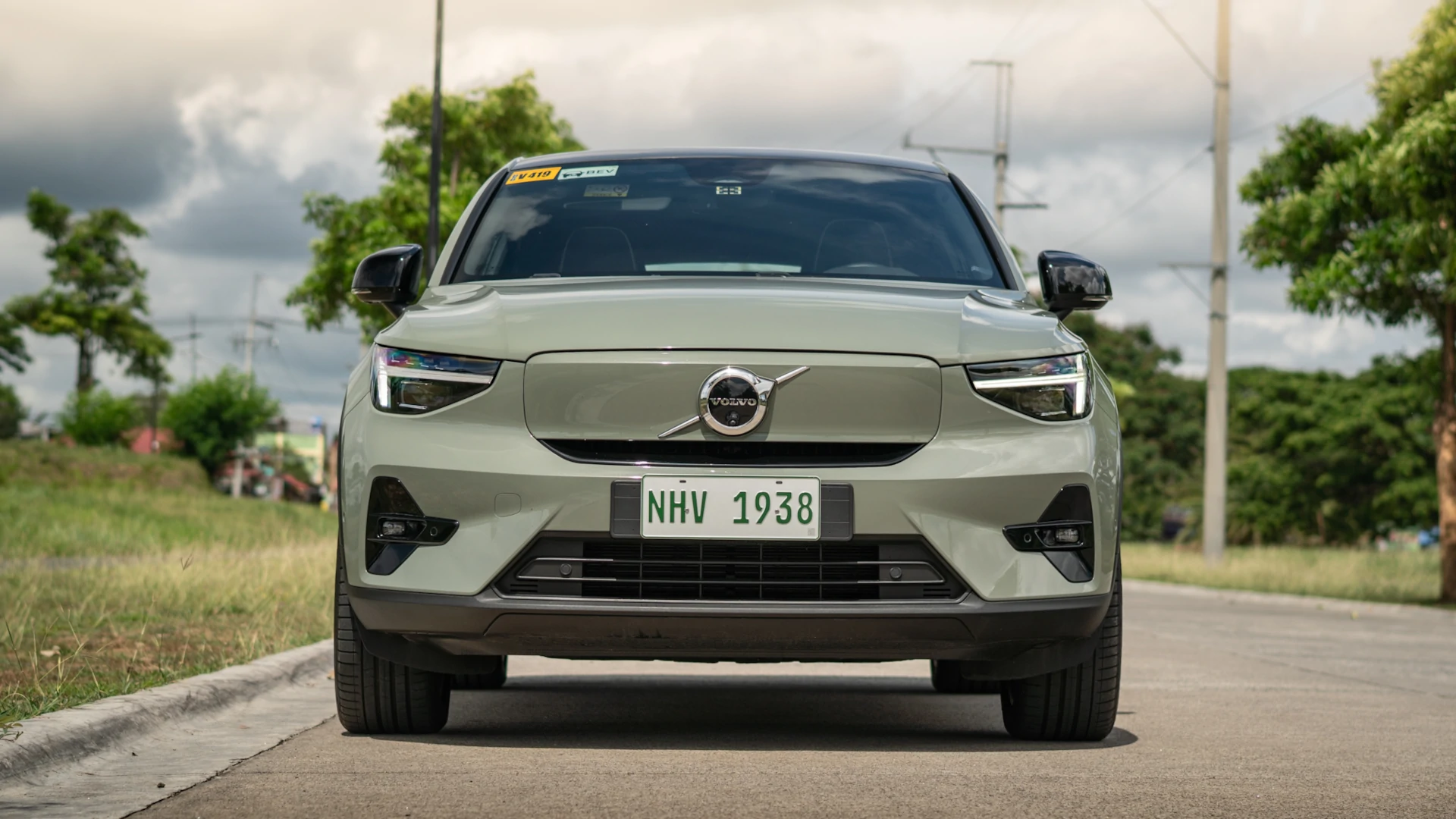
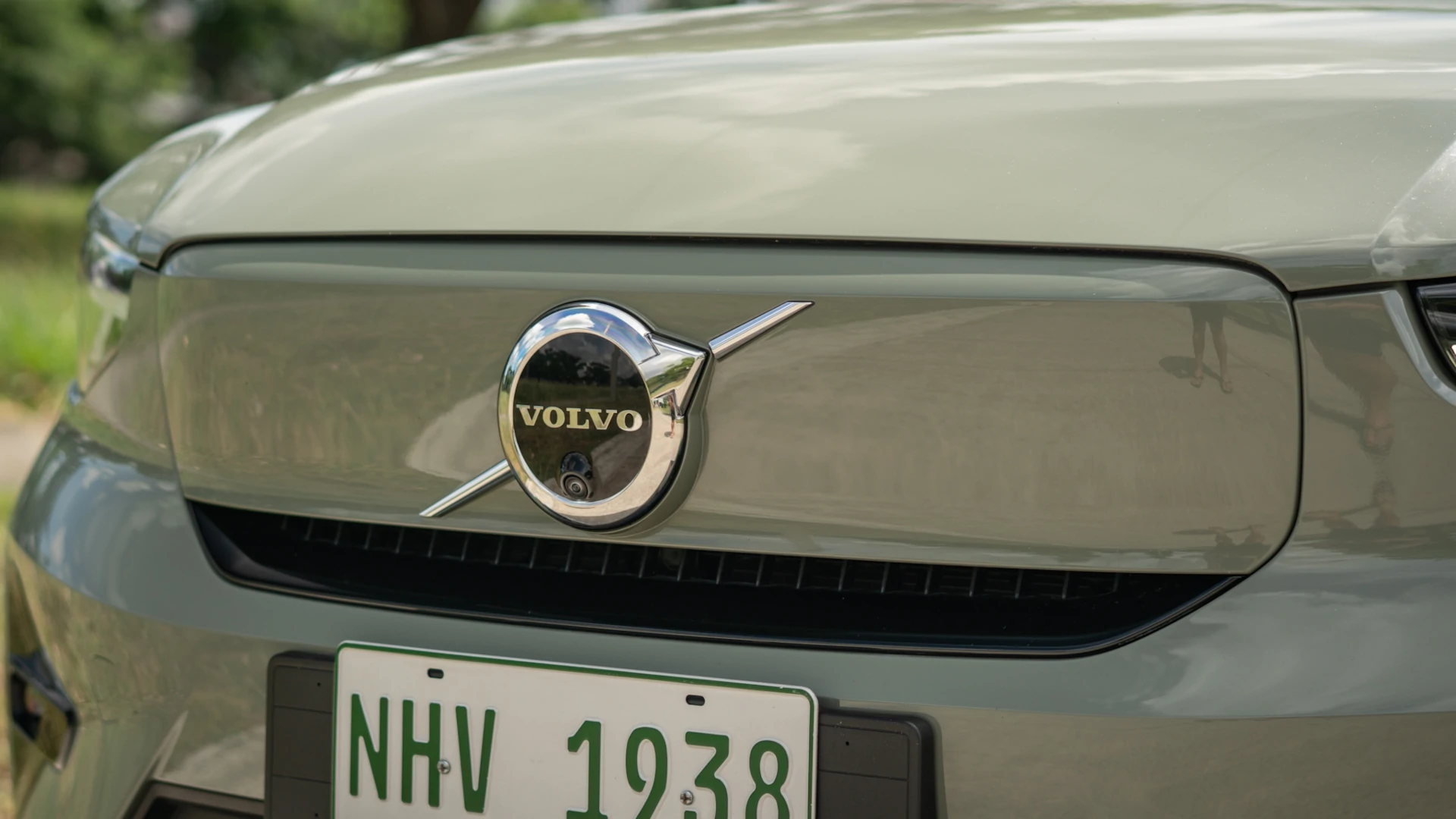
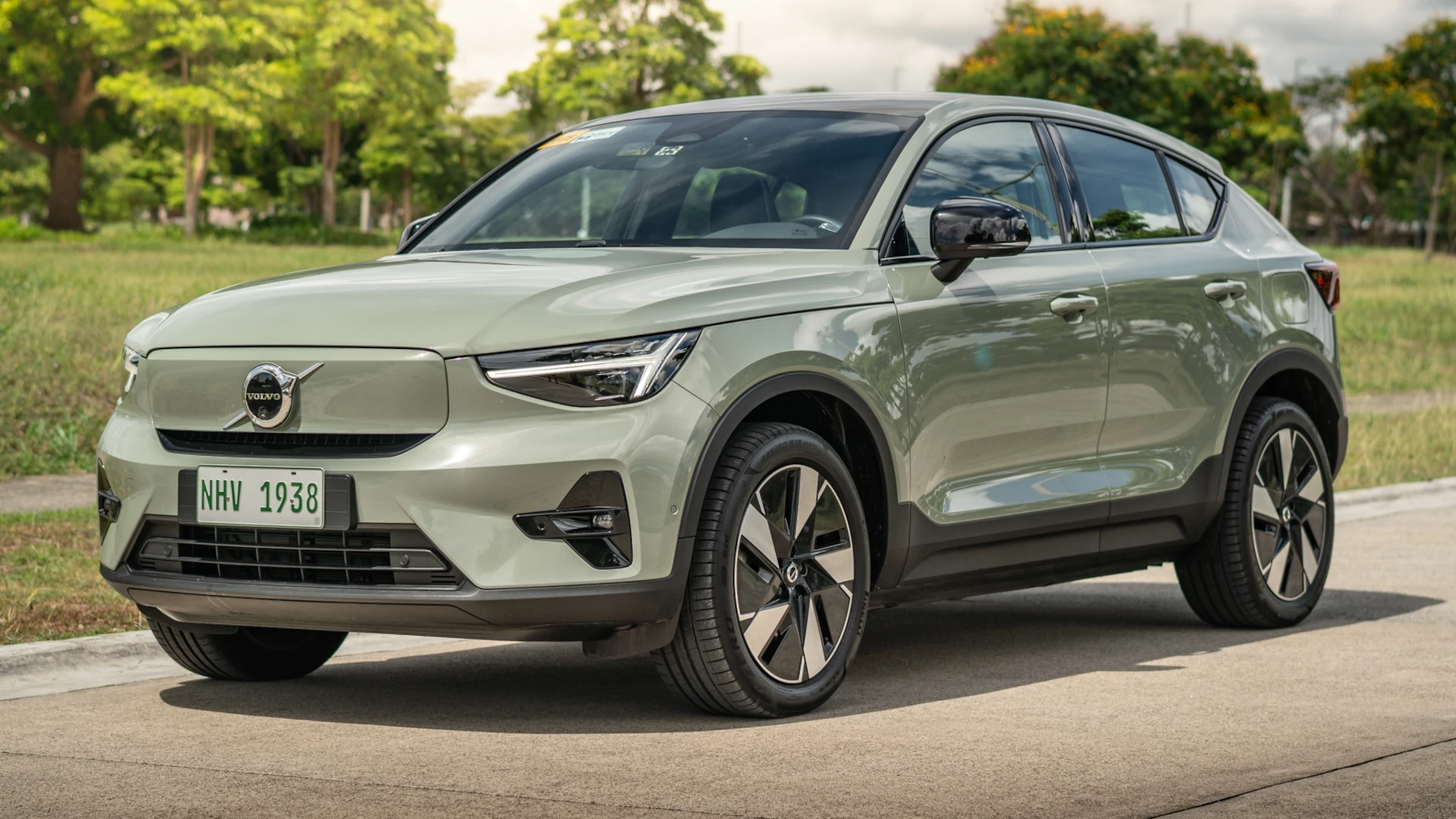
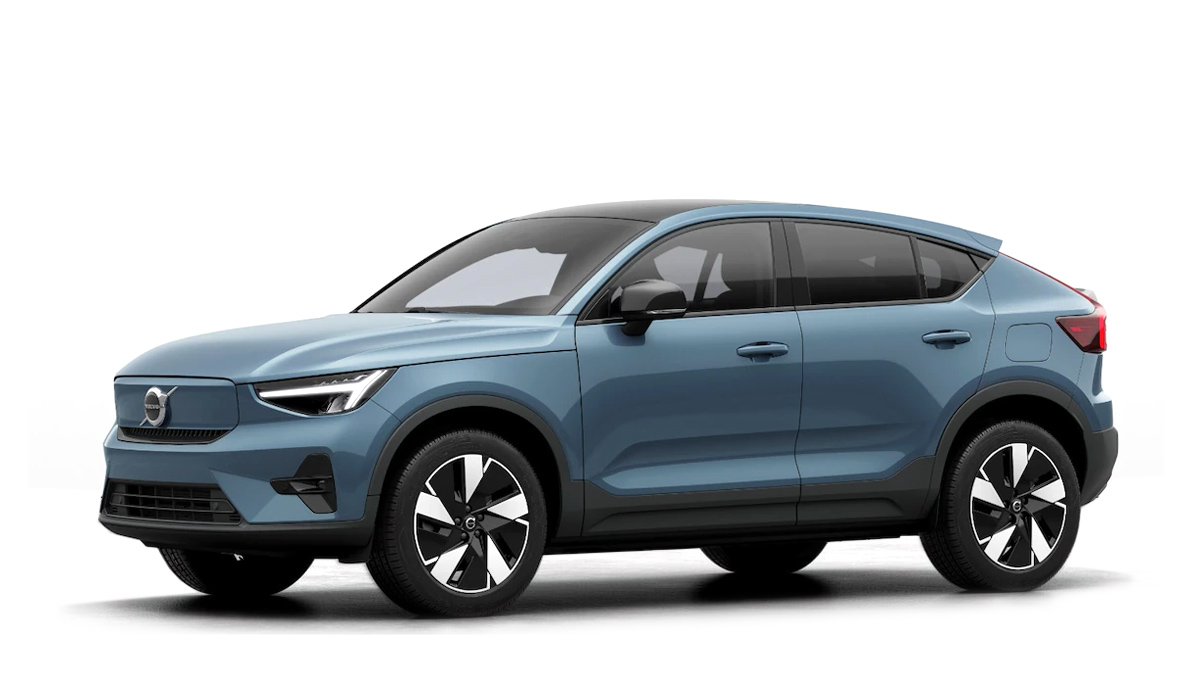
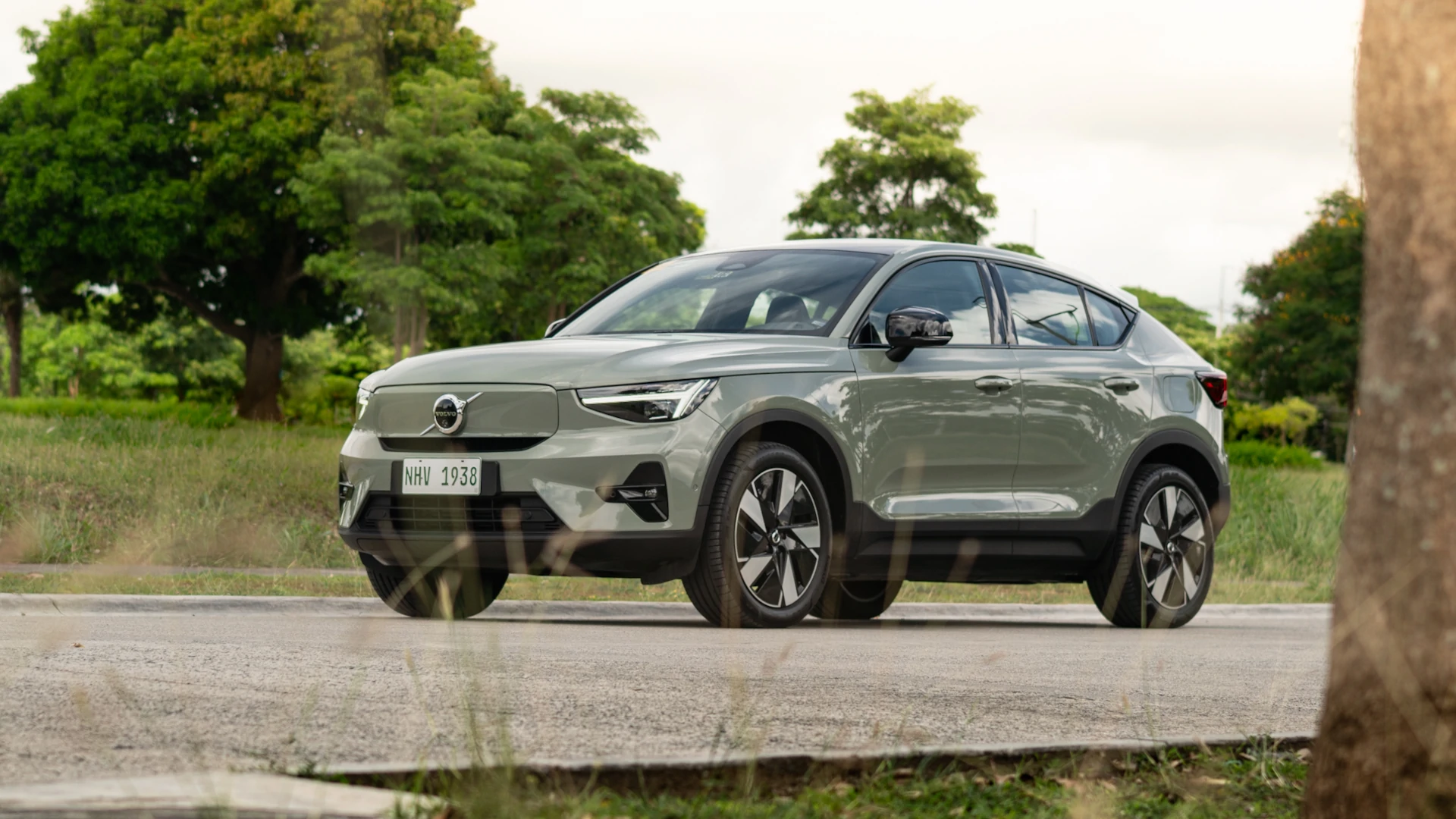
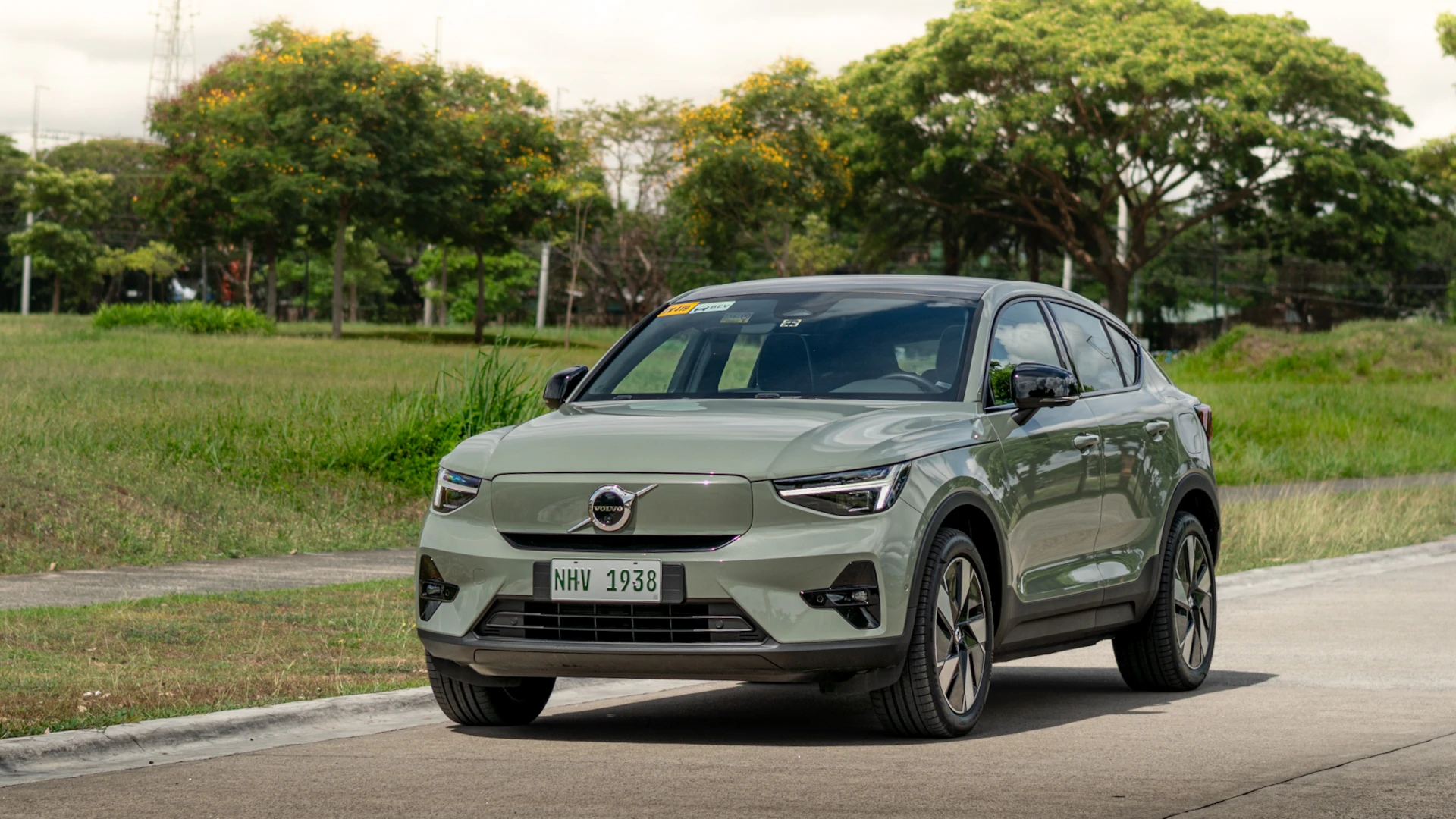
The C40 does look electric, meaning it has a more modern and futuristic-looking design than the long-standing Volvo sedans and SUVs. The front just screams EV with the lack of a large grille on the front fascia. Instead, there’s a solid panel behind the Volvo badge. The headlamps flanking it do look familiar, and it’s similar to the XC90 in this regard. The minimal black trim keeps the front clip looking clean and smooth.
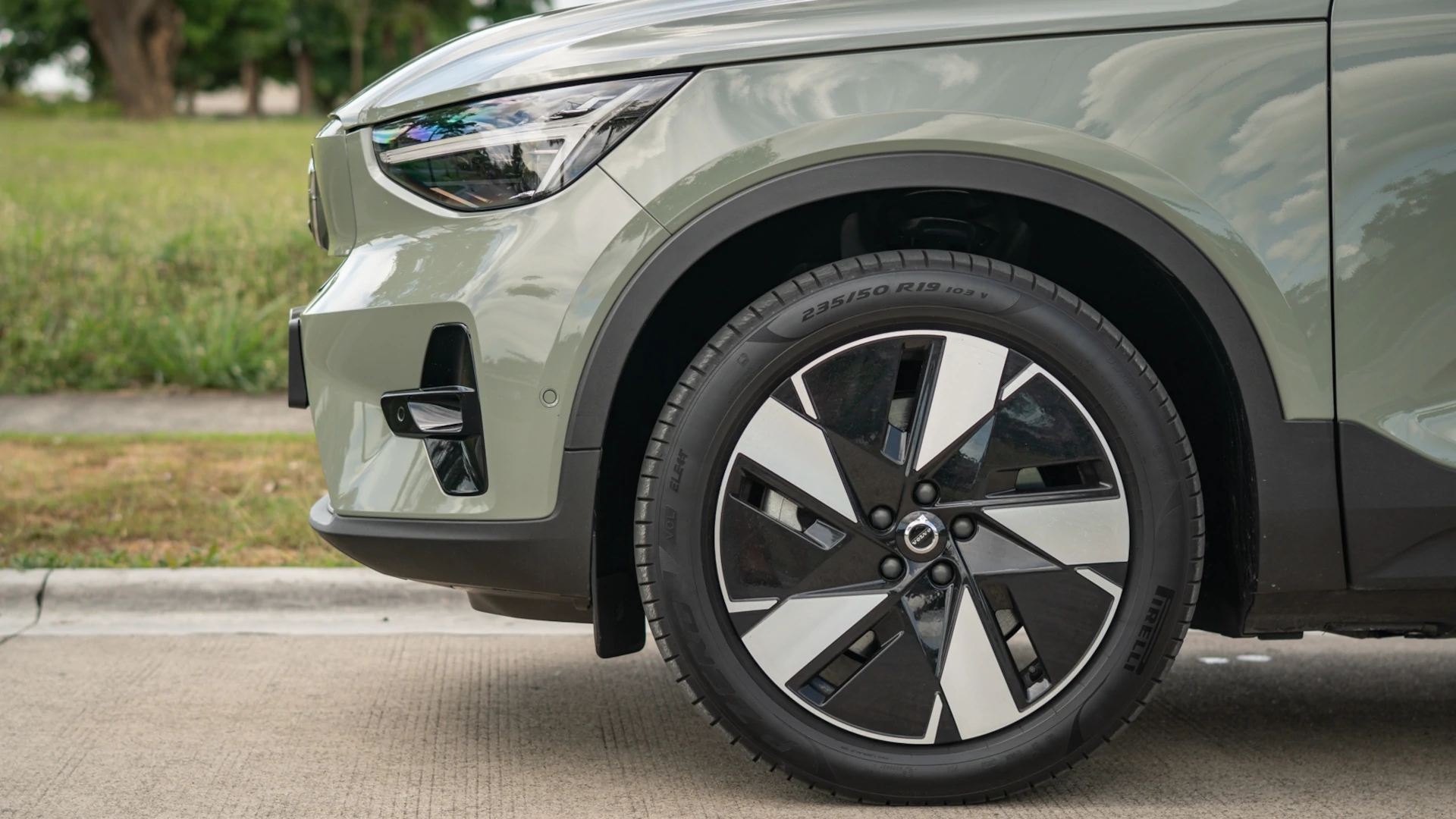
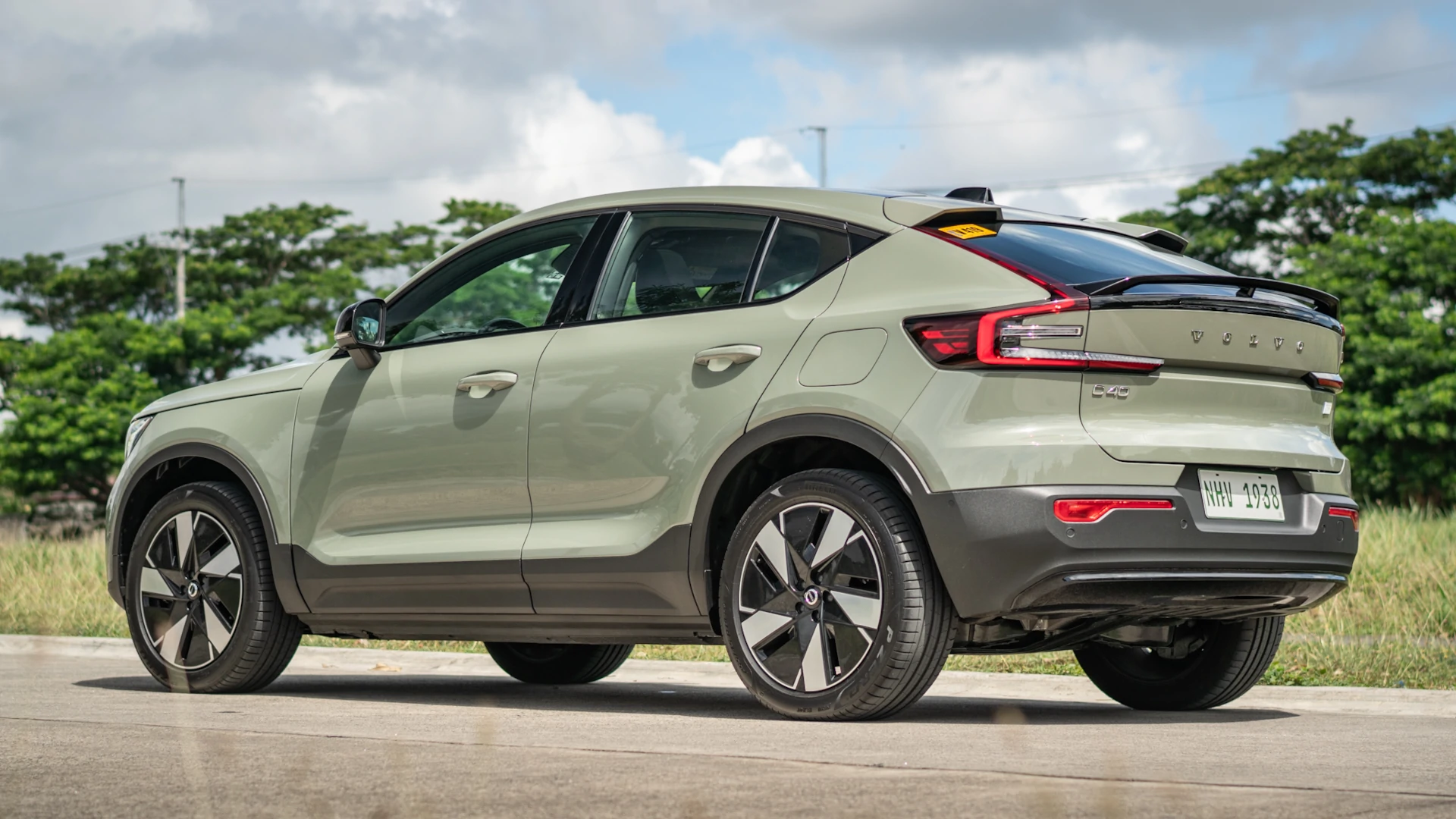
There’s still plenty of underbody cladding, although it’s been reserved more for the sides. It looks a bit bulky, if I’m being honest, but it does match the sleek two-tone 19-inch alloy wheels underneath.
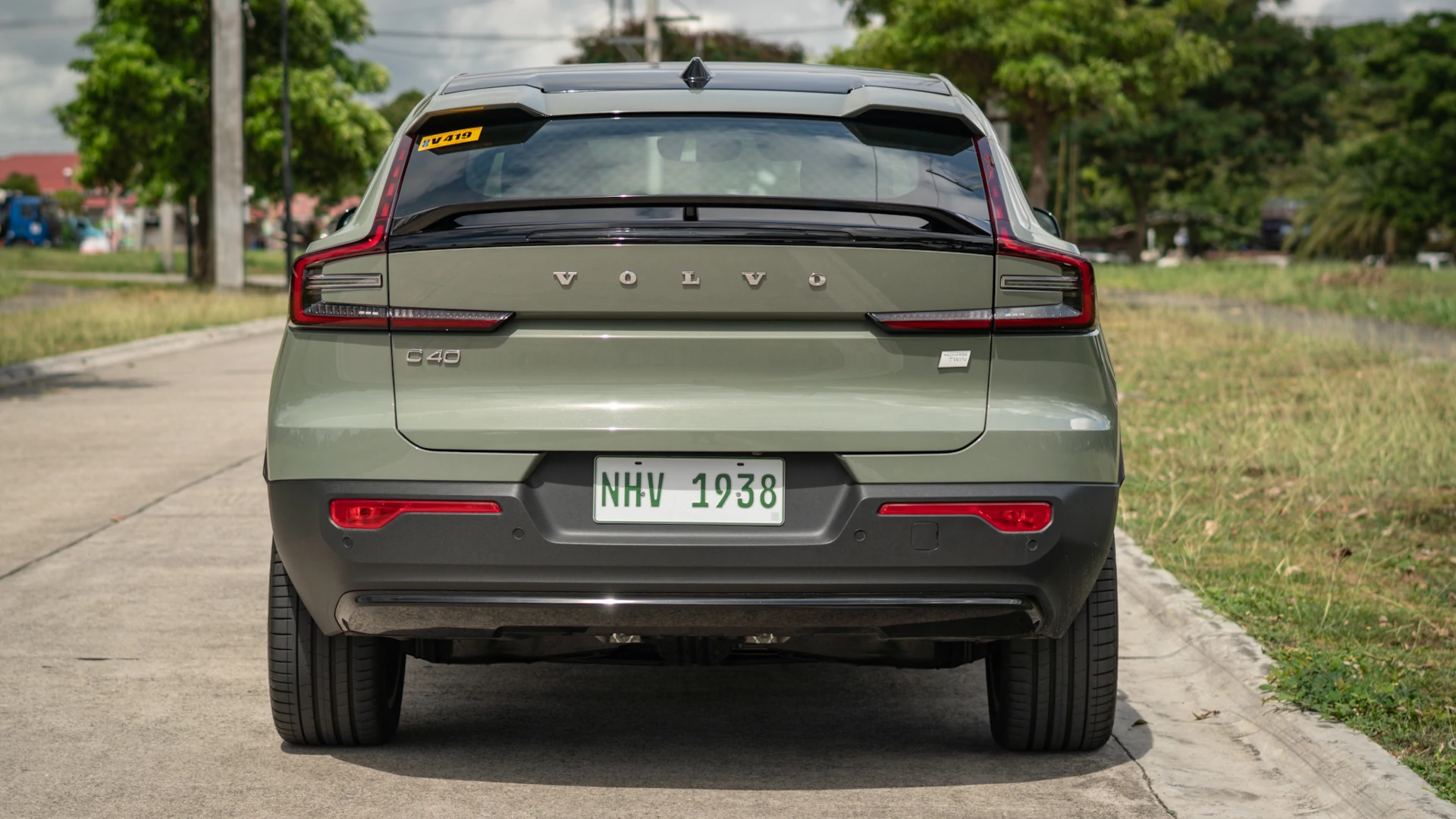
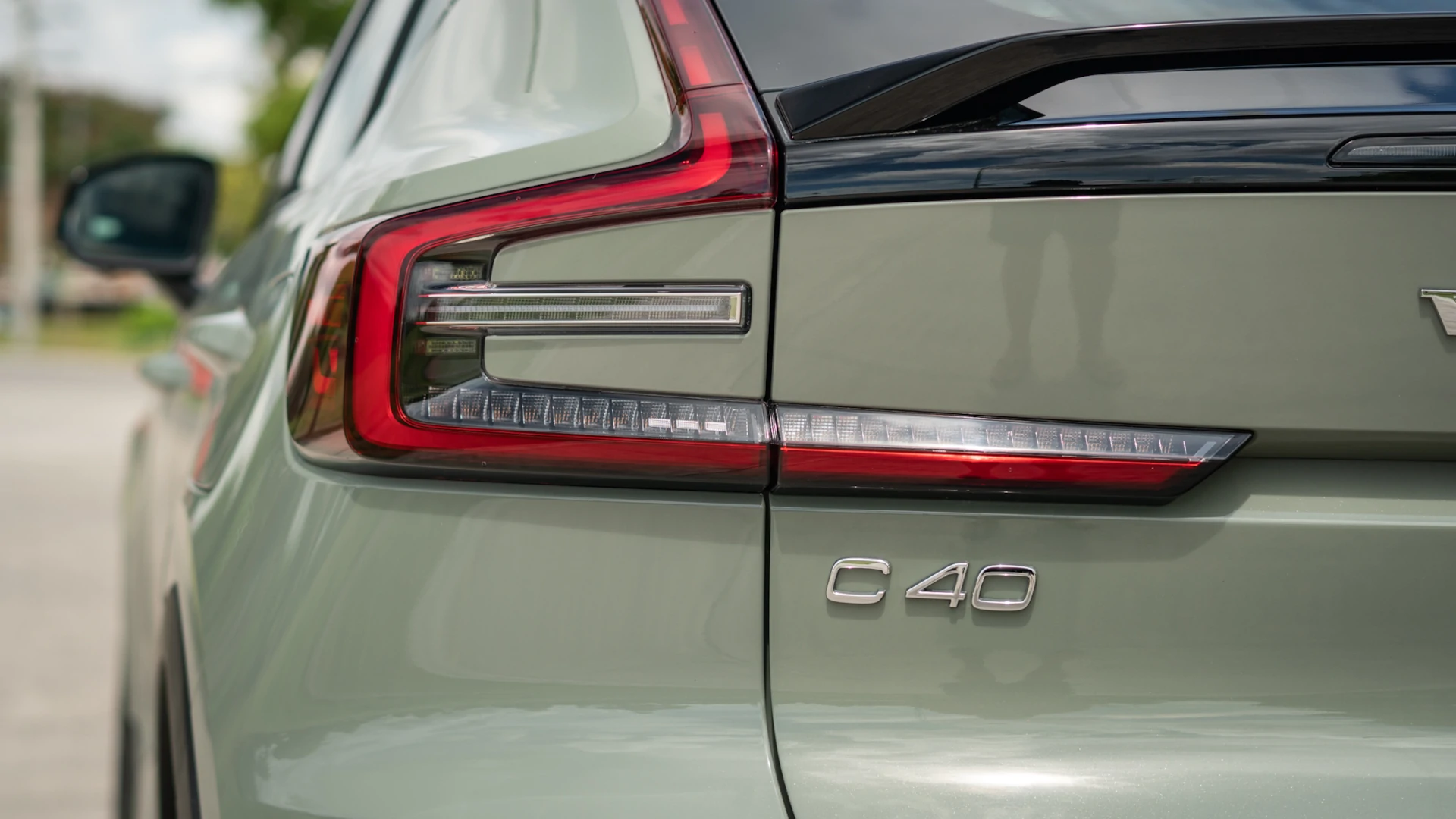
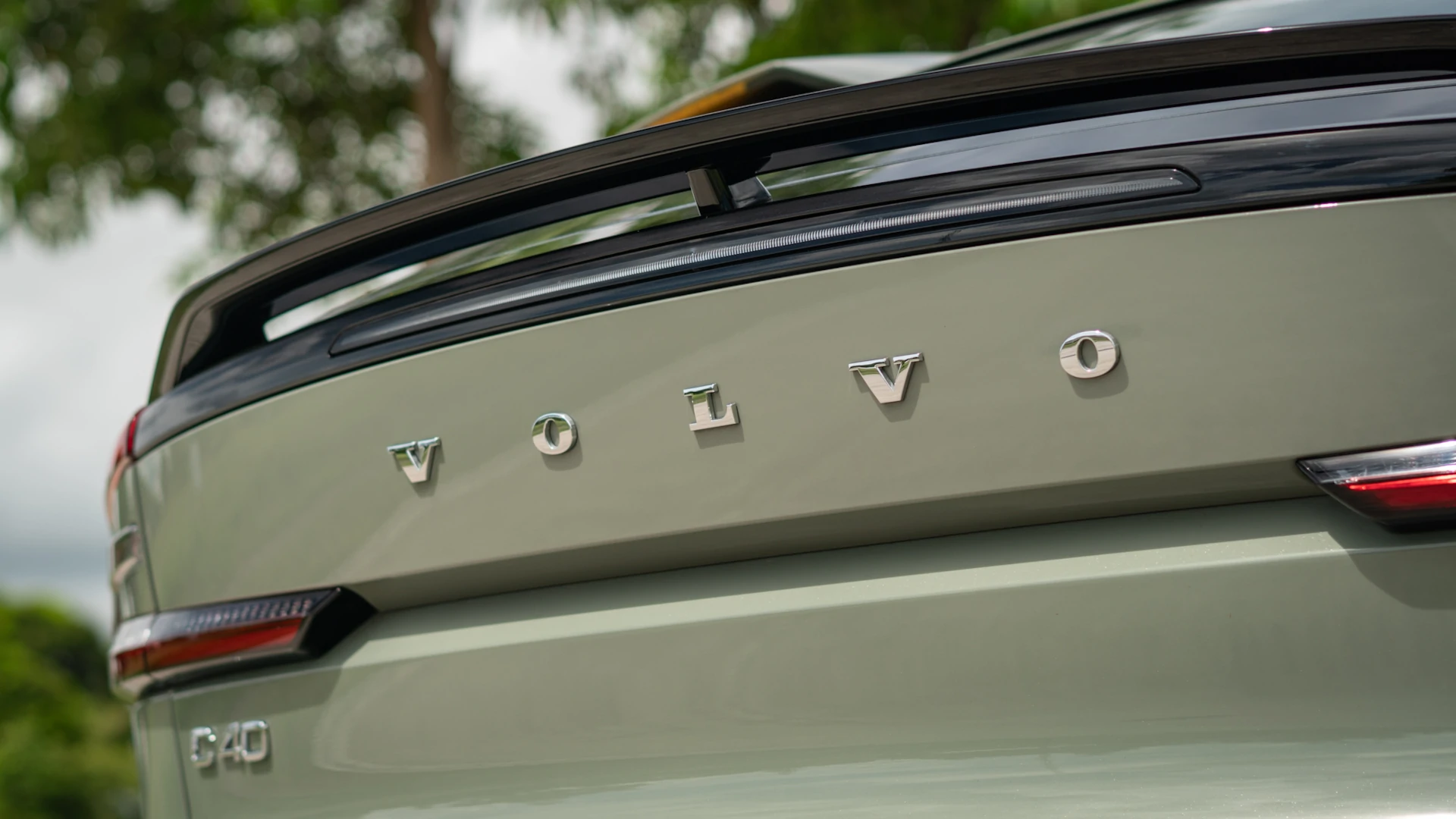
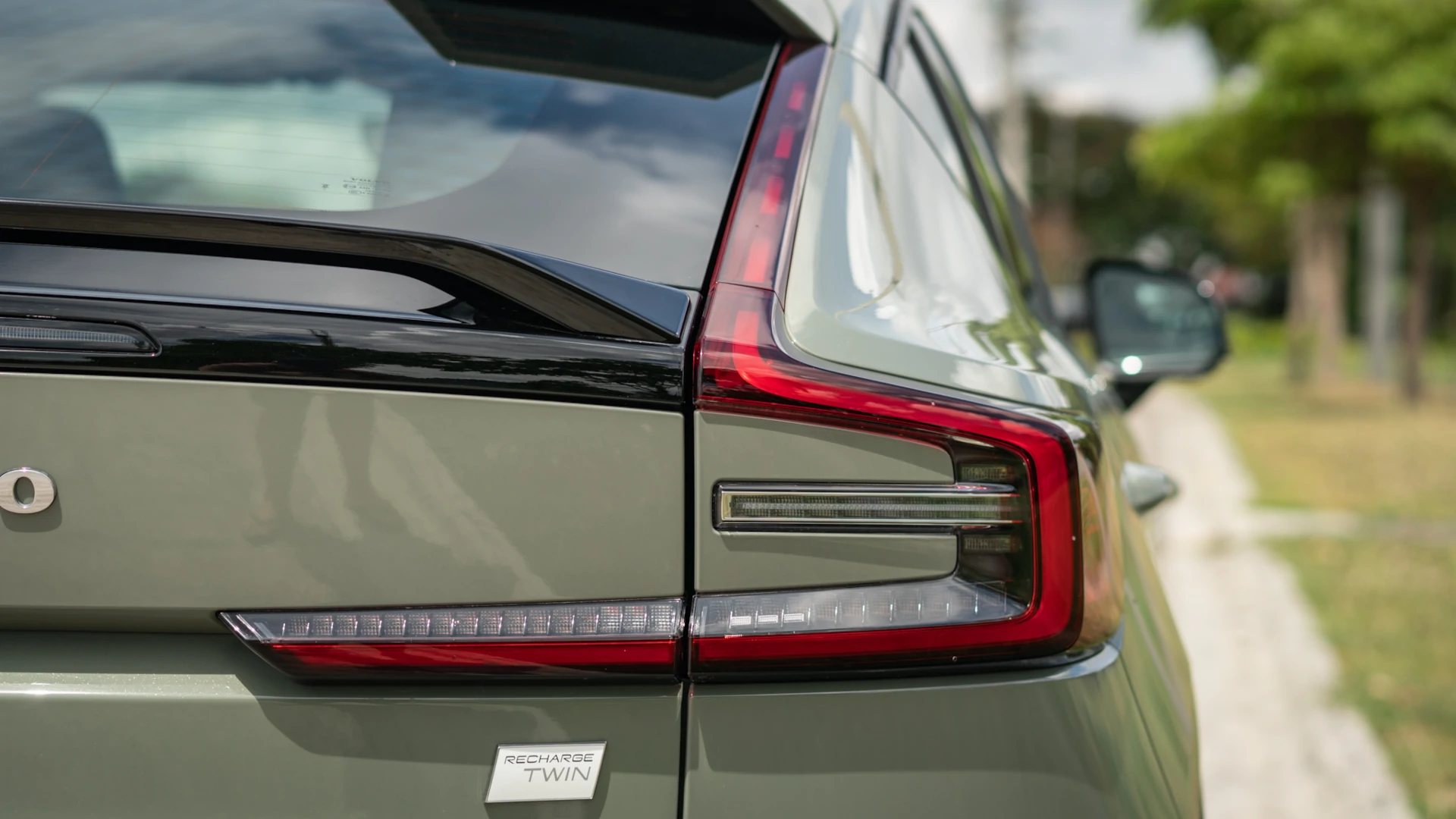
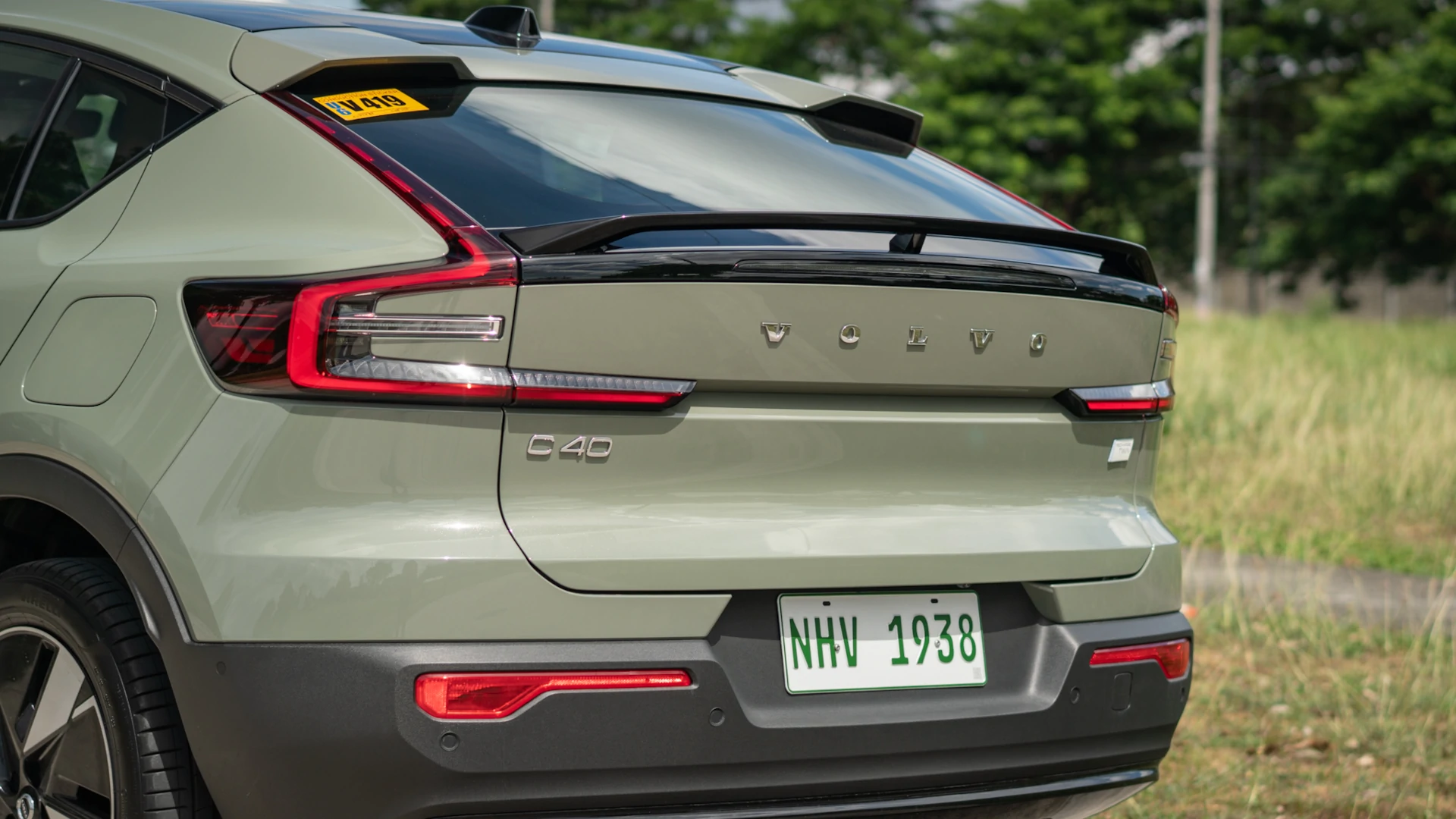
The rear, however, might be my most favorite part. At first glance, I thought it looked a bit messy, but it easily grew on me. It has that swooping coupe-like physique adorned with Volvo’s signature taillights as well as a small wing and subtle roof spoilers. While simple, minimalist designs are in, the C40’s rear end doesn’t feel like too much, but at the same time it can easily catch the attention of unsuspecting bystanders. Ask me how I know.
Interior
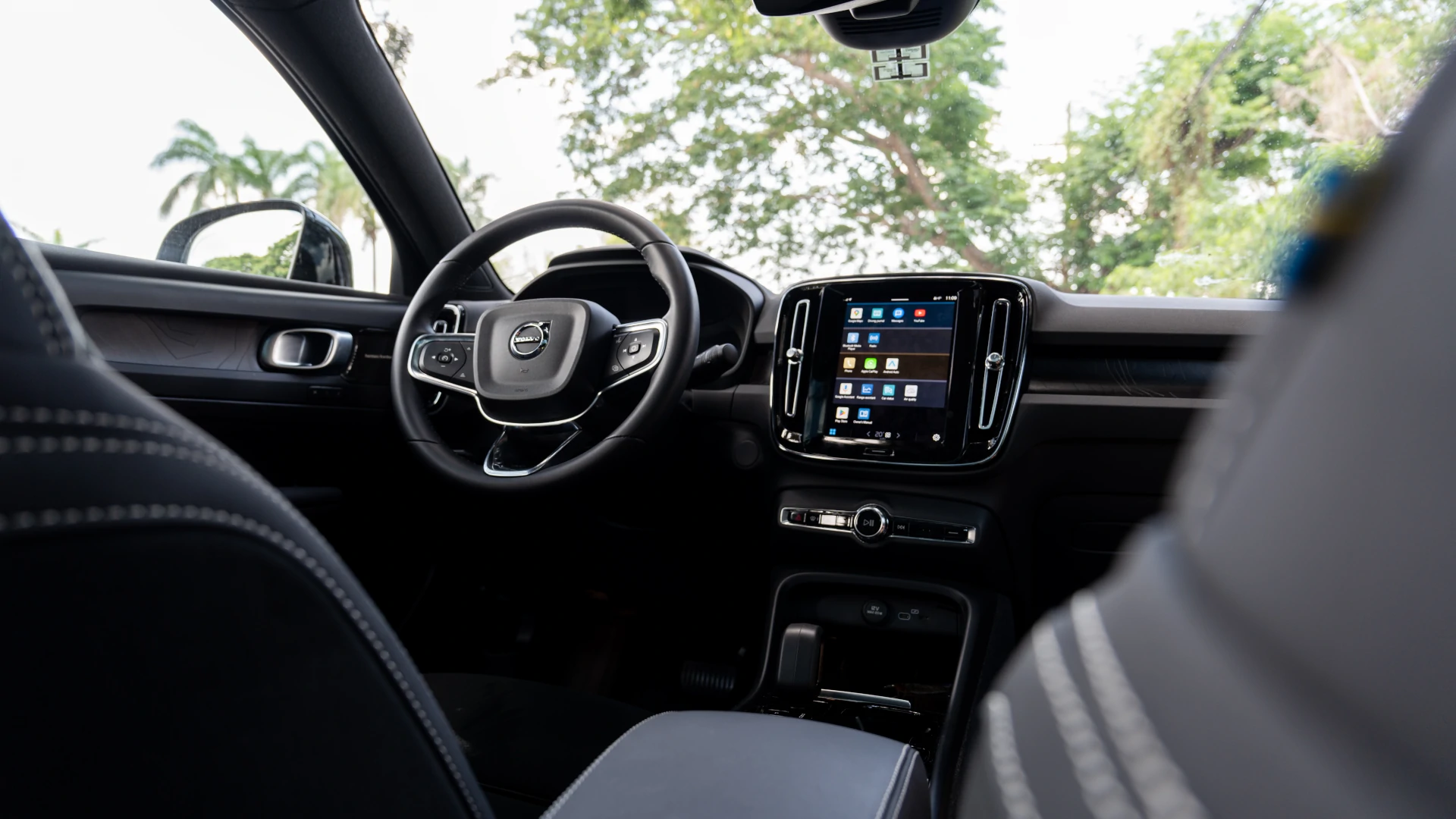
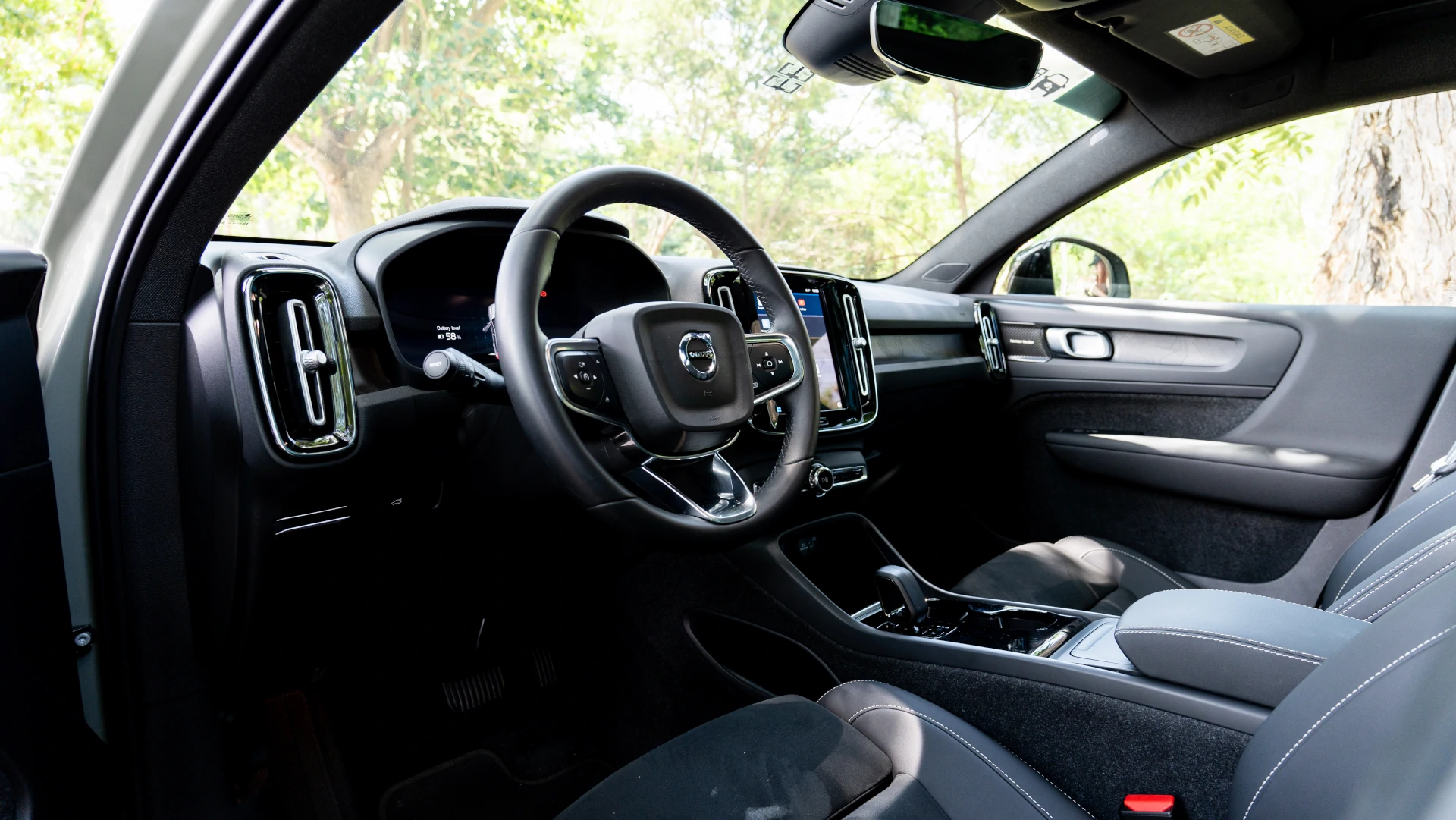
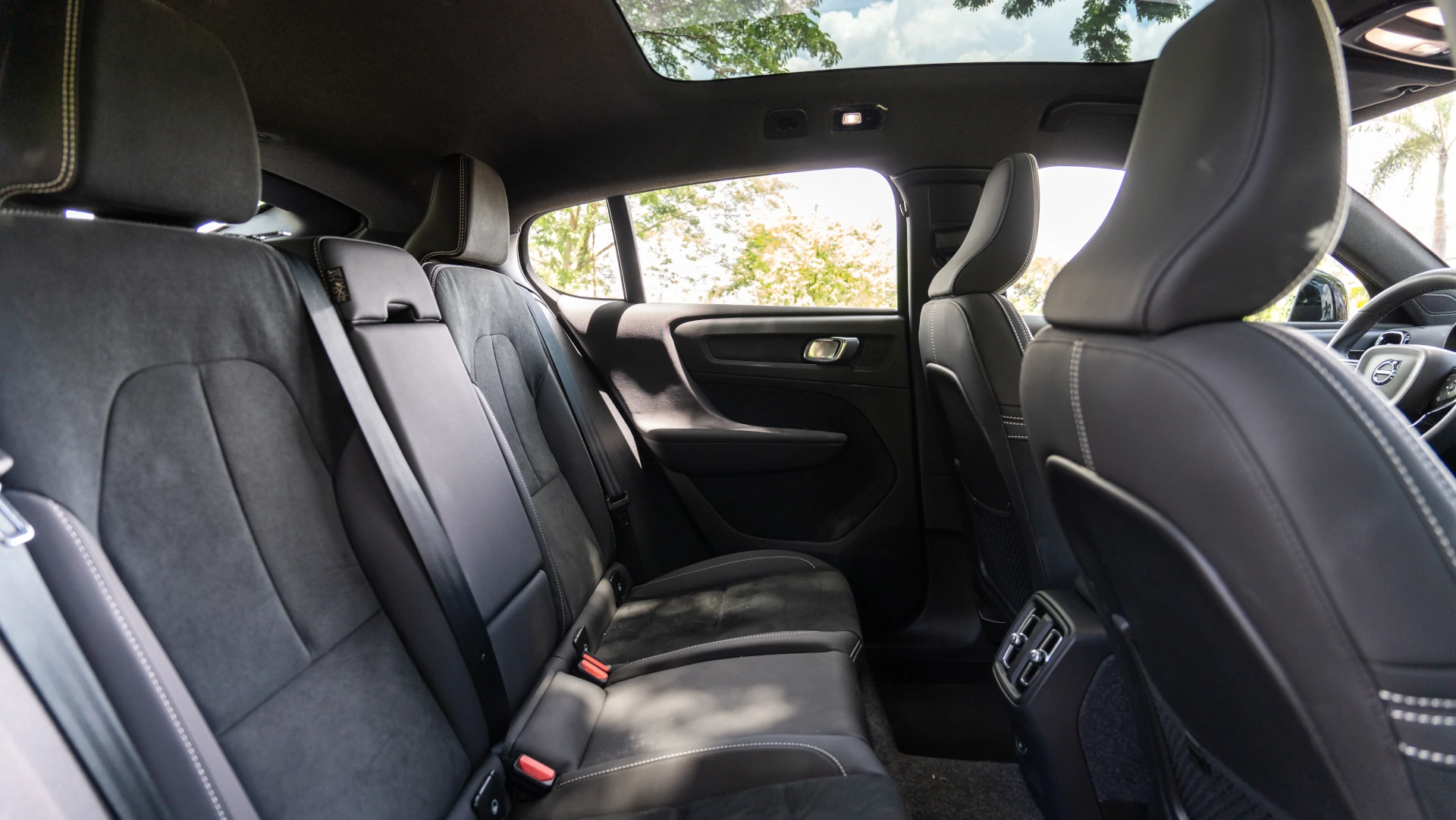
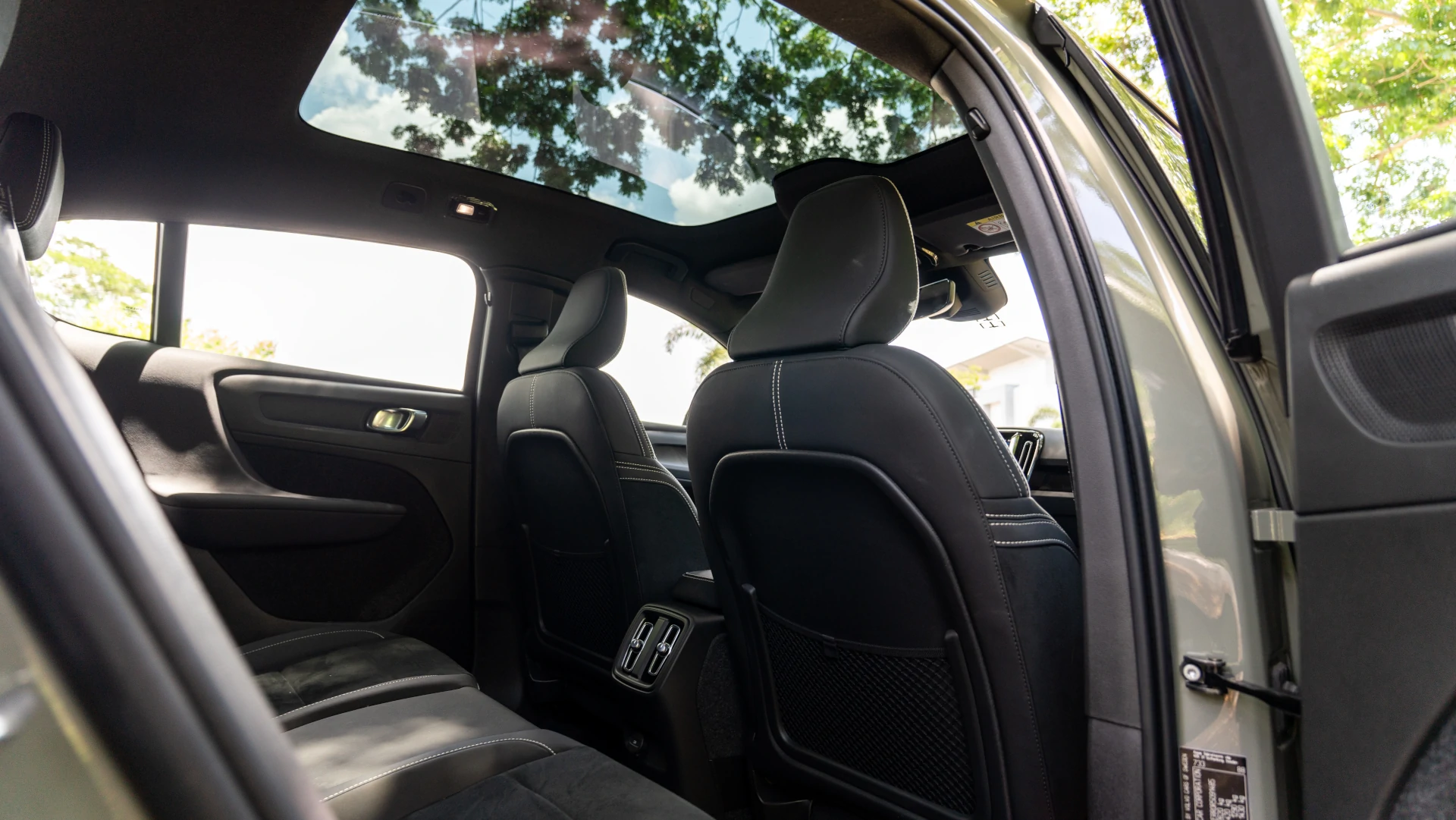
It’s on the inside where I found the EX30 a bit underwhelming, but to my surprise, the C40’s cabin was way better than I expected. There’s a variation of textures all around—there’s soft-touch trim, gloss-black panels, silver accents, and suede. The interesting part here is that the ‘leather’ inside isn’t real leather—it’s material made of recycled plastics.
The Volvo C40’s interior also features a myriad of colors, which does make it look a bit busy, but I would say everything is still pleasing to the eye. I would’ve liked a smoother surface on those backlit panels, but then again, I also like how they blend in the daytime and how they light up at night. The glass roof also adds to the overall ambience of the cabin, and it doesn’t feel hot during the day, too, which is important.
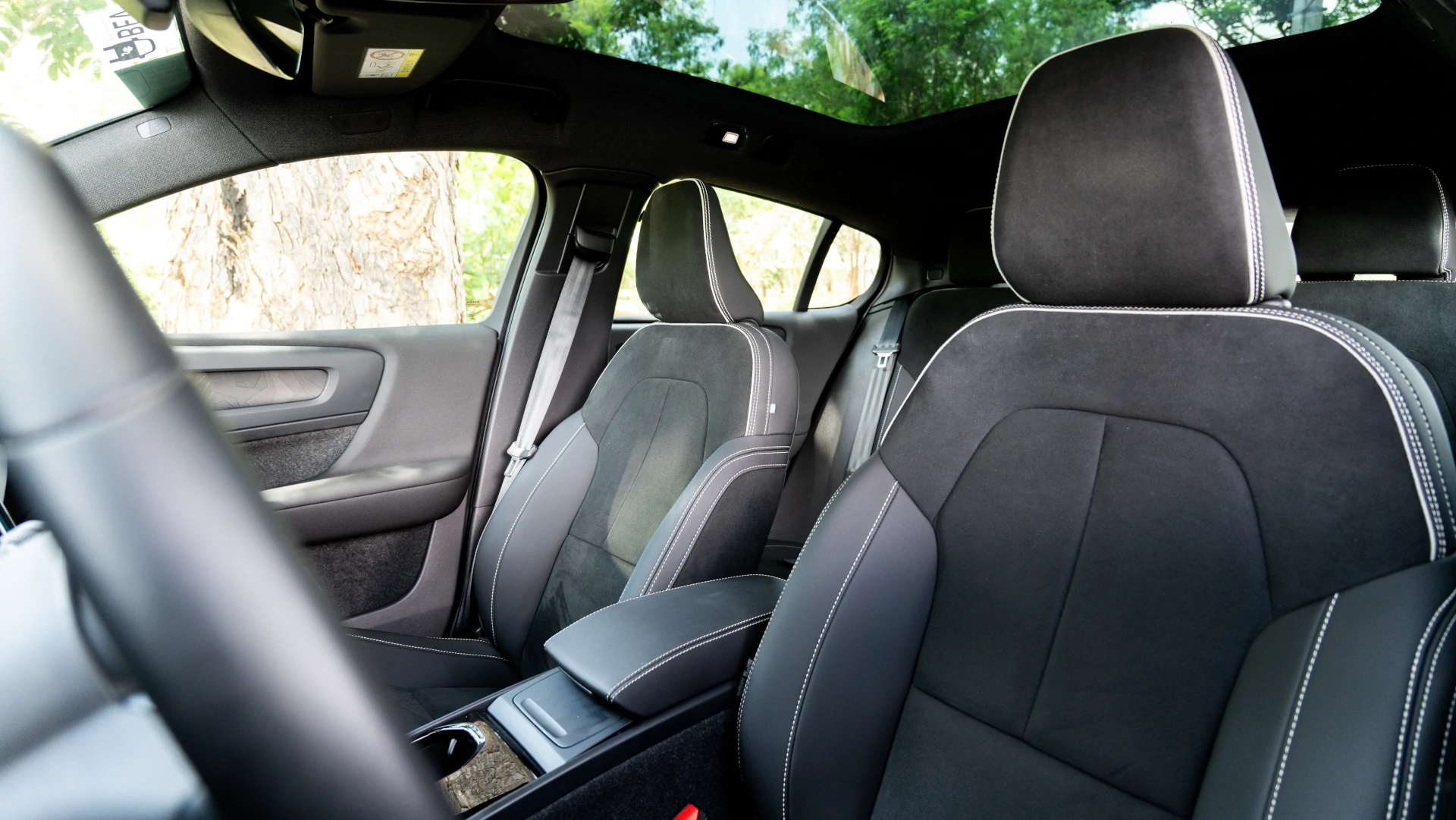
There isn’t a lot of storage for everyday items, but there is a small cubby on the center console that also houses the wireless charging pad. There’s also storage under the center armrest, as well as what appears to be a tiny trash can in the middle.
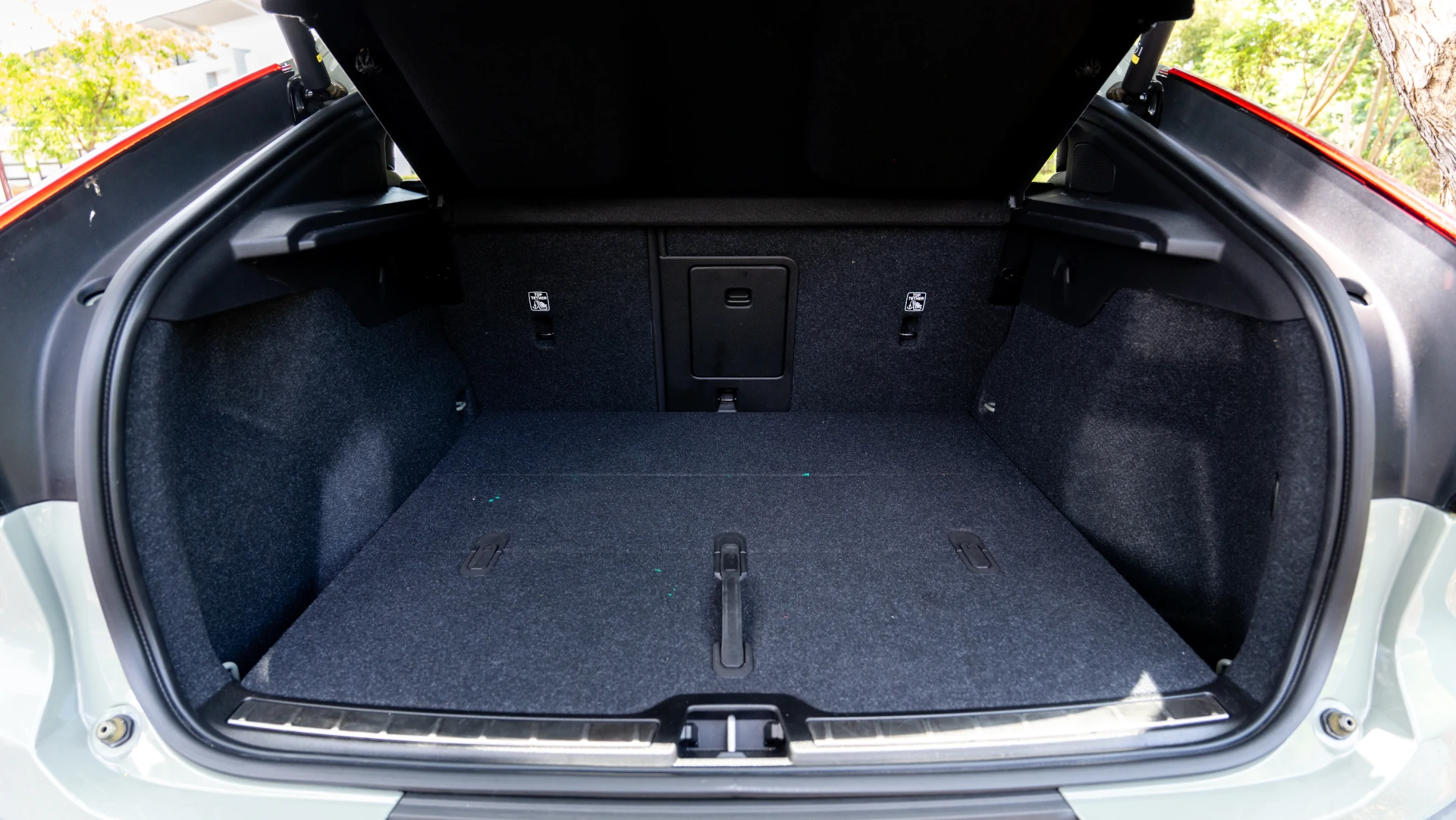
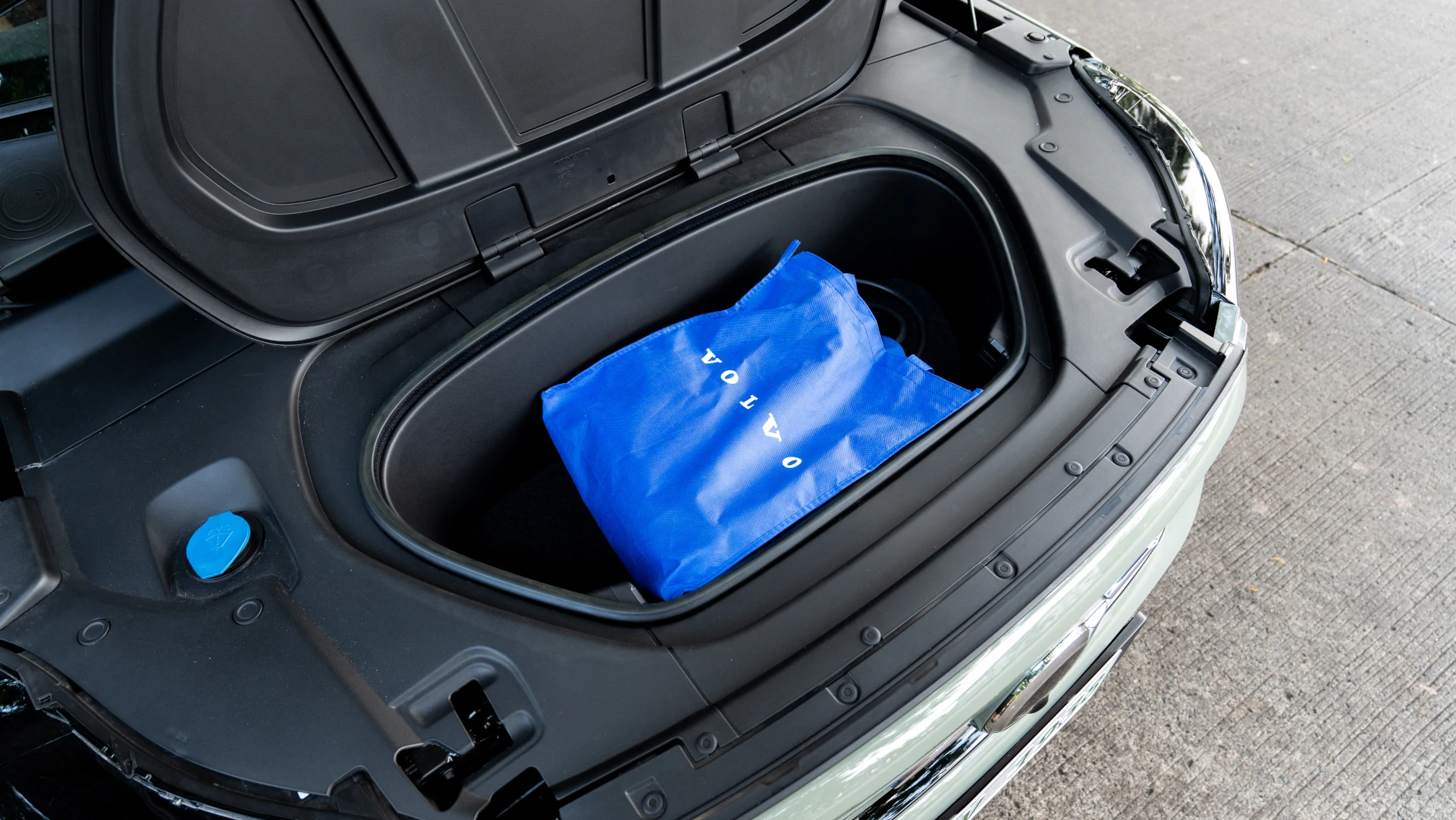
As far as space for passengers go, there’s decent leg, head, and elbow room for four average-sized Filipinos. A fifth passenger will have a hard time, as the tunnel in the center will get in the way. There’s an abundance of cargo space at the back as well, but worth pointing out that the shape of the rear limits its storage capabilities a bit. That said, the second-row seats can be folded down to open up more room. There’s also a front trunk—or a frunk—available for overnight bags and other small items.
Performance
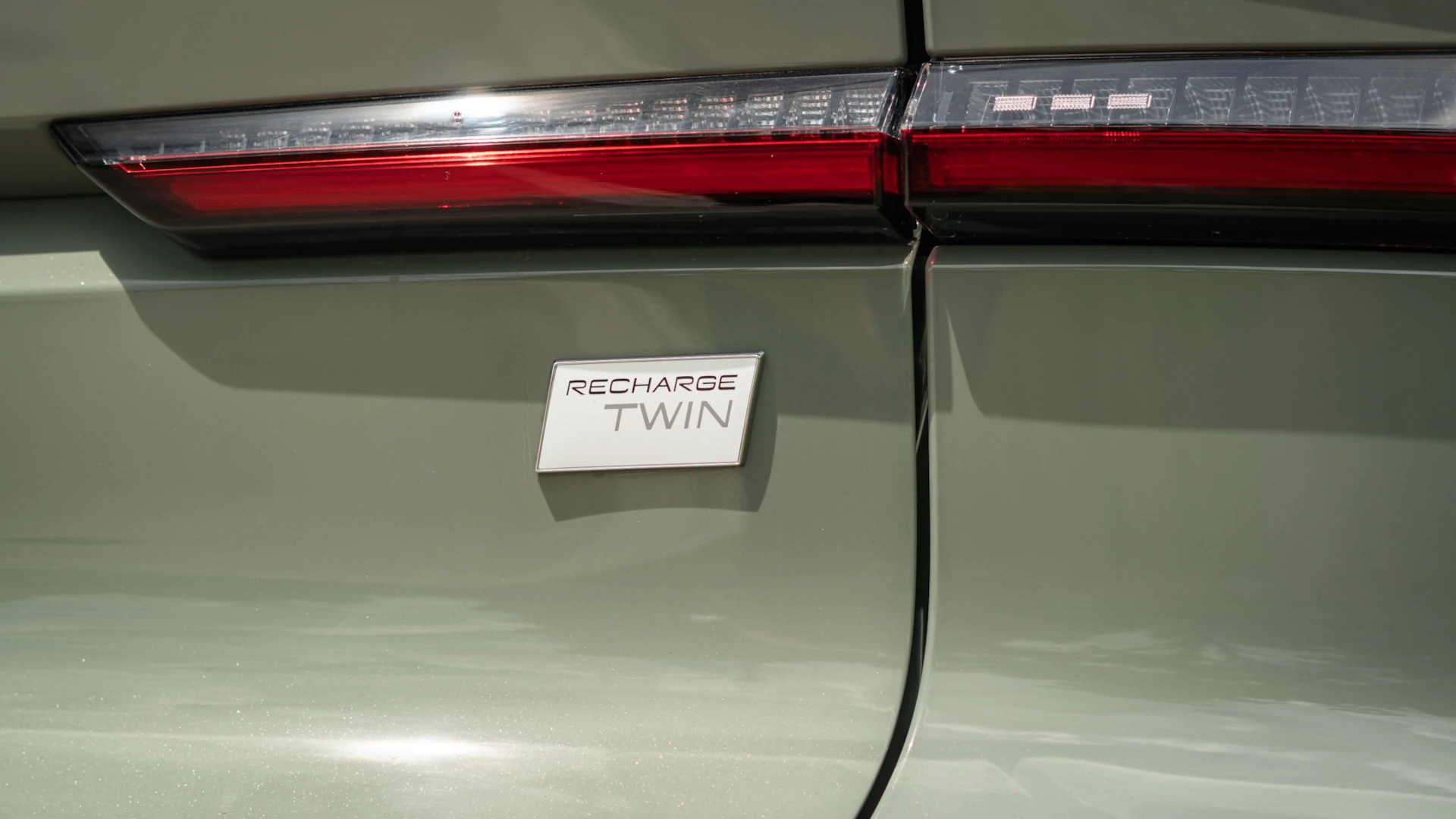
Frankly, I didn’t read the spec sheet enough before I got the C40 Recharge. I knew it had north of 400hp on tap, but I didn’t realize that translated to a 0-100kph sprint in just 4.7sec. Little did I know that it also had more than 650Nm of torque at its disposal. I learned that immediately after I got the vehicle—I drove out of the village and stepped on the pedal, and I felt the vehicle squat. I’ve driven a few performance cars in this lifetime, but they looked the part of an incredibly fast vehicle—the C40 does not. It’s a sleeper.
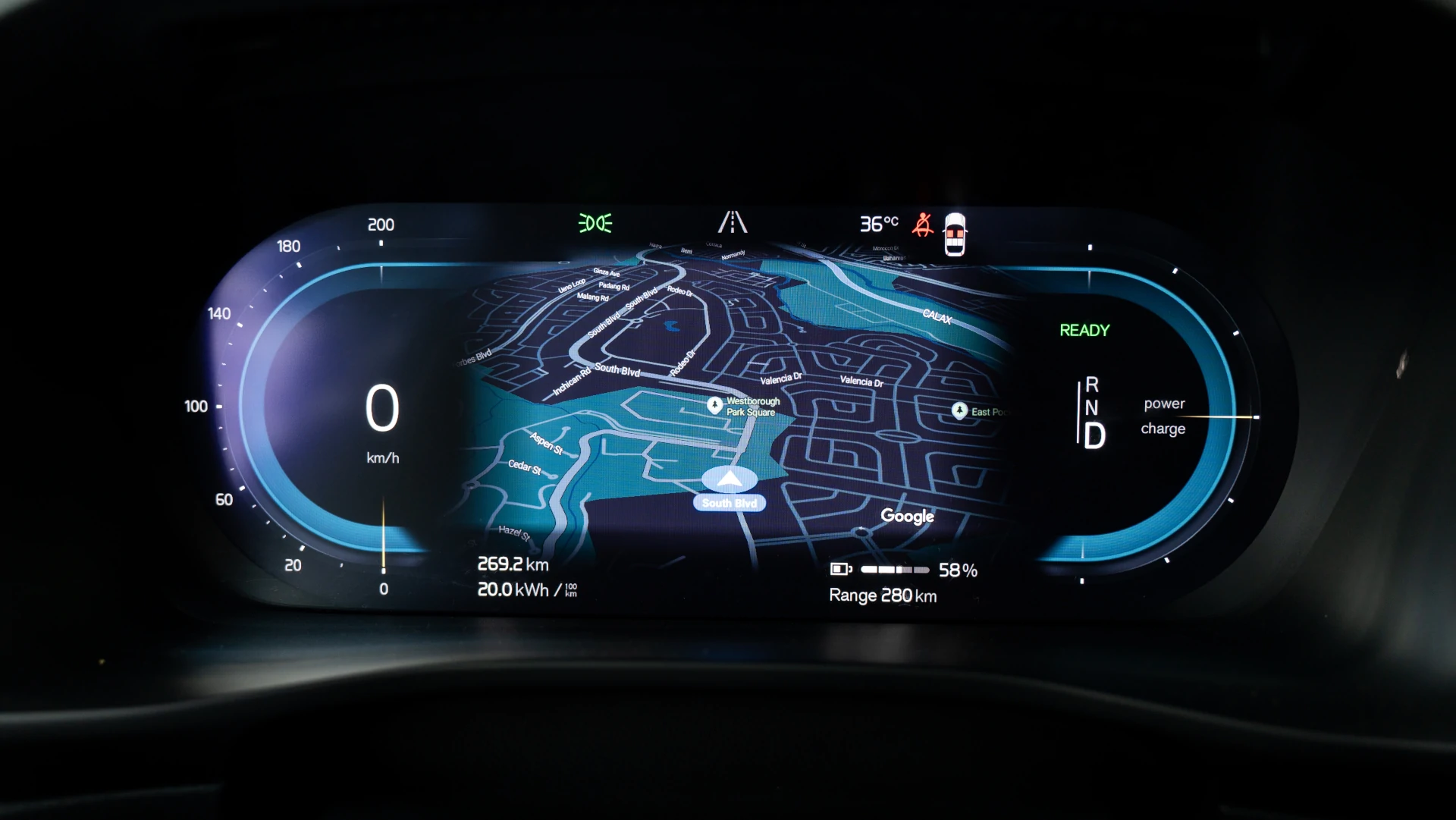
But it can stay calm and relaxed if you want it to, of course, because it was built to be a comfortable daily driver—it just so happened that it also has sports car-levels of power. It boasts a maximum range of 650km, which I made good use of during my time with it. Unfortunately, the instrument cluster wasn’t very friendly to me at first, so I wasn’t able to check my consumption for the whole test-drive duration—sorry for that. But I was able to tinker with it eventually, and at some point I was averaging 20kWh/100km.
With those figures, say you’re an owner and you charge at home, you’ll spend about P220 every 100km you drive. Assume the average price of gasoline is at P55 per liter, this equates to about 4 liters of fuel per 100km, or about 22km/L. That’s in mixed driving conditions, so that’s pretty darn good.
The C40 does support fast charging that lets it go from 10 to 80% in just 27 minutes, but I didn’t have the luxury for that. Instead, the one time I did plug it in, I did so at a free charging station. If you opt for any of the fast chargers in the metro, you’ll have to shell out more as the rates will be higher.
Ride and handling
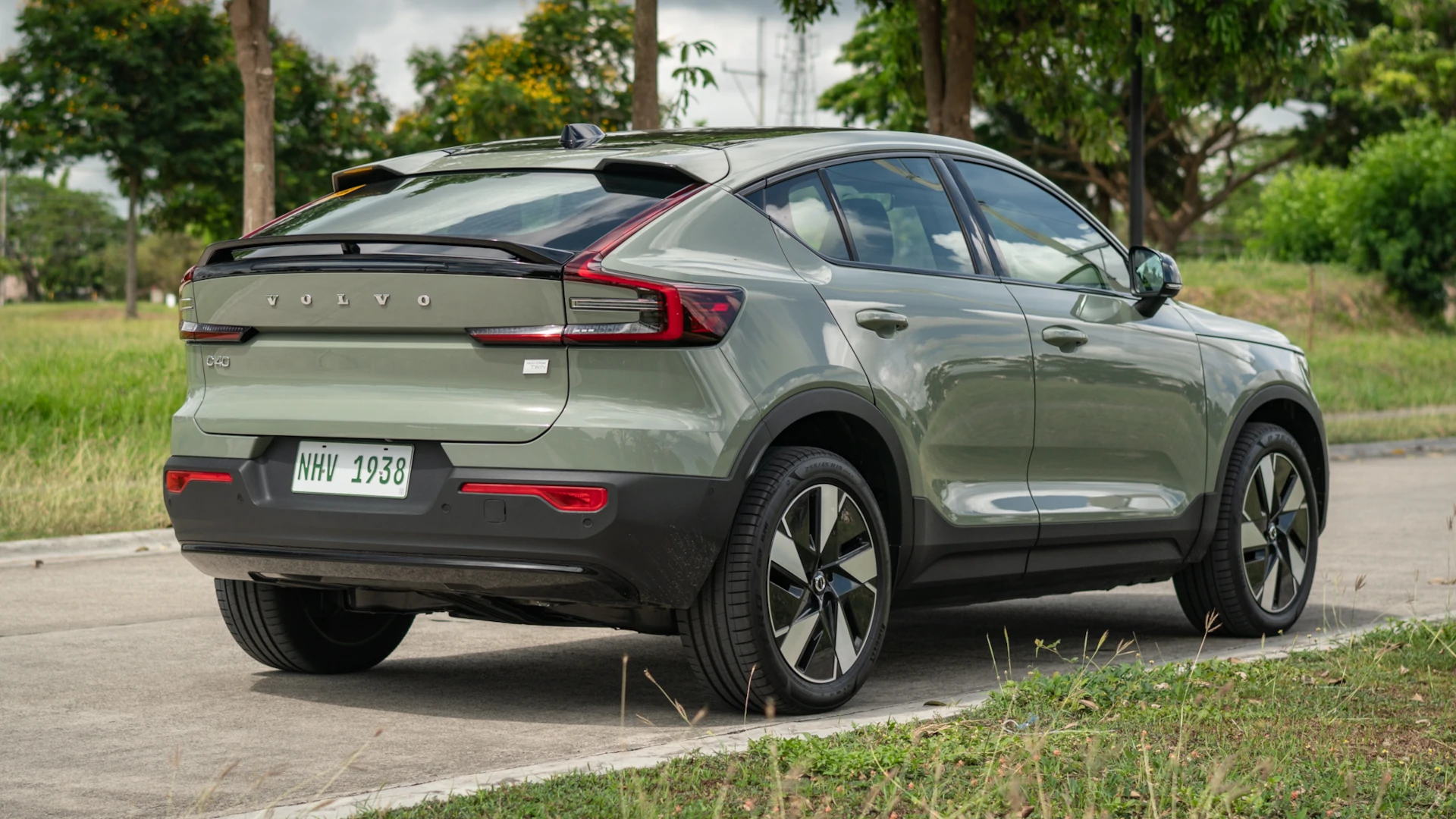
Like I said, this car has sports car-like power, and for the most part, the vehicle and chassis can keep up with it. By that I meant safe driving maneuvers on public roads. It has some body roll through corners, but still somewhat planted for a crossover that rides higher than a regular sedan. Though I wouldn’t suggest going flat out with this, because even if the Pirelli P Zero tires provide good grip, I worry the power output might be too much for the vehicle to keep traction. I wouldn’t want to find out the answer to my questions, either, because there’s no point in bothering—at the end of the day, this is a car meant for the city.
And in the city, it’s a good fit. It’s easy to maneuver thanks to its small footprint and its light steering, and despite having large 19-inch wheels, you don’t feel all of the road underneath you. The cabin insulates sound and vibration quite well, and while it’s nowhere near the XC90 in terms of comfort, the ride in the C40 is much more supple than in your everyday sedan.
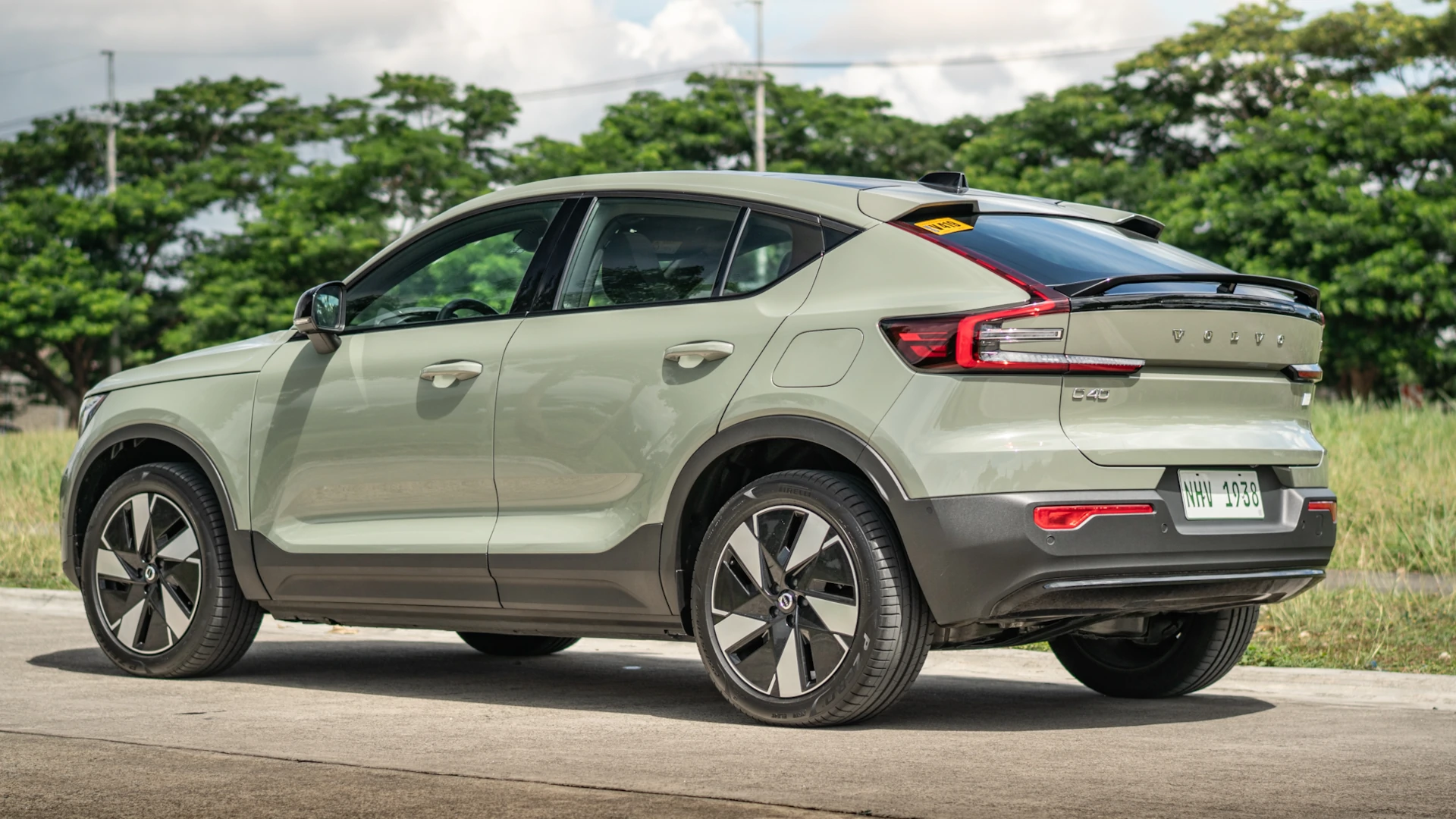
Using it as a daily driver will also prove easy, because apart from the fact that it has extra tech like parking aids available, getting in and out of the vehicle is easy. The doors open wide and the floor is relatively low—something passengers with mobility issues will appreciate a lot. As for the driver, the seat has multiple adjustments available, including the seat length itself. This will come in handy for tall or long-legged individuals.
On the highway, I’d say the C40 rides even better. It’s quiet on properly paved asphalt, and it’s neither wallowy nor too stiff on long, open roads. Just about right for my preference.
Extra features
Volvos are safe cars—that much has been established for quite some time now. The C40 exemplifies that, as it comes packed with a bunch of advanced driver-assist tech. There’s lane-departure warning and lane-keep assist, forward-collision warning with autonomous emergency braking, and blind-spot monitoring, among others. As implied earlier, parking is also made easy with a 360-degree-view camera and a rear-cross traffic alert, also with autonomous braking. The majority of these I didn’t use, but they all are good to have at the ready.
As with most modern Volvos, the C40 comes with a large vertical infotainment system. This is paired with a 13-speaker Harman Kardon hi-fi sound system that’s one of the best in the business. Of course, it comes with Apple CarPlay and Android Auto connectivity.
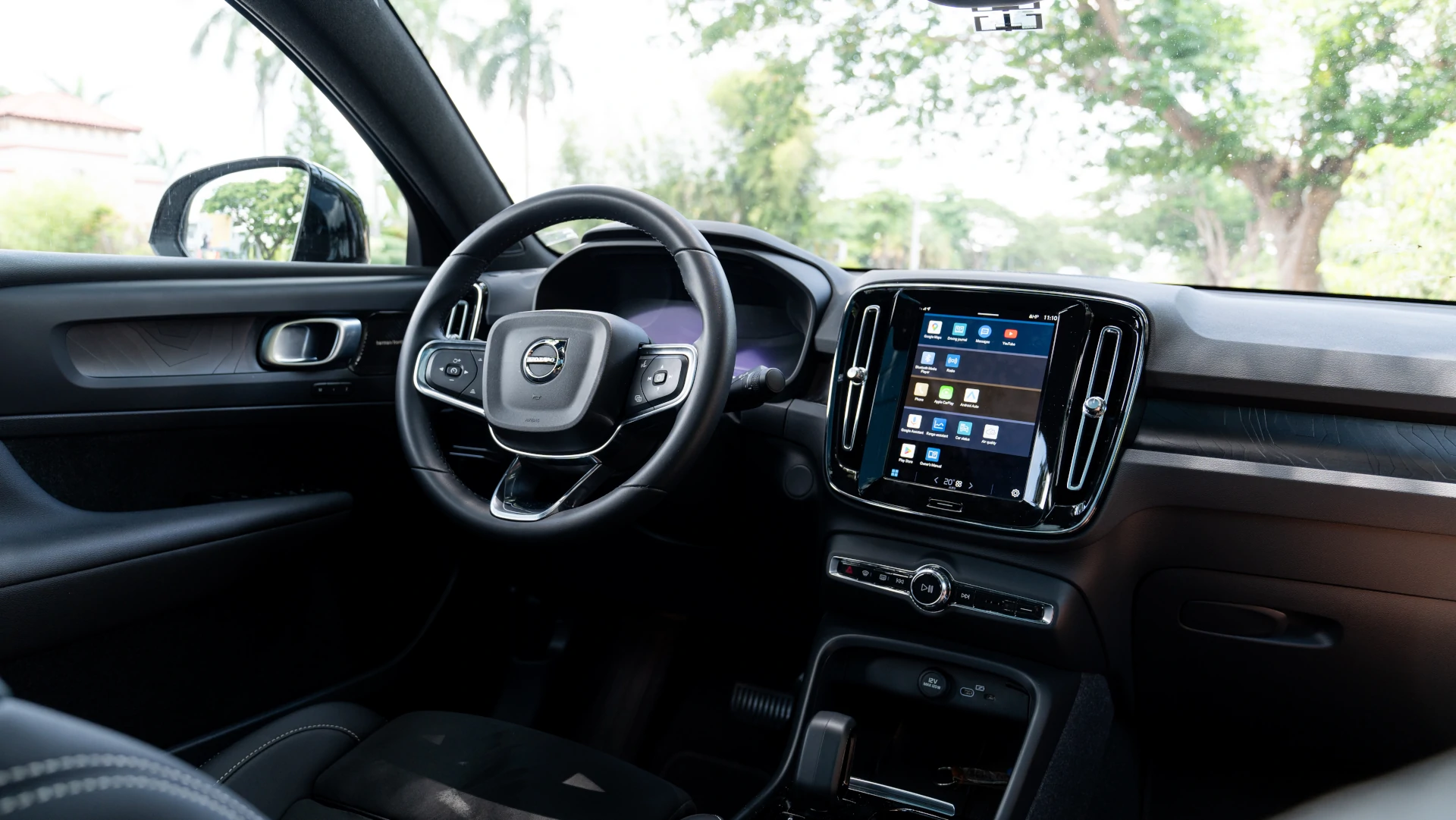
My biggest gripe about the display is that the A/C controls are buried in the touchscreen display. But that’s not the worst part. It’s the fact that whenever you try tweaking the climate controls—because it’s one of those air-conditioning systems that you just can’t get the proper perfect settings whether or not you set it to automatic—it’ll take up the entire screen and you’ll have to make a few presses just to get back to your previous screen.
Other brands have their A/C controls in their head units, too, but those usually only need one swipe to go back to, say, the CarPlay screen. It can get a bit distracting, and the only compromise is to just set the A/C to the most ideal settings possible and leave it be. It may be a small gripe for some, but it’s big enough for me to point out.
A bunch of Google Services are also available through the head unit, but that’s something I wasn’t able to try out. I suggest would-be owners ought to dive deeper into this, though, because there are a lot more other features to explore here.
Verdict
The Volvo C40 Recharge stickers for P4.19 million, which is quite expensive for a vehicle this size. But if you look at other EVs around this price range like the Kia EV6 or the Ioniq 5, the C40 starts to make sense. It’s also much, much better than what I expected, and is a stark contrast to the EX30.
It has plenty of range and a lot of power, a premium cabin that’s nice to be in, and looks that probably won’t go out of style in the foreseeable future. For what it is, the Volvo C40 Recharge still offers you a lot of value for your money. If you’re eyeing a full EV that’s a bit upmarket and you aren’t keen on getting something big, this is very much worth considering.
SPECS: 2025 Volvo C40 Recharge
Price: P4,190,000
Motor and battery: AC Permanent magnet motor, 78kWh capacity
Power: 402hp
Torque: 659Nm
Transmission: Single-speed
Layout: Rear-wheel drive
Seating: 5
Score: 9/10
More photos of the Volvo C40 Recharge 2025: