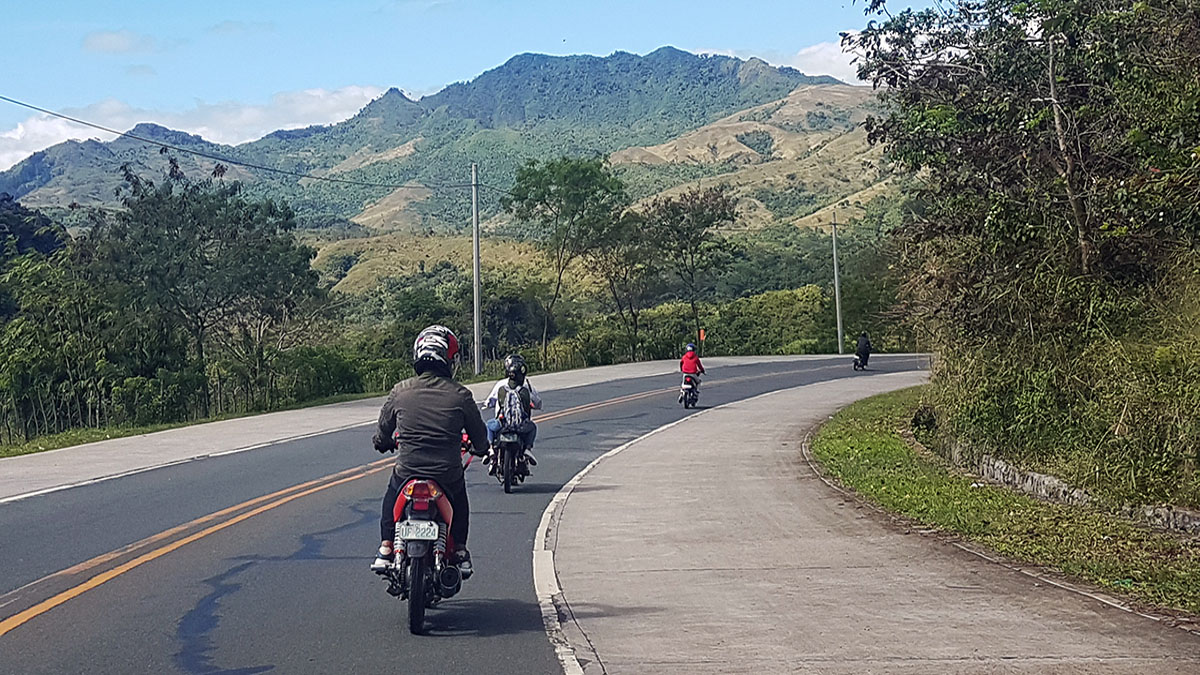
Planning a coffee ride soon? If you haven’t driven along the Marilaque Highway lately, you may have been surprised to come across online posts recently claiming that those driving through the public road are being charged a P30 environmental fee by the municipality of Infanta, Quezon.
Various motoring-centric accounts show riders passing through being charged per head to enter Infanta. Is it another passway or toll fee? Not quite.
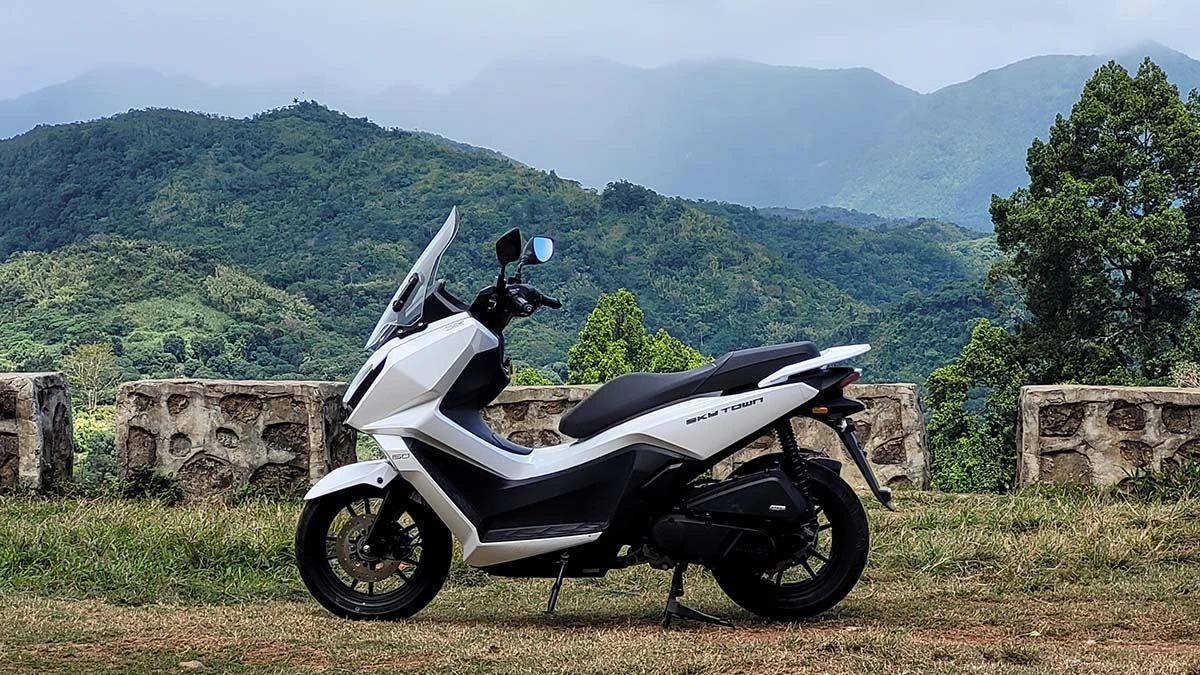
Here’s what you need to know about this new fee being charged to motorists and tourists in Infanta, Quezon.
ALSO READ:
Guide: Bike parking spots near the MRT/LRT stations
Pasig River Esplanade guide: Phases, landmarks, parking, and more
What is the Municipal Environmental User’s Fee (MEUF) in Infanta, Quezon?
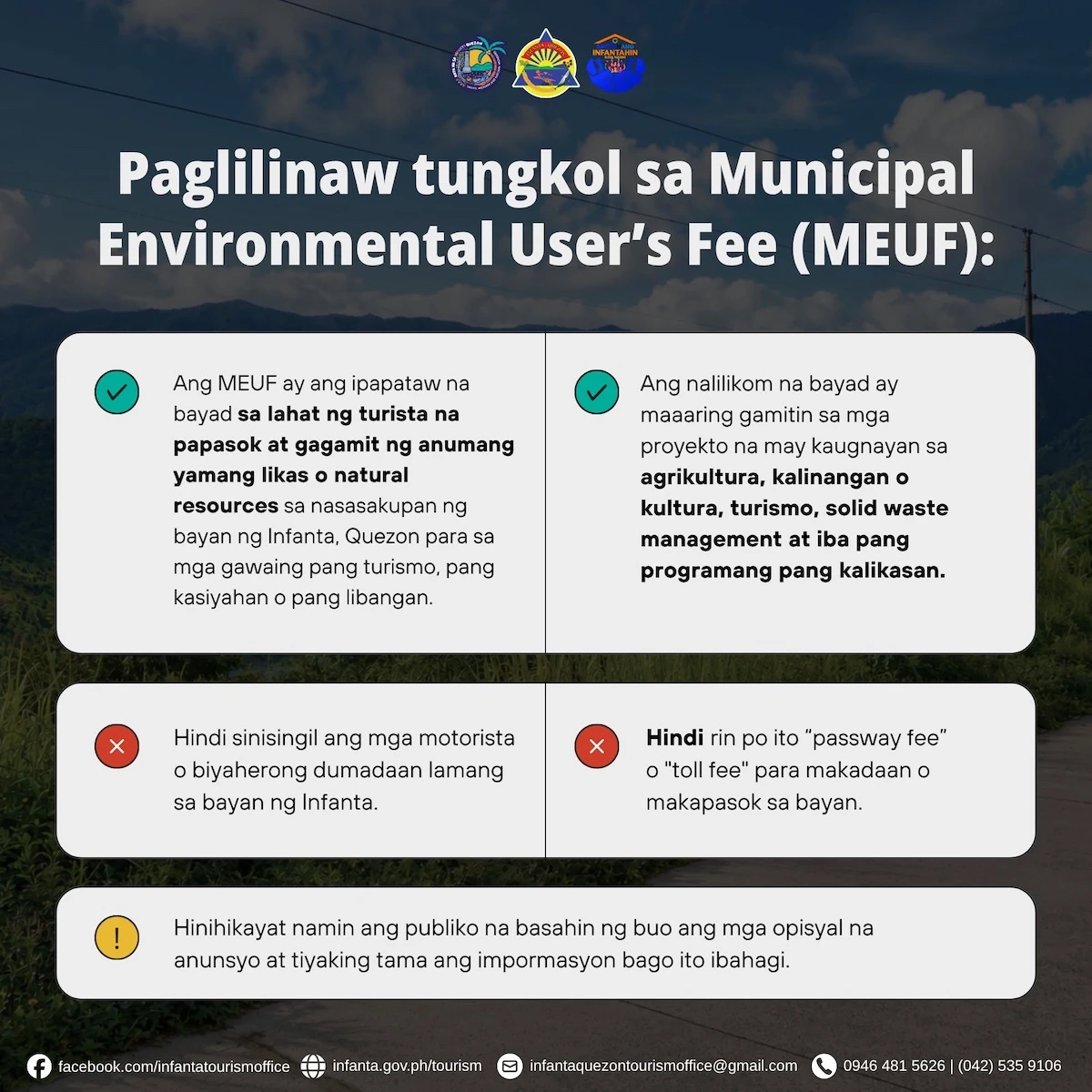
To shed light on the issue, the Infanta, Quezon Culture, Heritage, Arts & Tourism Section clarified that the fee being collected falls under the Municipal Environmental User’s Fee (MEUF) and is not a passway or toll fee, contrary to some claims circulating online.
The MEUF is being imposed by the local municipality of Infanta on all inbound tourists utilizing any of the town’s natural resources for tourism, sightseeing, leisure, or recreational purposes.
What’s the legal basis for collecting the fee?
According to the Infanta Tourism Office FAQs, the fee collection stems from Municipal Ordinance No. 30, Series of 2021, also known as the Tourism Code of the Municipality of Infanta, Chapter 5.
Citing Article X, Section 5 of the 1987 Constitution, they state that local governments have the legal right to raise revenues for use by local governments.
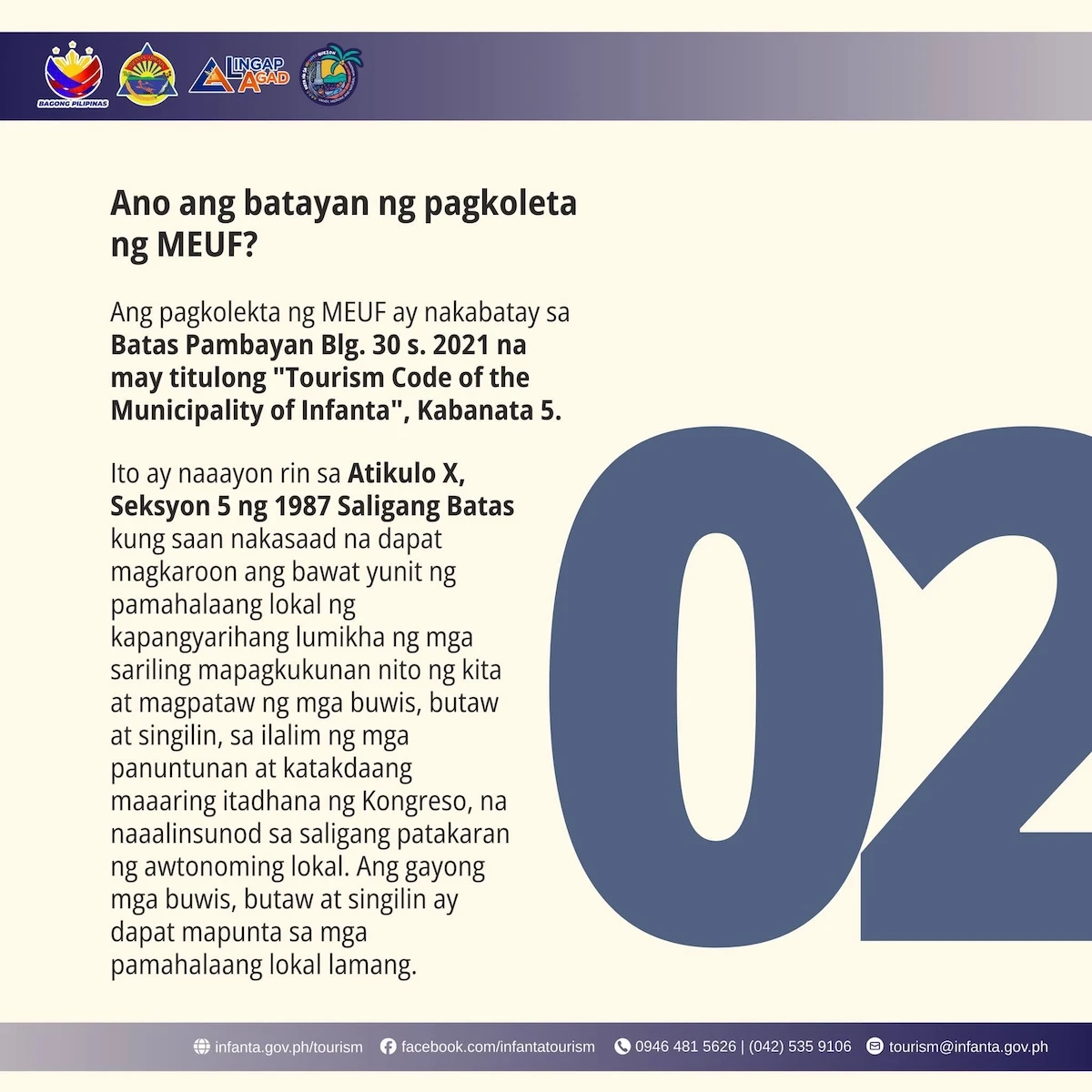
The section states that: “Each local government unit shall have the power to create its own sources of revenues and to levy taxes, fees, and charges subject to such guidelines and limitations as the Congress may provide, consistent with the basic policy of local autonomy. Such taxes, fees, and charges shall accrue exclusively to the local governments.”
Who is required to pay the fees?
Under the local ordinance, this fee will be charged to tourists who enter and make use of the town’s natural resources for tourism, leisure, recreational, and other enjoyment-related activities.
Take note: this P30 fee is supposed to apply to tourists participating in nature-based activities around natural spots in Infanta. Activities could include trekking, swimming, camping, and other forms of outdoor recreation that make use of Infanta’s natural attractions, like mountains, seas, rivers, fields, and other natural spots. While the sites themselves are free to enjoy, costs are incurred for the care and maintenance of the surroundings and natural environment.
In a previous detailed advisory posted in 2024, when fee collection first began, tourists were reminded that they were only required to pay the fee once for the duration of their stay in Infanta, and that it does not cover other nearby towns. Payments must only be made to authorized collectors with IDs or can be paid through accredited hotels, resorts, and tourism providers.
Who are discounted or exempted from paying the MEUF?
Exemptions include residents of Infanta (with proof of residency), children aged 10 and below, and business owners operating within the town, even if they reside elsewhere. Visitors of the LGU, with prior coordination, are also exempt under the local rules.
Meanwhile, senior citizens, PWDS, and students are entitled to a 20% discount.
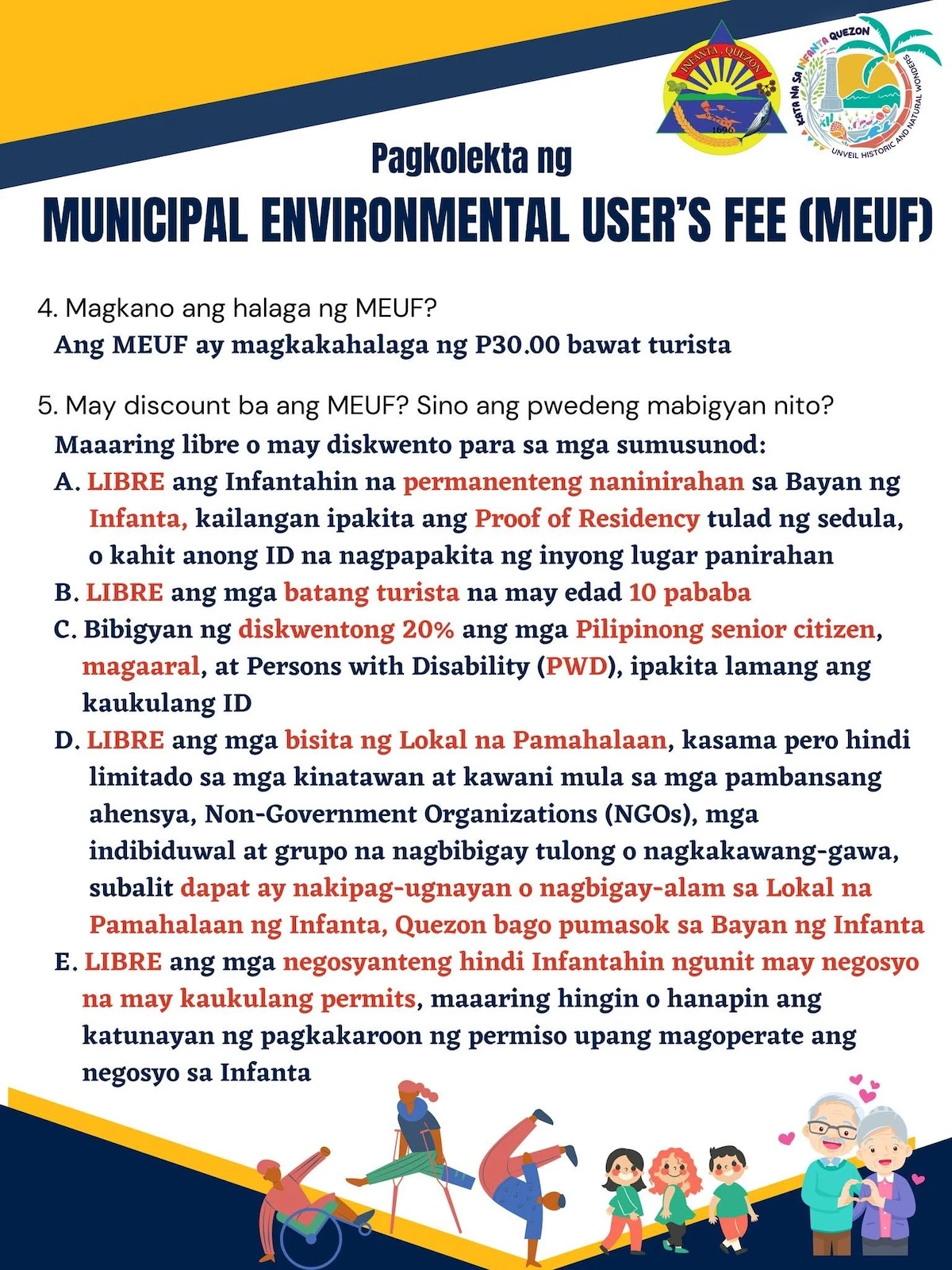
As cited by MotoPinas, the tourism office clarified that riders and motorists who are simply passing through Infanta on their way to other destinations are NOT required to pay the P30 fee. The exemption should also cover those who are on their way to dine in any of the restaurants on Marilaque, those going on coffee rides, and those just driving through the highway stretch on their way to other towns. So if you do happen to get stopped along the highway, just make sure to state the purpose of your visit.
Where will the collected fees go?
As per the tourism office, the fees collected will be used for various environmental projects related to “agriculture, arts, culture, tourism, solid waste management, and other environmental protection programs.” The main goal is to help with the conservation, preservation, and rehabilitation of sites directly affected by tourist activities.
A share of the fees is also being allocated for community and barangay development projects, tourism development, and incentives for the collectors themselves.
Collecting municipal environmental fees is a common practice in many parts of the Philippines. Based on our personal trips, many other tourist towns usually collect mandatory environmental fees upon tourist registration or entering an island.
For instance, Boracay collects an environmental fee of P150 for locals and P300 for foreign visitors right at the Caticlan Jetty Port. Sagada collects P100 at the Municipal Tourism Office and issues a receipt that you need to show to access almost all of the town’s major tourist attractions.
Presently, Marilaque does not have a dedicated tourism reception facility, which led to the collection being done at the KM90 point on the highway, which caused confusion among motorists.
In an online post shared by the Municipal Government of Infanta, Infanta mayor Lord Arnel Ruanto shared photos of truckloads of garbage collected from the area, often thrown by passing motorists along the road and left behind in mountains, campsites, and riversides.
“Hindi lang po ito basta basura, nakakaapekto po ito sa kalikasan at natural na buhay ng halaman, hayop at maging ng mga naninirahang tao sa kabundukan at dalampasigan,” Ruanto stated. “Malaki ang bahagi ng dinadaanan sa Marilaque Road sa Infanta na protected area.”
As reported by Inquirer in April 2026, the mayor issued a warning to undisciplined tourists visiting the area, after volunteers gathered tons of empty bottles, cigarette butts, diapers, and plastic packaging discarded along the roadside.
What happens if you don’t pay the fee?
According to the Infanta LGU, individuals who refuse to pay the fee, impersonate others, or provide false information to qualify for exemptions or discounts may face administrative charges and penalties from P60 up to Php 1,500.

With the rising costs of fuel these days and pricey food and coffee served in cafes along the area, in comparison, the P30 fee seems like a small price to pay. Hopefully, motorists will be able to see improvements in the care and maintenance of sites as well as the promised environmental projects in the future.
What can you say about this development? Sound off in the comments.