
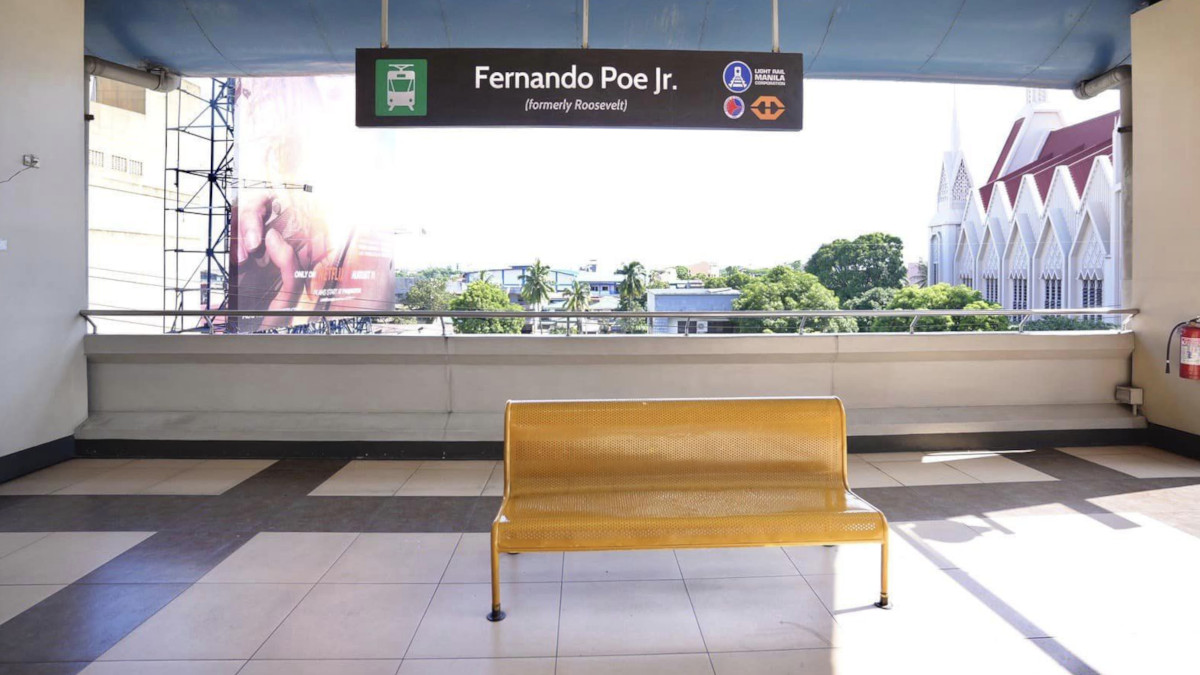
Another day, another accident—this time, though, there is a furor over what happened. For context: Someone purposely jumped from an LRT station and landed on the road below. A motorist, driving and minding his own business, had the person land on his vehicle, and the resulting impact led to the jumper’s death.
The police had earlier faced the press and came out with a statement that the vehicle’s driver was under custody and undergoing inquest proceedings, wherein a case will be filed for reckless imprudence resulting in homicide. As of this writing, the driver is already released from custody because the police found there was “no apparent negligence on the part of the driver,” and because the deceased person’s family had executed a notarized letter stating that they would not be pursuing a case against the driver.

Why, if it is so clear to us (based on available videos) that the driver was not at fault, did the police hold him in custody and even consider filing a case? Was that course of action even legal?
In this CarLaw feature, we will discuss why this course of action, although seemingly absurd at first glance, might be legal. Let’s break down the issues.
What is an inquest?
The police said that the driver was undergoing inquest proceedings—so what exactly is an inquest?
Normally, when a case is being filed, there has to be a determination that there is probable cause showing the person being charged with a crime has likely committed the crime. This is typically found out in a process called a preliminary investigation before a prosecutor. If there is probable cause found during the preliminary investigation, the prosecutor then files the case before the courts, where regular legal proceedings can begin.
ALSO READ:
CarLaw: Everything you need to know about reckless driving
Railways nationwide to implement new accessibility guidelines
An inquest is another way to determine whether there are sufficient grounds to charge an individual before the court of law. It is done when the person being accused is already in custody with the relevant authorities. Basically, it is an expedited procedure that ensures the rights of the accused are protected. Inquests and preliminary investigations, in short, are two sides of the same coin with the same goal: determining whether there are grounds to file a case.
So why, then, can the police proceed if it is apparent that the driver was not at fault here?
The prosecutor’s role

This is because the police merely conduct fact-finding in cases like this. The person whose actual job is to determine if there are sufficient grounds to charge someone is the prosecutor.
So, the police brings the case before the prosecutor. If the prosecutor, upon reviewing the available evidence, determines that a crime was committed and the accused was likely the guilty party, he then files the case before the court with competent jurisdiction, depending on the crime committed. If the prosecutor finds that no such grounds exist, he may dismiss the case at that point, and it never reaches our court system.
It is only once a case reaches the courts that the judge takes on the role of determining if someone is guilty beyond reasonable doubt—but that’s getting ahead of ourselves, and outside the scope of the case being filed in the first place.
So why, if the facts are clear, do the police seem to automatically file a case like this? Well, it’s because they really do have to err on the side of caution, lest they be administratively or criminally charged by the victim with dereliction of duty, which may fall under Article 208 of the Revised Penal Code, to wit:
Article 208. Prosecution of offenses; negligence and tolerance. The penalty of prision correccional in its minimum period and suspension shall be imposed upon any public officer, or officer of the law, who, in dereliction of the duties of his office, shall maliciously refrain from instituting prosecution for the punishment of violators of the law, or shall tolerate the commission of offenses.
As such, it is the more prudent act to wash their hands and pass on the duty to prosecute to the prosecutor; it is in the name of the role anyway.
In fact, this is what happened. In their statement, the police indicated that the victim’s family had signed a notarized letter saying they are not pursuing a complaint against the driver. Generally known to us lawyers as an affidavit of desistance, this is a document that is sworn under oath stating that no case will be pursued and that authorities will not be held liable for non-prosecution.
So, in sum, what the police did was mere procedure. They were doing their jobs, and yes, it may seem harsh, but harsh does not mean that illegality is being done.
Reckless imprudence resulting in homicide
Let’s quickly discuss the case that the police considered filing. This is nothing new to those who have kept up with the news. The case was one for reckless imprudence resulting in homicide under Article 365 of the Revised Penal Code.
In order to understand what reckless imprudence means, we have to look at the definition in the law:
Reckless imprudence consists in voluntary, but without malice, doing or failing to do an act from which material damage results by reason of inexcusable lack of precaution on the part of the person performing of failing to perform such act, taking into consideration his employment or occupation, degree of intelligence, physical condition, and other circumstances regarding persons, time, and place.
So this is an act in which there is a voluntary and inexcusable lack of precaution by a person resulting in damage to another—in this case, resulting in homicide or the death of a person. One has to take into account all the factors in play here, including the circumstances that resulted in the accident.
Does this mean that if someone jumps in front of your car, you are ‘negligent’? The answer is more complicated than ‘of course not’ or a categorical ‘yes.’ Again, this all depends on the circumstances surrounding the incident. Were you speeding? Were you driving with due caution? Was it night or day? Were you distracted? All of these and more will be taken into account by the investigating officer and the prosecutor in determining whether a case is warranted or not.
While in this situation, the police found “no apparent indication of negligence on the part of the driver,” this was based on a holistic view of all the facts that the police had on hand at the time.
Trust the system, change the system
The hardest part of this is trusting the system. It’s a system that has never had the best perception with the public. To lawyers, it’s quite clear that there was apparent good reason to believe that this case should not have reached inquest proceedings in the first place, but again, most, if not all, of us are mere armchair lawyers and do not actually have access to all the facts at hand.
Thankfully, due to the finding of no apparent negligence, as well as the notarized letter issued by the victim’s family, the driver in this case was released from police custody. This just underlines the importance of holding public authorities to scrutiny, but should not be an invitation to conduct a witch hunt against those doing their jobs.
Should we want changes to this system? Is it unfair? That is all up to us and the ones we vote to office. If something is legal, no matter how unjust, then we need to vote in those who will make changes to the law so that what is now legal may also become just.
At the end of the day, a tragedy happened, and two families’ lives were completely upturned in a few seconds. Let us hope for healing for all those involved in this series of unfortunate events.