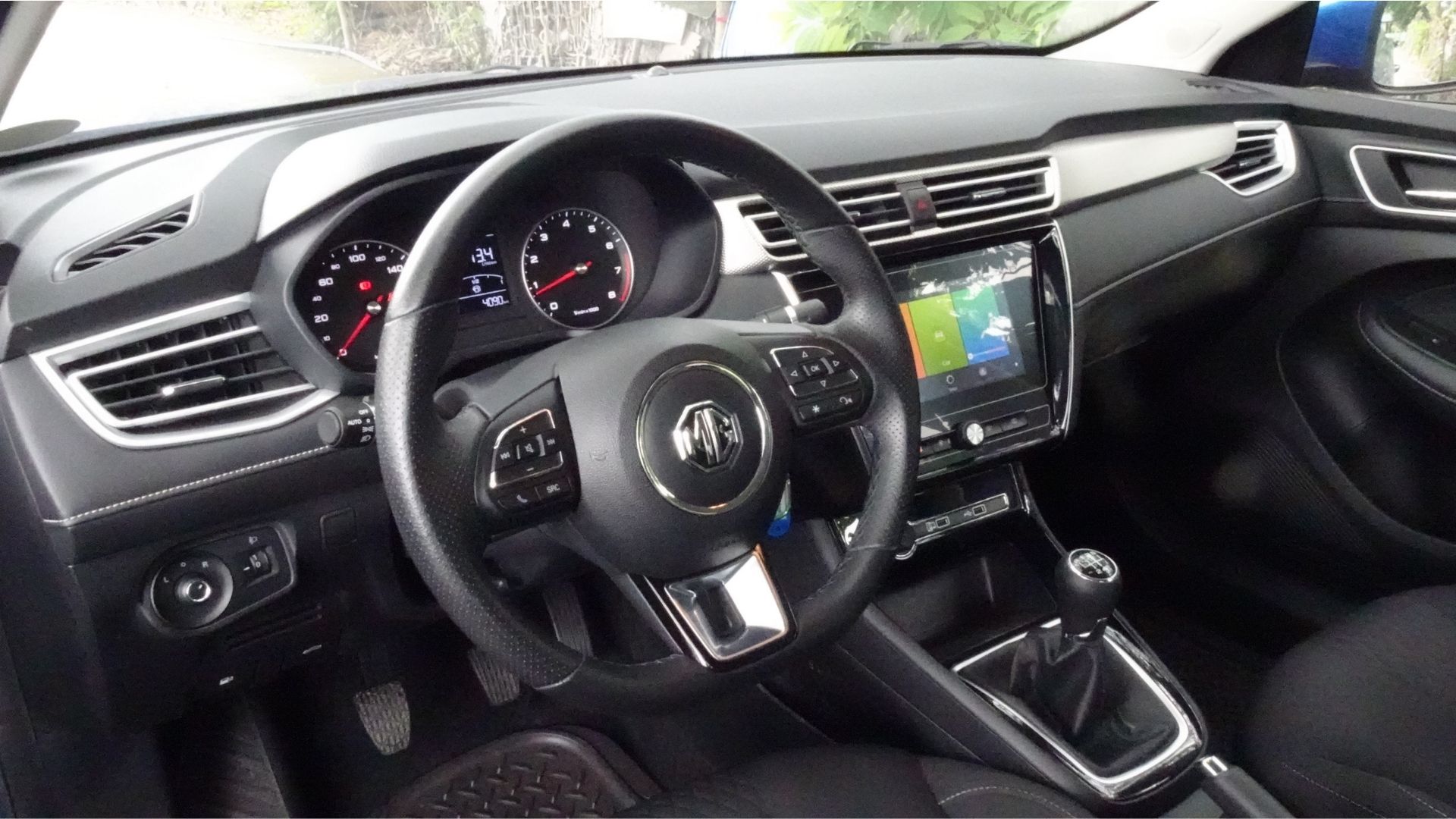
There are many important components in an automobile. For this feature, we’ll be focusing on the one we grip on to every single time we drive. We’re talking, of course, about the steering wheel. We’ll take a look at its history, how it has evolved, its different types, its latest developments, and where it may be headed.
OTHER STORIES YOU MIGHT HAVE MISSED:
This dashcam footage puts you front and center of a landslide
Report: 1,391 Motorists apprehended on Commonwealth on first day of MC lane policy
History of the steering wheel
Before we go straight to the steering wheel, let’s look at the other steering options that existed in the past before auto manufacturers settled on the circular steering controls we’re all familiar with today. Most early automobiles—like the three-wheeler 1886 Benz Patent-Motorwagen—used a tiller to steer. Another alternative steering control in the early years were handlebars that can be operated with both hands.
In 1894, Alfred Vacheron entered the Paris-Rouen race with his modified Panhard. He ditched the French car’s archaic tiller and gave it a proper steering wheel. Alas, it would take a couple of more years for car manufacturers to adopt this safer, more modern circular steering design.
It was only in the next decade when the steering wheel became widely adopted by automobile manufacturers. This made more sense since cars were getting heavier, more powerful, and faster. The old tiller wasn’t exactly something you’d want to use as you went motoring down the road at speed. The circular shape of the steering wheel not only made it easier to use, it also offered better control and accuracy.
The early automobiles were equipped with simple wooden steering wheels. The smaller lightweight cars came with small diameter steering wheels, while larger heavier luxury cars had noticeably larger ones. The increased size was necessary because the heavier the vehicle is, the more leverage is required to steer the wheels. We must remember, this was the era before power-assisted steering.
When it came to the aesthetics of the steering wheel, little changed during the first three decades of the 20th century. One of the early advancements came with the adoption of the more affordable and probably safer plastic-like Bakelite steering wheel which replaced the old wooden ones. By the 1930s, automobile manufacturers began to put more attention into the steering wheel’s styling. The spokes were now rounder, and the steering hubs which sometimes served as a horn button started to feature emblems or polished metal trim.
In this decade, the horn ring started to become popular, first on luxury models, and eventually on standard cars. This feature allowed the driver to honk the horn without removing their hand from the wheel. Unlike the passenger cars, the steering wheel’s aesthetic evolution was a bit slower in commercial vehicles.
The modern steering wheel
Thanks to the adoption of standard power steering in practically all modern vehicles, the need for a large diameter steering wheel for extra leverage is no longer needed. This development has allowed steering wheels to shrink in size and, in turn, made getting in and out of the driver seat easier.
While the general function of the steering wheel remains simple and straightforward, by the ’90s they turned into a more complex component with the introduction of modern safety and convenience features. The contemporary steering wheel assembly is built with an integrated SRS Airbag behind the horn pad. This is flanked by controls for various functions which usually include audio controls and sometimes cruise control buttons. Like the horn ring of yesteryear, the steering-mounted controls allows drivers to always keep their hands on the wheel when driving.
Steering wheel types
Steering wheels have evolved over the decades. Thanks to the influence of motorsports, new shapes have been born. Here are common types you’ll see on today’s production cars:
- Round: The most common type of steering wheel that’s been around for over a century.
- Flat-bottomed: This design makes ingress and egress easier as it leaves more room for the driver’s legs. This concept can be traced to motorsports, but more on that later.
- Squared-off (flat top and bottom): Depending on its position in relation to the instrument panel, the flat top and bottom of the steering wheel is designed either not to block the driver’s view of the gauge cluster or the driver’s view out the windshield.
Steering wheel materials
The modern steering wheels rim usually has a metal core, but its exterior is usually covered in a soft material. Here are some you’ll find in modern mass-produced vehicles:
- Polyurethane: The most common type of steering wheel material used on lower-end vehicles.
- Leather: This is one of the most common steering wheel materials for premium variants and models.
- Synthetic suede-like fabrics: You’ll find this grippy steering wheel material on performance machines.
Steering wheel adjustments
In most modern vehicles, the steering wheel can be adjusted to suit drivers of different shapes and sizes. The tilt function lets drivers adjust its height, while the telescopic function allows for adjustment in reach or distance. While these features have appeared in some cars over half a century ago, they have become much more common in recent decades.
Steering mechanism
While there have been various types of steering mechanisms over the decades like the worm and sector steering gear and recirculating ball steering, most modern vehicles use the lighter, simpler, more precise rack and pinion setup. Vehicles with front rigid axles like some off-roaders and trucks still use the older style recirculating ball.
In racing
Race cars started with large round steering wheels, but over the years these have shrunk in diameter to fit the tighter cockpits. Cramped race cars, particularly the ones used for endurance racing, have flat-bottomed steering wheels that allow for quick driver changes.
In Formula One, the evolution is more drastic, particularly in the last four decades or so. We saw the adoption of quick-release steering wheels, the introduction of paddle shifters, and saw the circular wheel slowly morph into the yoke-style steering with integrated digital display and an assortment of controls.
Yoke steering: Alternative to the circular wheel
While the round steering wheel has been proven to be a successful design, this hasn’t stopped automakers from experimenting with other alternatives. Two automotive brands have made yoke steering available in their respective production EVs. As a refresher, the Yoke Steering in production cars is basically shaped like a wide letter U. This design limits the driver’s hand position to the 9 o’clock and 3 o’clock positions.
As mentioned earlier, this could be found in some race cars and aircrafts. Tesla and Lexus are the two auto brands that offer a yoke option on a production car. Tesla’s yoke uses a conventional steering system which has the same lock-to-lock turns as a normal steering wheel. Lexus’ yoke uses a steer-by-wire tech. Because it lacks a physical connection, the steering ratio can adjust depending on the speed, eliminating the need for a hand-over-hand motion.
The future: self-driving cars and the steering wheel
The biggest threat to the steering wheel is the arrival of self-driving cars that are engineered to be driverless. Some car manufacturers think the steering wheel still has a future in the age of self-driving cars, and we hope that’s the case. As car enthusiasts, we wish to have the option to drive on our own with our hands in the 9 o’clock and 3 o’clock positions.