
“Sir, may biyahe tayo.”
When MG Philippines marketing head for PR and Events Uzzi Asuncion called me and said these words, I was worried. I thought he was going to invite me to China. I’m apprehensive because media trips to China have been quite…stressful. Because while Chinese brands are eager to bring journalists to their country to show off their latest technology and cars, the Chinese government has a less, well, enthusiastic approach when it comes to media.
Then I learned we were going to the United Kingdom. Oh, righto. As a way of highlighting and showcasing MG’s century-old legacy, MG Philippines brought a small group of media to the Goodwood Circuit in West Sussex, to attend the Goodwood Revival event. Most of us are probably more familiar with Goodwood’s flashier event, the Goodwood Festival of Speed.
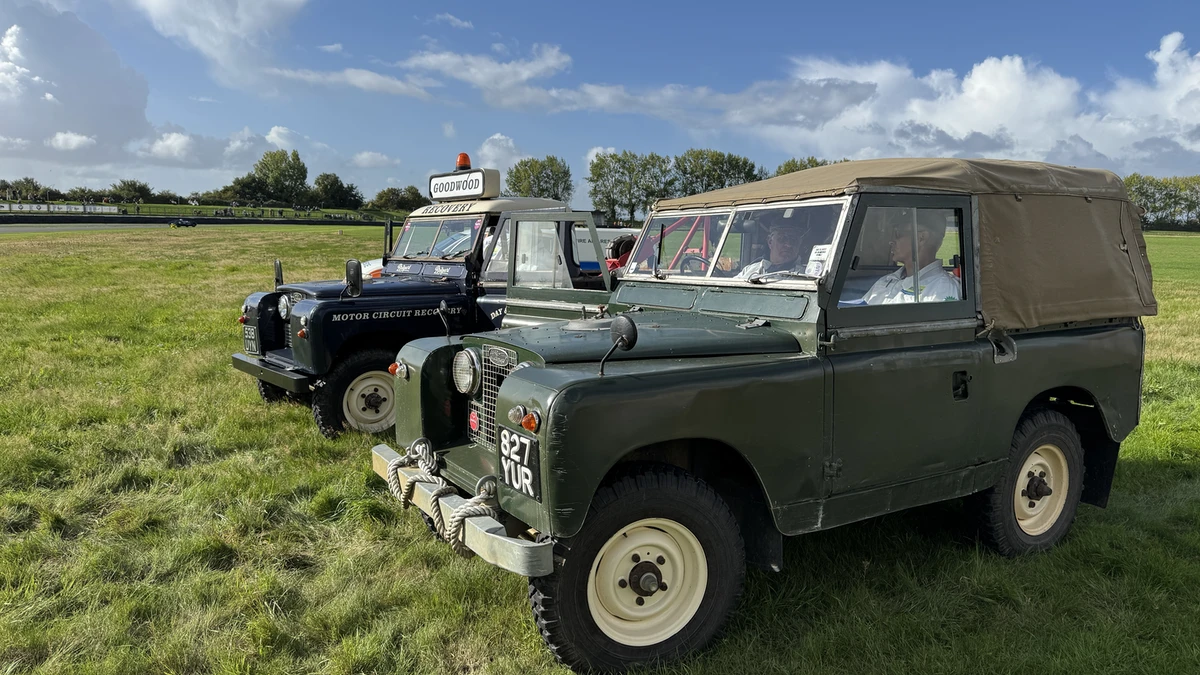
The Goodwood Revival is a three-day festival held since 1998. During the event, no modern vehicles are allowed on Goodwood Circuit. Cars that race during the Revival are from the ‘40s to the ‘60s.
Adding to the charm are the people who show up in period-correct clothing. So you have well-dressed gentlemen and ladies, classic race cars roaring around a historical circuit, and a festive atmosphere with food and drinks. I can say it’s an event like no other in the world, and something arguably only the British could pull off.
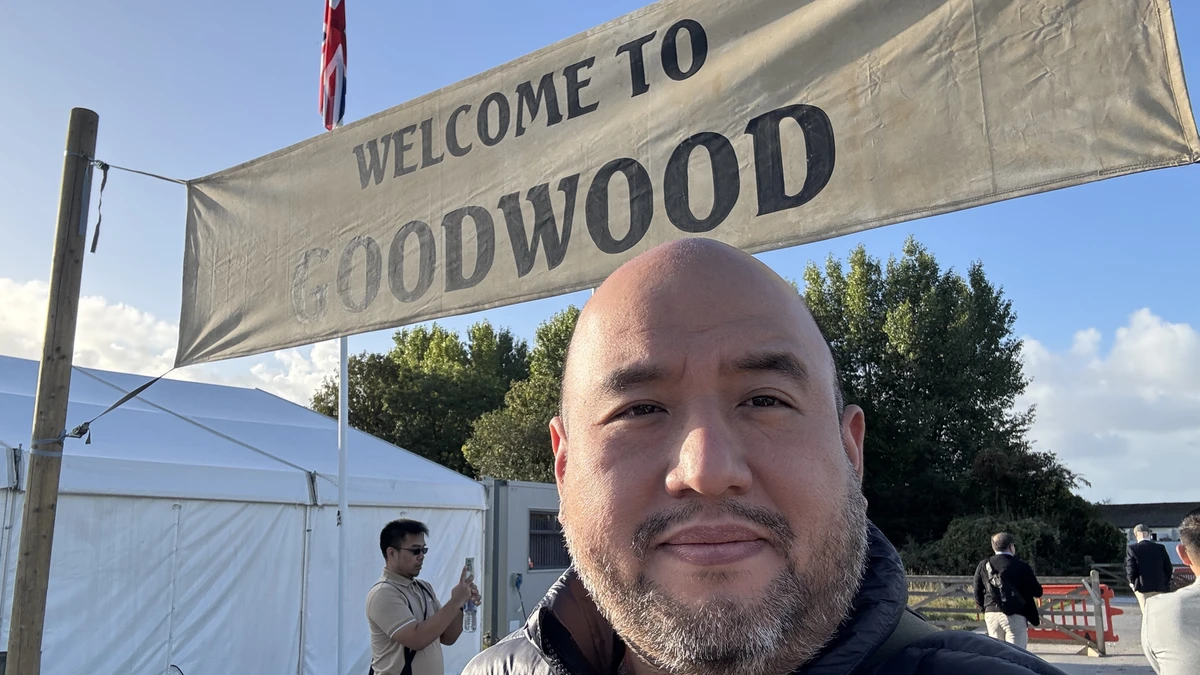
The drive to Goodwood from our hotel in London is about two hours. We reached a nondescript field with minimal signs; there were a few marshals guiding us on where to park. It didn’t feel like a massive event. We were greeted by a simple Goodwood tarp, no sparkling electronic billboard that’s par for the course these days.
After getting tickets and entering, we saw vintage tractors pulling basic trailers designed for human transport. I can’t believe I’m thinking this, but they reminded me of the kuligligs in the Philippines provinces.
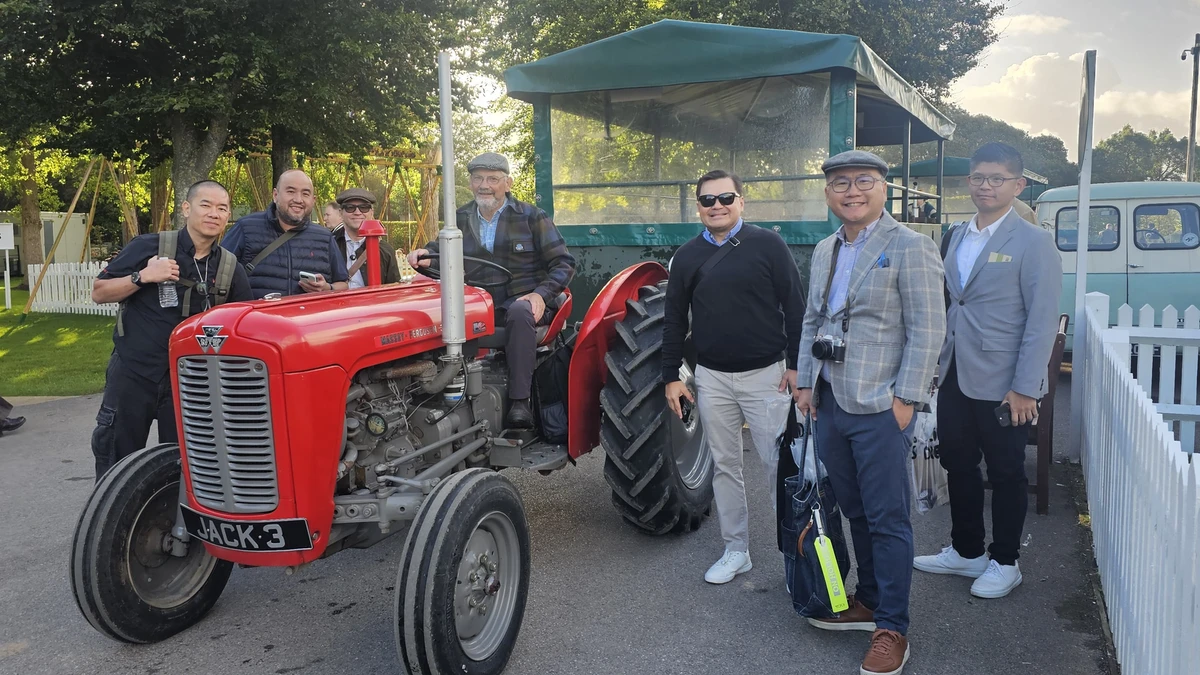
We did a slow, as in 15kph slow, tour of the perimeter of Goodwood Circuit. It dawned on us how big the Goodwood Revival is. But what’s charming is there’s so much open space around the track. Lovely weather, too, something not to be taken for granted in England.
Parked along the way were classic cars of varying vintage. My brain struggled to identify the models—many British-market cars don’t make it to our side of the pond. But they were beautiful, classic machines. We were starting to see the depth of British motoring heritage.
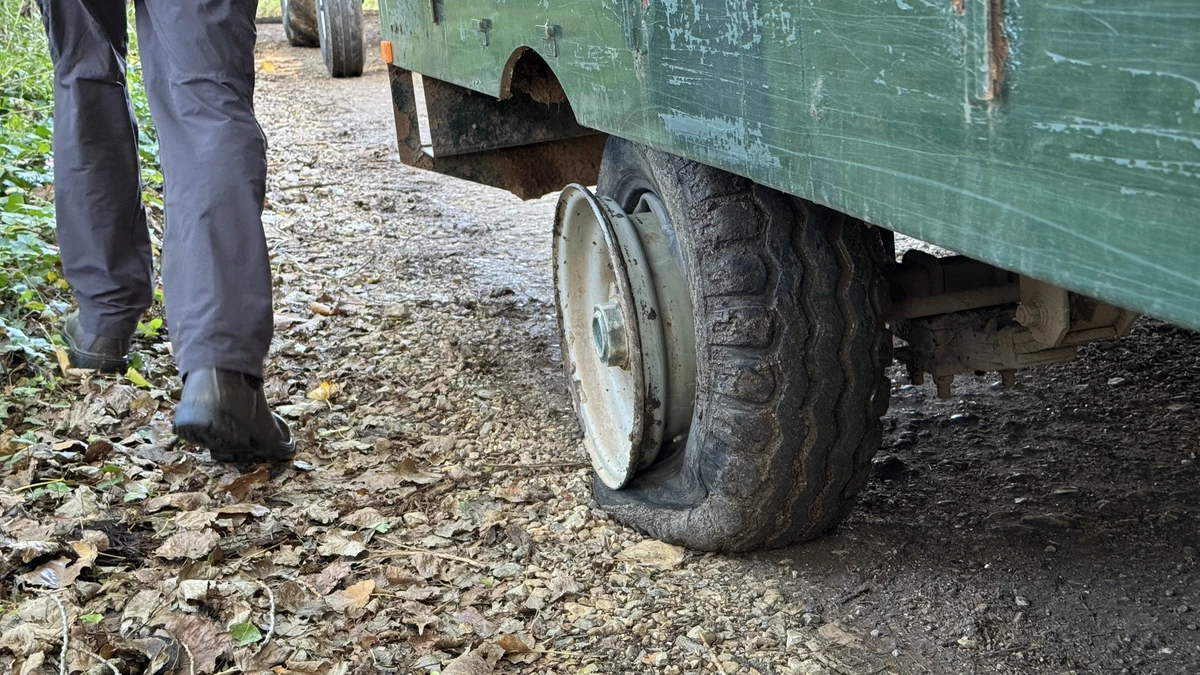
Our rustic English kuliglig started to vibrate more unsettlingly than usual. We heard metal on metal underneath—what was a charming ride increasingly felt like a Philippine road after it rains. Some of my companions leaned over and saw visual confirmation of what we suspected—we had a flat.
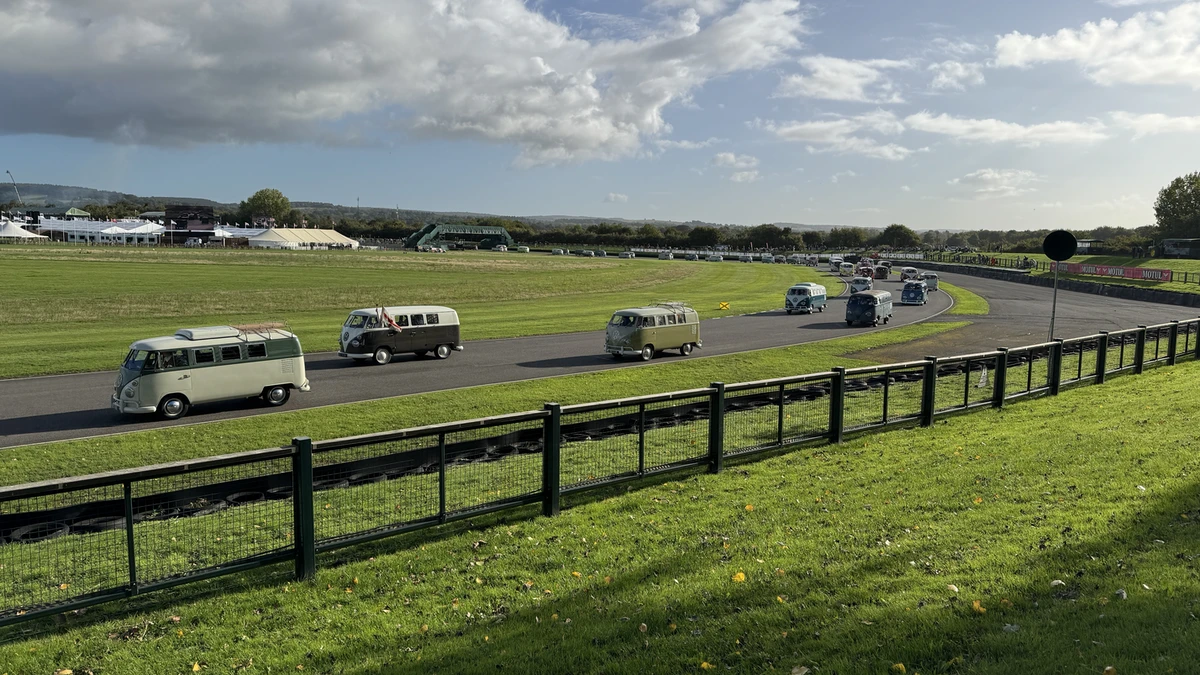
Our driver pulled over and we disembarked while he waited for a rescue. Just in time, we heard droning engine sounds coming from the track. We walked over and saw Volkswagen Kombis from the ‘60s racing around Goodwood Circuit. You can feel the smiles of the owners through the windshield; they were clearly having fun.
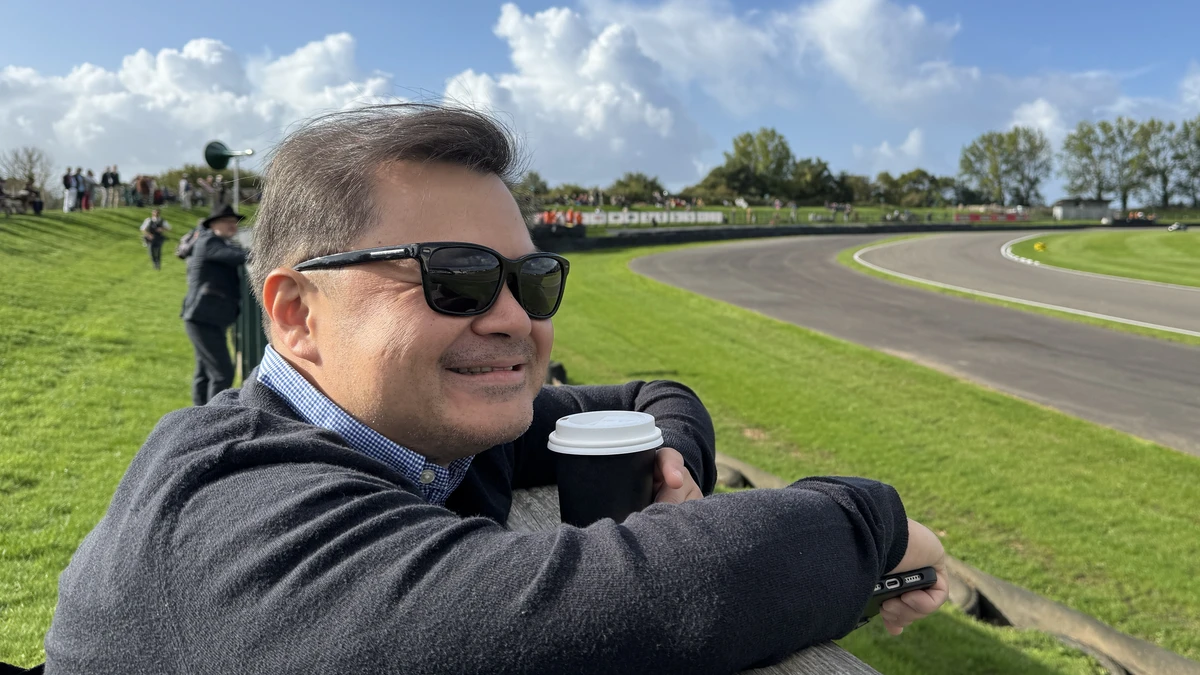
On the fence around the track, on picnic tables, and on the grass, people were relaxing and cheering them on. Many had a drink or food item in their hand. The positive vibe was infectious.
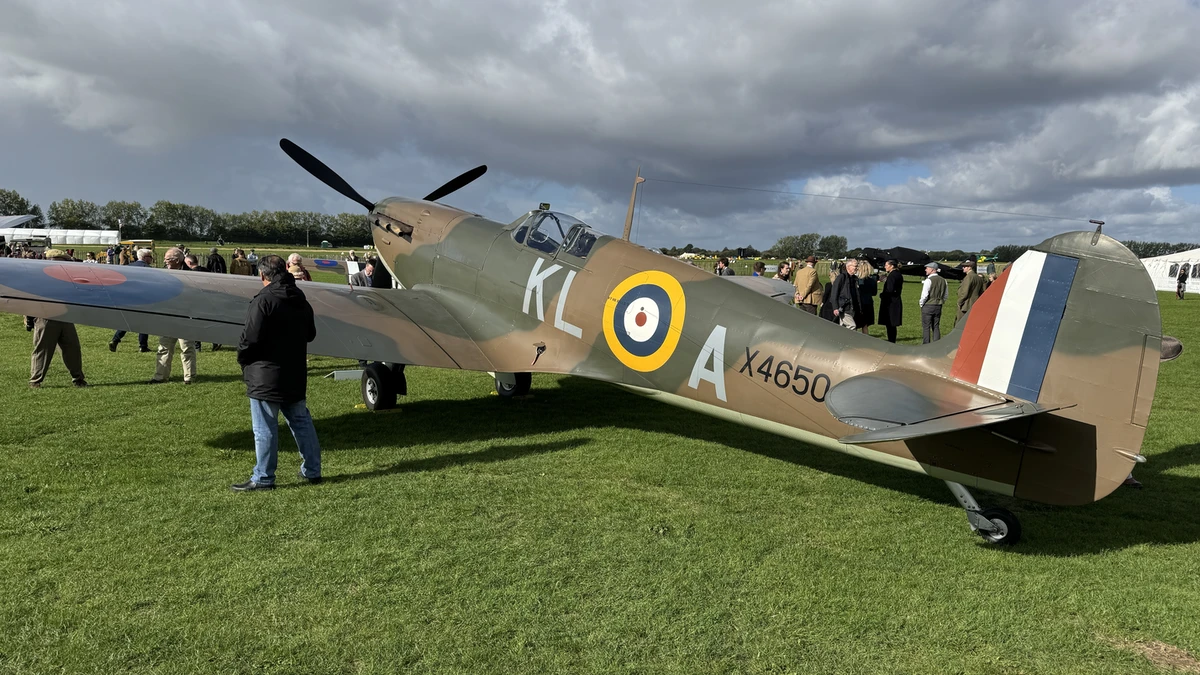
In the middle of Goodwood Circuit are some hospitality tents and the vintage warplane displays. Yes, Goodwood Revival isn’t just about cars. Also showcased are World War II aircraft and vehicles, all in pristine, restored condition. It’s very Top Gear, actually, as former presenter James May and former editor-in-chief Charlie Turner are known to be vintage warplane enthusiasts.
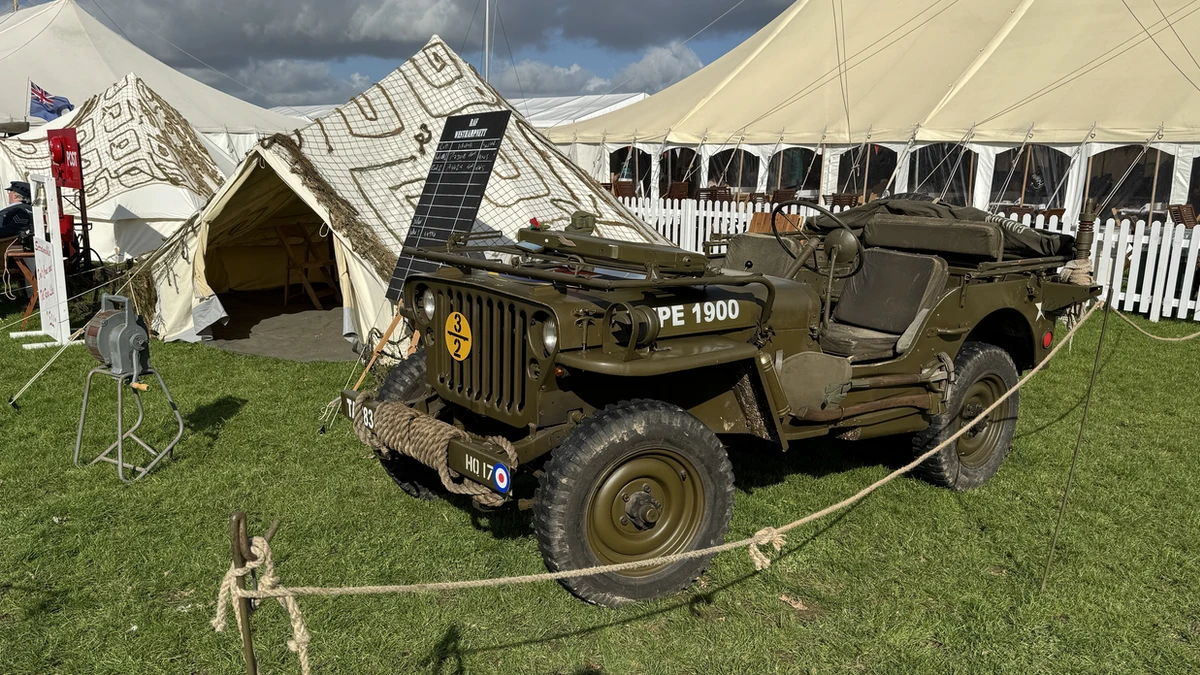
There were also vintage WWII jeeps and weapons. Funny how armaments of death become charming after a few decades.
Of course, there were the usual gift shops with merch, food booths, coffee carts, and stalls selling everything from vintage clothing to classic brochures. True to the spirit of the event, nary a modern car was in sight. Even the ‘shuttles’ ferrying attendees around Goodwood were vintage models.
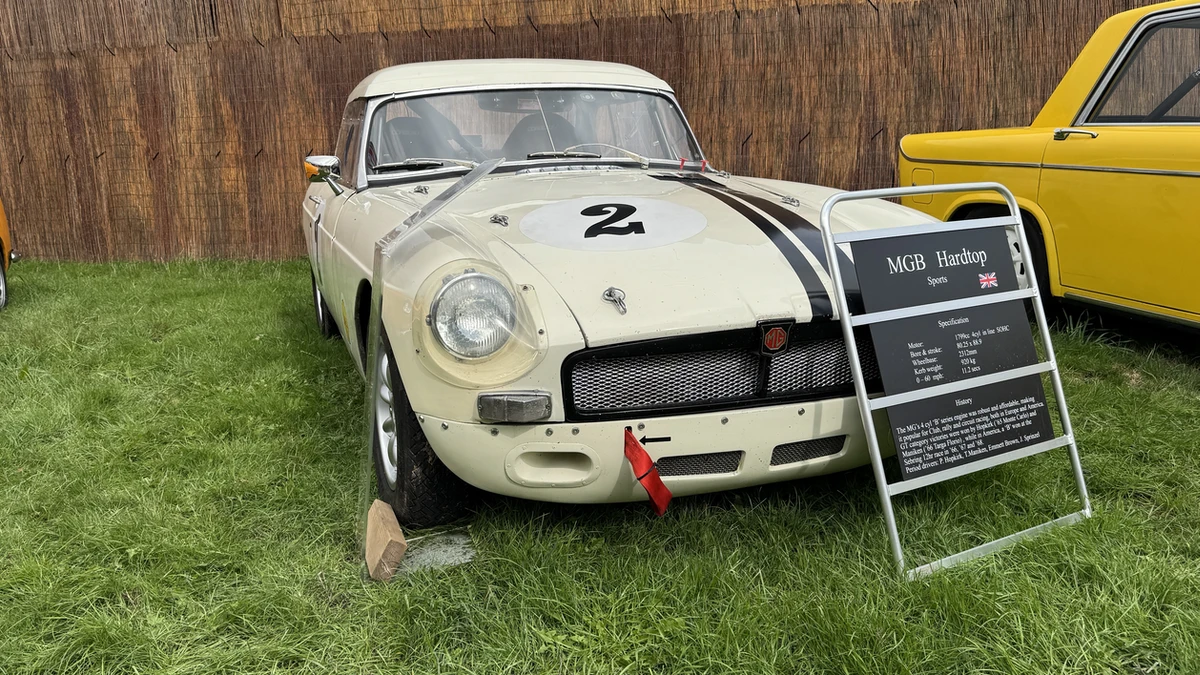
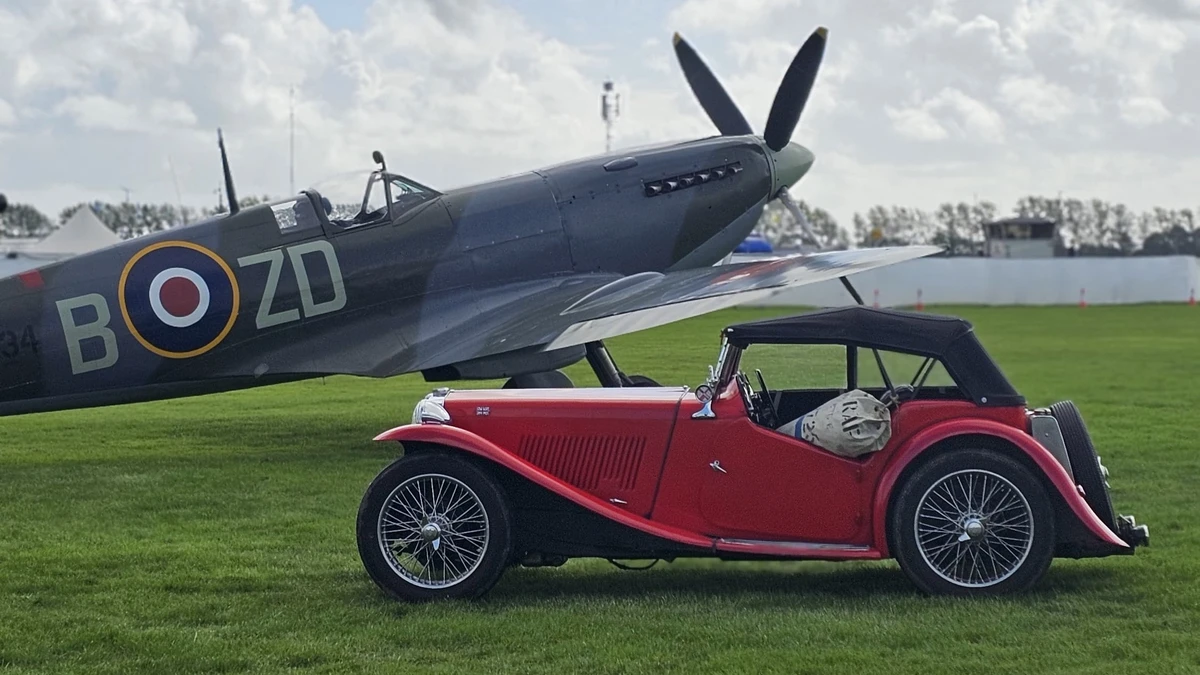
We saw a handful of MG cars, and they were quite special. One was an MGB Hardtop from the ‘60s in racing spec. Among those who raced this machine, a name stood out: P. Hopkirk. Yes, Paddy Hopkirk, the legendary Irish rally driver. The white MG with black racing stripes looked resplendent on the grass. Also on the grass, and beside a Spitfire no less, was a 1937 MG TA Roadster.
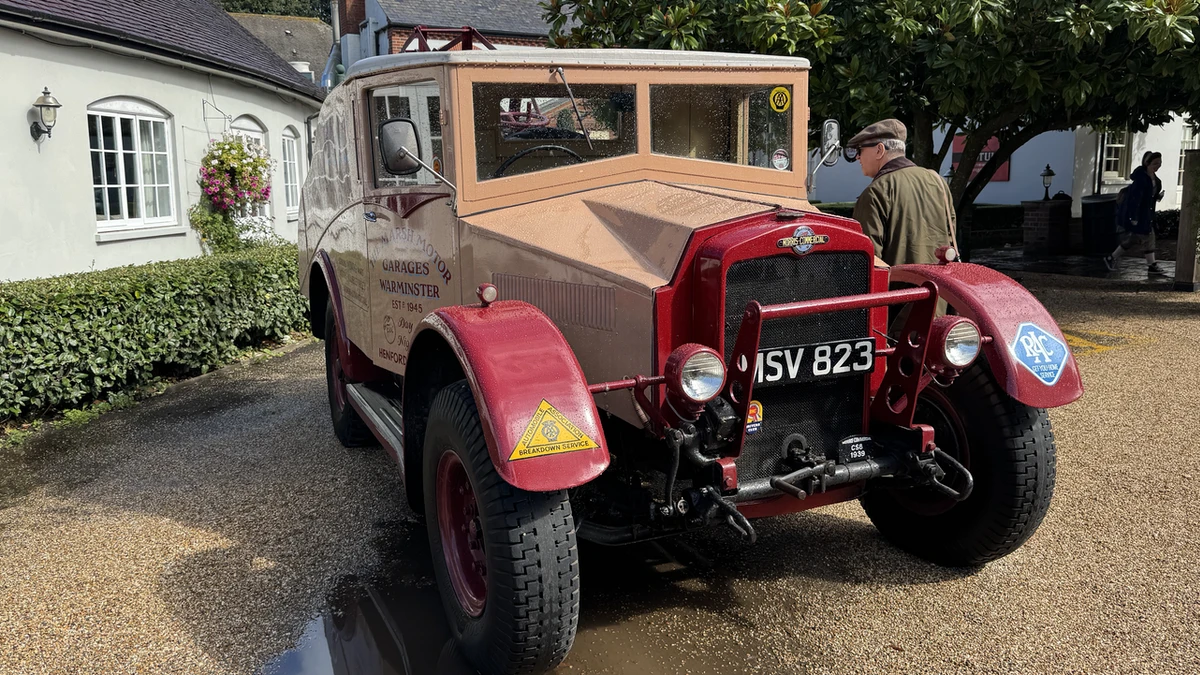
We also spotted a Morris Commercial Cars truck, the commercial vehicles company created by William Morris. He was the founder of Morris Garages, which would eventually become MG.
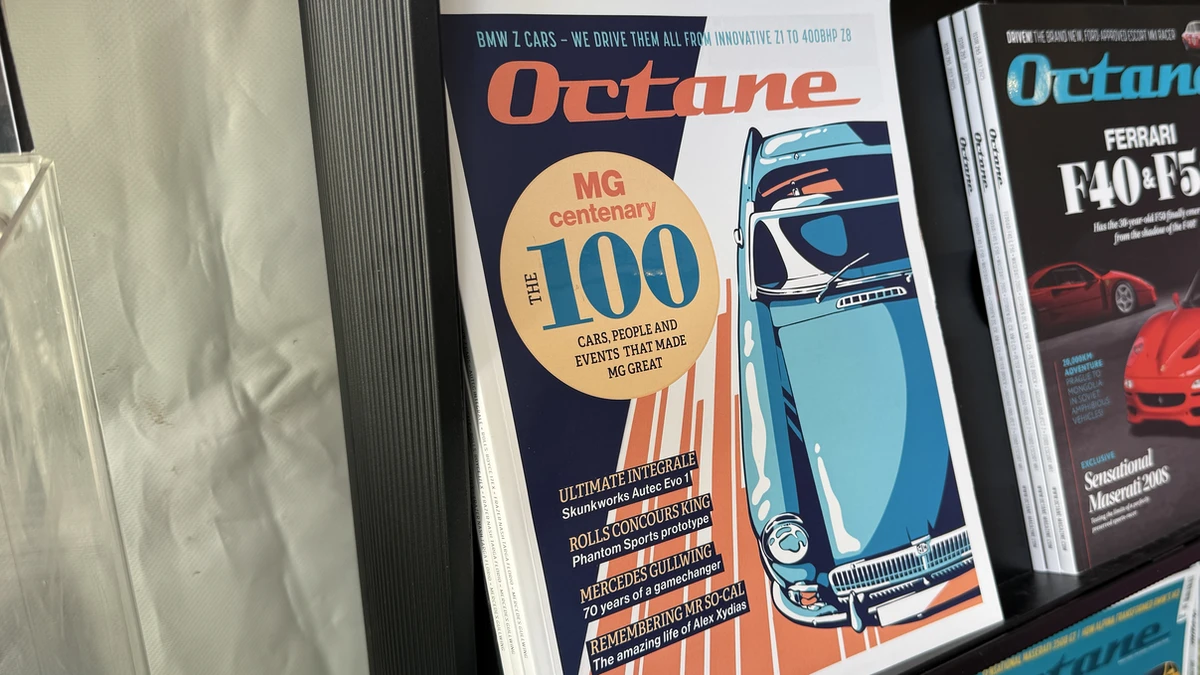
Our Goodwood Revival day ended with weary feet, high spirits, and a thorough immersion in British motoring culture. We may not see many British motoring marques on the road now, but you can see how their heritage left a mark that is still felt in luxury and motorsport today.
The next day we visited the British Motor Museum, a one-and-a-half hour drive from London. These buildings house over 400 cars, and boast of having the largest collection of historic British cars.
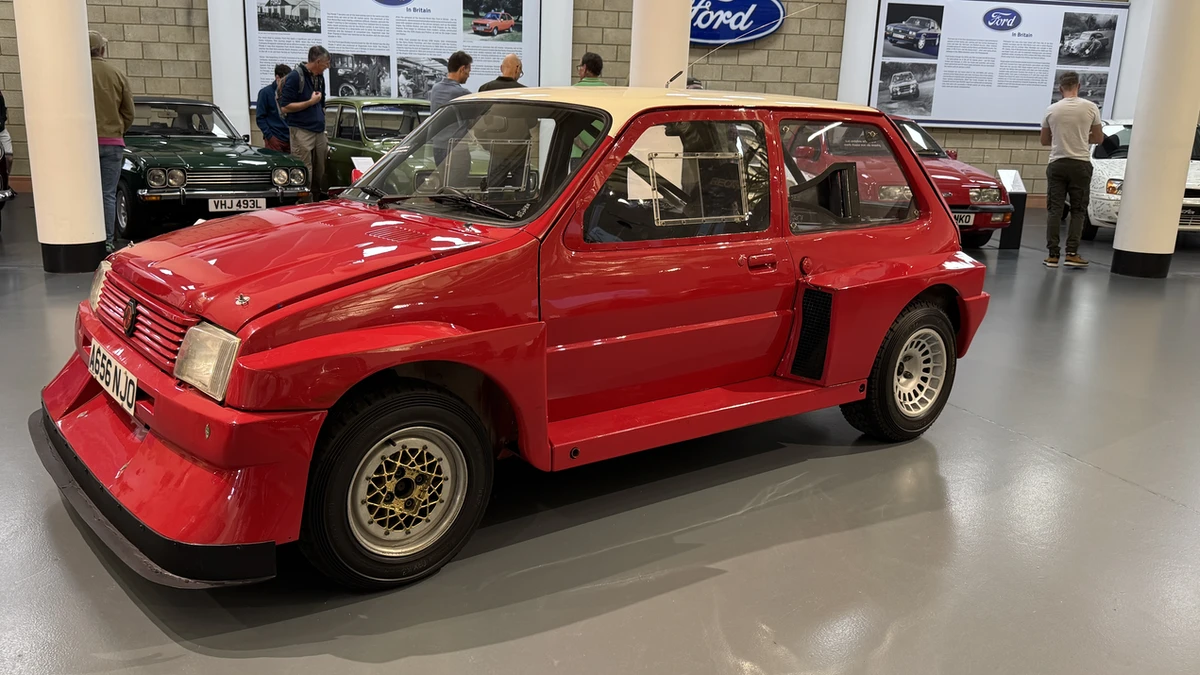
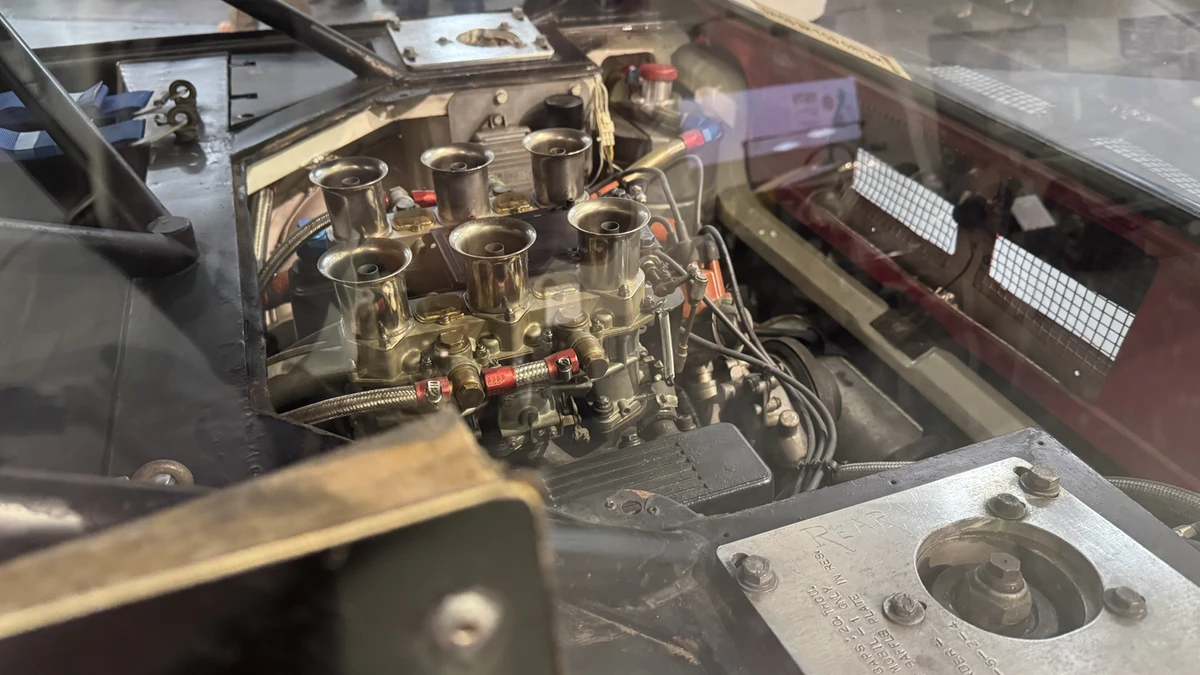
If we only spotted a handful of MGs yesterday, it was a different story at the museum. Right after we entered we were greeted by a MG Metro 6R4 rally car prototype. This red hot hatch was developed by Williams Grand Prix Engineering, and 6R4 stood for six-cylinder, rear engine, four-wheel-drive. It looked, to borrow a British work, wicked.
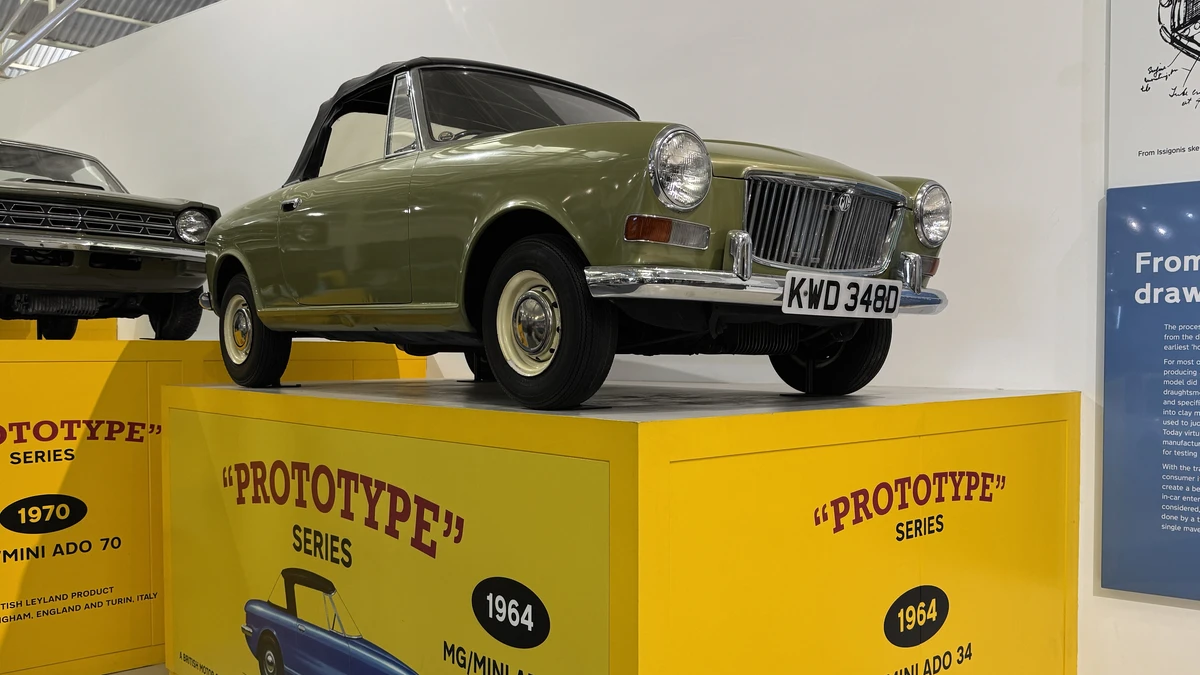
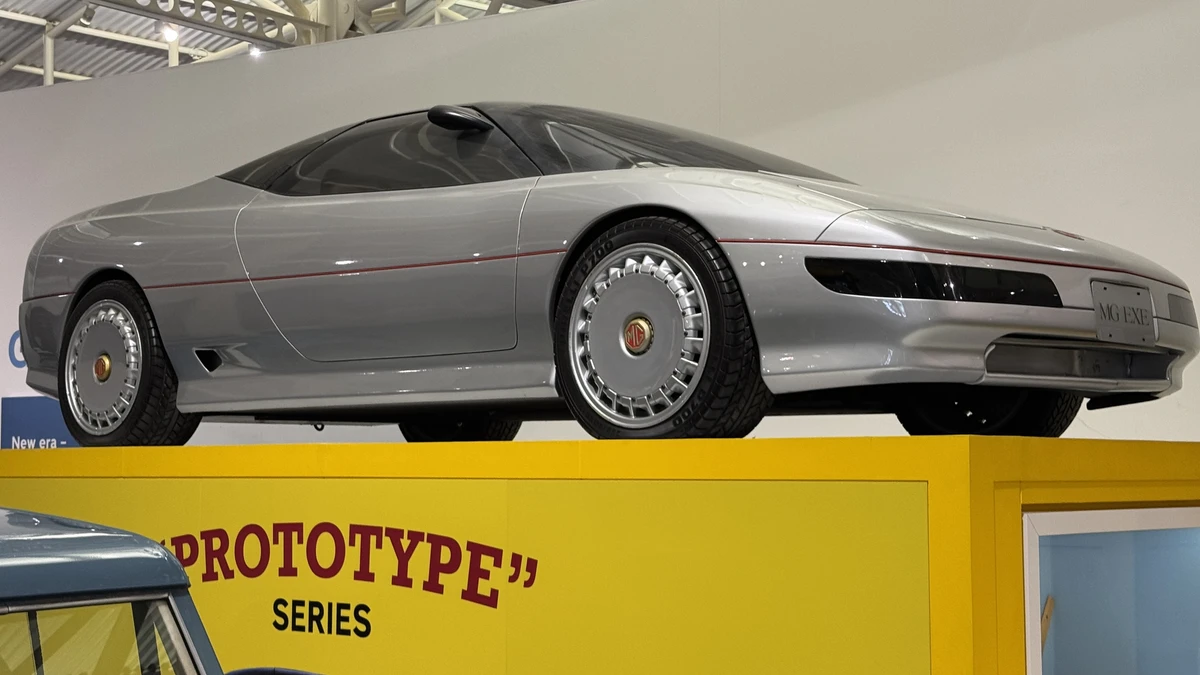
In one of the main halls, literally on pedestals were MG/Mini Ados from 1964 and 1970. Behind them was a MG EX-E from 1985, and it looked like a proper ‘80s sports car.
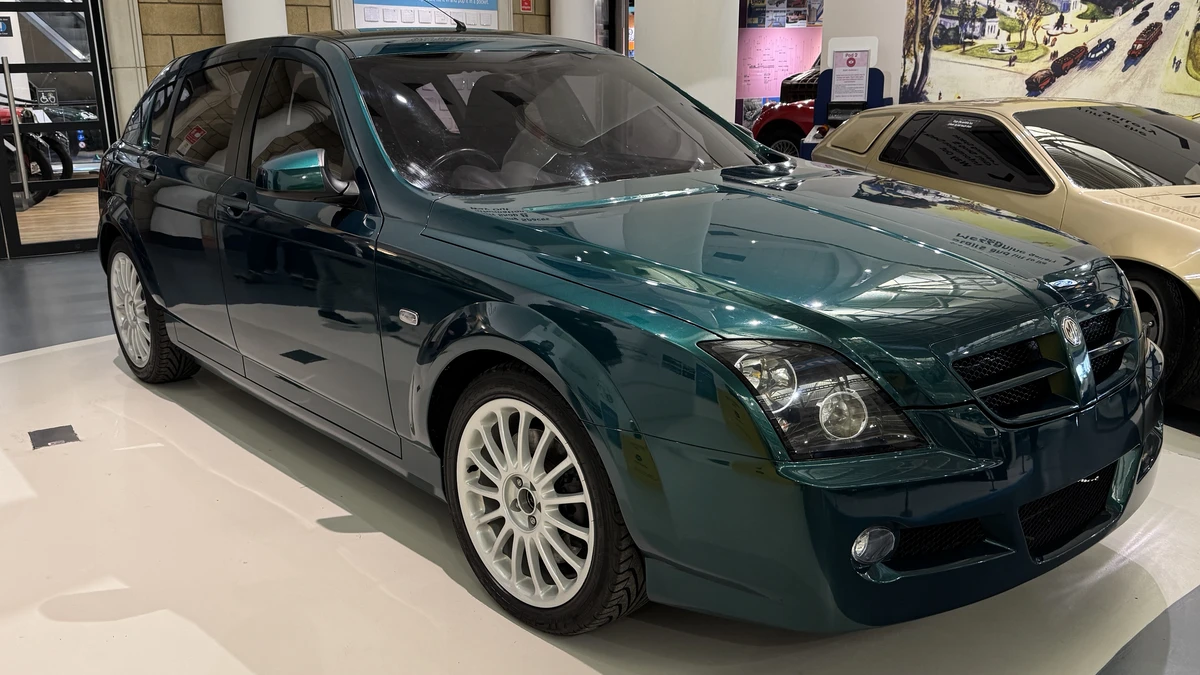
I came upon an ominous dark green MG with no information. Apparently, this was the RDX60 prototype co-developed with the legendary Tom Walkinshaw Racing. This was one of the last models in development within the former MG Rover Group, before the Nanjing Automobile Group (NAG) bought MG’s key assets in 2005 (in 2007 NAG merged with SAIC Motor Corporation, the current owner). We were looking at a unicorn.
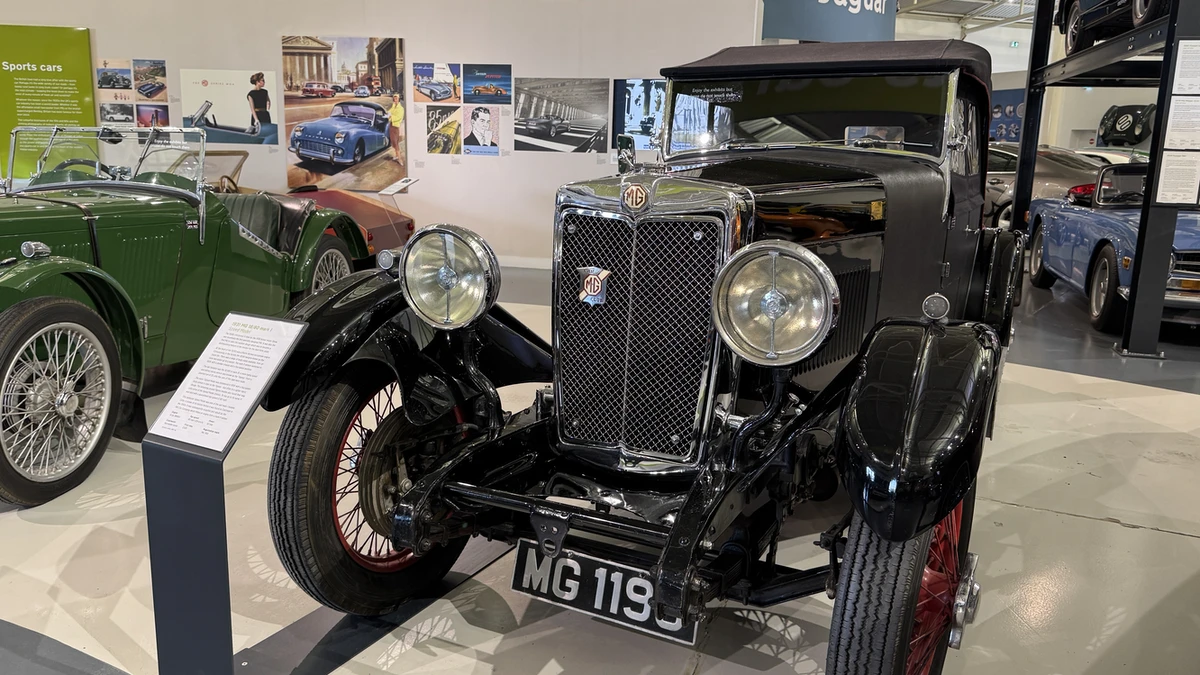
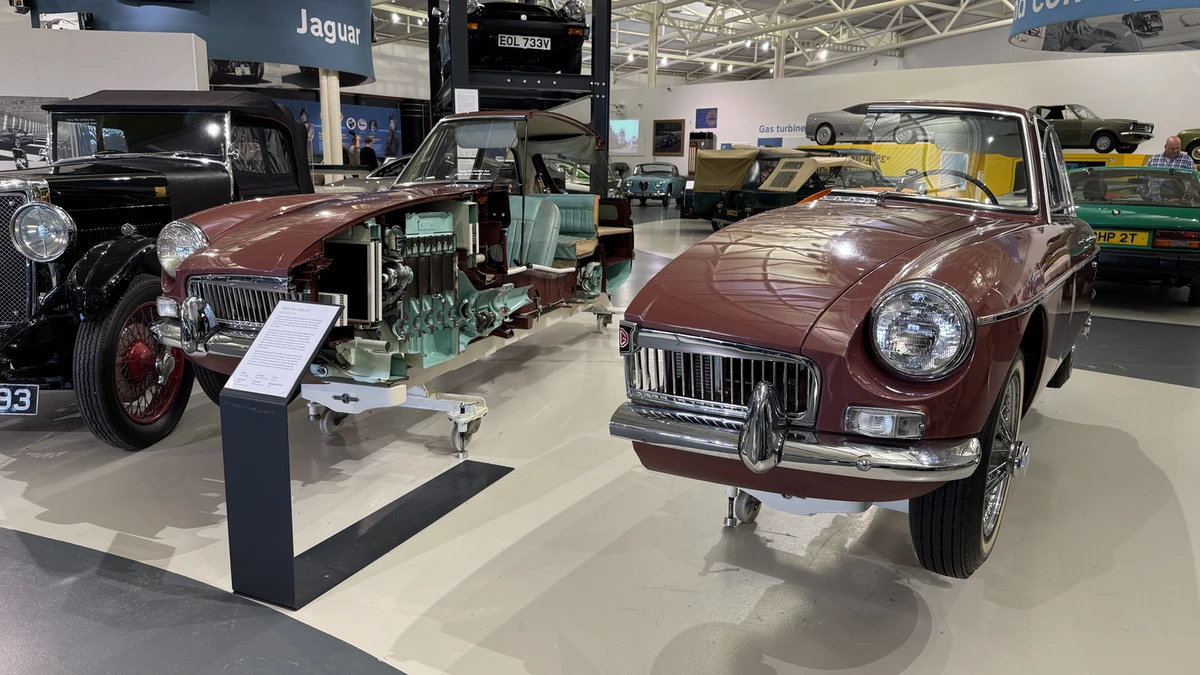
Even more beautiful MGs from a bygone were on the floor: A 1931 MG Mark I, a 1965 MGB GT that was cut in half, a 1932 MG 12 Midget, and a 1954 MG TF Midget
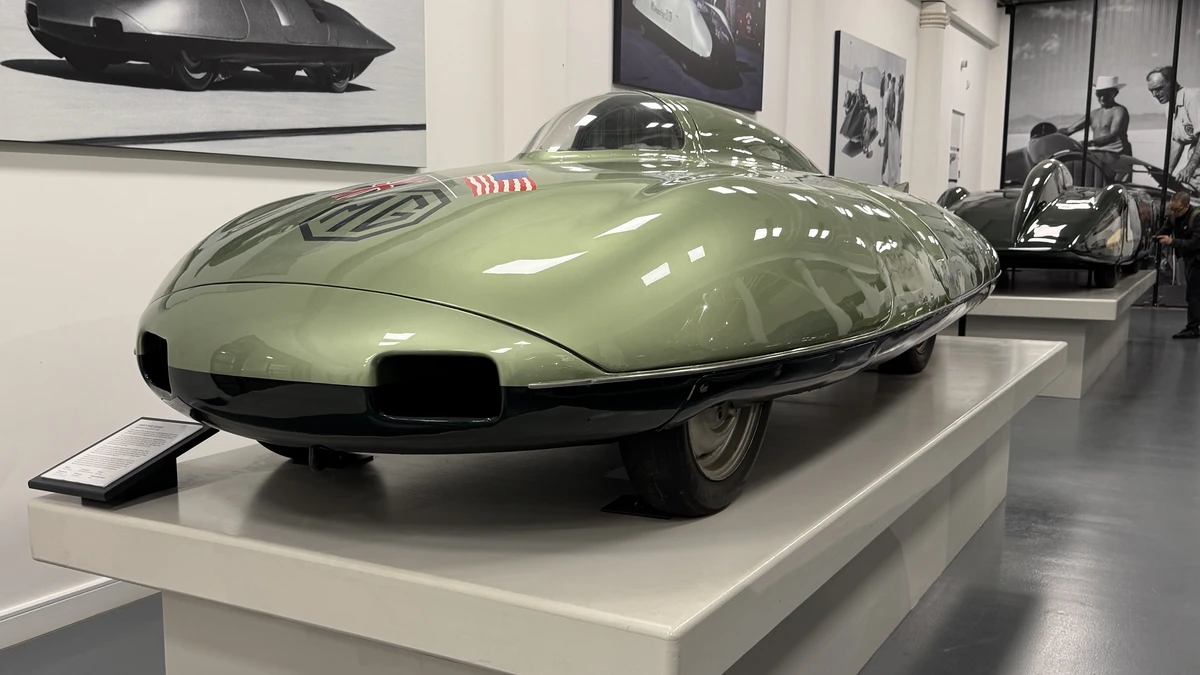
At the corner of the hall, occupying a special place were four special MGs. These were not production cars; they were custom machines built for land speed records. There was a time when MG was so competitive they wanted to build the fastest cars in the world. All done in shades of green (and one gray) were the 1938 MG EX135, the 1998 MG EX255, the 1954 MG EX179, and the greatest of them all, the 1957 EX181.
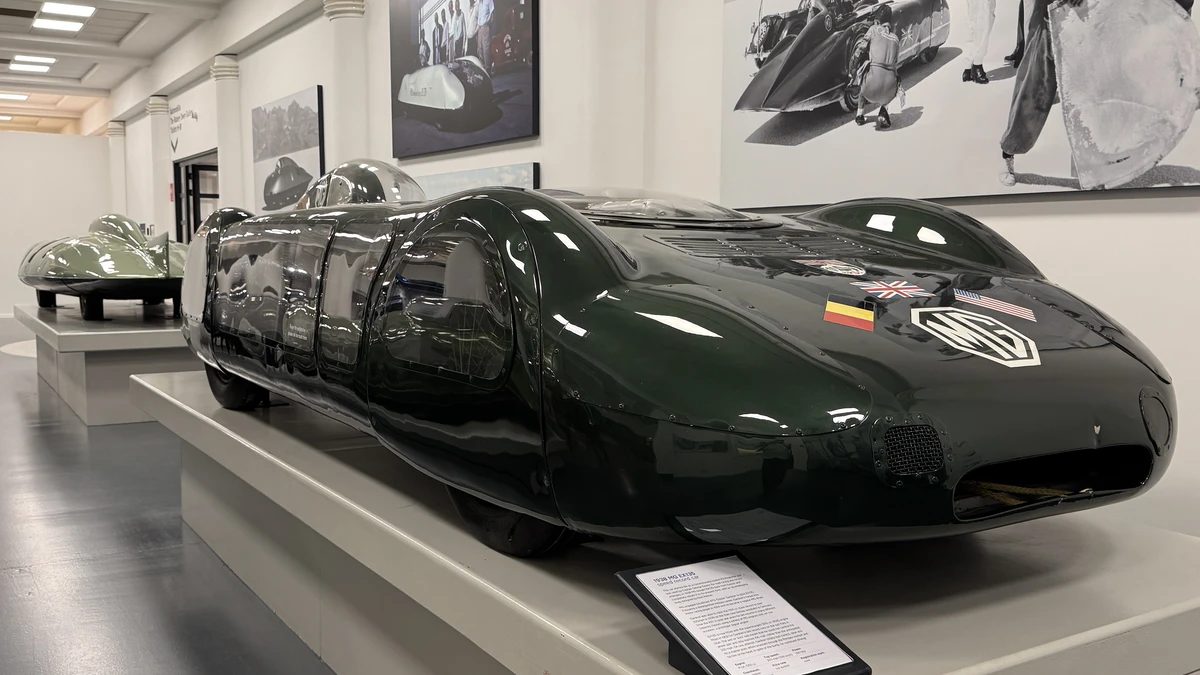
Piloted by racing legends Stirling Moss and Phil Hill, the EX181 reached 245.64mph (395kph) under Moss, and 254.91mph (410kph) with Hill behind the wheel on the Bonneville Salt Flats in the US. This was in the 1950s, guys.
Foreign trips are normally straightforward affairs. We’re flown in, shown a car/s, and/or brought to a specific launch event, and then we fly home. What MG Philippines showed us was an experience, and then let us decide for ourselves what we felt.
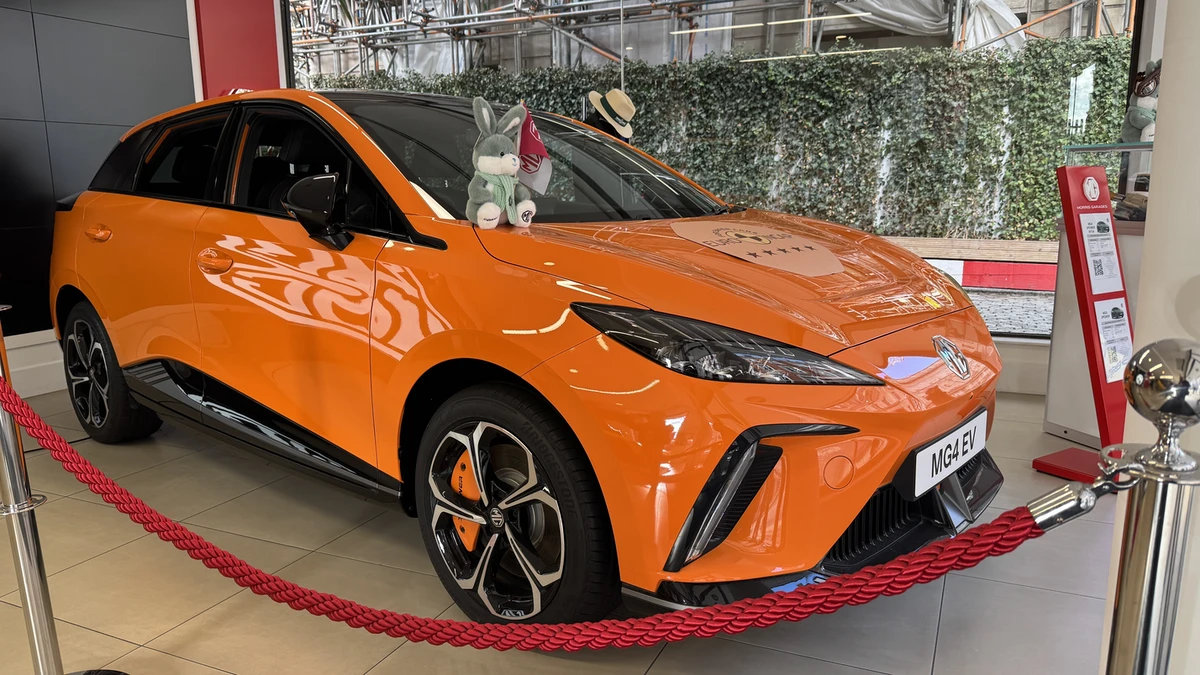
The UK experience was a reminder of MG’s global roots, that the car business goes beyond selling cars—it’s also about heritage and history. The history of MG can clearly be seen in its original home country. There must be a reason it lives and even thrives (in our market it’s one of the top Chinese brands) when so many other British brands have died. Austin, Daimler, and Bristol are just examples of once-proud UK carmakers that eventually didn’t survive.
MG Philippines’ current campaign slogan is ‘Made Global. Made Great‘, a reminder of its roots and century-old story. Thanks to its design center in London, MG products look distinct from China brands and other players, enough to land them a regular spot in top 10 sales rankings. The hybrid engines and generous features do the rest.
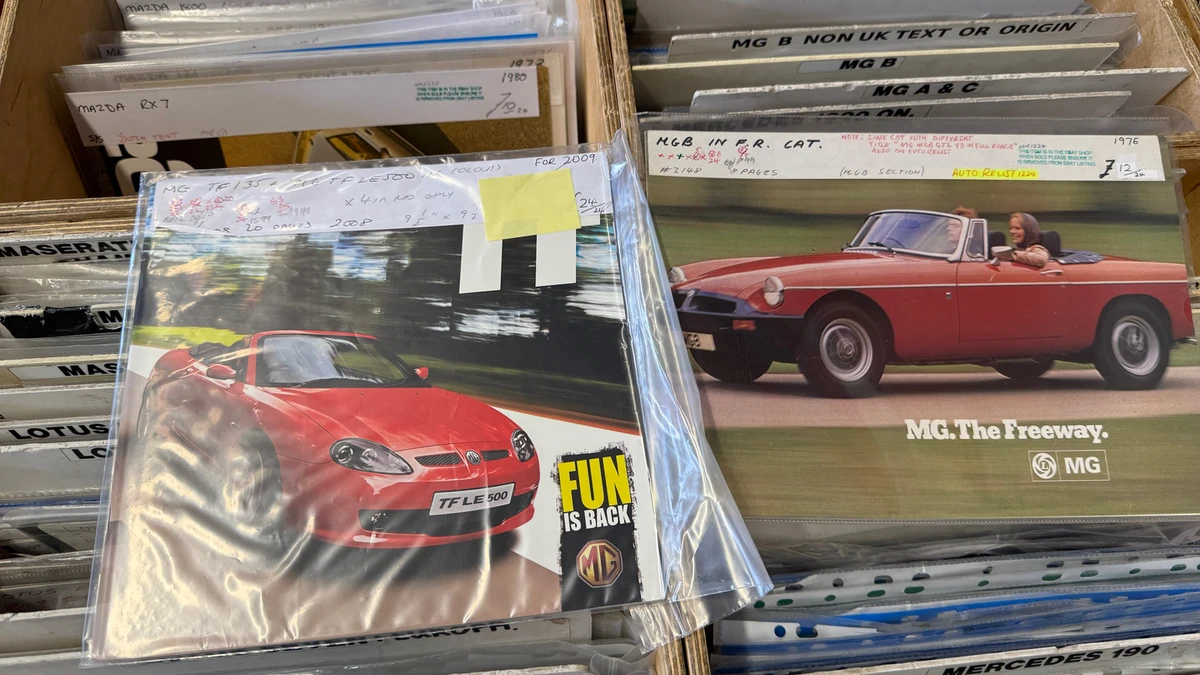
If I were to give MG advice, it would be to lean into its history even more. Bring back a proper roadster like the MG Midget (if Mazda can make a Miata, surely SAIC can?), make a rally hero like the MG Metro 6R4, or a beautiful coupe like the MGB GT V8. The MG Cyberster is a decent attempt at excitement, but it’s big and heavy.
The global automotive landscape is shifting and becoming more competitive. To secure its future, all MG has to do is remember where it came from.