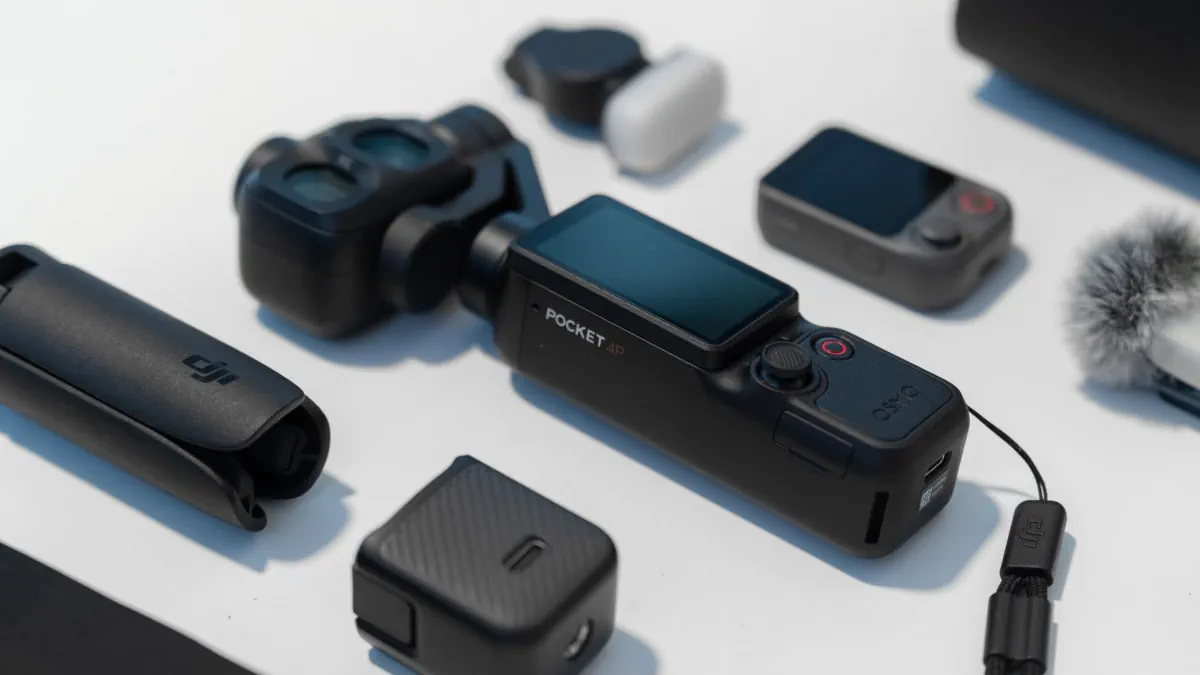
If you were to ask us what we think our best camera gear acquisition is, the DJI Osmo Pocket 3 would probably be one of the top answers. There was a time when it was the only camera we brought, whether the shoot was a local event or an international trip. It’s compact, shoots well, and is incredibly easy to use.
While the Pocket 3’s footage looks great, shooting everything on the same wide perspective can make our videos feel a bit repetitive. We often joked in our team that if DJI were to give the next Pocket a proper zoom lens, it would be a game changer for us. Lo and behold, as if the camera gods were listening, DJI came up with just that. For the first time ever, the DJI Osmo Pocket 4 Pro introduced a dual lens setup, giving this tiny camera something its predecessor desperately needed—versatility.
But does that extra lens actually make it a better camera? More importantly, if you already own a Pocket 3, is it worth upgrading?
OTHER STORIES YOU MIGHT HAVE MISSED:
Hot gear: Honor Magic V6 Review
Hot gear: The Honor Robot Phone could change the game for on-the-go content creation
You probably already have an idea of where we’re going with this. But after spending the past couple of weeks shooting with the Pocket 4 Pro, here’s why we think it could be the biggest upgrade to the Pocket line yet.
Out of the box
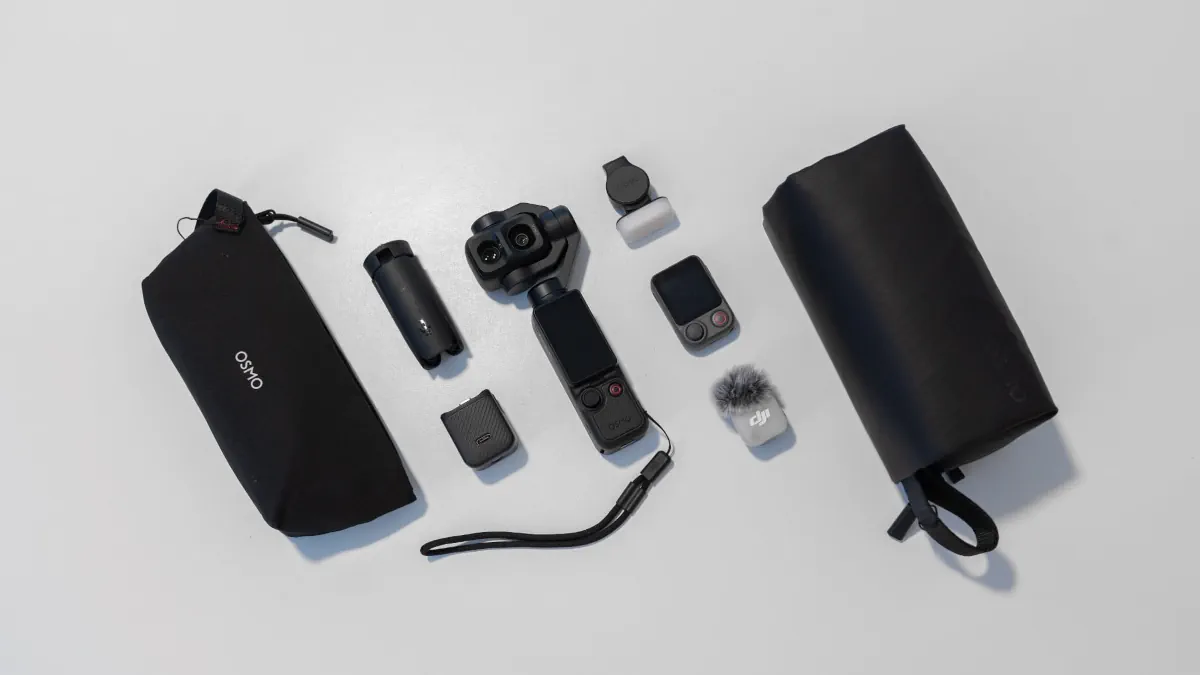
I won’t spend too much time on what’s inside the box. There are already thousands of unboxing videos out there. What you need to know is that compared to the Pocket 3, the Pocket 4 Pro’s kit no longer comes with a hard case or an external battery. Instead of the DJI Mic 2, you get a DJI Mic Mini 2. There’s also an LED light that doubles as a flashlight, although that’s something we rarely find ourselves using given what we shoot.
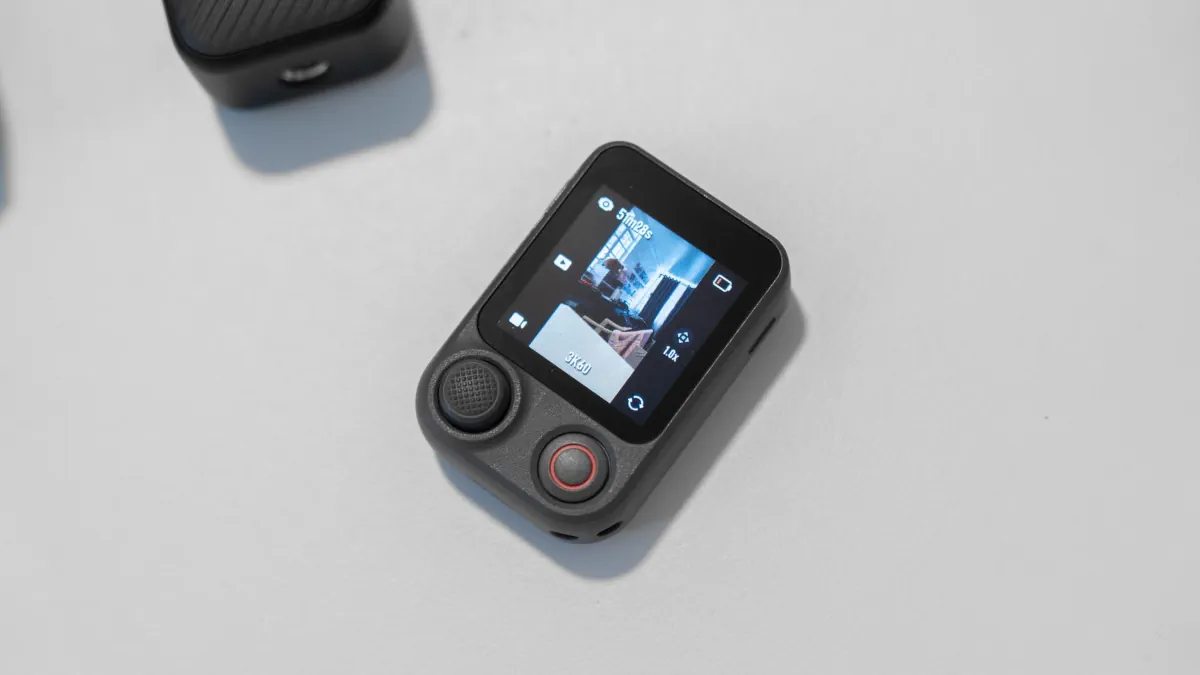
Of all the accessories, the one we like the most is the Frame Tap. It’s a compact touchscreen that acts both as a remote and as a second monitor. This allows us to track subjects even from a distance. We can also directly adjust the settings from this device, which is useful when the Pocket 4 Pro is mounted in a place that’s hard to reach. The screen could definitely be sharper and the build quality leaves a bit to be desired. But considering what it does, it’s a pretty useful addition to the kit.
Now let’s talk about the Pocket 4 Pro itself. It’s noticeably larger than the Pocket 3, largely thanks to the dual-lens setup. It also weighs 230g, up from the Pocket 3’s 179g. Personally, I don’t mind the extra heft—I actually quite like it.
The added size makes the Pocket 4 Pro feel a little more like a proper professional camera when you’re using it on a shoot, while its more aggressive design gives it a more serious look. It looks like it’s meant to do business. The extra weight also helps with stability—more mass means more inertia, so the camera is a bit less likely to budge from small movements. When shooting handheld, every little bit helps to keep the shot stable.
Shooting video
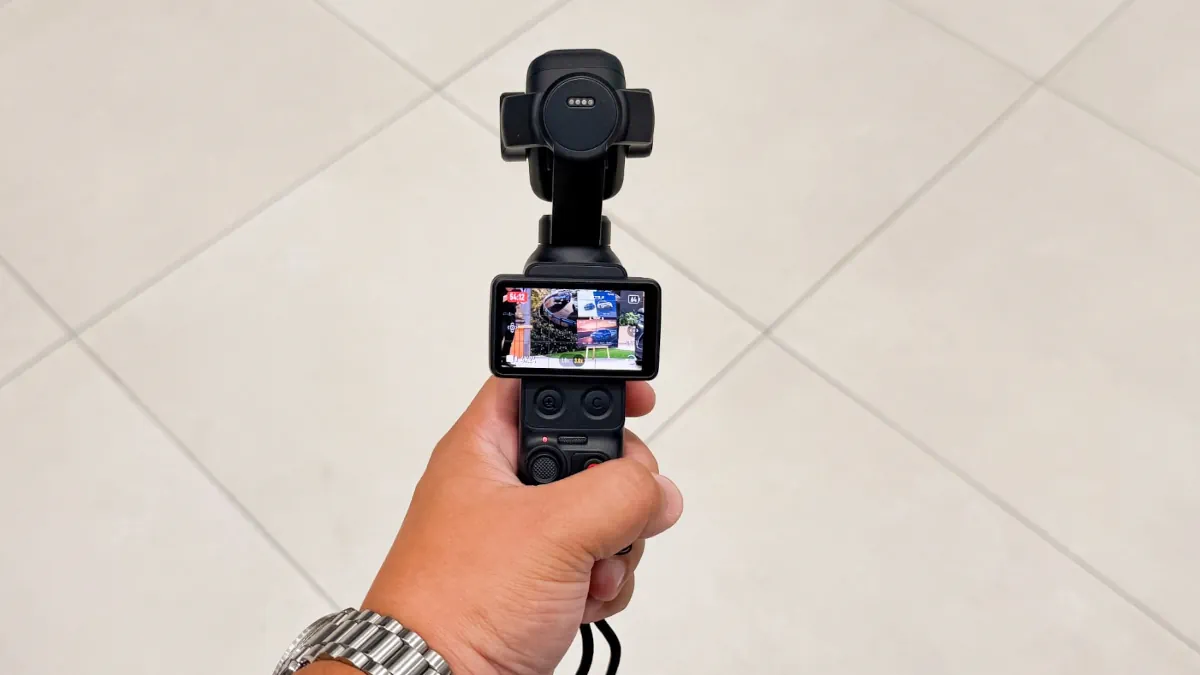
The Pocket 4 Pro is also easier to use. It still gets the familiar 2-inch rotating screen which you can flip depending on how you want to shoot. But the screen is now much brighter at 1,000 nits, and that makes a noticeable difference when you’re shooting under direct sunlight. You can actually see what you’re framing instead of constantly trying to find shade.
The other big change is the addition of two physical buttons. The one on the left controls the zoom, letting you switch between the wide-angle and mid-telephoto lenses. On the right is a customizable button, which we set to recenter the gimbal with a single press, rotate the gimbal with a double press, and change gimbal mode with a triple press.
These might seem like small additions, but they make a big difference when you’re actually shooting. Having the controls immediately on hand means less time digging through menus and more time getting the shot.
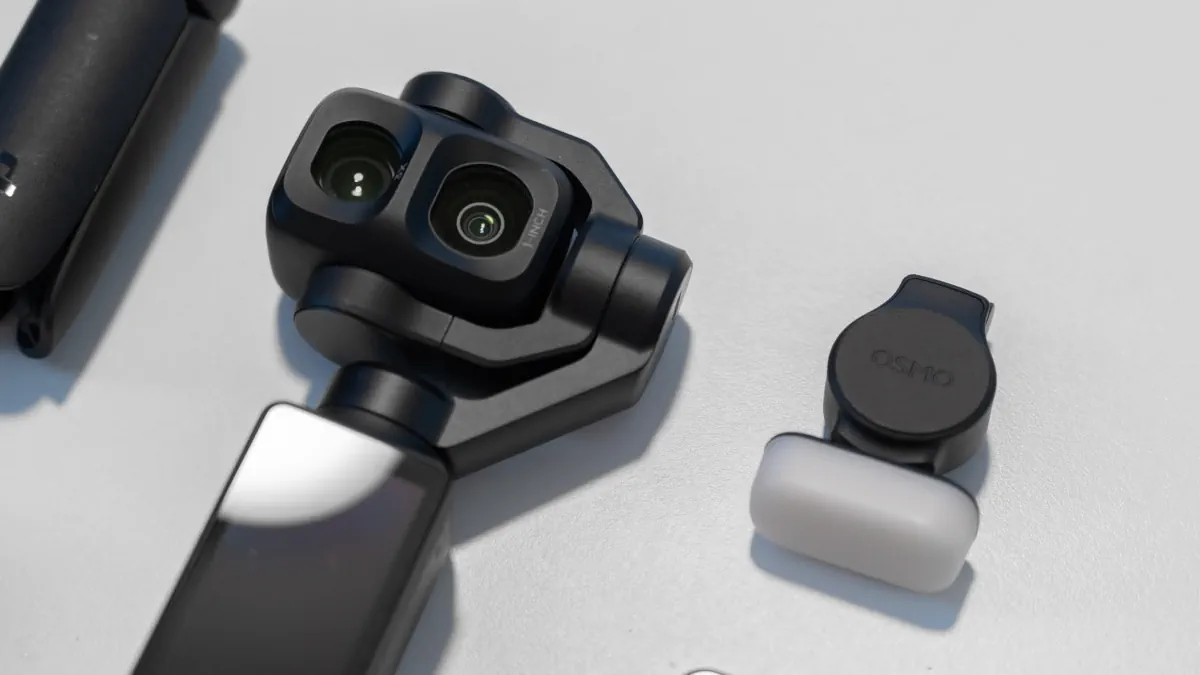
The main camera uses a 20mm f/2.0 lens paired with a 1-inch CMOS sensor. It has an ISO range of 100 to 25,600, which goes up to 51,200 in Low-Light mode. That’s a considerable jump from the Pocket 3’s 50 to 6,400 ISO range, or up to 16,000 in Low-Light mode.
Colors are also a big improvement. The Pocket 4 Pro can shoot in D-Log and D-Log 2, compared to the Pocket 3’s D-Log M. This gives you considerably more flexibility when it comes to grading and matching footage. If you’re already familiar with how the Pocket 3 looks, there’s not much of an adjustment when using the wide lens. The difference is that the Pocket 4 Pro produces better overall image quality and performs significantly better in low-light environments.
But the Pocket 4 Pro’s second lens is where things get really interesting: This is a 60mm f/1.8 mid-telephoto lens paired with a 1/1.28-inch CMOS sensor. Suddenly, this tiny camera can produce tighter, more cinematic shots with a surprisingly shallow depth of field. We were genuinely blown away the first time we saw the footage. In fact, I find myself using the mid-tele lens more often than the main camera.
Yes, it has a smaller sensor, but I simply prefer the way the footage looks. It gives shots a more compressed, cinematic feel that you’d normally associate with much bigger and heavier cameras. To be honest, this is where the Pocket 4 Pro starts to feel a little like a cheat code.
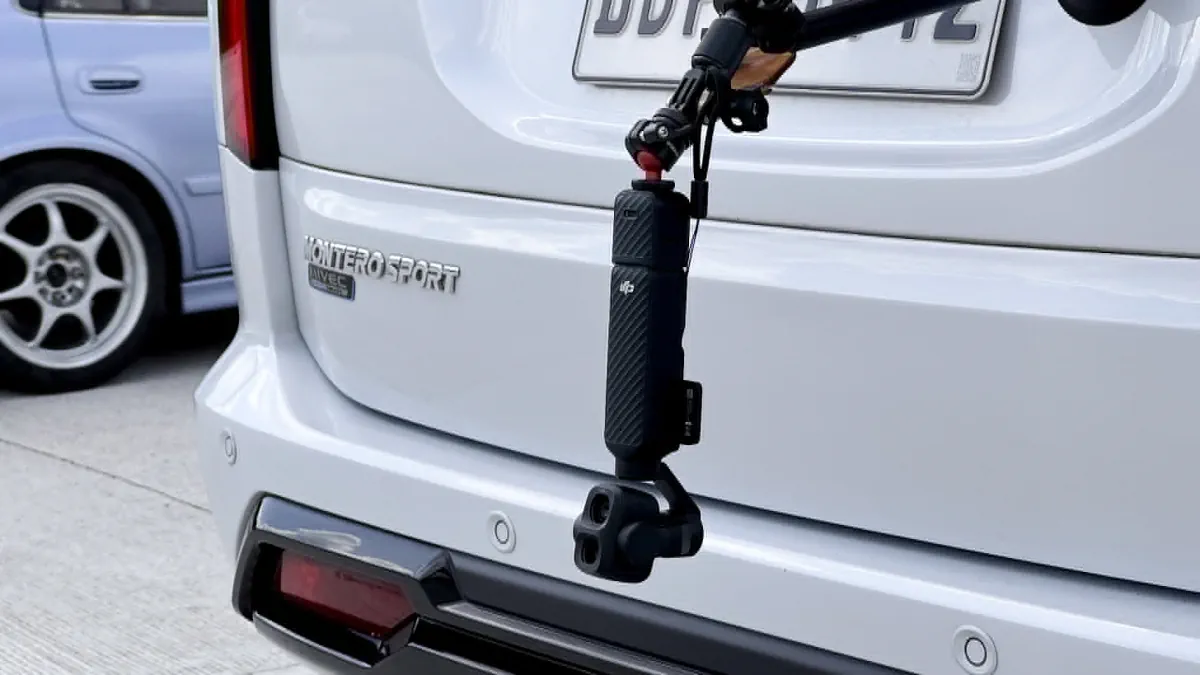
If the 60mm lens is too tight for a particular shot, I can simply switch back to the main camera with the press of a button. No changing lenses, no moving the camera, no pulling out another body. Just tap and voila, you now have a wide lens.
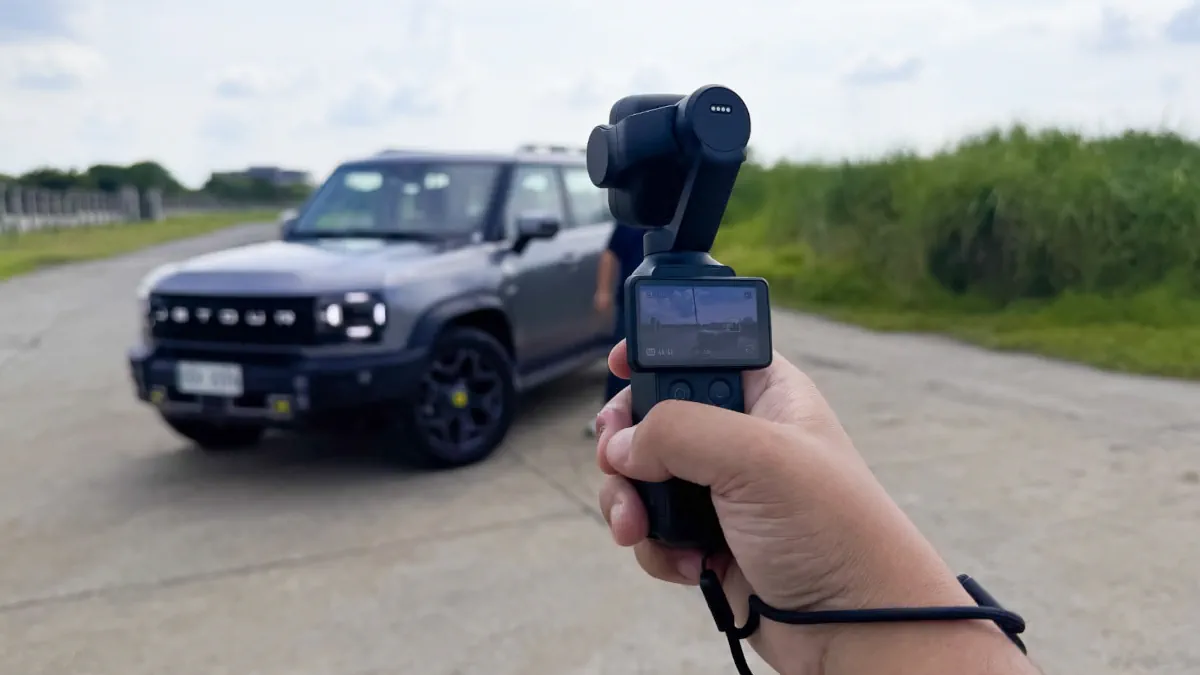
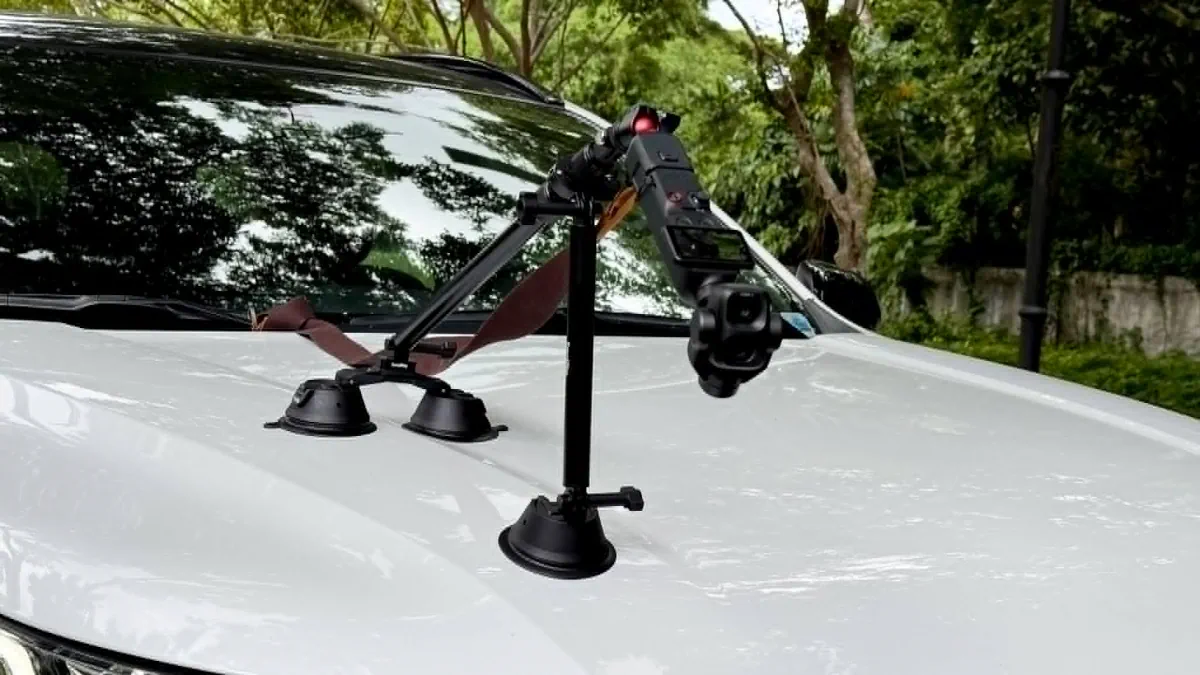
This is particularly useful for the way we shoot cars. I remember when we still had to get the subject incredibly close to the camera car just to get a decent rolling shot with the Pocket 3. Move back a few meters, and the digital zoom starts destroying the image quality. With the Pocket 4 Pro, we can simply switch to the mid-tele lens and maintain that tighter perspective without sacrificing nearly as much quality.
It gives us far more freedom when positioning the camera car—and that alone has changed the way we shoot. Not to mention, it’s a lot safer because we can actually drive at safe distances apart from each other. And then there’s ActiveTrack 8.0, which has quickly become one of those features that’s hard to live without. Tracking subjects, whether it’s a car or a person, is much smoother than ever.
Shooting stills
The Pocket 4 Pro isn’t just better at shooting video; it can also take surprisingly decent photos. The Pocket 3 could shoot stills, but I never really found myself using it for photography. The Pocket 4 Pro, on the other hand, produces much more usable images thanks to its 33-megapixel output—a huge jump from the Pocket 3’s 9MP. It’s still not going to replace your dedicated camera for photography, but having the ability to pull out the Pocket 4 Pro and get a genuinely usable still photo is another nice bonus.
And that’s really the biggest advantage of this new setup. The Pocket 4 Pro doesn’t just give you another lens; it gives you another way to shoot. The best part? All of that footage can be saved on the Pocket 4 Pro’s 103GB of internal storage. You can still expand it with a microSD card, but with memory card prices these days, I’d rather spend the money on food.
Just one catch: I had a hard time finding LUTs for the DLOG 2. It could be that it’s still too new, but I’m not sure. The other complaint I have is that the mid-tele lens is only limited to DLOG, no DLOG 2. That’s something DJI could’ve just given us to make color grading a much easier job.
Verdict
So, is the DJI Osmo Pocket 4 Pro worth the upgrade? For us, absolutely. Of course, the Pocket 3 is still an excellent camera, and if you already have one, you don’t suddenly need to replace it. But if you want more versatility without adding another camera, lens, and a whole lot of weight to your bag, the Pocket 4 Pro makes a very convincing case.
The addition of the 60mm mid-telephoto lens completely changes how we shoot. It gives us more perspectives, more cinematic-looking footage, and, perhaps most importantly, more freedom when we’re shooting cars. Switching between lenses with a tap almost feels like cheating.
Remember when we joked that a zoom lens would be a game changer? Well, DJI listened. And now, we’re wondering how we ever shot without it.