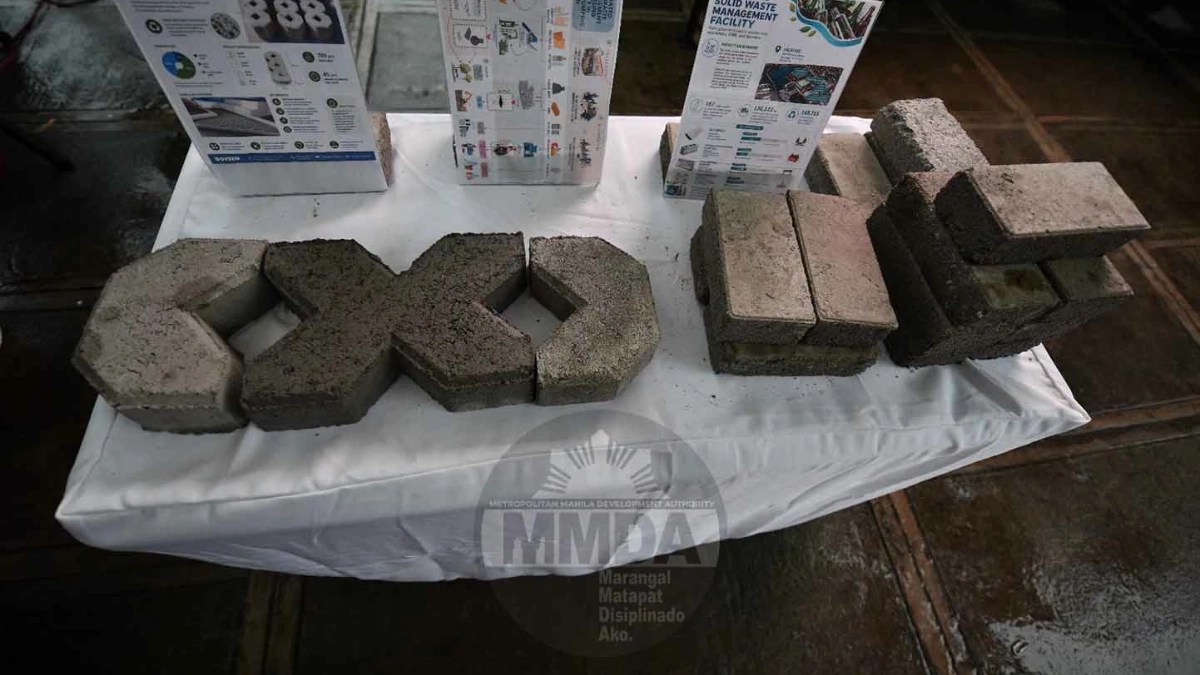
A 3km stretch of sidewalk around C5 in Pasig is set to be upgraded with water-absorptive pavers in a bid to improve walkability and address environmental and flood concerns.
The pilot project, launched by the Metropolitan Manila Development Authority (MMDA) in partnership with the Pasig City government, is being positioned as a pilot area for more climate-resilient and pedestrian-friendly streets in Metro Manila.
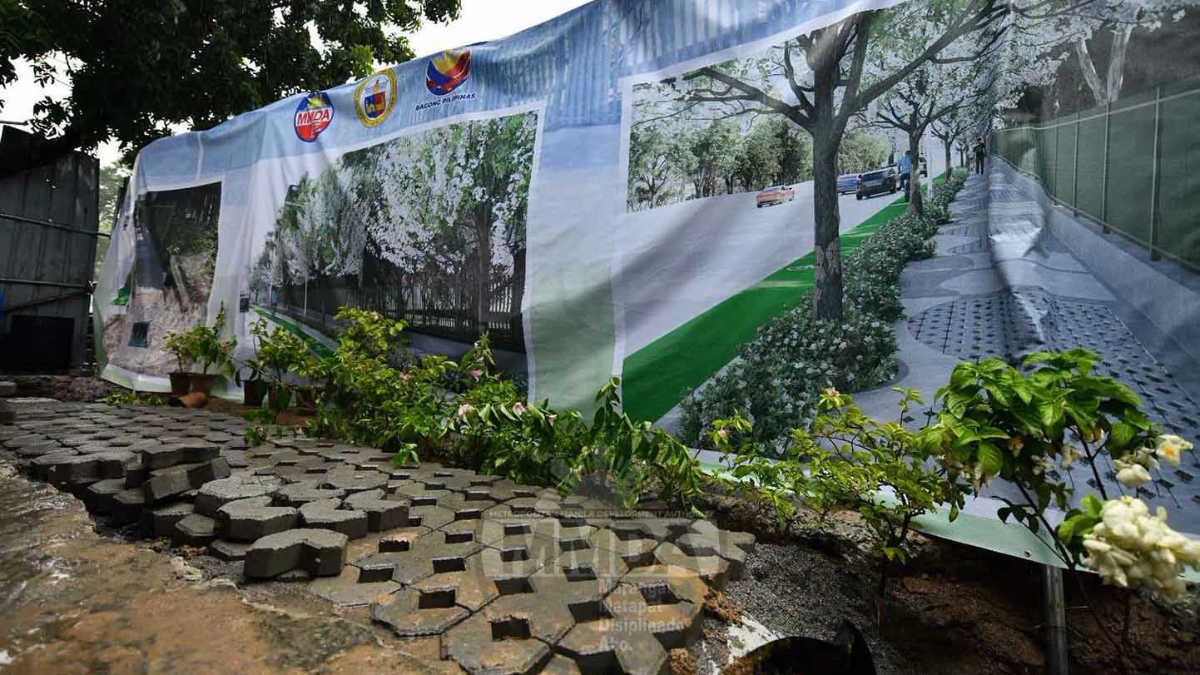
“Existing sidewalks in the city using traditional impervious concrete sidewalk will be replaced by a permeable pavement system with landscaping, and when possible, stormwater detention tanks,” said MMDA officials during the kick-off ceremony of the Nature-Based Sidewalk Improvement Project along C-5 Road.
So how exactly will these water-absorptive pavements work?
ALSO READ:
SONA 2026: PBBM eyes NSCR completion by 2028, sets goal of 50% EV adoption by 2040
5 Creative flood-control projects in Metro Manila
What are permeable pavements?
Conventional concrete sidewalks are built to be waterproof. During heavy rain, nearly all of the water becomes runoff, quickly filling canals and storm drains. Permeable pavement works differently.
As defined by the Green Building Alliance, permeable pavement (also known as pervious or porous concrete) is a pavement with high porosity that allows rainwater to pass through its surface.
Unlike traditional concrete, permeable pavement lets water seep into layers of gravel and soil beneath before slowly returning to the groundwater. It can also help trap suspended solids and pollutants, keeping them from polluting the water stream.
Typically, this type of pavement is used in low-volume pavements, such as residential roads and driveways, sidewalks, parking lots, low-water bridges, patios, well linings, walls (including load-bearing walls), and swimming pool decks.
This type of material can help to:
- Reduce flash flooding
- Lower the volume of stormwater entering drainage systems.
- Minimize standing water on sidewalks.
- Filter some pollutants before water reaches waterways.
While it may not eliminate major flooding caused by overflowing rivers or extreme rainfall, it can help in flood management along with other strategies.
Similar water-absorptive pavement systems have reportedly been used in places like Japan, Taipei, Singapore, and Germany, particularly in sidewalks, parks, parking areas, bicycle lanes, driveways, and other public spaces prone to flooding.
What are the pavement bricks made of?
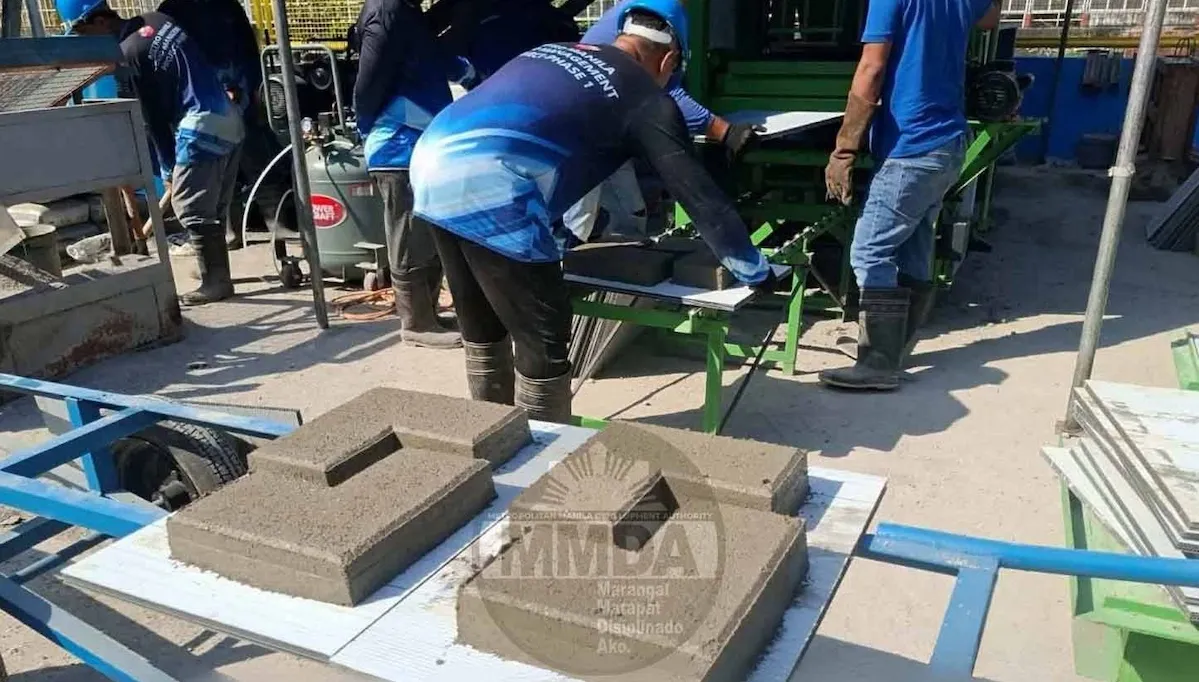
According to the MMDA, the permeable pavers are made of trash collected from waterways in support of their program on waste diversion.
The pavers are made from crushed recycled glass and hard plastics collected from rivers and processed into eco-bricks at MMDA’s Integrated Solid Waste Management Processing Facility at the Vitas pumping station in Tondo.
As previously detailed by the Philippine Information Agency: “The plant processes debris primarily collected from pumping stations and waterways through specialized equipment including a solid waste granulator, brick-making facility and plastic processing systems as part of the Metro Manila Flood Management Project.”
MMDA adds that since operations began in April 2021, the brick-making facility has managed to process over 3,000 cubic meters of waste. They’ve produced over 110,000 eco-bricks and concrete blocks and barriers, which have been distributed to local governments and MMDA offices.
These bricks are built to withstand heavy loads and harsh weather conditions and will reportedly enhance drainage systems.
Where are the sidewalks located?
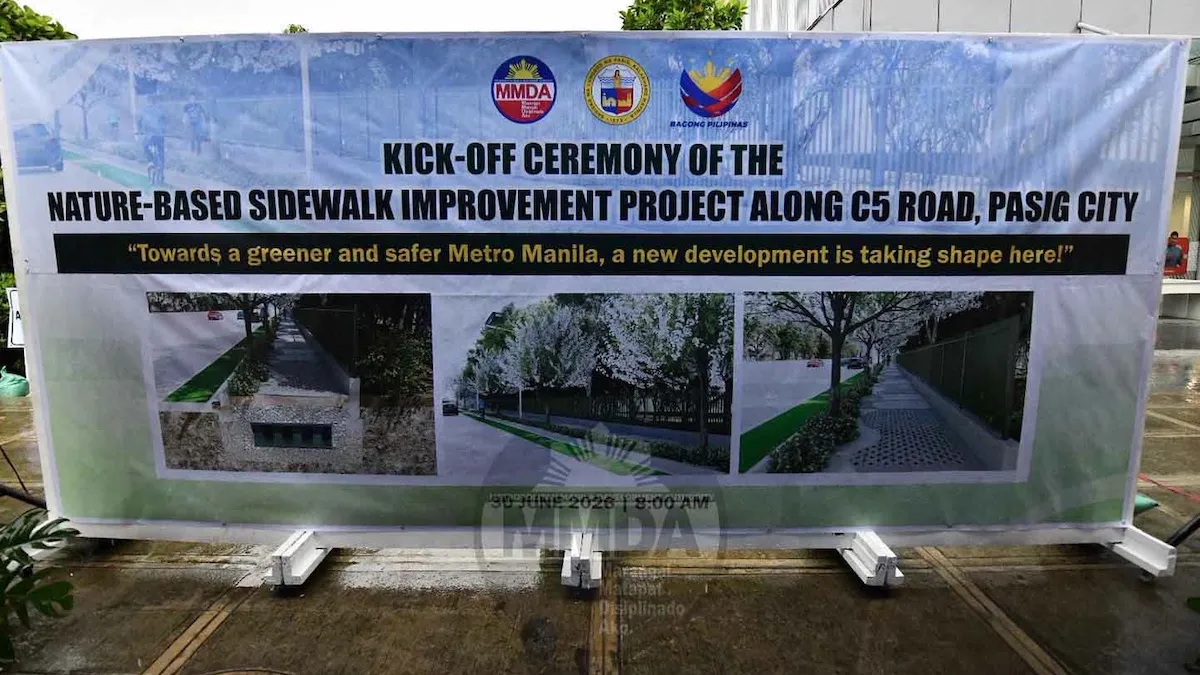
Pasig City is the pilot area for the Nature-Based Sidewalk Improvement Project. The first installation will cover a 3km stretch of C-5 Road in Pasig City from Ortigas Avenue to Bagong Ilog.
The MMDA says the area was selected as a pilot location to evaluate the effectiveness of the technology before considering wider implementation elsewhere in Metro Manila.
The project is expected to be completed within six months, with the MMDA’s plan to expand it to other LGUs in the NCR.
If successful, Pasig City officials also hope to replicate the project in their respective sidewalk improvements in the city’s inner streets.
Are there any disadvantages to using permeable pavements?
Following the launch, some netizens raised concerns about the brick design, pointing out that the sidewalks might not be PWD-friendly.
Based on some photos shared online, the large holes in the bricks could pose a challenge to wheelchair users, senior citizens who use canes, people wearing heeled shoes, those wheeling luggage, or pushing strollers.
However, other netizens point out that “if installed and maintained properly,” the new paths could benefit the general public.
As mentioned, the Pasig stretch is only a pilot area that will be used to evaluate the effectiveness of the technology before considering wider implementation in other areas.
Like any infrastructure project, regular maintenance will be essential to prevent dirt and debris from clogging the pavement’s holes that allow water to pass through and ensure the path won’t be too slippery for people to walk on, particularly during the monsoon months.
As cited by TIME Magazine, more cities around the world are increasingly adopting nature-based solutions and using natural processes to tackle floods.
“Urban planners are increasingly exploring nature-based solutions such as temporary lagoons, which can store excess water during heavy rains, and green roofs that help to absorb rain and cool down buildings.”
Instead of relying solely on larger drainage pipes and concrete flood-control structures, other solutions, such as planting trees, installing rain gardens, reviving urban forests and wetlands, installing green roofs, and building more pocket parks, could also help flood resilience and improve public spaces in our cities.
What do you think of this initiative? Sound off in the comments.