
The rainy season is brewing on the horizon, and we all know that many streets in Metro Manila will inevitably be flooded. Between the mess of ineffective flood-control projects and ghost projects that continue to hound the country, and the tendency for trash to clog pumping stations and waterways, our situation can sometimes make us feel so hopeless.
Why do some districts remain flood-free despite heavy downpours? Are there any good flood-control projects in the country that we could learn from? And what are some projects in the pipeline to look forward to?

Here’s a look at some of the more innovative flood-control projects in Metro Manila we've come across.
ALSO READ:
Flood-prone areas in Metro Manila to avoid during the rainy season
How to protect yourself from leptospirosis this rainy season
1) Underground water detention system in BGC, Taguig
Ever wonder why it never seems to flood in Bonifacio Global City (BGC) in Taguig? The secret lies in a massive water detention tank sitting beneath Burgos Circle, as illustrated in the infographic below by Assortedge. Above ground, this central park in Forbes Town Center serves as an open space and park surrounded by diverse restaurants and bars.
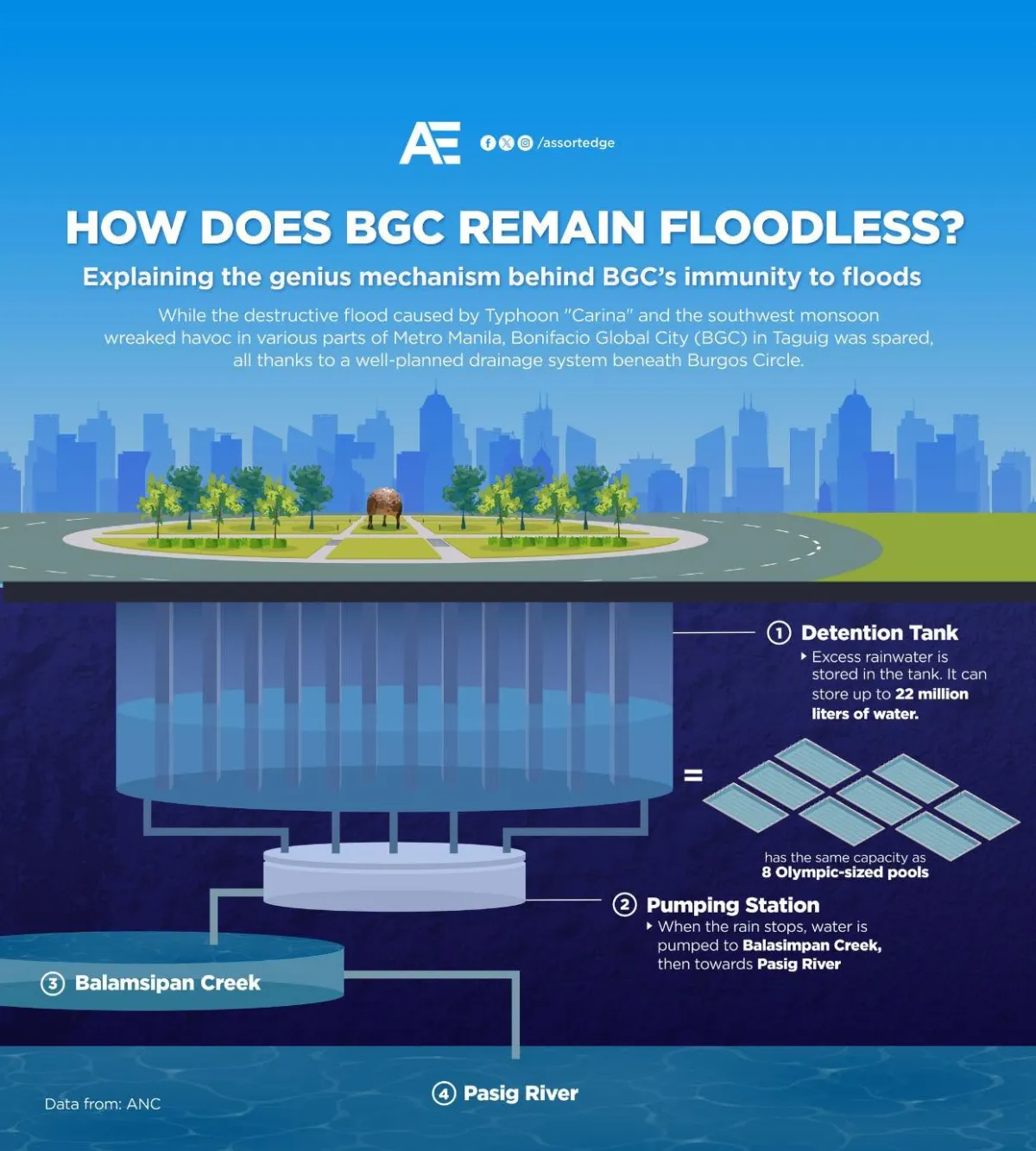
According to Taguig.com, the water-detention tank underneath Burgos Circle measures 12 meters deep, equivalent to the height of a four-story building. It’s capable of storing a whopping 22,000 cubic meters of water—equivalent to eight Olympic-sized swimming pools.
Thanks to its well-planned drainage system, built in the 1990s, rainwater is stored in a tank before being systematically released into nearby creeks and the Pasig River, which ultimately flows into Manila Bay.

A similar underground stormwater detention tank has also been integrated beneath roads and parks in Arca South. In a feature of their "Parks that Protect", developer AyalaLand says the mixed-use estate along the East Service Road in Barangay Western Bicutan, Taguig City has a tank with a capacity of 25,000 cubic meters, or 25 million liters. That’s the equivalent of 500 large fuel tanker trucks (each carrying 50,000 liters).
2) Vertis North Rain Garden in Quezon City
Hidden between several malls and residential complexes in Quezon City is a rain garden—a two-hectare park that doubles as a stormwater catchment system. Designed with infiltration stripes and a detention pond, the Vertis North rain garden serves as an open space for jogging, exercise, relaxation, picnics, and community events during the dry season. When the monsoon months come, it serves as a temporary stormwater catchment pond to protect nearby areas from flooding.
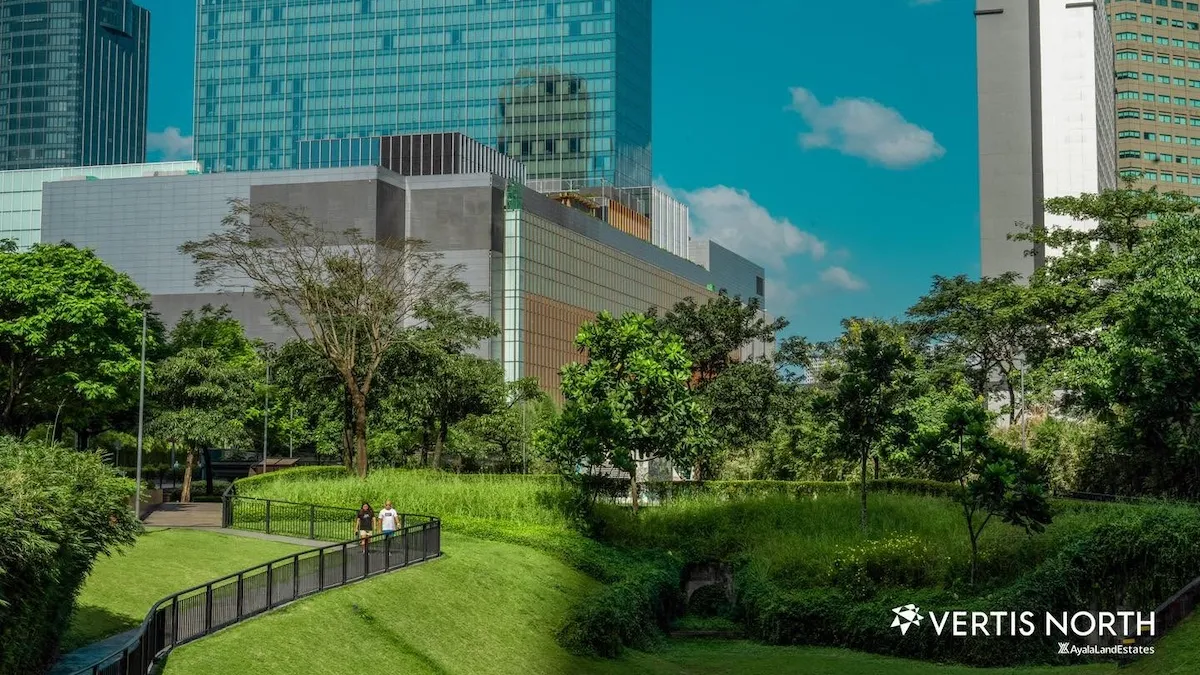
As explained by Arch. Mia Quimpo, Head of Planning, Innovation and Design at Ayala Land Estates, in a video feature, the rain garden serves as a “mini sponge” that helps manage rainwater across the estate.
“A rain garden is a shallow, planted depression in the ground that collects rainwater from roofs, roads or streets, allowing it to soak slowly into the soil instead of running off into drains. It’s usually filled with native plants, gravel or sand layers that help filter pollutants and reduce flooding,” said Quimpo.
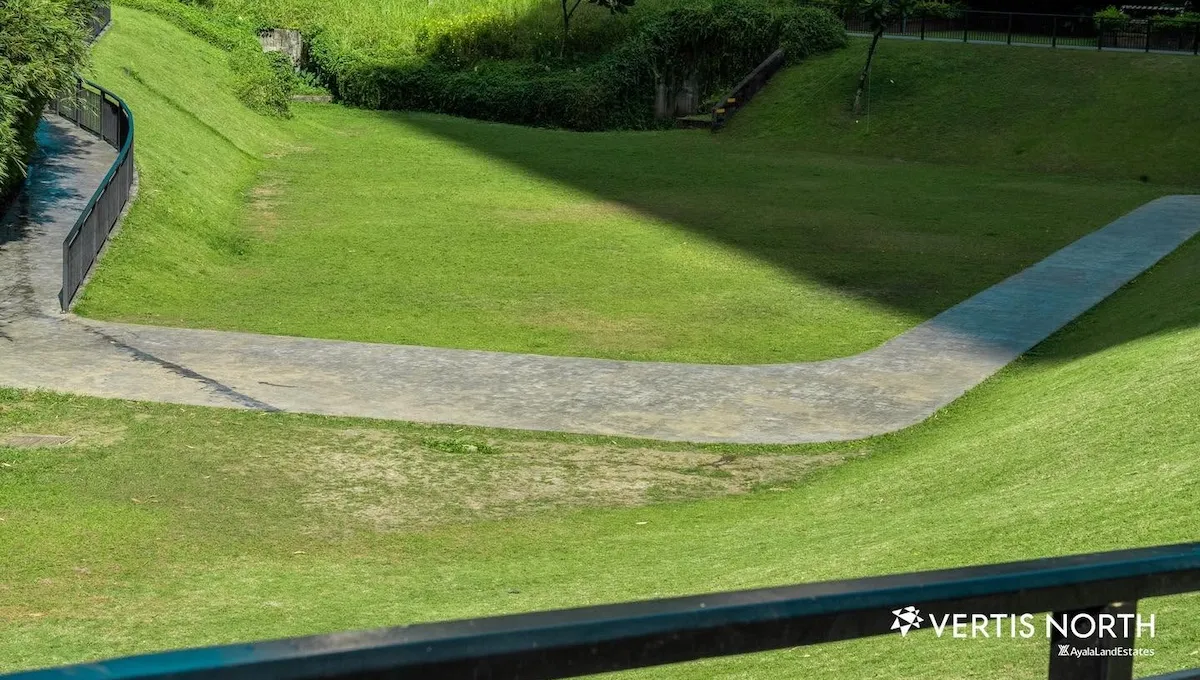
The rain garden can hold 3,000 cubic meters of rainwater, or roughly the size of one Olympic-size swimming pool.
3) Multipurpose park/detention and retention ponds in Quezon Memorial Circle
Aside from private developers, local governments are coming up with their own unique flood-control measures. For instance, Quezon City is in the process of building a detention and retention pond inside Quezon Memorial Circle to help mitigate floods in the area. Designed by City Engineering Head Atty. Dale Perral, the area will serve as a multipurpose park, scenic spot, and open space in the park, while absorbing rainwater during the rainy season.
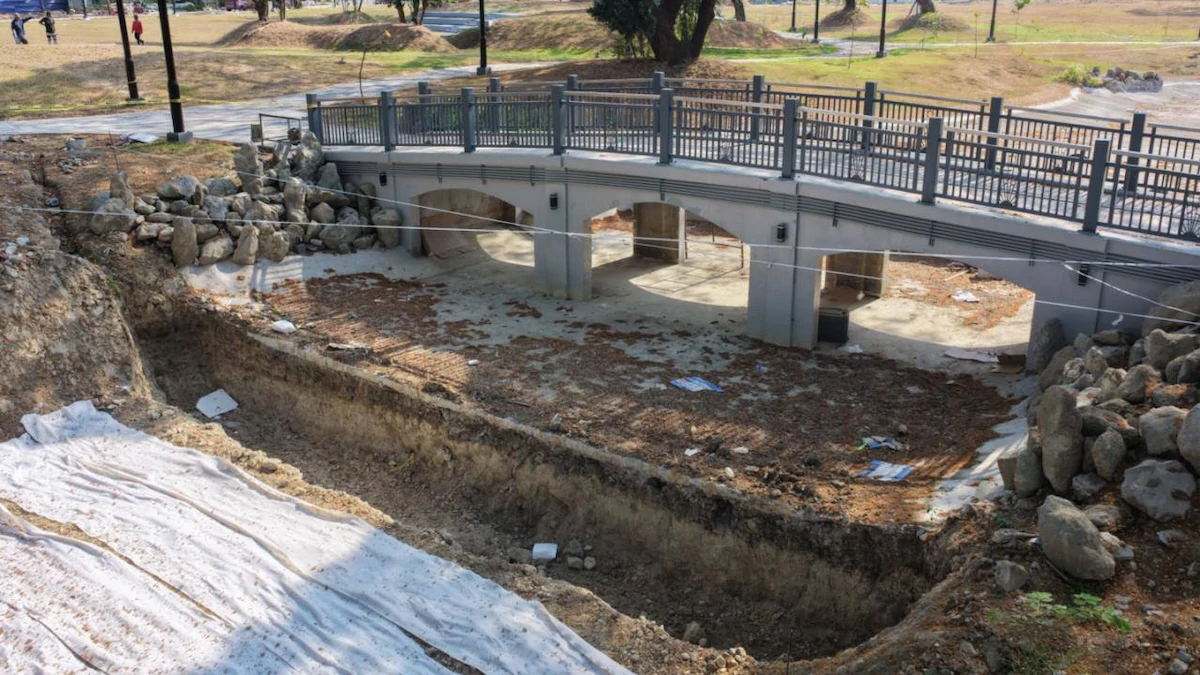
Once completed, the structure will be able to store up to 651 cubic meters of water—equivalent to 3,255 200-liter water drums. The detention pond will also be connected to tanks used for watering plants in the city. The project is expected to be completed before the rainy season sets in.
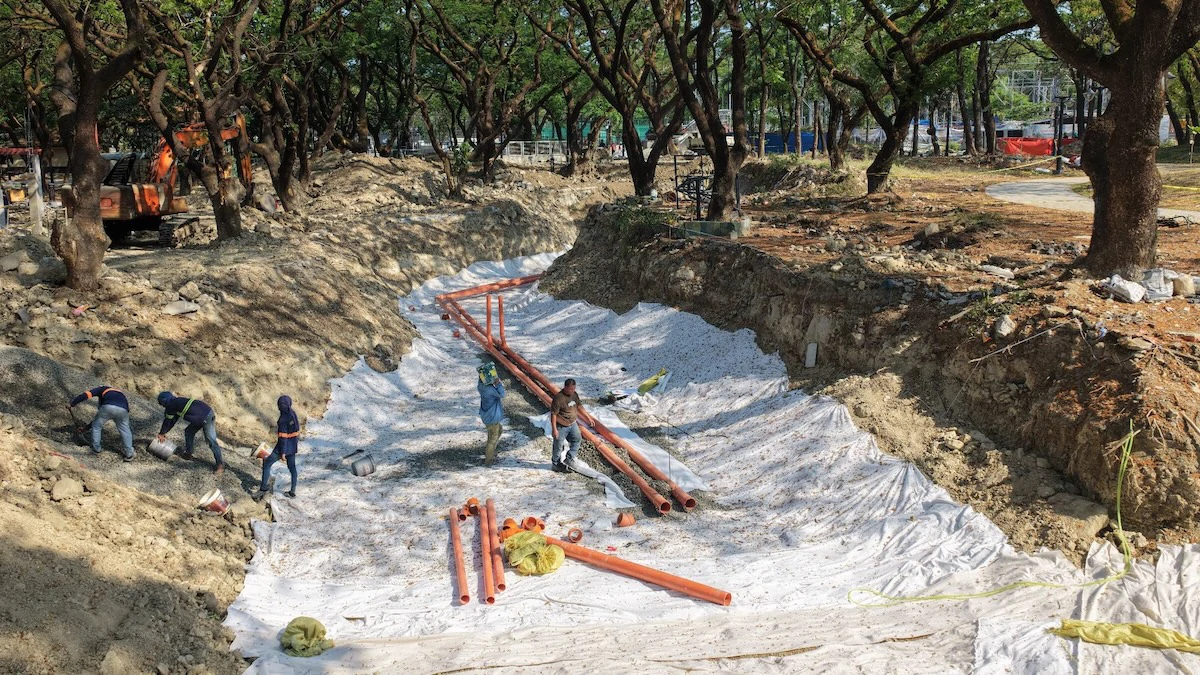
4) Dual-purpose basketball court detention basins in Quezon City
QC is also using sports infrastructure to help reduce flooding. The city currently has two existing basketball courts that double as detention ponds.
Just recently, the QC LGU opened its second basketball court–detention basin facility in Barangay Tandang Sora. Beneath a covered court that citizens can use for sports and other community activities lies a basin with a 1,256 cubic meters catchment capacity, half the volume of an Olympic swimming pool.
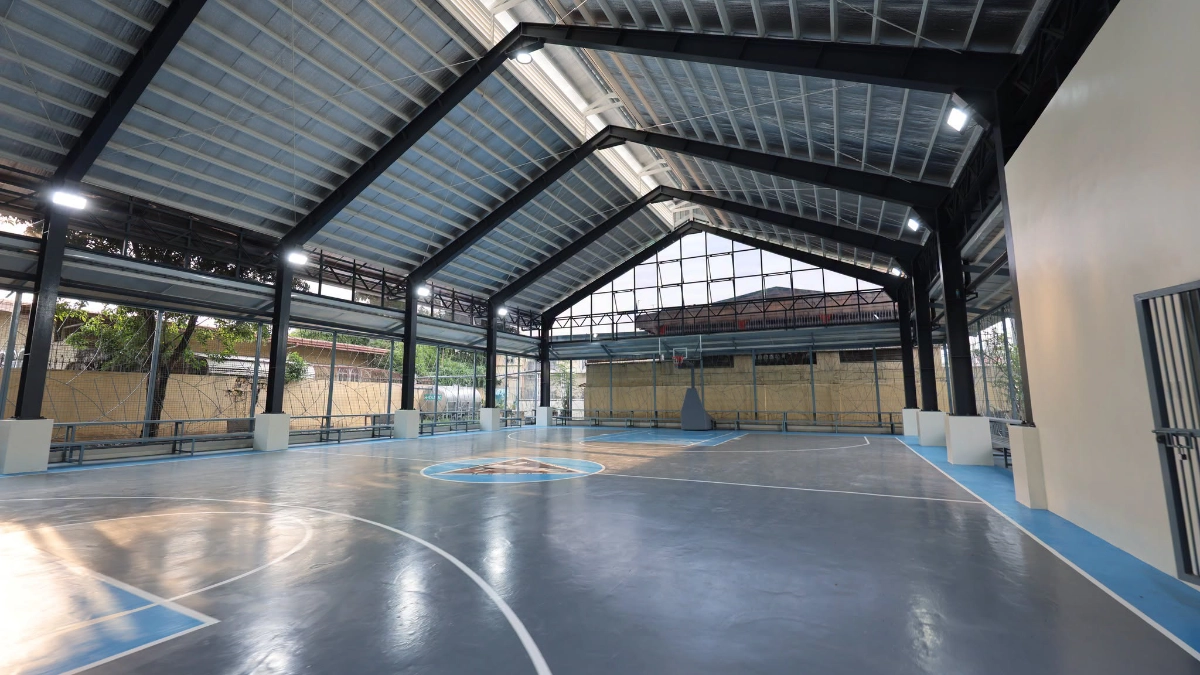
The structure also houses a water-harvesting system, capable of collecting up to 15,000 liters of rainwater. The filtered water from the facility can also be used for general cleaning and landscaping.
This follows the first detention pond facility underneath a basketball court that opened in Barangay Santa Monica in Novaliches earlier this year. The first detention basin can hold 1,700 cubic meters of water.
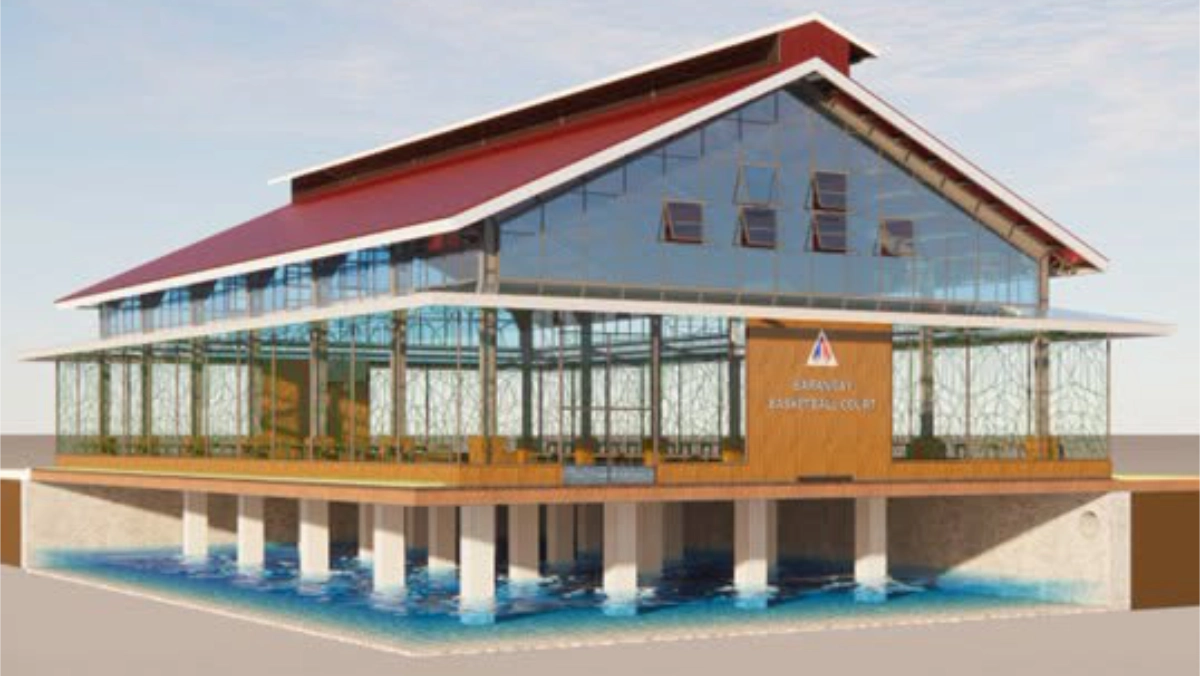
Mayor Joy Belmonte also announced that a new detention basin is currently being built along flood-prone G. Araneta Avenue, alongside city-wide dredging and declogging efforts.
5) Pasig-Marikina River Channel Improvement
Pasig and Marikina are also introducing new technology to boost long-term flood-control efforts.
As reported by Inquirer, new floodgates that will make use of alloy-saving duplex stainless steel (ASDS) will form a critical part of the river’s upgraded flood-control system. The lightweight and corrosion-resistant material is said to be more durable than black iron and will require less maintenance than traditional steel.
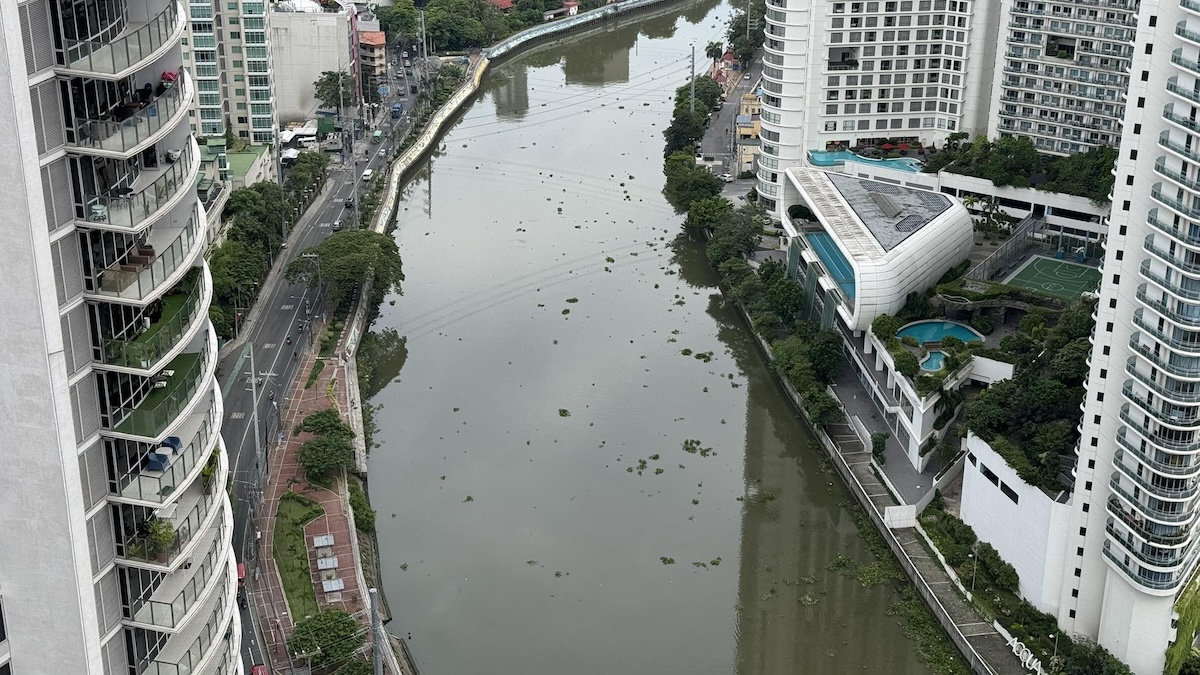
The Pasig-Marikina River Channel Improvement Project (PMRCIP), which has been ongoing for two decades, has reached Phase 4, which stretches from the Sierra Madre mountains through lower Marikina to the Pasig River and Manila Bay, covering one of the country’s most flood-prone urban corridors.
Floodgates will be installed at key structures downstream of the Manggahan Floodway Control Gate in Pasig City, the Cainta floodgate, and the Taytay sluice gate.
Status of flood-control projects
Want to check the status of existing flood-control projects in your area? The Sumbong sa Pangulo website lists various flood-control projects being implemented across the country, showing the project description, exact location, cost, and alleged completion date. The platform allows citizens to report suspected anomalous, substandard, or incomplete projects by uploading photos or video proof.
The public grievance platform for ineffective flood-control projects was flooded with over a thousand reports within three days of its launch last year, according to Malacañang. Frankly, we’re not surprised.
The website also features an interactive map that allows users to pinpoint and zoom in on the flood-control projects in specific areas. Check out the map here.