Lighter, harder, faster, noisier, wingier. And no hybrid. Just when you thought this was a regular approach to making a Ferrari go faster, in comes that final nugget.
The 296 Challenge Stradale is combustion only. Ferrari has stripped out the electric motors and battery, reducing weight by 140kg and power by nearly 200hp.
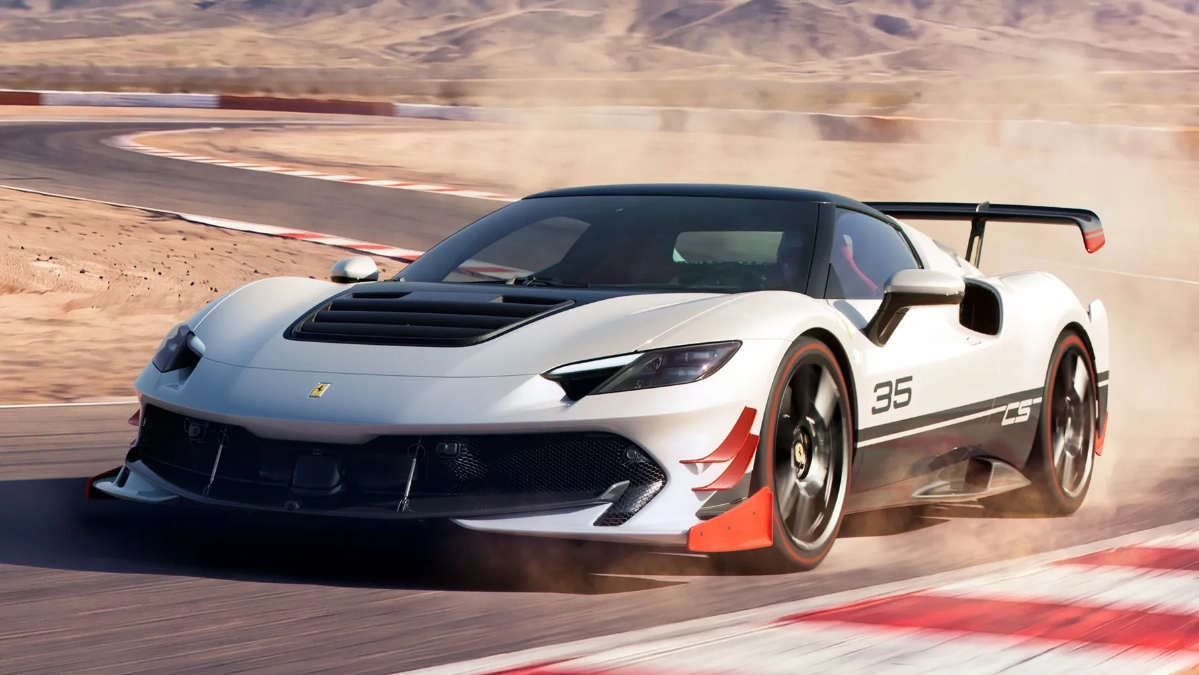
There’s a lot going on here. Traditionally, Ferrari only builds one special version of its mid-engined cars. But this is the second derivative of the standard 296 GTB. Last year we had the 868hp Speciale; now we have the 670hp Challenge Stradale.
OTHER STORIES YOU MIGHT HAVE MISSED:
Hyundai has previewed the Ioniq Earth Concept, a futuristic family SUV with coach doors
A closer look at the extra-large BYD Seagull
And there’s more good news: This isn’t a limited edition model only being made available to a handful of Ferrari’s best collectors. It’s a full production model. And—relatively speaking, of course—it’s going to be a bargain, priced almost exactly in line with the entry-level 296 GTB at around £260,000 (around P21.7 million). A return to the good old days where the stripped-out car was the cheap one.
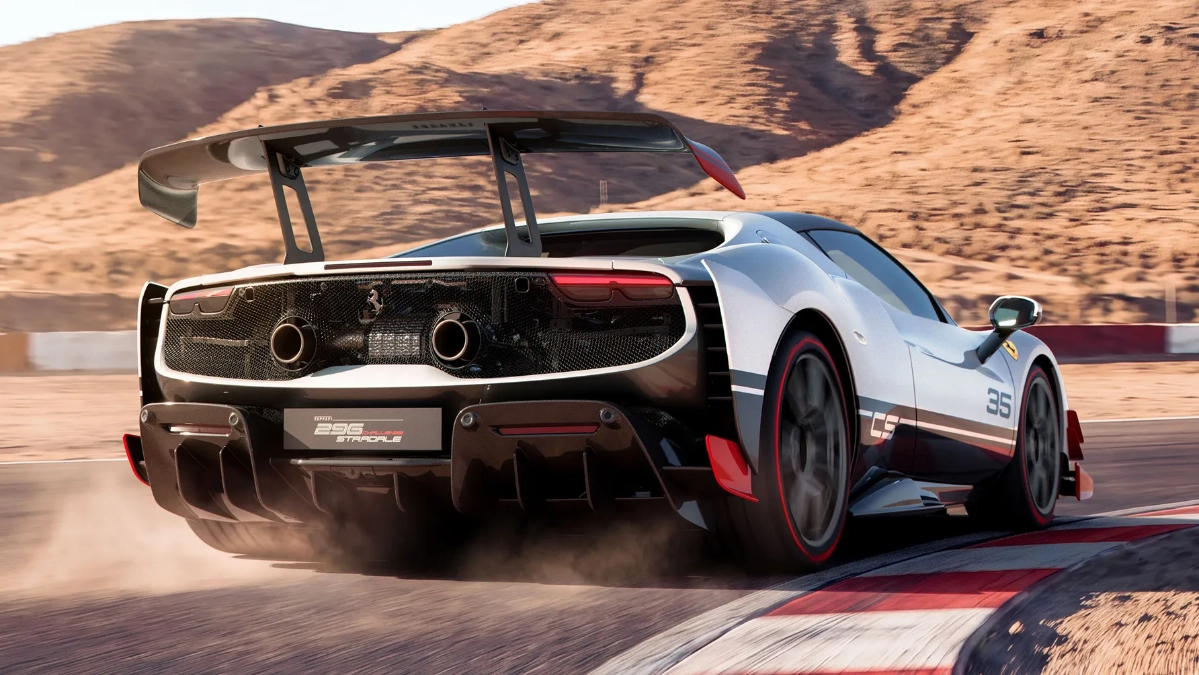
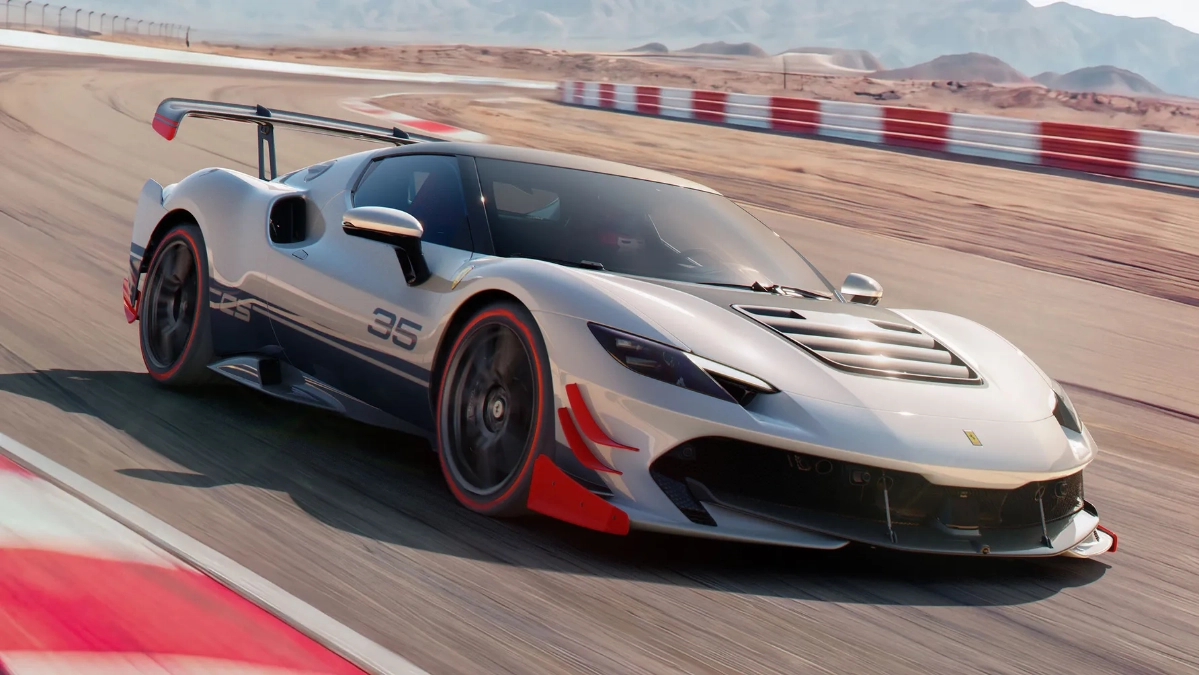
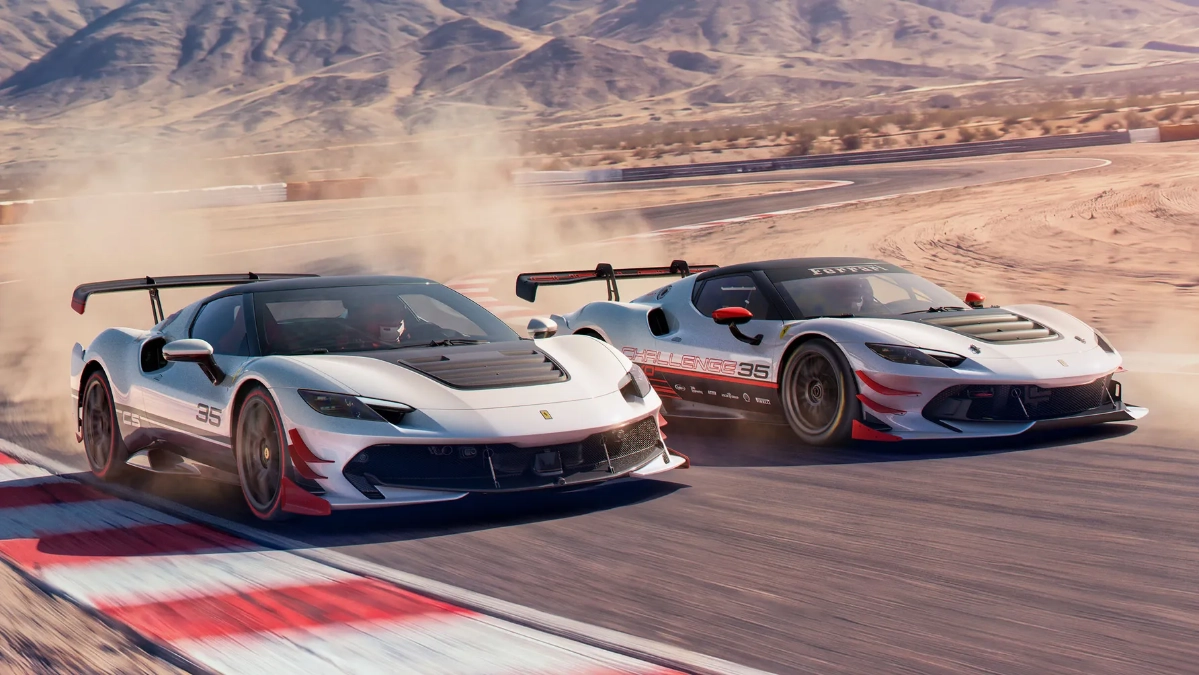
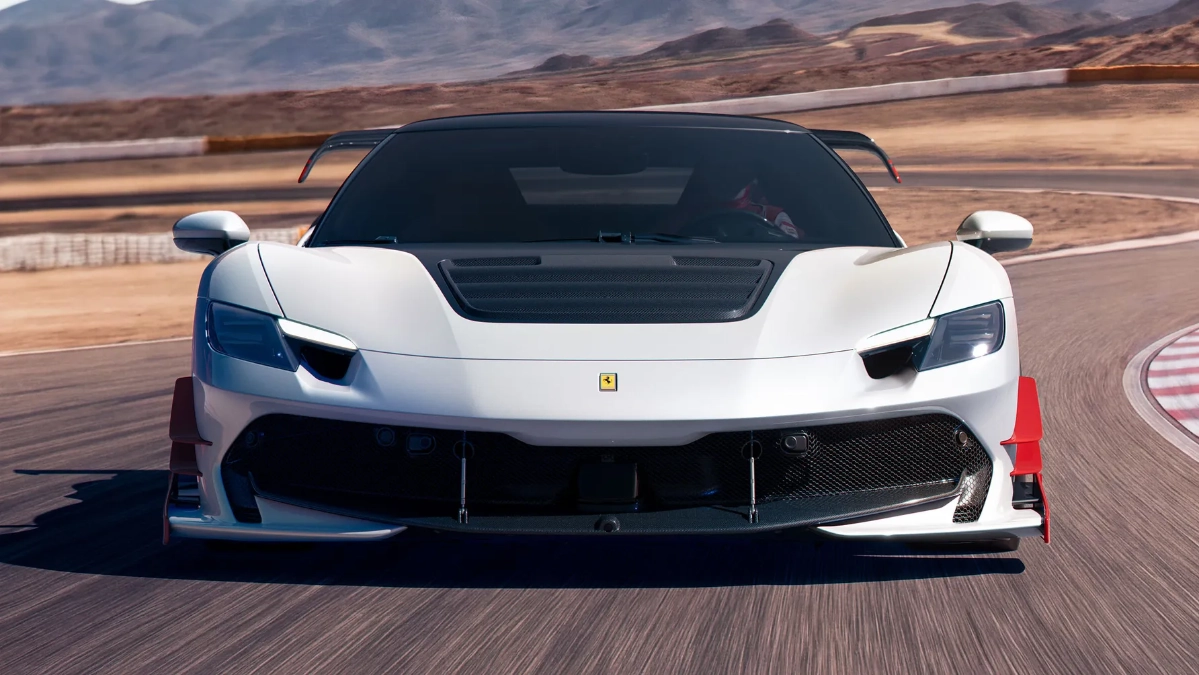
And it has been stripped out. It’s been released alongside (and developed with) a newly enhanced 296 race car, the Challenge Evo, used for one-make racing. Outwardly, the most obvious differences are the wing mirrors and plexiglass windows.
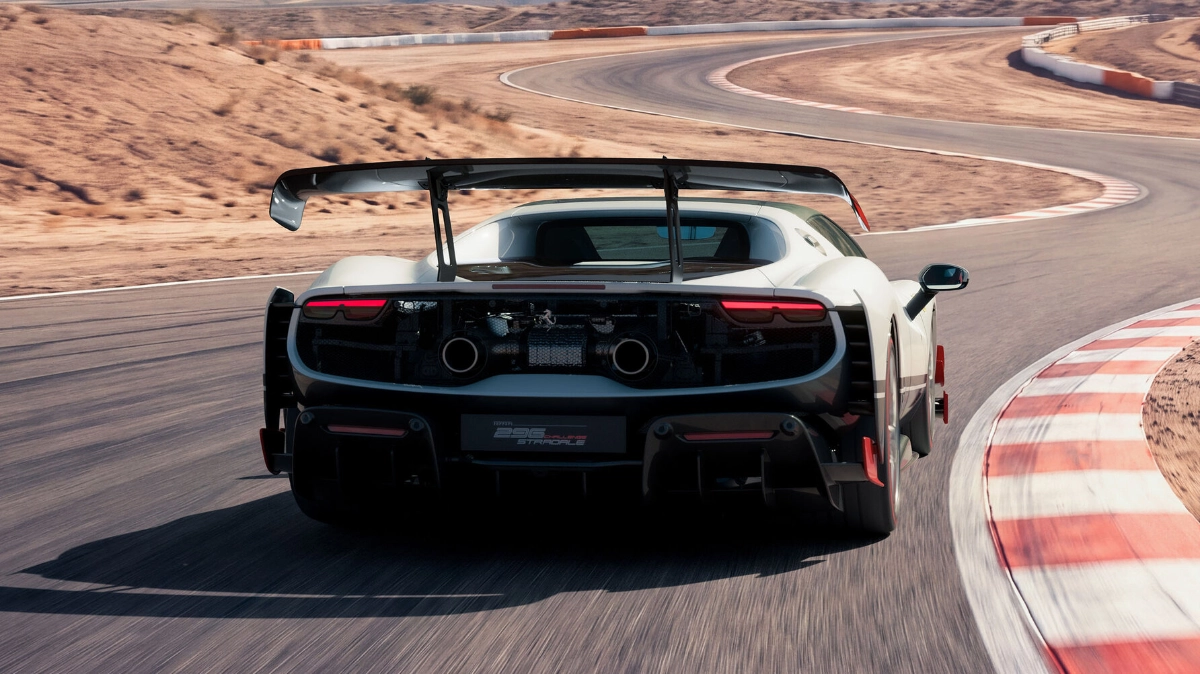
Neither is pretty. The soft elegant curves of the 296 GTB have been lost, hidden behind all manner of bolt-on winglets, vents, flicks and foils. The rear wing is a thumper, alone responsible for 270kg of downforce.
For a car that has a claimed performance balance of ’80% road, 20% track’ it’s a bit OTT. Elegance has been sacrificed on the altar of aero.
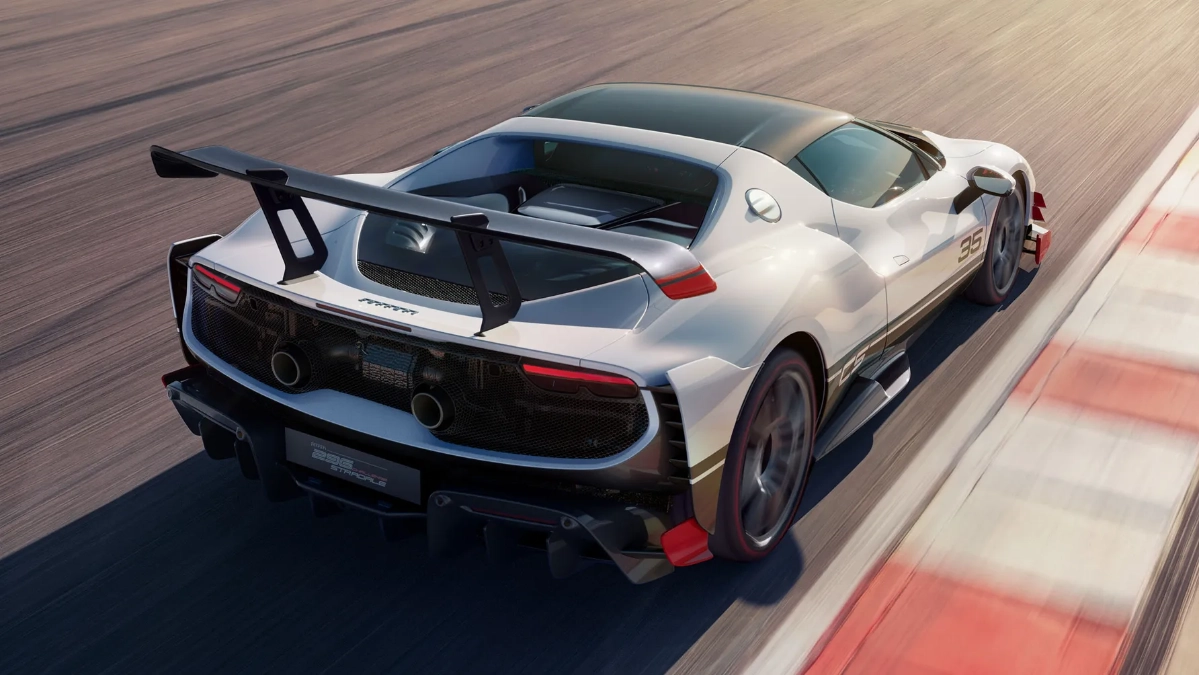
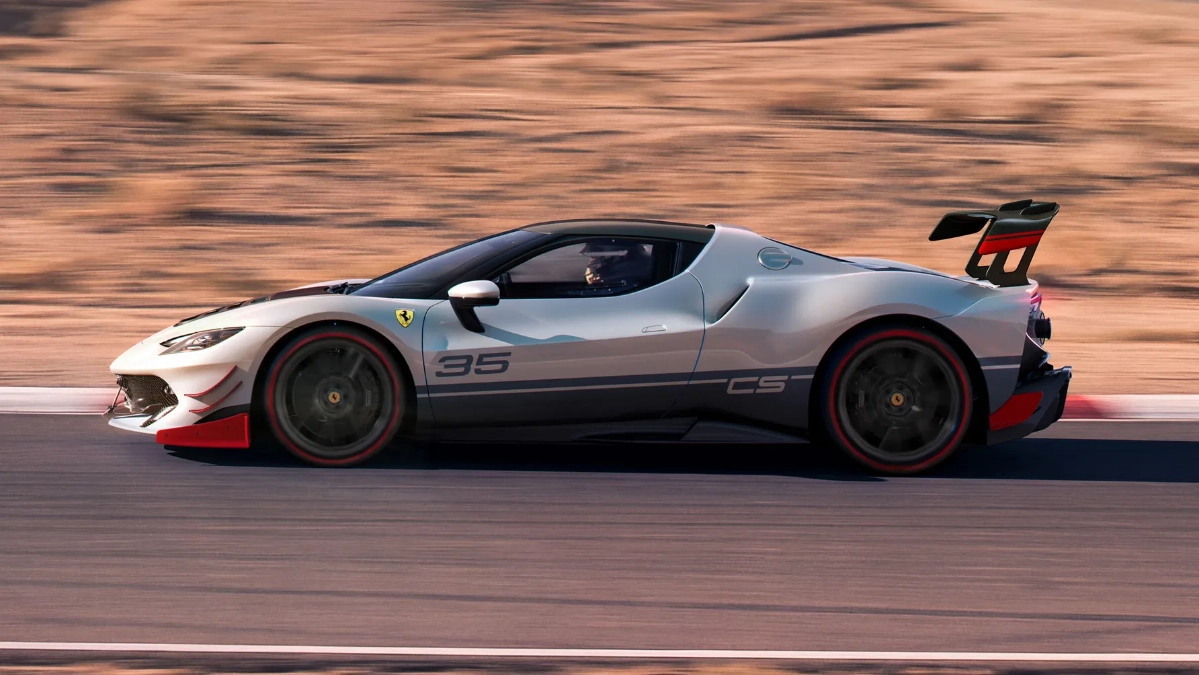
Total downforce is 617kg at 249kph. At the same speed, Porsche’s GT3 RS is rumored to develop around 640kg. They weigh about the same too. Porsche quotes a 1,450kg wet weight, Ferrari a 1,330kg dry weight.
But here’s something different. Ferrari has managed to keep the front boot, where Porsche hasn’t. Admittedly it’s half the size it used to be, just 67 liters, a narrow gutter flanked by air channels that bring hot air from the rads up through the hood. I wouldn’t go putting the ice cream in there for long. But it’s there, which signals Ferrari appreciates this car has to be usable, something it forgot to its cost with the luggage-less SF90.
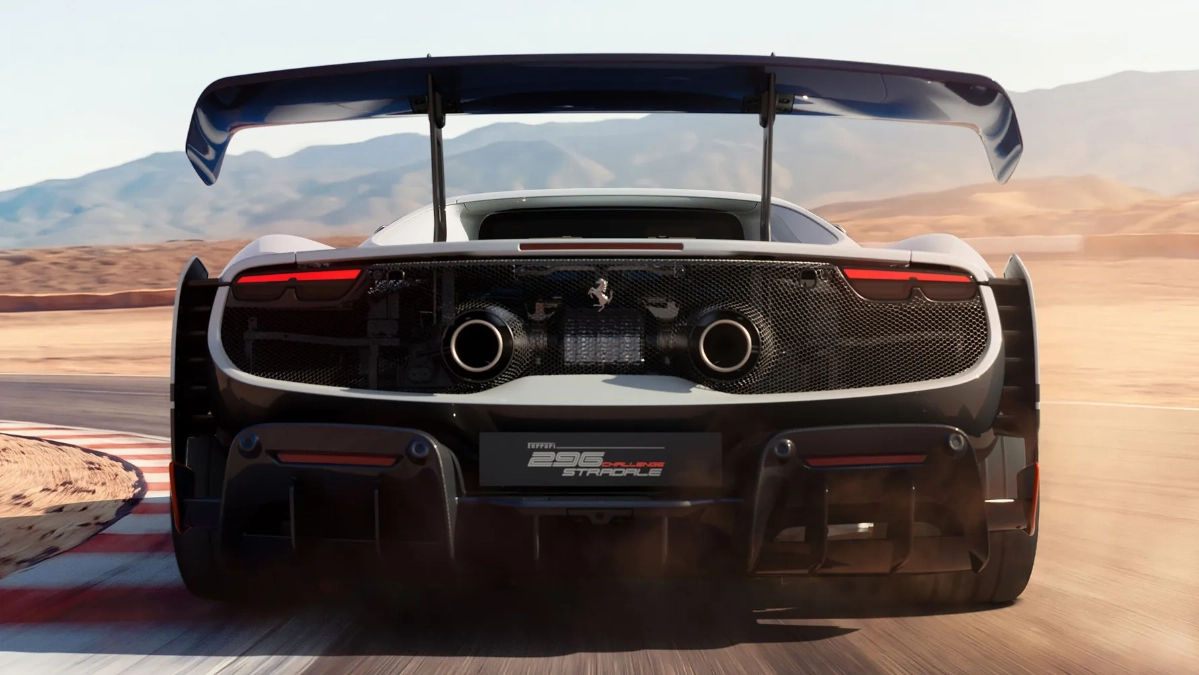
Removing the hybrid has meant lots of engine tweaking. From fattening up the torque curve at the bottom to enhancing the power delivery up above 8,000rpm. The Challenge Stradale uses the Speciale’s engine, complete with titanium conrods and a nitrided steel crankshaft, but power has been lifted 7hp to 670hp.
That’s the same power as the 488 back in 2015, but from an engine two cylinders and one liter smaller.
It should sound good, too. The new exhaust promises to enhance harmonics, and the 296’s sound tube, bringing noise back to the cabin, has been recalibrated. As fierce and strident as the GT3 RS’s nat-asp flat six? Let’s not get carried away.
It will be faster than the Porsche. The promise is 100kph in 2.8secs, 200kph in 7.9secs. The Porsche’s times are 3.2sec and 10.6sec. As far as sibling rivalry goes, it matches the 296 Speciale to the first marker, and lags a second in getting to the latter. Around tracks it’s a different story. “At Fiorano and other twistier tracks the Challenge Stradale is faster,” claims Matteo Turconi, the Challenge Stradale’s senior product manager, “at high speed circuits like Monza, the Speciale is faster.”
The most radical change to the suspension was to the springs—the main spring is now almost twice as stiff, so Ferrari has added a softer helper spring—a solution carried straight over from the Evo race car.
The damping is still done with the adaptive Magneride system, but for the first time ever on a Ferrari there are actually two bumpy road settings rather than one. What we can deduce from this is that the ride quality is…uncompromising. Fortunately, Magneride is capable of minor miracles.
There are carbon-ceramic brakes, you can have the carbon wheels as an option (saving 2kg per corner), and track widths are up a little (13mm front, 22mm rear), just helping to pack out the arches and deliver a little bit more lateral grip.
According to Turconi, “This is not a car for everyone. If you want to slide, you don’t want this car. This is like going back 30 years; it’s more precise, more challenging, with less assistance. It’s more difficult to drive. The brake pedal is firmer and has less travel, the throttle spring is stiffer, and the steering is heavier.”
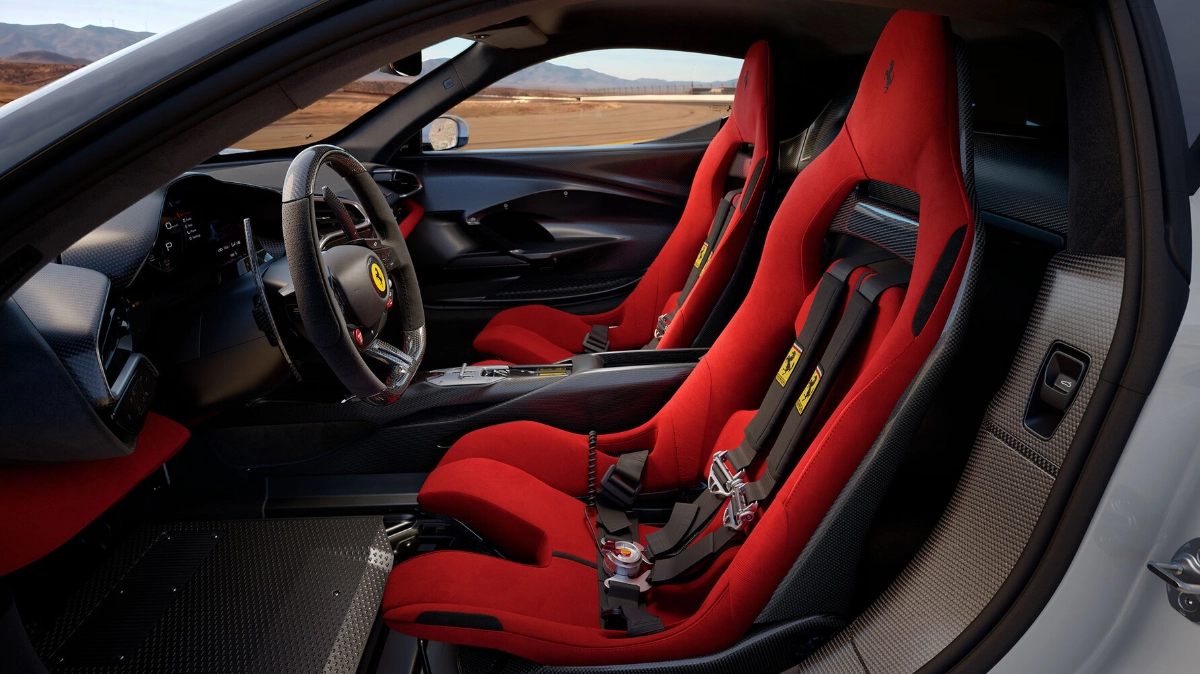
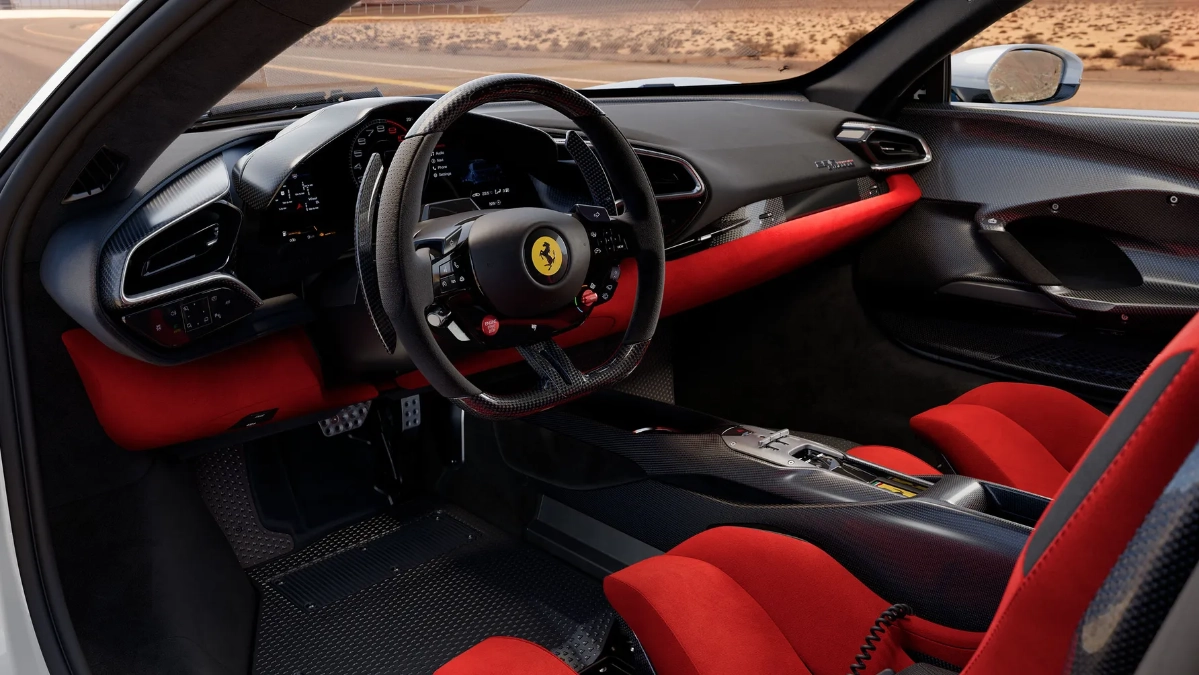
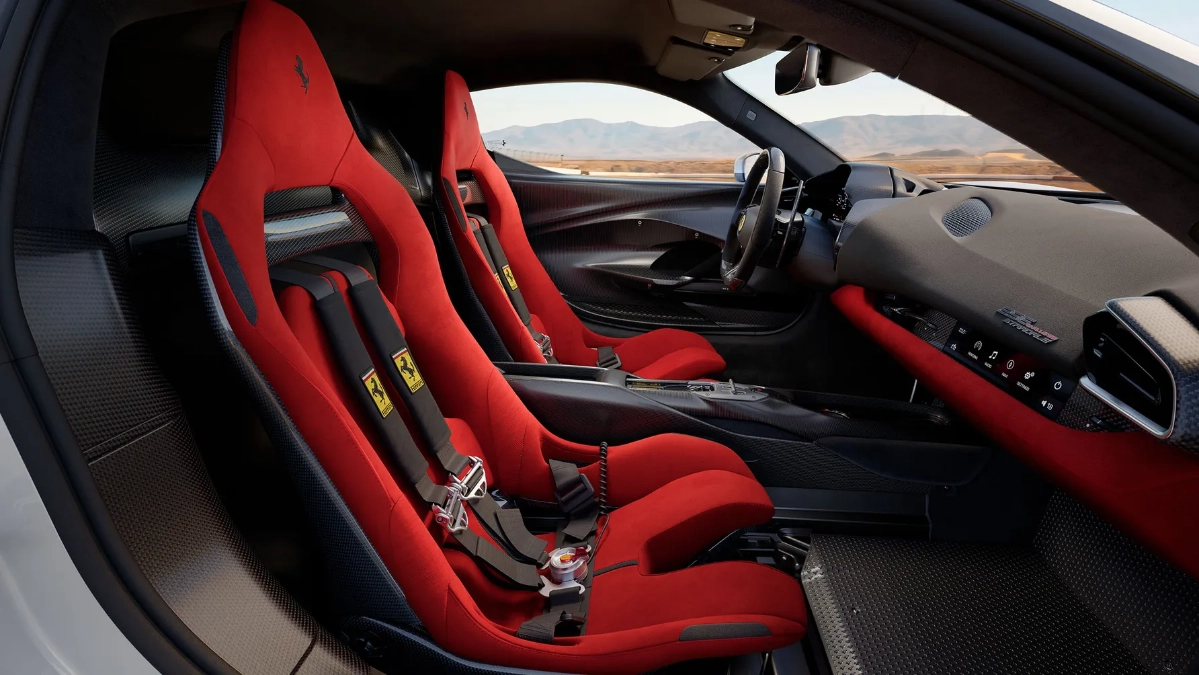
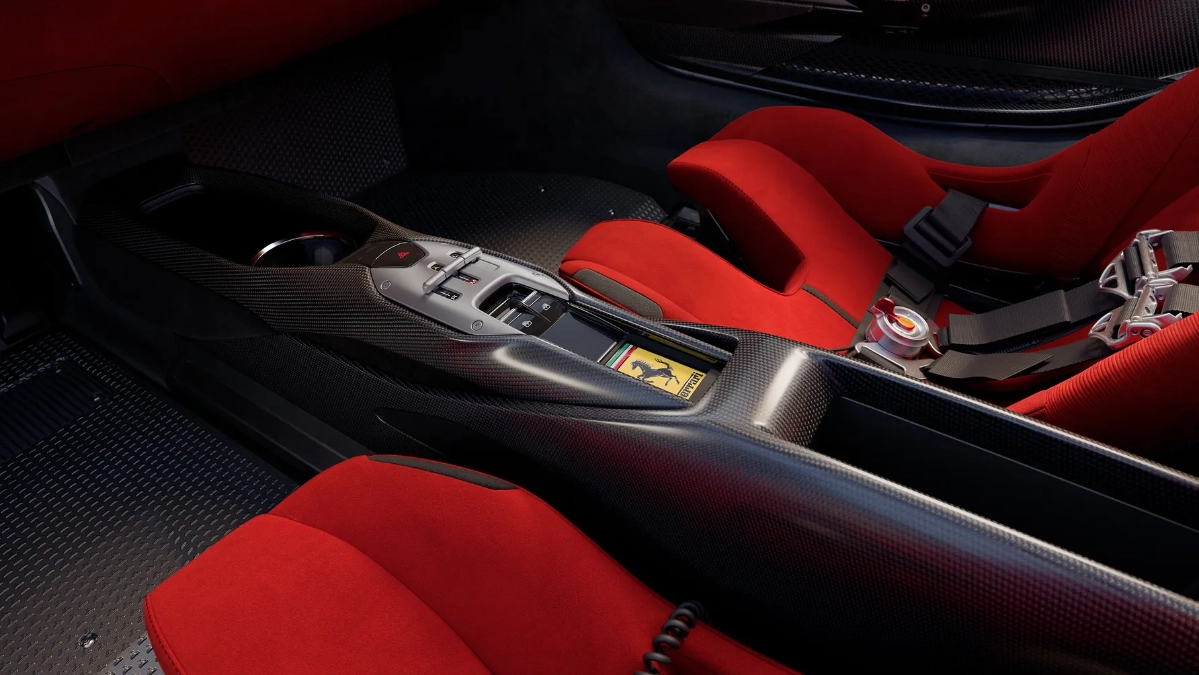
You guess as much the moment you get in. The carbon door panels have some shape, but no material covering; likewise the center console. You sit lower on carbon race seats borrowed from the F80—lesser chairs are available. Nor do you have to have race harnesses.
Sound deadening has been stripped as part of all the weight saving, but there are some things even Ferrari can’t dodge—the hardcore Challenge Stradale still has adaptive cruise, lane keep, sign recognition and driver drowsiness detection. Shouldn’t be any need for the last one. Or the others, come to think of it.
Ferrari can be trusted to make it a blistering driver’s car. Fair play to them for not making it a limited-edition special and charging the earth for it. But more than that, it signals a diversification at Ferrari. And it looks like they’ve been taking lessons from Porsche’s 911.
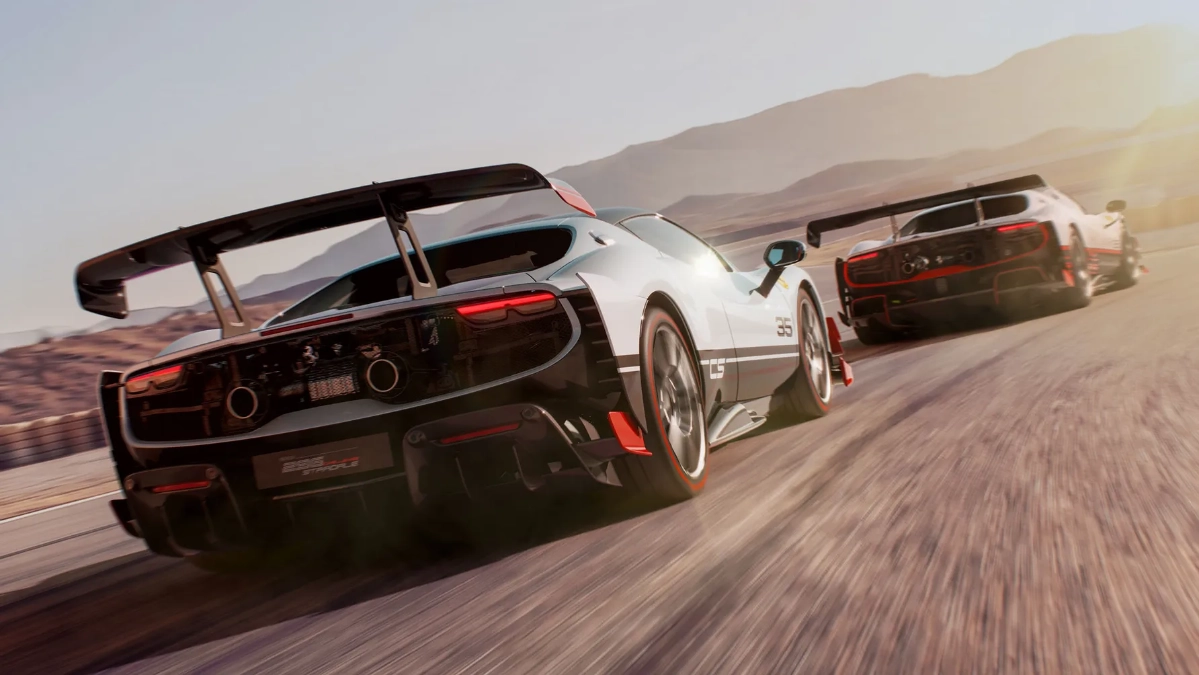
The Speciale now seems to be positioned akin to the 911 Turbo—the same basic experience as the standard car, just enhanced, with more power, luxury, and usability. In this narrative, the Challenge Stradale tracks the GT3’s more closely. It’s sensible thinking—Porsche GT cars are much less powerful than the Turbos, but it’s never held them back; they are rawer, more exciting.
The timing is interesting too. 2026 has been a torrid year for Maranello. It gave us the Luce. It got kicked in the plums. The Dodici Cilindri Manuale was meant to take the pain away, only for people to turn around and complain it’s not a proper manual. It’s well known that the 296 hasn’t been selling well. So the Challenge Stradale follows hot on the heels of the Speciale.
This one, we have a feeling, will help steady the ship.
NOTE: This article first appeared on TopGear.com. Minor edits have been made.