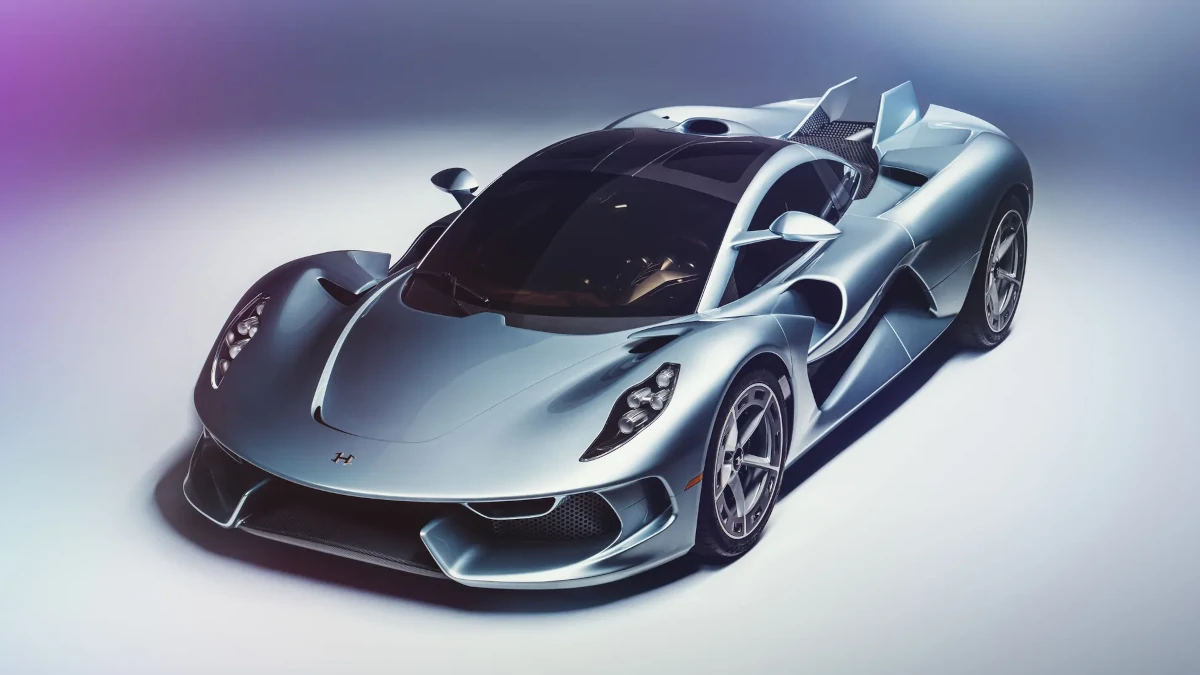
If there was one company likely to relinquish its deathgrip on horsepower, you wouldn’t have guessed it would be Texan manufacturer Hennessey, purveyors of the Venom series. The current Venom F5 sports 2,031hp and styling heavily influenced by the aerodynamic constraints of 480kph+ (300mph) engineering—even if the cars ‘only’ manage around 450kph. They are, particularly in manual form, deliciously exceptional—and faintly terrifying.
The new Hennessey Blackbird upends everything you thought you knew. It features a naturally aspirated V8 engineered by Ilmore (Hennesseys usually feature biturbo bent-eights) that revs up to 9,000rpm and has ‘just’ 800-850 horsepower, making it the most powerful production n/a V8 in existence.
More than that, it’s got three pedals and a six-speed gearbox, and an interior that reflects exactly no screens. The engine sits in a carbon chassis clothed in carbon bodywork and weighs well under 1,400kg. So it’s light and analogue, and only lacking in power by Hennessey’s own stratospheric metrics. Still 320kph+, still around 2.7sec to 0-100.
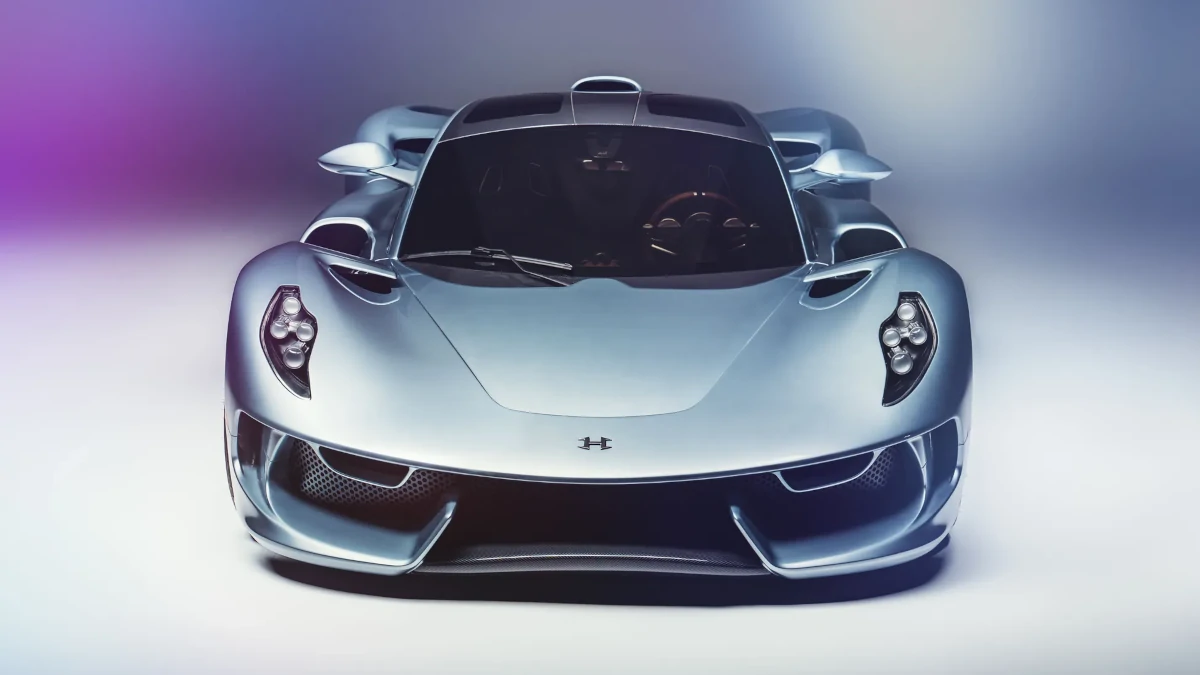
The big news, however, is that styling. Because this is a Hennessey that’s more about form than function, artistry and heart rather than ruthless efficiency—although it’s apparently still got the aero chops to make super-320kph a realistic possibility.
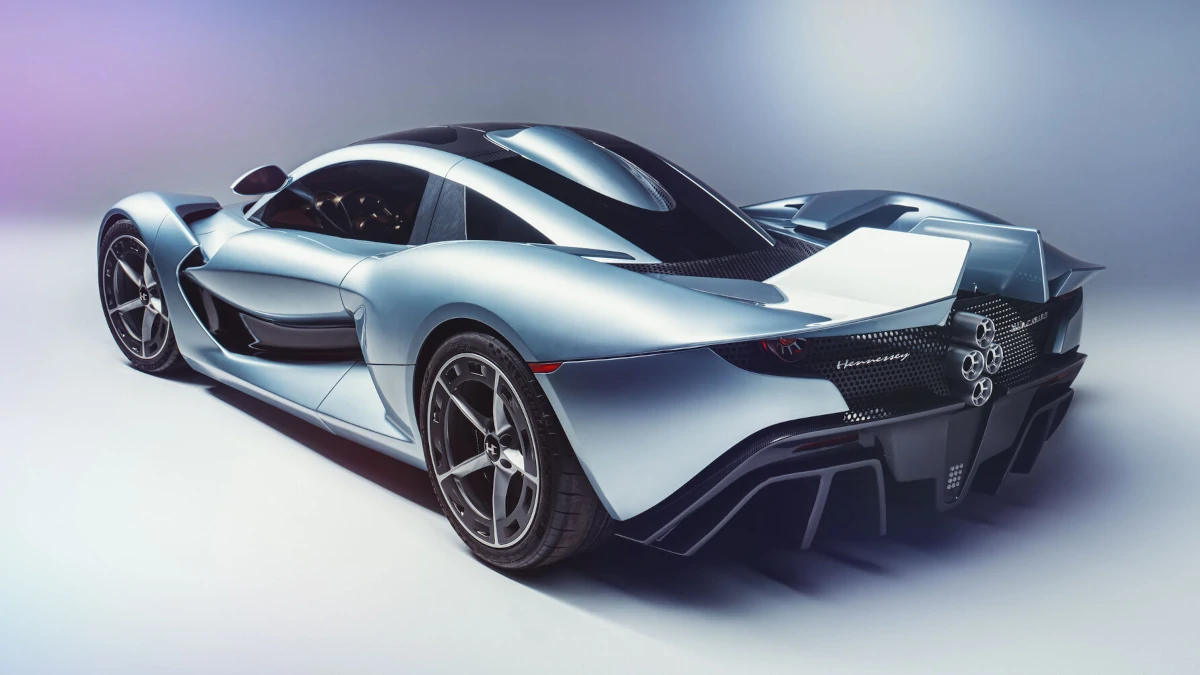
As you might have guessed, designer Nathan Malinick took cues from the SR-71 strategic reconnaissance aircraft nicknamed ‘Blackbird’—hence the name. But it’s not a caricature. The vertical rear fins that rise from the middle section of the rear wing are the most obvious inspiration, but they look entirely appropriate, if a little theatrical. But they add stability at speed and help vent the engine bay at speed.
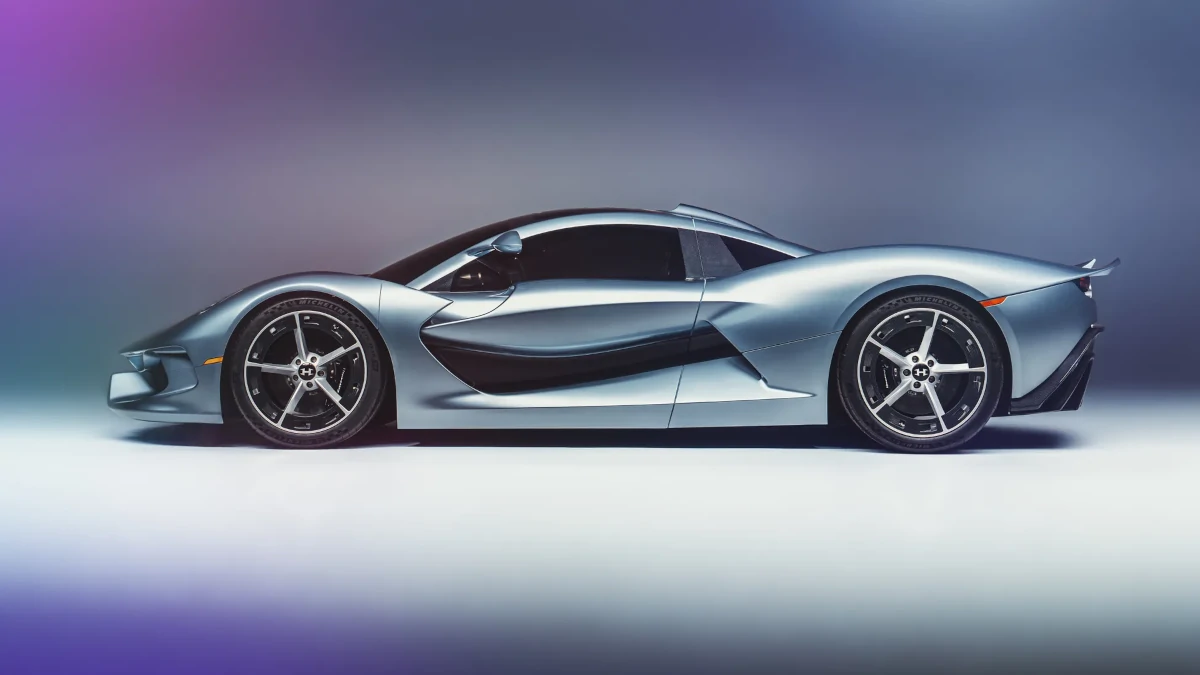
The jury’s still out on whether they look better up or down—the longtail profile looks particularly elegant when they’re stowed. Whatever, they actually rise at 71mph (115kph) and sit at +/-71-degrees, which proves that John Hennessey has both an eye for detail and a sense of humor.
OTHER STORIES YOU MIGHT HAVE MISSED:
All-new Lexus ES launched in PH with hybrid, electric variants; prices start at P4.108-M
Happy 8/6 day: The refreshed Toyota GR86 has been unveiled
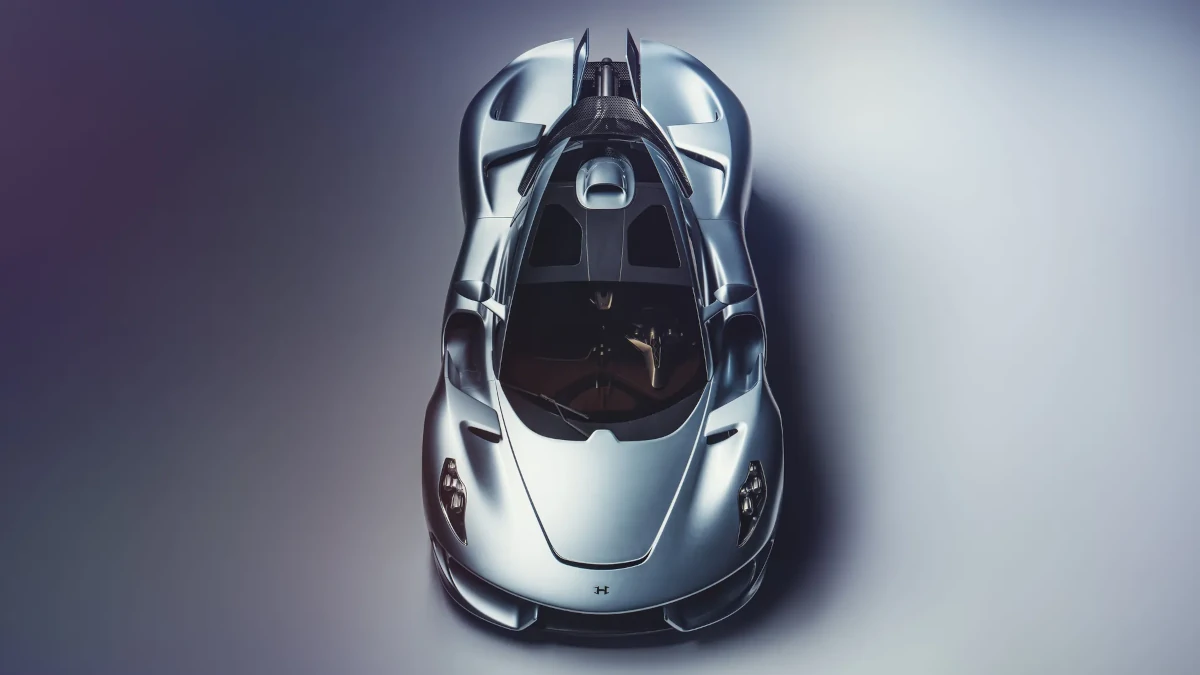
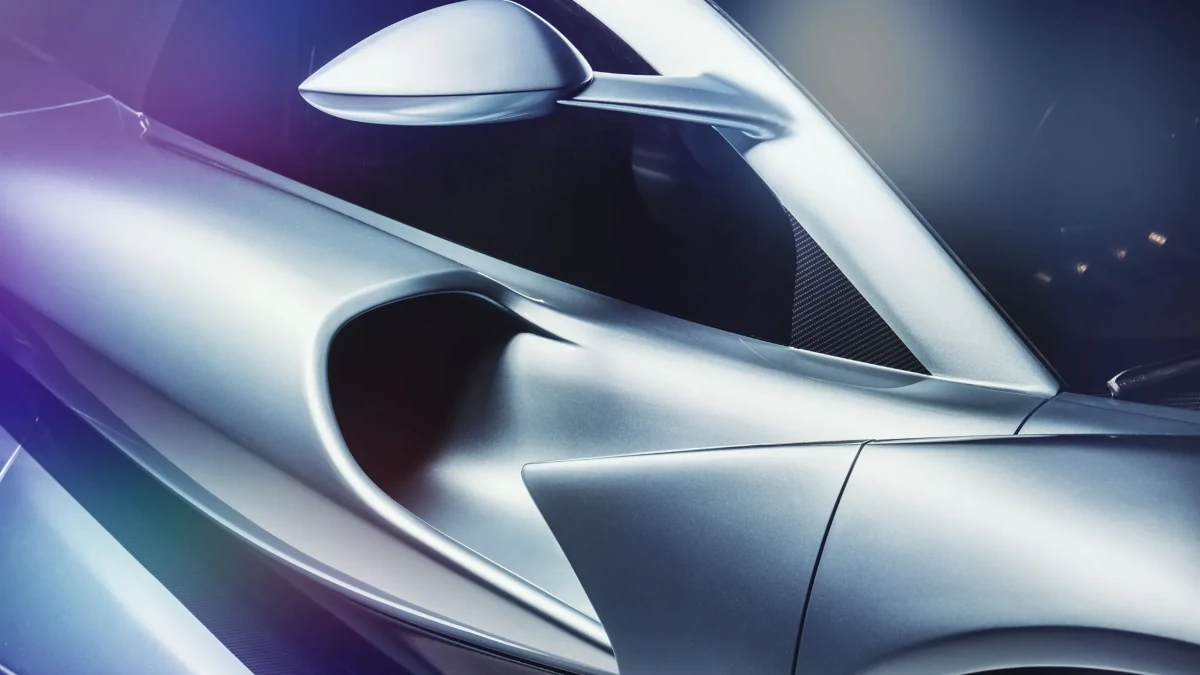
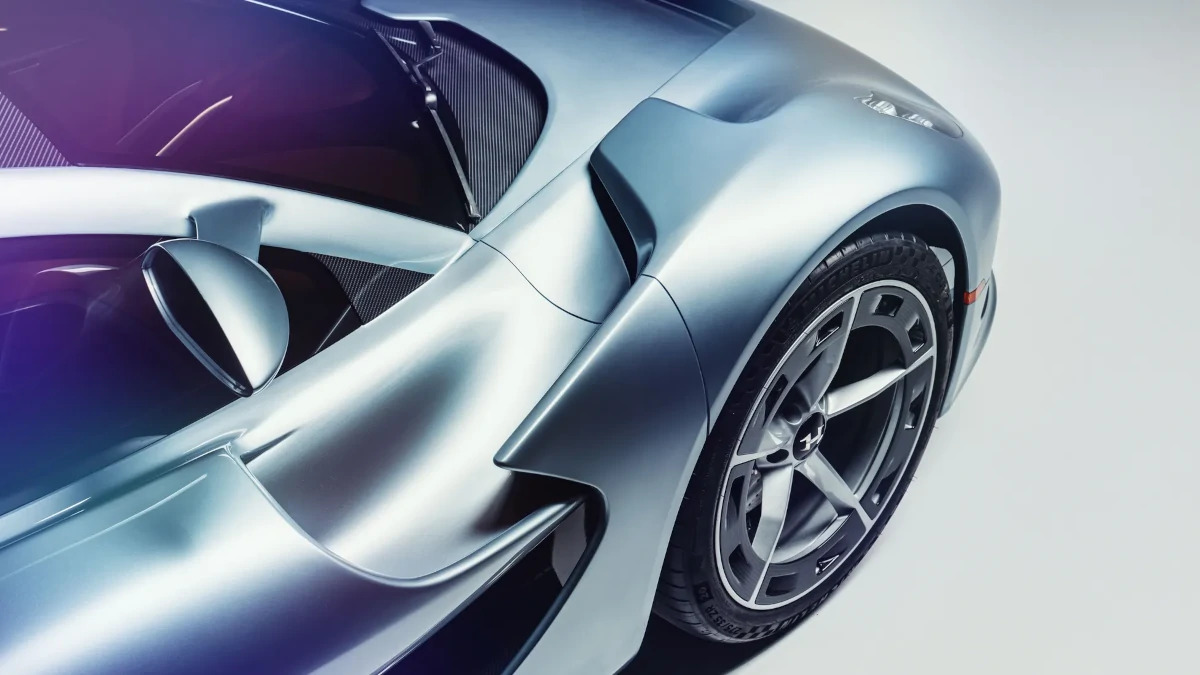
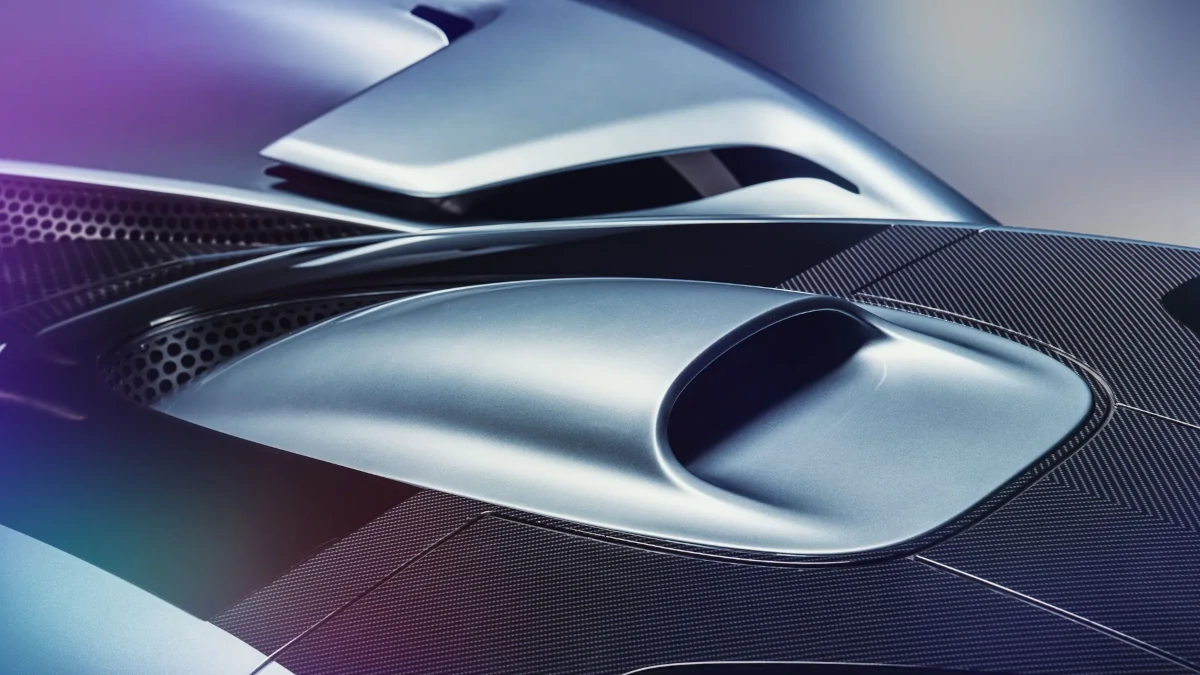
It’s definitely a departure for Hennessey. The front features a big splitter bracketed by a pair of tusks, the LED headlights swept up and onto the front wings a bit like an F5, with the four lighting elements arranged in a diamond motif—something echoed throughout the rest of the car. The sides get a deep and architectural undercut in the sills, all the better to make the engine nacelle of the side intake pop out like the sinews of a forearm, the rear haunch the meatier bicep.
Then there are little winglets that reach toward the middle on the front and rear wheel arches, giving it some tension. But there’s fun in the creases—the sharp lines on the sides ape the fuselage of the airplane, but you only guess it when it’s pointed out.
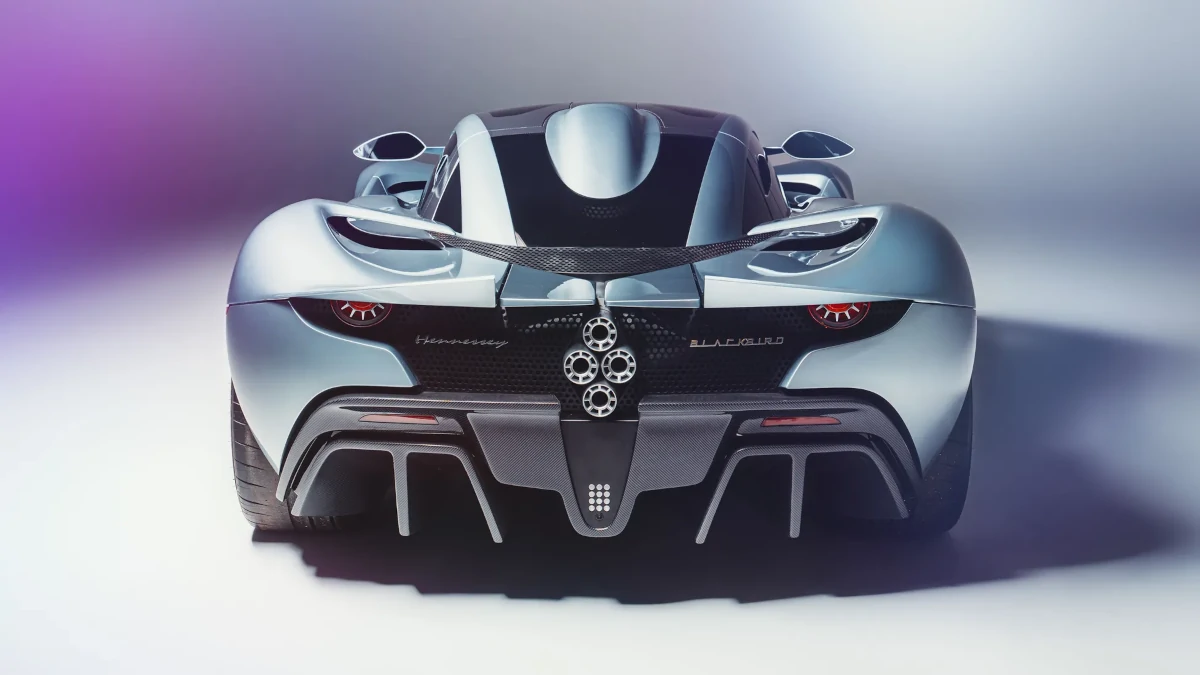
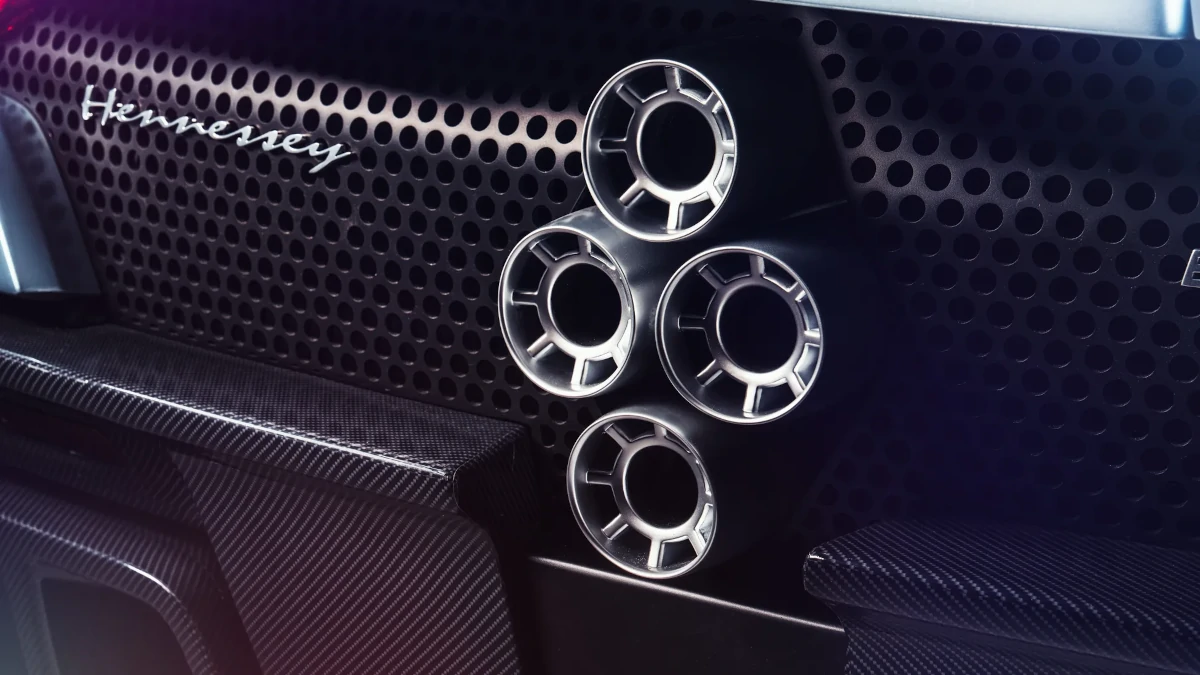
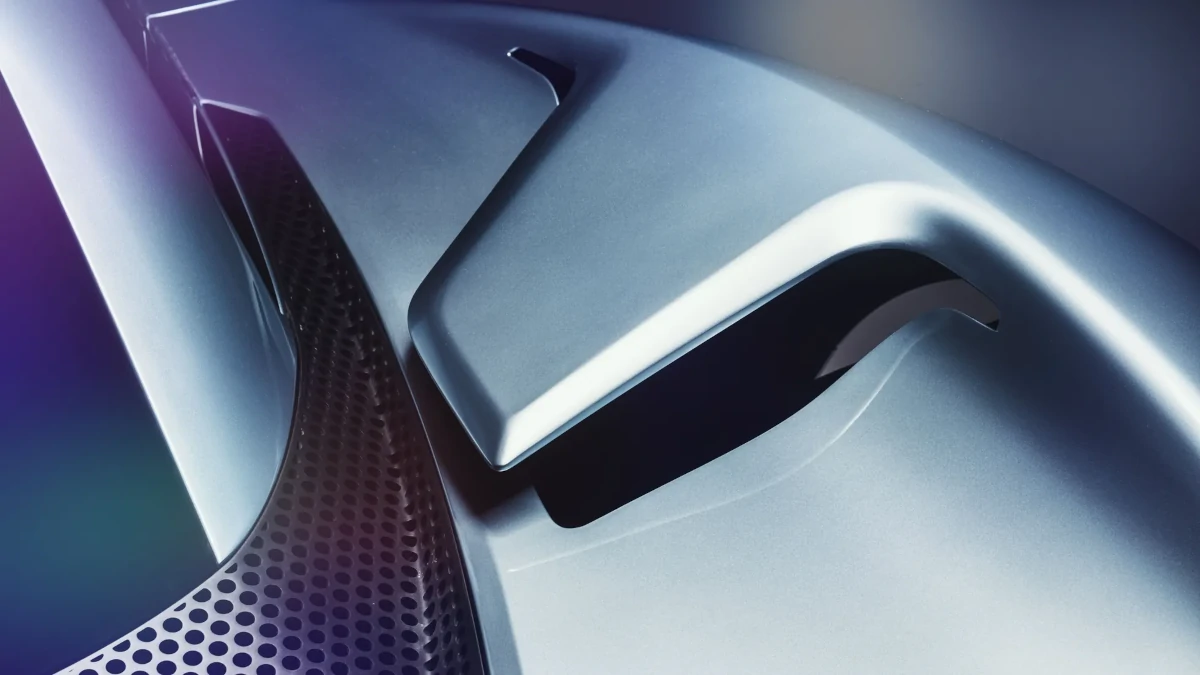
At the back is a small rear wing and longtail profile, interrupted by those fins, which sit atop a quad exhaust (very Pagani-ish, but actually a shout-out to the Bell X-1 experimental jet), again in a diamond motif. There are afterburner rear lights—the only bit that’s a bit on-the-nose—and more traditional aero on the lower third. But there’s detail everywhere you look, from the fretwork rear grille that allows visual access to the length of the exhaust, to the little inlets and sharp angles that stop the car from looking blobby.
It’s even more fascinating in the metal, and feels smaller than it looks. Oh, and that roof scoop isn’t actually part of the bodywork—it’s attached to the engine in true shaker-hood style. But whatever the minutiae, Hennessey wanted something ‘timeless and beautiful’—and the Blackbird proves that it isn’t just Europeans who can manage that aesthetic.
The real surprise is probably that the company is pitching the Blackbird as ‘touring-focused.’ Doors are gullwing and wide. There are—count ’em—four cupholders. There’s space for a pair of standard flight cases in the frunk, space behind the front seats, and more storage in the rear haunches—like in a McLaren F1.
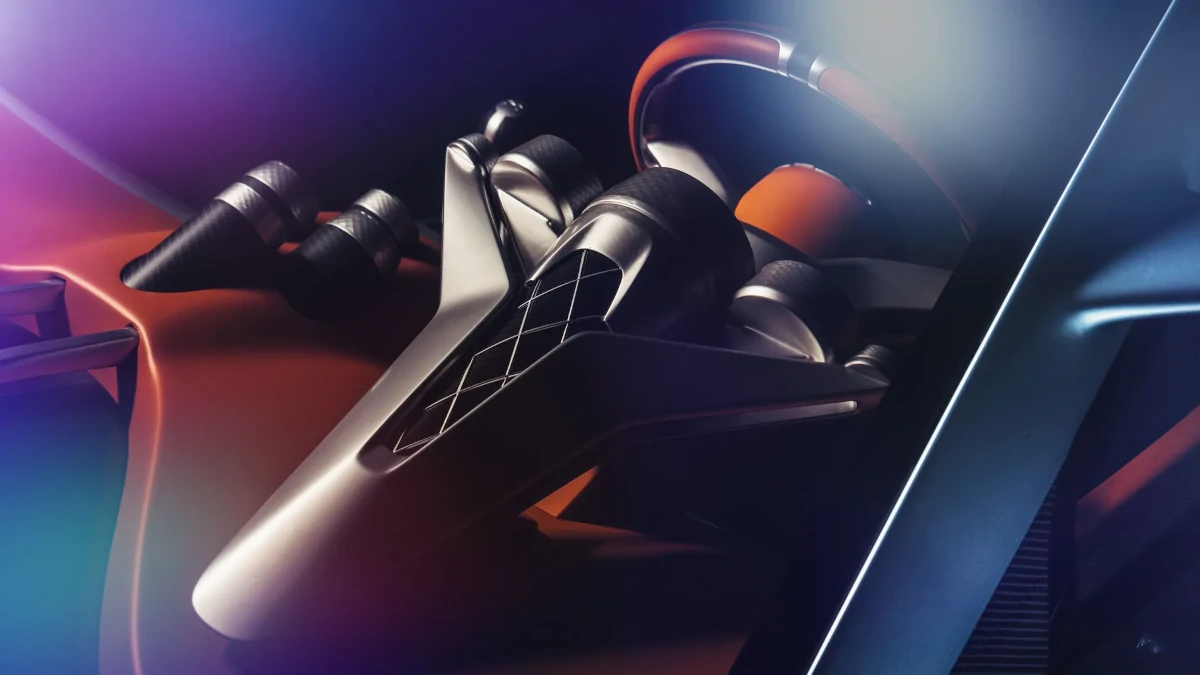
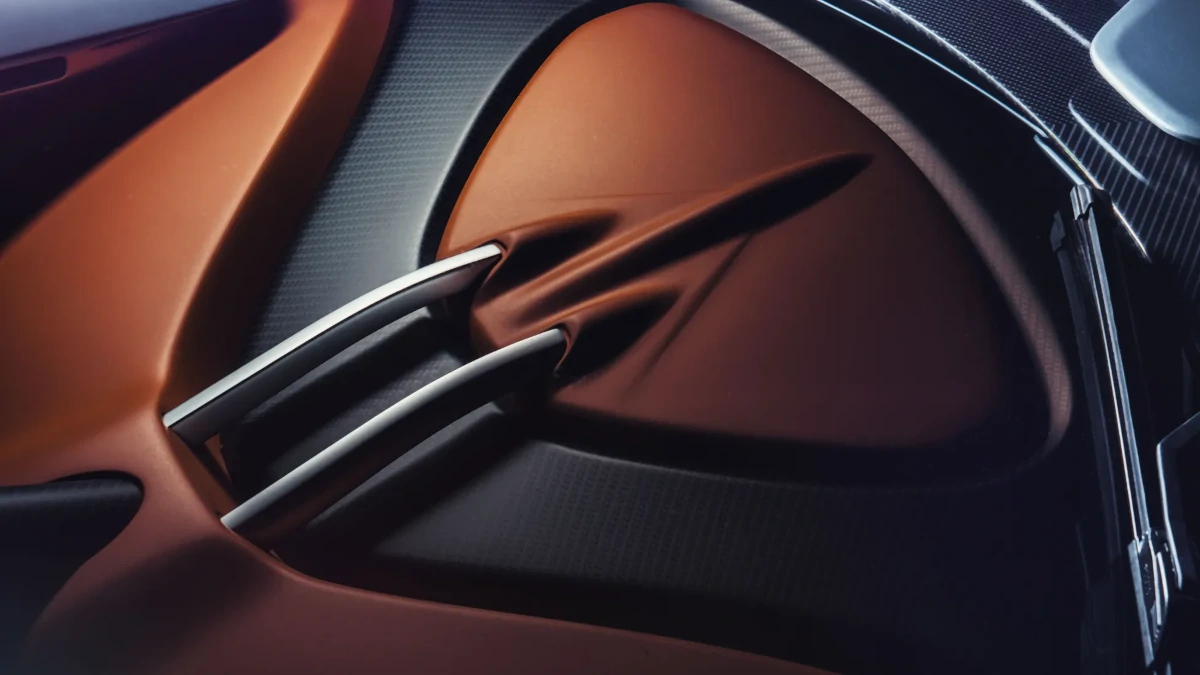
The interior is elegant, featuring slim, touring-style seats without the big bolsters of the racier stuff. There’s a triplet of dials in front of the driver—the middle one is a big rev counter—a physical key, and a pleasingly minimal vibe. But it’s still got that detail—the front of the dash features a stylized 3D-pop-up of an SR-71 ejecting itself from the front of the car.
There’s a ‘Whiskey compass’ on the dash—just a traditional compass and a nod to old-school navigation. But the ‘whiskey’ part comes from pilot slang for a traditional, liquid-filled magnetic backup, the bulb of which was filled with alcohol to prevent freezing back when airplanes didn’t have very good HVAC, and a subtle nod to the aviation inspiration.
There’s also talk of a dash-top timepiece, possibly one you can liberate from the car and wear on your wrist, á la the Parmigiani Fleurier Tourbillon that graced the Bugatti 16C Galibier concept of 2009. Or the Audemars Piguet in the Veyron F.K.P Hommage of 2025. Niche, sophisticated inspiration. After that, there’s a central spar that houses other buttons for various functions, terminating in the delicious potential of that manual ’box. But it’s a calm, considered environment rather than a glowing data center.
Underneath, there’ll be adaptive suspension, Michelin Pilot Sport Cup 2 tires, ABS and traction control (and a backup camera), but no Level X hands-free or stop/start. And it’ll be the better for it—more of an edit of what you might want, rather than an edict from governmental draconia. No, it won’t be available for a couple of years, and yes, it’s expensive at $2.5 million (around P152 million before taxes). But there will only ever be 71 of these things, natch.
So this is Hennessey accepting that the relentless pursuit of top speed and acceleration from internal combustion has reached a nadir. EV horsepower is just too cheap. Instead, there’s a pivot to a car that promises more engagement, beauty, inspiration, and emotion. More involvement than just the stats. It’s the dawn of a new-but-old-school era for hypercars with more soul than speed. And it’s come from the most unlikely of directions.
More photos of the Hennessey Blackbird:
NOTE: This article first appeared on TopGear.com. Minor edits have been made.