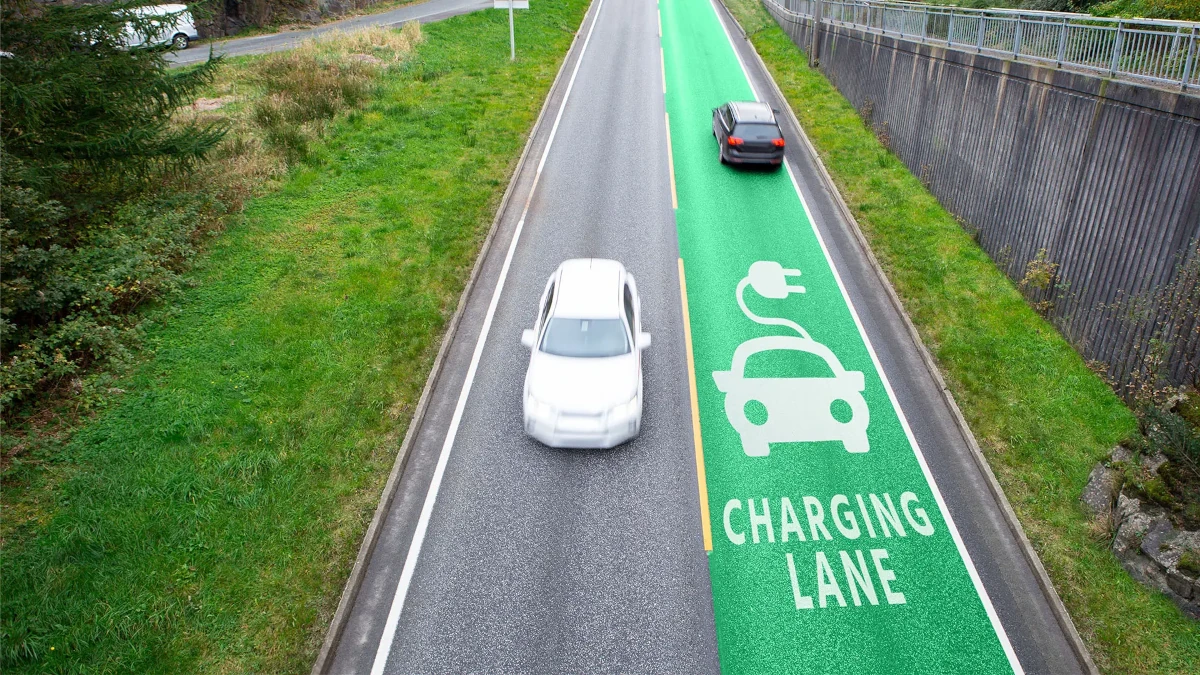
The Swedes are setting out to build a permanent e-motorway. The road will charge electric vehicles while they’re on the move, mitigating the need for a longer break to charge up.
After various pilot projects, experimenting with temporary versions of the road and other solutions, the road is set to be built by 2025. However, the engineers involved are still working out which technology would be best suited for the job.
Much of that comes down to the types of vehicles using it. Jan Pettersson, director of strategic development at Trafikverket (Sweden’s transport authority) explained to Euronews Next that the biggest challenge in mass decarbonization is figuring out the best solution for heavy goods vehicles (HGVs).
To get HGVs to achieve their lengthy journeys with weighty payloads, more EV batteries are needed. These add significantly to the weight, creating a vicious cycle. Sweden’s looking to alleviate that burden by charging while moving.
OTHER STORIES YOU MIGHT HAVE MISSED:
The all-new Ford Ranger Raptor is now in PH priced at P2.339-M
What does the all-new Toyota Tacoma tell us about the next-gen Prado?
More details on Sweden’s EV-charging motorway
Electric trams and trolley buses using either a catenary (overhead line) system, or a conductive (contact with an electrified rail) system are long-standing solutions, and are still common in many localities across the UK and Europe.
They are being introduced in new places, too—France is undergoing a major project to stick conductive charging on its national motorways for trucks. However, they generally need a designated lane for that specific vehicle format.
Ideally, the team wants to use an inductive system, where technology in the road can pass a charge into the vehicle’s battery using an electromagnetic coil on the underside. To date, the test beds for such technology have been short. For example, the 4km stretch between Visby and the airport in Gotland County that Sweden commissioned in 2020.
The 20.9km E20 selected for this project will prove a bigger challenge. It connects logistics hubs between Hallsberg and Orebro, and it’s well-placed for accessing from Sweden’s three major cities: Stockholm, Gothenburg, and Malmo.
If the inductive tech proves successful for a longer stretch of road, it could signal a shift in the need for as many batteries in EVs. A study looking at an electric road system for trucks suggested private cars could benefit. It found a combination of home charging and dynamic charging could make EV batteries 70% smaller.
NOTE: This article first appeared on TopGear.com. Minor edits have been made.