Batteries are bulky and heavy, and no one wants that. Worse, a lot of that excess stems not from the actual cells that store the electricity, but from structures designed to house and cool them.
EVs use individual cells, wired in series to reach the approximately 400V or even 800V that the drive systems use. Standard procedure is to package a number of cells, maybe two dozen, into a structure called a module. This is basically a metal box incorporating wiring between the cells and cooling channels. Multiple modules are fixed inside a bigger, stronger box—the battery pack.
This sounds safe. The cells are mounted in three layers of box. If one group of cells fails, only that module needs replacing, not the whole pack. But it’s also wasteful. Cooling and wiring channels need to worm their way among all this structural steel or aluminum, and the structure itself is bulky.
OTHER STORIES YOU MIGHT HAVE MISSED:
This 24-year-old former F1 engineer is now building a net-zero vehicle to save the world
BMW design boss on the i3: ‘The world is changing so fast that we felt encouraged to make a bigger leap’
So, innovators such as BYD are skipping the modules and stacking the cells straight into the battery pack. Cooling channels and wiring are redesigned to keep temperatures even, and careful design maintains repairability. Cells seldom actually fail.
BYD’s cells, as with increasing numbers of cars, use lithium-iron-phosphate (LFP) chemistry, which has cheaper minerals and is less prone to fire than the lithium-nickel-cobalt-manganese (NCM or NMC) type. LFP cells are less energy dense than NCM, which is why saving space and weight in the structure of an LFP battery matters, and so binning the module structure is good.
BYD calls this the ‘Blade battery.’ Tesla calls it a ‘structural battery pack.’ Many Chinese are there now, and Renault has it on the Twingo and VW on its new small EVs.
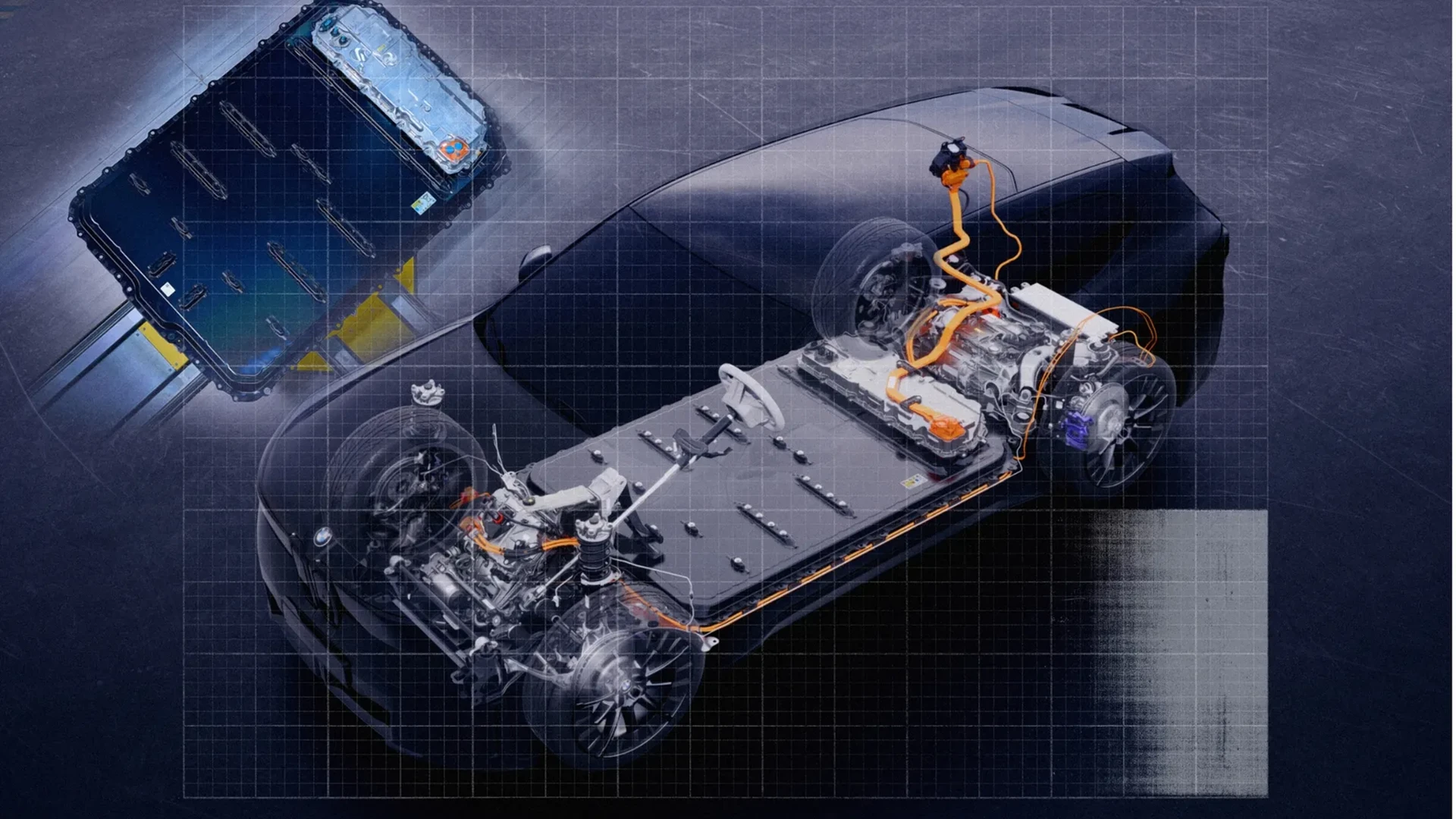
Next stage, then: cell to body. Here, the battery isn’t really a separate unit at all—the battery box is part of the car’s monocoque. Again, BYD is there with the Seal, and BMW with the Neue Klasse. In other words, the body isn’t self-supporting without its battery, and the battery isn’t a finished article until it’s united with the body.
With a cell-to-body battery, the car uses its space better, allowing for more cells and range, and can be lighter and potentially cheaper. But it demands a tricky design of the cell crash protection and temperature regulation, when each element of the understructure around the battery has to do at least two jobs.
NOTE: This article first appeared on TopGear.com. Minor edits have been made.