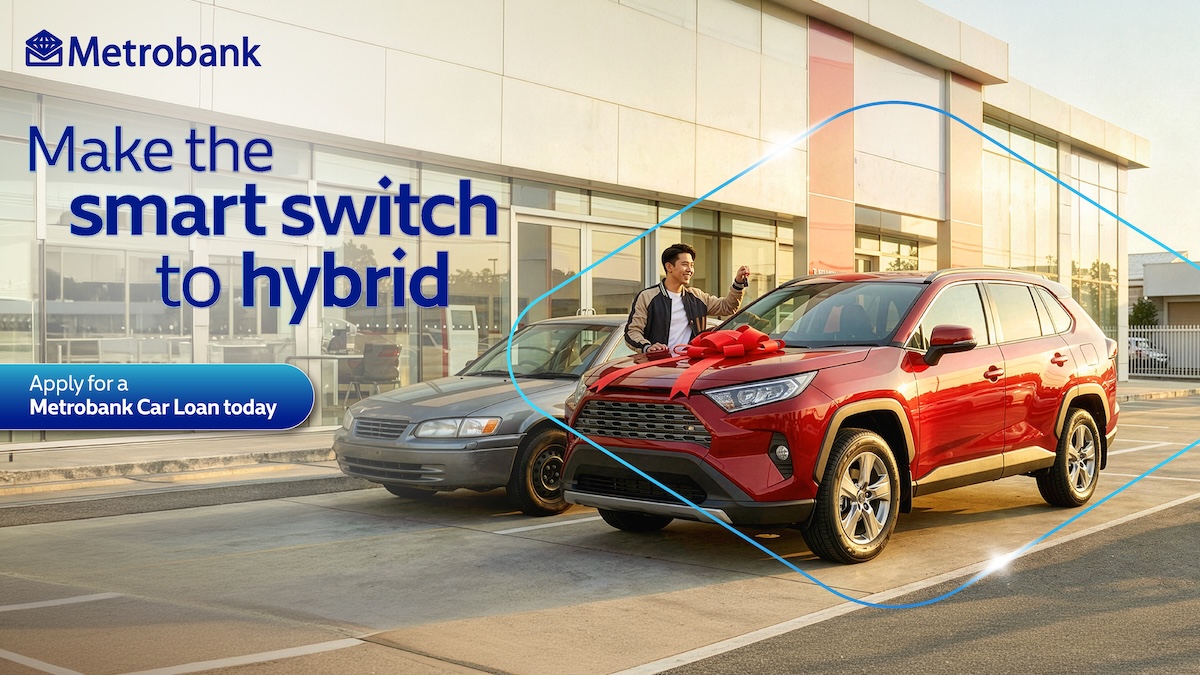
Buying a car used to be straightforward. You looked at the sticker price, figured out the monthly amortization, and hoped fuel prices would cooperate.
These days? That’s only half the equation.
With traffic becoming a permanent fixture of daily life and fuel prices keeping everyone on their toes, more Filipino families are starting to look beyond the purchase price and ask a different question: How much will this car actually cost me to live with?
After all, it’s easy to budget for your monthly amortization. It’s the weekly fuel stops, routine maintenance, and countless hours spent crawling through traffic that quietly chip away at your wallet.
That’s where hybrids begin to make a compelling case.
Sure, the green license plates and number coding exemption get plenty of attention. But ask anyone who’s been driving a hybrid for a while, and they’ll probably tell you the biggest benefit isn’t skipping coding days—it’s spending less time (and money) at the gas station.
Take the Toyota Corolla Cross 1.8 G HEV. It’s capable of returning more than 20km/L on the highway while still delivering around 12-13km/L in city traffic. Considering how much time most of us spend inching along EDSA or C5, those savings can add up faster than you’d think.
Then there’s the way hybrids handle traffic. Instead of burning fuel while sitting still, many hybrids can switch the gasoline engine off and rely on the electric motor when appropriate. The air-conditioning keeps running, the cabin stays comfortable, and you’re not watching your fuel gauge drop quite as quickly.
Fuel isn’t the only place where hybrids can save you money. Since the electric motor assists the gasoline engine and regenerative braking reduces wear on the brakes, some maintenance costs can also be lower than those of a conventional gasoline-powered vehicle.
One feature that’s usually not marketed, but which is something all hybrid vehicle drivers know, is that they are also more powerful than regular cars. Remember, a hybrid has both a gasoline engine and an electric motor, and the latter is very torquey: When needed, it can deliver rapid bursts of acceleration for quick overtakes and short, fast maneuvers in traffic.
In other words, buying a hybrid isn’t just about being greener anymore. It’s becoming one of the smarter financial decisions you can make if you’re planning to keep your next car for years.
Of course, choosing the right car is only part of the equation. The next step is finding the right financing.
Recognizing the growing interest in fuel-efficient mobility, Metrobank has expanded its car loan offerings to include hybrid vehicles, making ownership more accessible.
For example, you can drive home a Toyota Corolla Cross 1.8 G HEV for approximately P25,400 a month, based on a 20% down payment. Need something that’s better suited for city driving? The Toyota Yaris Cross HEV can also be financed through the program, giving buyers more options across different lifestyles and budgets.
The takeaway? A hybrid isn’t simply an investment in cleaner mobility. It’s increasingly becoming an investment in lower day-to-day running costs.
And if you’ve decided it’s time to make the switch, Metrobank’s Car Loan program is designed to help you get there.
Visit Metrobank’s website or drop by any branch to learn more about financing your next hybrid.