What is it?
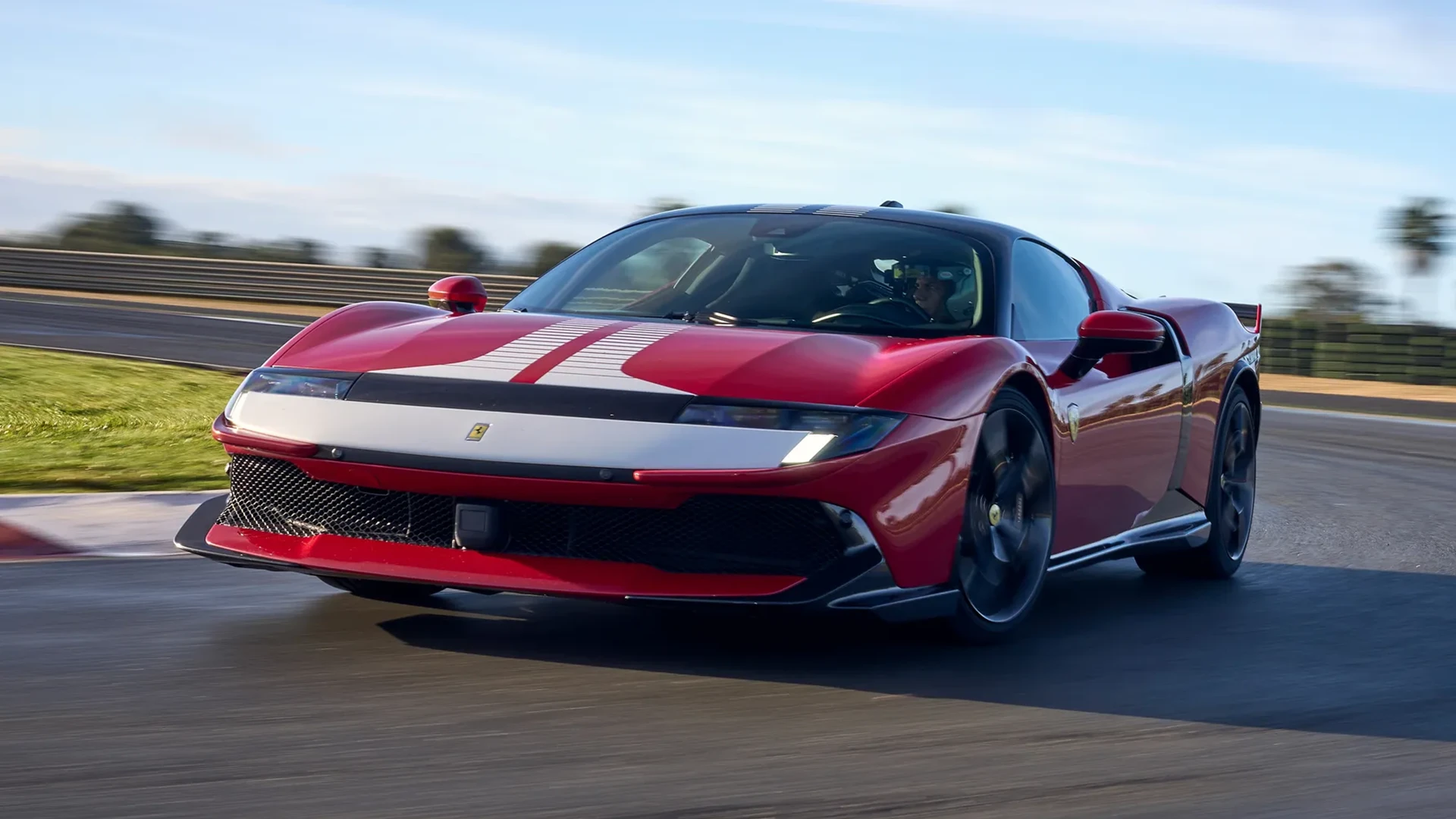
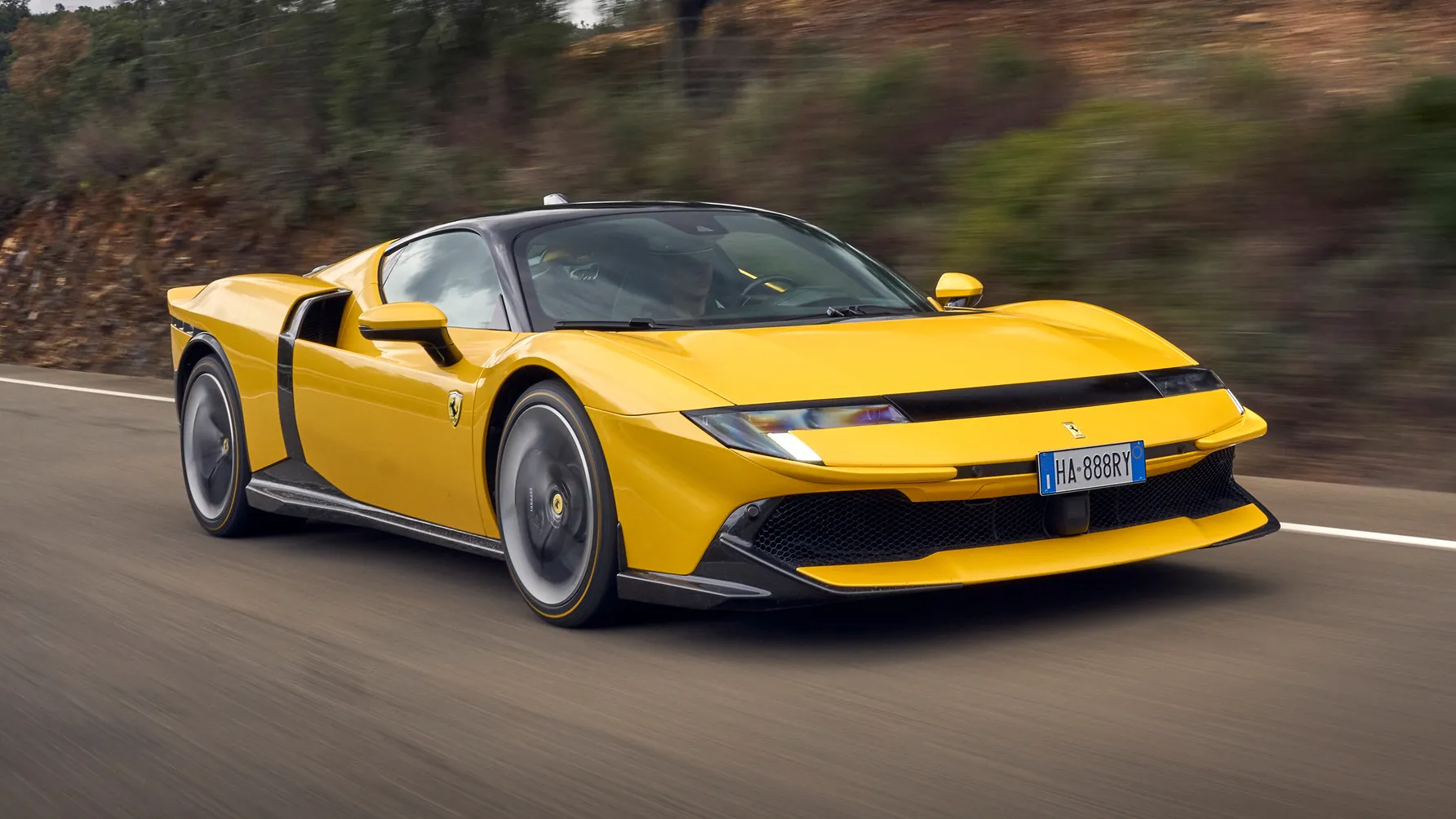
The Ferrari 849 Testarossa is another controversial Ferrari, that’s for sure. Chief design officer Flavio Manzoni is pushing forward his bold new styling themes for Ferrari with relentless energy. So much so that the 849 Testarossa’s launch was met with mild bemusement at the name (seeing as it doesn’t appear to have too much in common with the Testarossa most people know and idolize) and then a lot of regret that Pininfarina is no longer in charge of the coloring-in at Maranello.
Beneath the skin, though, it’s very clearly an SF90 Stradale replacement that’s been uprated, refined and given a much bolder, more aggressive identity to separate it from the smaller, simpler and cheaper 296 models. The headlines are a jump in total power output from 987hp to 1,036hp, an increase in downforce to 415kg at 250kph (with the £42,115 [P3.3 million] Assetto Fiorano package) and a complete dynamic makeover from chassis and brakes to the engine itself.
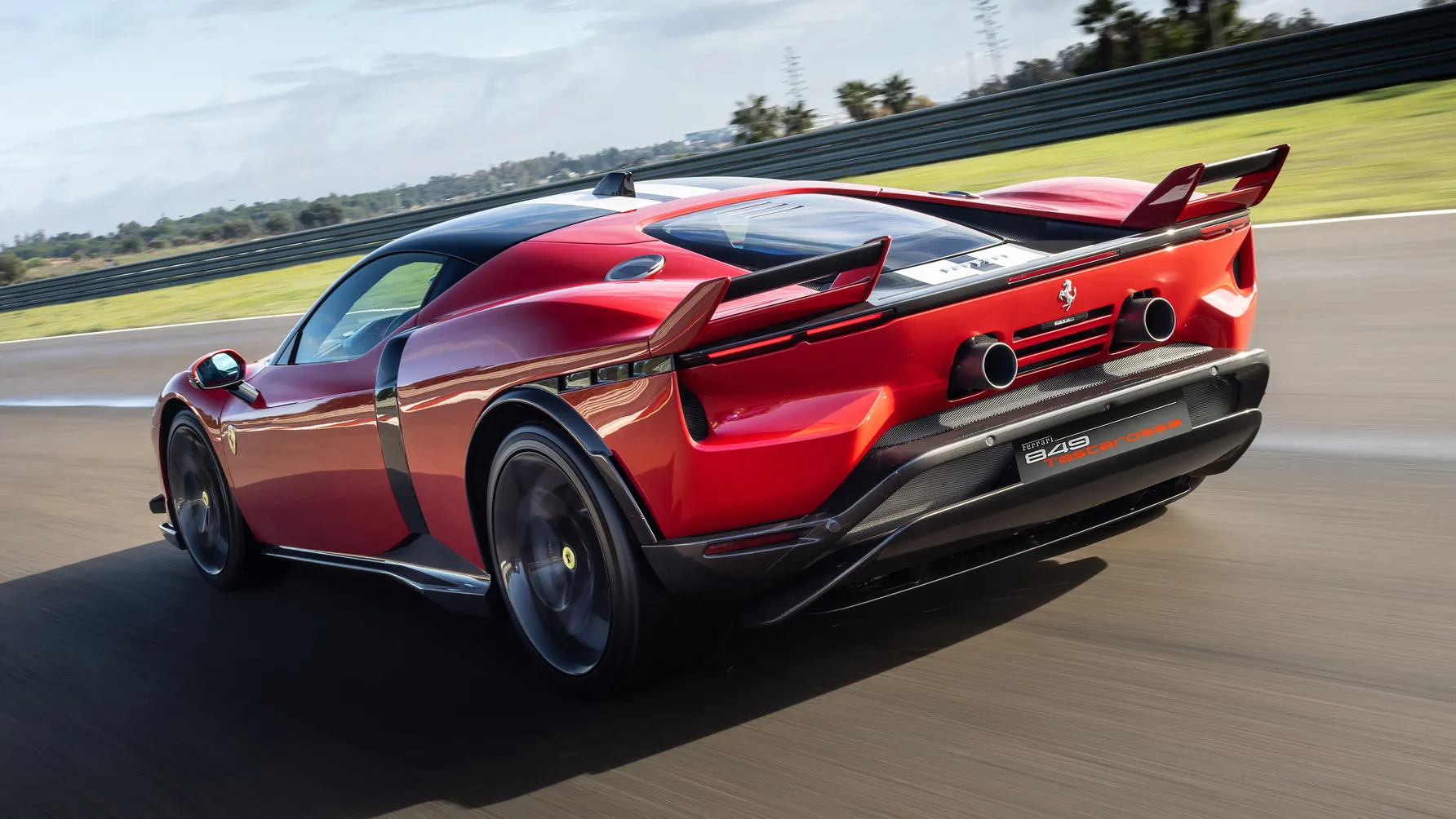
Ferrari claims the 849 Testarossa can reach over 330kph, cover 0-100kph in under 2.3sec and that it laps Fiorano in 1:17.5s—that’s 1.5-seconds faster than the SF90 Stradale and just two-tenths shy of the extreme SF90 XX. The coupé costs starts at £407,617 (P32.4 million), with Spider prices starting at £442,467 (P35.2 million).
Is it really that different from the SF90 Stradale?
The mechanical layout is identical. That means a 4.0-liter twin-turbocharged V8 supplemented by an electric motor in the eight-speed dual-clutch transmission, and a further two for the front axle. In simple terms, the latter allow for true torque-vectoring and aid traction, whilst the former helps with torque fill and superpowers the already pretty intense combustion engine.
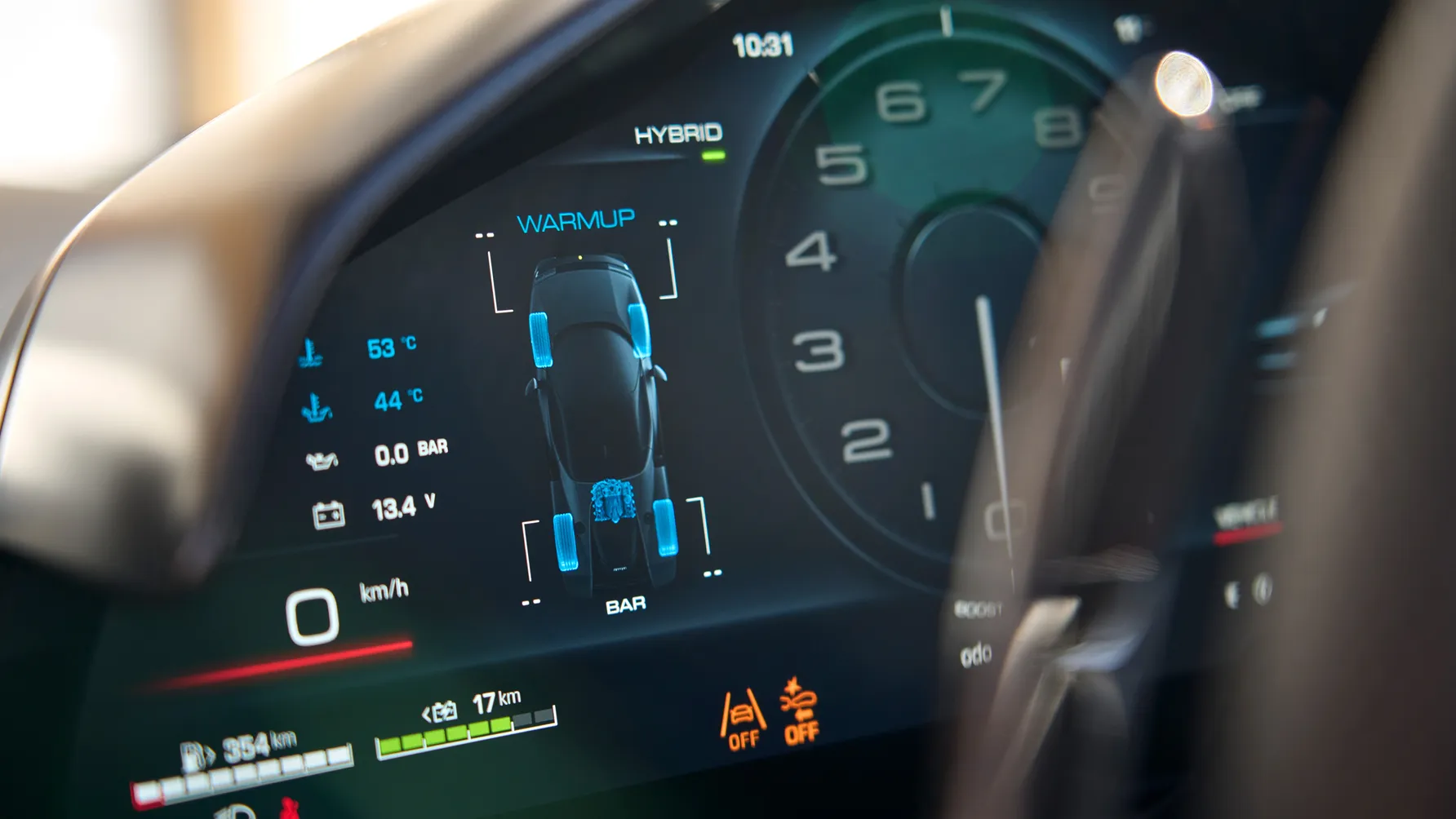
The 849 now has the biggest turbochargers ever fitted to a Ferrari production road car, and the 4.0-liter engine is vastly changed, with a new block, new heads, lighter cams, titanium fixings used throughout, much better cooling, and a very trick fully Inconel exhaust system. It produces 819hp at 7,500rpm and 840Nm at 6,500rpm all on its own. Should that sound too scary, you can always opt for eDrive mode and enjoy a front-wheel drive EV Ferrari for 25km of near silent progress.
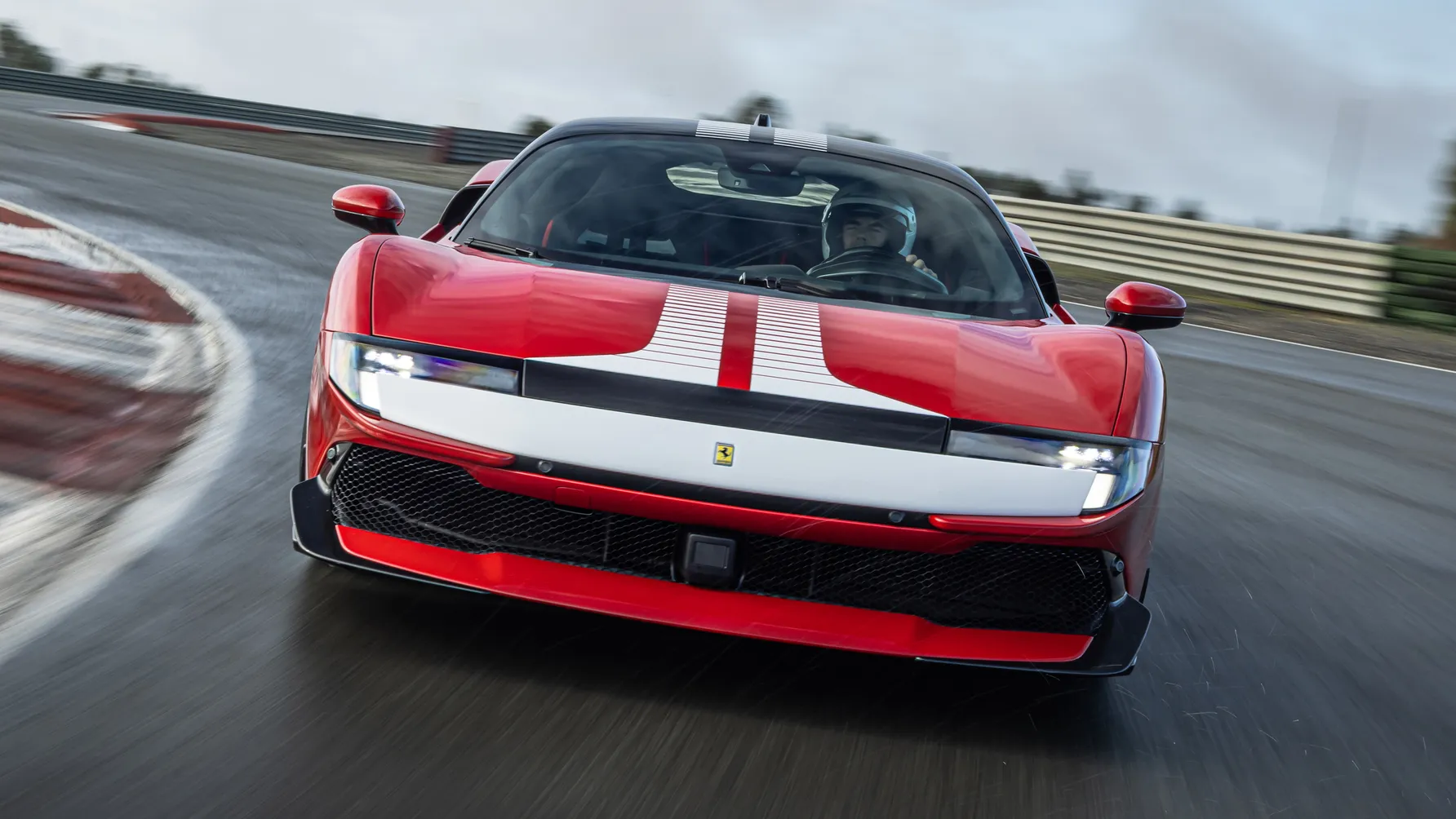
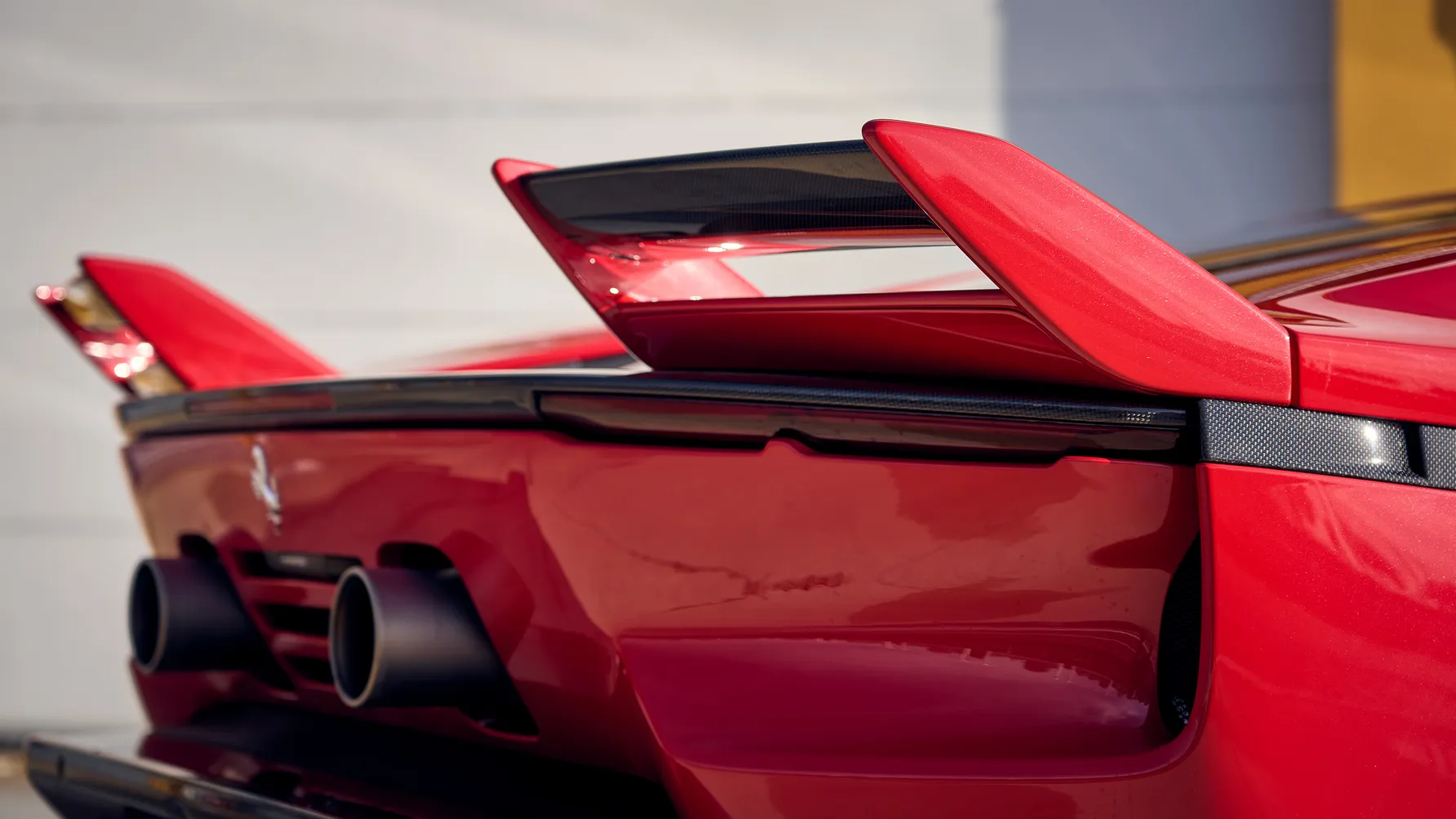
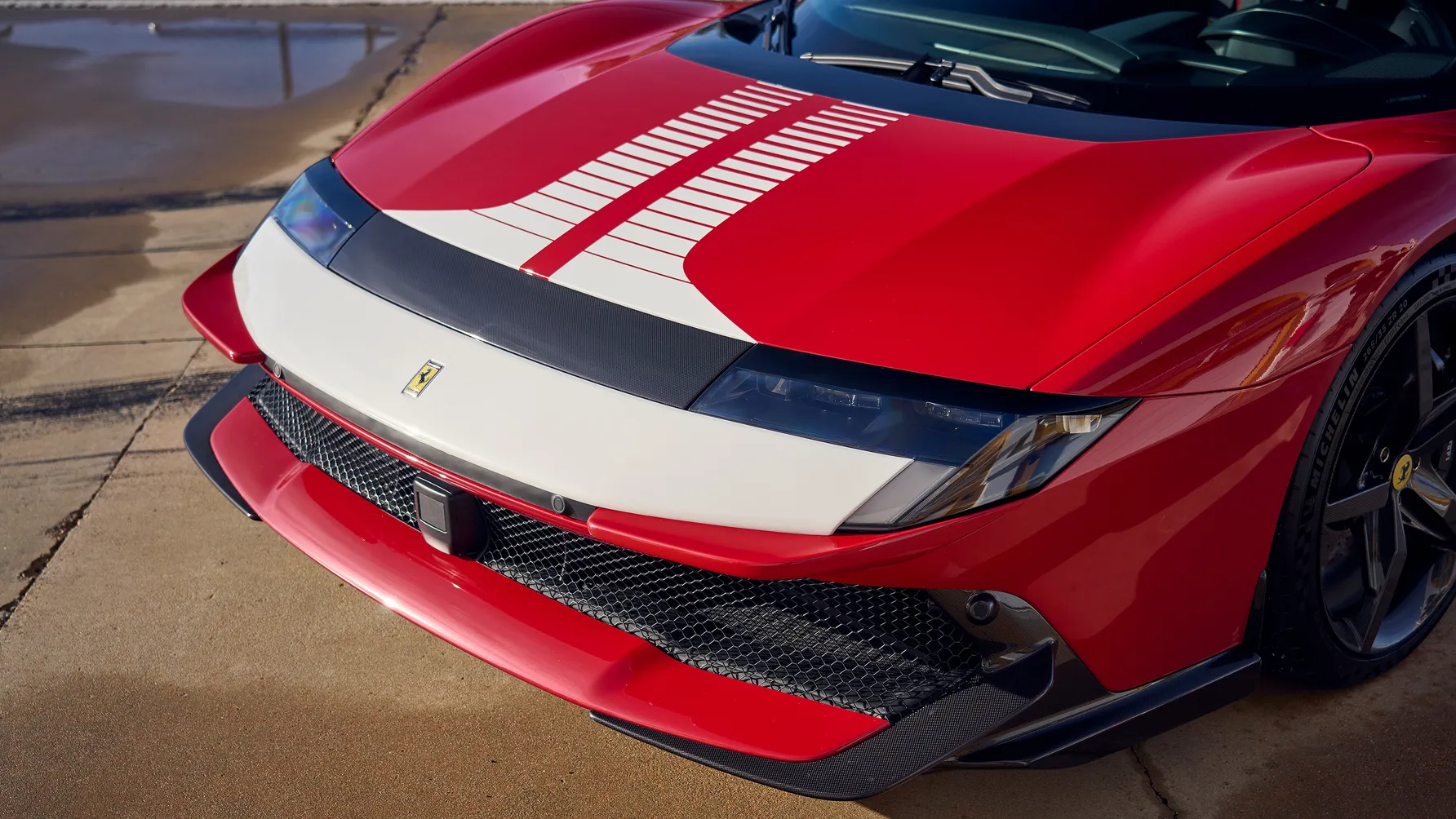
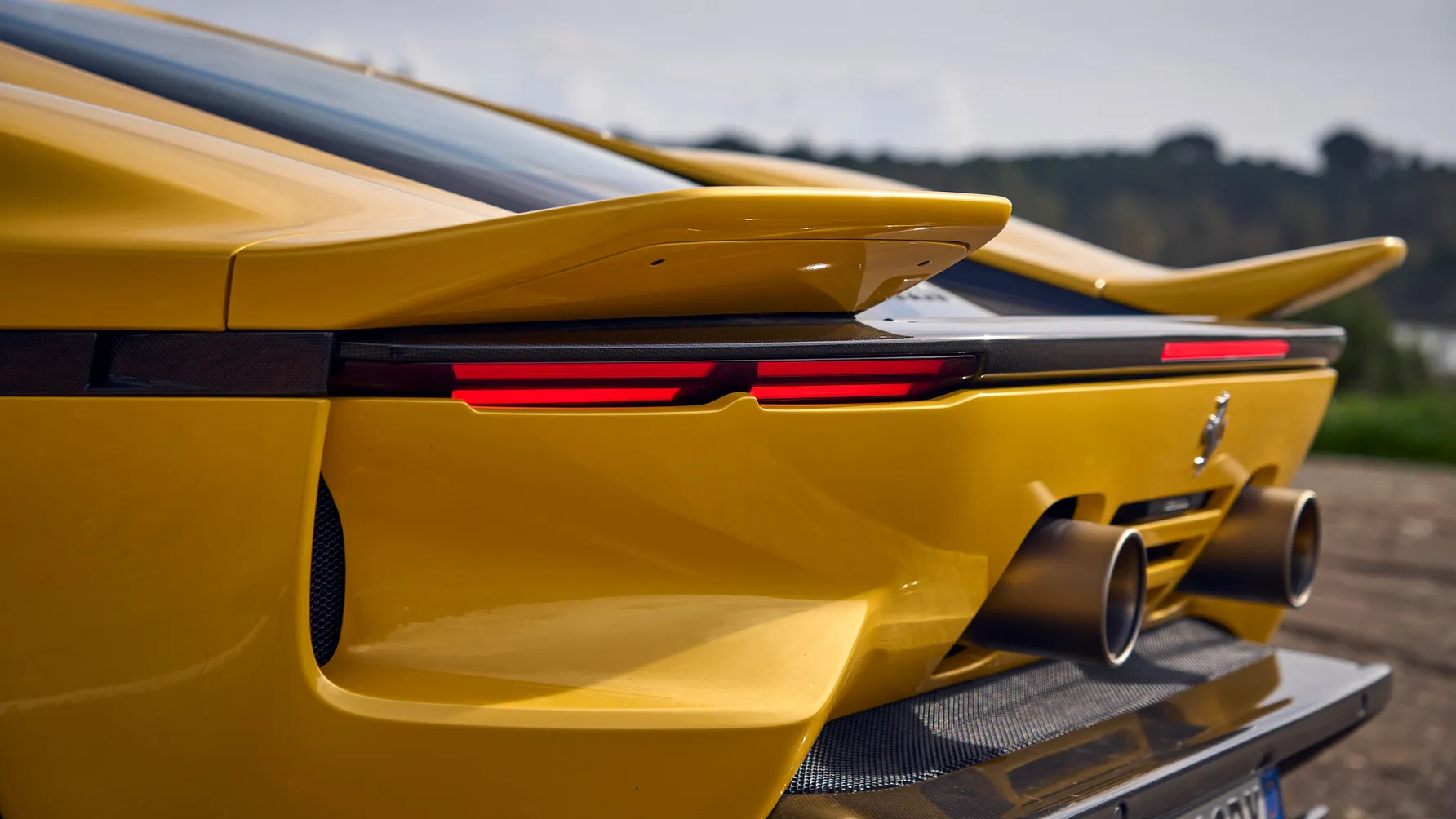
In terms of aerodynamics, the Testarossa is inspired by the 512 S and 512 M prototype racers of the late ’60s and early ’70s. Hence the distinctive ‘twin tail’ design, which Ferrari upgrades to ‘twin wing’ should you opt for the Assetto Fiorano package. There’s an active element between the two small flicks that can add 100kg of downforce when in its highest position.
What about the aero?
The front underfloor has been completely redesigned and features three pairs of vortex generators, plus Ferrari really shapes and works the air to feed the underbody in the first place (as well as the intercoolers with that distinctive, vertical side intake). The rear features a multi-level diffuser with more vortex generators, and whilst it’s no more powerful than that fitted to the SF90, it produces its downforce with a 10% reduction in drag.
The suspension changes are just as significant, and whilst Ferrari provides numbers for context —for example a 3% increase in lateral grip, 10% increase in roll stiffness, 35% lighter springs—they’re also keen to point out that driving excitement and fun were key parameters. As ever, the suite of sophisticated tools used to create the dynamic identity is mind-scrambling, and is now manipulated by the Ferrari Integrated Vehicle Estimator (FIVE) system.
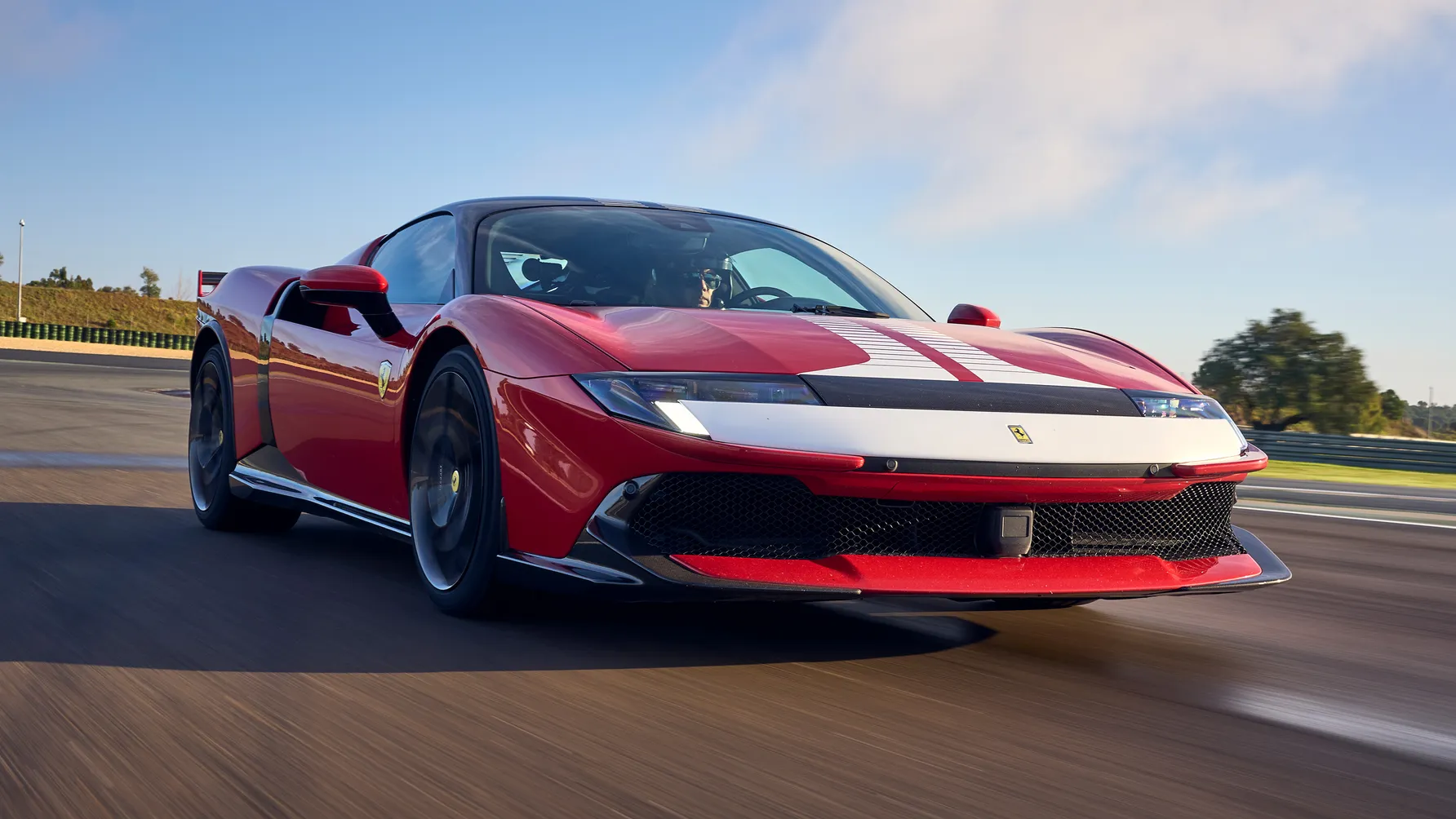
Now, we could explain this system but a direct quote from Ferrari’s literature might be useful here. Ready? Okay: “FIVE is an estimation system capable of creating a digital twin that replicates the behavior of the car in real time, based on a simplified mathematical model powered by real measurements (acceleration, 6D sensor).
“FIVE accurately estimates performance characteristics that cannot be directly measured, such as speed (with a margin of error of less than 1 kph) and yaw angle (margin of less than 1°) of the vehicle, improving traction control, electronic differential management and e4WD system delivery. These estimates feed into all vehicle dynamics controls, making the response more precise and repeatable.”
Wow. That sounds heinously complex.
It is. But Ferrari has an incredible ability to turn information and sophisticated chassis controls into a transparent and intuitive driving experience. The new Testarossa is no exception. Yes, there’s Side Slip Control buffing away your sharp-edged inputs, ABS Evo working its magic to provide ultimate stability, and 6D sensors feeding back all sorts of information. But given an empty racetrack and Ferrari’s latest PHEV, you’ll just feel and enjoy an incredibly precise, shockingly fast and stunningly well-balanced supercar at the height of its powers. It’s seamless despite the savagery of the performance and breeds instant and assured confidence.
Special mention should go to the programming for the e4WD system. The SF90 sometimes displayed some odd behavior at the limit, and the front axle’s actuation seemed a bit inconsistent and very obvious. For the most part that’s eradicated in the Testarossa. Go for a quick lap and the car just feels extremely stable and secure but still displays plenty of adjustability. It still has well over 800hp going to the rear wheels, so oversteer is there for the taking, but the balance is very good indeed and such is the communication through the chassis that it’s never a surprise.
Ferrari 849 Testarossa on the road
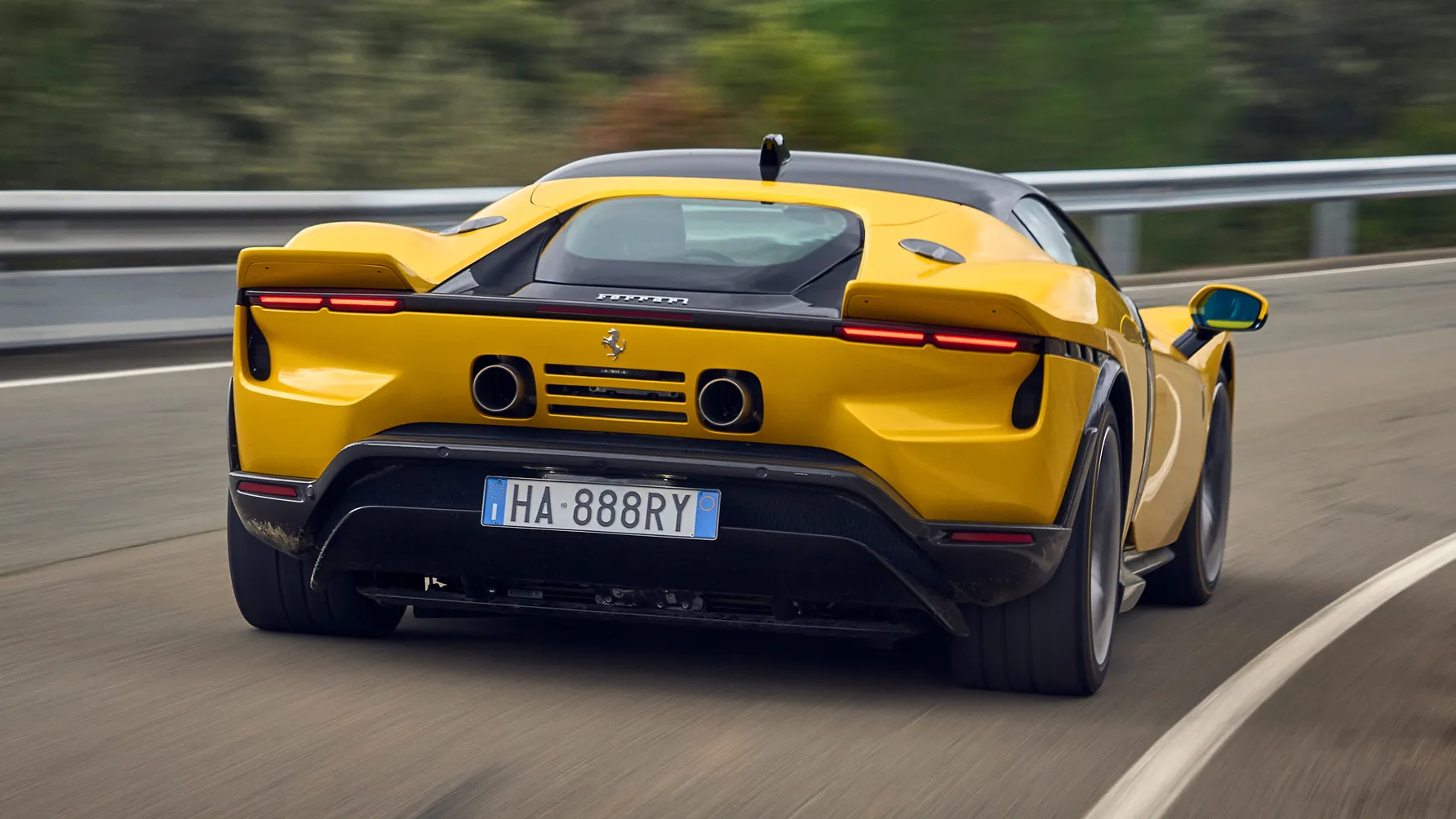
Only when you start trying to play with the car with super-aggressive turn-in to induce bigger slides does the front axle start to counteract your intentions and pull the car straight. The Revuelto feels even more rear-driven—purer, if you like. However, the Testarossa’s blend of supreme stability and fine adjustability is very impressive. It’s much lighter than the big V12-powered Lambo, too. Ferrari claims 1,570kg dry with lightweight options, around 200kg less than the Revuelto.
The gearbox is stunning. The shifts are ferocious but feel engineered rather than pre-programmed for ‘emotion’ and really add to the sense that the Testarossa is absolutely focused on delivering its maximum at all times. The whole car just feels ‘on it’ and performs really consistently, too.
Huge new ceramic brakes (410mm front, 372mm rear) ensure it can lap for extended periods without showing signs of fatigue despite the huge speeds achieved on the straights. Pedal feel is great, too. There isn’t the instant top-of-the-pedal response of a Porsche 911 GT3, but the slightly longer travel is great for left-foot braking.
So many systems. Does it feel like you’re actually driving the car?
As with other Ferrari hybrid models there’s a Manettino that selects pre-programmed driving modes for traction and stability control, e-diff, dampers (for cars with the standard MagneRide suspension) throttle response and gearbox, plus another eManettino to control the powertrain. Here you can choose between eDrive, Hybrid, Performance and Qualifying. For our track sessions they suggested Qualifying, which lasts around five-to-six laps of Fiorano or one full lap of the ’Ring before depleting the battery.
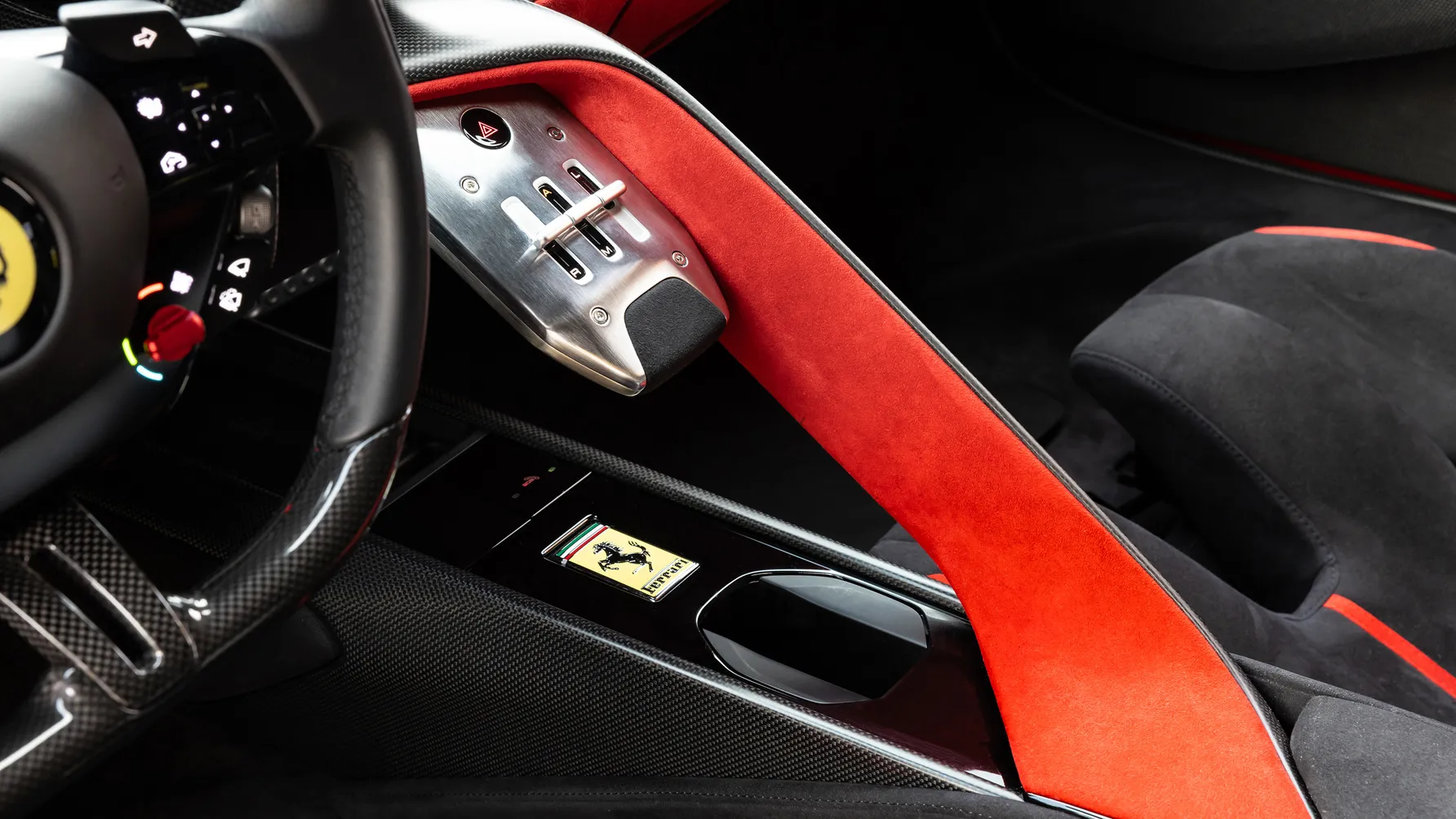
Again, this sounds rather intimidating, but in practice you quickly find your preferred settings and it feels very natural. The Manettino cycles through Wet, Sport, Race, CT Off and ESC Off modes, and is incredibly adept at gradually releasing more and more of the Testarossa’s potential.
On the circuit, it’s perhaps just a shade too restrictive in Race mode, but feels superb in CT Off—indulging with small, neat slides on corner exit, but still trimming away to prevent any huge, scary moments. So rather than removing you from the experience, the various modes actually allow you to access perhaps more performance than you’d ever dare all on your own.
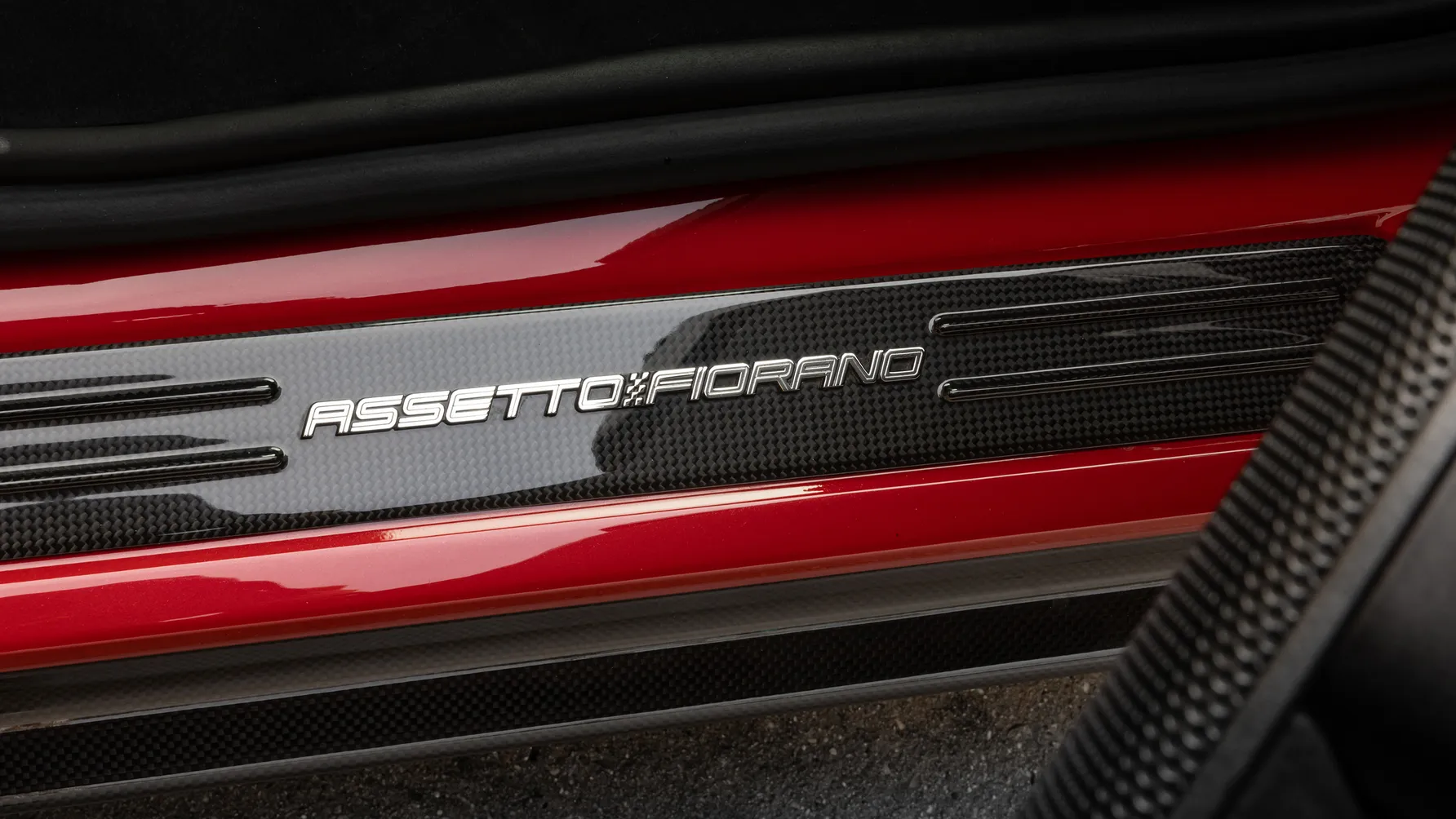
As for whether you need the Assetto Fiorano pack, ‘need’ is not a word often associated with a supercar packing 1,036hp, but we guess once you’re spending over £400,000, what’s another £42,115 if it unleashes even more performance and character? Especially as now you can get all the weight savings and funky aero upgrades of this package but request the standard MagneRide suspension with its ‘Bumpy Road’ mode and nose lift. Previously, this package necessitated the more hardcore fixed rate Multimatic dampers.
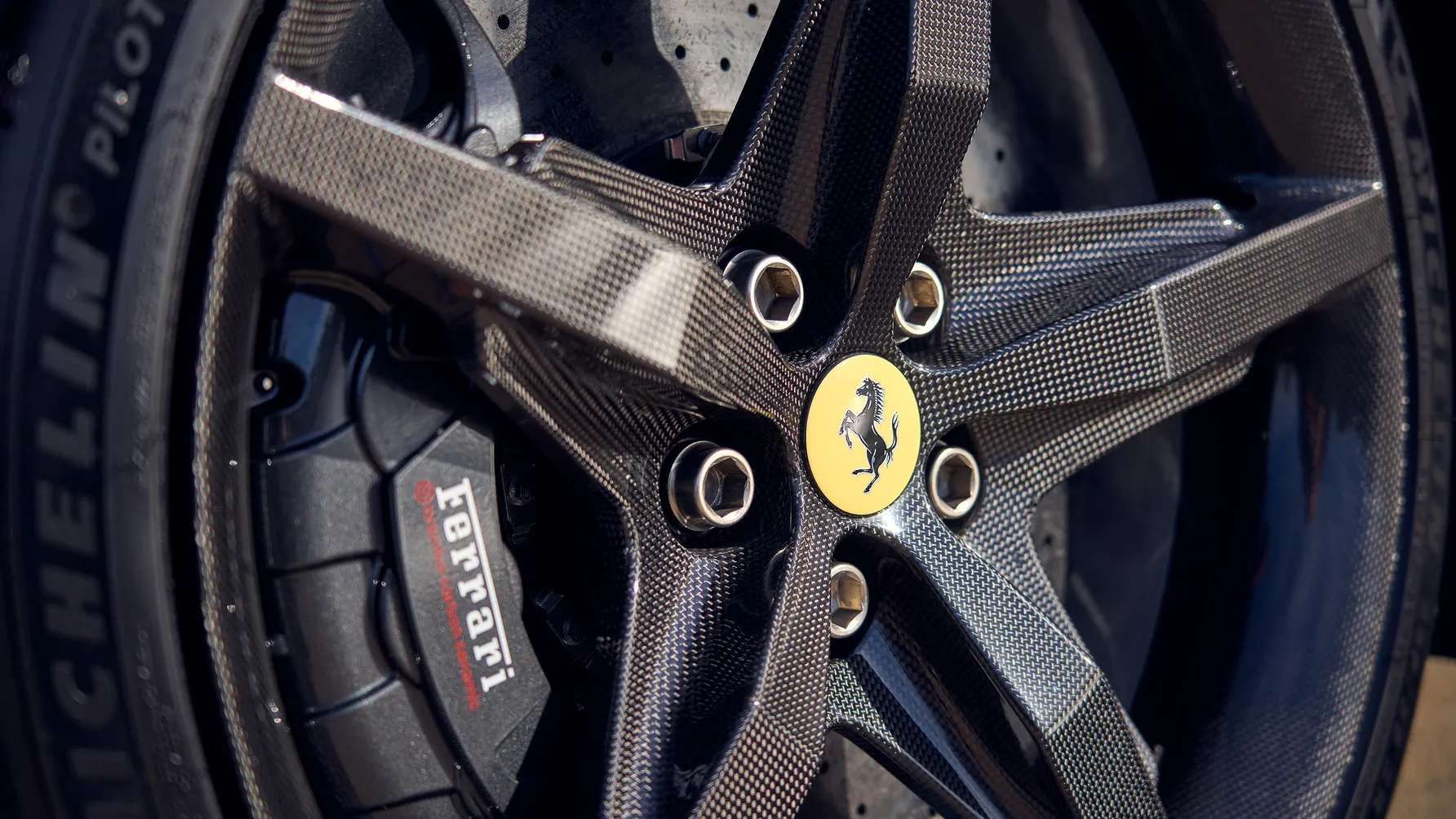
Other benefits include lightweight seats, carbon fiber wheels, the much-enhanced aero already discussed, and the option of Michelin Cup 2R tires for ultimate grip and response. Should you stick with the Multimatic option, it now features 35% lighter titanium springs and reduces roll by a further 10%.
How does it perform on the road?
For the most part, it’s more of the same: outrageous performance, clear and deliciously satisfying tactile feedback, and a remarkable blend of agility and control. However, it also highlights the excellent ride quality, amplifies the breathless response of the gearbox, and allows you to appreciate the lovely, understated and inventive interior. You don’t sit quite so low or feel as enveloped as you might in a McLaren 750S or Revuelto, perhaps because of the aluminum structure rather than a carbon tub, but there’s not too much to complain about.
We’ve barely mentioned the 4.0-liter twin-turbocharged engine thus far. On track, where response and outright performance are everything, it’s pretty amazing. The performance is relentless.
However, on the road a Ferrari engine needs more than just raw power and sharp response. It should be the heart and soul of the car. But the F154FC sounds harsh and tuneless at low and medium revs, and it’s just not a joyous, memorable engine. It seems strange to say it, but the 3.0-liter twin turbocharged V6 in the 296 GTB and Speciale is much more exciting and gives you that tingle of anticipation even at walking pace. Compared to the Lamborghini Revuelto’s 6.5-liter V12? It’s not even close.
Ferrari 849 Testarossa on the inside
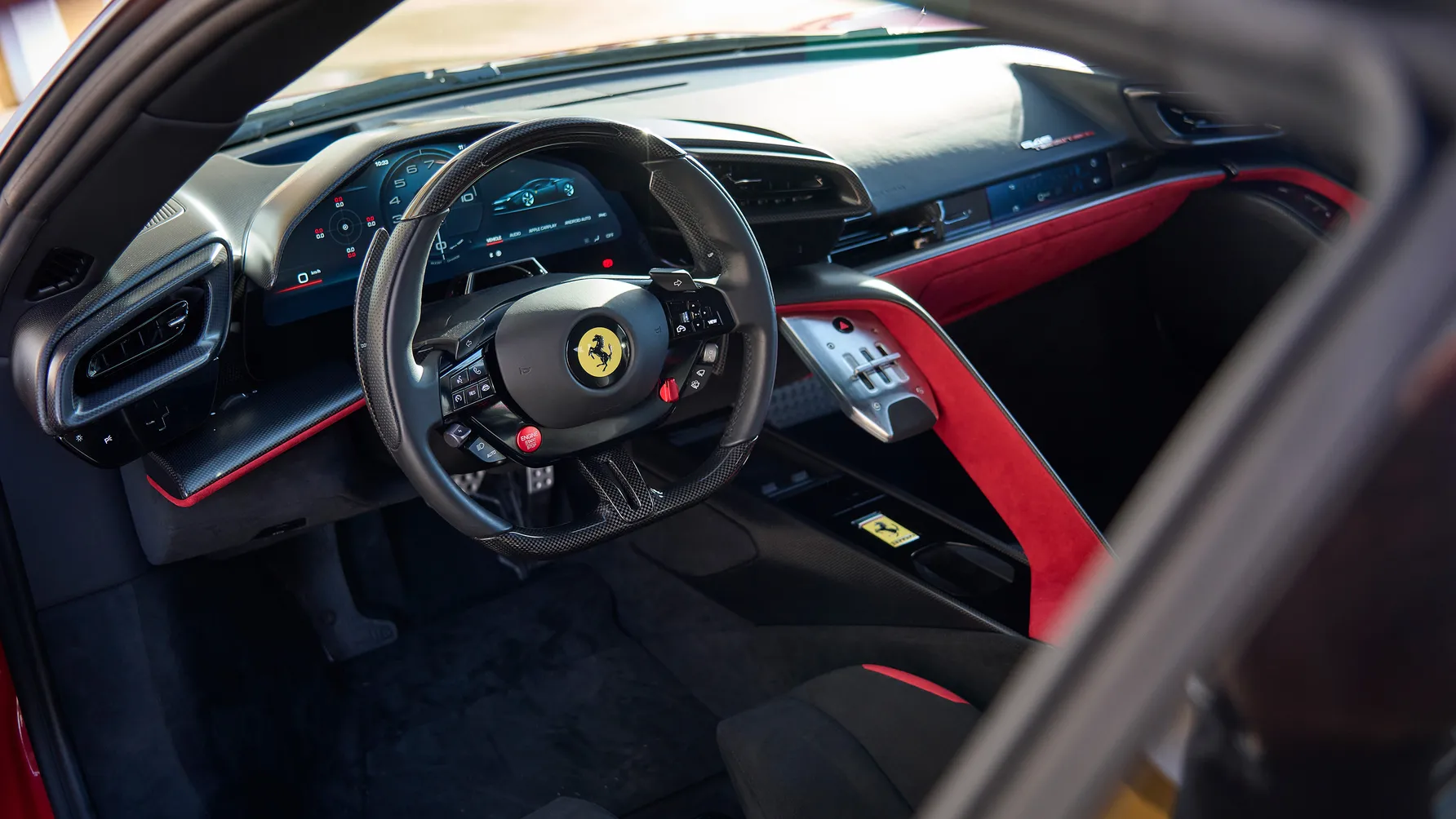
The huge news in here is that Ferrari has seen the light and reinstated physical buttons to the steering wheel. The eManettino is still a haptic control, but everything else reverts to good old fashioned controls that actually work. Plus, the evocative big red start button is the perfect way to start your Ferrari experience.
Having said that, Apple CarPlay (and, we assume, its Android equivalent) is designed with touchscreens in mind, so toggling between the various functions is still a little clunky. Even so, we’re extremely grateful to welcome the return of common sense and the end of infuriating haptic controls that only seemed to work every third Tuesday.
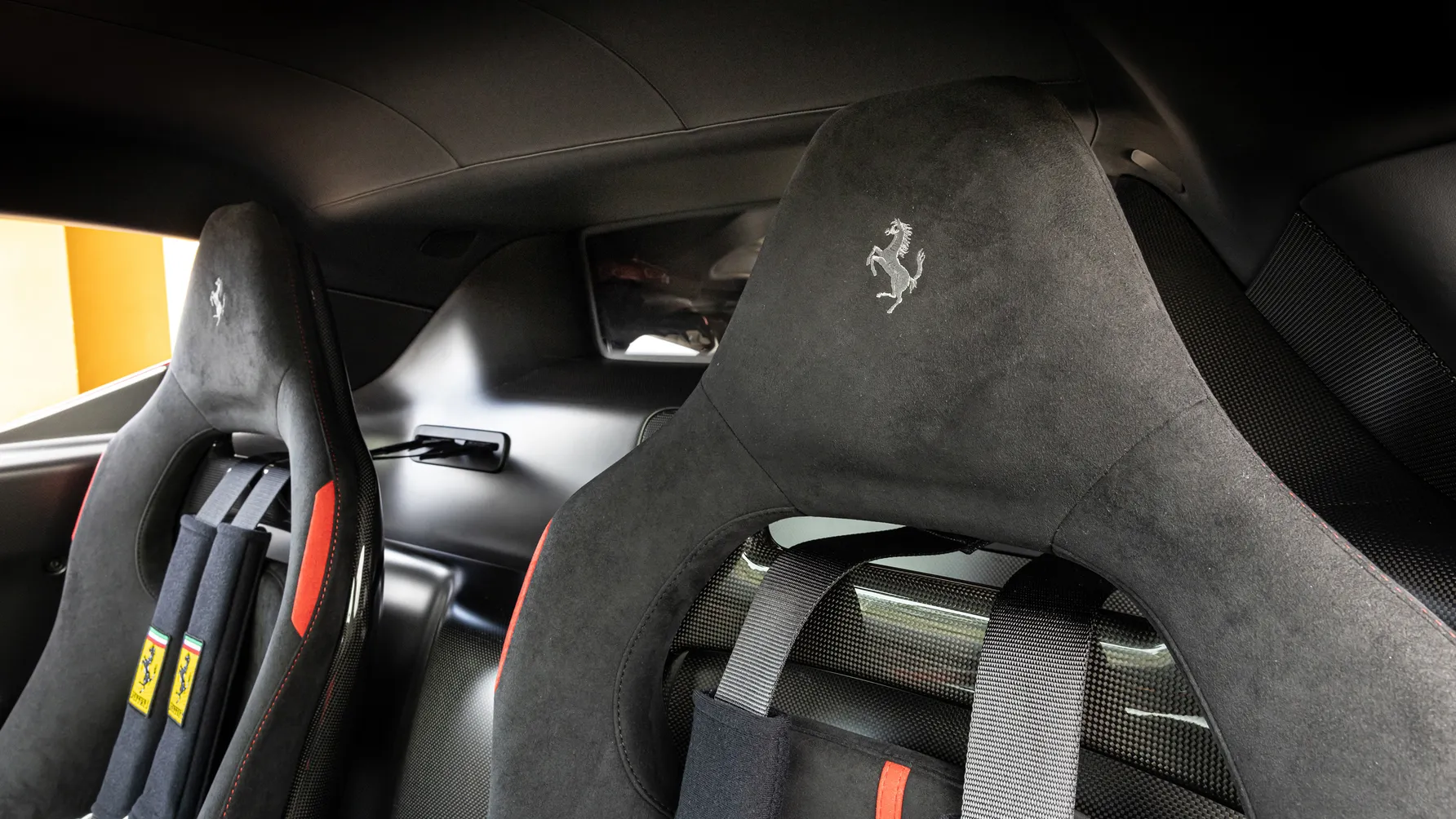
The Assetto Fiorano cars feel nicely stripped back, with carbon fiber door panels, gorgeous carbon fiber seats with well-placed individual cushions, but just enough alcantara to still feel pretty luxurious. The display for passengers always feels a little gimmicky, but it’s well executed and quite a fun novelty.
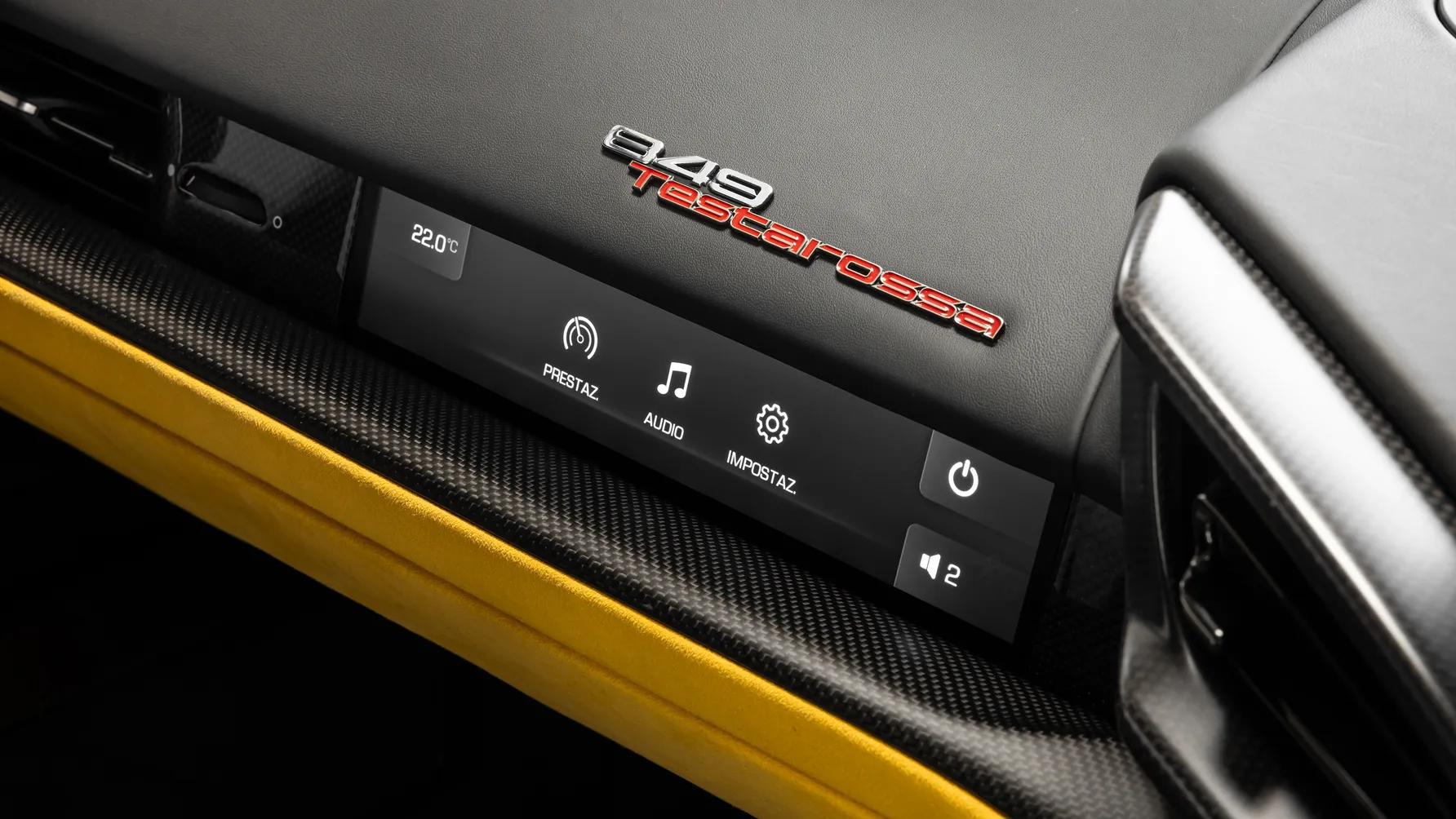
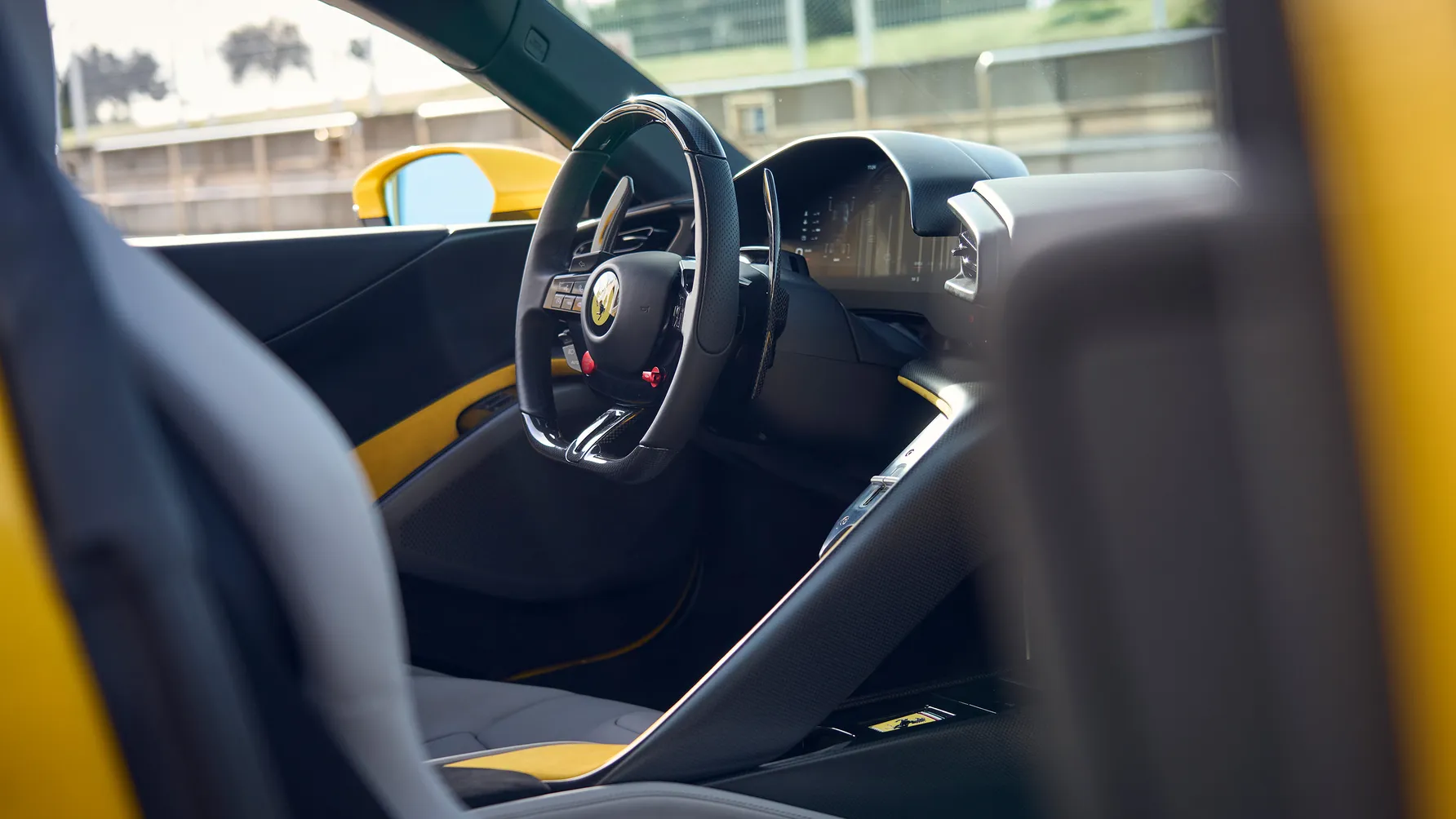
There’s more leather and a more GT-style feel to the standard cars, but it still feels a pretty focused cabin and Ferrari talks a lot about a ‘single-seater’ feel for the driver. An exaggeration, but it certainly feels driver-centric and quite a special place to be.
Even so, the driving position isn’t as perfect as a McLaren 750S and the cabin doesn’t have the unhinged, old-school supercar vibes of the Revuelto.
Final thoughts on the Ferrari 849 Testarossa
The 849 Testarossa is a remarkable car and feels like a leap forward from the SF90 Stradale. We thoroughly enjoyed it on road and track, and it’s very hard to fault the optimization of this complex platform and powertrain. Ferrari really does create scintillating cars that offer you incredibly thrilling yet easy access to captivating performance. In that sense, it’s a triumph.
Yet, the massively powerful engine feels lacking in character and spine-tingling excitement when you consider the price point, and hence one huge part of any Ferrari’s appeal seems to be missing. Furthermore, the 296 GTB seems to undermine the 849 Testarossa in many ways. It’s lighter, offers more ‘purity’ due to its rear-drive configuration, feels every bit as sharp and connected, and is so fast that the Testarossa’s power-to-weight advantage seems vaguely irrelevant.
The fact it has a sweeter but equally savage engine is the killer blow. At the other end of the scale there’s the incredibly impressive Lamborghini Revuelto with an old-school V12 and, finally, the dynamic capability to stand toe-to-toe with Ferrari…
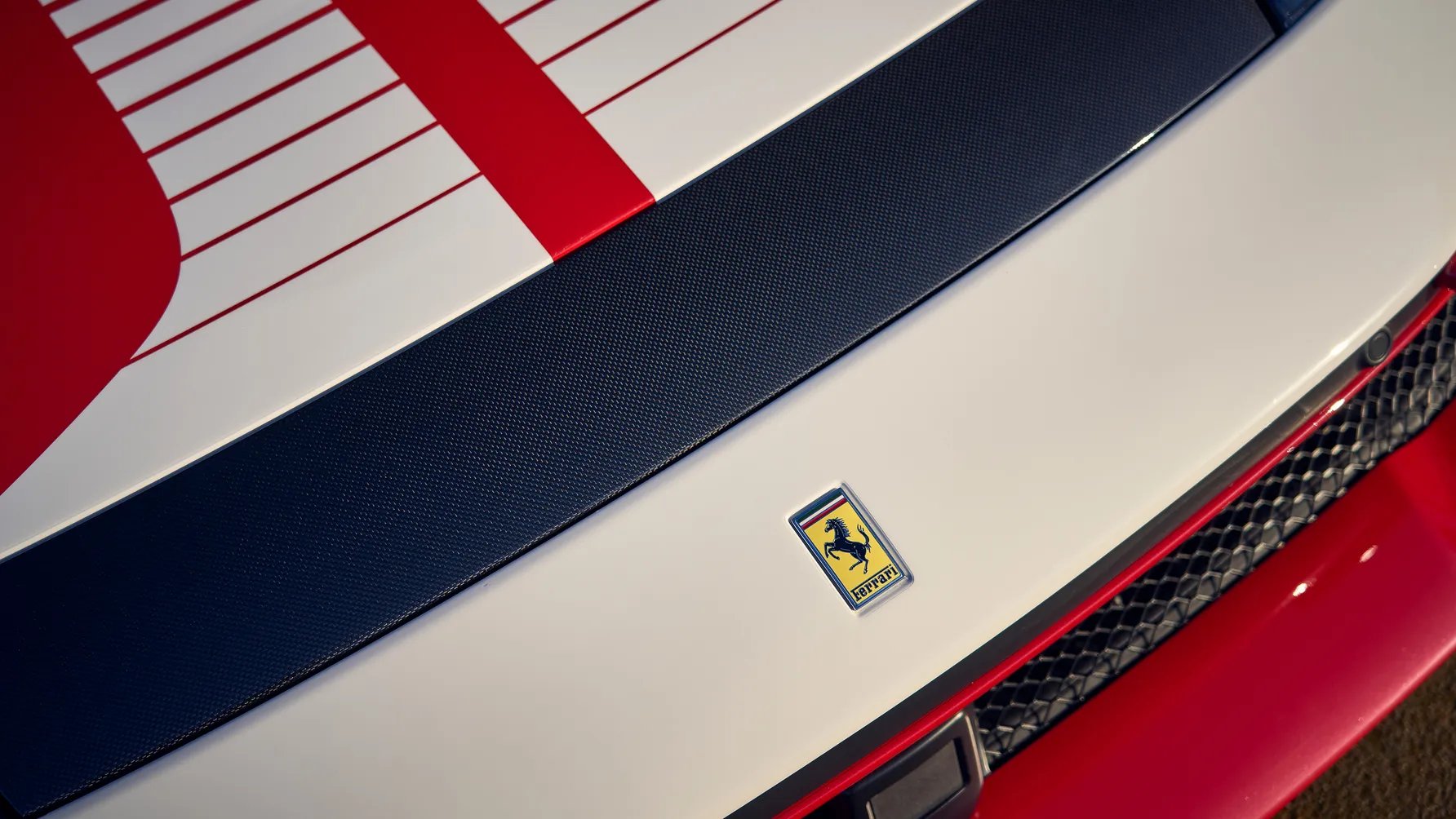
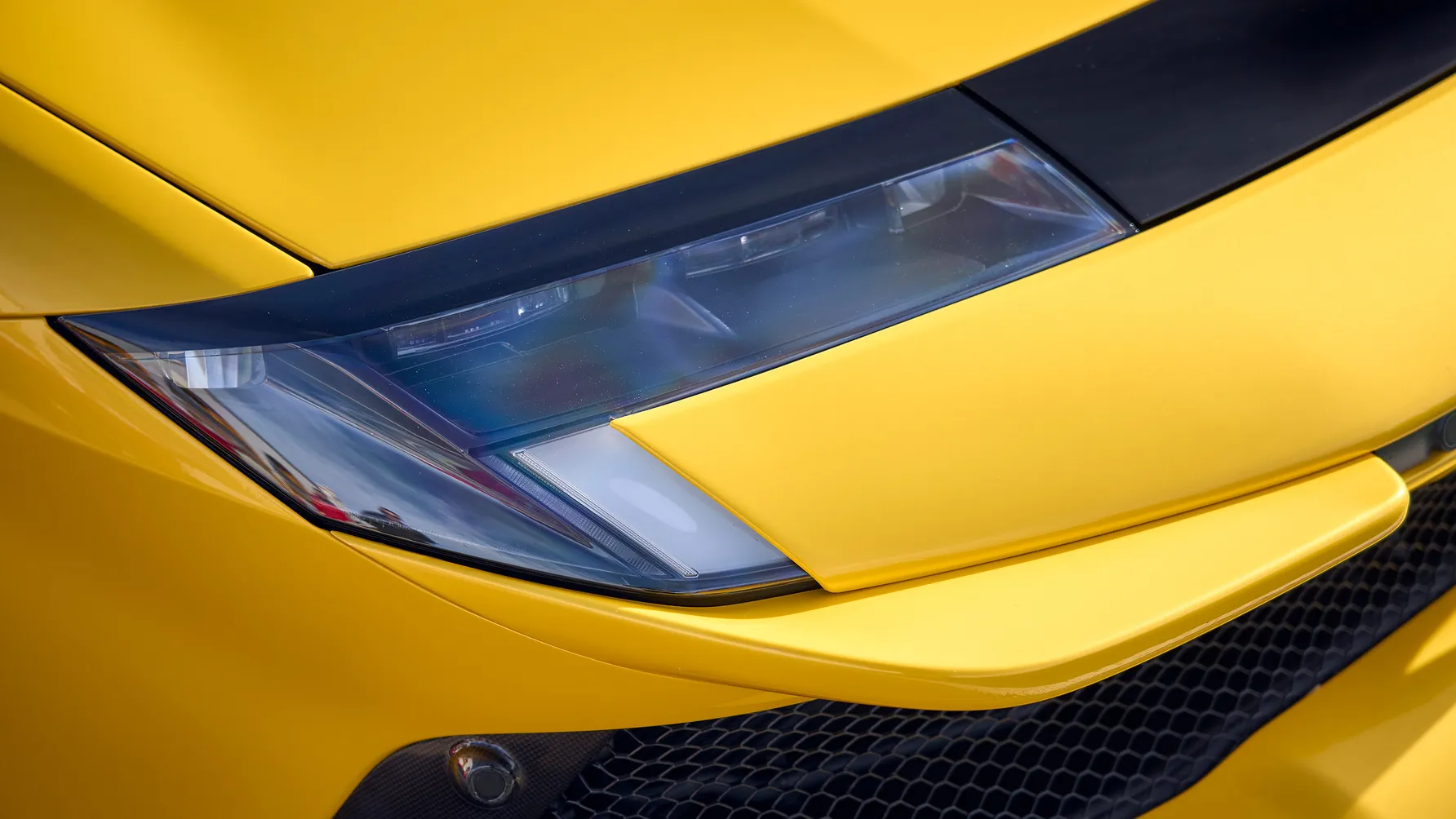
More photos of the Ferrari 849 Testarossa:
NOTE: This article first appeared on TopGear.com. Minor edits have been made.