
Overview
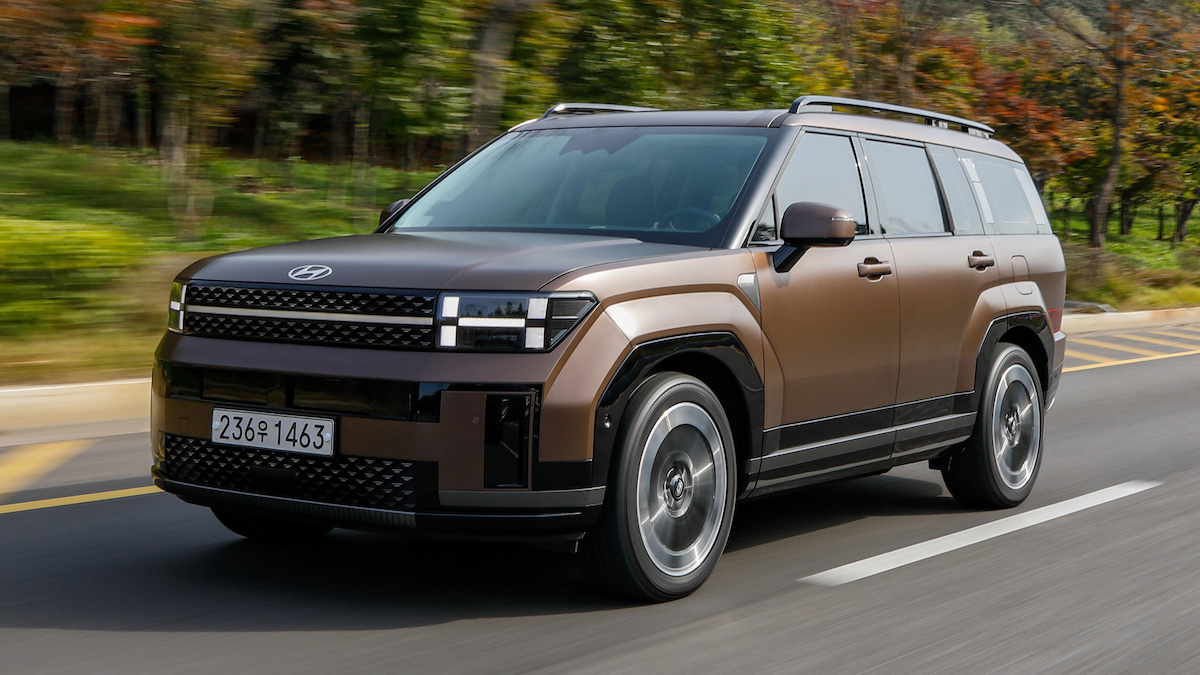
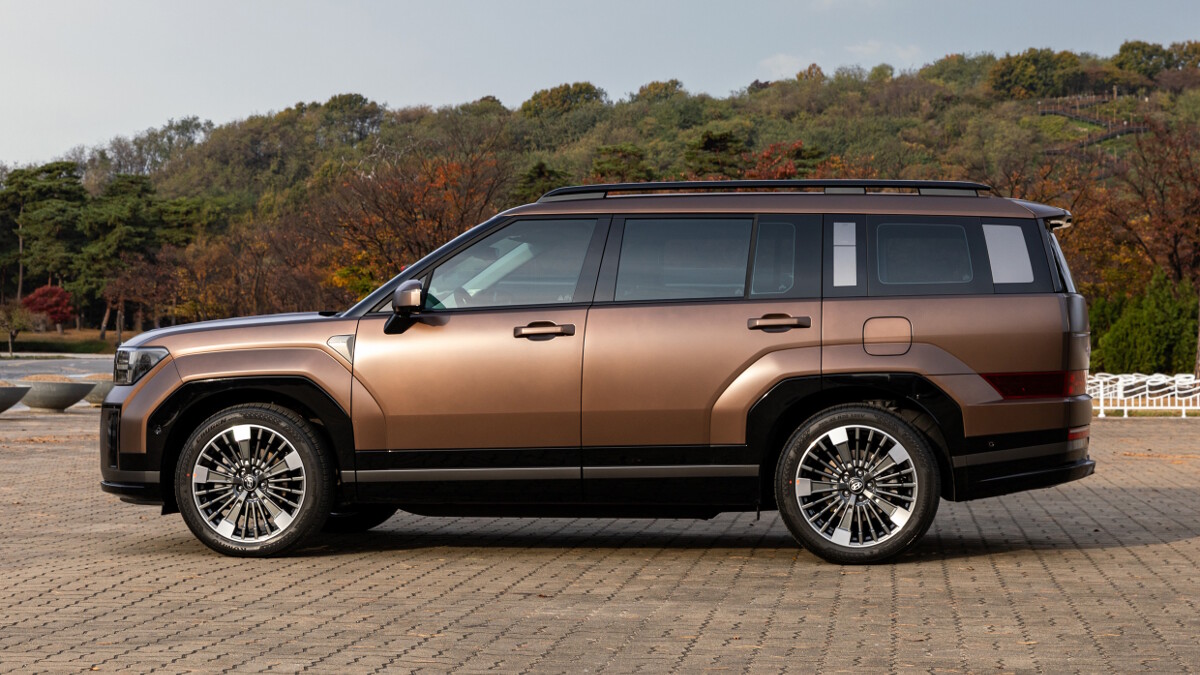
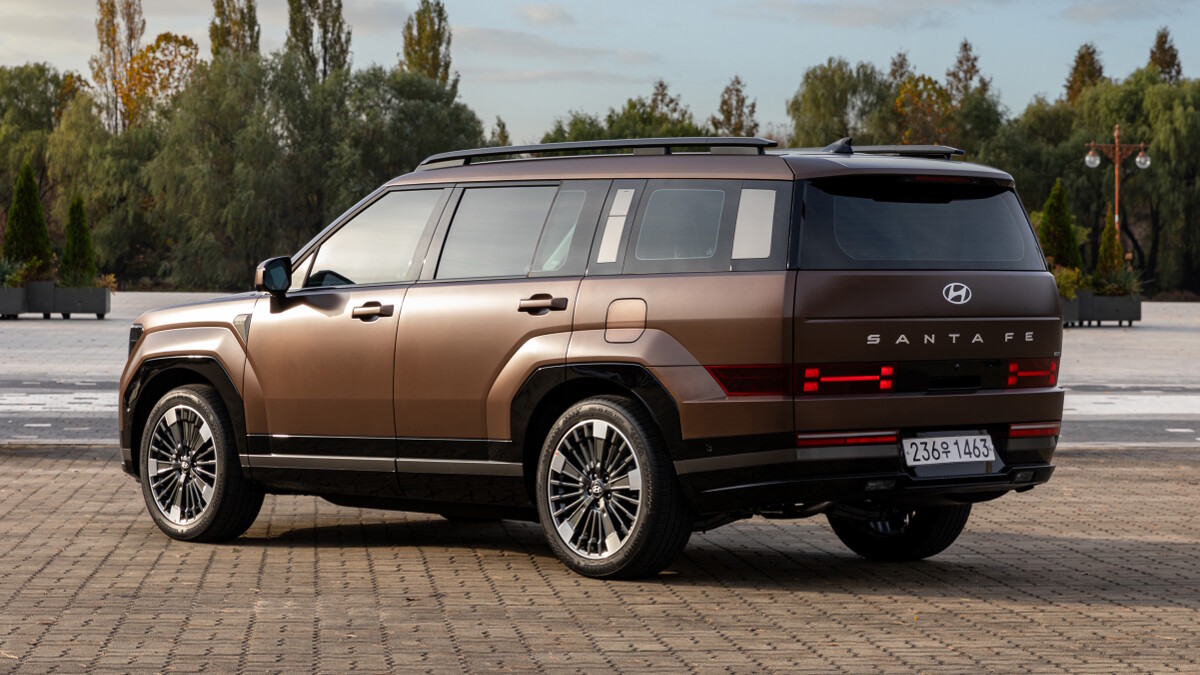
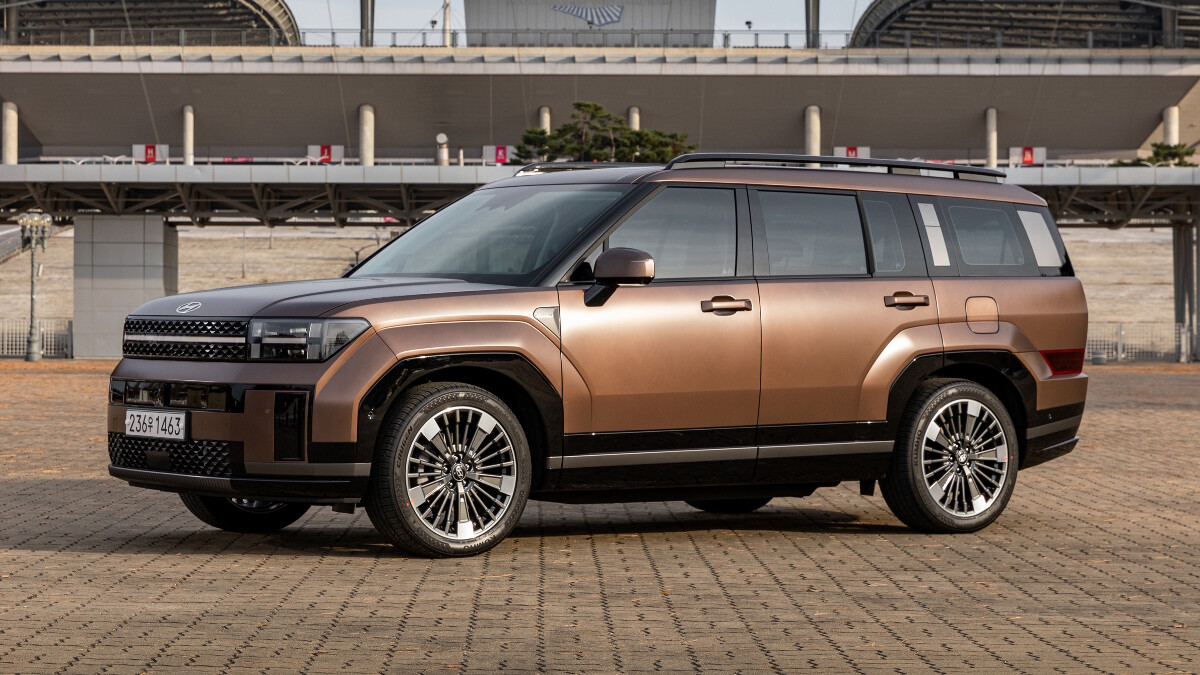
The Hyundai Santa Fe is a family SUV, about as big as you could possibly want for city streets and carparks. It’s got seven seats with cargo space beyond that, and it’s a solid tow car. There’s something about the 2004 Discovery going on its looks, as boxy as a box of Lego.
But actually it’s a slightly different proposition from an old Land Rover, quite apart from two decades of added electronic sophistication. It’s only optionally 4WD, and doesn’t have a low-ratio transmission or diff locks. The Santa Fe might be all about lifestyle, but it isn’t designed for extreme off-roading. For most people, it’s better off without that weight and complication.
Looks big enough to block out the sun...
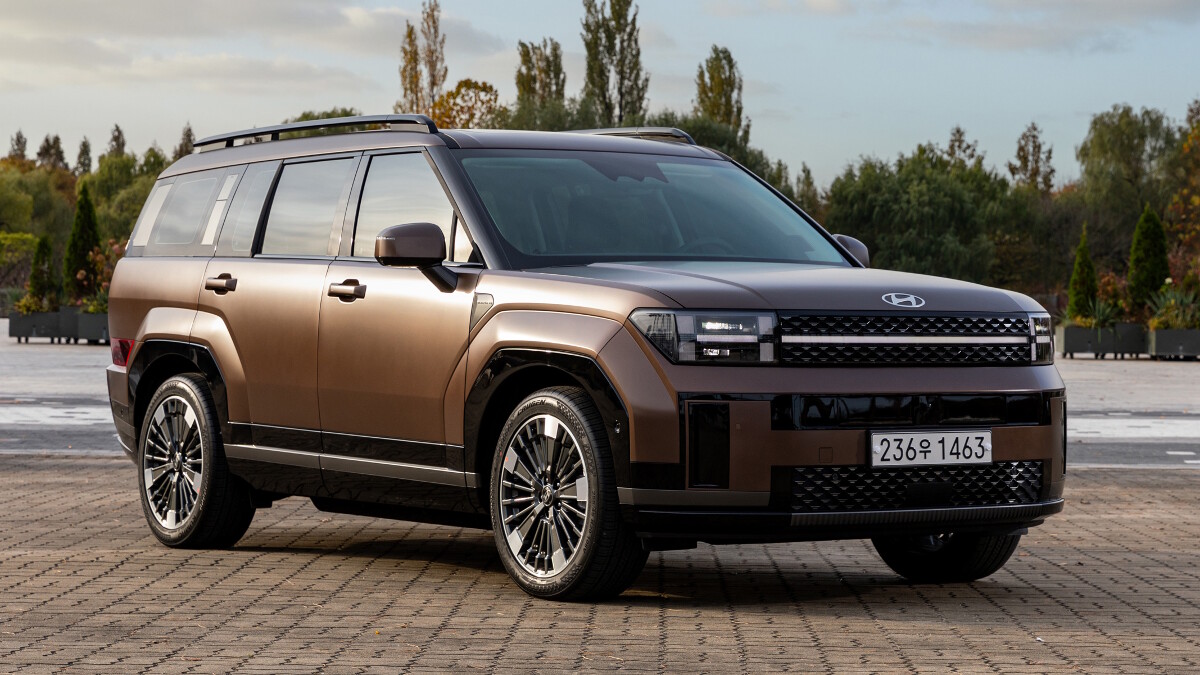
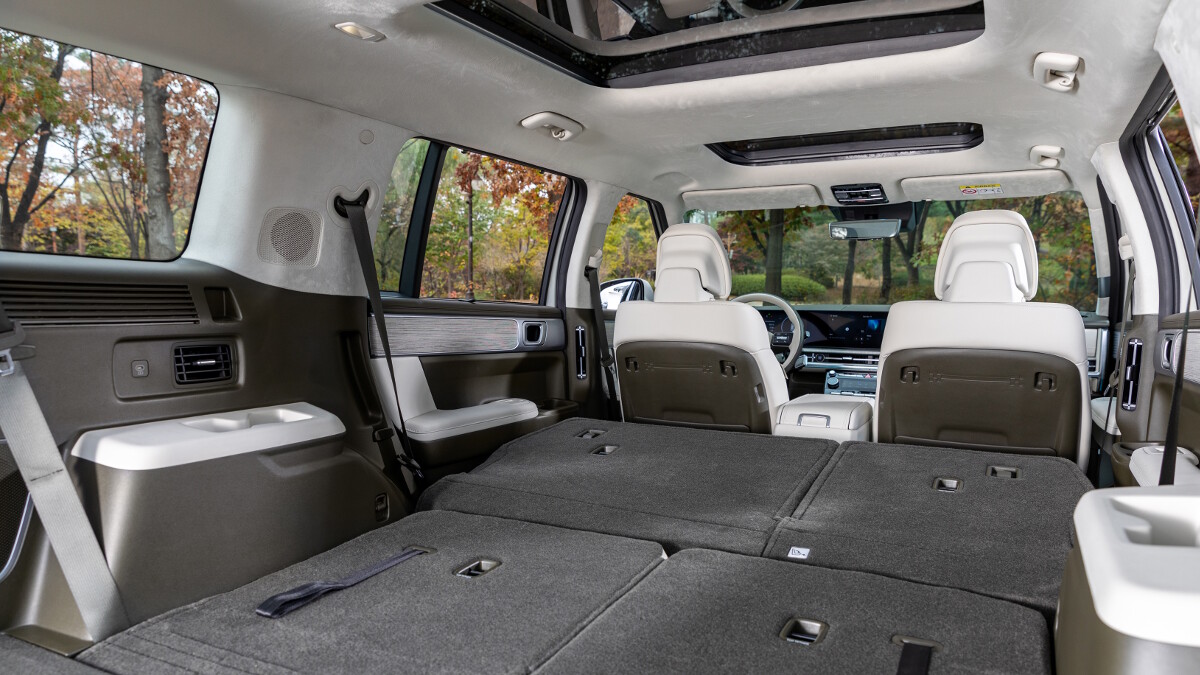
The square shape stems from an attempt to enclose a cathedral of space in the back. And it has worked. The middle-row seats are a big sofa, and they slide to give extra room behind. That done, there’s definitely room for seven full-size adults. Behind seats six and seven, seven airline bags fit. Just. Plenty more if you’re carrying just six occupants and fold one seat.
Other cabin choices are a five-seater with huge cargo area, or a six-seater with middle-row captain chairs. Even so, the Santa Fe isn’t absurdly fat—a manageable 1.9 meters wide and 4.83 meters long, which is a useful 12cm shorter and a bit slimmer than a Volvo XC90 or a full-fat Discovery.
Those rivals are pretty premium. Can the Santa Fe stand up?
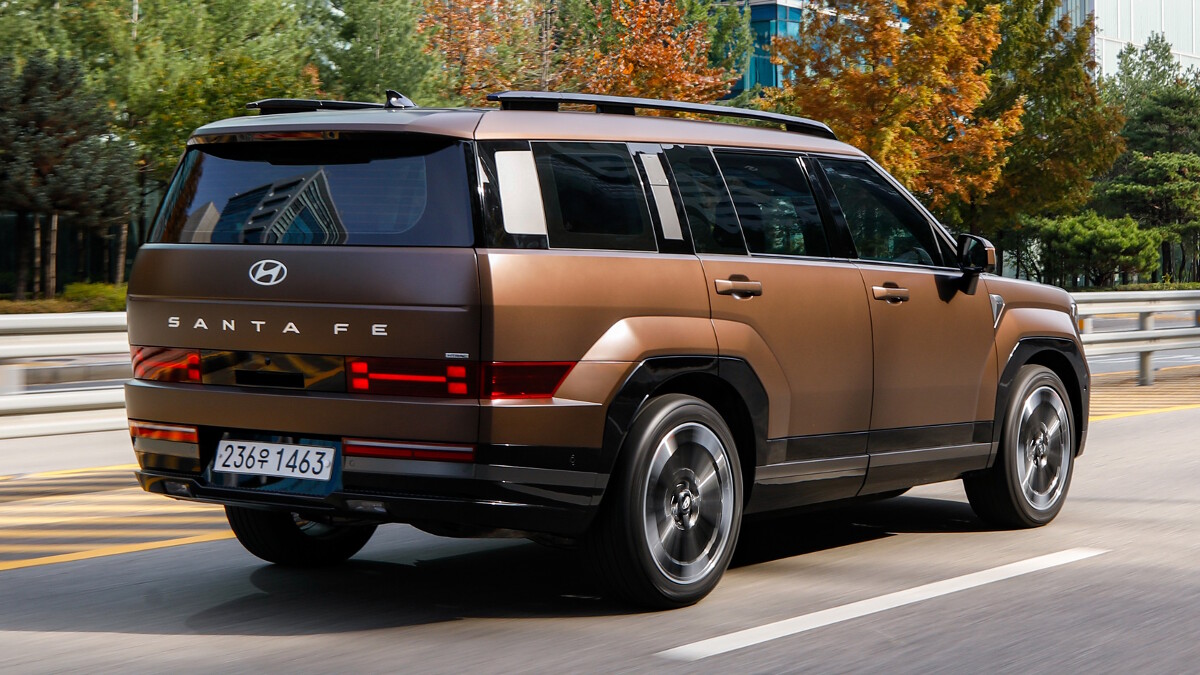
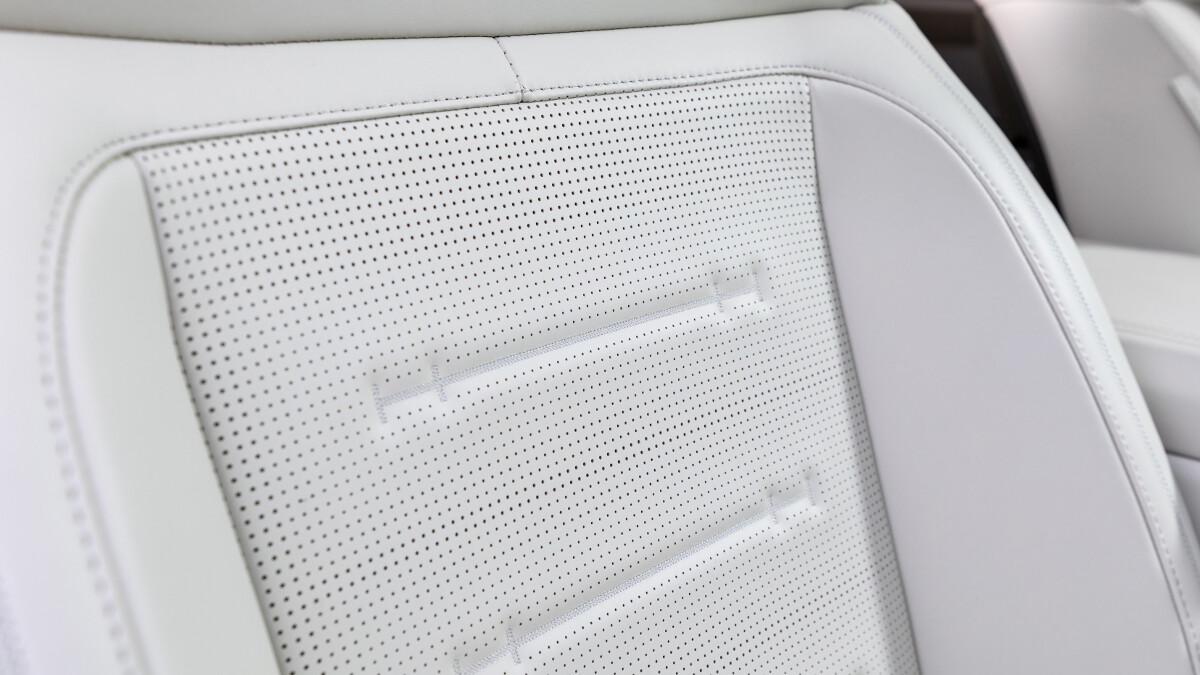
Frankly, the Santa Fe undermines your badge snobbery. The inside, as well as the outside, is interesting in design and well-detailed and made. Ingeniously practical, too. Against its direct competitors, neither does it want for usable, high-tech equipment.
What’s under the hood?
The Santa Fe is all-electrified in this generation, with a four-cylinder hybrid in front- or four-wheel drive, or a PHEV version of the same engine, with 4WD only. Our first test was the non-plug-in hybrid with all its wheels driven.
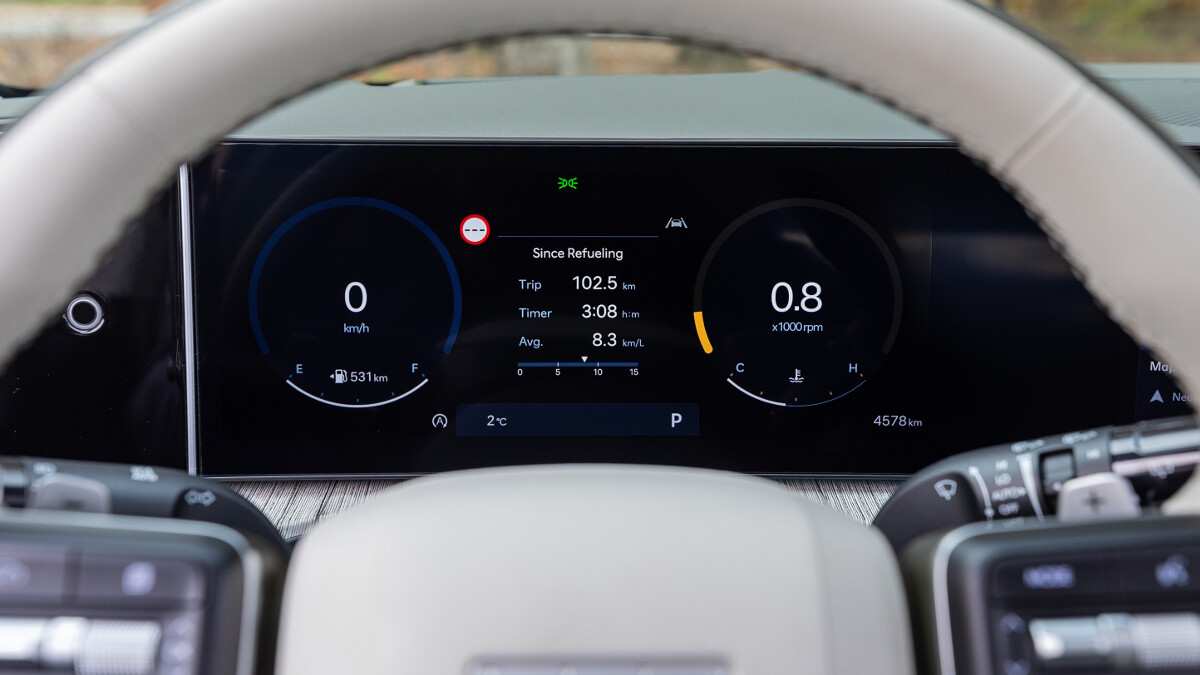
It goes, shall we say...leisurely. That’s not an insult. The performance metrics are like those an old-school four-cylinder diesel SUV, but this gasoline hybrid is far quieter. Its got 235hp from the combination of engine and motor, which impels it from 0-100 in 9.5sec. No rush, then.
The suspension is set up for comfort, with a softish ride. But that doesn’t mean the Santa Fe is a galleon. Its steering is reasonably accurate, and pitch and roll are buttoned down decently. Provided you guide it smoothly, it’ll bowl down a twisty with its dignity intact.
Likely of more concern to Santa Fe buyers is the allowable mass of a braked trailer: two and a quarter tons.
Hyundai Santa Fe on the road
No more diesels here, like we’ve already touched on: Every version is a combination of engine and electric. The non-PHEV hybrid that we drove consists, as many other hybrids from Hyundai and Kia, of a 1.6-liter turbo four-cylinder engine driving through an automatic gearbox. Sandwiched between engine and transmission is the motor, so it, too, operates through all six ratios.
This isn’t absolutely the most efficient of the hybrid systems out there. But it’ll match a diesel, and it does feel very normal. The engine revs rise and fall as with a conventional automatic (because that’s what it is) when you’re on the accelerator. When you’re going gently, it can hand off entirely to the motor, falling still and silent—even up to quite high speeds if you’re lifted off or going gently downhill. But since any gasoline engine would be pretty quiet at those times, you hardly notice.
As a gasoline auto, it’s smooth and progressive, if predictably uncharismatic-sounding at full bore. And you’re aware this is a two-and-a-quarter tonner it’s hauling. Still, the brakes felt perfectly stout enough on the flattish roads of our test.
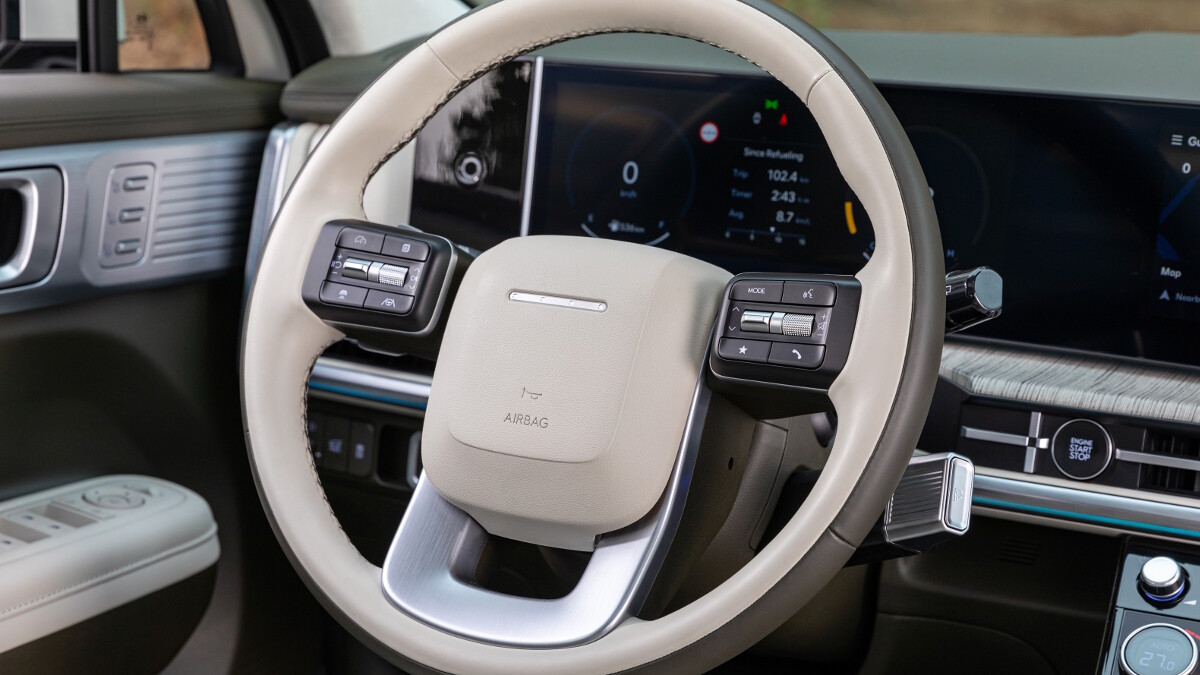
In Normal and Eco drive modes, the column paddles control regenerative braking; in Sport, you have control of the gears.
If it’s heavy when accelerating, what about when cornering?
The suspension manages that weight pretty well. The steering is well-weighted, has a progressive action, and marries well with the roll angles. In any case, roll, pitch and heave are well-contained, at least when the car is not full of people, so you’re confident in carving neat lines whatever the road.
But let’s stress again: It’s not a sports SUV and it’s not meant to be. That’s part of its appeal, frankly.
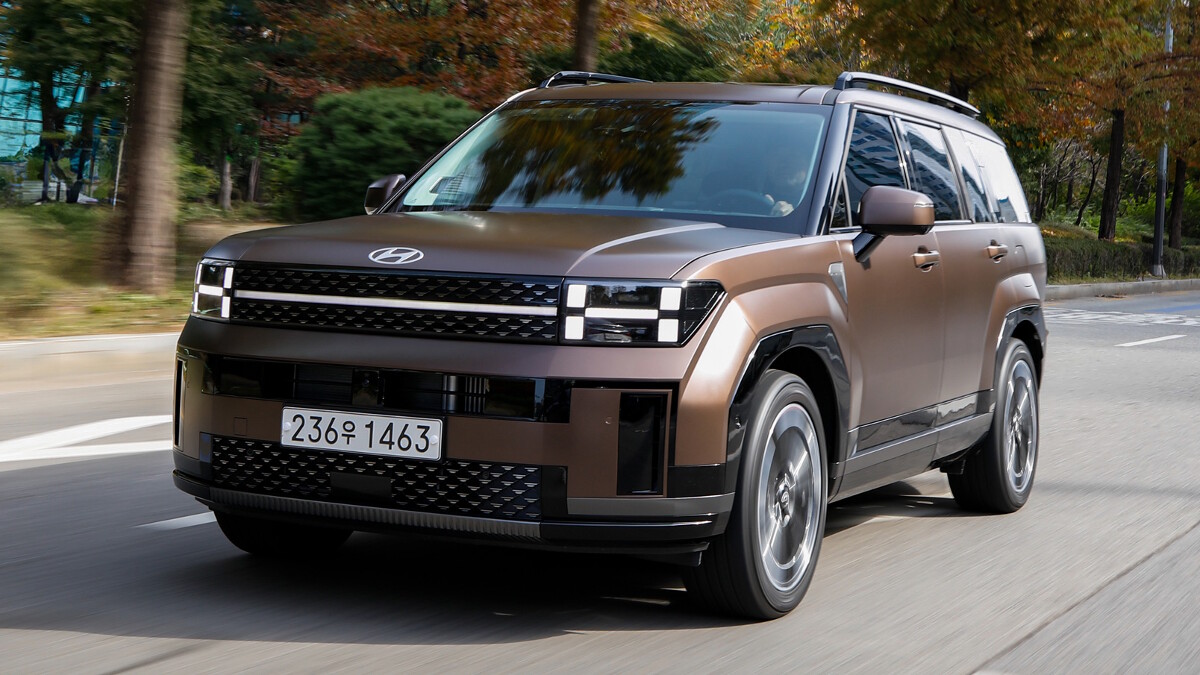
The ride is smooth enough, although there’s some secondary shimmy from the big, heavy tires. Nothing too bothersome. We didn’t get much tire noise in Korea, but let’s reserve judgment because every country’s surfaces are different and ours are about the loudest. We did find out the Santa Fe holds its highway lane serenely.
It comes with Hyundai’s usual driver assist suite. There are sentinels all around to try to prevent you biffing into stuff or people. On highways, the lane centering and the adaptive cruise control work smoothly, and their symbols and switching logic are easy to get your head around, especially with the high-trim heads-up display.
Will it go off-road?
We didn’t try, and it’s pretty clear that the road-biased tires and suspension and the lack of crawler gears mean this isn’t the aim. Still, the 4WD has electrically controlled variable torque split; the traction control system has snow, sand, and mud modes, as well as hill-descent control.
Hyundai Santa Fe on the inside
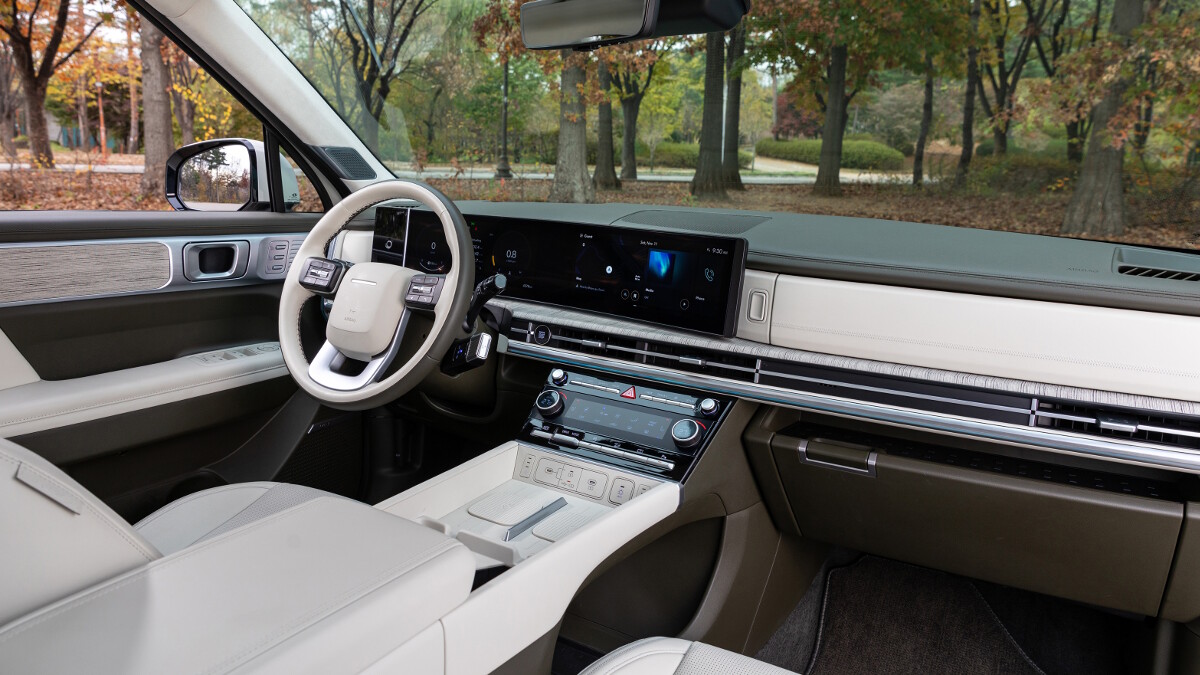
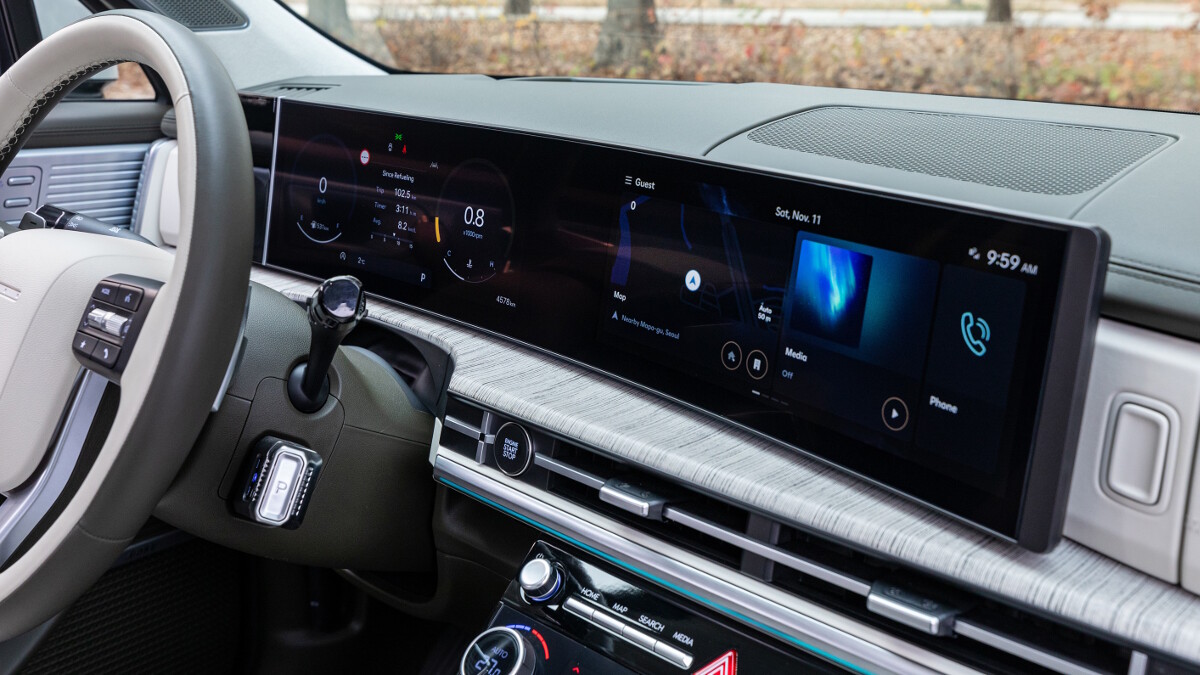
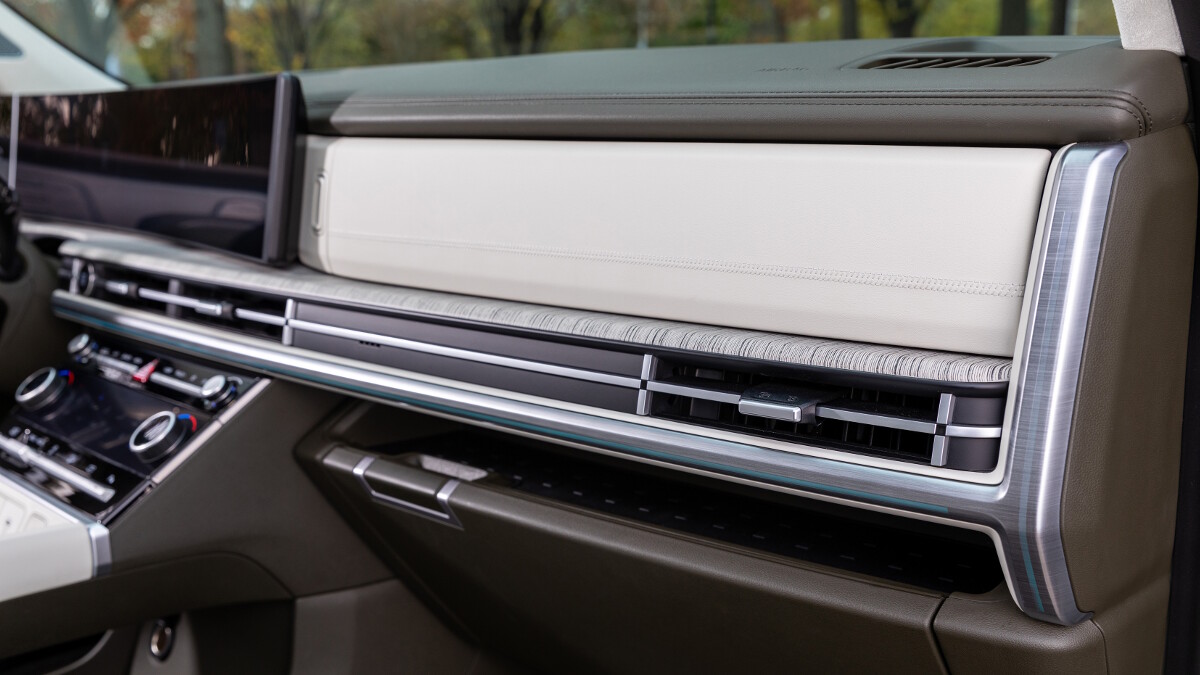
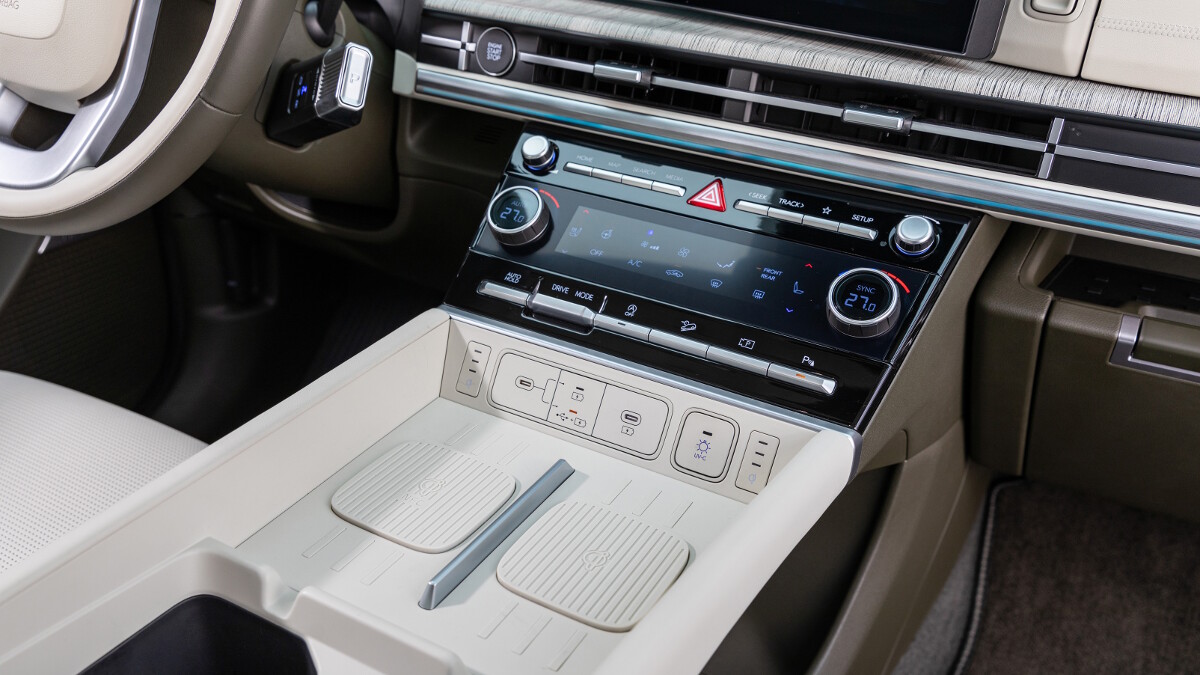
The squared-off blocky themes of the outside carry on in here. The main dash is a nicely trimmed horizontal pavement, and the center console is mostly oblongs. But the double-width screen forsakes the linear rule: It’s curved toward the driver. It works with all the pleasing logic we’ve come to expect from the Koreans, and there are plenty of extra physical switches for stuff you grab fast: audio, climate, parking cameras, drive mode.
The transmission selector is a big stalk, freeing up even more space on the center console for storage. It’s a double-deck piece of furniture, like you’d find on an electric vehicle. As well as a glovebox ahead of the passenger, there’s a small lidded compartment that’s a UV sterilizer. Not for your hands, silly: It only works with the lid shut.
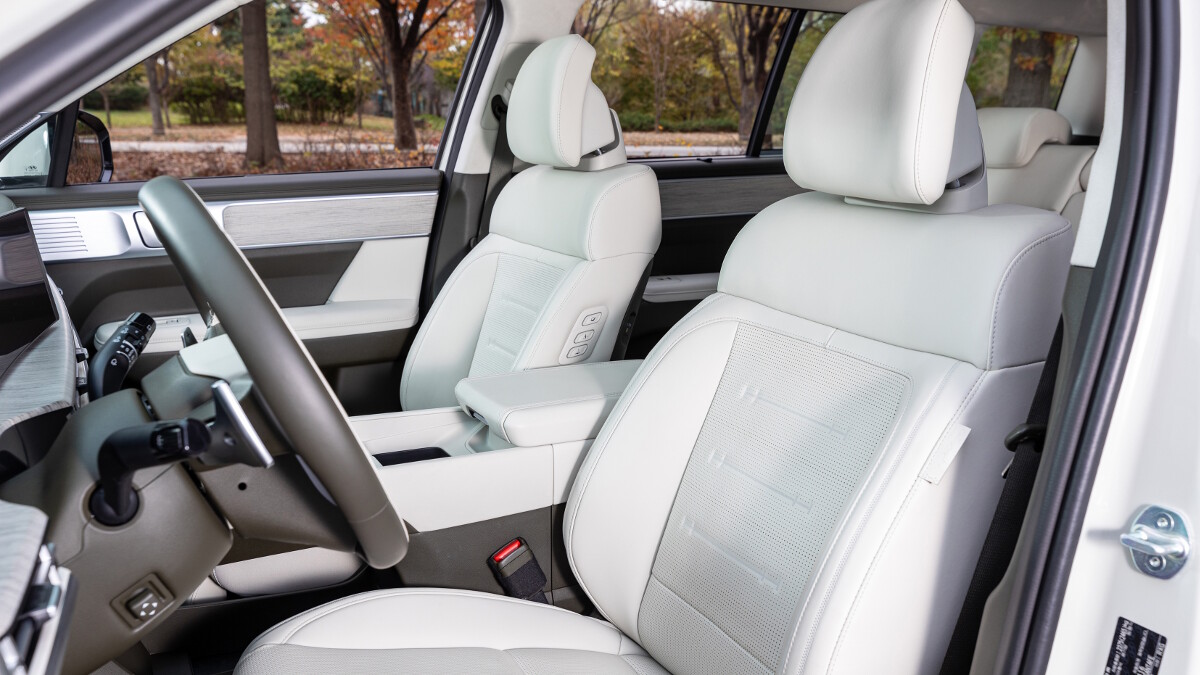
The front center armrest lid does a double-flip, so it can be used by the people in the front or middle rows. All around the cabin are USBs, charging mats, vents, lights, speakers, and cupholders. No one’s going to feel second-class.
What about the space?
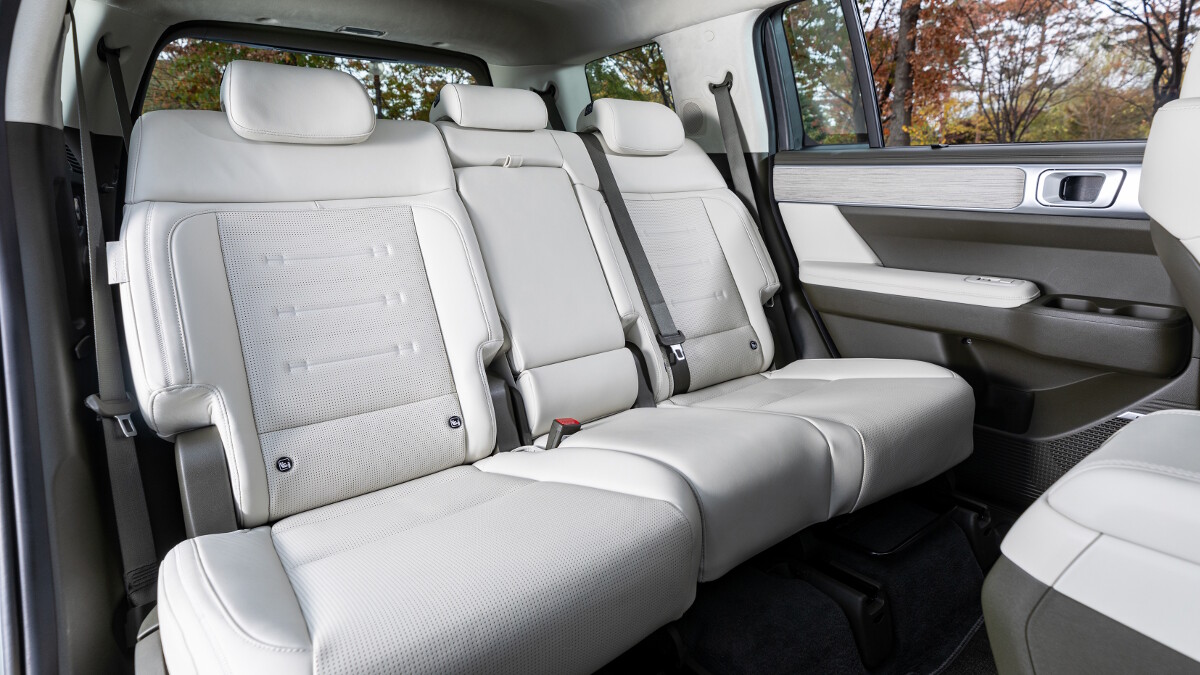
The middle bench is split two-thirds to one-third, and both sections slide and recline independently. They’re limo-like if the third row is vacant, but otherwise, there’ll be requests from the back-back to slide forward a little. No biggie. Seats six and seven have okay legroom with a bit of compromise from those in front, and adult headroom. They, too, recline a little, but in a moderately upright position, there’s useful baggage space behind.
Hyundai also expects you might put stuff on the roof, and has even built little handles into the external side trim so you can pull yourself up to reach it.
Final thoughts
This was a test drive in South Korea, and local specs—or arrival—haven’t been announced yet, let alone prices. So you’ll excuse this for being provisional in places.
What’s clear is that the Santa Fe is roomy and useful. End to end, the cabin is full of practical touches to make a journey better. It’s also stylish and well-made in there, and the ride is comfortable and quiet. And while it’s no sports car, the consistency of the go-stop-steer responses is nicely considered, so it’s not unsatisfying to drive if you’re in no mad hurry.
The Santa Fe is a striking machine, not for people who want to keep a low profile. But it’s not been done just to make a statement—Hyundai backs it up with well-crafted utility.
More photos of the Hyundai Santa Fe 2023
NOTE: This article first appeared on TopGear.com. Minor edits have been made.