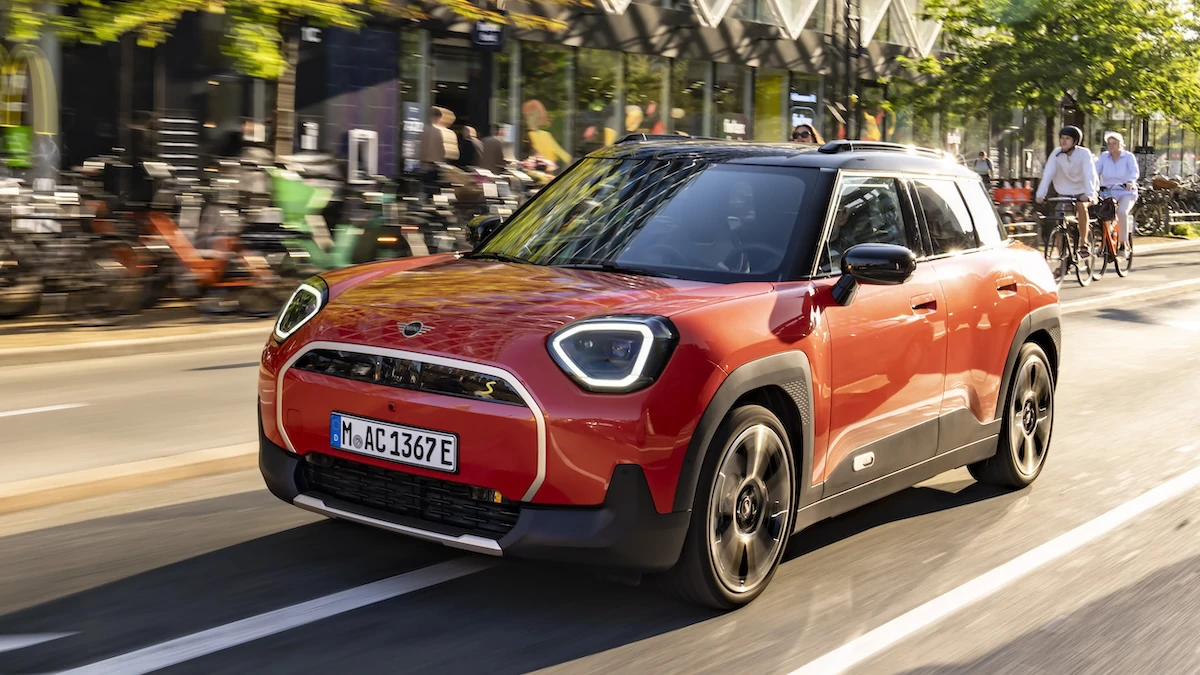

Minis have had an existential crisis for the last couple of decades. It started with the BMW takeover in the 2000s, but to be fair, I think the Germans have always respected the brand’s character and heritage. What got things murky later on was when the modern lineup expanded with models that had maybe too much character: Where Minis have always drawn an “aww” from onlookers whenever they zipped past, I can’t be the only one who looked at the newer cars for the first time and went, “Ah…what?”
Let’s exempt the Clubman since its barn doors were cool and we’re big wagon fans here. The Cabrio I can accept, too. Three model generations later, I’m still a bit shocked every time I see a Countryman, as if my brain refuses to reconcile the classic Mini shape with not-so-mini dimensions, but crossovers sell and also come with useful advantages. Hard pass on the short-lived Coupe and Roadster—two-seaters, to make up for being so impractical, should at least be nice to look at, and these two were...not. As for the Paceman, not a lot of people were sad to see it killed off in 2016.
At its core, Sir Alec Issigonis’ classic Mini was functional above everything else, designed to be an efficient mode of transport amid an oil crisis. That it was an absolute blast to drive came as a consequence of pushing the wheels as far out to the corners as possible to maximize interior space, then dropping a transversely mounted engine under the hood to drive the front wheels. The last three modern Minis I mentioned were more statement pieces: Different for the sake of being so, with limited practical value.
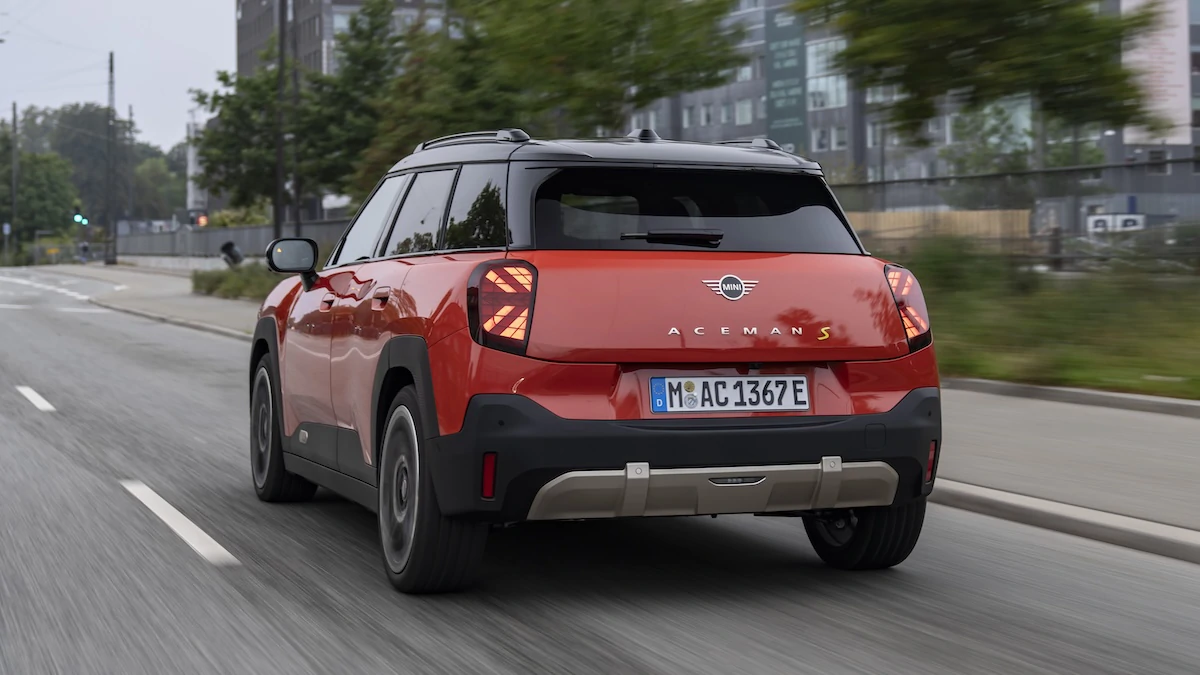
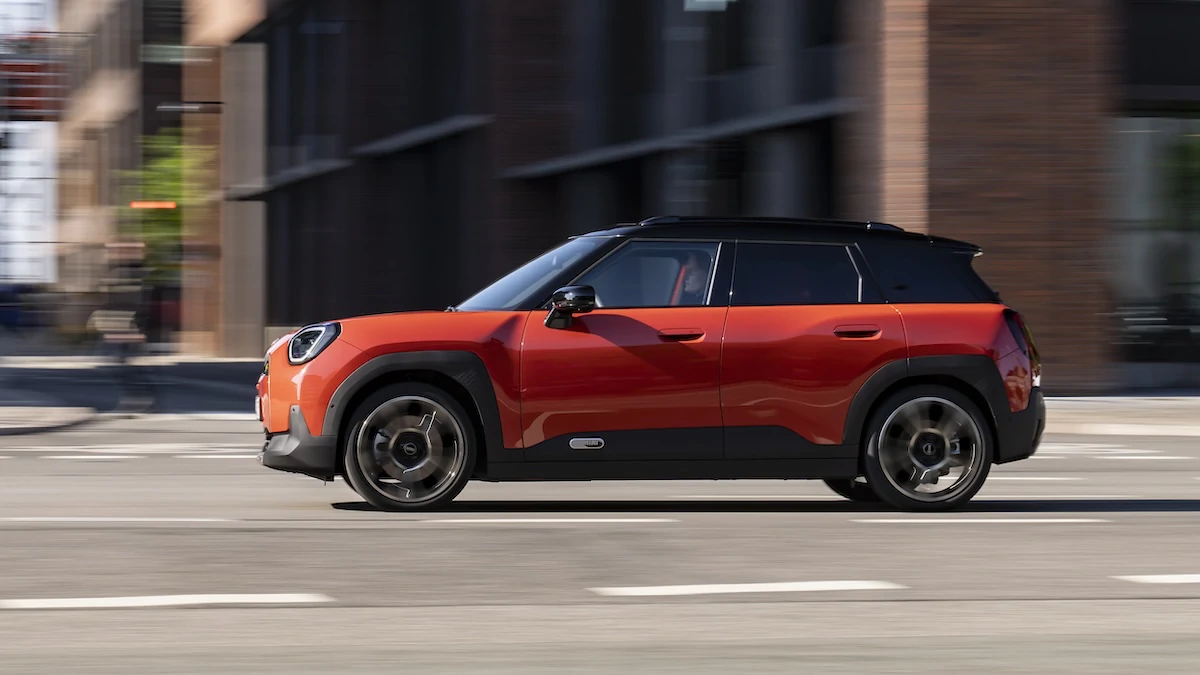
Having culled its model range, the British carmaker now tries again with an all-new model: the Mini Aceman. And apart from earning its place in the lineup, it also has to help convince long-time fans of the brand that the best qualities of Mini can live on in the electric realm.
No, it’s not related to the Paceman. What was baffling about that car was instead of having more space for rear passengers, the two-door ‘coupe-crossover’ body style made getting in and out more complicated, and also cut into the available headroom with its sloping roofline. In the Aceman, the loss of one letter in the name comes with the addition of two doors, and the shape of the car is more faithful to the classic Mini silhouette. Good start.
OTHER STORIES YOU MIGHT HAVE MISSED:
Kia has just introduced the Tasman, its first global pickup
John Cooper Works goes electric: Meet the JCW versions of the Cooper and the Aceman
We’re driving the car for the first time in Denmark, and as we arrive at our scheduled stop in Helsingør, there’s the Aceman parked alongside its electric siblings: the J01 Cooper hatch and the latest Countryman. Looming in the background is Kronborg, which inspired Elsinore Castle in Shakespeare’s tragedy about the prince who now serves as the poster child for existential crisis.
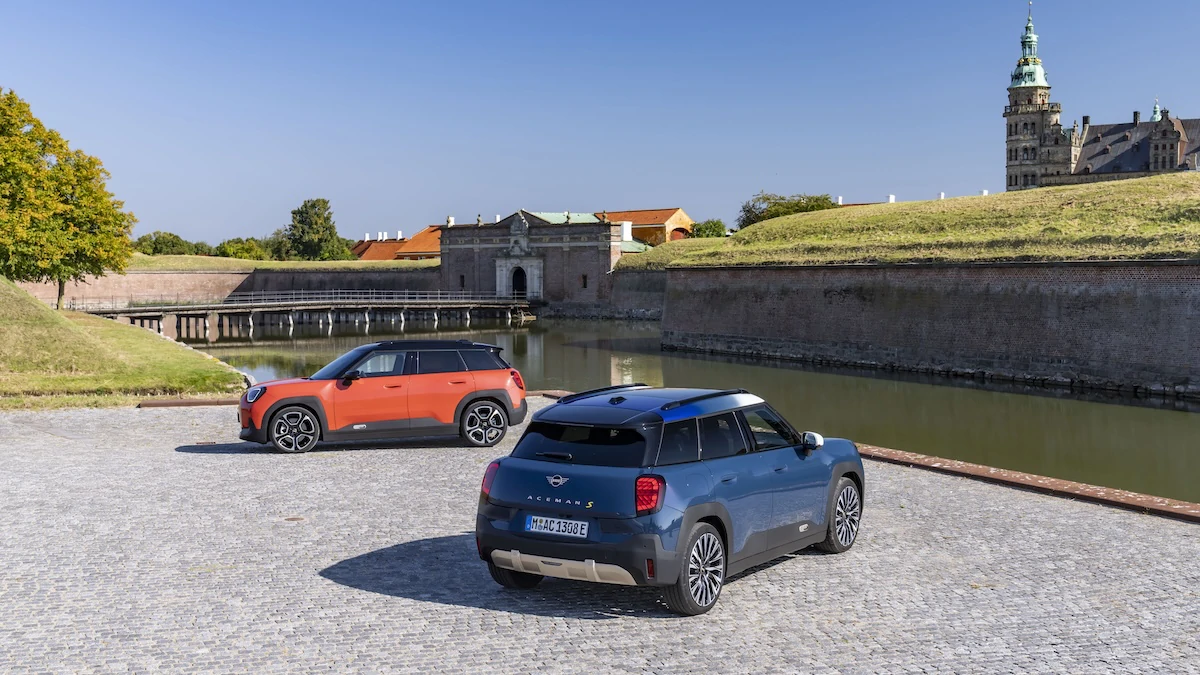
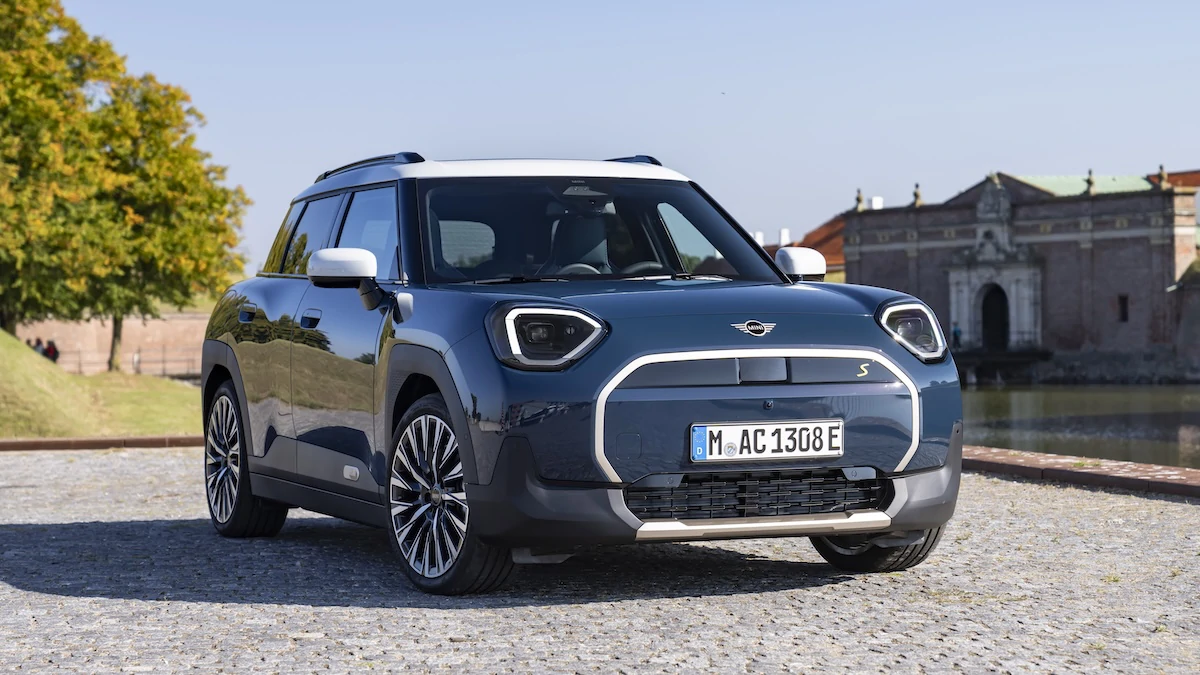
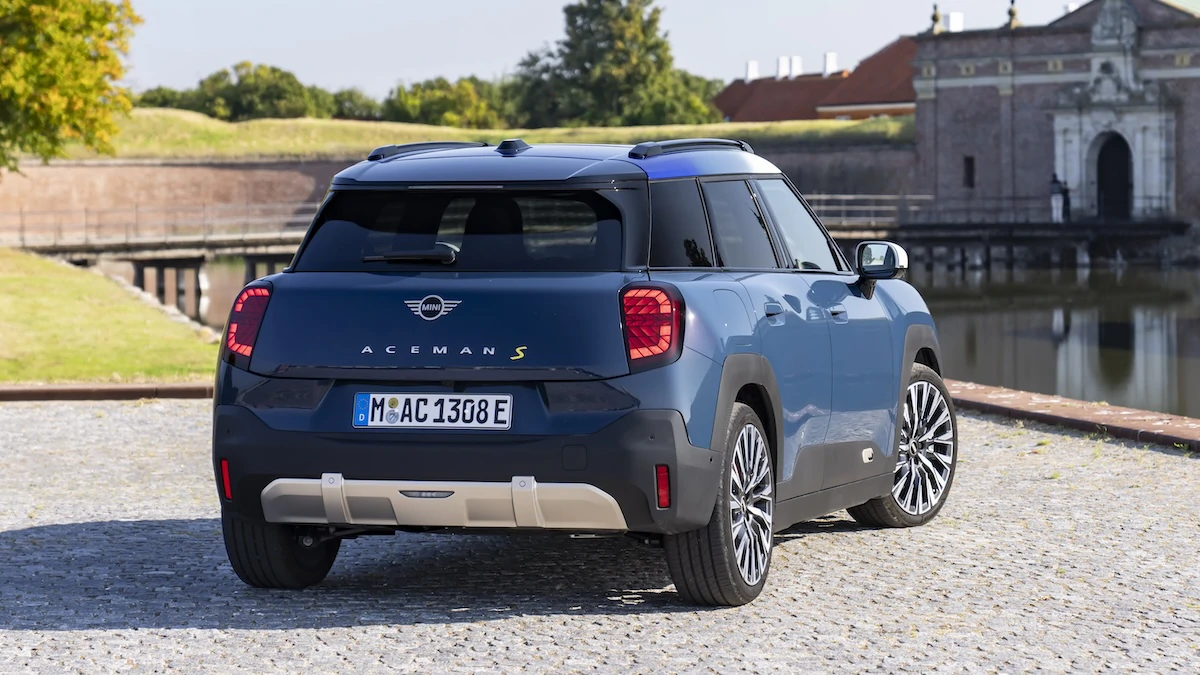
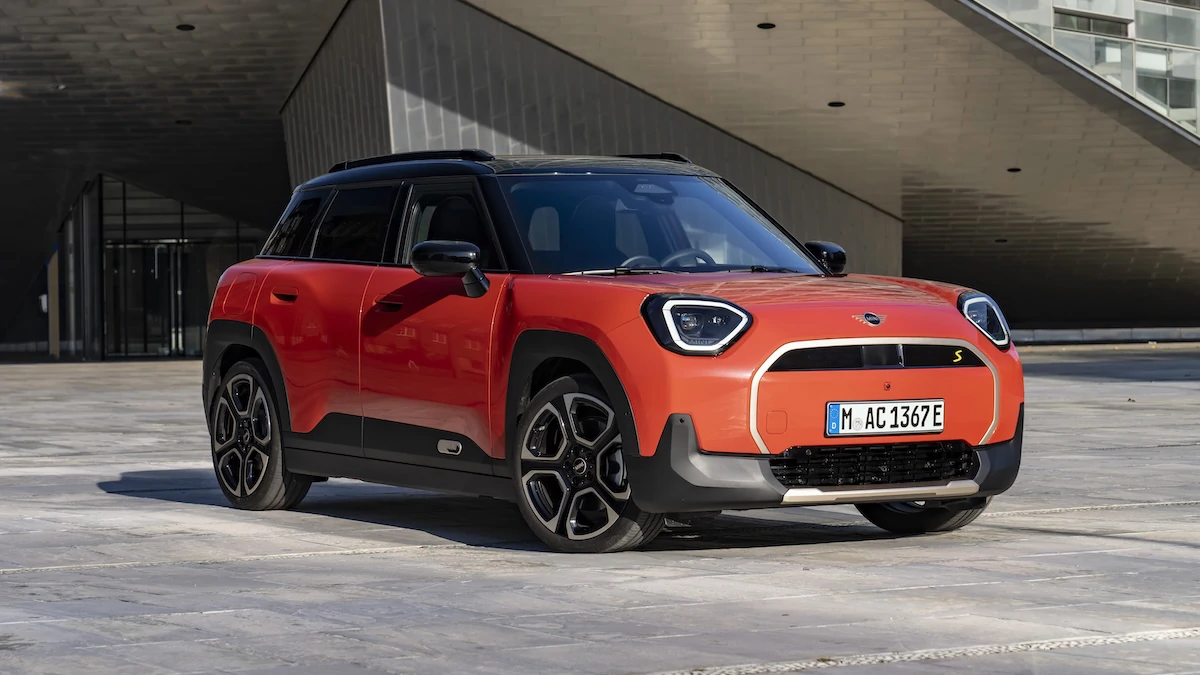
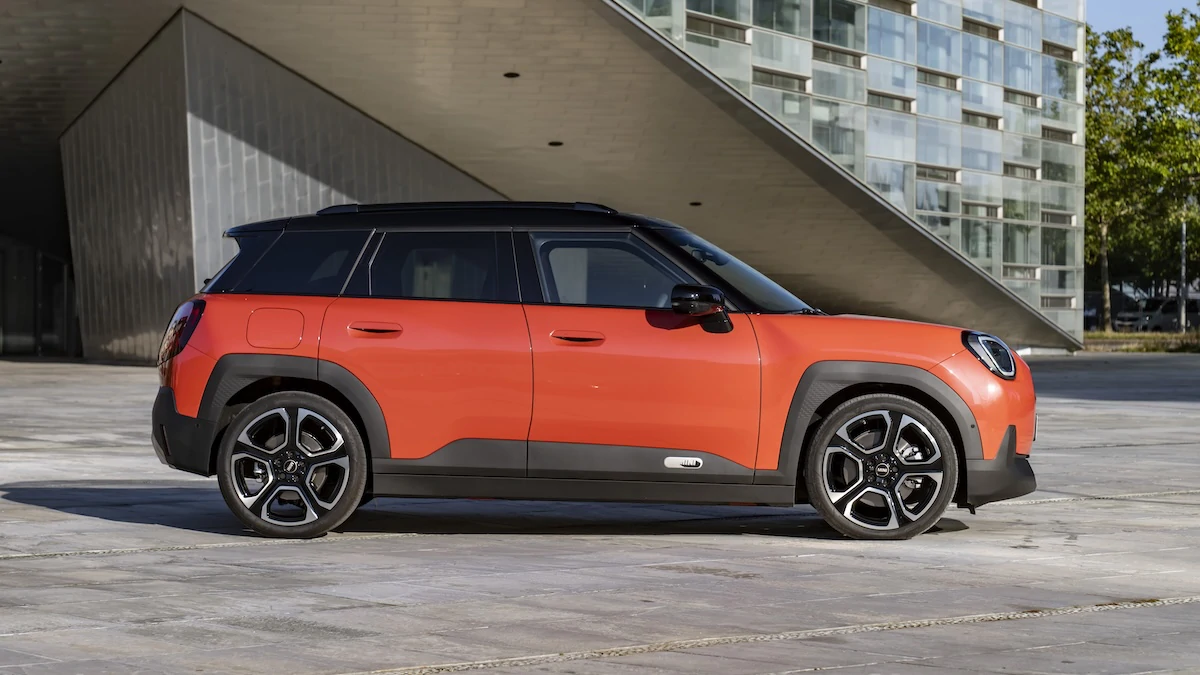
“To be Mini or not to be Mini,” that was the question the Aceman had to answer early on. Ultimately, its designers went for dimensions closer to the Cooper. At 4,079mm long, 1,754mm wide, and 1,514mm tall, the Aceman is 221mm longer, 2mm narrower, and 54mm taller than the J01; versus the Countryman, it’s 366mm shorter, 89mm narrower, and 121mm lower. The 2,606mm wheelbase and 143mm ground clearance technically make it a stretched J01 that sits higher off the ground—and your only option at the moment if you want an electric Mini with five doors and compact dimensions.
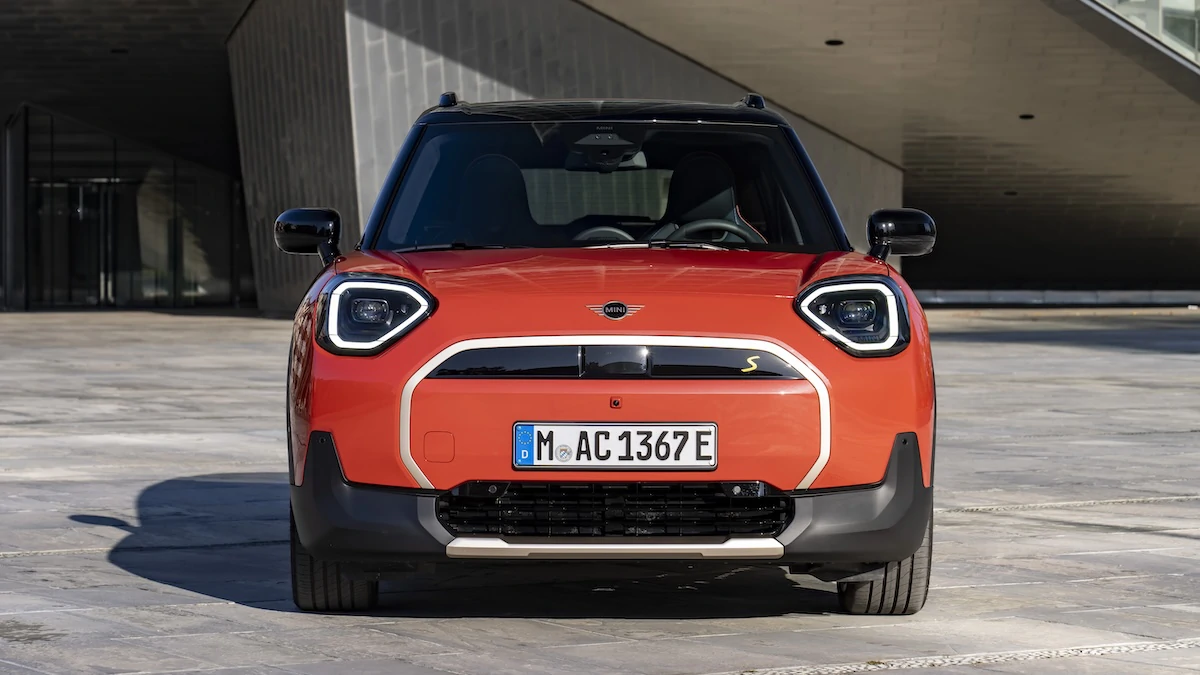
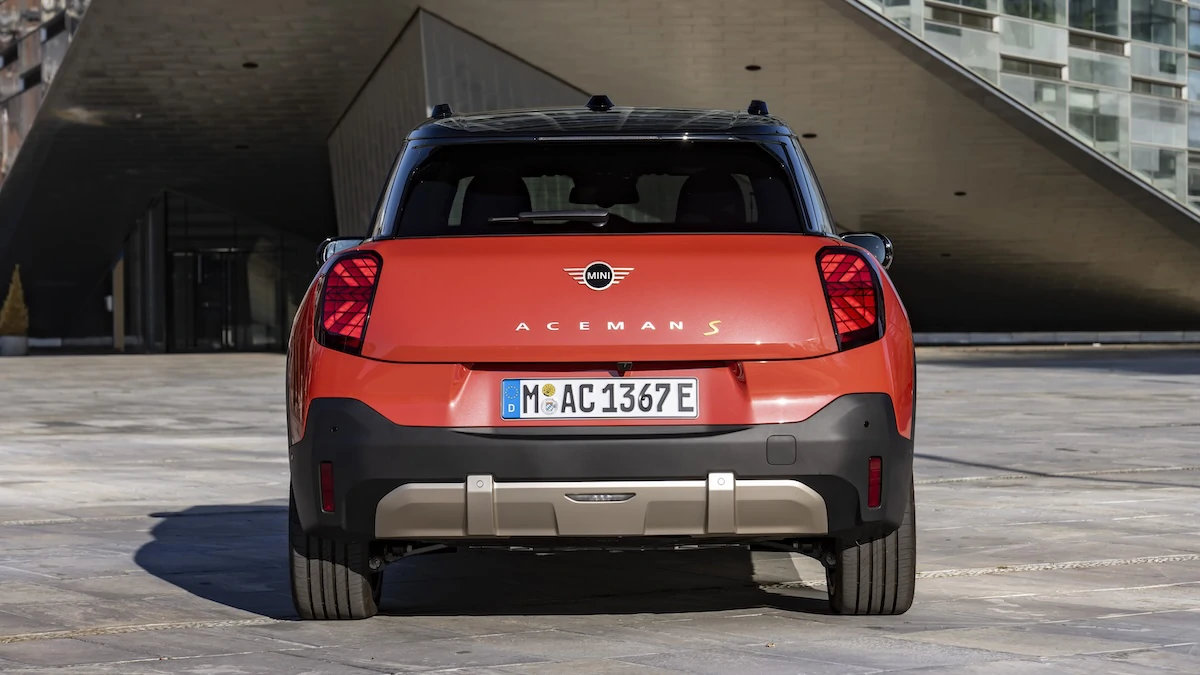
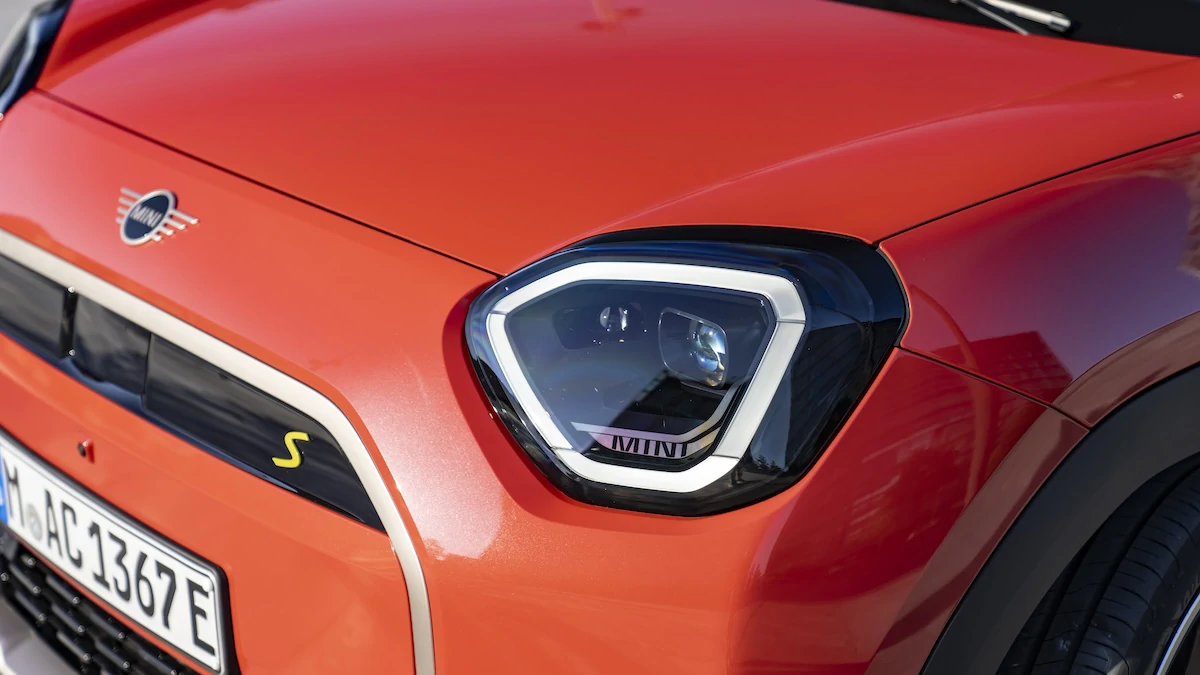
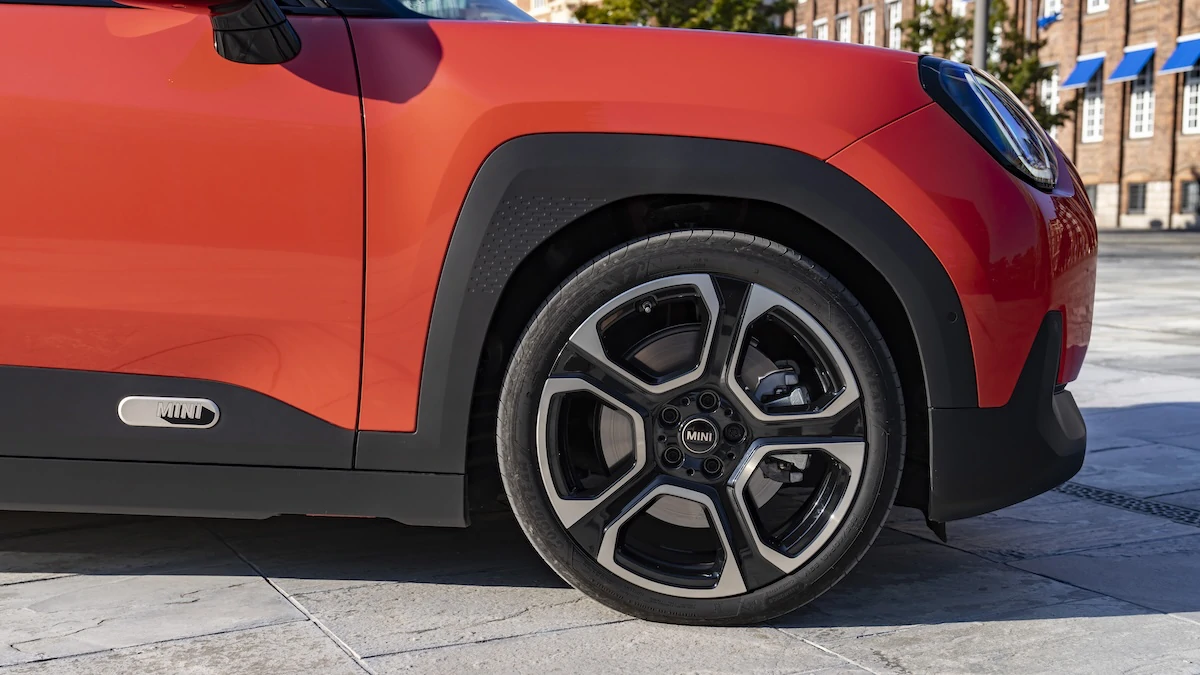
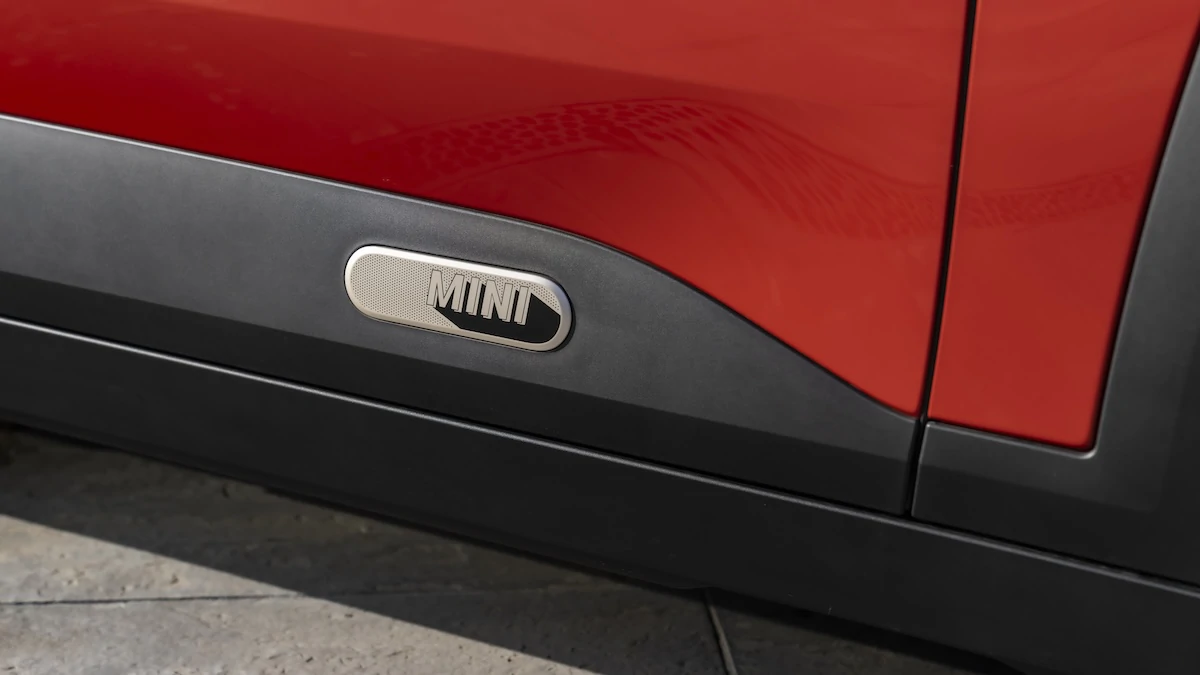
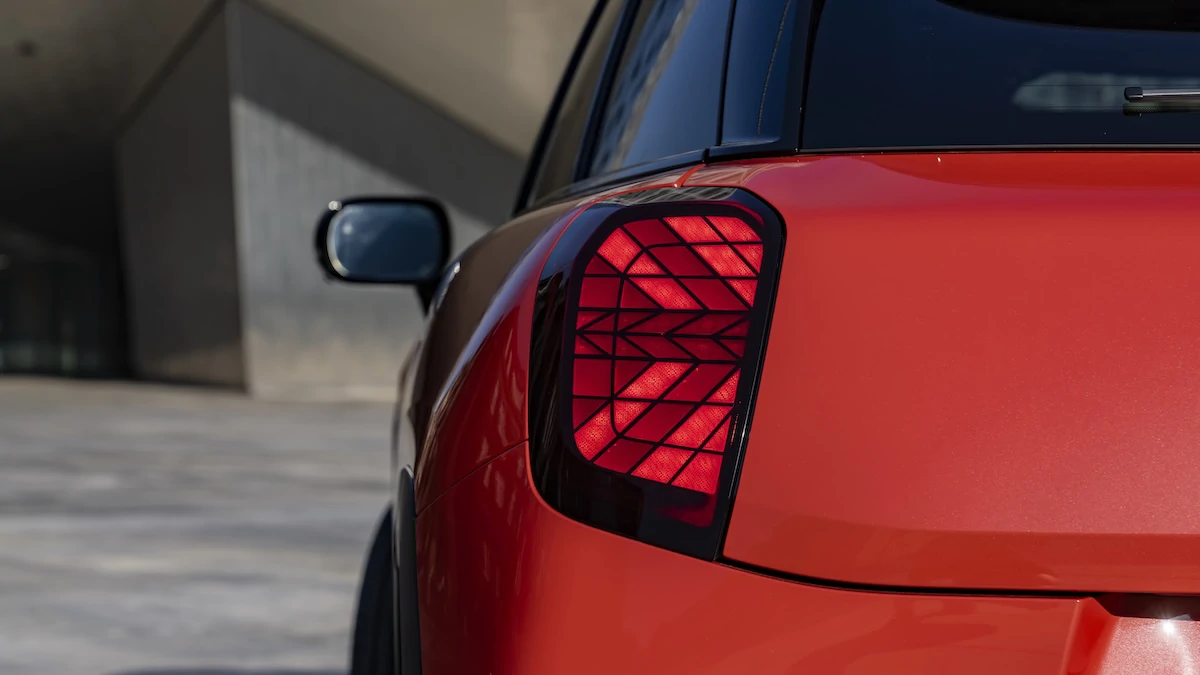
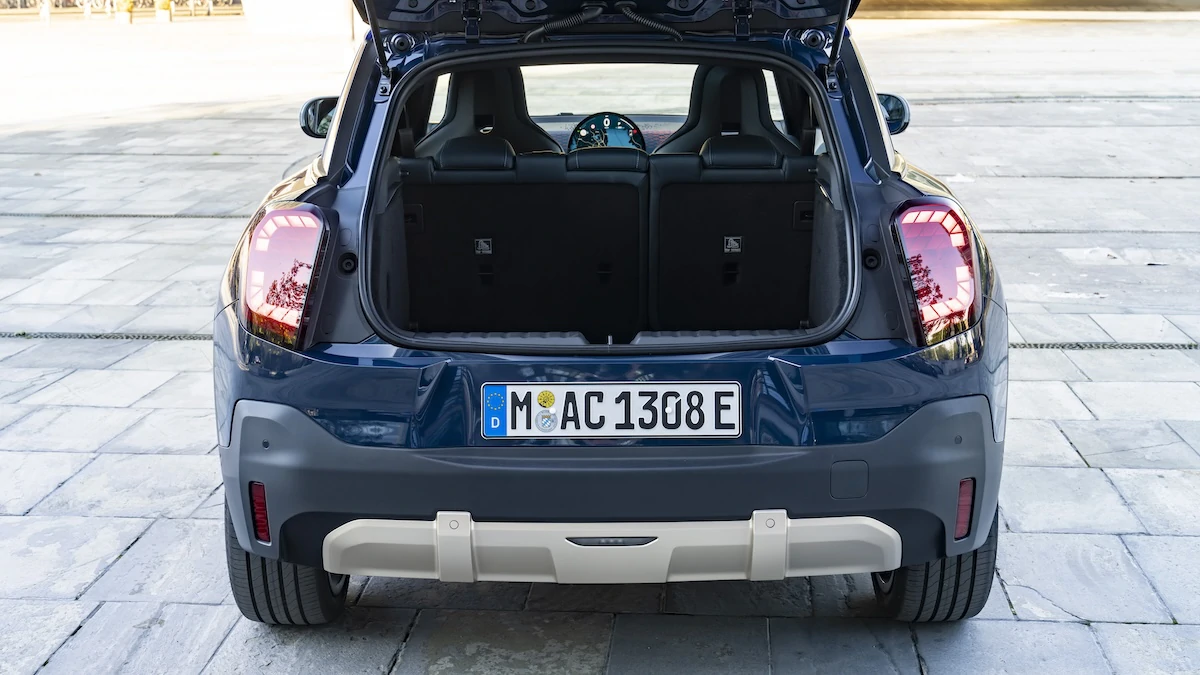
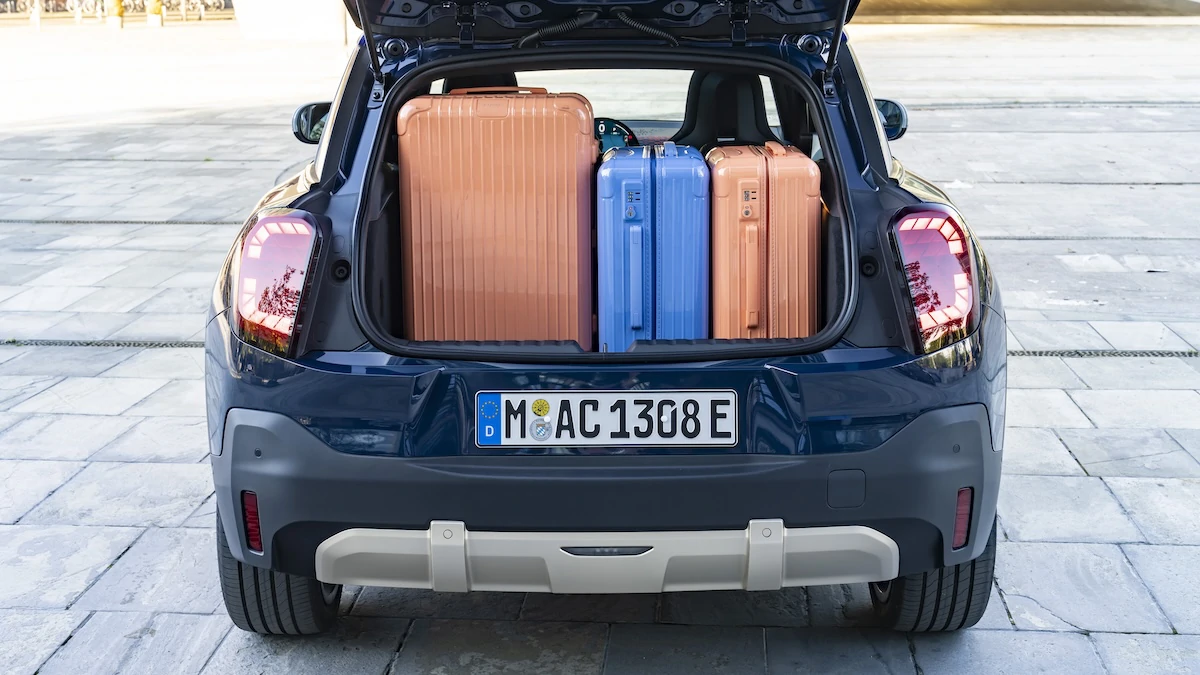
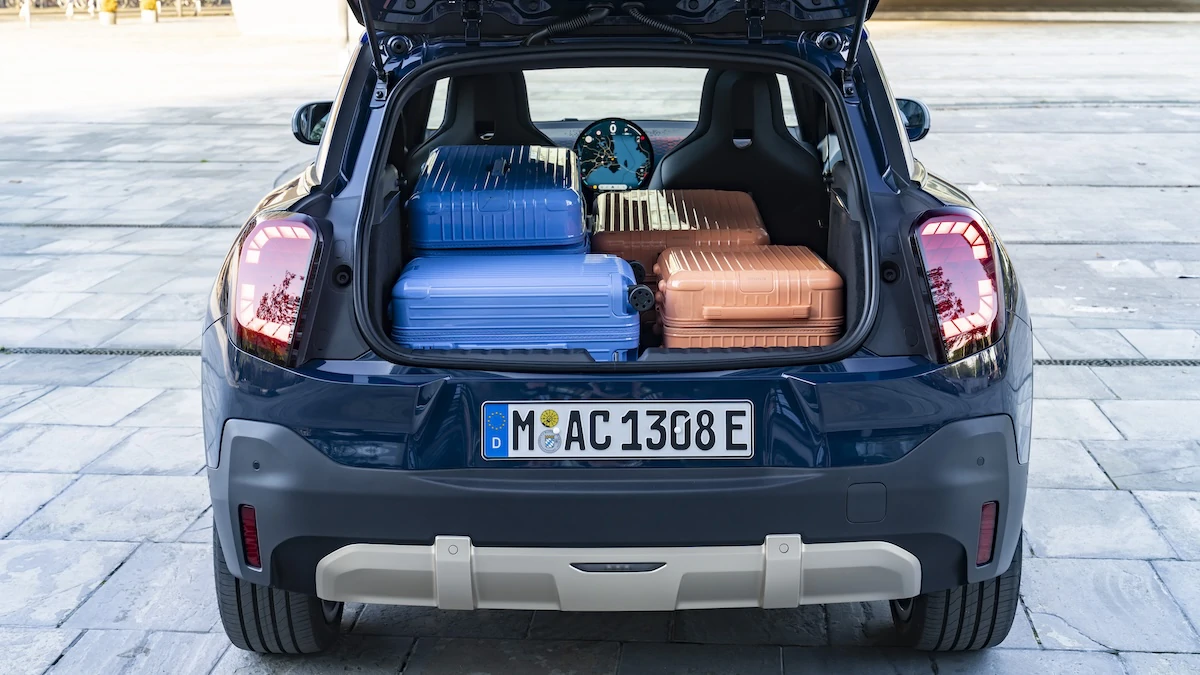
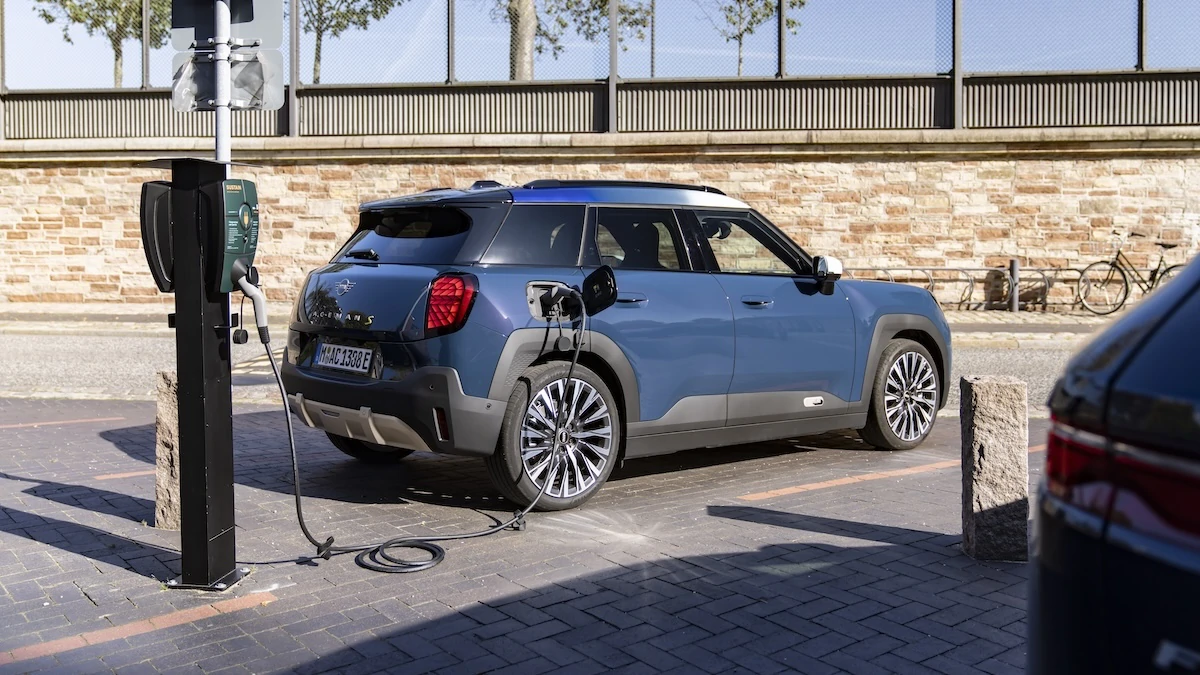
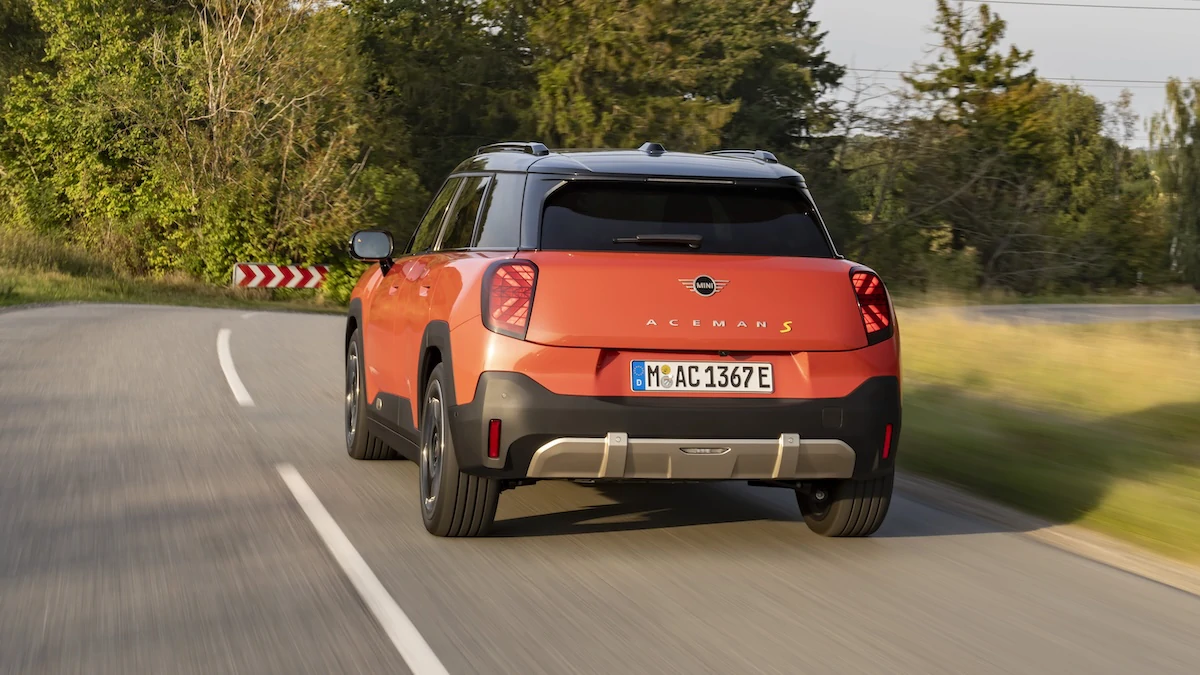
The exterior is very much in line with the other electric models in the range. In place of a grille, there’s an octagonal outline on the fascia, flanked by polygonal headlamps that boast three different lighting signatures. It’s modern but unmistakably Mini. Wheel-arch trim and lower body cladding break up the slab-sidedness of the profile, and at the back, the rugged bumper emphasizes that this is a crossover. The taillights also get three different lighting signatures synced with the front. Opening the hatch reveals 300 liters of cargo space (up to 1,000 liters with the rear seats down), but the high loading lip will be an issue if you need to put something heavy into the trunk.
An option on the Indigo Sunset Blue units in our convoy is something called a Multitone roof, which starts off white at the front and then darkens into a purplish cobalt hue as you move back. The Rebel Red units, meanwhile, get a solid black contrast roof.
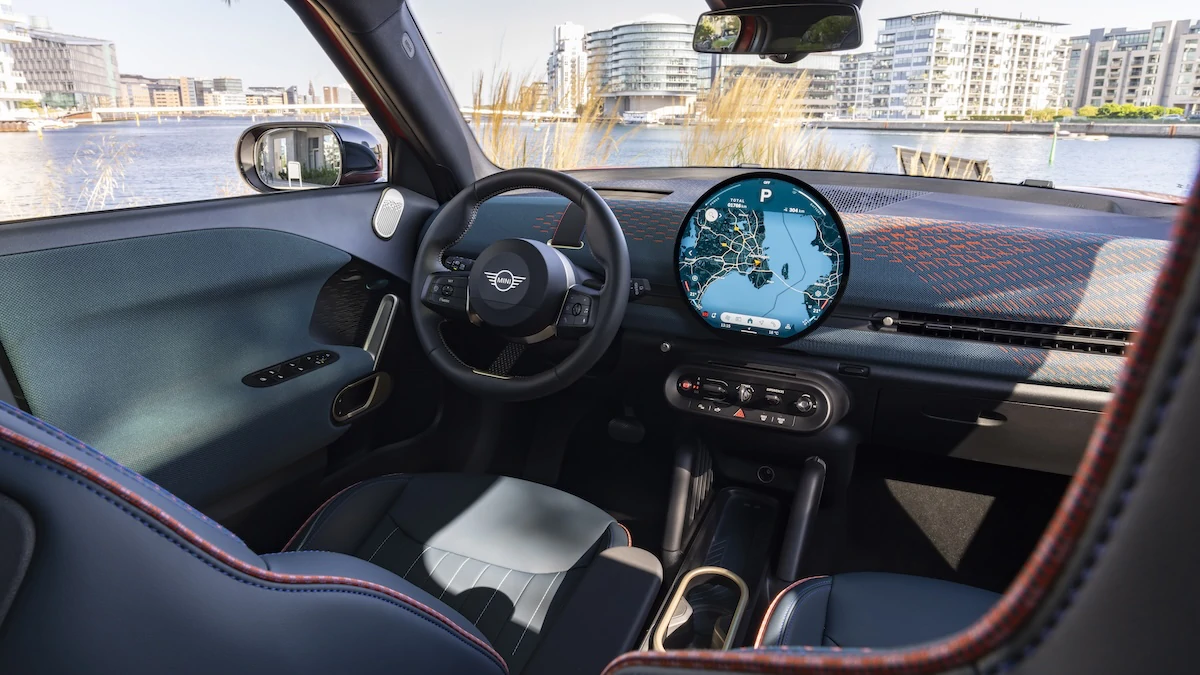
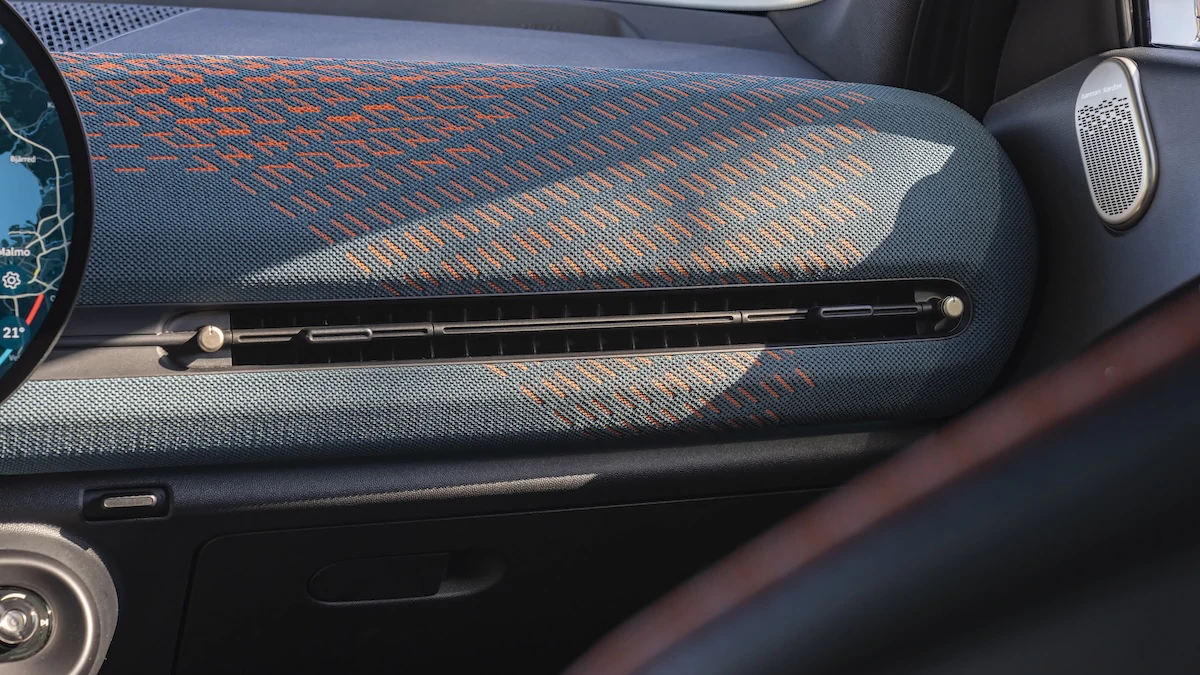
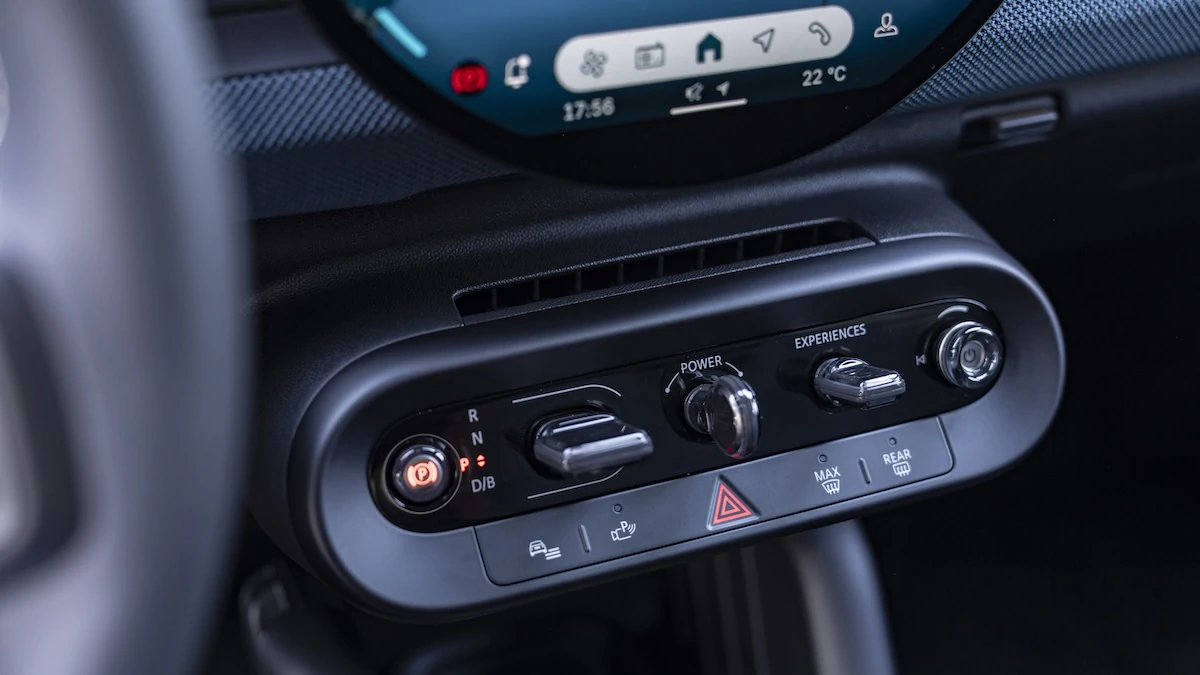
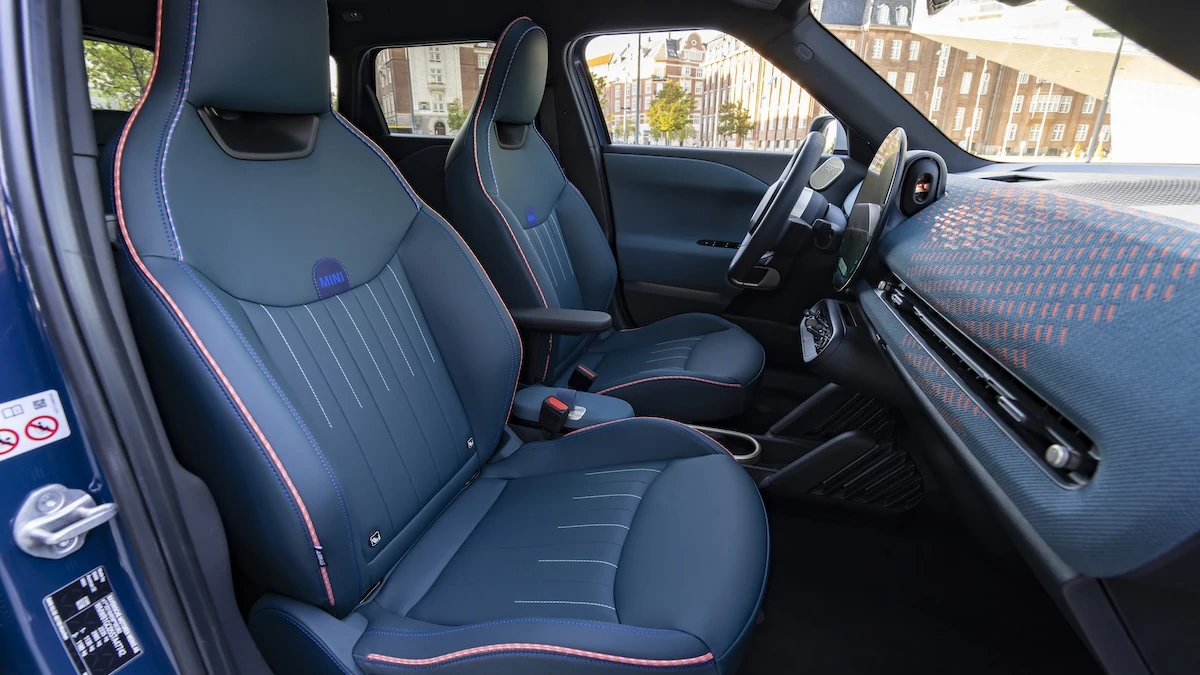
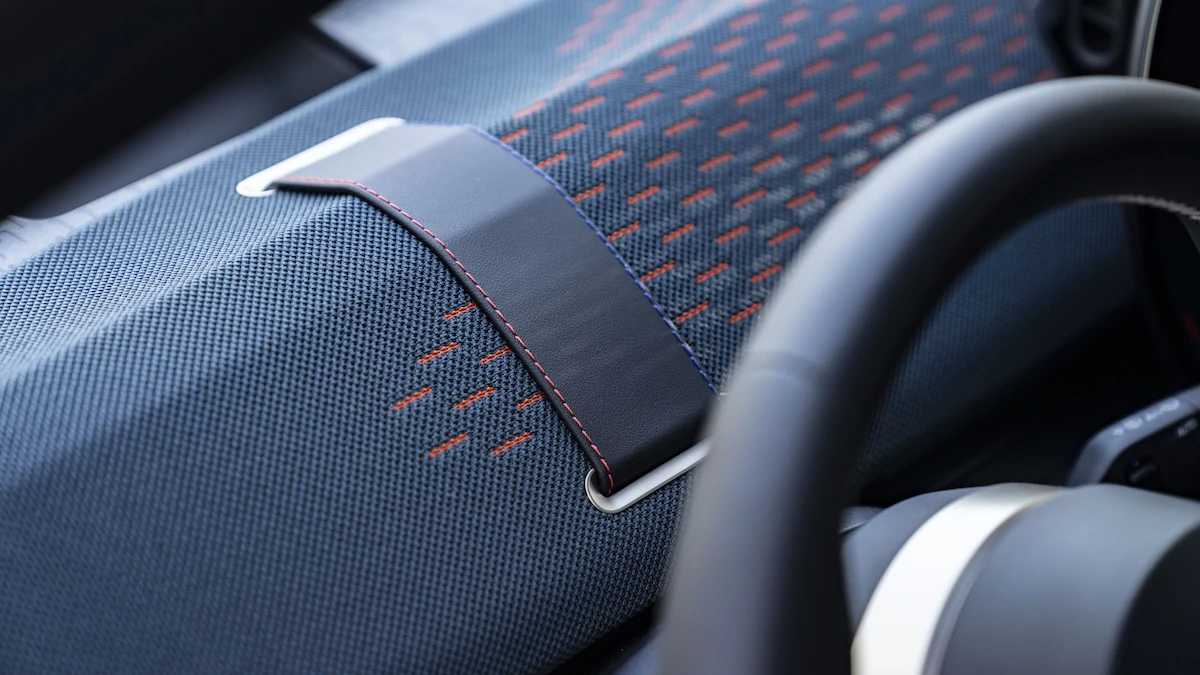
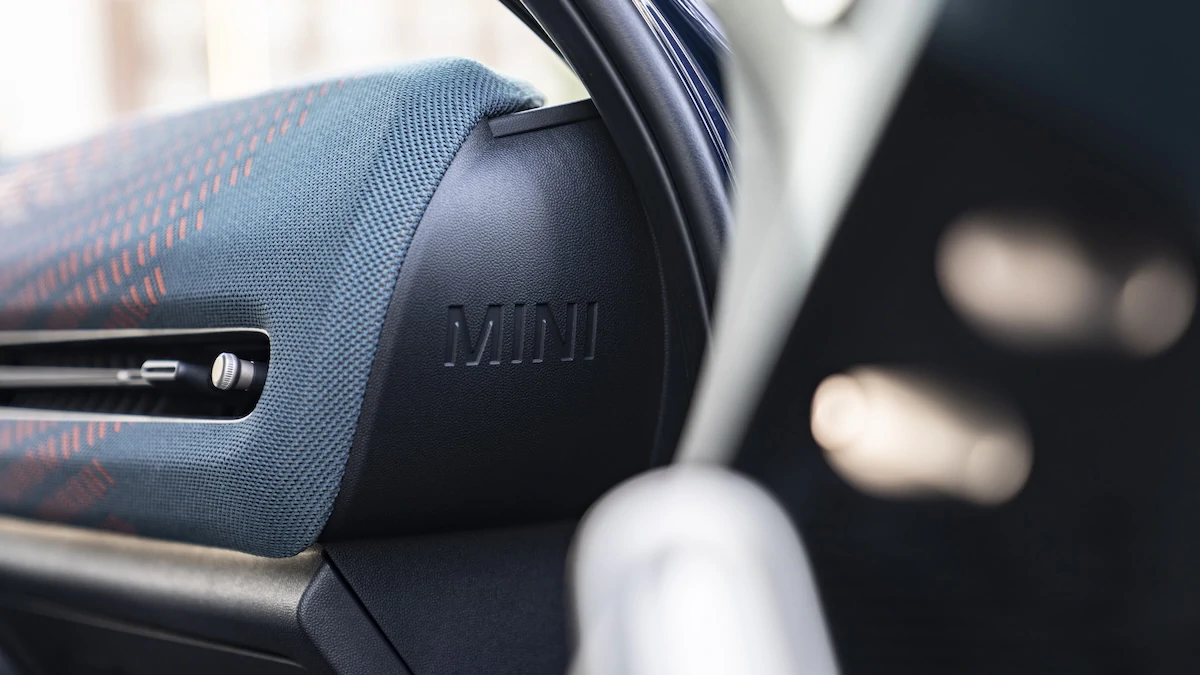
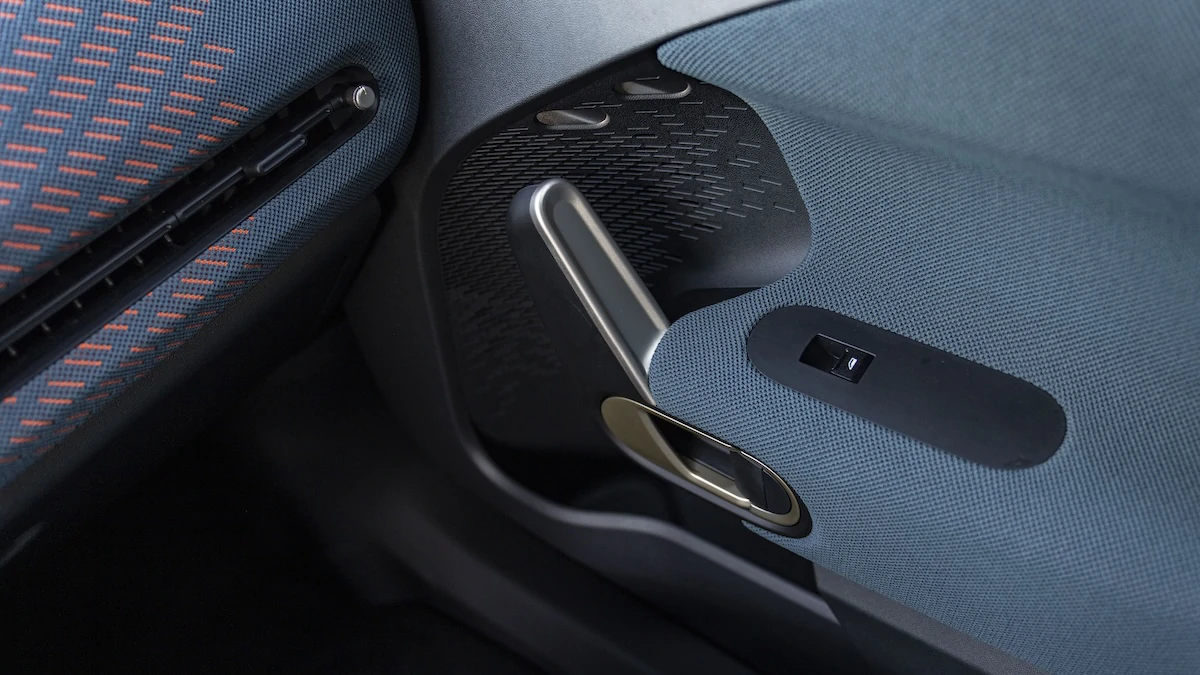
You won’t mistake the cabin for anything other than a Mini, either. The simple dashboard architecture is livened up by playful colors, recycled 2D-knit textiles, and interesting shapes, with the 240mm circular OLED touchscreen running on Mini OS 9 serving as the literal centerpiece. Save for the optional head-up display, it’s your only interface for multimedia, driving information, and vehicle settings, but touch operation is mostly seamless and responsive, and the graphics quality is phenomenal.
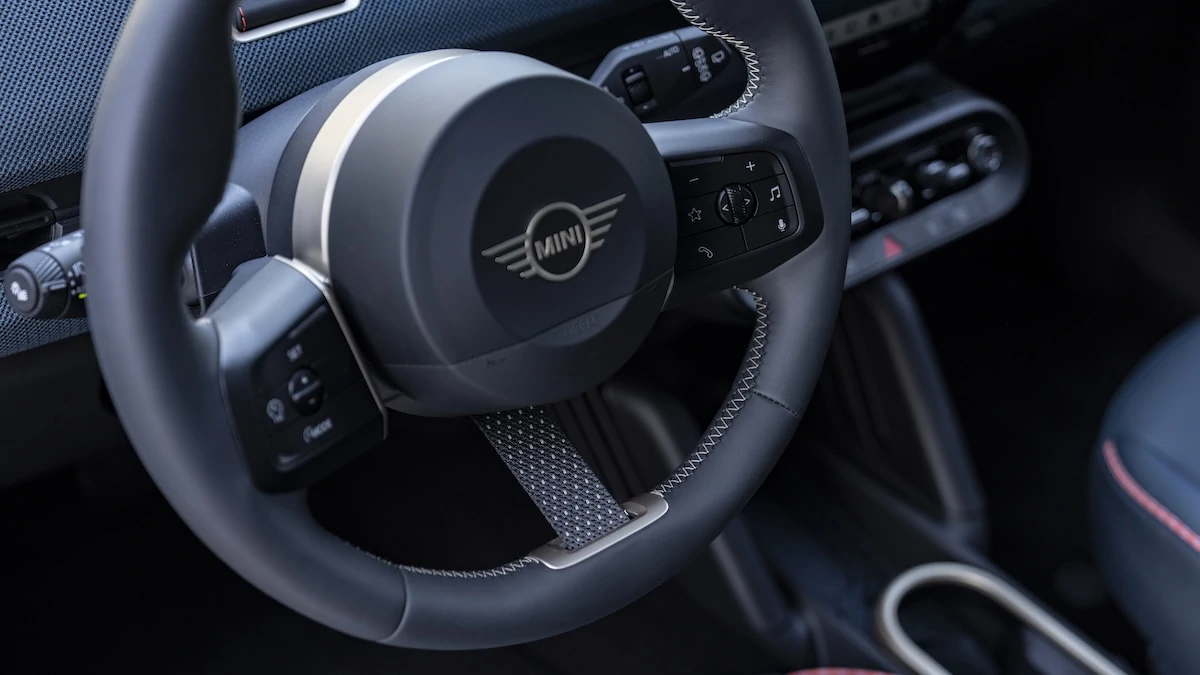
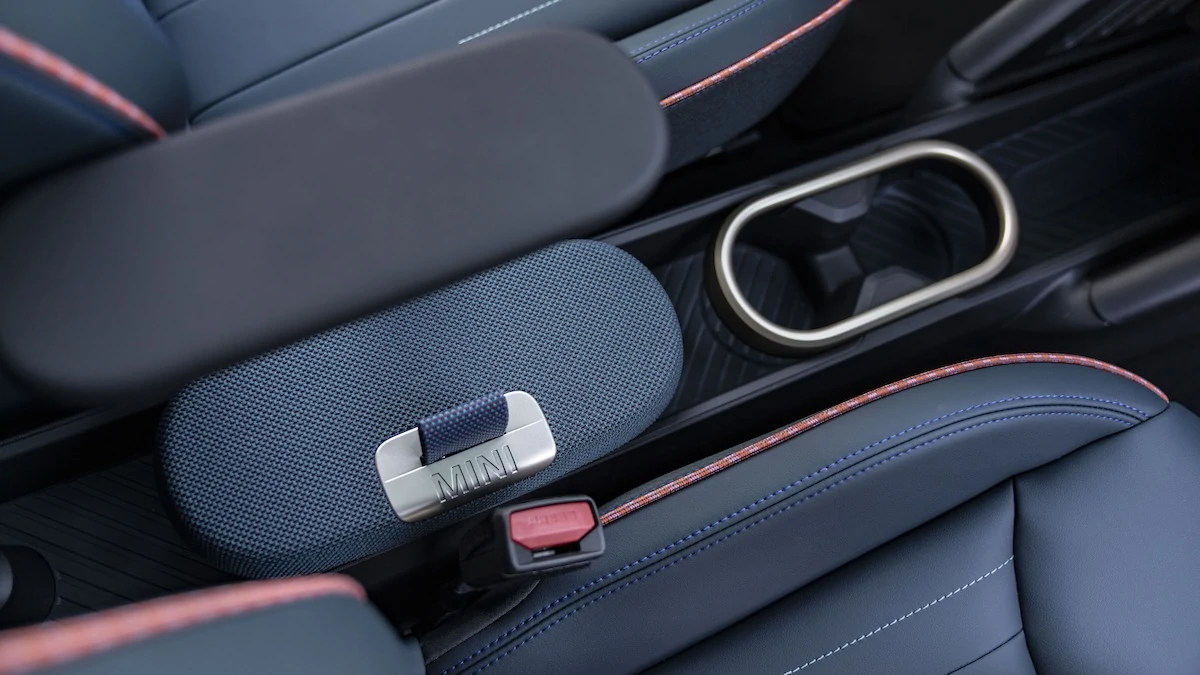
To minimize distractions on the road, there’s a voice assistant in the form of an animated dog called Spike, as well as physical controls on the steering wheel and the toggle bar on the center console. The latter houses the ignition switch, gear selector, parking brake, volume knob, and a toggle for the Experience Modes, which mostly change up the look of the interface, the ambient lighting and sound, and the content shown on the screen. Some modes do alter the driving characteristics of the vehicle.
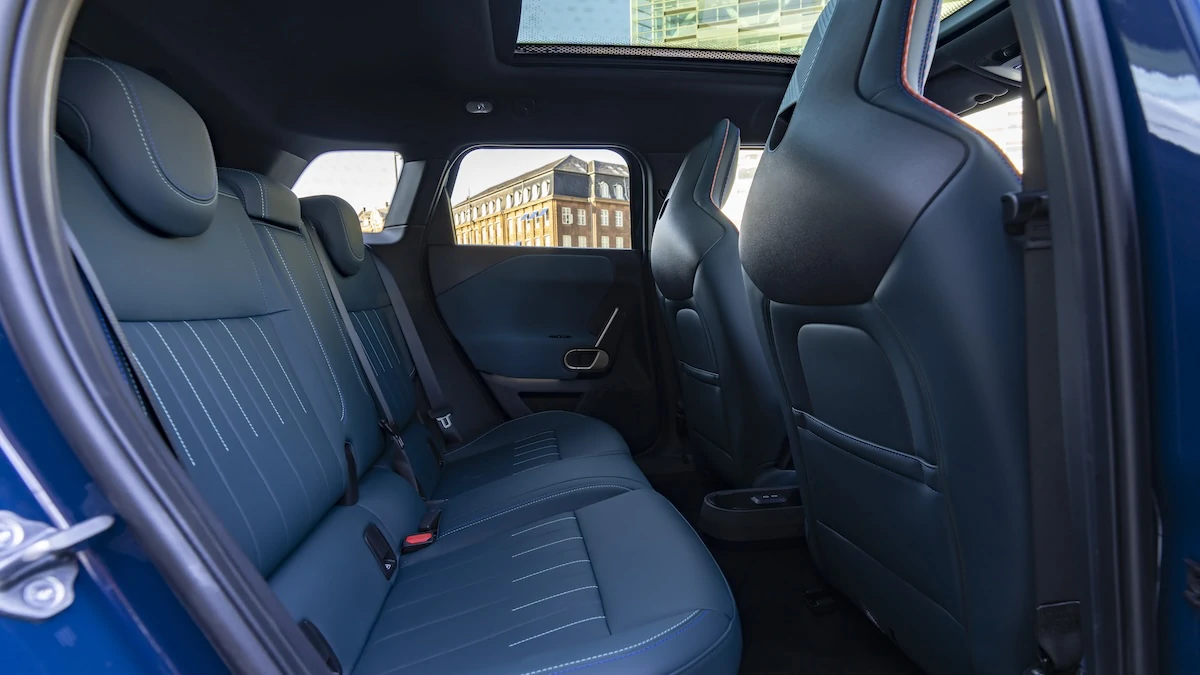
Speaking of altering, there are various optional add-ons available. Our test car in Favored Trim is equipped with John Cooper Works seats covered in vescin, a panoramic glass ‘skyroof,’ a sports steering wheel, and a Harman Kardon audio system, among others. So far, so Mini, but does the Aceman drive like one?
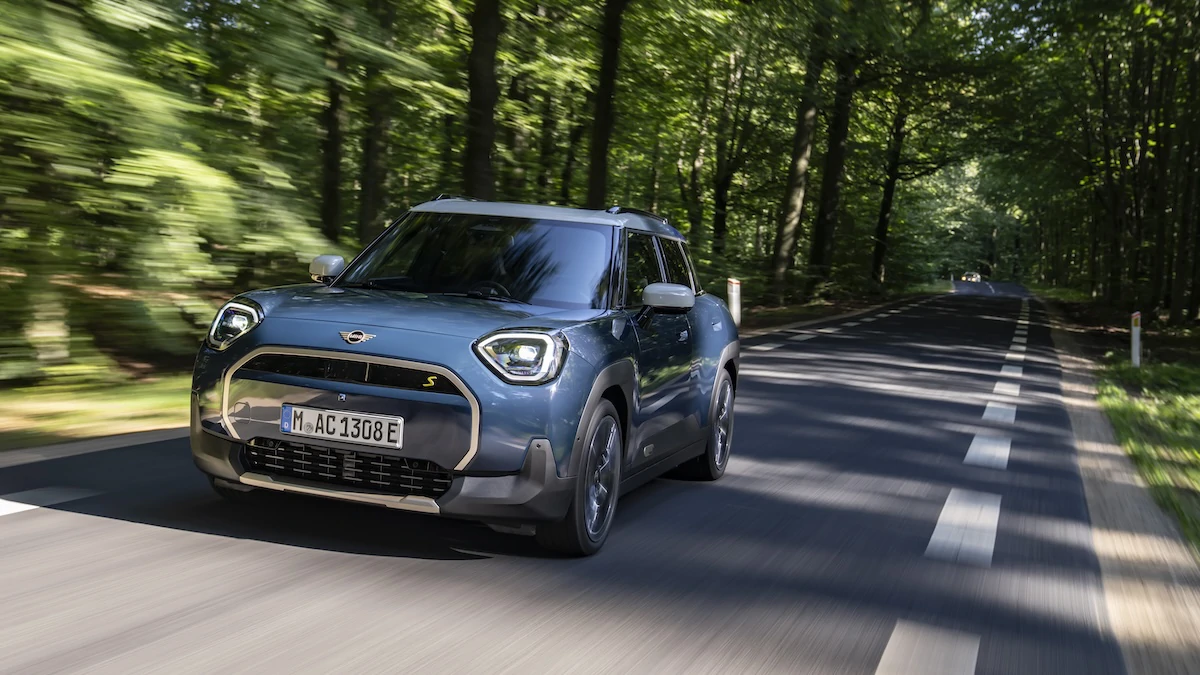
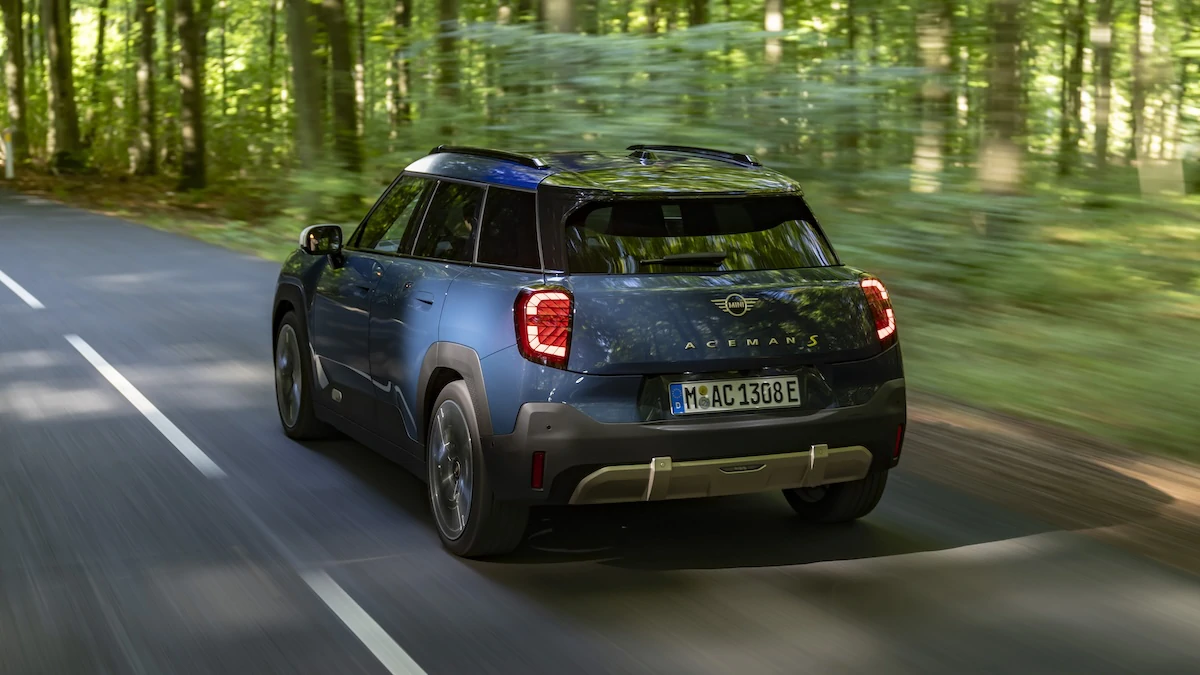
Like the J01 Cooper, the Aceman was co-developed by BMW and Chinese carmaker Great Wall Motor under the joint venture company Spotlight Automotive. Right now, China is the only manufacturing hub for these models, with a facility being set up in Oxford to churn out Coopers in about two years’ time. Mini and BMW have stressed, however, that apart from the Chinese involvement in building the cars and some early input on the battery-electric powertrain, everything else is theirs, from the design to the overall engineering.
The powertrain is exactly the same as in the Cooper. Whichever variant you go for, the Aceman gets a single electric motor, which, in this higher SE spec we’re driving, makes 215hp and 330Nm of torque. That’s good enough for 0-100kph in 7.1sec (versus 6.7sec in the Cooper SE) all the way to a top speed of 170kph. There are no base E variants to test (181hp, 290Nm), but I get the sense that the SE’s output is just right for the car’s size and heft.
Full EVs are spritely off the line, and this aspect of electrification suits the agile and spirited driving behavior that Minis are known for. The Aceman won’t win drag races, obviously, but you get a surge of power right away when you step on the go-pedal. If you’re in a mode that doesn’t pipe in some fake engine noise to help convey how fast you’re going, it’s easy to go past the speed limit.
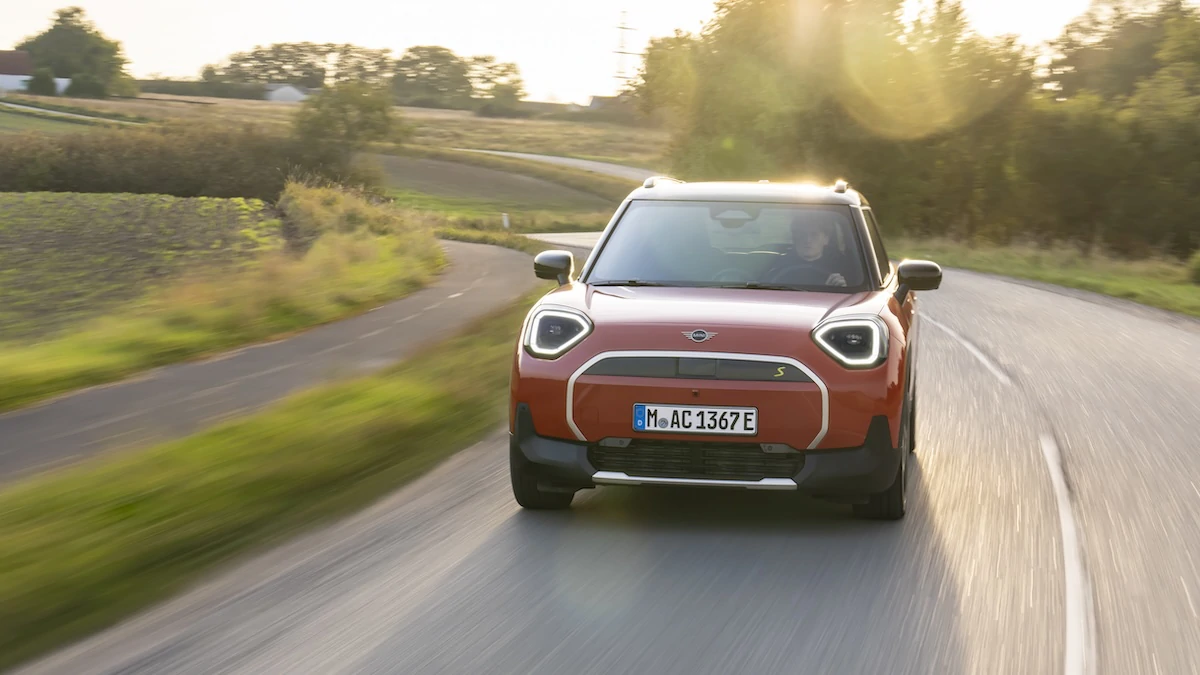
There are up to seven Experience Modes, including ‘Timeless’ with a beautiful vintage aesthetic. ‘Go-Kart’ is what you want for the full Mini experience. It lets out a ‘woohoo’ once activated, and plays an ‘exhaust’ soundtrack meant to evoke the brand’s sportier cars. Doesn’t sound realistic at all, though that doesn’t seem like the intention—the point is to help make the drive more engaging.
Apart from that, it gives you quicker steering, more immediate throttle response, and I’m guessing far less range than the claimed 405km from the 54.2kWh battery. The default braking feel is the best in this mode, too, with regen not being as grabby or early as in other modes, letting you apply small dabs of stopping power when you only want to scrub off a bit of speed and not stop entirely. You can further adjust regen settings, and if you like using one-pedal driving in the city, the Aceman has one of the most intuitive systems I’ve tried.
Changing modes doesn’t alter the ride because the Aceman doesn’t come with adaptive suspension. That said, the car already does pretty well at suppressing body roll and managing weight transfer, so it’s still fun to throw around corners even if the steering could use just a bit more feel and feedback. It’s definitely not the cushiest of rides—the people who made this car admit that Minis aren’t renowned for comfort, but it’s a fact that most target buyers are aware of and ready to live with, they say. So while the suspension is reasonably compliant, the prevailing attribute of the ride is firmness. It’s not quite a Mini if you don’t come out of it wanting a massage after a day of hard driving.
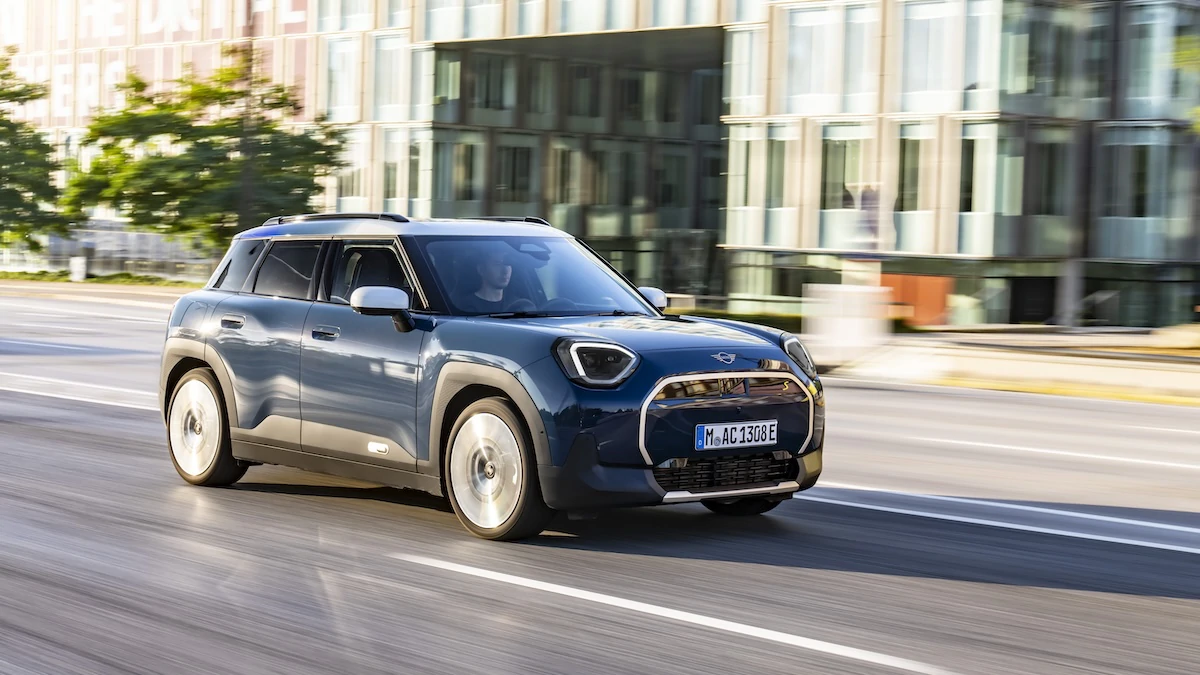
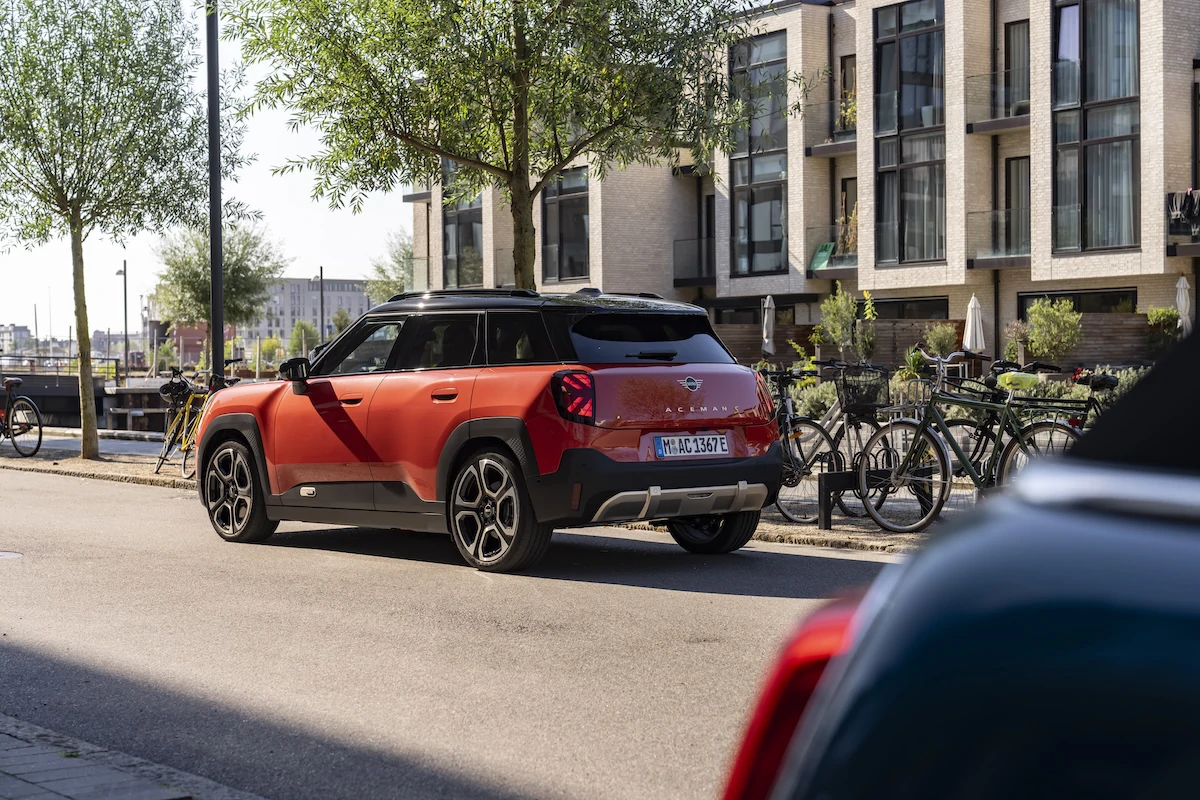
To answer the question earlier, the Aceman does drive like a Mini. It also looks like one, is an acceptable size to be called one, and has the rizz to win over a new generation of owners and fans like the classic did. Unsurprisingly, it has lost most of the raw tactility and analog feel that even the modern petrol-powered Minis possessed, and no amount of simulated engine noise can be as engaging as the real thing. That’s the advent of electronics and electrification for you.
Still, it has a way of keeping you engaged behind the wheel. Beyond all the tech, which sometimes feels gimmicky, this is a car that’s very eager to be driven and keeps you entertained on twisty roads with Mini’s signature keen handling and peppy acceleration. It’s true that the electric Cooper delivers a sportier driving experience, but the Aceman demands fewer compromises than its three-door hatchback sibling does—and also provides the practicality of a crossover without being as polarizing as the Countryman.
In terms of getting the balance of form, function, and fun just right, it comes closest to the OG. And for that, I think it will enjoy a much longer existence than the other modern Minis before it.
More photos of the Mini Aceman: