We all know that we shouldn’t drink and drive, but with all the social gatherings resuming and ‘ber months fast approaching, alcohol is an inevitable part of events and parties.
Unfortunately, along with speeding, texting while driving, and human error, drunk driving makes up 25% of the causes of total road crashes in the Philippines, which leads to 11,000 deaths annually in the Philippines.
Last year, the LTO's Law Enforcement Service-Anti-Drunk and Drugged Driving Enforcement Unit responded to 402 road crash incidents from January to August 2022, where 353 of the drivers involved tested positive for alcohol intoxication. Data from the Philippine National Police-Highway Patrol Group (PNP-HPG) also shows that the number of road accidents caused by drunk drivers rose to 59 incidents or at least 90% in November 2022, compared to 31 recorded in the previous month of the same year.
For the past 10 years, we’ve had a law in place prohibiting those under the influence of alcohol and drugs to operate motor vehicles to protect the welfare of the general public. But how much do we actually know about it?
ALSO READ:
All you need to know about the Child Car Seat Law in PH
Here’s your ultimate guide to the LTO driver’s license
What is Republic Act No. 10586?
Republic Act No. 10586, or the “Anti-Drunk and Drugged Driving Act of 2013” states that it is unlawful for any person to drive a motor vehicle while under the influence of alcohol, dangerous drugs, and similar substances. The law enacted on May 27, 2013, aims to protect citizens’ lives and properties by promoting responsible and ethical driving.
What does the law cover?
The law makes it illegal for anyone to drive a vehicle while under the influence of alcohol, dangerous drugs, or other similar substances.
Based on the simple implementing rules and regulations of the law, alcohol refers to alcoholic beverages such as beer, wine, beer and distilled spirits.
Dangerous drugs and other similar substances refer to substances enumerated under Republic Act 9165 (Comprehensive Dangerous Drugs Act of 2002) which include but are not limited to cannabis or marijuana, ecstasy, cocaine, and methamphetamine hydrochloride, also known as shabu.
What happens if you get caught?
Under the law, enforcement officials can only ask drivers to pull over if they believe the latter to be under the influence. Signs of driving under the influence include overspeeding, weaving, lane straddling, sudden stops, swerving, poor coordination, and the evident smell of alcohol on the driver’s breath.
Those caught driving under the influence must undergo a standardized field sobriety test, which will determine whether they drink too much alcohol or took drugs at the time of the incident.
Field of Sobriety Test
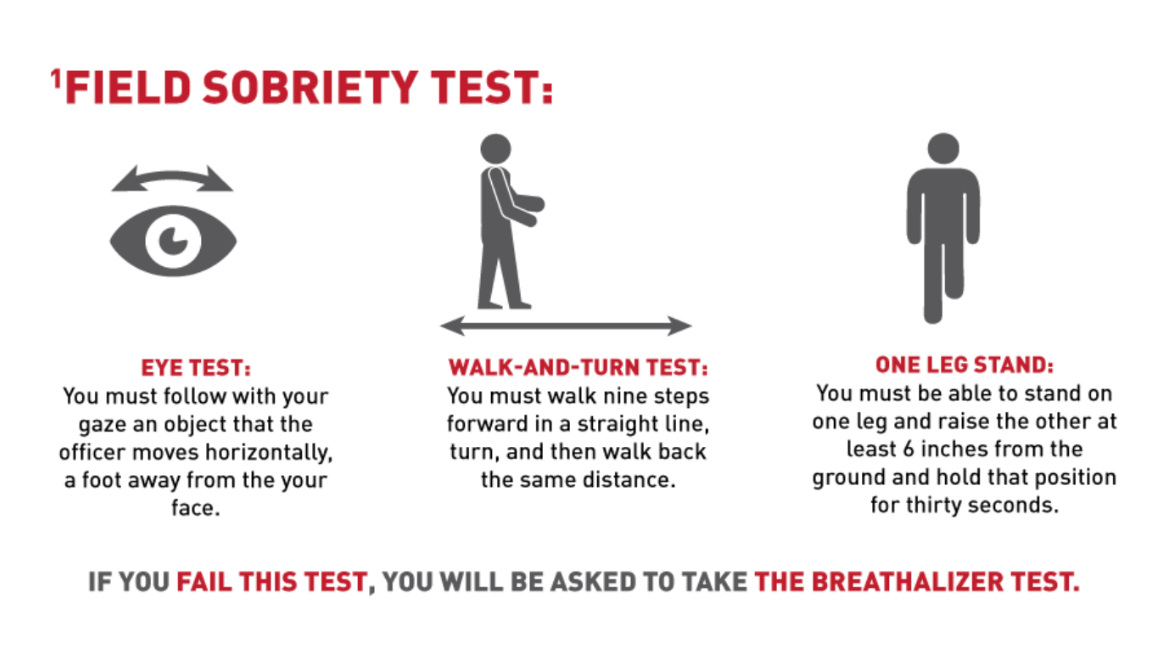
1. The Eye Test
The law enforcement officer will move an object from side to side, and you must be able to follow its movement with your eyes from a foot away from your face. This tests for involuntary jerkiness of the eyes, wich is a common symptom for those under the influence of alcohol or drugs.
2. The Walk-and-Turn
To demonstrate your ability to maintain your balance, you’ll walk heel-to-toe in a straight line nine steps forward, turn around, and walk another nine steps back. Wobbliness or failure to complete the nine-step walk is a possible indicator of intoxication.
3. The One-Leg Stand
For the last test, you must be able to stand on one leg while keeping the other foot raised at least six inches above the ground and keep the position for 30 seconds. This measures your balance and coordination.
What’s the allowable Blood Alcohol Concentration (BAC) level?
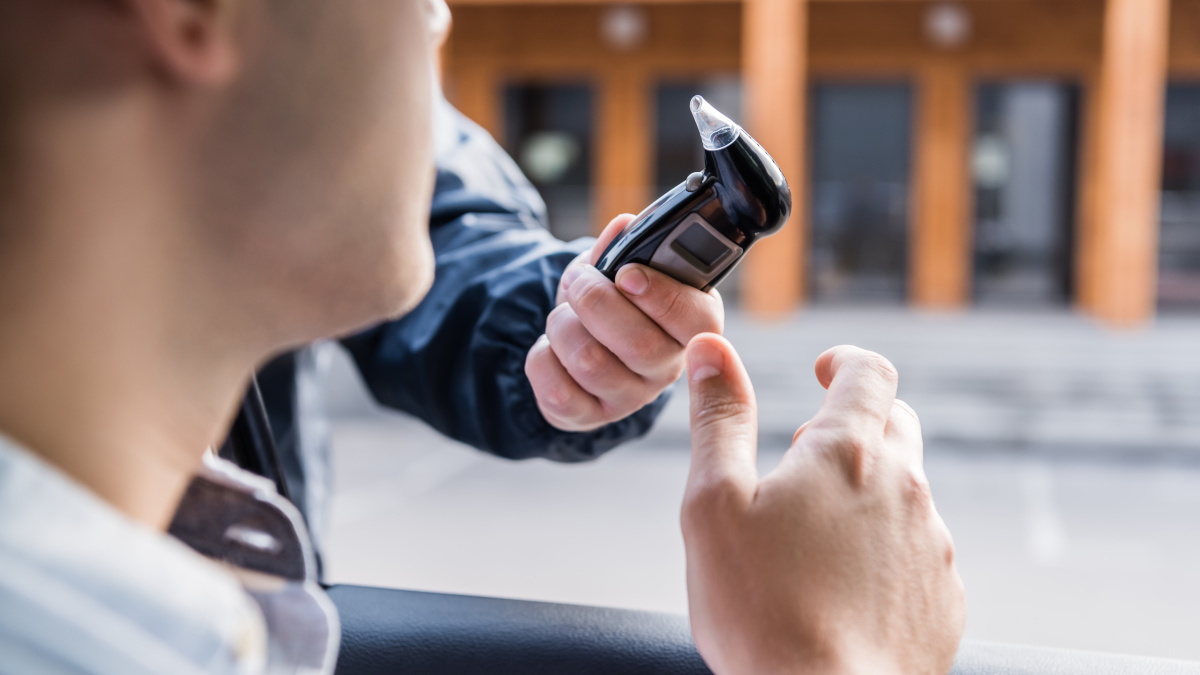
In case you fail any of the tests above, those caught driving under the influence of alcohol (DUIA) have to take an Alcohol Breath Analyzer (ABA) exam. This uses a breathalyzer to analyze the driver's Blood Alcohol Concentration (BAC) levels.
To pass this test, a driver of a private motor vehicle with a gross vehicle weight not exceeding 4500 kg. should show blood alcohol concentration levels below 0.05%.
Meanwhile, drivers of trucks, buses, motorcycles, and public utility vehicles, need to have a blood alcohol level of 0.0%.
Based on flyers handed out by the LTO to publicize the law, the typical effects of the BAC can be described as follows:
- .00-.05 = Buzz Zone: Euphoria, feelings of relaxation, loss of shyness, somewhat impaired judgement.
- .06-.11 = Drunk Zone: Impaired reaction time and muscle control, mood swings, impaired sexual performance. The legal limit is 0.08.
- .12-.15 = Elevated risk zone: Vomiting likely, risk of injury, very poor decision making.
- .15-.25 = High-Risk Zone: Blackout likely, loss of consciousness is possible, risk of choking on vomit.
- .25+ = Medical Emergency Zone: Loss of consciousness, loss or slowing of involuntary reflexes, death. A .45 BAC is fatal in 50% of the population.
ALSO READ:
Guide: What should you do when you witness a road accident?
Riders, here’s a full guide on the motorcycle dress code in PH
Typical effects of BAC
Meanwhile, those who are believed to be under the influence of drugs will be taken to the nearest police station for a drug test.
In case you refuse to take the field sobriety or drug tests, your driver’s license will be confiscated and revoked. If you pass the tests, you’ll be sanctioned only for the traffic offense for which you were pulled over.
However, if you take the test and your blood concentration level is found to be above .05%, you will be arrested and your vehicle will be impounded.
What are the penalties for driving under the influence?
Driving under the influence of alcohol/dangerous drugs imposes hefty fines and penalties. Under the original law, the fines ranged from P20,000 to P500,000 with a minimum 3-month jail term, depending on the nature of the violation and whether the act caused injuries or deaths.
In 2021, the House of Representatives approved a bill seeking to provide stiffer penalties increasing the initial fine to P50,000 and minimum 6-month jail term for driving under the influence of alcohol, dangerous drugs, and other similar substances.
The updated penalties under the anti-drunk driving law in the Philippines are as follows:
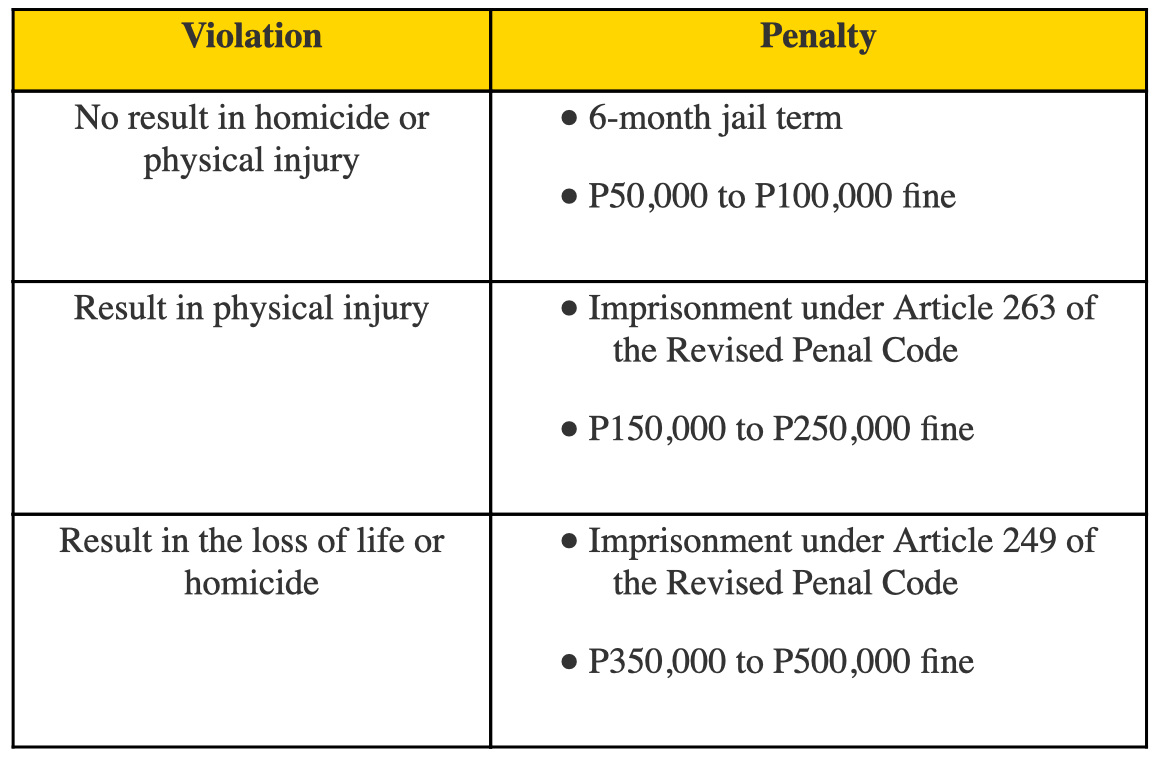
Under the measure, those caught driving drunk or drugged will face a penalty of six months of imprisonment and a fine ranging from P50,000 to P100,000 if nobody gets injured.
If somebody gets injured, stiffer penalties will be imposed on the driver. Aside from imprisonment, a fine will imposed ranging from P150,000 to P250,000.
Meanwhile, if the violation resulted in homicide, a penalty of imprisonment and a fine ranging from P350,000 to P500,000 shall be imposed.
In 2022, the LTO amended the law to state that motorists who drive after drinking alcohol or using drugs may get a twelve-month driver’s license suspension (implemented for non-professional driver’s license) for the first offense, while the second conviction would warrant a perpetual revocation of driver’s license.
For people who are holding a professional license shall be canceled the license constantly for the first offense.
What is the direct liability of the driver versus the owner of the vehicle?
It’s not just the driver of the vehicle at fault when it comes to drunk driving incidents. The law penalizes both the DRIVER and the OWNER of the vehicle involved in cases of public utility vehicles and commercial vehicles such as delivery vans, cargo trucks, container trucks, school and company buses, hotel transports, cars or vans for rent, taxi cabs, and the like.
According to the law: “The owner and/or operator of the motor vehicle driven by the offender shall be directly and principally held liable together with the offender for the fine and the award against the offender for civil damages unless he/she is able to convincingly prove that he/she has exercised extraordinary diligence in the selection and supervision of his/her drivers in general and the offending driver in particular.”
How to avoid drunk driving
Drunk driving is not about making a bad decision because of peer pressure. It is a criminal act that can result in the unnecessary loss of life. Given the stiff penalties that you could face, possible injuries and death, it makes sense just not to drink if you’re planning to drive.
If you’re planning to go out partying with friends, remember to drink responsibly. Avoid drinking alcoholic beverages on an empty stomach and consume lots of water throughout the night to make sure you’re still in a good state to drive. You can also sober up at a nearby cafe before going back behind the wheel.
The best and safest options if you’re planning to get wasted is to just book a taxi or ride sharing service, spend the night at a friend’s place, or ask to be picked up by a designated driver instead.
Stay safe on the road!