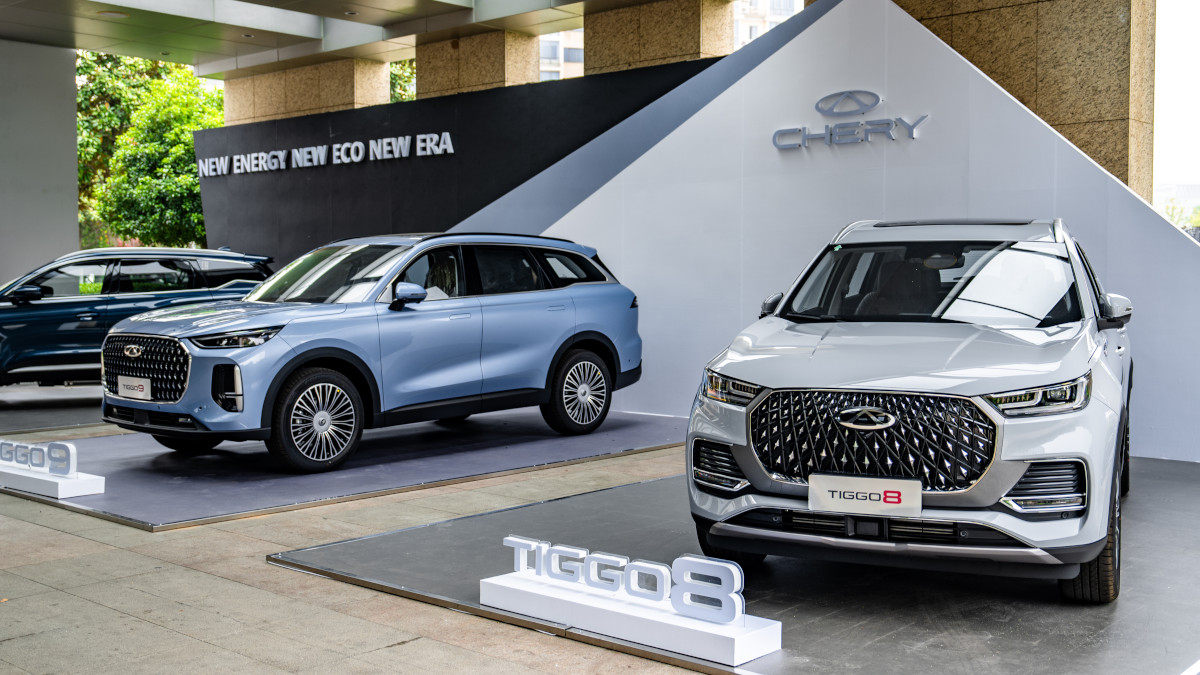
The Chery of today is a far cry from the Chery of yesteryear. While the Filipino consumer was first introduced to the brand with the infamously bad but cheap and not-quite-so-cheery QQ in the mid-2000s, after a few changes of distributorship, Chery Philippines is now handled by industry veterans of United Asia Automotive Group (UAAGI) and almost unrecognizable from its checkered predecessor.
Unbeknownst to most, the state-owned Chinese car manufacturer is and has been the leader in Chinese automotive exports for 21 years. Driven mainly by demand in Russia (as most carmakers have pulled out of the war-happy nation), Central and South America, and Southeast Asia, it has seen massive growth and expansion in such a short time, fueled by a shift to new energy vehicles such as battery electric vehicles (BEVs) and hybrids.
OTHER STORIES YOU MIGHT HAVE MISSED:
Auto China 2024: Mazda unveils its all-new electric sedan, the EZ-6
Auto China 2024: The Geely Galaxy Starship isn’t just a concept—it’s the company’s future
In our market, it has had modest success thus far, with an entire lineup focused exclusively on SUVs, specifically the Tiggo range. It is poised for growth, however, with some new models fitting into the niches that the brand has carved out for itself with SUVs of various sizes and powertrain configurations. Chery Philippines flew us to China, first to Beijing for Auto China 2024, then to its international headquarters and factory in Wuhu, to see what exactly it has been cooking up.
A plug-in hybrid as the main Auto China showcase
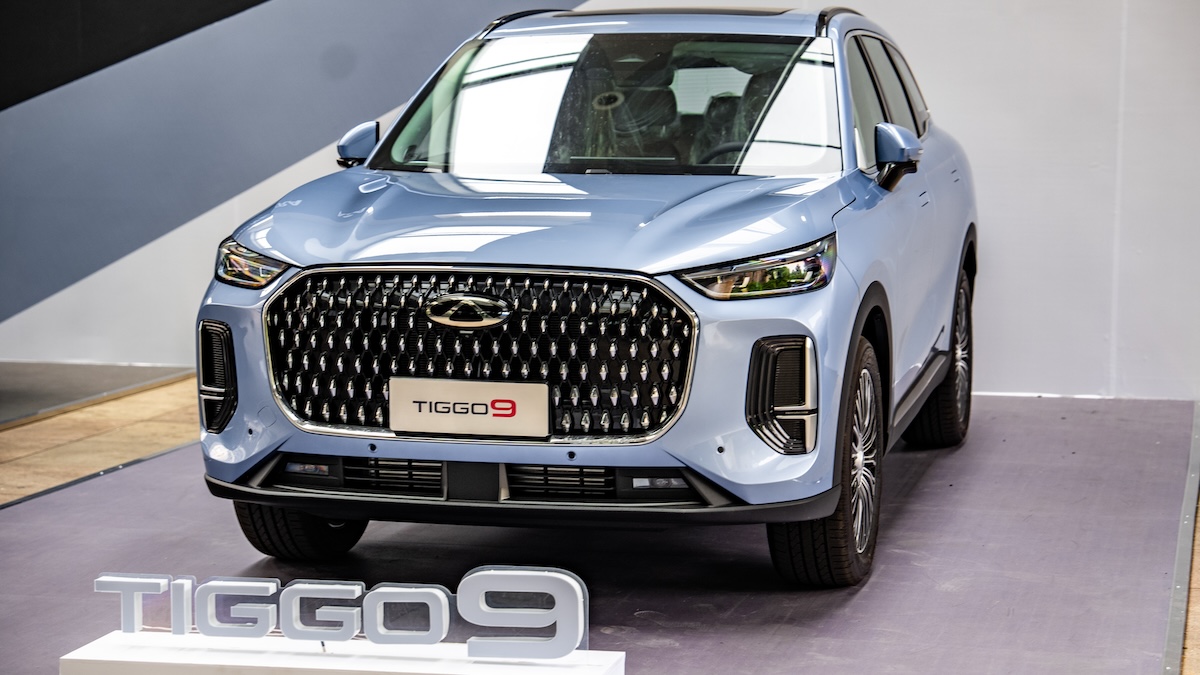
Chery’s booth at this year’s Auto China was massive in size, but somewhat more muted when it came to the cars that were on display. Yes, it showed off some interesting a flying car and some conceptual EVs, but more important, it launched only one new vehicle during the show, the Chery Tiggo 9 PHEV. It is a large premium SUV from the brand and serves as the flagship of the Tiggo range.
The Tiggo 9 is powered by a 2.0-liter turbocharged gasoline engine delivering 234hp and 385Nm of torque, mated to an eight-speed automatic transmission. Chery claims that fuel consumption should only be about 19.2km/L, which is an impressive claim given the size of this SUV. It also claims that the 221hp electric motor, working in tandem with the engine, extends the range beyond 1,400km on a full tank of gas.
While the overall design is reminiscent of an Audi, with a tiger-themed fascia like Kias of a generation ago, the Tiggo 9 itself is handsome if not very outlandish. It is, for the most part, an attractive design, even if it does not stand out as much as Chery would have liked in the very crowded market of SUVs.
The interior is fetching in white, the highlight undoubtedly being the 15.6-inch 2.5K HD central display where most of the car’s features may be accessed. If there’s one thing about recent Chinese cars, it’s that their interiors have been much more interesting than most other cars from other countries, and the Tiggo 9 is no exception.
So, will the Tiggo 9 be coming to our market? Chery Philippines has been mum on this point, but in other overseas markets, it has been sold through Jaecoo, a sub-brand of Chery that is also present in the country, as the Jaecoo J8. Only time will tell if this will reach our shores as a Chery-branded product.
A look at Chery’s mainland operations and production
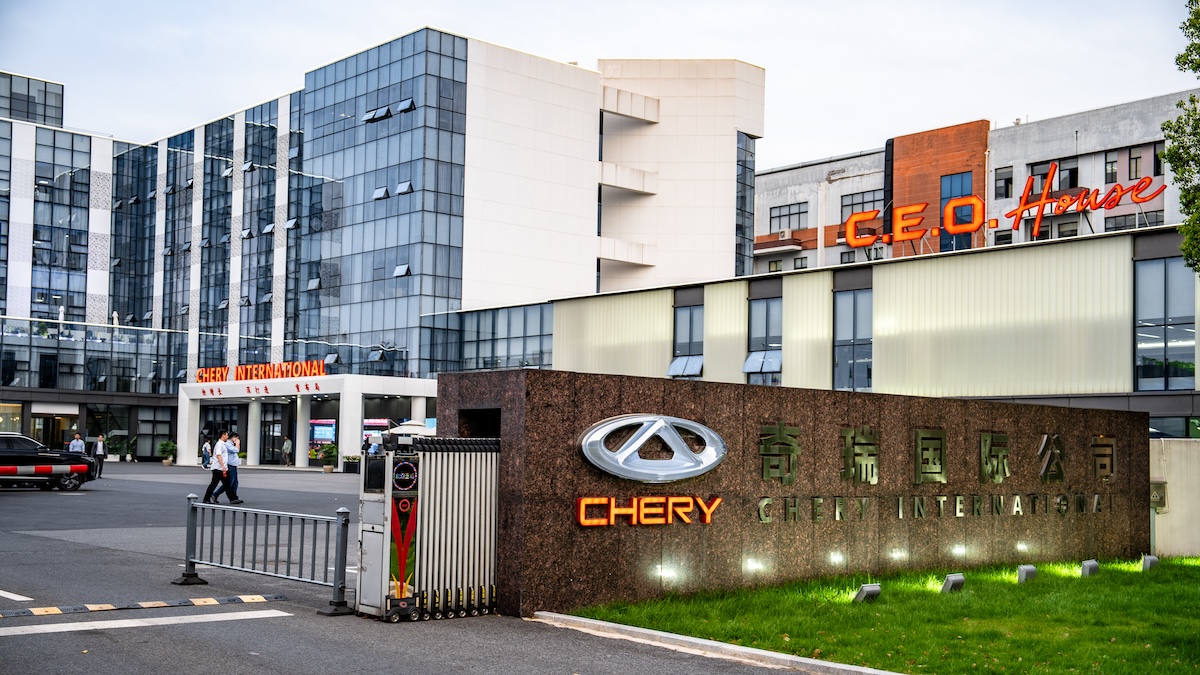
Situated in the countryside and a mere five hours away from Beijing by bullet train, Wuhu is dominated by the Chery operations present in the city. Driving from the hotel to the plant, you’d be amazed to see just how many factories and auto parts suppliers dot the landscape, all in service of the brand.
Upon stepping foot in the plant (no photos allowed inside), we were blown away by the sheer scale of the operation. The entire facility, which produces a total of 23 configurations of Chery vehicles, is on a scale that dwarfs most plants we’ve seen so far.
What shocked us was how few workers we actually saw running around, as most of the plant was completely automated. Giant machines swung half-welded SUV chassis over our heads, while laser-welding robots came in to put things together with a quick zap of super-heated material, all while small teams of young workers performed quality checks and monitored some screens. It was a glorious cacophony of industrial ballet that mesmerized and terrified in equal measure.
The massive facility can produce up to 60 vehicles an hour—roughly one car a minute—with an average target of delivering 625 finished vehicles a day. Our guide told us that a vehicle, from its individual components up to the finished product, only takes about two hours and 35 minutes to produce.
Seeing a scale of this magnitude, we got the answer as to how Chery had become the number one automotive exporter in China and why it has been key in the country’s relatively recent push to compete on the world stage.
What’s in store for the Philippine market?
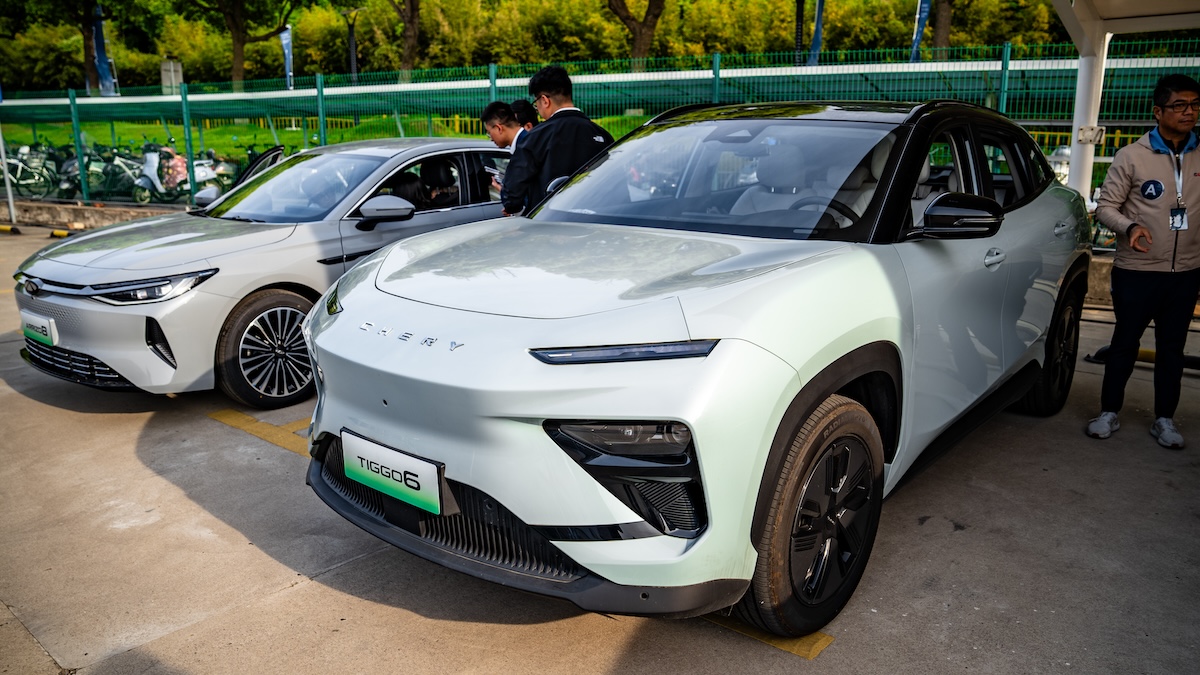
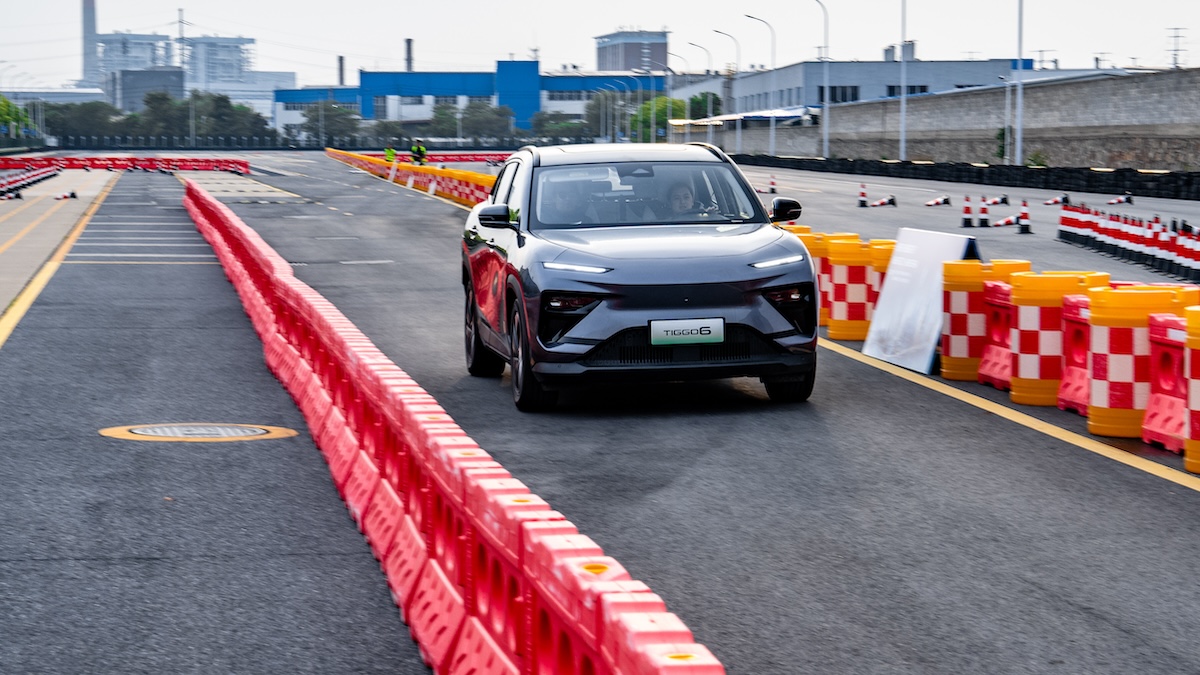
Leaving through the back of the facility led us to the test track where Chery gave us the chance to sample some cars that the Philippines will be getting this year. We were able to check out the Tiggo 4, which in our market is sold as the Tiggo 5, and the Tiggo 6, which, confusingly, is named the EQ7 on our shores.
Mind-bending naming aside, what were these models? Well, the Tiggo 4 is a mid-cycle refresh of the current Tiggo 5. It adopts the newer and more uniform front fascia of the Tiggo range, and has some updates to both the interior, as well as to the accessories, like new mag wheels, and the like.
The bigger news, however, is the EQ7, as this one has a much bolder front design that departs from the relatively tame Tiggo front fascia. Some readers have pointed out that it sort of looks like a Lamborghini Urus, and while we can see the resemblance, in person, it is a much more muted design compared with the Italian super SUV.
The lack of a front grille shows that this is a battery-powered electric vehicle—something that has been missing from Chery’s Philippine offerings for quite some time now. The rear end, in our opinion, looks much better than what you currently see on the other Chery SUVs. We wouldn’t be surprised if this design eventually found its way across the Tiggo range.
We were afforded only a brief period to try out the EQ7 on track. While it’s not the fastest or most exciting EV we have ever tested, acceleration is decent enough and the suspension is tuned quite well for bumps; fully laden with four adults, it seemed quite compliant at speed and under braking.
We will reserve judgment for a full review when we get the chance to test the EQ7 out on Philippine roads. The opportunity might come soon enough—the EQ7 will be launched before the end of the second quarter of this year.
After crossovers and SUVs, Chery trucks are coming up next
Finally, we got a sneak preview of three renders of all-new Chery products—no photos allowed, of course. These were the T1q concept, a new, more aggressive compact SUV that’s set to replace the Tiggo 5 at the end of 2025; the S57 concept, a Jaguar I-Pace lookalike that will succeed the Tiggo 3 in 2026; and, most interesting of all, a concept of Chery’s first pickup truck.
The last one is set to arrive in 2025 with an internal-combustion engine. Electric and, more important, a diesel PHEV will follow. Chery also informed us that a full-size EV pickup to compete with the likes of the Ford F-150 Lightning is in the works, to be launched sometime in 2027.
While we were at the headquarters, we noticed that the Philippine flag was raised quite far back in the line of flags. Our hosts explained the positioning: The flags were arranged by Chery market size. In front, alongside China’s flag, were that of Russia, Mexico, and other countries with much more sales than ours.
Given what we saw of Chery and its sub-brands, Omoda and Jaecoo, we would not be surprised if, after a few years of growth and sales, our flag steadily made its way up the line of flags to a position of more prominence. This, with the right support from the manufacturer to its local partners and dealers, may just be a possibility in the years to come.