Here’s some good news for commuters who regularly travel north to south of the metro, as well as non-commuters looking for efficient and affordable transport options, especially on coding days.
The EDSA Busway recently expanded with a new bus stop at SM Mall of Asia (MOA). As part of the ongoing infrastructure upgrades under the EDSA Busway Project, the EDSA–SM MOA Busway Station now serves commuters traveling both northbound and southbound.

Following a dry run of the new traffic scheme, the full implementation officially commenced on Wednesday, October 1, 2025. We wanted to see how long a trip would take on the busway versus taking the MRT, so we tested it out on the first week of its operations on October 7, 2025, riding both ways from Quezon City to Pasay on a weekday to cover an event.
DISCLAIMER: The travel time is based on our own experience riding during specific times at non-peak hours to give an estimate. Expect travel times to be longer and traffic conditions to be much worse during rush hour.
Where is the EDSA–SM MOA Busway Station located?
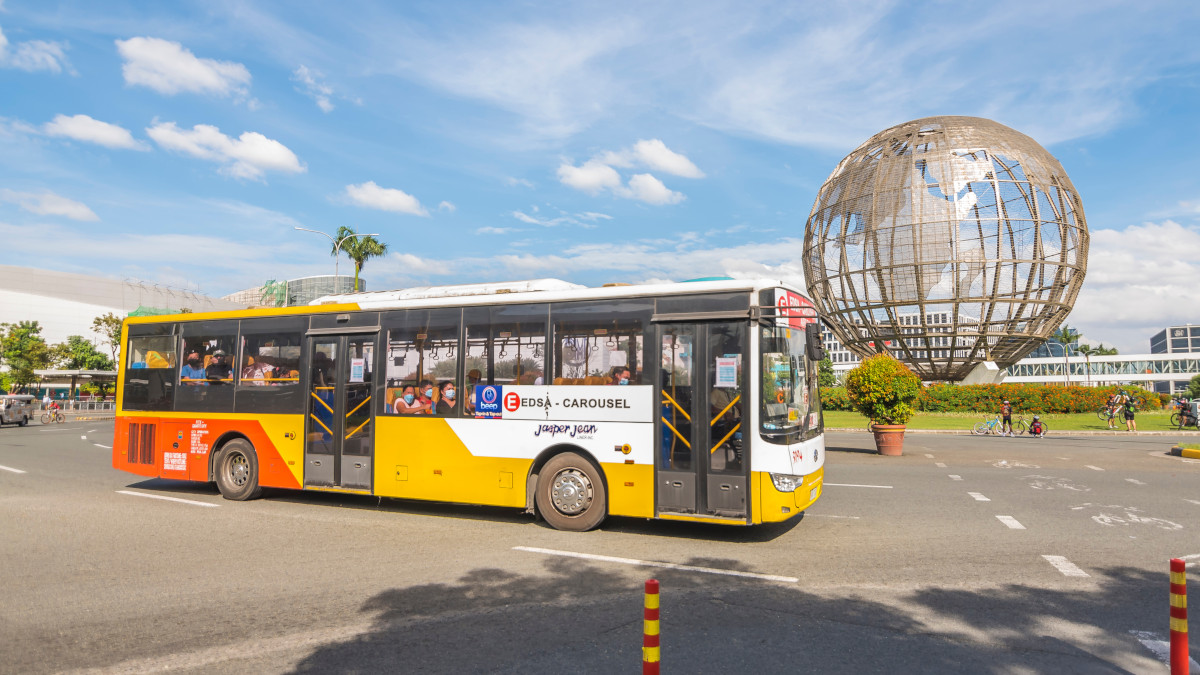
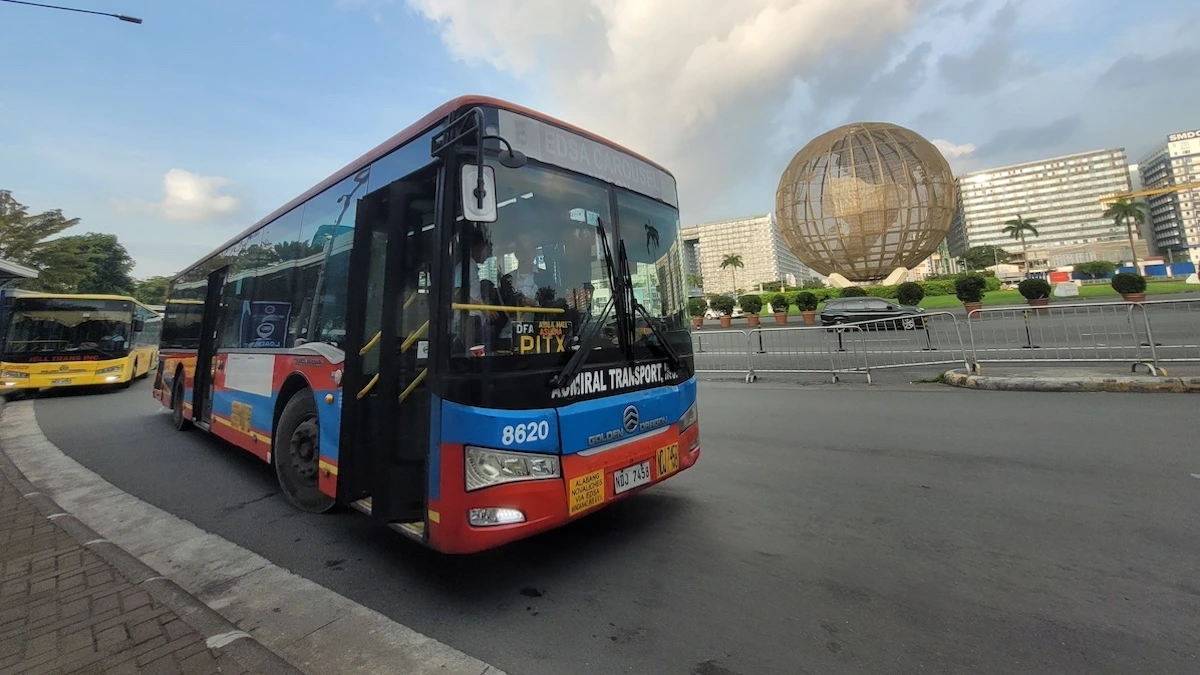
The SM MOA Busway Station is located directly in front of the Mall of Asia in Pasay, near the Globe Rotonda. Clearly marked loading and unloading zones serve northbound buses to Monumento and southbound buses to PITX, with distinct lane assignments for each.
OTHER STORIES YOU MIGHT HAVE MISSED:
Full guide: How to convert a foreign license to a Philippine driver’s license
MRT-7 guide: Stations, landmarks, and planned connections
While the MOA stop has been serving southbound passengers since the pandemic days, northbound travelers to Monumento from MOA previously needed to go to PITX to catch the bus, or walk past Blue Bay and Double Dragon to ride from the Roxas Boulevard station. Now, commuters heading north can finally board directly at MOA for Monumento, bypassing PITX and saving energy, travel time, and fare.
What are the stops on the EDSA Bus Carousel?
When it first started in 2020, the EDSA Bus Carousel had just 15 stops, but now it operates 24 stops along its 28km dedicated lane, with southbound buses from Monumento to PITX and northbound buses from PITX to Monumento. As of October 2025, the current stops include:
- Monumento
- Bagong Barrio
- Balintawak [LRT-1]
- Kaingin Road
- Roosevelt (Fernando Poe Jr.) [LRT-1]
- SM North EDSA
- North Avenue [MRT-3]
- Philam QC
- Quezon Avenue [MRT-3]
- Kamuning [MRT-3]
- Nepa Q-Mart (Mega Q-Mart)
- Main Avenue
- Santolan [MRT-3]
- Ortigas [MRT-3]
- Guadalupe [MRT-3]
- Buendia [MRT-3]
- Ayala (One Ayala) [Terminal Platform, MRT-3]
- Tramo
- Taft Avenue [MRT-3, LRT-1]
- Roxas Boulevard
- SM Mall of Asia
- DFA Aseana (Shell/Starbucks)
- Ayala Malls Manila Bay/City of Dreams
- PITX [Terminal Platform, LRT-1]
Plans are underway to expand the system by improving the accessibility and connectivity of the various bus stops to nearby transport networks. Additional stops are also planned.
What are the types of busway stops?

The EDSA Busway features three types of pickup/drop-off points: median, curbside, and terminal stops. Most of the stops (like Quezon Avenue) are median stops, which means they’re positioned in the road’s center and accessible via crosswalks or bridges.
Meanwhile, curbside stops (like the MOA stop) are located along the roadside for easy bus boarding. Terminal stops (like One Ayala and PITX) serve as central hubs where multiple routes converge to accommodate transfers and manage high commuter volumes.
Actual riding experience

Coming from Quezon City, I used MoveIt (15-minute travel time) to get to the bus stop in Quezon Avenue, located near ETON Centris and the Quezon Avenue MRT station. The driver let me down at a designated drop-off point near the footbridge crossing directly to the busway station in the middle. There’s no need to go into the MRT station to access the busway. Crossing the footbridge to the middle took about two minutes.
I didn’t have to wait long to catch a ride; an air-conditioned bus arrived right as I got there, so I boarded. Early in the afternoon, the bus had plenty of empty seats, so I could sit comfortably. We departed Quezon Avenue at 3:55pm. A conductor came around to collect the fare of P46 pesos from Quezon Avenue to the Mall of Asia. I asked if they accepted payment by Beep cards, but they said they only accepted cash.

Midway, the bus made a brief stop at One Ayala in Makati, where passengers on our bus were asked to transfer to another bus, but to keep and show their tickets for inspection, as these are valid all the way up to MOA. I was able to sit, but the bus got packed quickly. The transfer, waiting time for more passengers, and take-off took about five minutes. Eventually, I got to MOA at 4:48pm, for a travel time (just on the bus) of 53 minutes. Including my booking, waiting time, and motorcycle-taxi ride, that’s still a little over an hour.

On the way back home, I took the same route from MOA to Quezon Avenue. I got on a bus from MOA at 9:55pm, and the bus left at 10:00pm (five-minute waiting time). There were no transfers on the bus ride back. I got back to Quezon Avenue at 10:46pm, with a travel time of 51 minutes, including the waiting time to depart. From the busway, I crossed the footbridge, walked to Centris, and took a taxi back home for another 20-minute ride. While there’s a jeepney terminal nearby that offers cheaper options, multiple transfers are still required, so I chose the cab.

In both cases, each one-way trip (by bus alone) took roughly an hour. Of course, this excludes the rides to and from the busway station and waiting times, which will vary for commuters depending on their origin.
However, regular commuters point out that traffic can get very bad during rush hour, particularly if you get stuck from Buendia to Ayala approaching the Magallanes Bridge, which can sometimes take more than an hour.
What’s the cost of taking the bus versus taking the MRT, using ride-hailing services or driving?
If you want to save time, cash, and your energy from having to drive through traffic (plus the cost of gas, parking fees, and maintenance), taking the bus from an accessible EDSA Busway point may be a faster and cost-efficient alternative, especially if you travel during non-peak hours.
While the estimated travel time on the MRT from Quezon Avenue to Taft Avenue Station is faster on paper (38 minutes) and cheaper (P28 for a single journey ticket), this doesn’t take into account the time spent lining up for tickets and inspections, and your comfort level riding in the train.

If your destination is MOA coming from the north and you take the MRT, you’ll still have to transfer and pay again for another 10- to 20-minute mototaxi/taxi/jeep (price varies) from Taft Avenue to MOA, or walk through a footbridge and cross to take the EDSA Carousel bus from Roxas Boulevard to MOA (P15).
The busway is ideal for those who need to ride or get down in other areas that aren’t near existing MRT stops, and those who want to be able to sit comfortably without having to line up or stand in the MRT.
Even if I had to spend to get to and from the busway, it’s still cheaper than if I had taken a ride-hailing service all the way. The same distance usually costs roughly P300+ by motorcycle taxi or P500 to P800 one-way by regular taxi or Grab. It can also take longer because of the traffic. If I chose to drive all the way, I would have to load gas, brave the traffic, and have to deal with parking problems.
The EDSA Busway operates 24/7, so if you missed the last ride on the MRT, you can still take this. However, operating hours may vary depending on the bus companies. While most buses operate from 4am to 11pm, some extend their services to run throughout the day and night. Expect fewer buses and longer waiting times after regular working hours.

While I didn’t have a problem riding during off-peak hours, commuters can expect the buses to get more crowded during rush hour. Waiting times could vary depending on the passenger load and if buses wait too long at stations.
Personally, I think the EDSA Carousel Busway is a game-changer for north-south commutes, and could help reduce car dependency and traffic if more people used it instead of taking private vehicles. Now, if only there were more accessible routes connecting places to the various busway stops. But that’s another story.
We’ll try to come up with an updated explainer on the exact bus route, updated stops, nearby landmarks, and possible connections for those totally clueless about commuting. In the meantime, check out this extremely helpful video guide on the EDSA Carousel by our friends from Philippine Beaches.