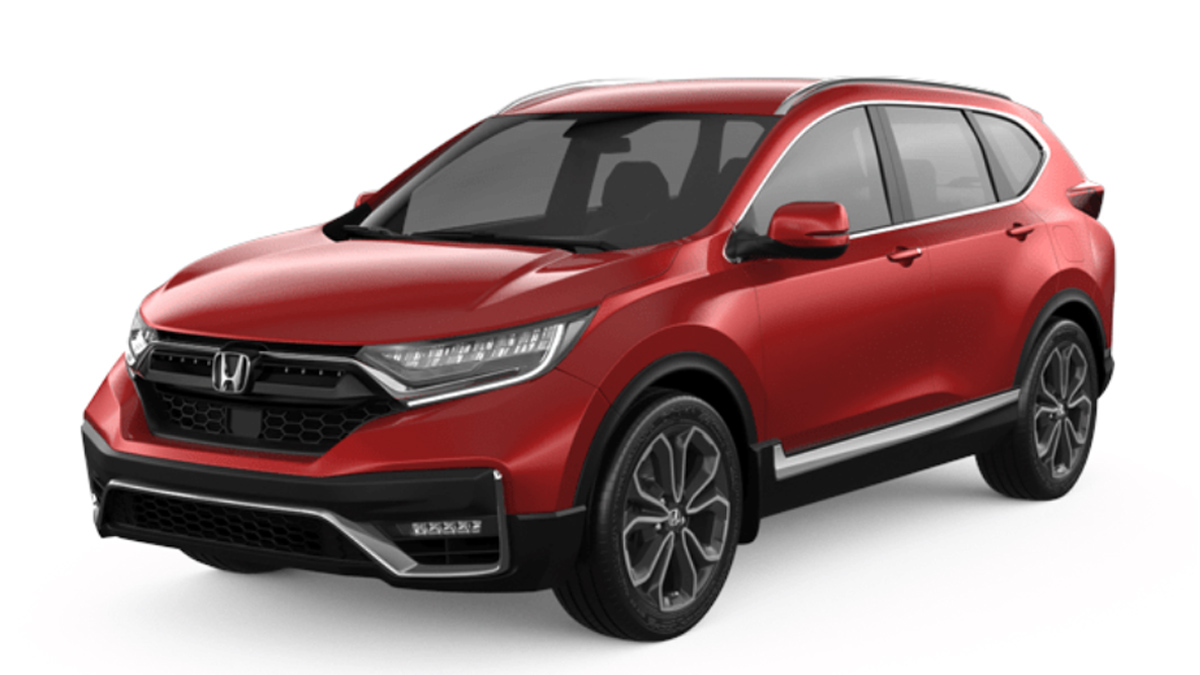
The all-new sixth generation Honda CR-V recently made its ASEAN debut at the 2023 Bangkok International Motor Show. The Japanese carmaker has given its popular compact SUV a larger body and a more mature design.
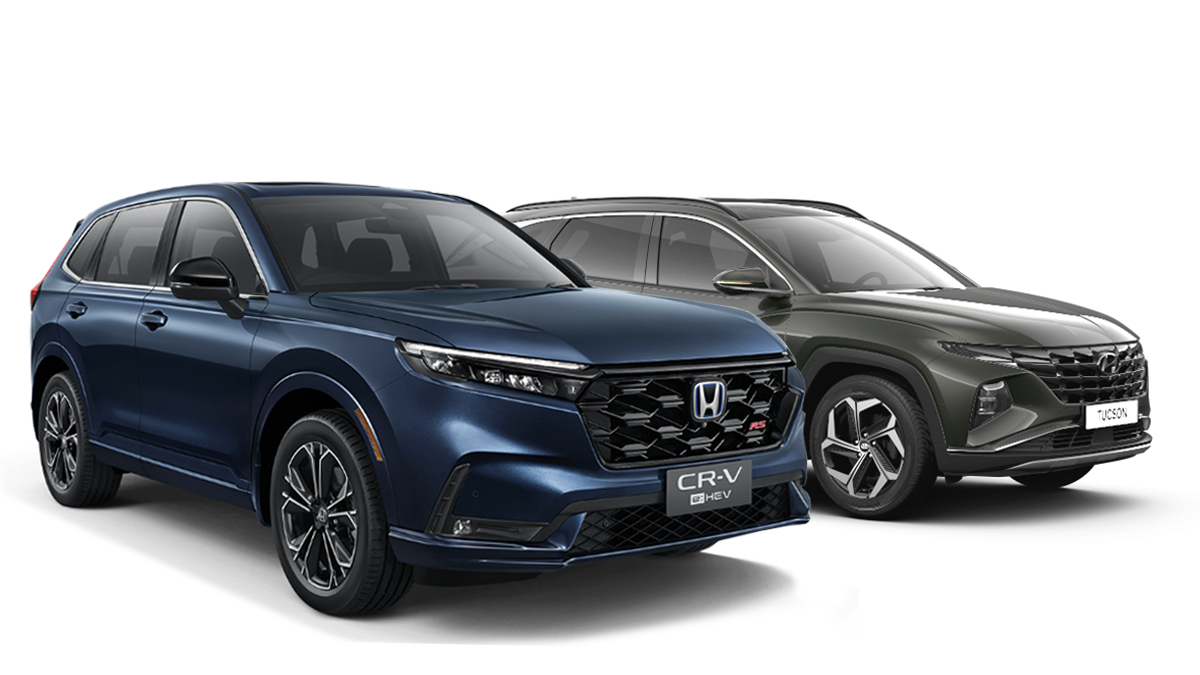
For this comparison, we’ll be pitting the latest CR-V against the new Hyundai Tucson. While both vehicles belong to the compact SUV segment, each carmaker has given its high-riding family hauler a unique interpretation. Let’s see how the new sixth-gen CR-V stacks up against the new fourth-gen Tucson.
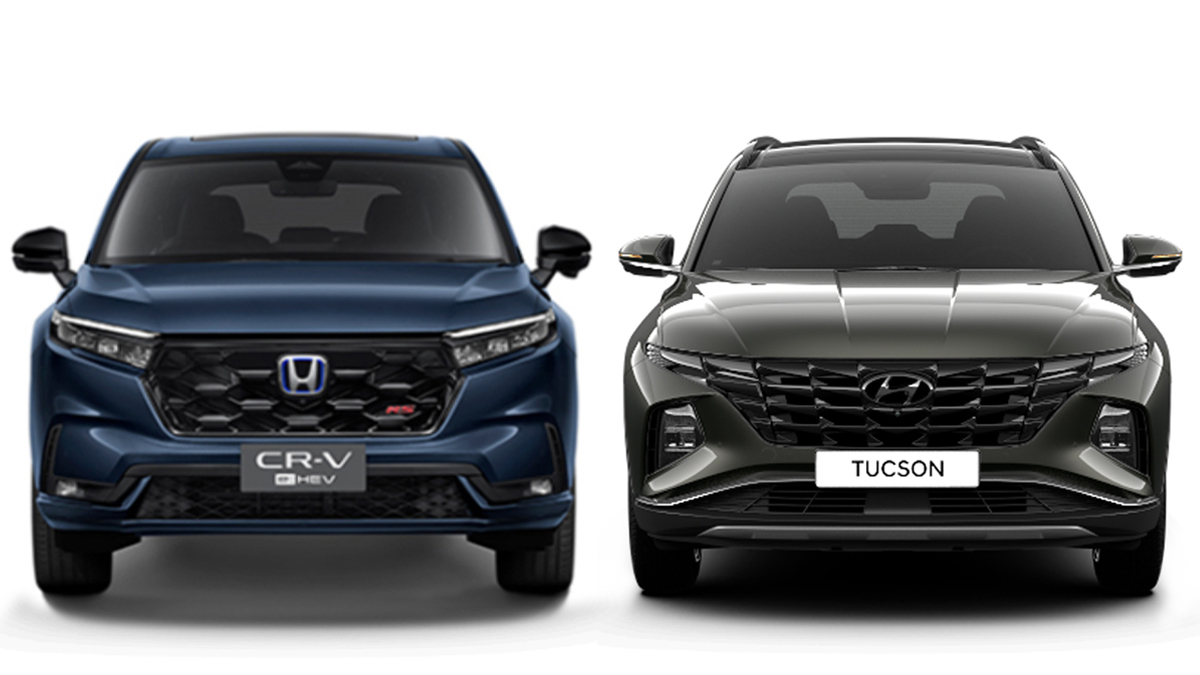
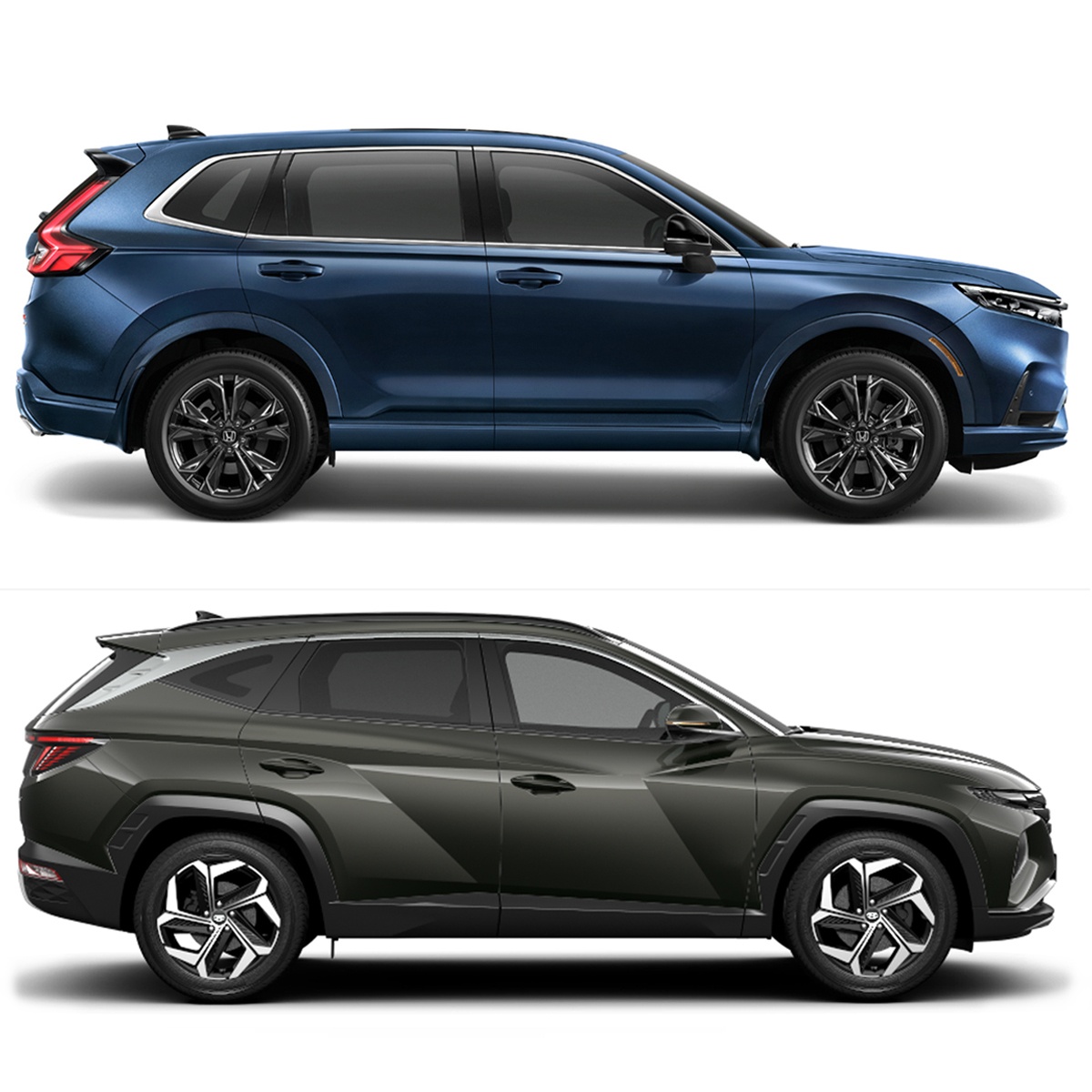
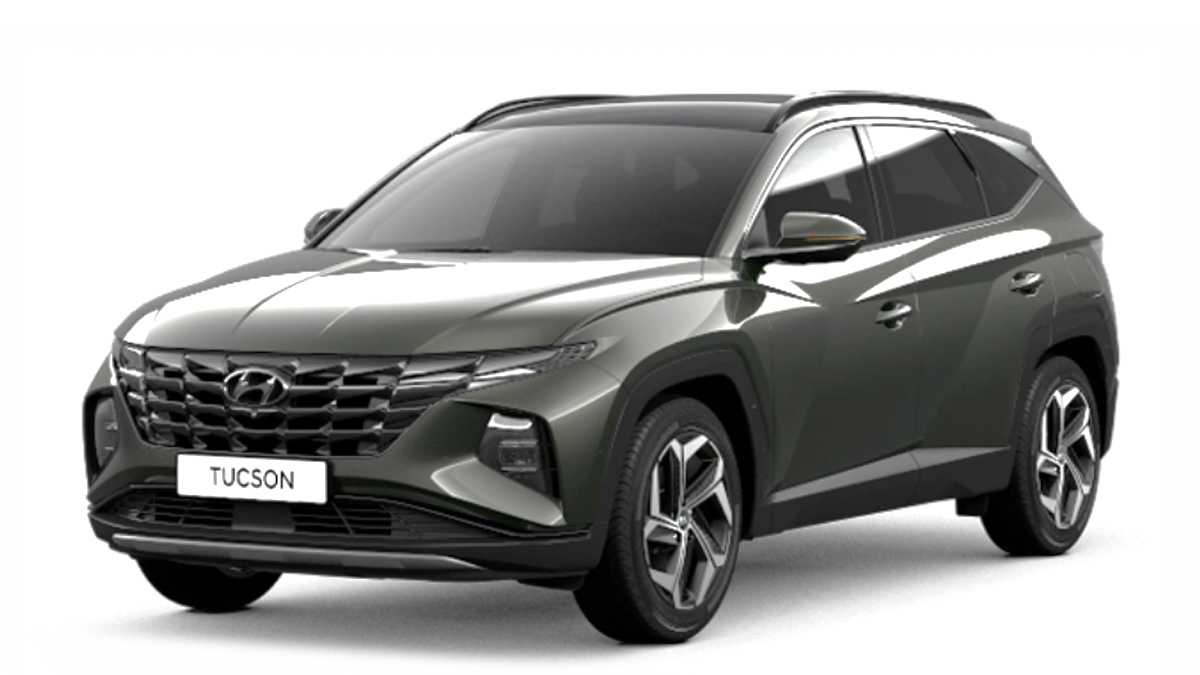
The images used in this comparo depict the top trim variants, the CR-V e:HEV RS AWD and the Tucson 2.0 CRDi GLS+ FWD. While not exactly a direct apple-to-apple comparison, the 10mm height difference between the FWD CR-V and AWD CR-V is minor. The all-new CR-V measures 4,691mm x 1,866mm x 1,691mm, this makes it approximately 61mm longer, 1mm wider, and 26mm taller than the Tucson. Note that the Hyundai has standard roof rails, while the Honda has it as an option.
The latest CR-V rides on a 2,700mm wheelbase, making the distance between axles 55mm less than the Tucson, despite the Honda’s greater length. The AWD CR-V has a 208mm ground clearance, this makes it sit 27mm higher than the Tucson. For those curious, the FWD CR-V has a slightly lower 198mm ground clearance, shrinking the difference between the Hyundai to 17mm. The longer CR-V has a more traditional SUV wagon profile with a slightly more upright greenhouse and a roofline that slopes less than on the Tucson. There is a reason for this, of course: the Honda SUV has a variant with third row seats, while the Hyundai is strictly a five-seater. The new CR-V and new Tucson have similar wheel and tire size options. The lower trim variants have 18-inch alloys with 235/60 R18 tires, while the high variants (as seen in the images) have 19-inch wheels shod with 235/55 R19 rubber. Unlike the Tucson, you need to get the top AWD hybrid CR-V to get the bigger wheels, at least on the Thai-spec version.
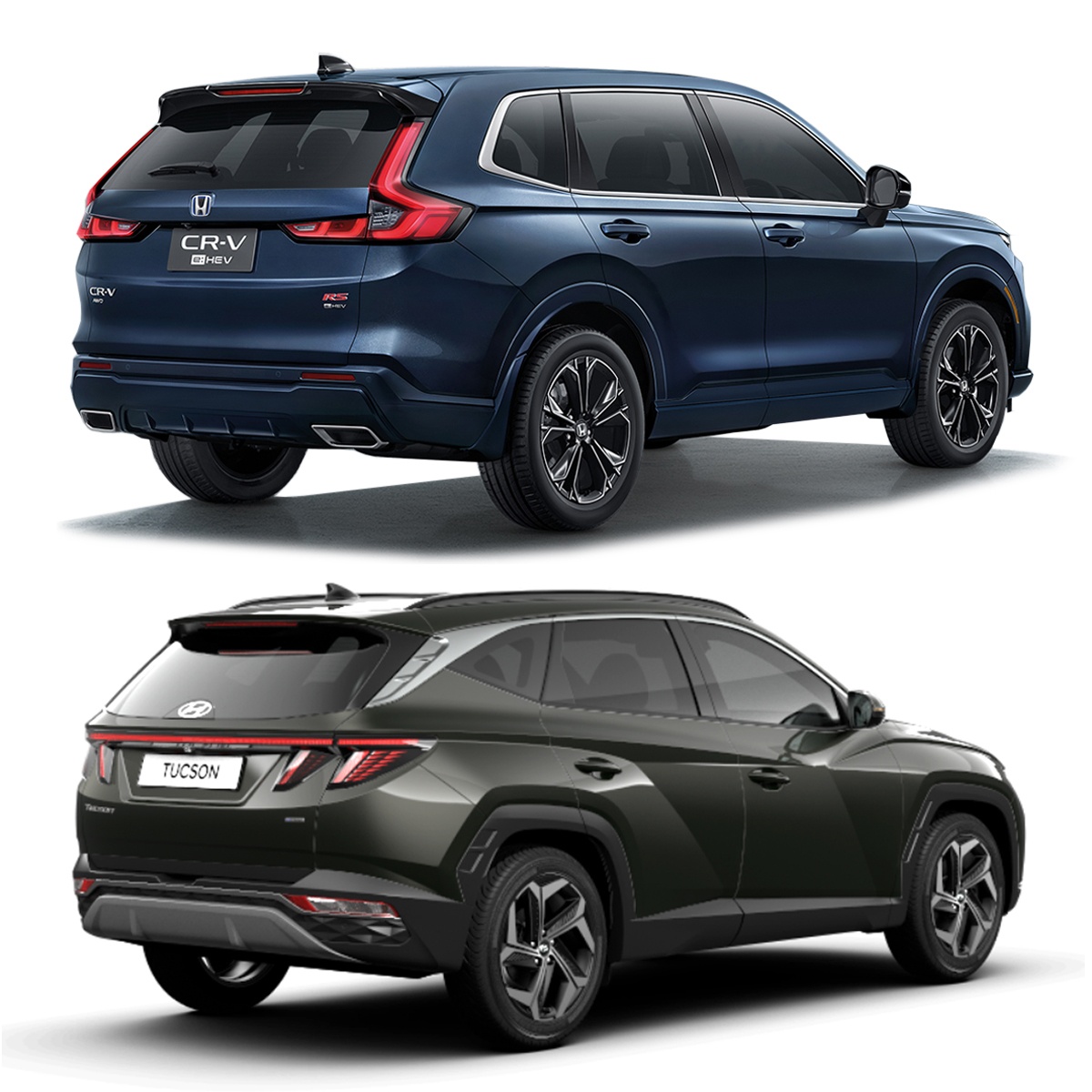
As a refresher, the local spec Tucson is available with two front-wheel-drive variants, the 2.0 gasoline GLS, and the 2.0 CRDi GLS+. It’s still too early to tell which powertrain options will be offered in the local spec CR-V. In Thailand, the Honda SUV can be ordered with either a conventional 1.5-liter turbo gas engine or a 2.0 e:HEV hybrid mill, with front-wheel drive or with all-wheel drive.
Are you looking forward to the arrival of the sixth-gen CR-V? Do you think it will still be competitive in the local compact SUV segment? Let us know in the comments.