The Ioniq 5 N just might be the electric GOAT

by Niky Tamayo | Jun 18, 2024

“The bastard offspring of an Ioniq 5 and a Nissan GT-R.”

If you’re here expecting a sober, analytical review of the pros, cons, pluses, minuses, assets, liabilities and whatnot of Hyundai’s latest electric vehicle, I regret to inform you that—alas—it is not.

Instead, this is a gushing love letter to the greatest motor vehicle that nobody will buy. The answer to the question that nobody asked, and to questions asked only after several beers. Like: “Can an EV shift like a bloody teenager on a learner’s permit?” or “Is there a family car faster than a Lamborghini?” or “Would I look good or silly driving around a pastel blue SUV cosplaying as a rally car?” The answer to all three questions is, invariably, yes. Especially the last one.

This car takes sound automotive logic, turns it on its head and then drop kicks it into the ditch. If you want a serious review of the Ioniq 5, I wrote one last year. If, instead, you would like to hear what it’s like to live with the bastard offspring of an Ioniq 5 and a Nissan GT-R, then read on.

PHOTO: Niky Tamayo

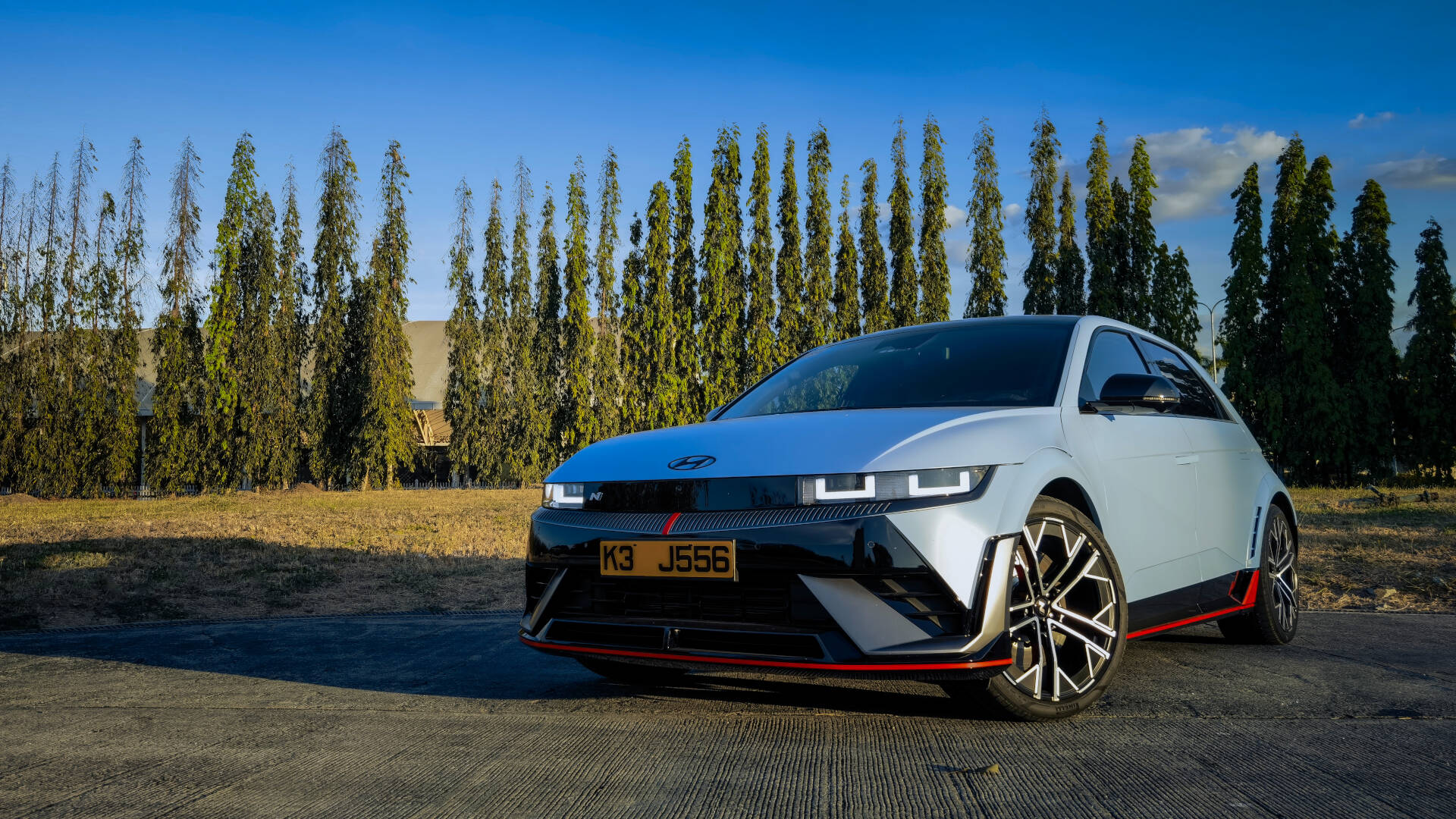
Let’s begin at the beginning: The Ioniq 5 N is the latest in a line of Ioniq-branded electric vehicles, distinct from other Hyundais. As such, they also have distinct styling. The Ioniq 5 looks nothing like the Ioniq 6, which looks nothing like the original Ioniq, which looks nothing like the Santa Fe, which looks nothing like the Staria—well, you get the idea. Despite the ADHD approach to brand identity, Hyundai’s cars look incredible, and the Ioniq 5 is perhaps one of the best-looking of the bunch.

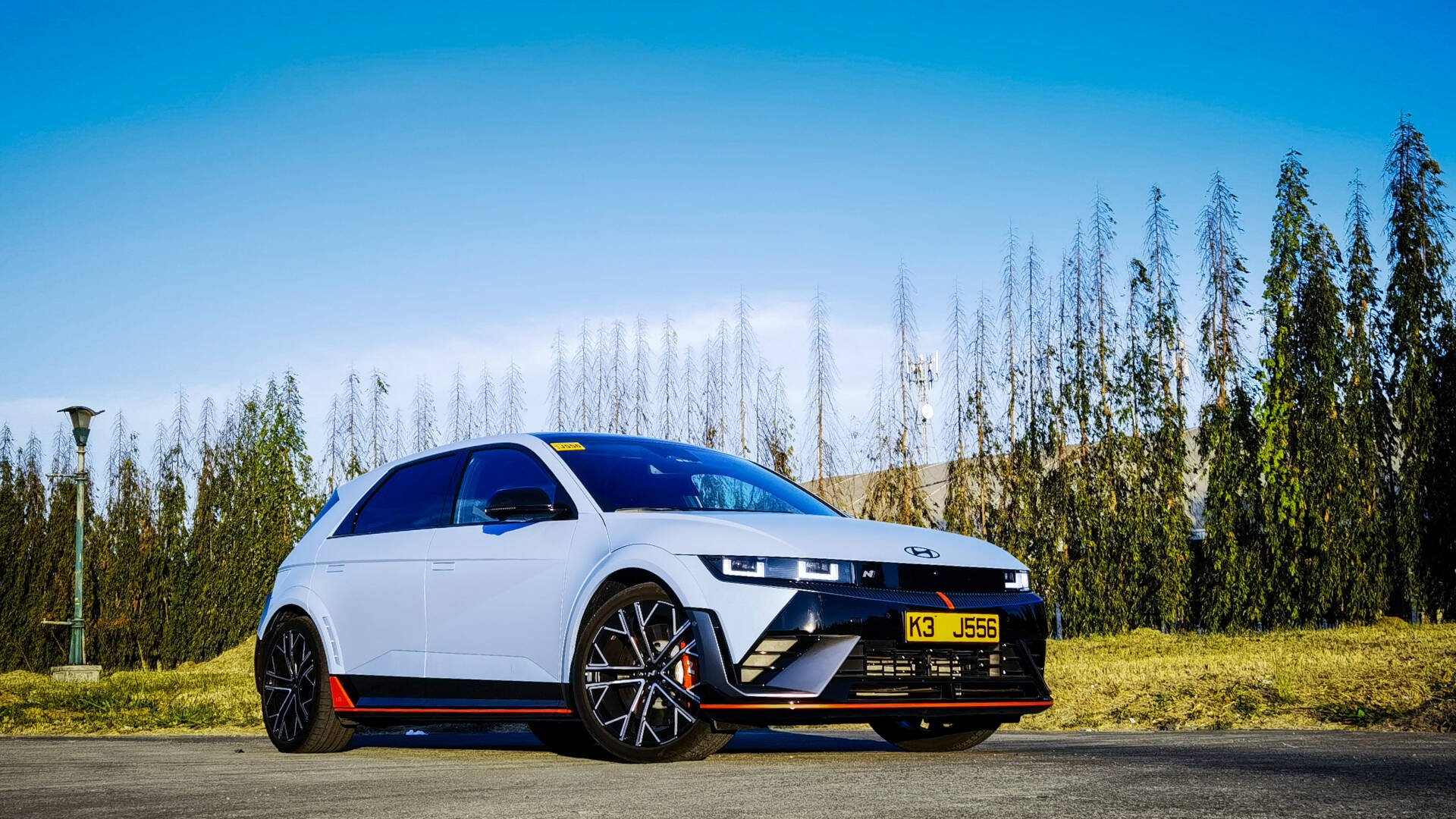
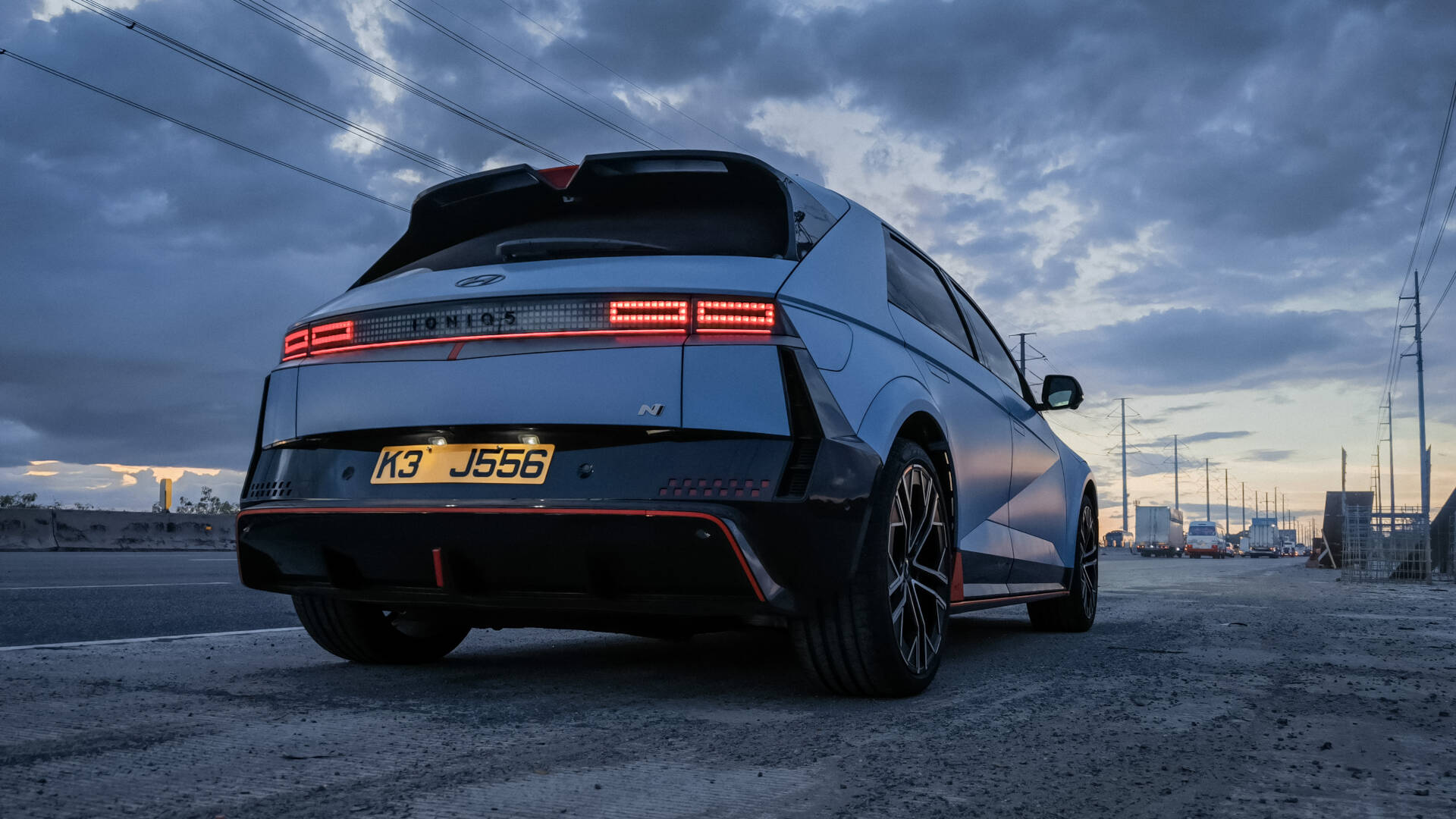
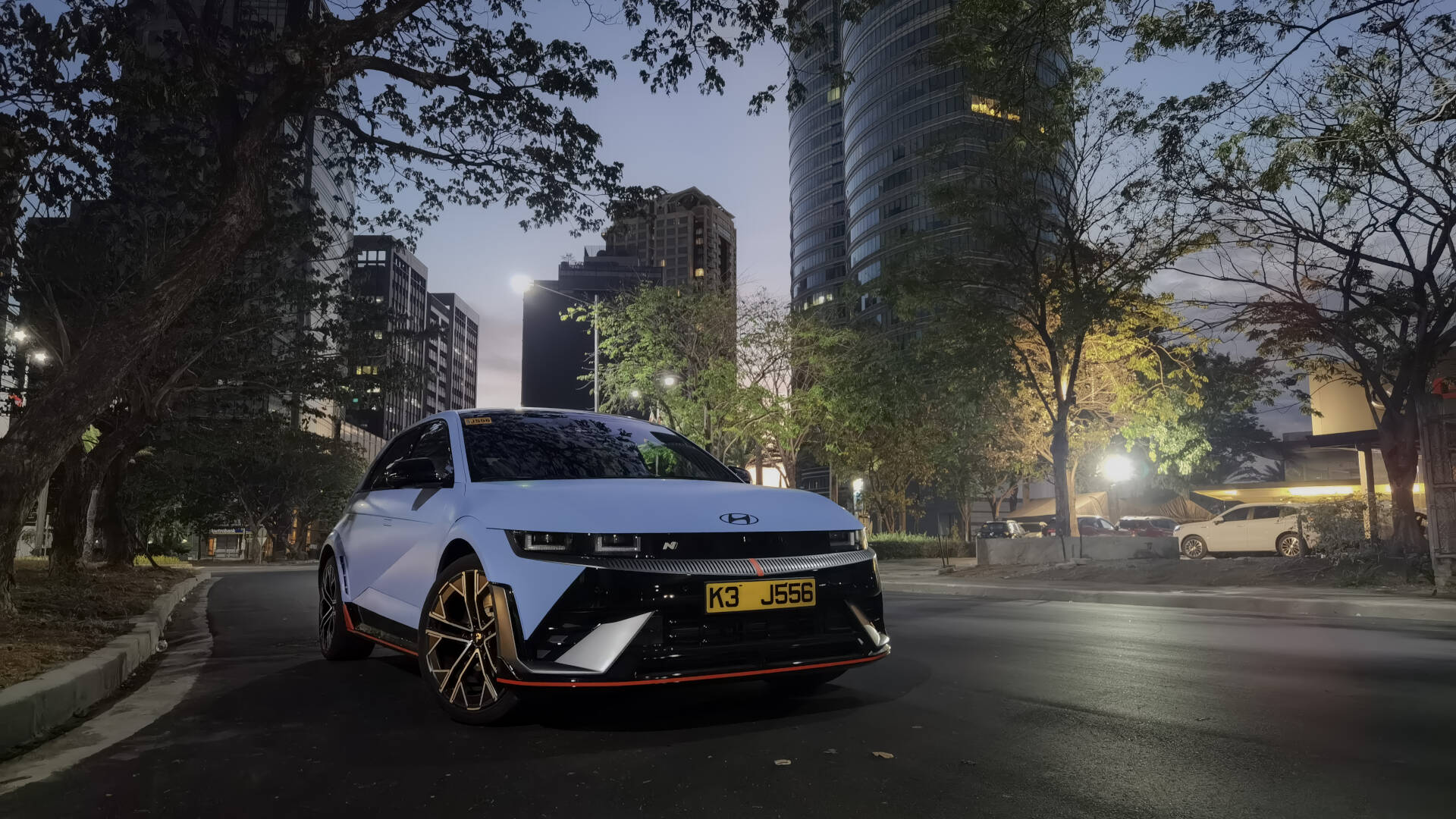
But with the 5 N, Hyundai went all Rauh We’lt Butcherit. The retrofuturistic pixelated lights and slashing character lines remain, but the subtle, straight-laced architectural aesthetic has been enhanced by punched-out fender blisters covering gigantic new wheels. The standard 5’s massive 20-inch art deco wheels give way to massive-er 21-inch spider-spoke wheels wrapped in extra-wide 275mm wide Pirelli P-Zero tires. The sensible bumpers have been torn off and replaced wtih glossy black be-winged and be-straked batshittery. Those crazy winglets and double-wide diffusers likely generate zero kilograms of grip-enhancing downforce, but they do a good job of dropping jaws.

Just like an actual Rauh Welt Begriff car, restrained, this is not. This is a hot hatch, but not as we know it.

PHOTO: Niky Tamayo

Of course, it isn’t really a hot hatch. Get within touching distance and you are overwhelmed by its sheer size. We've often joked that the Nissan GTR looks like a bus sitting beside the old Skyline, but that’s still a low-slung two-seater. This thing is an actual bus. 2.2 tons and five by two meters worth of bus. Granted, that’s not large by SUV standards, but it’s bigger than any hatchback you’ve ever driven.

It is so wide that even with 360-degree cameras and automatic emergency braking, it is a chore to back out into the street. But absent the issue of its ridiculous width, the Ioniq 5 N is a peach to drive in traffic.

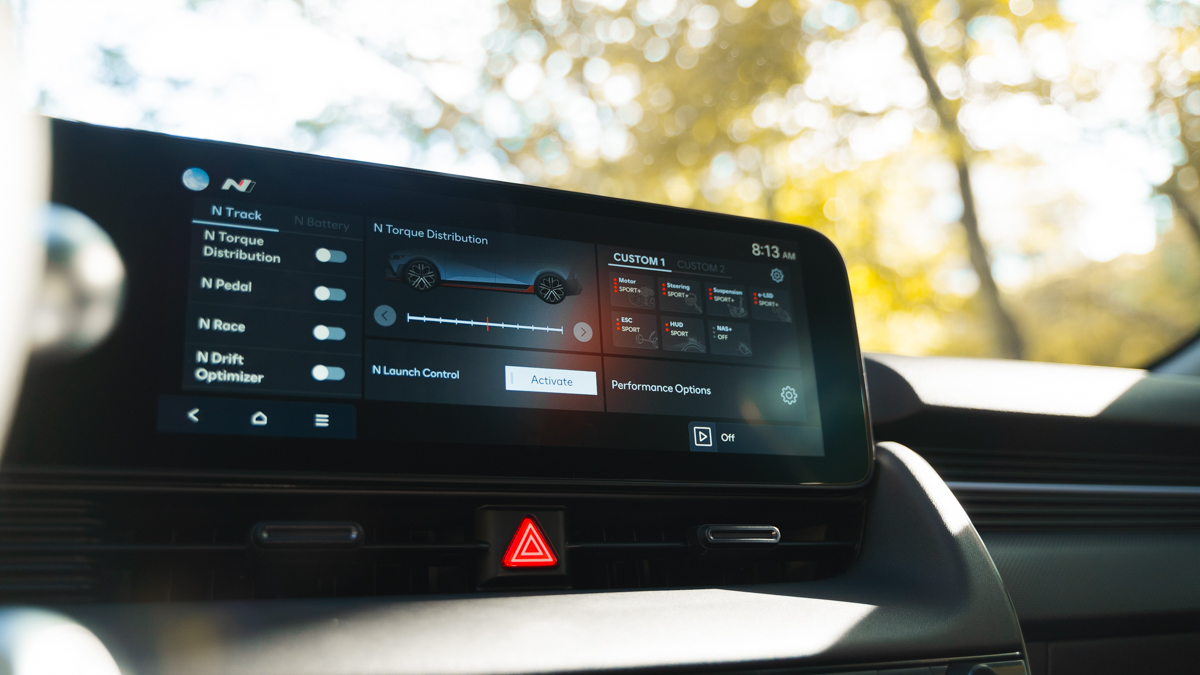
But before you drive off, you have to choose. Choose your driver personalization presets. Enter your name, age, zodiac sign, and dietary requirements. Pick your favored drive mode. Or customize those drive modes. Or, better yet, create a custom drive mode preset with your favorite accelerator, brake, steering, shifting, differential and suspension presets. Oh, and choose your “engine” soundtrack and shifter/regen paddle settings. Then get into the nitty gritty of battery management and cooling, traction control, traction presets for different surfaces, select between racetrack endurance mode or full-bore dragstrip settings, then get into a bloody screaming match with the operating system over the activation conditions for drift mode, and—is it lunch time already?

PHOTO: Charles Banaag

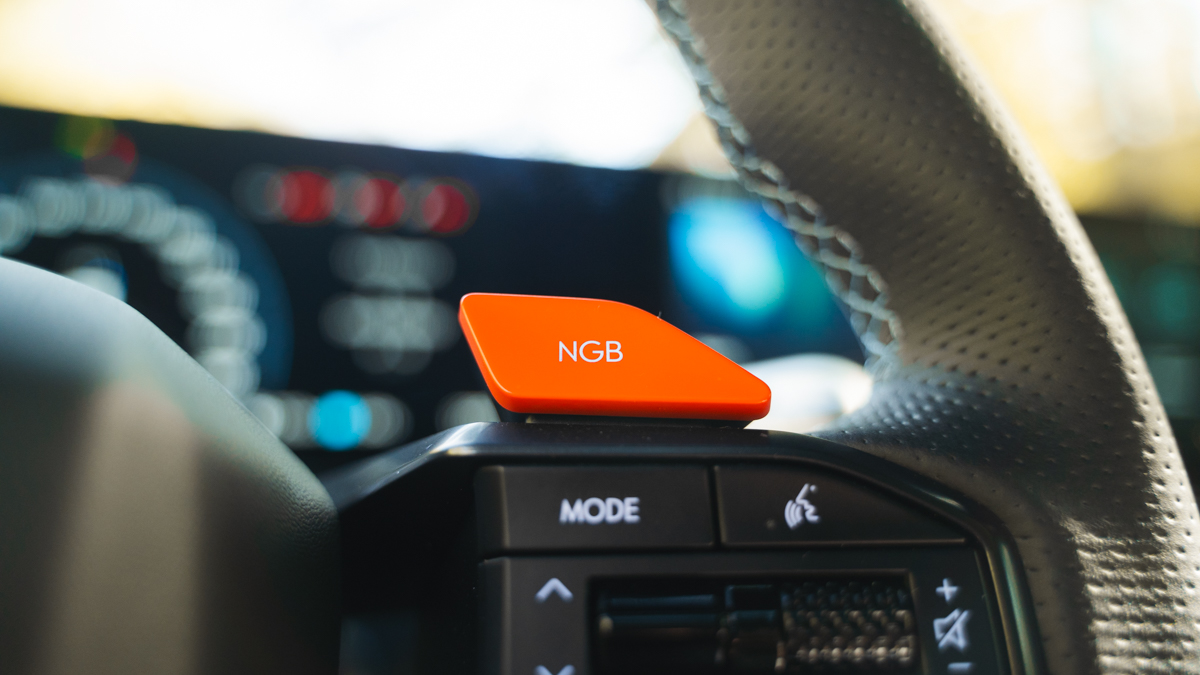
It can all get a bit overwhelming, really. As with any new car with more settings menus than an Airbus. And the way Hyundai has split many of these drive mode functions into completely separate submenus defies all logic. But for the beginner driver, all you need to know is this: Holding down the Drive Mode button on the left side of the steering wheel sticks you into the hardcore N Sport+ mode. Pushing the NGB Button on the other side of the wheel—the ‘N Grin Button’—gives you the 5 N’s full 641 horsepower for the next ten seconds. Find a clear, empty piece of track, press both, hold the brakes, floor the accelerator, and go.

You’re catapulted from 0 to 100kph in just 3.4 seconds. More impressively, you can go from there to 160kph in just 3.5 more seconds. That’s faster than a Lamborghini Urus. Of course, Lamborghini says that the experience is more important than pure acceleration times, but when the Ioniq punches you in the kidneys and sits on your chest until you run out of road, that certainly feels like an experience. My GPS logger tells me it actually accelerates faster past 80kph, as the traction control eases up and lets the motors cut loose.

I haven’t felt acceleration this violent since I tested the Nissan GT-R on the track. And this big blue lunchbox will do it again, and again, and again, without trouble or complaint.

hyundai ioniq 5 n

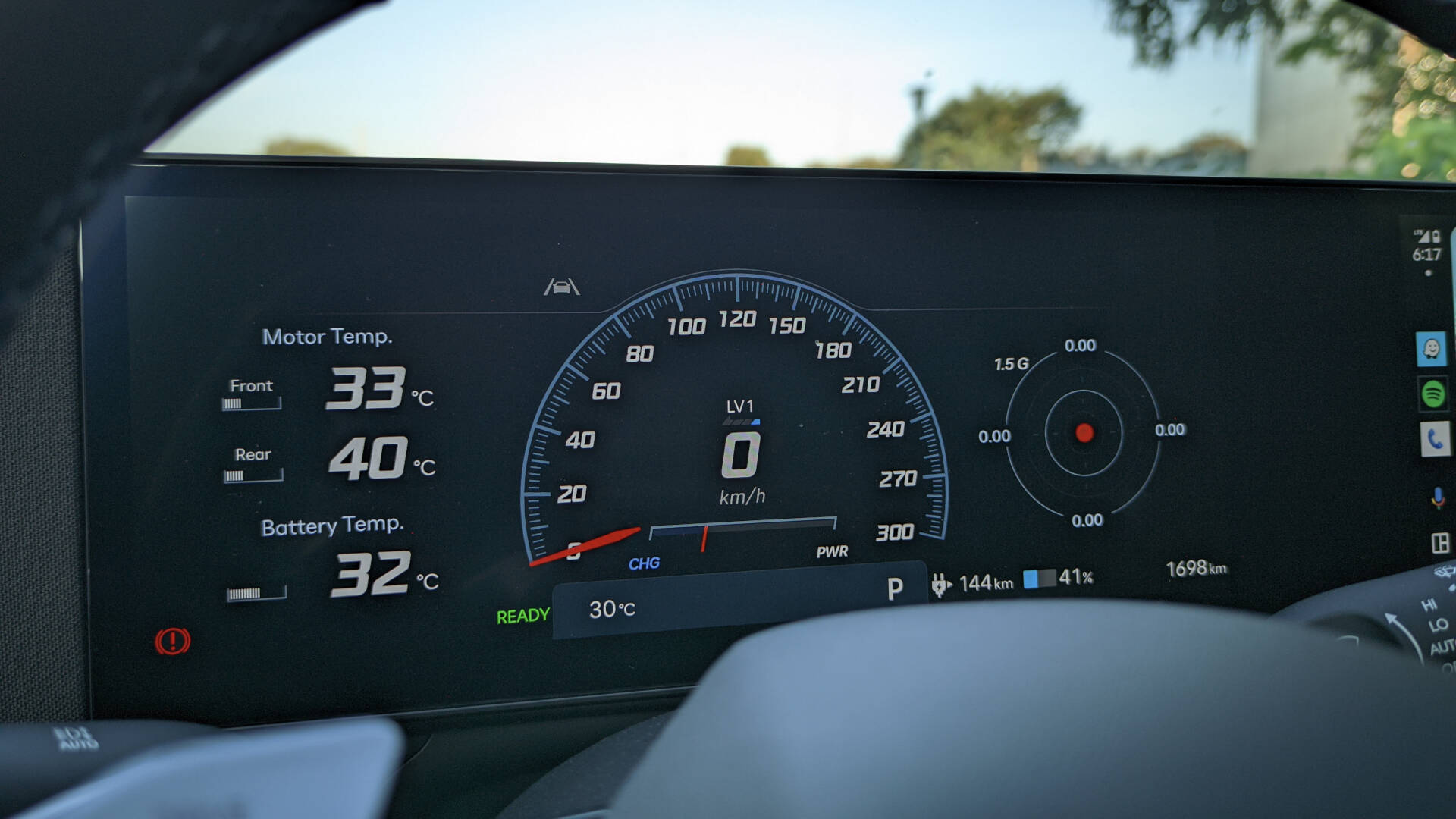
A helpful dashboard display shows you the motor temperatures. They do not get hot. There is no engine oil or transmission fluid to overheat. The battery temperatures barely move. It takes several laps at full blast around a racetrack to move these temperatures significantly, and even at their hottest, they’re nowhere near as hot as the coolant on a Toyota Vios sitting in traffic.

PHOTO: Charles Banaag

The 5 N isn’t just a straight-line rocket. It goes around corners very well, too. Those big 21-inch wheels are shod in 275/35 R21 Pirelli P-Zero EV tires. They're surprisingly quiet, astonishingly grippy and worryingly thin. Despite this being an SUV, I wouldn’t drive this down a gravel path for fear of scratching those beautiful wheels. But thanks to the hardcore rubber, the 5 N has a lot of mechanical grip, if a tad less steering fluency than I'd like. But that’s what you get when you have ultra-wide sports rubbers on, and the level of steering response is commendably good.

Out on twisty switchbacks, the two ‘N’ buttons on the steering wheel come in handy. The one on the right engages the 5 N’s most celebrated party tricks: Fake gear shifts and engine sounds. The gear shifts feel absolutely convincing. They cut power between shifts, with a comically theatrical pause, before slapping you in the back as you ‘engage’ the ‘next gear.’ The fake engine sounds are less convincing, played through the internal and external speakers, they lack the buzzing vibration and thumping infrasound of a real combustion engine. You have a choice of aircraft turbine and sonic booms, snap-crackle-pop-pop-pop race engine, or electrowhiney ‘Evolution,’ which is the best of the three. Most buyers will turn these on once, giggle a little, then turn them off again, only using them occasionally to amuse friends bumming rides.

The left button accesses your custom drive modes. You can set up an N Sport+ mode with custom damping, steering and differential balance. The last one is slightly misleading, as the Ioniq doesn’t have a center differential. All it does is prioritize either the 200 horsepower front motor, or the 400 horsepower rear. So no, setting the bias to 100% rear doesn’t turn the Ioniq into the drift machine you hope it to be. Not, at least, without engaging N Drift Mode, which requires you to input your social security number, TIN and the Contra cheat code.

But even without drift mode, the Ioniq has a lovely character and balance. The low-slung battery and square stance make it rotate very keenly, and in the Sport+ setting, it feels like the anti-roll bars stiffen up to squelch any body roll.

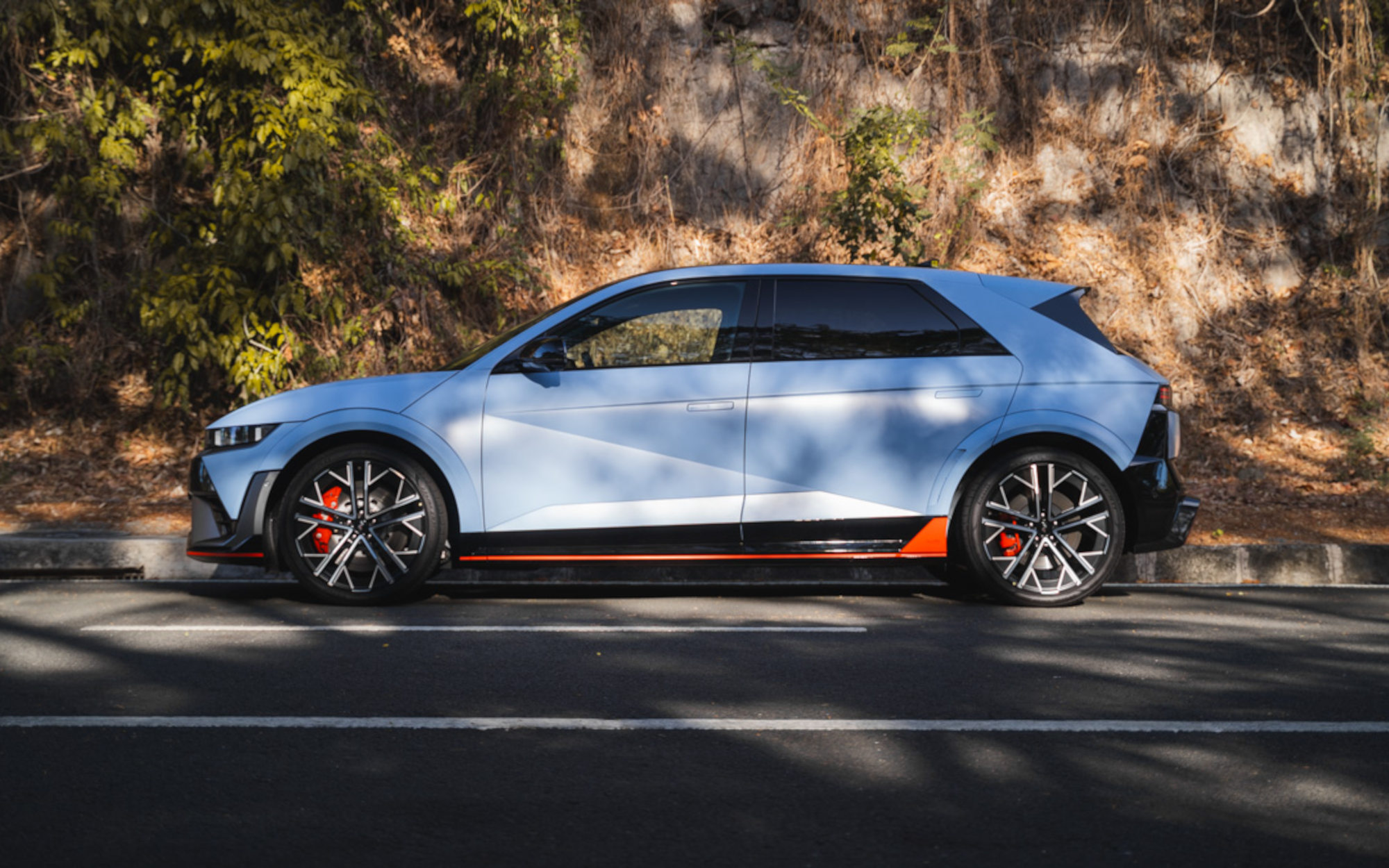
PHOTO: Niky Tamayo

It’s here that the illusion starts to break a little. While you do get less body roll than you expect with all that weight, you can still feel all that weight. Many motoring journalists have wonderful things to say about how the 5 N drives on track, but it is an undeniably heavy car that relies on good tires and brakes to keep it shiny side up. On roads narrower and more challenging than a flat, wide, drift-worthy race track, it can feel—as racing YouTuber Misha Charoudin notes—like making an elephant dance. It’s an exhilarating challenge, but the amount of power and weight mean that you are not ever going to be doing any of that dancing on the narrow, gritty, bumpy mountain roads typically available here. You will run out of traction and talent long before the car does. Suddenly, the silly N-Sport sound effects and N-Shift fake gear shifts make sense. They're there to keep inexperienced hands entertained at lower speeds. Because what this car is capable of in its serious no-fakery-sport mode is too much for most.

If adrenaline isn’t your thing, maybe the 5 N is not for you. Granted. It does all the family things the regular Ioniq 5 does. Only a bit less so. The suspension, even in its softest mode, can feel a bit jiggly in the back seat. The extra power and extra wide tires make the 5 N less energy efficient than the regular 5, getting 1-2 kilometers less per kilowatt hour. As ‘thirsty’ as the big Lexus I drove a while back, but not as ‘thirsty’ as you’d expect given this level of performance. And a far cry from any gasoline car with similar power. It still charges in half an hour at Shell’s Level 3 charger, but that giant battery takes an entire day to top off at your regular Level 2 home charger.

hyundai ioniq 5 n

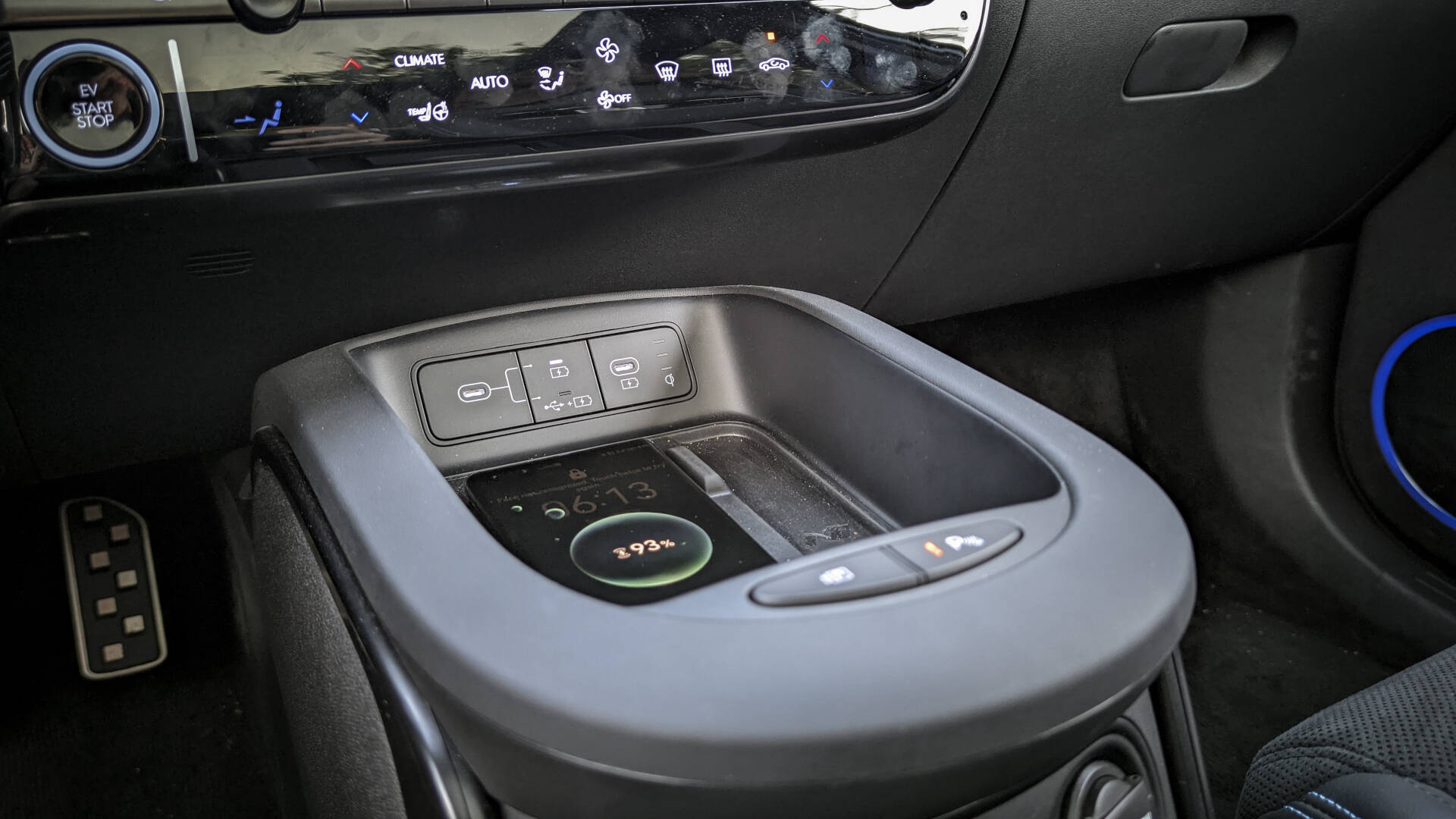
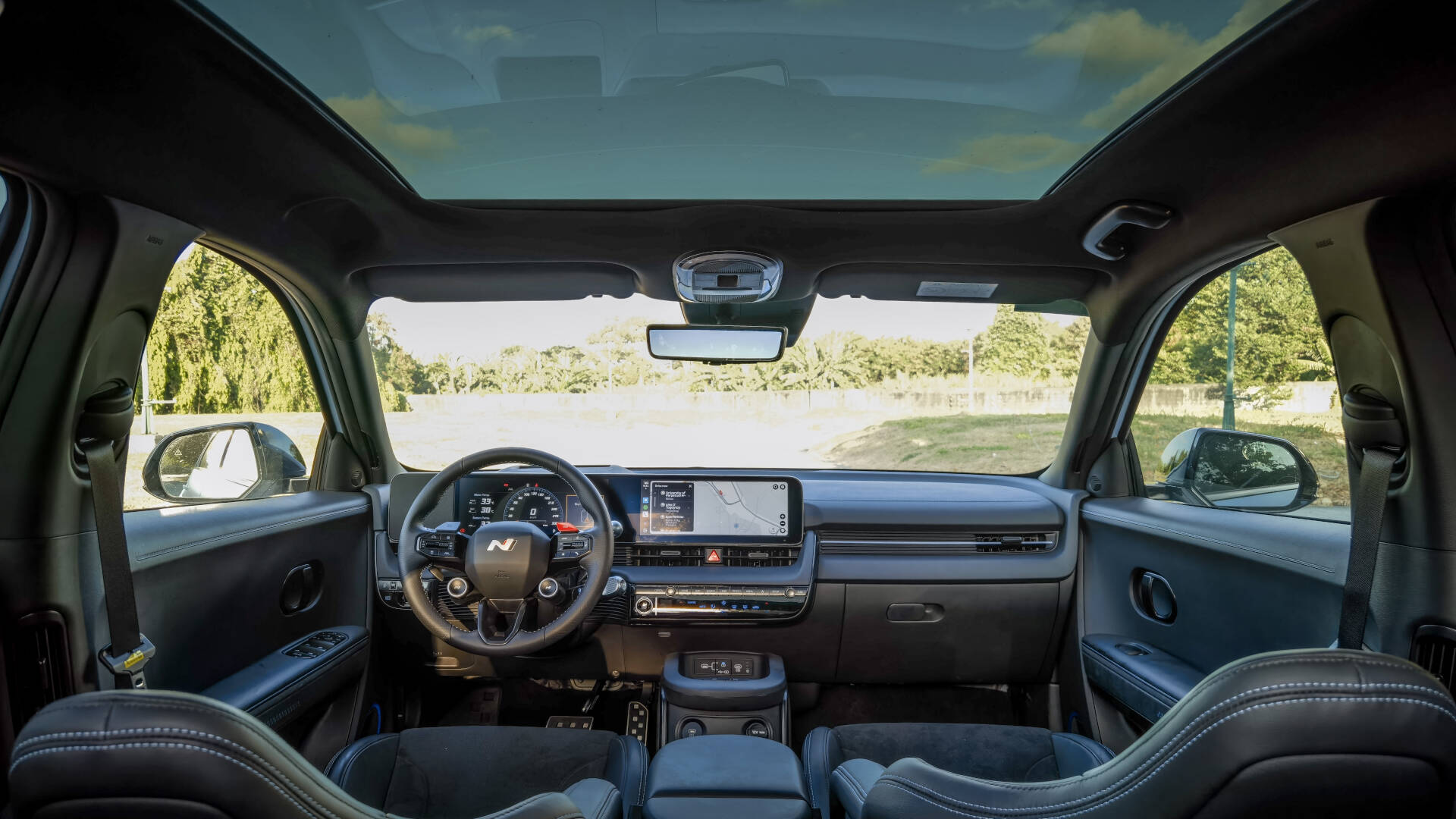
The extra 200hp front motor means there’s no frunk to store groceries. Despite the bigger rear motor, you still get 527 liters of cargo space in the rear, thankfully, though you'll want to strap down that cargo extra tight for when you’re out driving. The interior sees few major changes—the biggest ones being new front seats and a revised center console sitting between them, with a more secure wireless charging shelf. Perfect for securing your phone and GPS logger during high-G maneuvers, though phones and other small items can get wedged in that weird space between the console and the dash if you’re careless.

PHOTO: Niky Tamayo

Those new front seats have extra bolsters to hold your flab in during those same maneuvers. Like true racing seats, they pinch uncomfortably if you’re not sitting right, and there’s no power adjustability, although you do get seat ventilation through the suede liners. There’s more suede on the ceiling around the gigantic fixed glass roof, and a feeling, overall, of better material quality than the regular 5.

The black display surrounds work better than the gray on the regular car, and the custom display backgrounds are wonderful. There’s comprehensive telemetry, including a G-counter and temperature readouts, as well as an HUD projected onto the windshield in front of the wonderful leather steering wheel. Other toys include wireless Android Auto and Apple CarPlay—painless to set up and a great help for navigation—built-in navigation that’s slick looking and intuitive, automatic opening everything, and a more robust sound system, with great clarity and impressive volume. Though again, lacking the bass to truly mimic real engine sounds. The fake engine sounds end up being meme fodder more than anything else. Like oversized decals and chrome muffler tips on a Shelby Mustang. There for the ego boost, rather than the turbo boost.

PHOTO: Niky Tamayo

Do Filipinos need another meme machine sitting in gas station forecourts on Sunday mornings or sliding into ditches on Saturday evening due to juvenile owner antics? Maybe not. But as an icon of EV desirability, the Ioniq 5 N is a spectacular thing. At just P4.25 million, it costs a third as much as a Nissan GT-R and a tenth as much as an Urus, while offering similar performance. And perhaps, at that price, it will still be out of the reach of the hopelessly inept. But for those who can live with driving the ultimate contradiction, this is a fascinating machine that can truly do it all. Is it perfect? Absolutely not. Do I love it anyway? Absolutely.

See Also

[bg_related:0]
PHOTO: Charles Banaag
  • TGP Rating:
    /20

    Starts at ₱

    TGP Rating:
    /20
    Starts at ₱