Vehicle safety has come such a long way over the years. Stability control is practically standard is everything, and side airbags have become the norm, too. Back then, we were lucky enough to get side impact door beams.
These days, however, the crash test isn’t just the lone measure of a safe vehicle. That brings us neatly to advanced driver assist systems or ADAS. Protecting the occupants in an accident isn’t enough anymore, avoiding the accident in the first place is a must.
OTHER STORIES YOU MIGHT HAVE MISSED:
Confirmed: The cute little VinFast VF 3 will come to the Philippines
The new Mitsubishi Montero Sport is on the way to local showrooms
Active safety takes prio
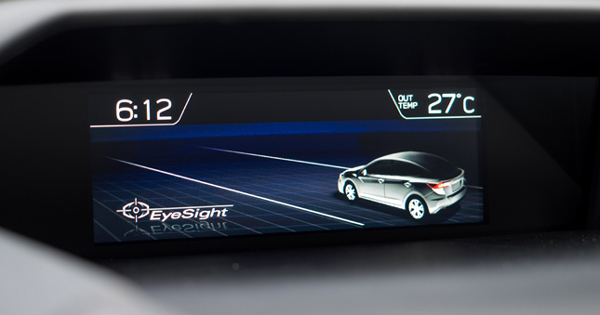
Carmakers have been putting more of these advanced driver assist systems in their cars lately. They claim they can, at the very least, mitigate a crash from happening or, at most, leave you and your car scratch-free. Various New Car Assessment Programs have tested them out such as EuroNCAP, Global NCAP, and ASEAN NCAP.
Enter, the IIHS
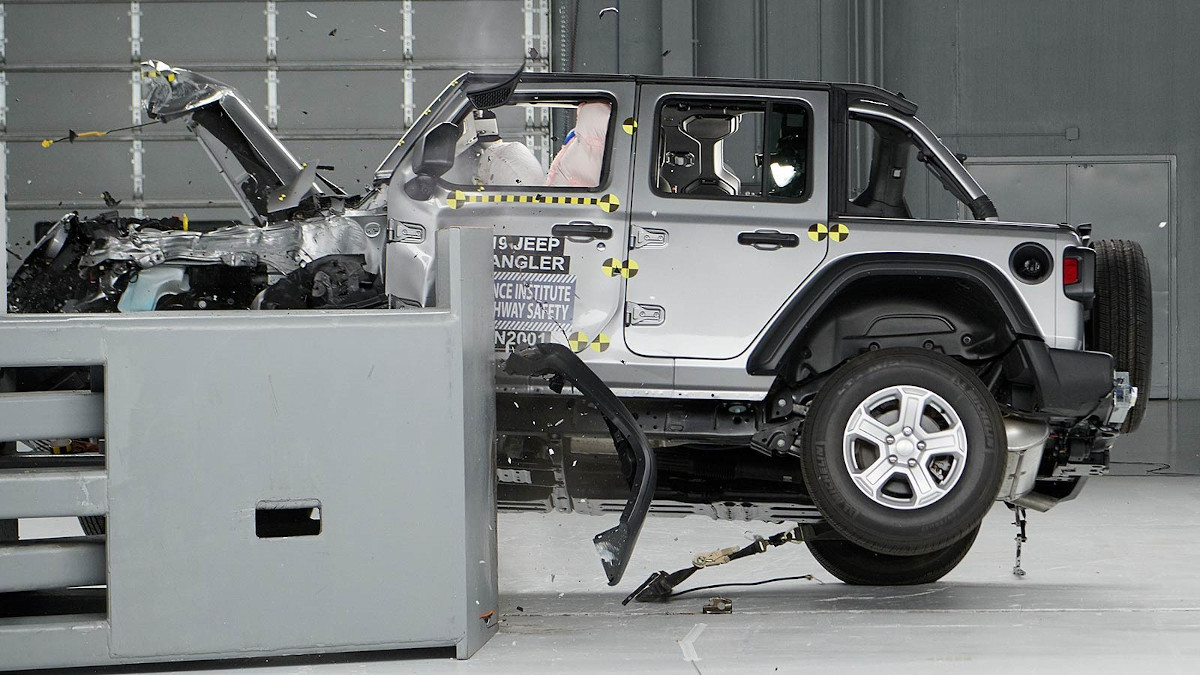
However, the Insurance Institute for Highway Safety (IIHS) does things a little differently. The firm is known to push the boundaries of vehicle safety testing, being the first to implement the tougher offset crash test at 64kph in the mid-‘90s, a norm today. The IIHS has since made tougher tests such as the small overlap frontal crash test and side impact testing with heavier side rams.
Advanced driver assist systems aren’t spared from the IIHS’ tougher standards. In a recent test, it gathered 10 popular compact crossovers sold in the US equipped with ADAS. These are the, in alphabetical order, the Chevrolet Equinox. Ford Escape, Honda CR-V, Hyundai Tucson, Jeep Compass, Mazda CX-5, Mitsubishi Outlander, Subaru Forester, Toyota RAV4, and Volkswagen Taos.
The (tougher) test
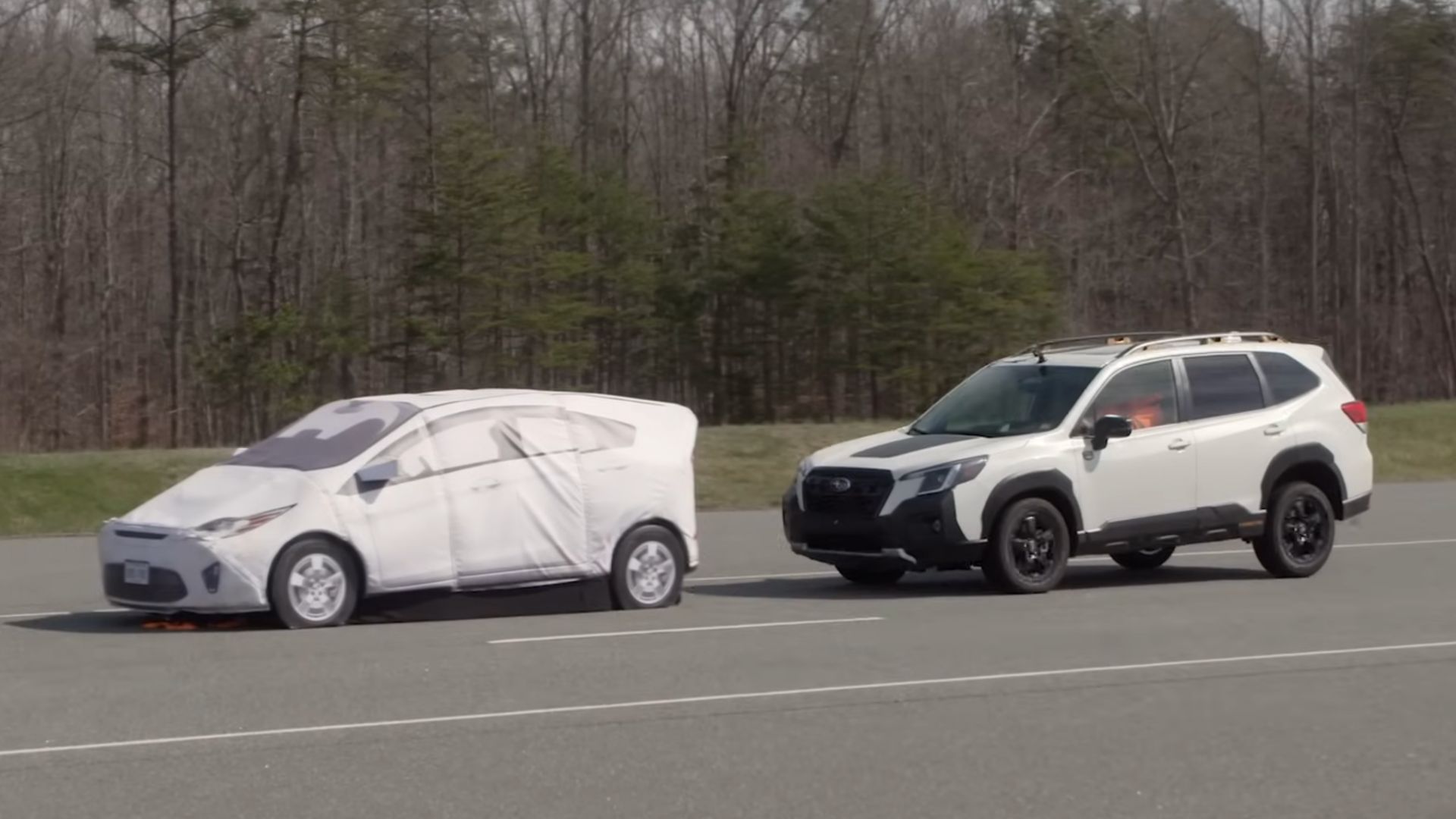
How much tougher is the test? Usual testing speeds are at 20kph and 40kph. For the IIHS, it ramps up to 50kph, 60kph, and 70kph, far faster than most safety organizations. At those speeds, each car was tested against simulations for a car, a motorcycle, and a semitrailer. The tests evaluate not just the forward collision warning system, but also braking performance and avoidance features.
Out of the 10 compact SUVs tested, only one was rated as good.
The sole 'Good' SUV
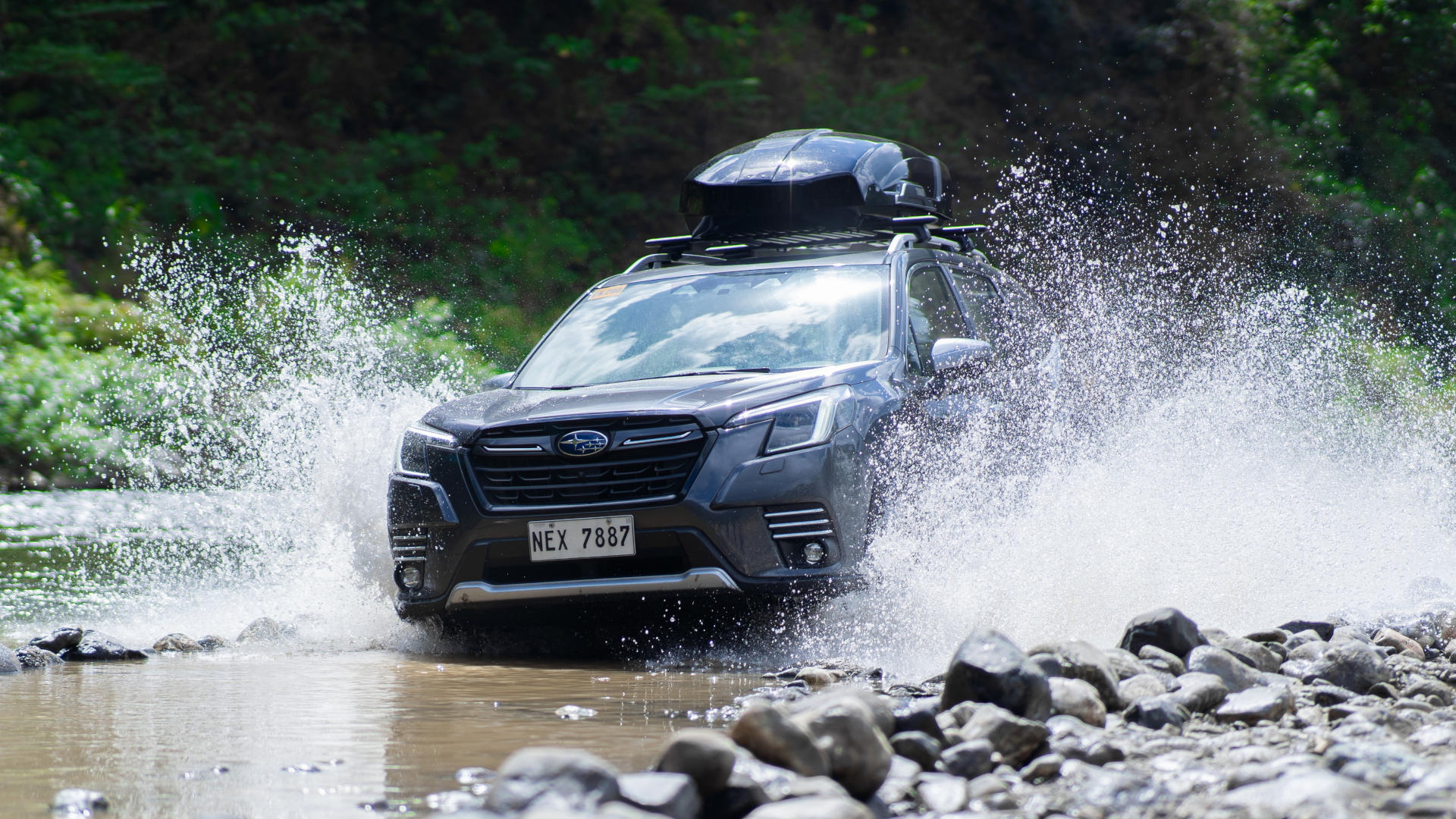
At the top stood the Subaru Forester as it was the only one that alerted the driver early and stopped in time at all speeds. Whether it was with a car, motorcycle, or semitrailer, the Forester effectively avoided a potential crash. It was also the only one with an effective autonomous emergency steering. The IIHS noted that the car began slowing down even before the autonomous emergency braking system went in full effect.
Best of the rest
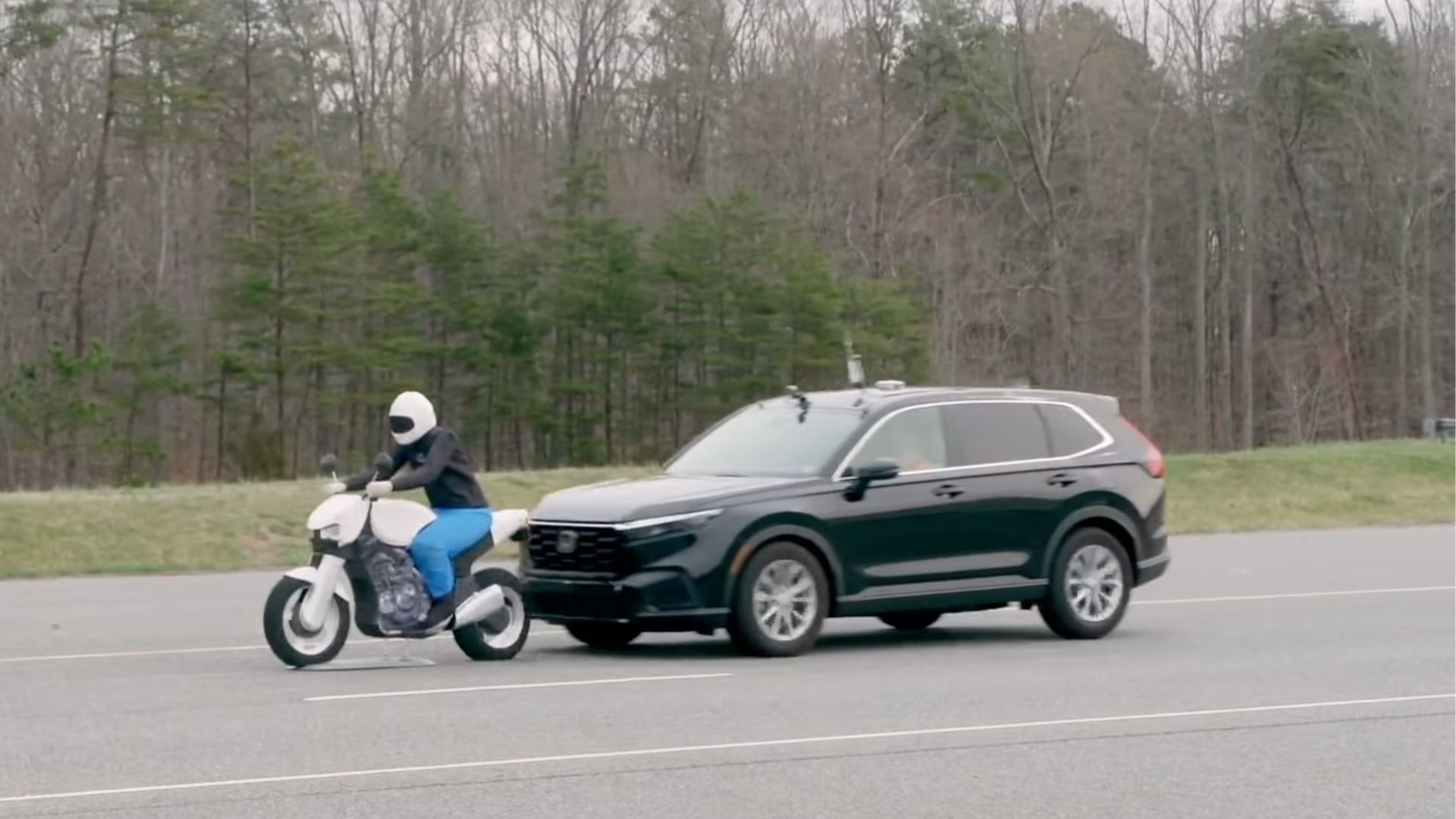
So, who came in second, you ask? That would be the Honda CR-V. It aced the test with no problems, alerting the driver early and had strong braking performance. However, the CR-V came up short to the Forester as it started to struggle with the 70kph test. It did edge out the Toyota RAV4 thanks to its stronger binders, but the longtime rivals exhibited similar behavior in the 70kph test. These SUVs were rated as ‘Acceptable’ by the agency.
Almost there
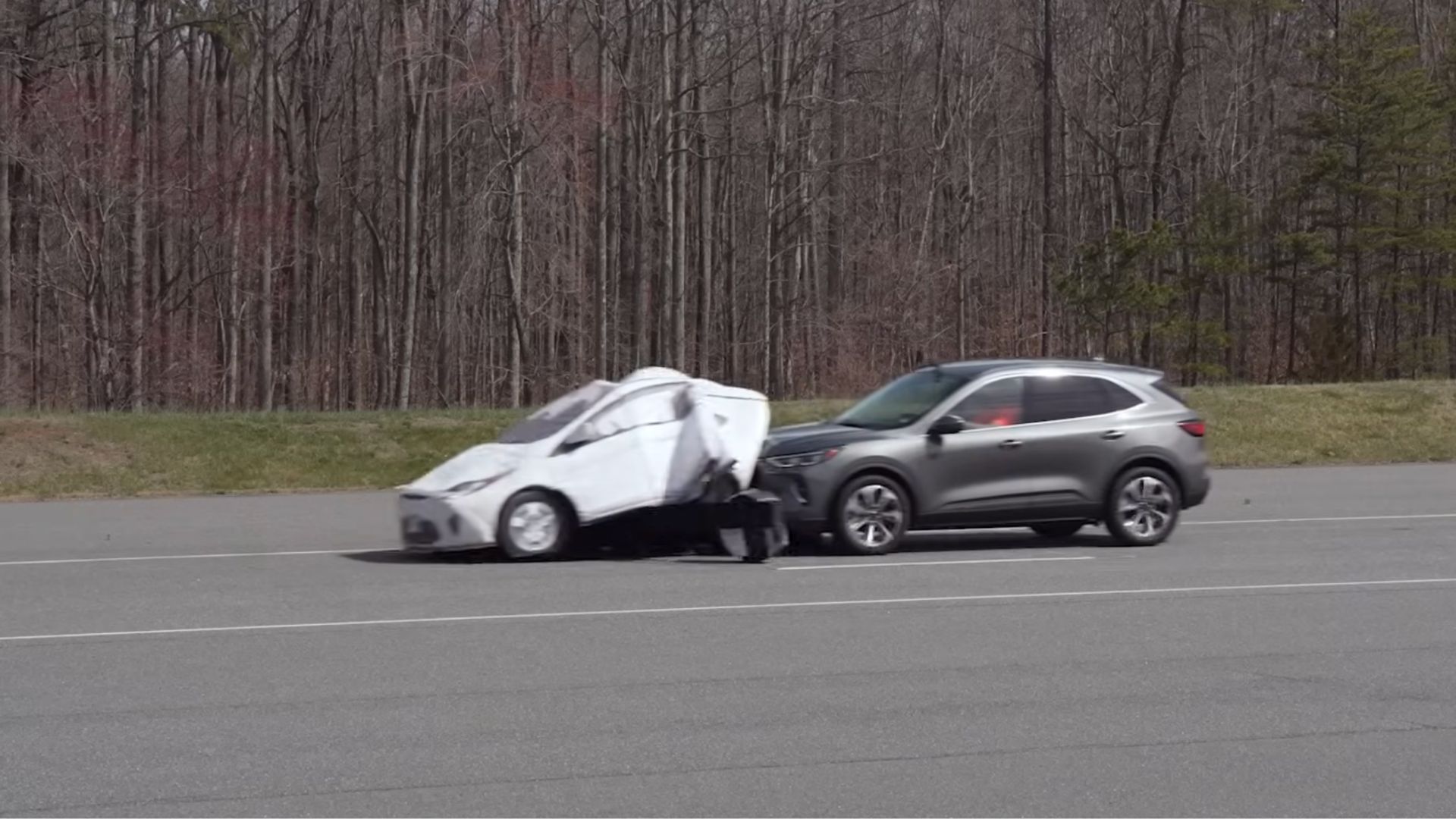
The Ford Escape came in fourth as the IIHS had to knock off points for the late alerts. It performed well in the 50 and 60kph test, but hit the (foam) motorcycle at 70kph. The Hyundai Tucson and Jeep Compass also received the same rating of ‘Marginal’ like the Escape.
Playing catch up
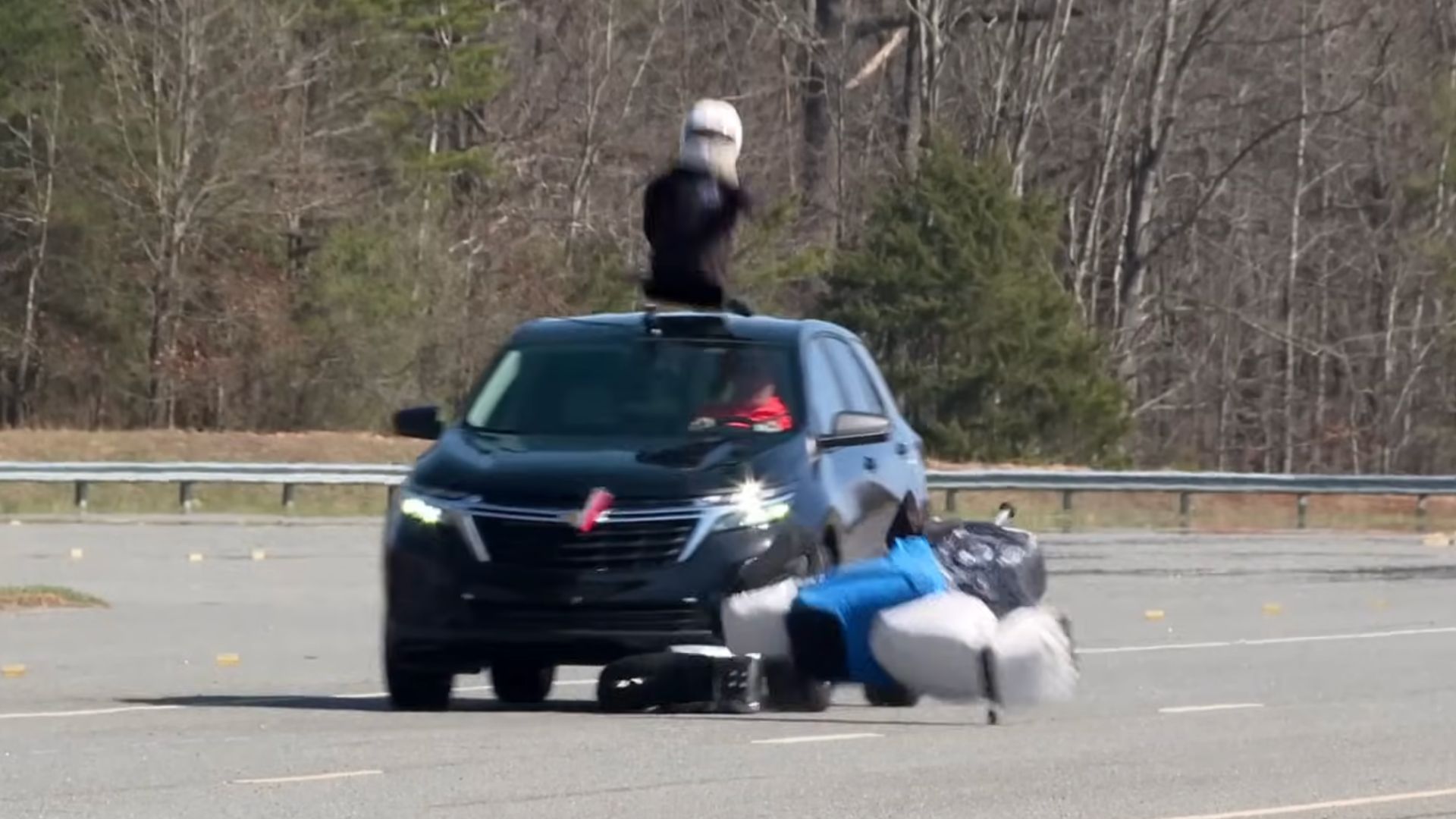
Rated as ‘Poor’ were the Chevrolet Equinox, the Mazda CX-5, Mitsubishi's Outlander, and Volkswagen Taos. These SUVs were noted for alerting the driver late and poor detection for motorcycles. The ADAS in these vehicles barely kicked in, per the IIHS, barely shaving off speed until it was too late. The Equinox was a special mention, sadly slowing down and decimating the dummy motorcycle.
For Subaru owners with EyeSight models, this comes as good news, but those with Hondas and Toyotas can sleep easier at night knowing their systems are effective enough. The rest need to step up, says the IIHS.