Maginhawa Street, one of Quezon City’s top arts and food hubs, is transforming one section of the street to be more walkable, cyclable, and environment-friendly.
A short stretch from Magiting Street to the Teacher’s Village East Barangay Hall is implementing a dry run involving sidewalk widening, a one-way scheme, and on-street parking from November 20, 2024 to February 28, 2025.
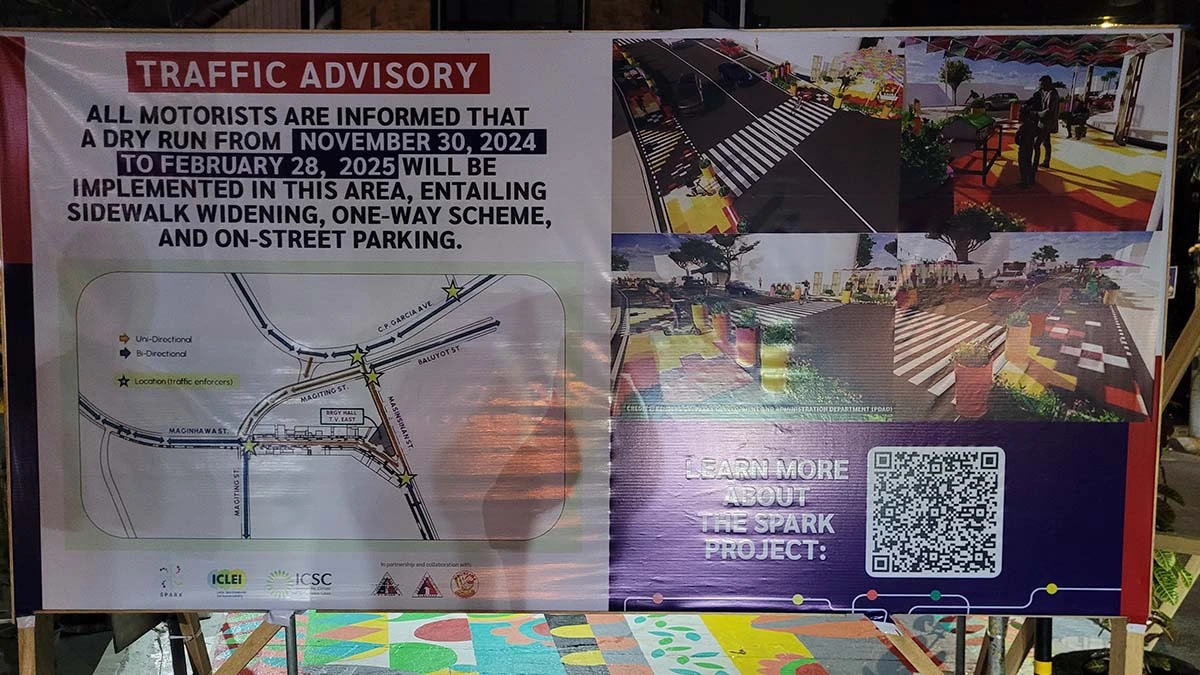
The initiative is part of the SPARK Project, which aims to take back Maginhawa Street “for the people” to counter the car-centric culture and transportation policies in Metro Manila. The measure also aims to promote climate-friendly mobility behavior and active mobility to create more livable cities. Metro Manila traffic was ranked among the worst in the world based on the 2023 TomTom Traffic Index.
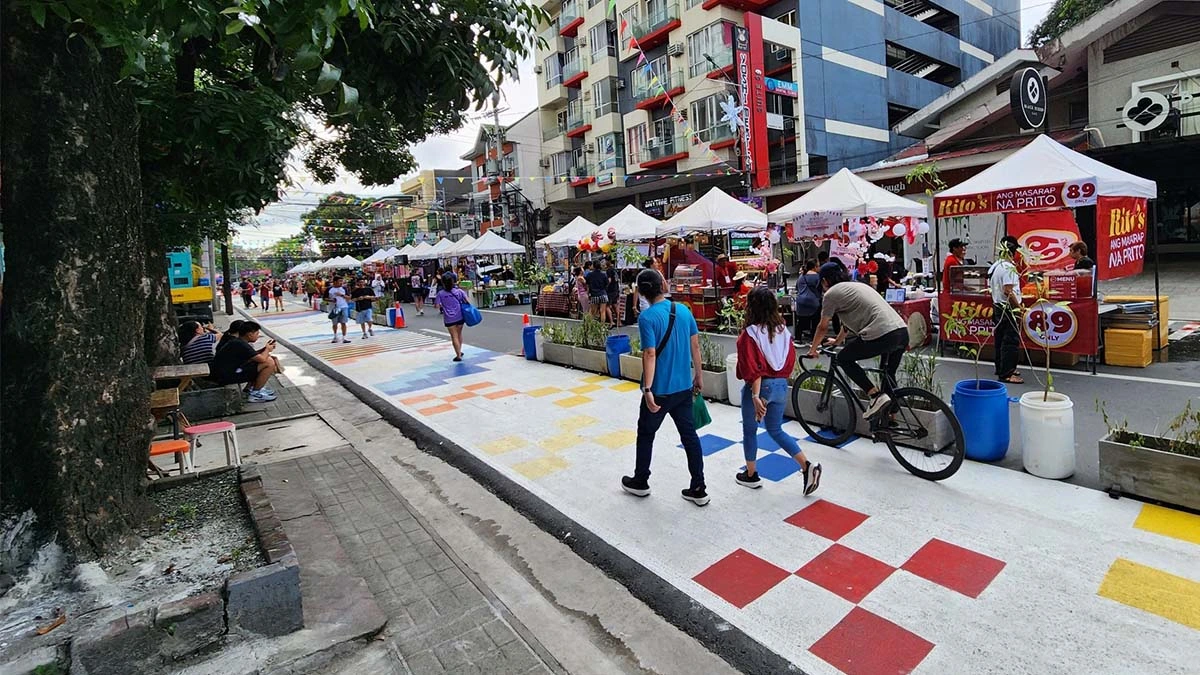
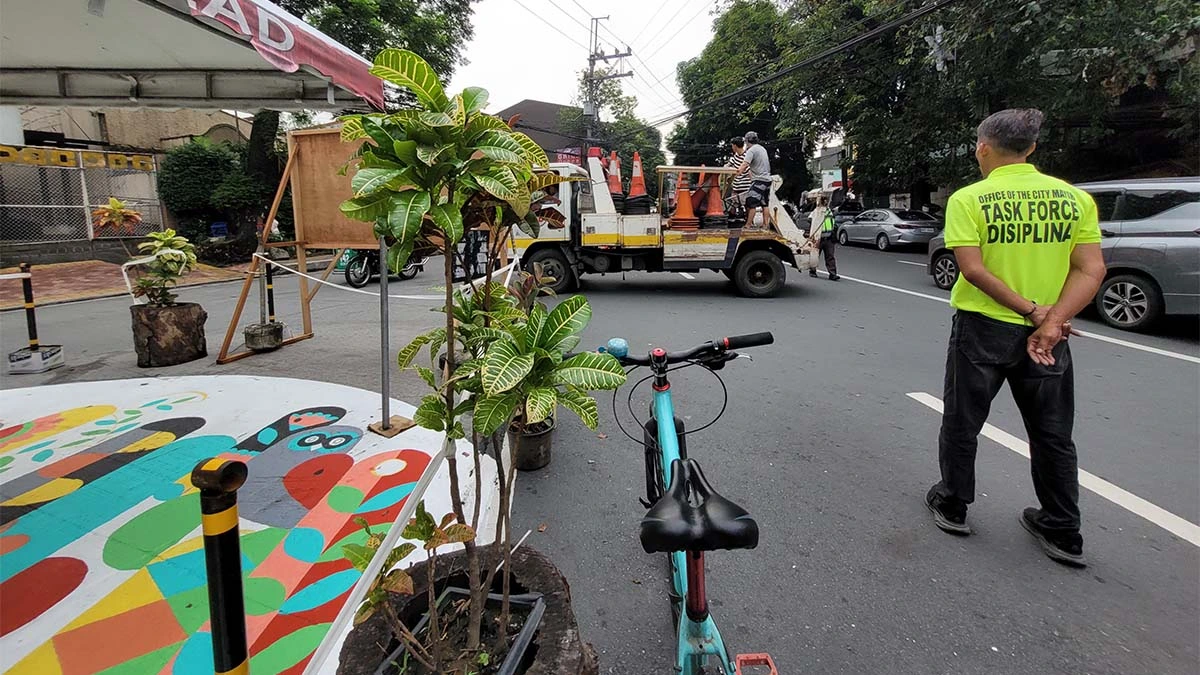
Volunteers painted colorful geometric patterns, inspired by the Philippine banig (handwoven mat), on two sides of the road and clearly marked crosswalks. Buffer zones marked by concrete plant boxes, recycled tires, and barrels with plants have also been placed along certain sections to prevent cars from parking.
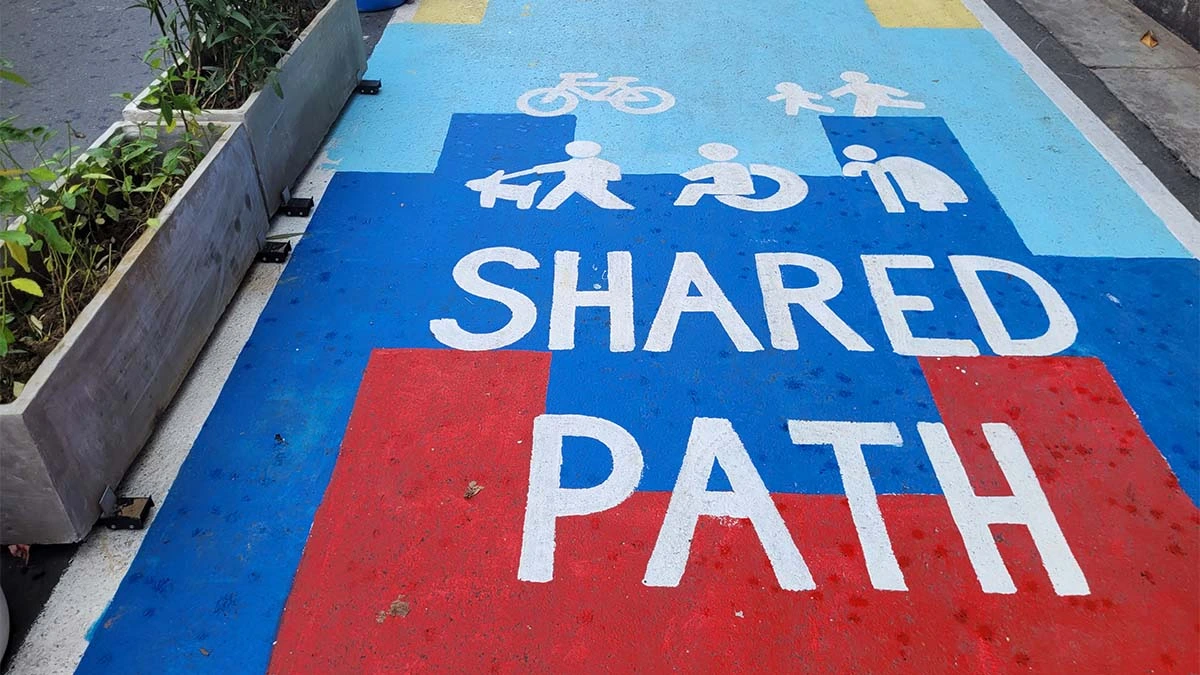
The idea is to transform the streets into shared spaces for the benefit of people, rather than serving merely as a thoroughfare and parking space for motorized vehicles.
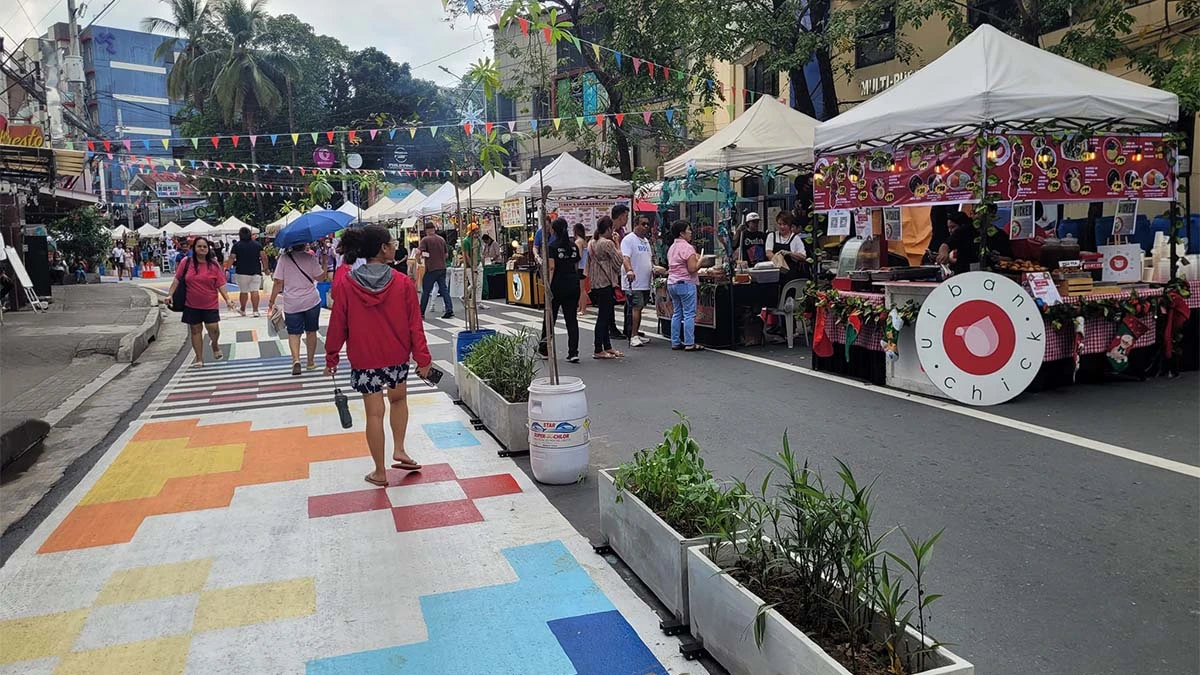
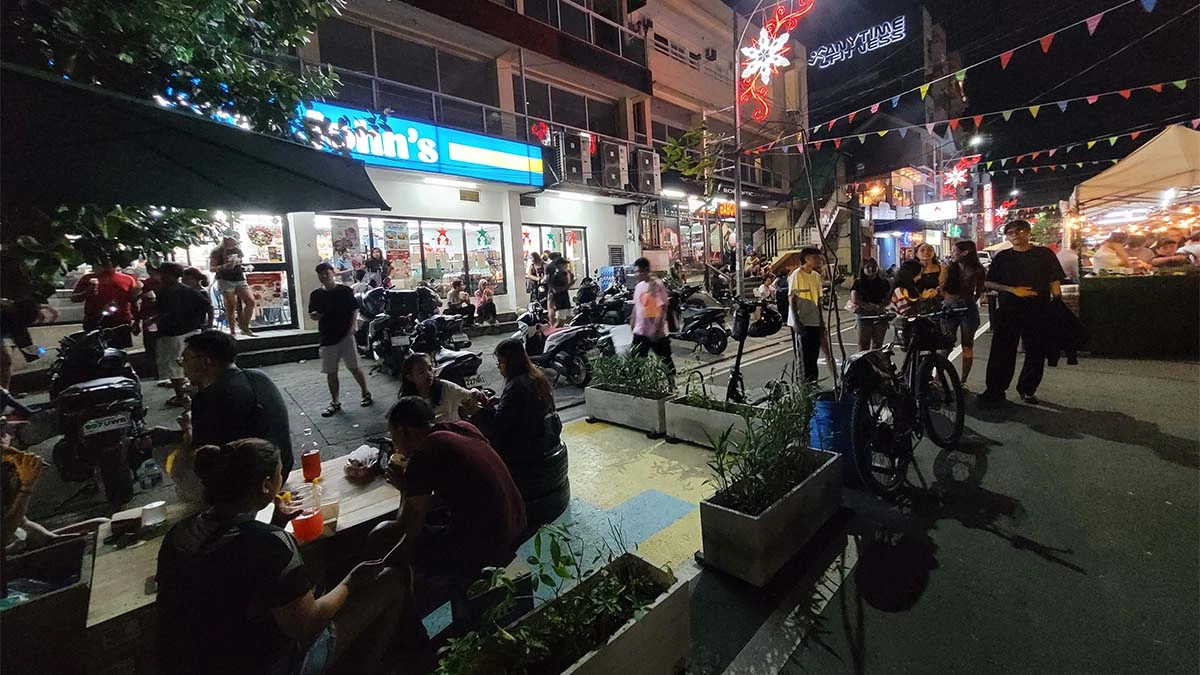
The vibrantly painted lanes were put to good use during the recently concluded Maginhawa Arts and Food Festival 2024 when the stretch was closed off completely to cars for the arts, food, and live music event that drew an estimated 30,000 attendees.
Here’s what you need to know about these latest developments in Maginhawa Street.
What is the SPARK Project?
The street transformation is all part of the Sparking Active Mobility Actions for Climate-Friendly Cities (SPARK) Project, which “aims to increase the role of active mobility in building resilient and safe transport systems.” The project being implemented by ICLEI-Local Governments for Sustainability (ICLEI) and the Institute for Climate and Sustainable Cities (ICSC) utilizes “tactical urbanism or community-driven actions that involve temporary, small-scale interventions to improve the urban environment of a specific area.”
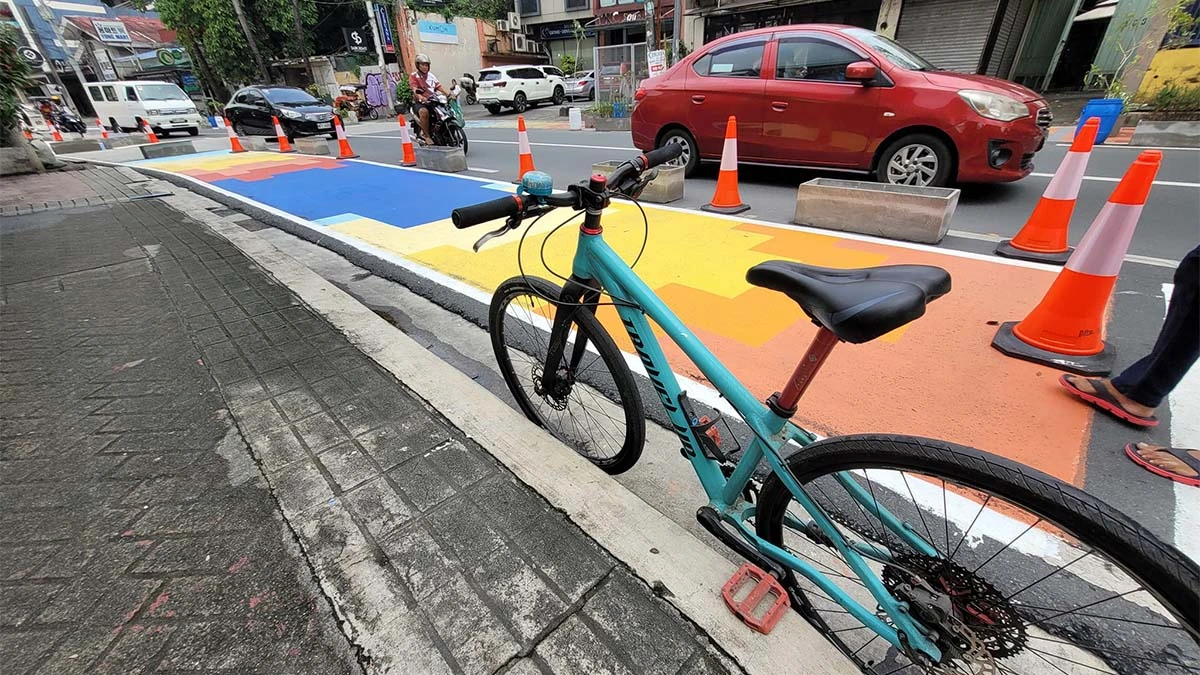
Tactical urbanism often uses informal interventions to “improve the urban environment and test out new ideas” before implementing larger and more permanent changes.
The colorful artwork and buffer zones, covering the portion of Maginhawa Street, from its intersection at Magiting Street to the location of the Teachers’ Village East barangay hall, provide a shared pathway for cyclists and pedestrians to move around safely. At the same time, the other side will serve as a space for residents and customers of local businesses to sit. Makeshift tables made with wooden pallets, tire seating, and umbrellas give an extra space for people to socialize.
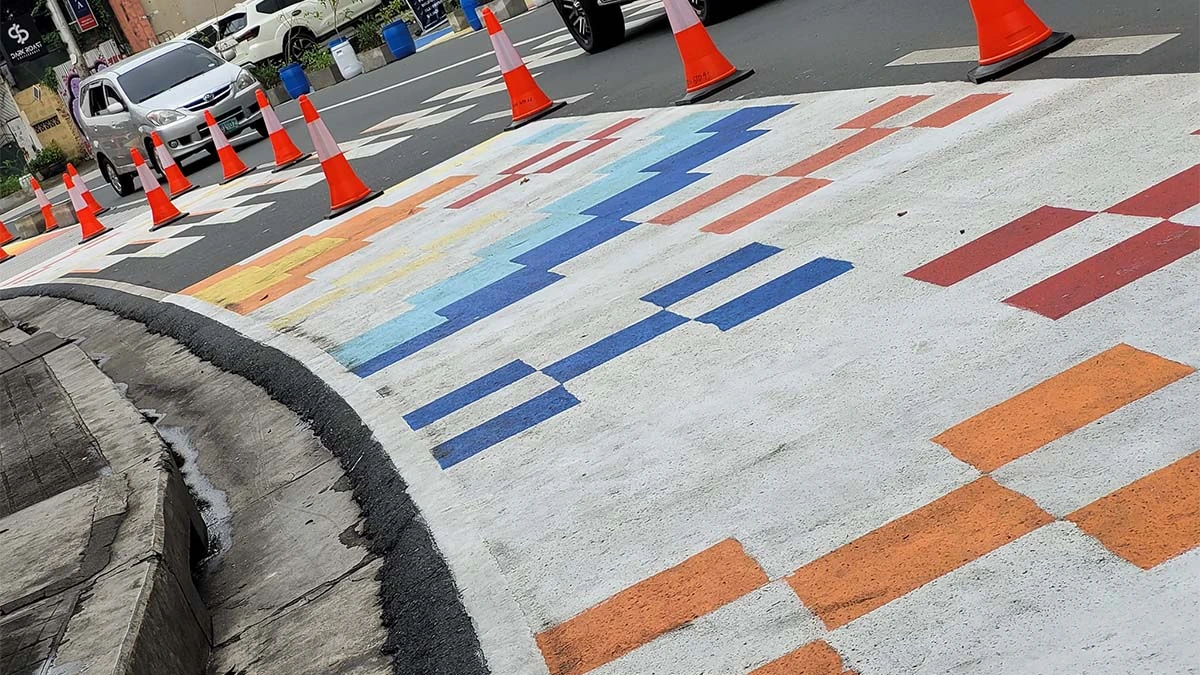
“We are doing the interventions temporarily first using low-cost materials, to test out if it will be effective and if the arrangement will work for the community of Maginhawa,” said ICLEI Southeast Asia project officer James Anthony Oriña.
How will motorists be affected and what are the alternate routes?
Resident car owners, those who frequent the restaurants, and motorists who pass Maginhawa Street as an alternate route should know that the sidewalk widening, one-way scheme, and on-street parking will be implemented until February next year.
The stretch of Maginhawa Street from Magiting Street from the corner of Uncle John’s to the Teacher’s Village East Barangay Hall will be converted into a one-way street to ease the traffic flow and reduce bottlenecks.
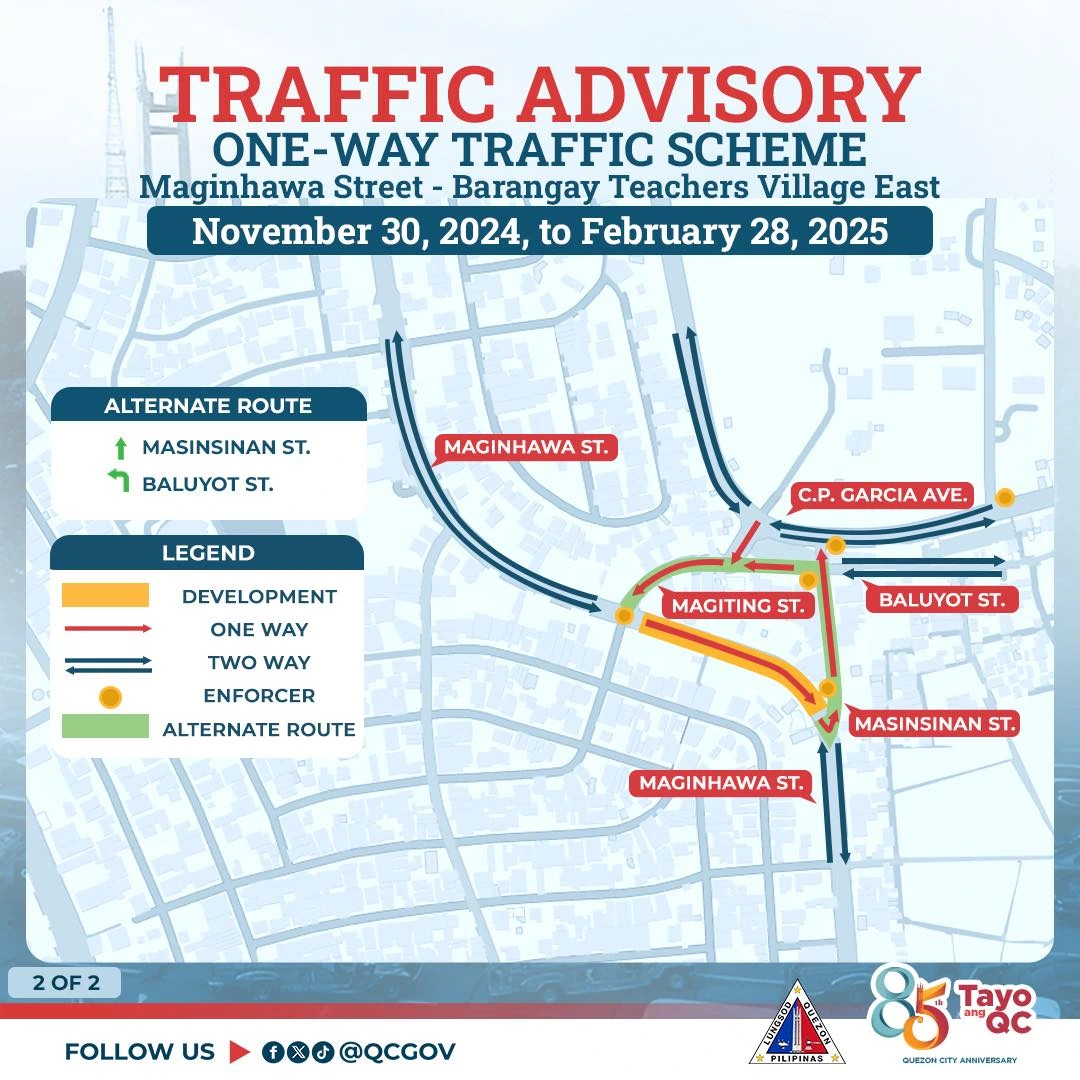
Affected vehicles can take Masinsinan Street and turn left to Magiting Street instead. Meanwhile, vehicles heading towards Mayaman/Masaya Streets are advised to take Masinsinan Street and then turn left at B. Baluyot Street.
Why was Maginhawa Street chosen for this project?
A series of cyclability and walkability assessments, stakeholder workshops, and consultations with the LGU and community were held before the design was finalized. After studying the entire stretch, the final project site zeroed in on the busiest section of Maginhawa Street where numerous businesses attract high foot traffic.
The central location near Teacher’s Village East Barangay Hall, a central hub for residents, is a major bottleneck area due to the number of cars parking (or trying to park) next to the mom-and-pop restaurants, which residents normally walk, bike, or use tricycles to get to.
“Maginhawa has gained its popularity and is continuously thriving because of its local businesses and restaurants, and their sense of community. However, uneven sidewalks and numerous parked cars often lead to traffic congestion, making it difficult and less safe for people to move around the area, especially during evenings,” Institute for Climate and Sustainable Cities (ICSC) urban development manager Arielle Celine Tabinga said in a news release.
Based on the baseline data gathered by the agencies involved, customers of local establishments often engage in double-parking, extending their parking onto the road and further exacerbating traffic and accessibility issues.
The key challenges identified include the blind curve near the Barangay Hall, speeding cars and tricycles, parked cars obstructing visibility, and the absence of traffic calming measures to aid pedestrian crossings.
“We need to make Maginhawa safer for people to walk, cycle, and visit the shops. It is important that these interventions fit the needs of the community and ensure that they benefit them in every way possible,” she added.
The interventions also support the Quezon City Ordinance No. SP-2559, Series of 2017 that declared Maginhawa and adjacent areas as a tourism district known as the “Maginhawa Art and Food Hub.”
Maginhawa is just one area in Quezon City where initiatives like this will be implemented. The local governments of Quezon City and Pasig City both expressed their commitment to active mobility and sustainable transportation.
According to ICSC, Quezon City has proactively developed bike lanes and accessible cycling infrastructure for residents. Meanwhile, Pasig has expanded its “People’s Streets” to provide exclusive spaces for pedestrians and cyclists during car-free Sunday. Another iteration of the SPARK intervention will also be done in Pasig City in 2025.
Is removing parking slots for cars bad for business?
There’s a common misconception that by removing parking areas from cars, you’ll be hurting businesses. On the contrary, investment in walking and cycling infrastructure can actually help small business owners gain business.
Studies worldwide have shown that people walking, cycling or using public transport actually end up spending more in local shops than those who drive. While they may spend less per visit, they are more likely to be loyal, repeat customers who make frequent visits.
A news article by Forbes cited: “Those not in cars spend 40% more each month in neighborhood shops than motorists.” Research conducted in London showed that businesses benefitted from Dutch-style streetscape improvements, such as the addition of cycleways.
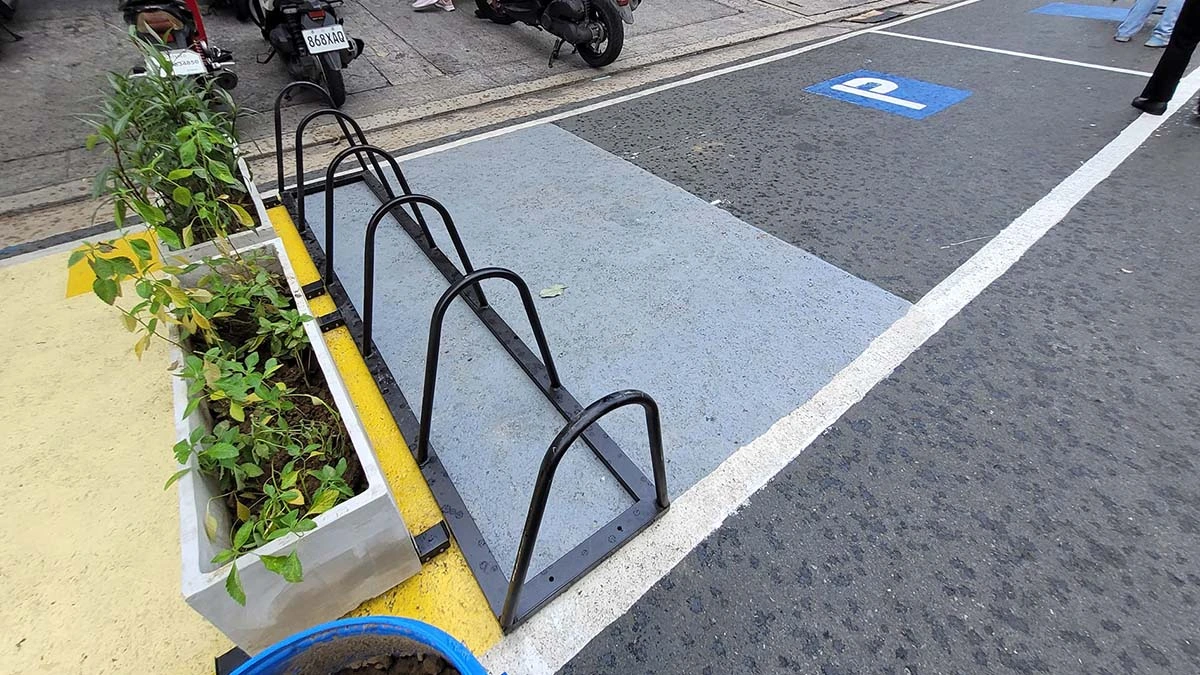
A study of a Toronto neighborhood found small businesses drastically overestimated the share of customers arriving by car. A parking space converted into a bike parking area can go from providing a slot for one customer to up to twelve at one time. The visitors themselves “overwhelmingly preferred” the widened bike lanes or sidewalks and room to move around, even if it meant sacrificing some parking spaces, according to the study.
Thus, creating spaces where more people who use active and sustainable transport can enjoy and spend time can lead to better business in the long run.
In the Philippines, surveys from SWS show that bicycle owners outnumber car owners. Within Metro Manila, there are four bicycle owners for every single car owner. It’s estimated that 88% of households in Metro Manila and the rest of the Greater Manila Area do not own cars, while only the remaining 12% own at least one.
RECO