Have you ever stopped and wondered what the connection is between tires and tasteful dining? Foodies around the world usually seek out restaurants that have been awarded Michelin Stars, which have come to symbolize an honor in the fine dining scene. We all know that stars are awarded to restaurants that are considered the best in a city. This prestigious award has the power to boost a restaurant’s popularity, which could mean big business.
But what does an elite restaurant ranking system have to do with Michelin, the well-established tire company that supplies rubber tires to modern cars and vehicles? It’s actually a very interesting story.
OTHER STORIES YOU MIGHT WANT TO CHECK OUT:
Year-end roundup: All of the ‘Big Test’ episodes that premiered on Top Gear PH in 2023
Santa, we’ve been good: 10 Cars we wish to see in PH next year
What is Michelin?
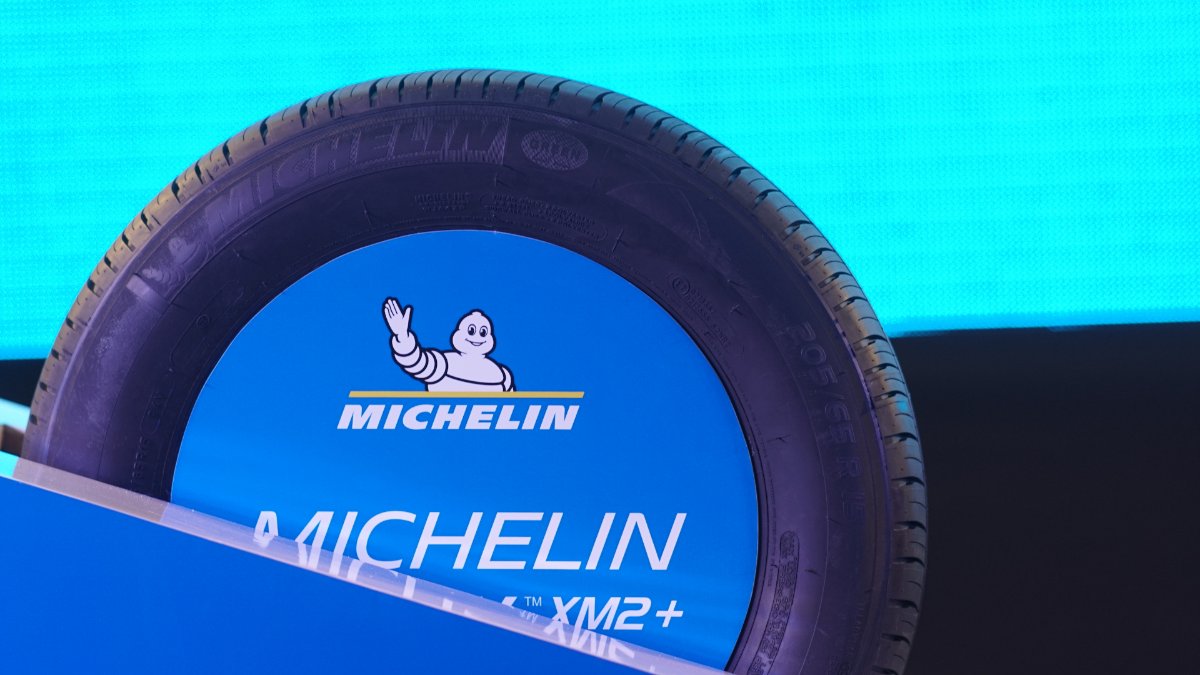
Michelin is a French multinational tire manufacturing company founded in 1889. Currently, it’s the second largest tire manufacturer in the world behind Bridgestone and is larger than both Goodyear and Continental. Among its numerous inventions include the removable tire, the pneurail (a tire for rubber-tired metros), and the radial tire. Aside from your regular rubber car tires, Michelin is responsible for manufacturing tires that are used by Space Shuttles, aircrafts, automobiles, heavy equipment, motorcycles, and bicycles.
While most tire companies are known primarily for – well, their tires – Michelin is also famous for its Red and Green travel guides, its Michelin stars rating system that awards restaurants for their cooking, and its signature tire mascot, Bibendum, a humanoid figure consisting of stacked white tires.
In case you didn’t know, Bibendum is the official name of the company’s famous mascot referred to commonly as the Michelin Man or Michelin Tire Man who made his debut in 1894. The mascot is white because in the early days of cars, tires made of natural rubber were light gray or off-white, and not black as most tires are today.
Why did Michelin publish a restaurant guide?
The origin of the Michelin Star and its restaurant rating system goes back to the early days of the automobile in France when brothers Ándre and Édouard Michelin first founded their self-named tiremaking company in 1889. Back then, there were very few automobiles in France, so having one was considered a novel luxury reserved only for the elite class.
The Michelins believed that a travel guide, which contained information on trip planning, do-it-yourself maintenance, and suggested food stops along the way would encourage early adopters of automobiles to drive more, thus creating a higher demand for automobiles – and the rubber tires that they sold.
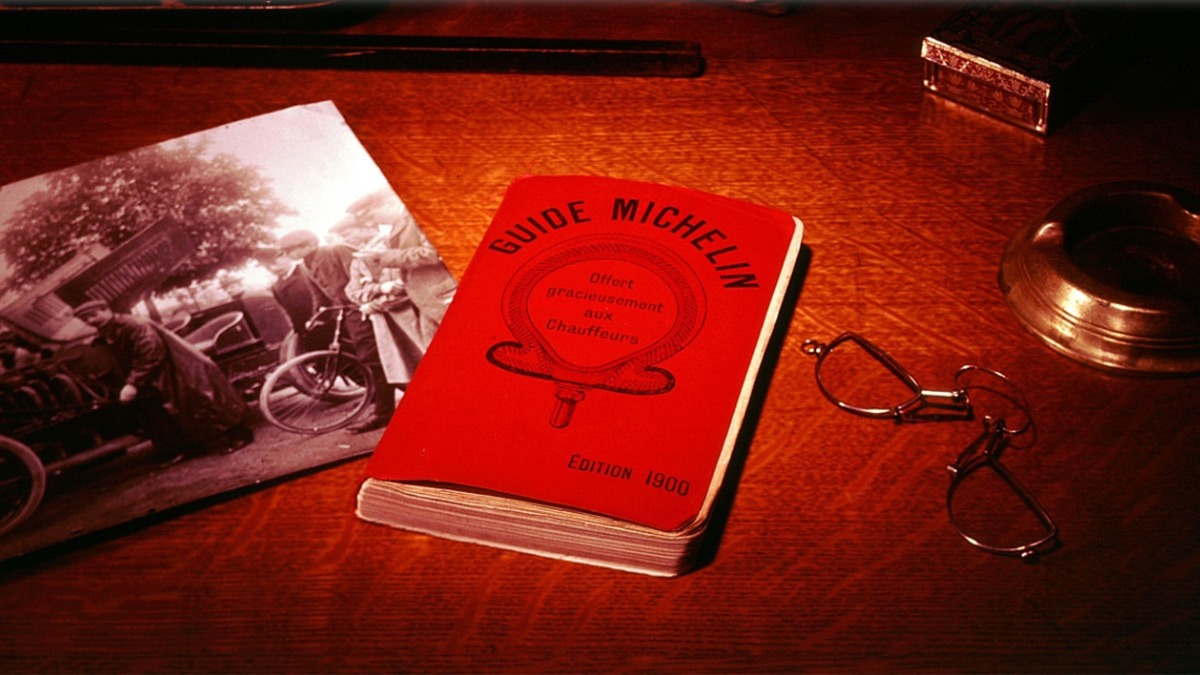
Michelin began publishing its “Red Guide” in 1900, initially filling it with handy information for travelers, such as road maps, instructions on how to repair and change tires, and a list of where to get a good meal after driving along popular routes.
At first, these guides were given out for free but in 1920, the Michelin brothers started selling them for seven francs to drive up demand and make the guide more respected. The Michelin brothers recruited a team of mystery diners (known as restaurant inspectors today) to visit and review restaurants anonymously. The new guide included a list of hotels in Paris and lists of restaurants according to specific categories.
In 1926, the brothers introduced the concept for the Michelin Star to rank restaurants, eventually expanding the hierarchy of zero, one, two, and three-star ratings five years later. Over a century after they started publishing it, these Michelin Guides and the Michelin Star system are now considered among the highest honors in the culinary world.
Modern Michelin Guides have become best-sellers, now responsible for rating over 40,000 establishments in over 24 territories across three continents. This tire company pretty much pioneered the whole concept of food tourism as we know it today.
What do the Michelin Stars rankings mean?
Restaurants may receive one to three MICHELIN Stars for the quality of their food based on five criteria: quality of the ingredients used, mastery of flavor and cooking techniques, the personality of the chef in the cuisine, harmony of flavors, and consistency between visits. Restaurant inspectors do not look at the interior decor, table setting, or service quality when awarding stars. Here’s what the three-star ranking refers to.
- One star: “High-quality cooking, worth a stop”
- Two stars: “Excellent cooking, worth a detour”
- Three stars: “Exceptional cuisine, worth a special journey”
According to Michelin, a restaurant is awarded one star if it uses top-quality ingredients, where dishes with distinct flavors are prepared to a consistently high standard. Two stars are awarded when the personality and talent of the chef are evident in their expertly crafted dishes and their food is refined and inspired.
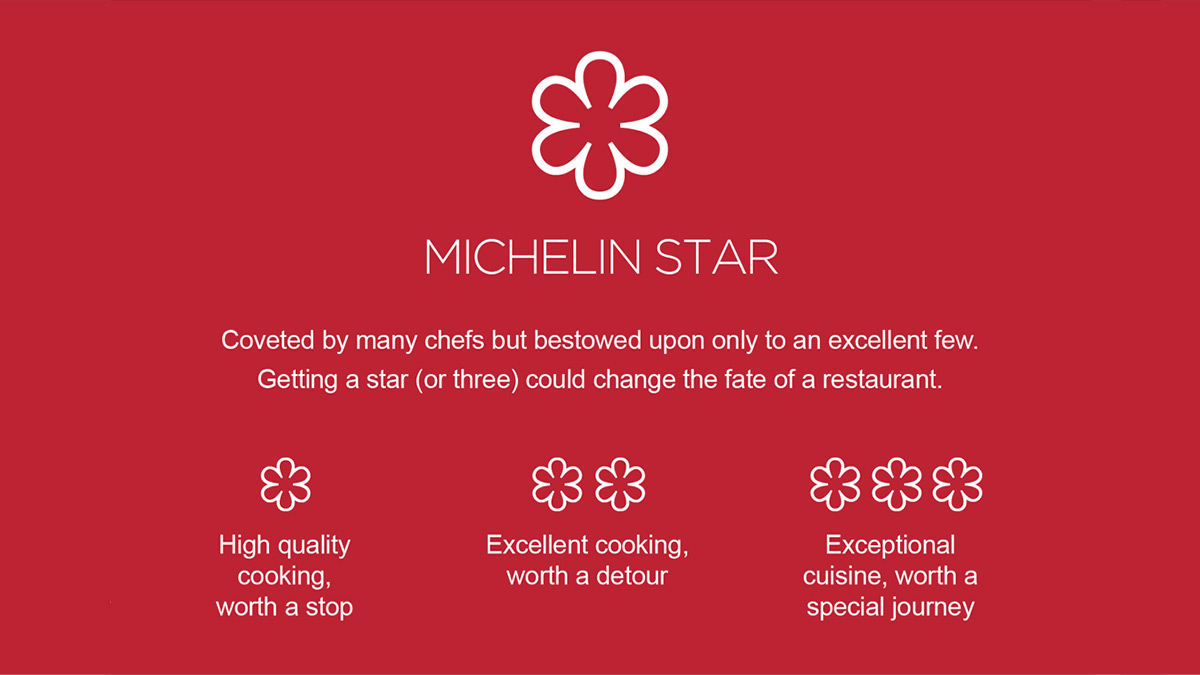
The highest award of three Michlin Stars recognizes “the superlative cooking of chefs at the peak of their profession” where “their cooking is elevated to an art form and some of their dishes are destined to become classics.”
OTHER STORIES YOU MIGHT WANT TO CHECK OUT:
Flying out? Here’s an updated transport guide to and from NAIA
The ultimate guide to the hop-on hop-off bus in the Philippines
Are there any Michelin-starred restaurants from the Philippines?
The Philippines currently does not have any homegrown restaurants based in the country that have been awarded a Michelin Star. This is because Michelin doesn’t operate its restaurant ranking program all around the world. Even in some countries, considered foodie destinations, it only operates in certain cities.
The very first edition of the guide for a Southeast Asian Country was the Singapore Michelin Guide, which was only launched in 2016. The guide has since expanded to include other countries in the region, such as Thailand in 2018, Malaysia in 2022, and Vietnam in 2023.
However, there is a restaurant specializing in Filipino cuisine based in another country that has been awarded a Michelin star. Kasama, a Filipino restaurant based in Chicago helmed by Tim Flores and Genie Kwon, is officially recognized as the world’s first MICHELIN-Starred Filipino restaurant.
Where can you find Michelin-starred restaurants in the Philippines?
Looking for restaurants to take the whole family on a weekend drive? While we may not have any homegrown restaurants just yet, some of the more affordable restaurants from nearby Asian countries have found their way to the Philippines through franchises. These are mostly located in malls in city centers, making it easier for Filipino foodies to try.
Tim Ho Wan
A one-Michelin star dim sum restaurant from Hong Kong, it has branches in SM City North Edsa, SM Megamall, Robinsons Place Ermita, Uptown Mall in Taguig, Gateway Mall 2, Glorietta 4 - Ayala Malls, SM Mall of Asia, and Alabang Town Center.
Din Tai Fung
A Chinese cuisine restaurant chain with one Michelin star originating from Taipei, Taiwan. It has branches in SM Megamall, SM Mall of Asia, Bonifacio High Street, Power Plant Mall Rockwell, and Greenbelt 3.
Kam’s Roast
A one-Michelin-starred roast meat restaurant hailing from Hong Kong. A Kam’s Roast branch can be found in SM Megamall.
Putien
A Singaporean restaurant which was awarded one Michelin Star. It highlights ingredients from Putian, a city in the eastern Fujian province of China. Putien can be found at The Podium in Mandaluyong.
Liao Fan Hawker Chan
Singapore’s famous one-Michelin star hawker stall known for its soy sauce chicken rice and roast pork has branches in SM Mall of Asia, SM City San Lazaro, SM Megamall, SM Grand Central, SM North Edsa, Glorietta 3, Bonifacio Global City, Ayala Malls-Manila Bay, SM City Baguio, SM City Legazpi, and SM City Sorsogon.
Before you head out for a drive at the mall, make sure your car is in good condition by following a regular maintenance schedule, which includes regularly taking care of your tires to ensure they’re roadworthy. Happy driving and eating!