
Omoda & Jaecoo Philippines is finally launching the iCaur brand in our market in October 2026. Two SUV models have been confirmed for our market: the subcompact V23 BEV and the midsize V27 extended-range EV, with the latter being the focus of this feature. For this comparo, we’ll be pitting the big iCaur V27 against the popular Jetour T2 Lightning i-DM. Let’s see how this new boxy SUV compares to its established Chery Auto cousin.
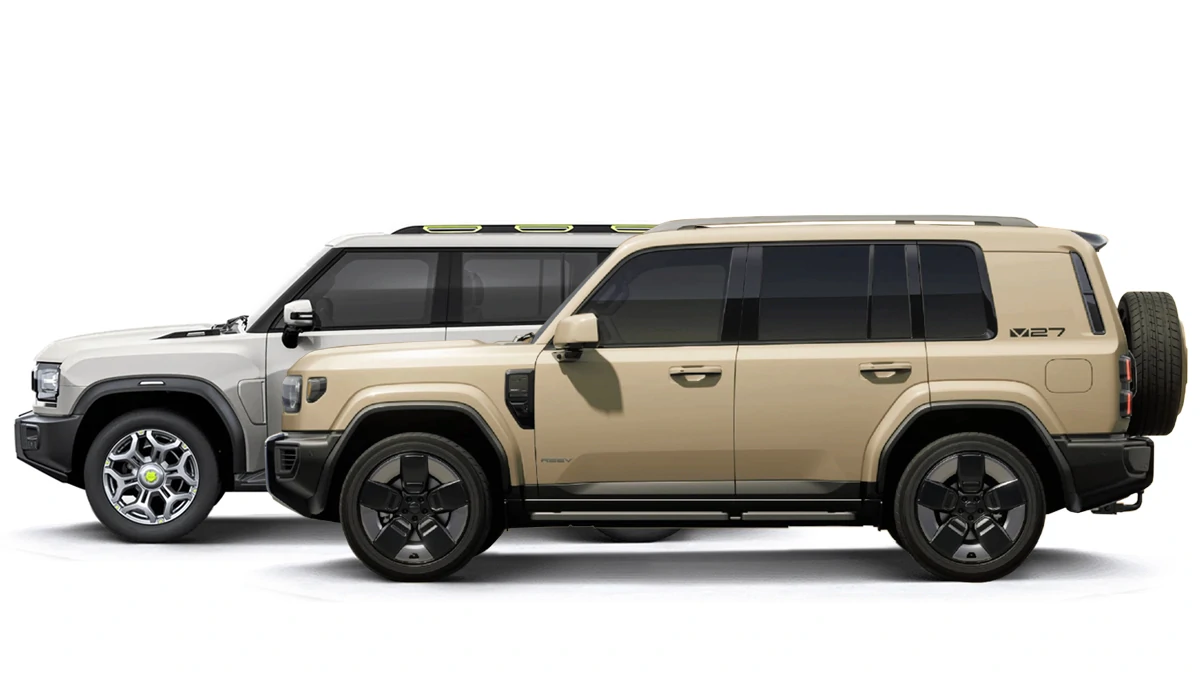
The V27 is 5,045mm long, 1,976mm wide, and 1,894mm tall. This makes it 260mm longer, 30mm narrower, and 19mm taller than the T2. The iCaur rides on a 2,900mm wheelbase that is 100mm longer between the axles than that of the Jetour. The laden or minimum ground clearance of the V27 180mm, which is 20mm less than that of the T2. The published ground clearance number of the midsize V27 is 224mm, according to iCaur Indonesia.
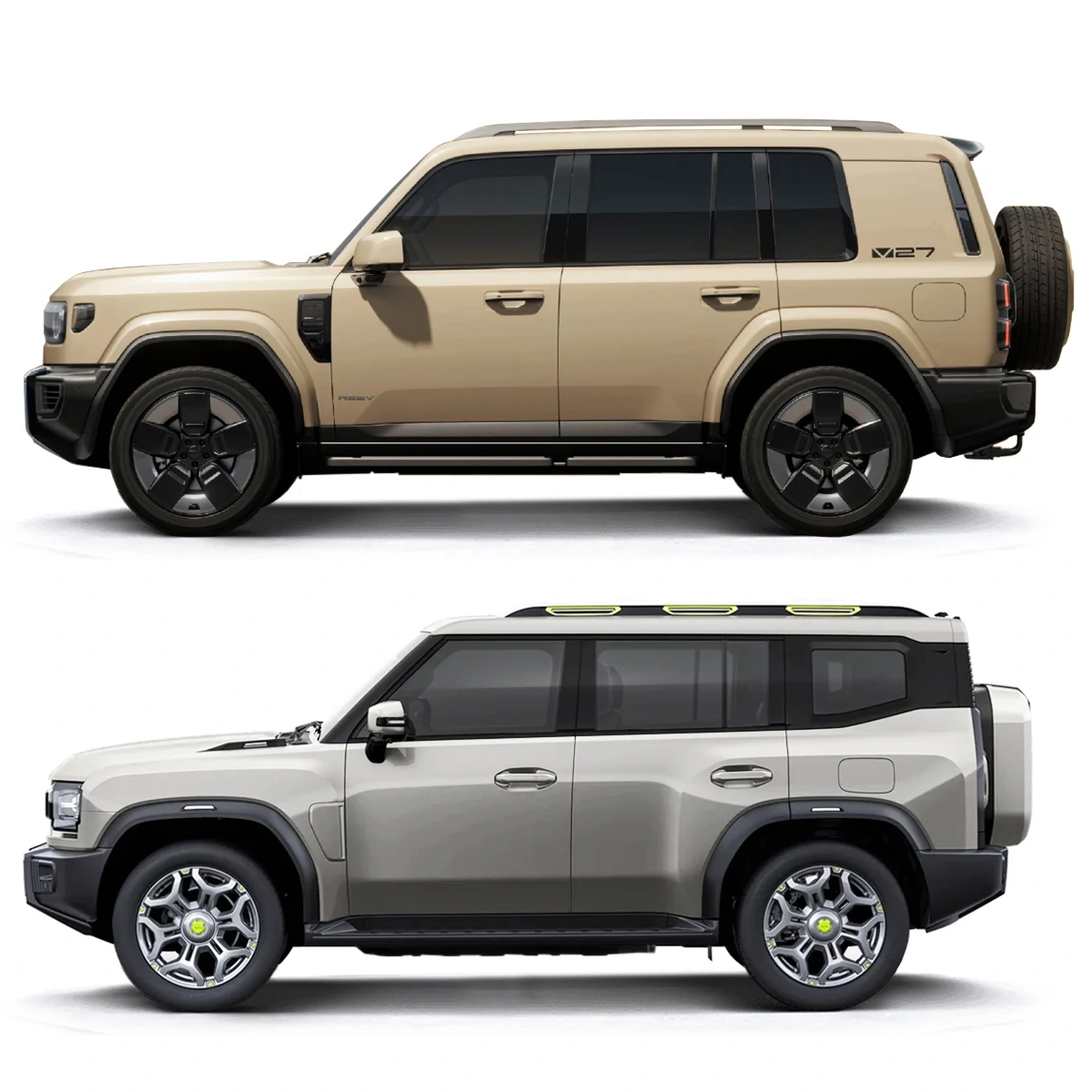
The all-wheel-drive V27, as seen in the photos, rolls on 30.4-inch-diameter 265/45 R21 tires; these are 0.6 inches smaller than the T2 i-DM’s 255/55 R20 rubber. Note that the T2 4x4 looks almost identical to the 4x2 variant in the photos, except for minor accent color changes and badging.
OTHER STORIES YOU MIGHT HAVE MISSED:
The hybrid Subaru Crosstrek e-Boxer gets an upgraded 2.5-liter engine
Kia launches all-new EV3 with a P1.898-M price tag
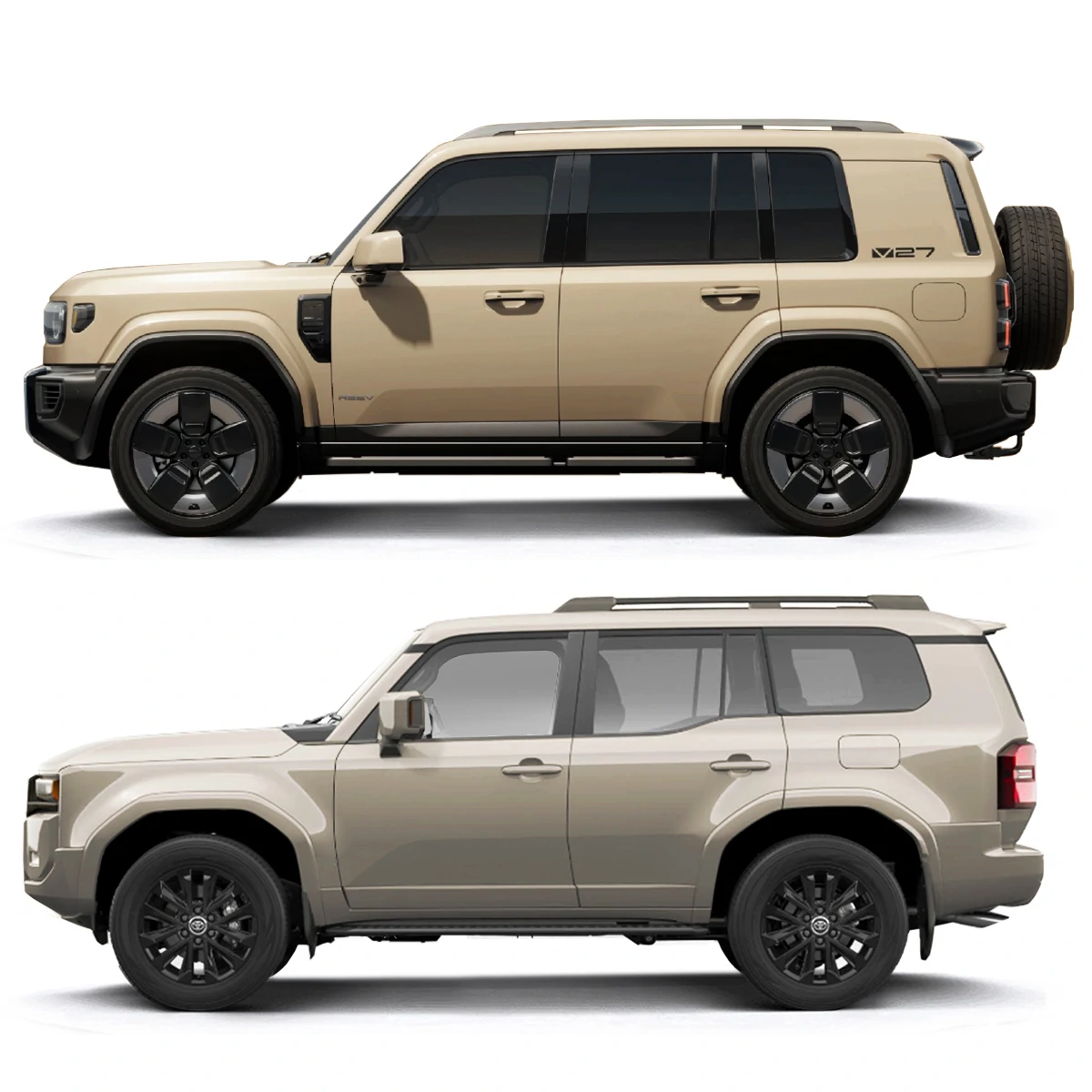
Bonus comparison: The V27 is 120mm longer, 4mm narrower, and 31mm lower than the Toyota Land Cruiser Prado. The iCaur rides on a wheelbase that is 50mm longer than the Toyota’s. The former’s external spare tire adds to its overall vehicle length.
Here’s a little refresher on the two main featured electrified SUVs: The midsize iCaur V27 EREV is available either as a single-motor RWD variant with 248hp and 300Nm of torque, or a dual-motor AWD variant with 449hp and 505Nm. The midsize Jetour T2 i-DM Lightning is available either as a 4x2 variant with a total system output of 355hp and 610Nm, or an AWD variant with a total system output of 600hp and 915Nm. Both electrified SUVs have a 1.5-liter turbocharged gasoline mill. But unlike the plug-in hybrid T2, which allows a mechanical connection, the internal combustion engine in the V27 works purely as a generator.
Both SUVs have unibody construction and feature independent suspension all around. The V27’s body boasts a torsional rigidity of 32,186Nm/deg—slightly higher than the T2 PHEV’s 32,000Nm/deg.
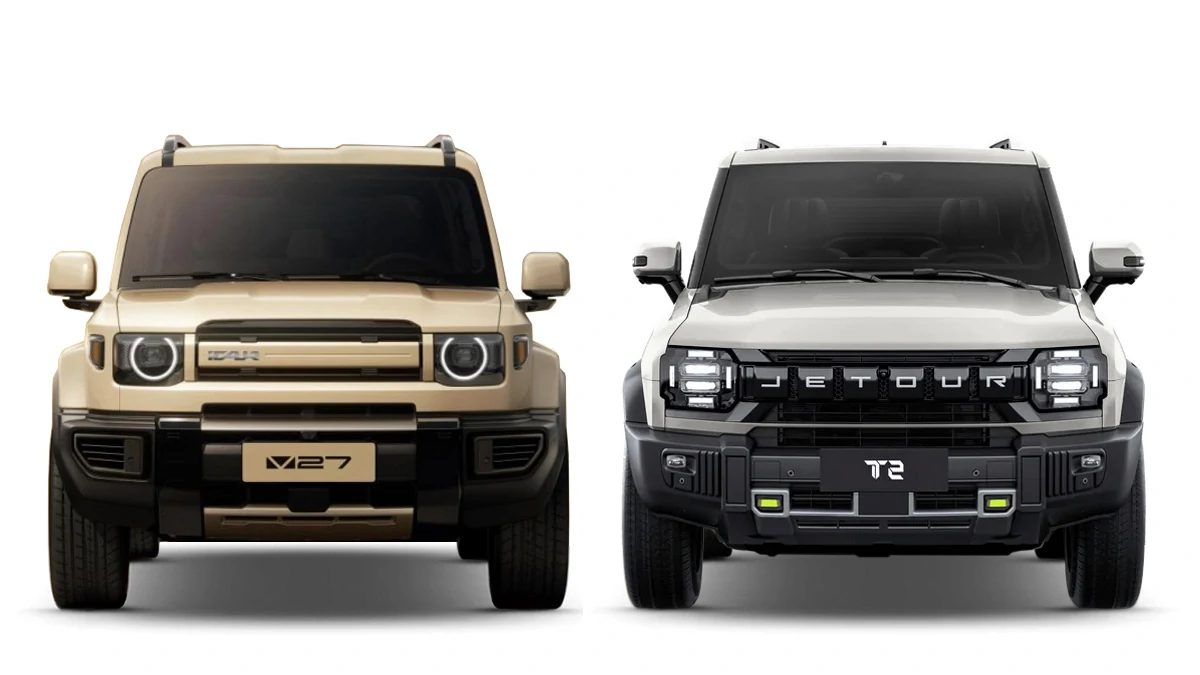
While official pricing hasn’t been announced by iCaur as of this writing, the two boxy SUVs occupy a similar price range in China. This gives consumers two options built on different philosophies: one is a range-extender, while the other is an ICE-based PHEV.
What do you think of the new iCaur V27? Would you consider it over the Jetour T2 i-DM? Let us know what you think in the comments.