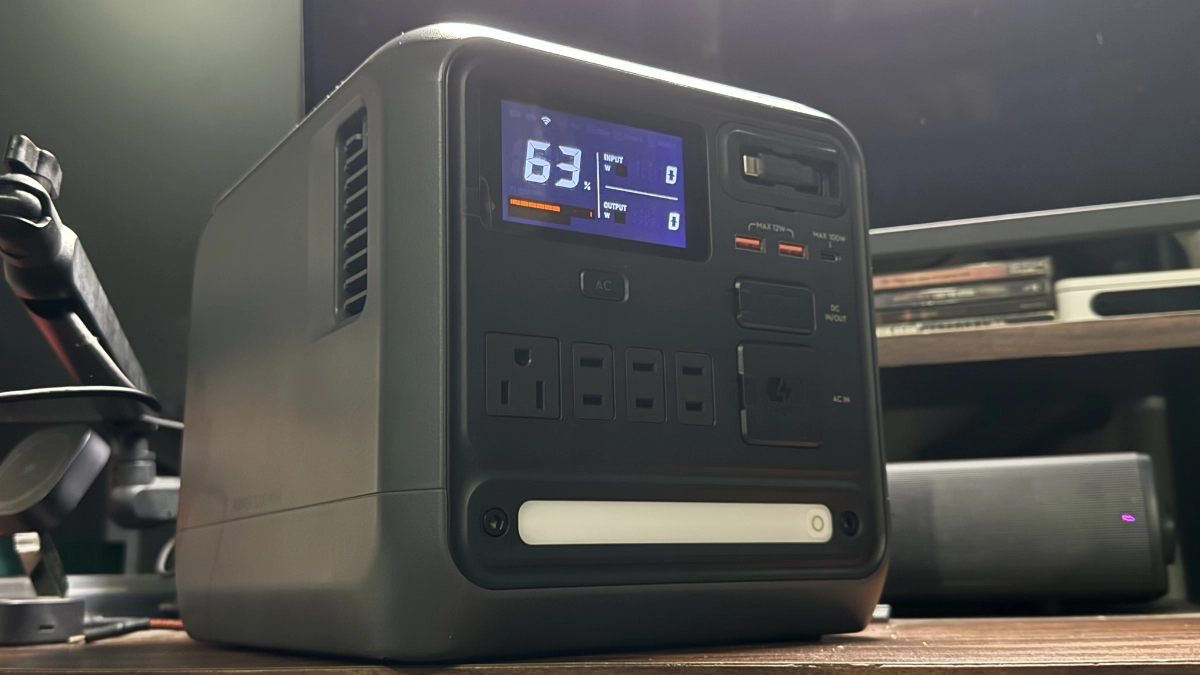
Calling a power station like the DJI Power 1000 Mini a ‘glorified powerbank’ isn’t completely wrong. I mean, both share the same purpose: to hold energy in reserve until the time comes to recharge a gadget. A power station just does that on a much larger scale, and probably for several people at once, too.
At least, that was what I was thinking as I accepted the assignment to live with the Power 1000 Mini for a while. That’s plenty of power for a writer like me; the only gear I need to keep topped up are my phone and my laptop. But after having it with me for a while, I can say that calling it a ‘glorified powerbank’ doesn’t give it nearly enough credit for the tricks it has up its sleeve.
Watch: Our unboxing of the DJI Power 1000 Mini
Wait, just how big is this thing?
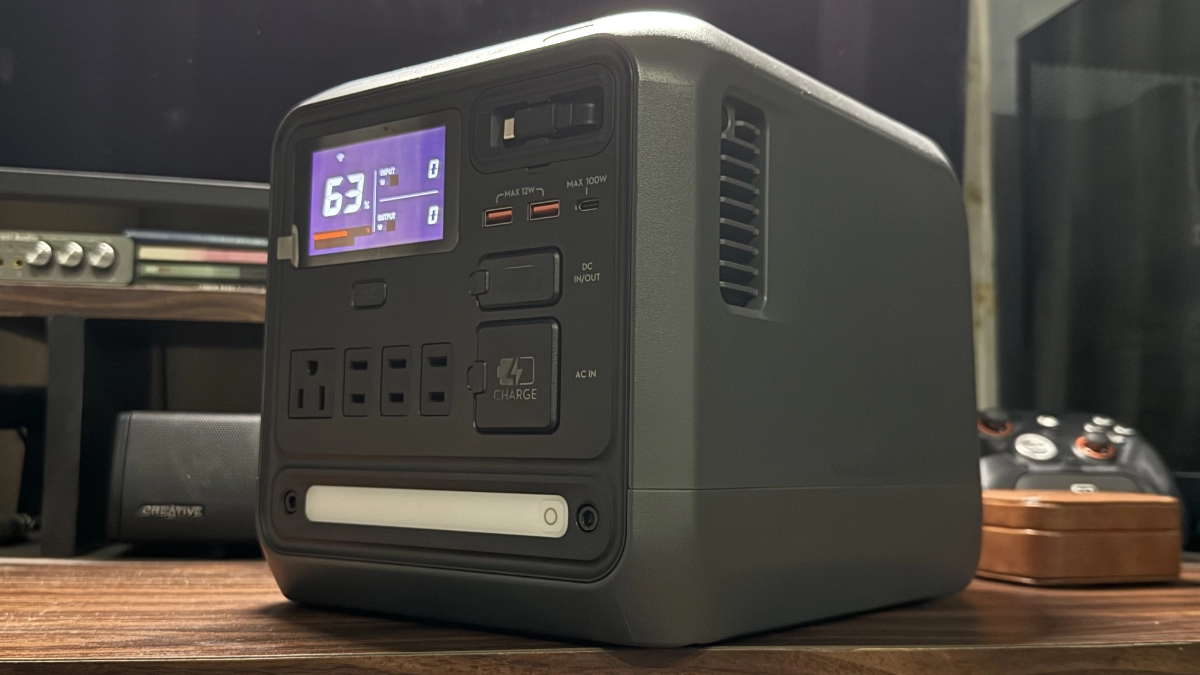
Despite the ‘Mini’ in the name, it’s still a fairly big box. If you want solid numbers, it’s 314mm long, 212mm wide, and 216mm tall—roughly the size of an ICE car’s battery. Hard to imagine that this is what DJI calls a mini power station, right? Well, bigger models in the Power range are multiple times the Mini’s size, so just trust DJI on this one.
ALSO READ:
Hot gear: For most content creators, the DJI Mic Mini 2 is just right
Hot gear: Add-on wireless chargers for your car—good buy or goodbye?
That said, the relatively compact design hides just how hefty this thing is. It weighs in at approximately 11.5kg. Defintely still portable with a single hand (the carry handle is useful for this), but it’s a workout.
Woah, that’s pretty heavy for its size.
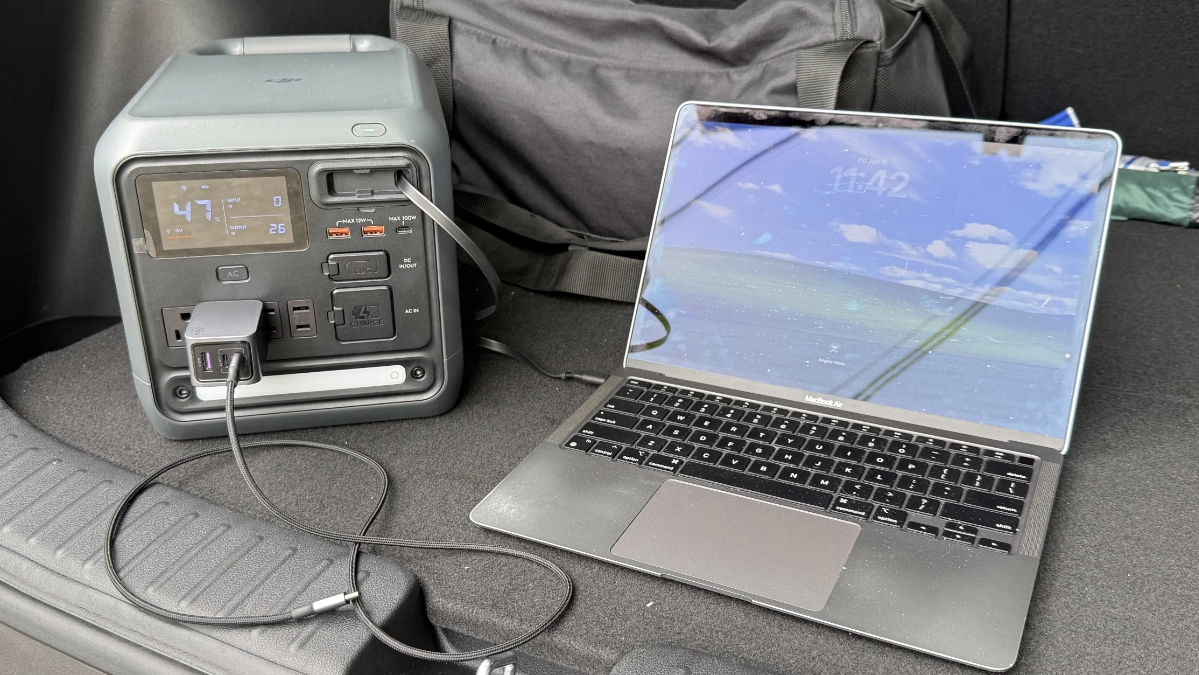
Just like EVs, am I right? The Power 1000 Mini weighs what it does because the LFP battery holds up to 1,008Wh when fully charged. I did the math, and that’s equivalent to around 20 times the capacity of an iPhone 17 Pro Max’s battery. As you can see from the front face of the power station, there are ports galore to support a variety of options for both the input and output of power.
Walk me through all these ports, then.
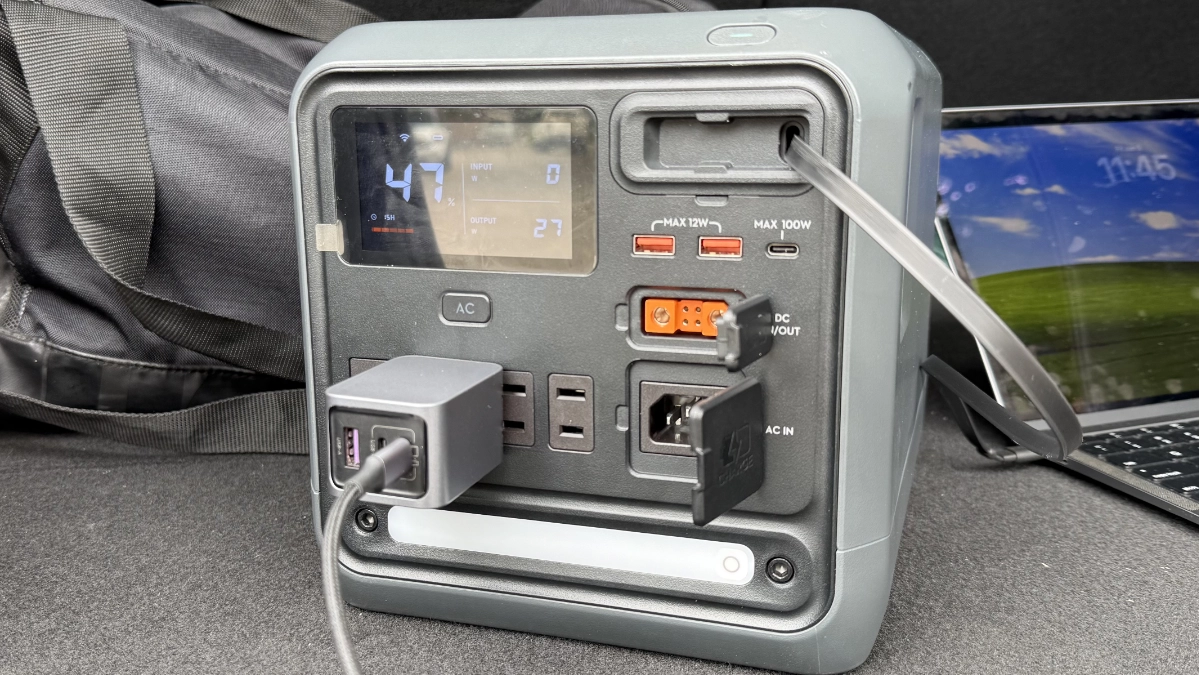
For power output, we have four AC sockets, two USB-A ports, and one USB-C port. There’s also a single retracting 100W USB-C cable for added convenience. For most people, this selection should provide plenty of options for powering their devices.
For getting power into the Power 1000 Mini, we have two ports: the AC input port, and DJI’s proprietary SDC port. These inputs have gaping holes, so I appreciate the built-in flaps to protect them from any debris that might get embedded.
Oh yeah, that’s a flashlight towards the bottom of this panel. Didn’t really get much use out of it, but I can see it being helpful in a pinch.
What’s it like using the power station?
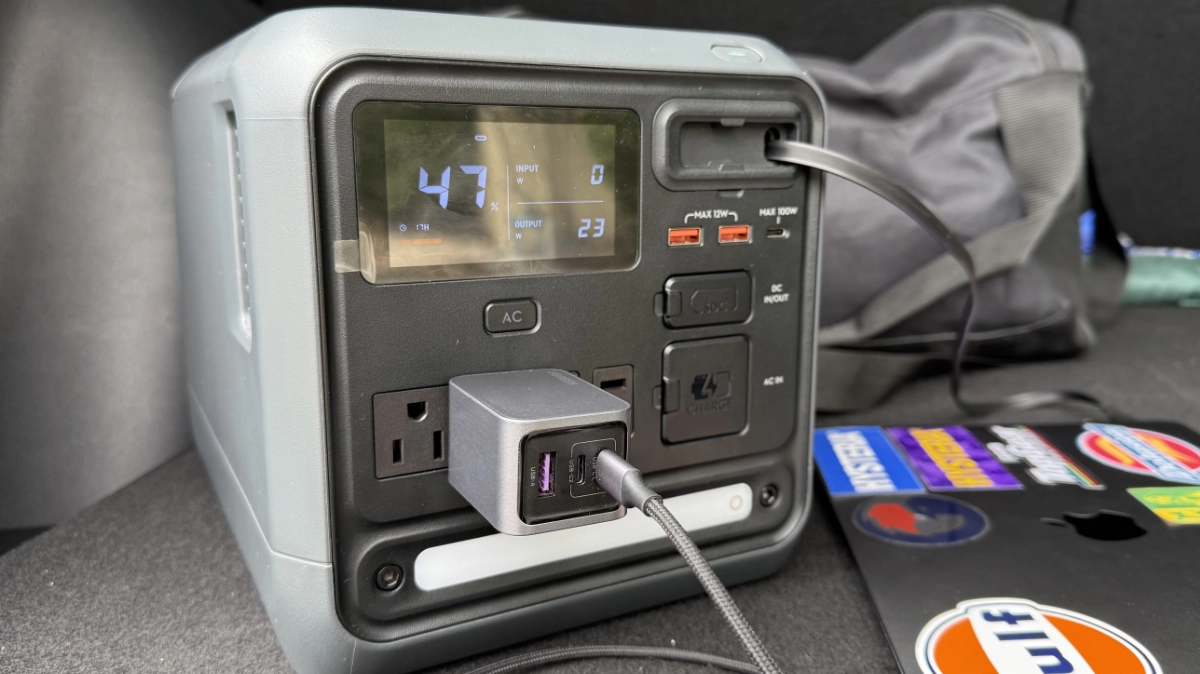
Plug and play. No, really—you just need to plug in your gadget in need of power into an output socket and it automatically turns on to start feeding power. The display screen is very helpful for getting a read on how much power it’s sending out. The timer on the bottom of the display also helps you gauge roughly how long the Power 1000 Mini can last at the current output level.
Like I said earlier, the only things I could think of charging at first were my laptop and my phone. The power station worked as expected, silently keeping my gadgets topped up as I worked on my stories for the day. It was sending out around 100W combined, down a trickle of just under 10W after my devices were fully charged. It took almost a week to get the power station’s battery down to 75% doing this.
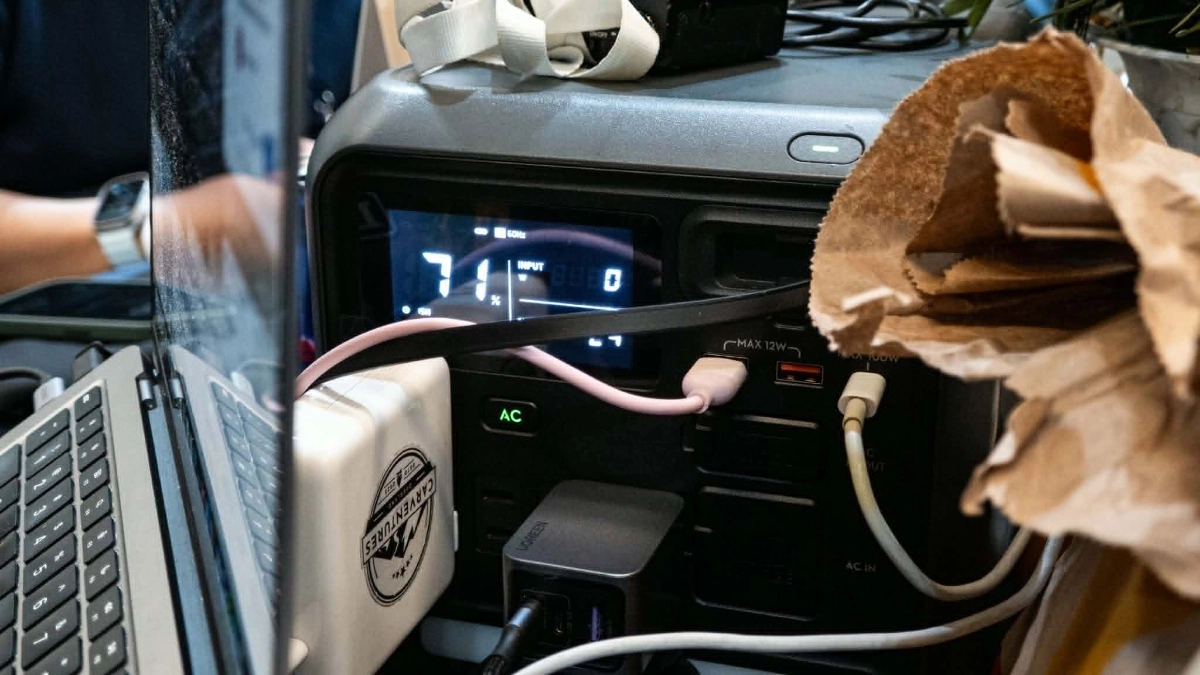
But what if we multiplied that load a few times? Well, that’s exactly what I put the Power 1000 Mini through during the 2026 Philippine International Motor Show. The Top Gear Philippines team has plenty of gear to keep charged as we cover the event, which makes it the perfect field test.
Over the course of 12 hours covering PIMS 2026, it supported the batteries of our phones, laptops, cameras, and mics. We were never short on ports; there was always a free socket open for anyone that needed it. The Power 1000 Mini was sending out as much as 300W when it was most utilized. And it still ended the day at above 45% battery. What a trooper.
Impressive! How do you charge it up, though?
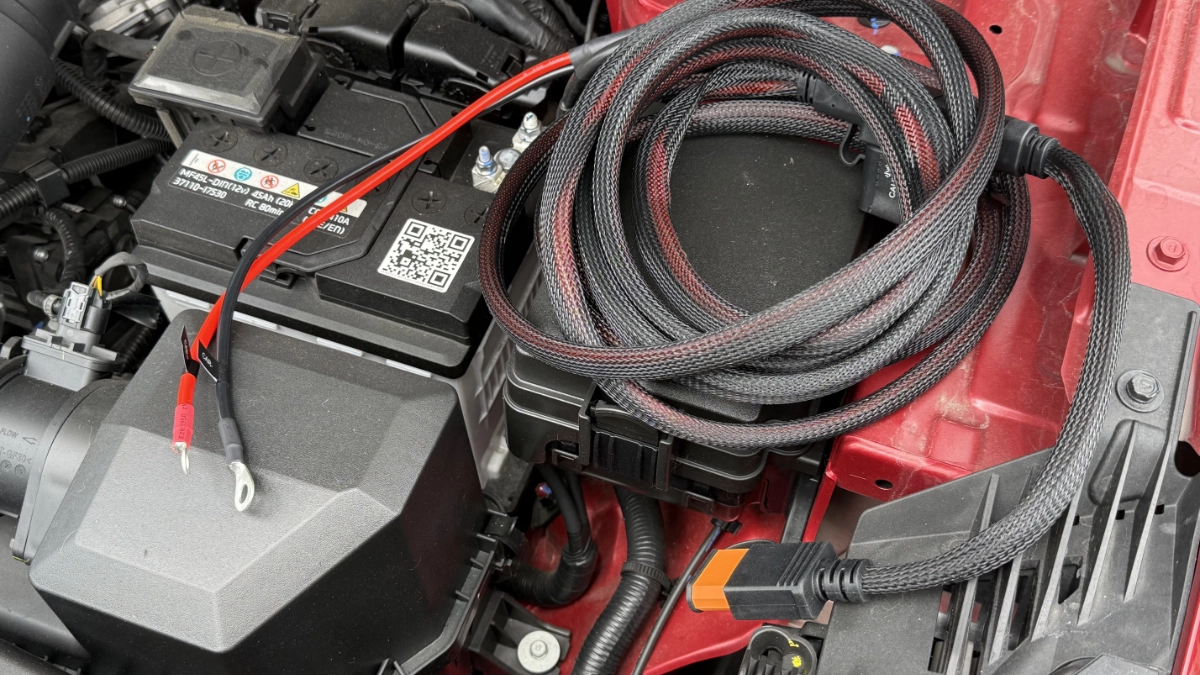
Despite just two ports for power input, there’s actually plenty of options when you pair the Power 1000 Mini with accessories. Through the AC input port, you can plug the power station into a wall socket with the provided cable for up to 1,000W charging. It does make a slightly disconcerting amount of noise as the fans spin up to keep it cool—you can use the DJI companion app to limit it to just 500W. Sacrificing charging speed nets you less noise and prolonged battery lifespan.
The SDC port, DJI’s proprietary power socket, has interesting uses with compatible accessories. I was lent out a car battery charging cable, which hooks up to the posts of an ICE car’s battery. This can feed the power station up to 400W of input. You do need proper tools and knowledge specific to your car’s setup to ensure safety while doing this, so I suggest doing your research before trying this method out.
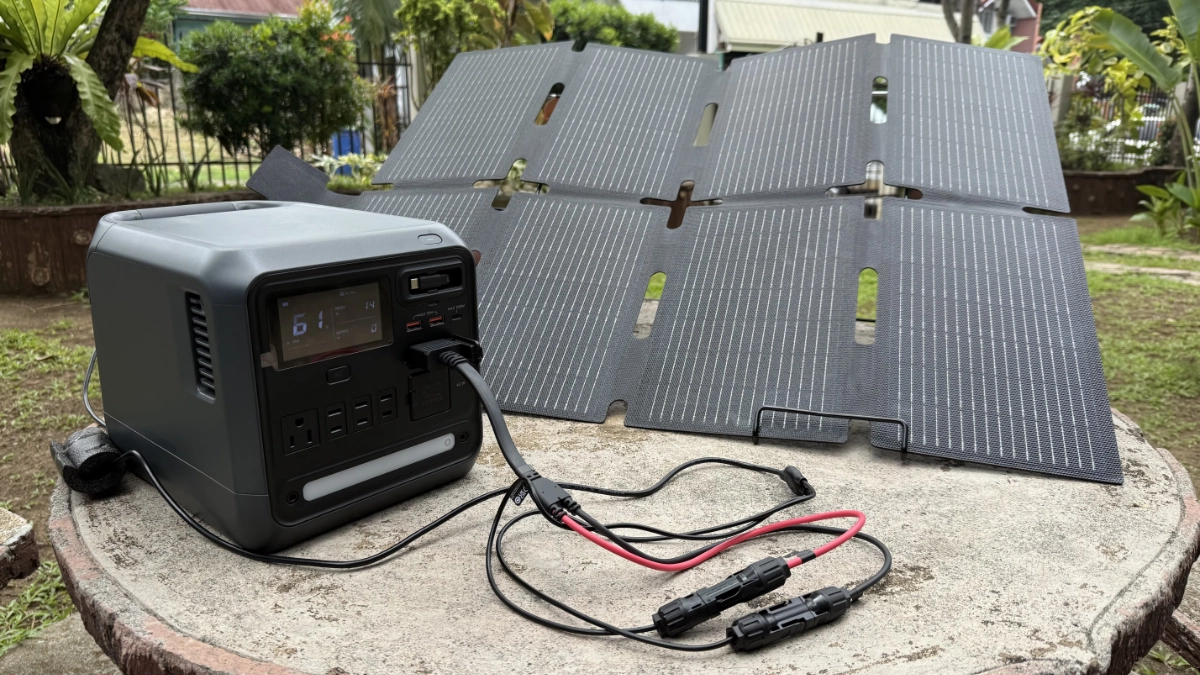
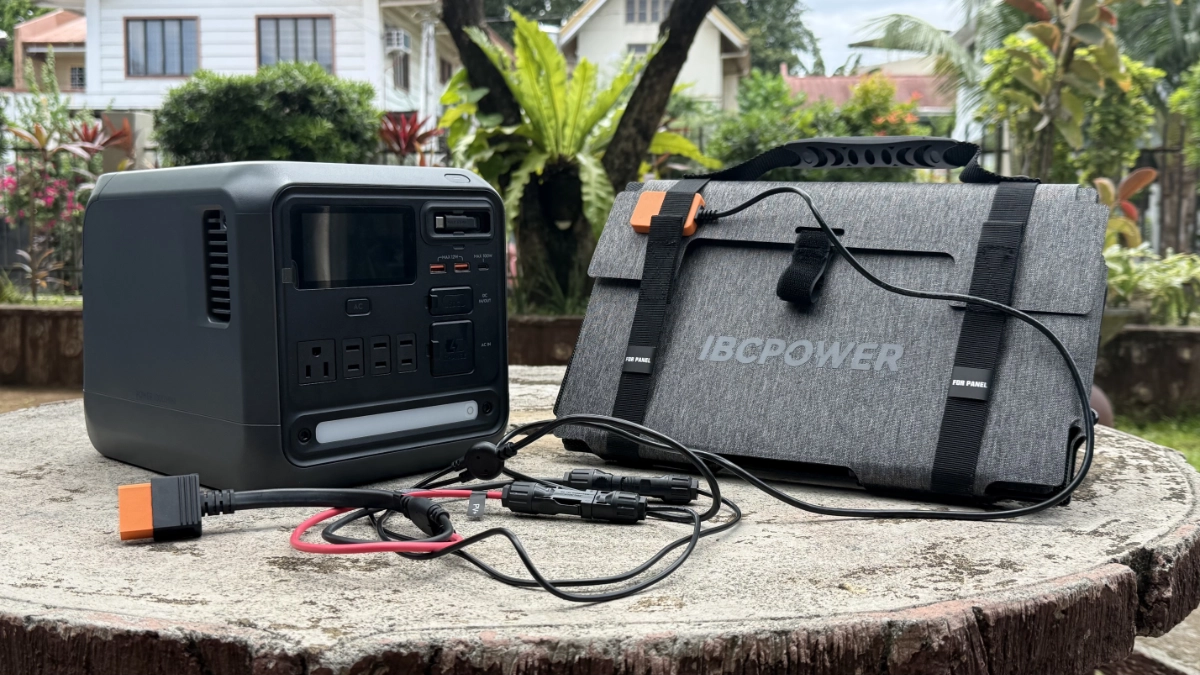
You can also pair the Power 1000 Mini with a compatible solar panel for outdoor charging. It’s honestly impressive how easy the setup is for this option: just unfold the solar panel, connect the cables properly, and plug it into the SDC port. Again, plug and play.
Unfortunately, it’s not the most consistent way to recharge. Although the solar panel I was lent could provide up to 100W, I was getting half of that at most because of the clouds blocking the sun during testing. Putting it under the shade of a tree (like I did to get nice pictures of the setup) further drops it to around 15W charging. Still, not bad for an off-the-grid charging solution.
Did you discover any other cool features?
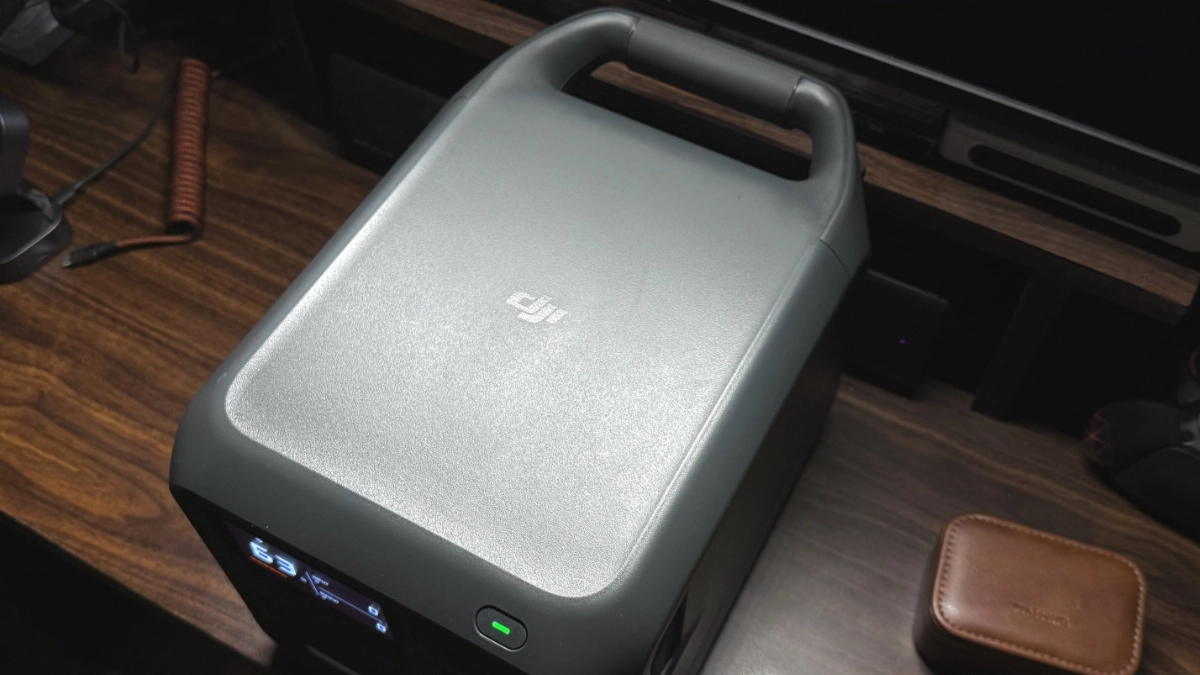
Yes, actually. One of the extra features that I think needs deserves extra praise is the uninterruptible power supply (UPS) mode. By plugging the Power 1000 Mini into a wall, then plugging an appliance into one of the AC ports, it automatically switches into UPS mode. In the event of a power outage (just like last month’s rotating blackouts), the power station near-instantly takes over and provides power for continued operation.
One of the most common use cases for a UPS is to protect PCs and servers from corruption because of an unsafe shutdown. That’s how I used the Power 1000 Mini for a week just in case my neighborhood was caught in a power outage, and it inevitably did. My PC (as well as my internet router, also plugged into the power station) stayed on when the power was cut, but it did blip a little as the power source switched from the wall to the Power 1000 Mini.
The display readout showed less than two hours of estimated uptime since I was pulling a bit over 500W in the middle of a gaming session. Turning off the game and disconnecting some peripherals dropped power draw to around 150W, giving me plenty of time to keep using it for less intensive tasks then shut down safely after. Like I said, the UPS mode is underrated, and definitely needs to be advertised more.
So at the end of this day, who is this for?
I mean, you read my headline, right? With a good balance between performance and practicality, I do think everyone can find use out of the Power 1000 Mini that fits their lifestyle. Even if you decide to get one to keep around as an emergency power unit, it’s still a fair investment—DJI itself even provides guidelines on how to store it safely and ensure it keeps charge for when you actually need it.
But with a sticker price of around P36,000 depending on retailer—which can balloon past P45,000 with accessories—it isn’t an investment to be made lightly. So while I think most people can find use for the Power 1000 Mini, it’s the enthusiasts and power users (heh) that will get the most value out of it.
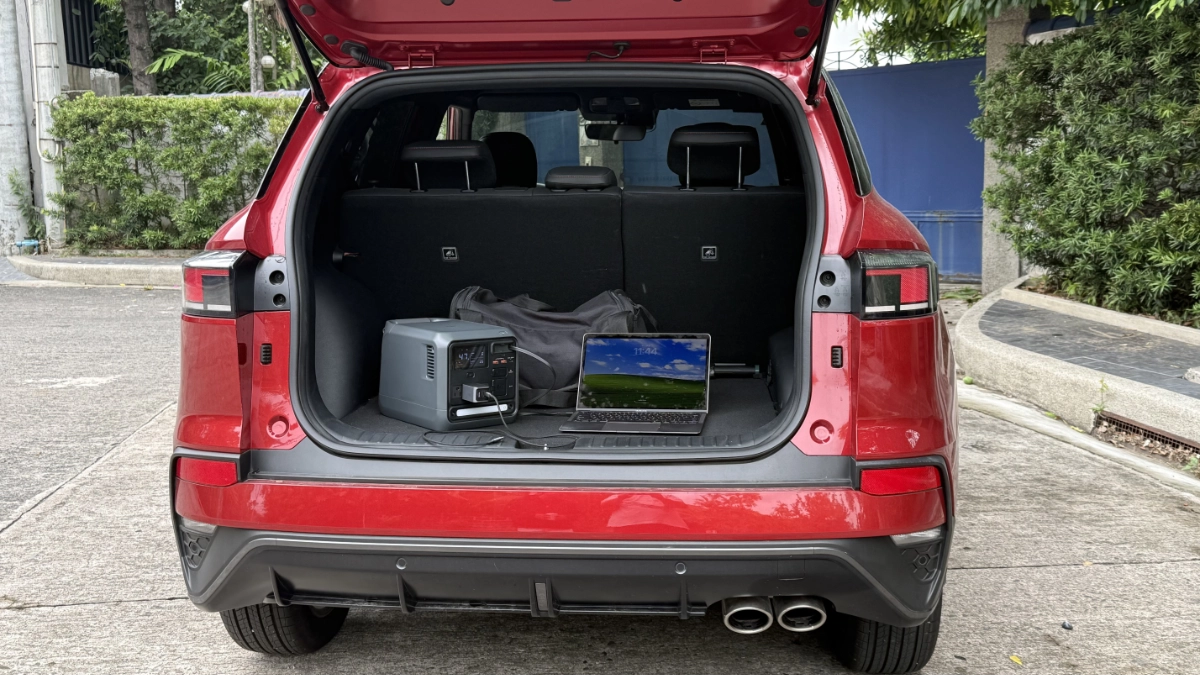
That could be teams with multiple creators like us at Top Gear Philippines who have plenty of things to keep charged while on the go. I can also imagine overland enthusiasts packing a power station like this in the trunk of a Land Cruiser FJ as part of their camping gear, plus the car battery charging cable and portable solar panel in case of emergencies.
Think of it like this: if after reading this whole article, you still think of the Power 1000 Mini as a glorified powerbank, fair enough; it just means this probably isn’t for you. But if the gears in your head are turning thinking of all the ways you can use this for your hobbies? Then this little guy just might be your next best friend.