Three kilograms. That’s the approximate weight of my typical camera rig, which includes a gimbal, a full-frame mirrorless camera, a standard zoom lens, and some accessories. Any landscape video we’ve released on our YouTube page is probably shot with this rig setup. It’s not insanely heavy, but after a long day of shooting, especially under the sun, I usually feel the strain more often than not.
I have to admit, there are times when I wish for something smaller and lighter to bring to shoots, without sacrificing quality.
On the other hand, most of the vertical videos you see on our Facebook page, Instagram, and Tiktok were shot with a smartphone. Smartphones are easy to use for short content, but the video quality could be better.
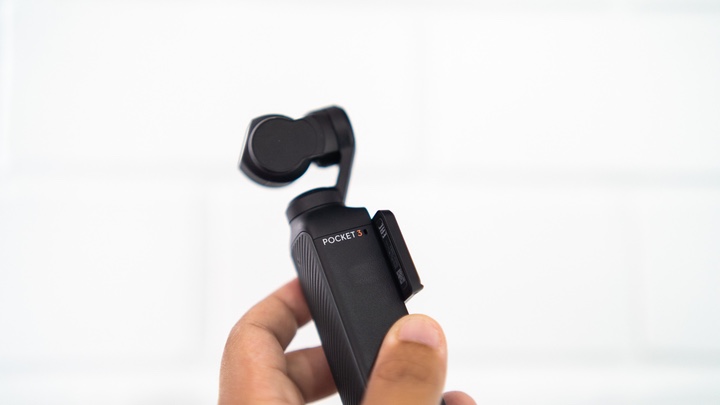
I was starting to feel like I would have to choose between quality and convenience in my line of video production work. But then DJI came out with the Osmo Pocket 3. We’ve tried Osmo Pockets before, and they’re good products—producing output better than phones, stabilized to address shaky footage. But the Pocket 3 now had a bigger sensor that promised much better video output.
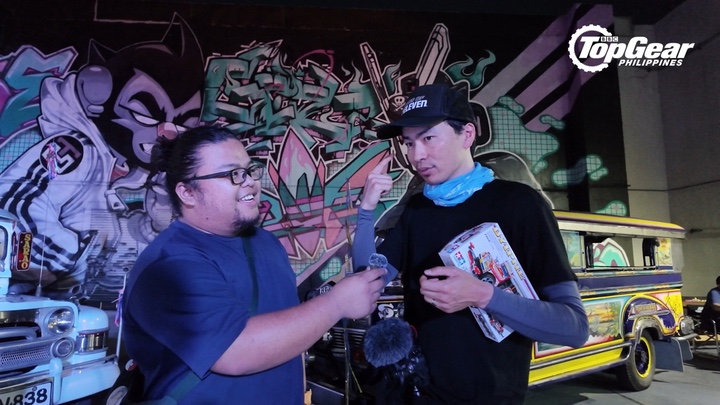
I first tried the Osmo Pocket 3, courtesy of a loaner from DJI, when photographer Larry Chen visited the Philippines. The local car community came together and organized some car meets for Larry. These events were so important to assistant managing editor Leandre Grecia and I since we draw so much inspiration from his work.

Our plan was to shoot a longform landscape-oriented video, a couple of short-form vertical videos, and a gallery of photos since we were told that the cars would be wild. We wanted to make sure that we produced the best quality videos and photos; we are Top Gear Philippines, after all. I brought our heavy gimbal and our big lenses to the event, but at the last minute I decided to use the Osmo Pocket 3 and give it a try.
We started to shoot as soon as we arrived at the car meet. There are certain cars which I shot in vertical mode since I also wanted to do a short reel for them. If I were using my big gimbal setup, I would have needed to change a certain part of the gimbal and rebalance it to shoot vertically, and then do the entire process again if I want to shoot horizontally. Quite tedious, but this was the way.

My other option is to use my three-year-old iPhone for the vertical clips, but it doesn’t have the best video quality. Pulling my phone from my pocket while holding a gimbal is also tiring, especially if I were to do it every minute.
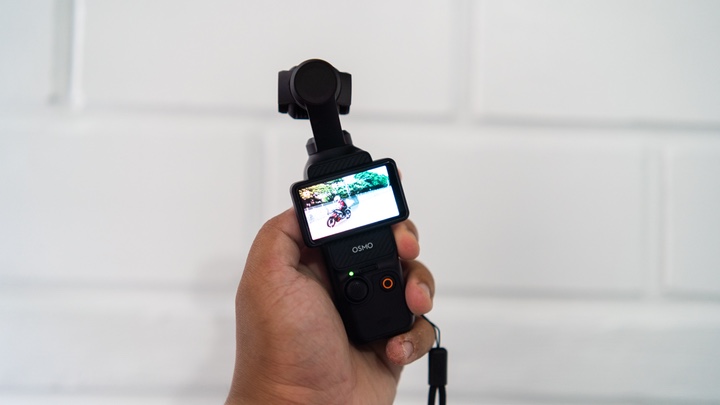
This is where the best feature of the Osmo Pocket 3, at least for me, shines the most. With just a simple flick of my thumb, I can switch between horizontal and vertical shooting effortlessly. This gave me the opportunity to cover the event and produce two different orientations for different platforms. Framing my shots is also a breeze thanks to its 2-inch 314×556 resolution OLED display that boasts up to 700 nits of brightness. The colors were vibrant and the highlights were not blown out.
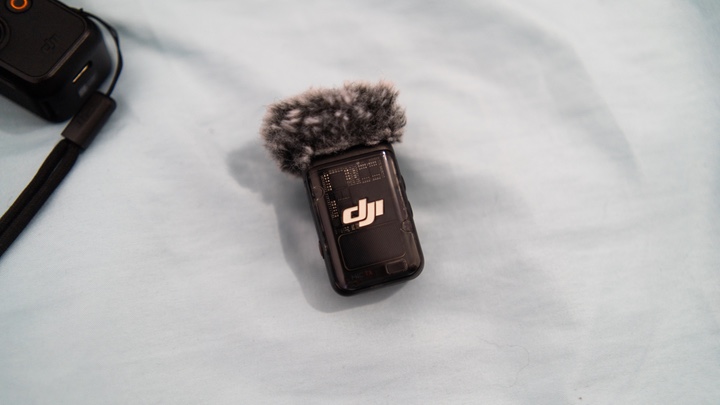
For the audio I connected the DJI Mic 2 that is included in the kit. What I like about it is that there are audio levels displayed on the screen that confirms that the external mic is connected, and that the Pocket 3 is picking up the audio. The mic also has an internal recording function which records up to 14 hours of uncompressed 48kHz 24-bit audio. We gladly used this feature because we didn’t want to mess up our interviews.
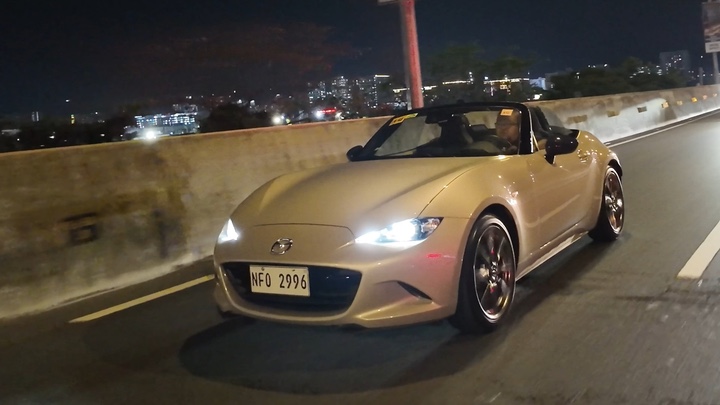
The sun came down and it’s the perfect time to test the low-light capabilities. Low light is usually the achilles heel of most small cameras and smartphones, but the Pocket 3 exceeded our expectations in this area. Thanks to its 1-inch CMOS sensor that can record up to 4K 60fps paired with an F/2 lens, shooting at Ayala Malls Manila Bay at night is possible. I even set the Pocket 3 to 1080p 120fps for some shots and they still turned out to be usable.
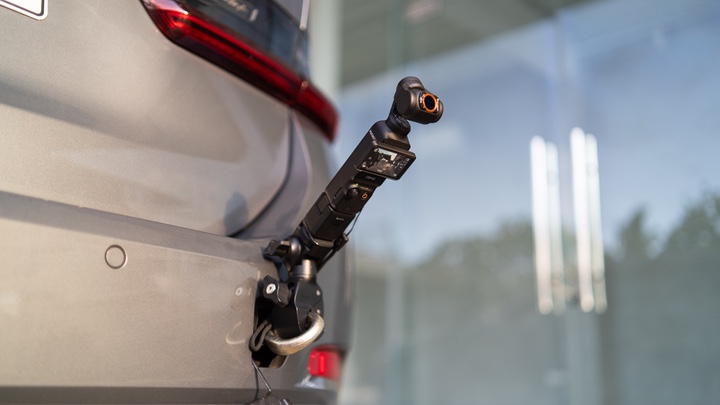
After the event we even did some rolling shots along NAIAX and we were blown away when we reviewed the footage. We used the rolling shot as the background photo for the title card, something we usually use a well-framed still photograph for. Yes, the screen capture from the Pocket 3 is that good. The low light performance of this DJI is just exceptional.
After a few hours of roaming around, shooting cars, and interviewing people, the meet ended. The Pocket 3 had about 50% of battery charge remaining thanks to its 1300mAh internal battery, which was extended by the external 950mAh battery handle. I would also like to point out how comfortable it is to hold the Pocket 3 with the battery handle attached.
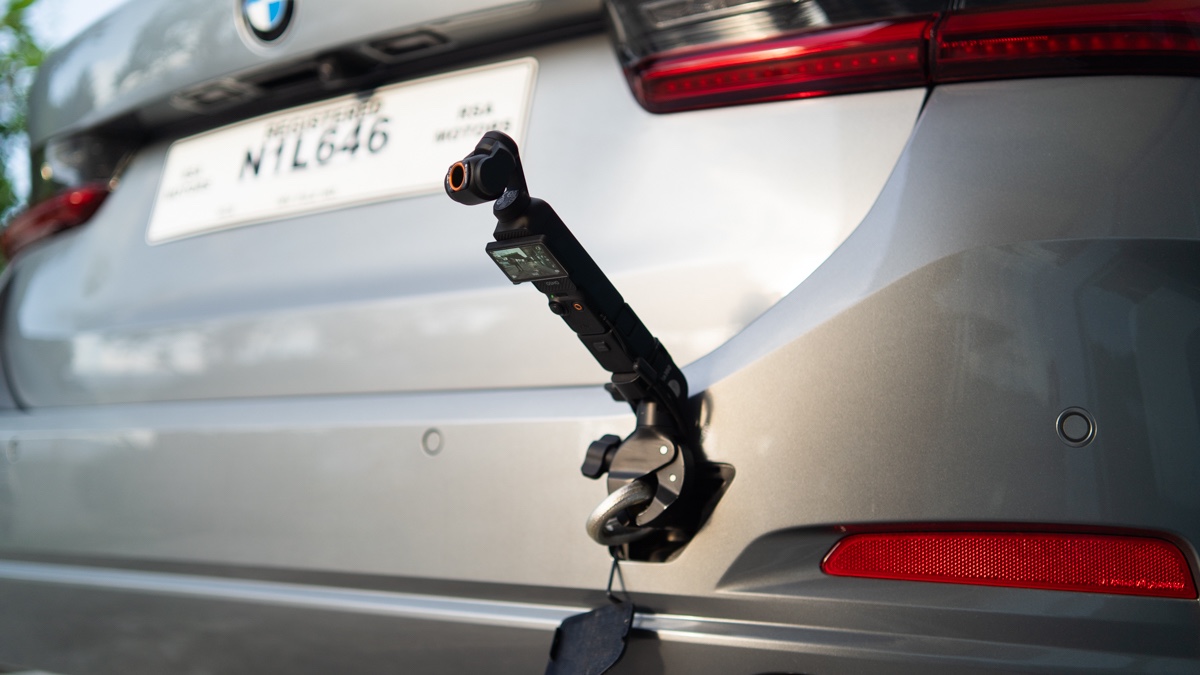
We also noticed that the Pocket 3 has improved its cooling ability by miles when compared to the Pocket 2. We have used the Pocket 3 for shooting rolling shots while it was attached to the trunk of a car; while filming 4K videos for 30 minutes under the sun we never experienced it overheating.
Despite all its improvements, there are still some things I wish DJI would improve or include in the next DJI Osmo Pocket. First is that the quality when using the digital zoom is a bit grainy, even at 4K. Maybe in the future a multi lens setup is possible (like with Mavic drones), or even a detachable telephoto lens like the wide lens. I also wish that the wide angle lens would be compatible with other magnetic filters. It would be great if the next Pocket can also offer more custom buttons for better customizability and ease of use.
When the Pocket 2 came out, I was a bit disappointed since it felt like a minor upgrade from the original Pocket—slightly bigger screen, slightly bigger sensor, and slightly better overall performance. The Pocket 3 is a totally different thing—it’s an entirely new product.
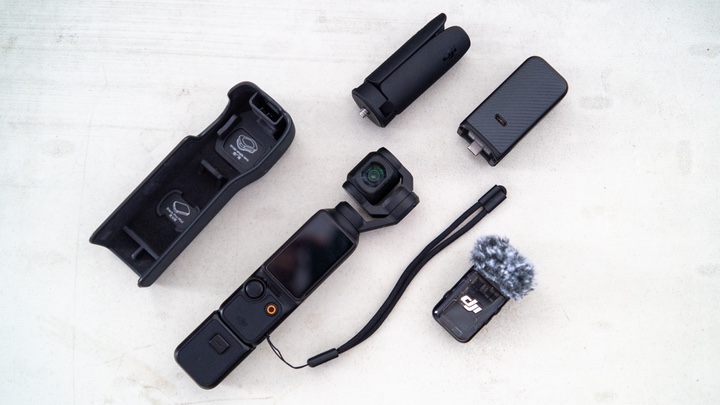
The Osmo Pocket 3, especially with this Creator Combo kit, is a perfect run-and-gun camera. Our team loves it so much that we rarely use our old cameras or smartphones when shooting events. You can’t expect the quality to be at par with the bigger cameras with larger sensors and dedicated lenses. I still prefer the depth of field and the crispness of video clips shot using my bigger rig. But for shooting events that require versatility and ease of use, a 179g device easily trumps a 3kg rig, and with no significant loss in quality at that.