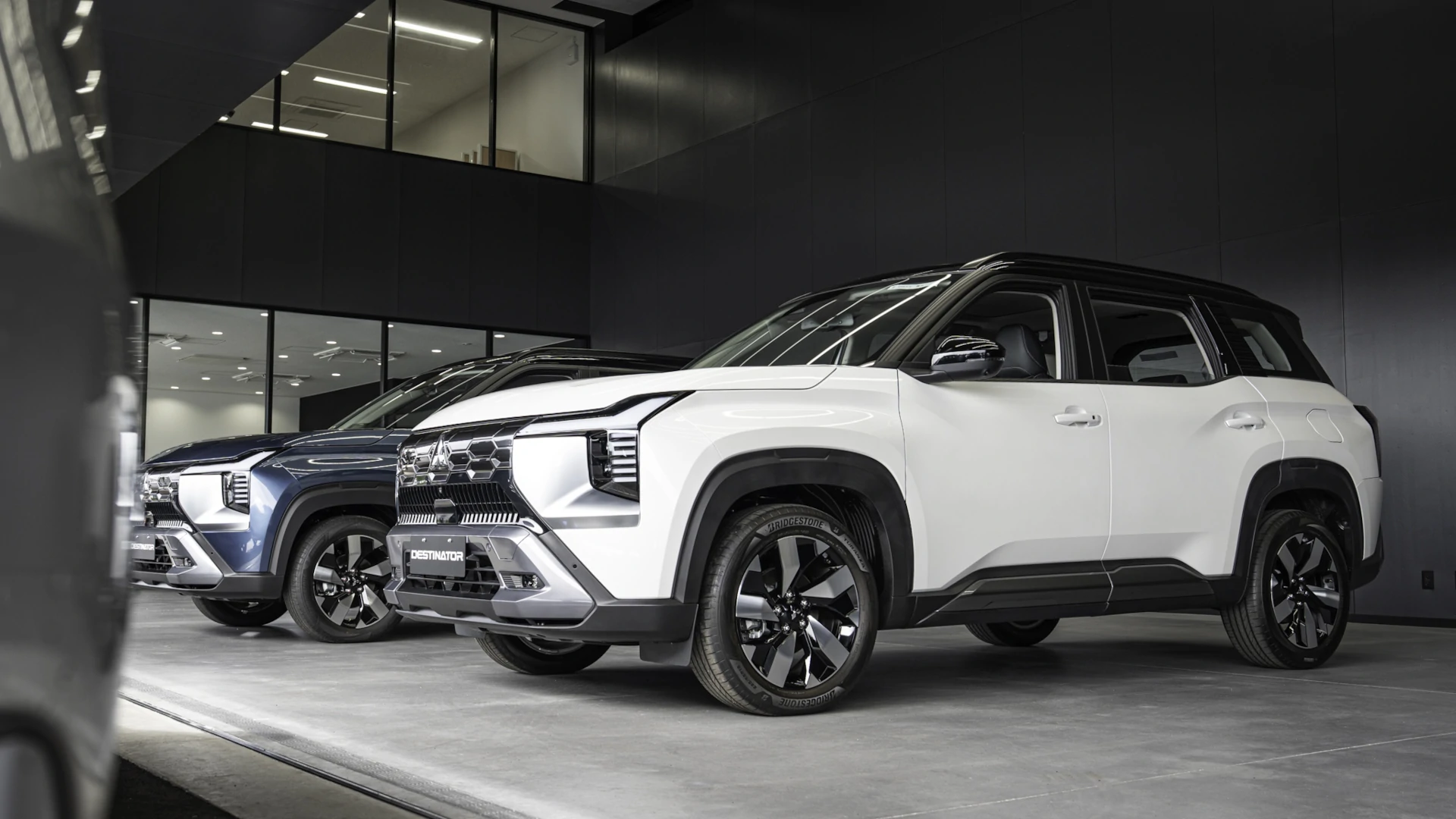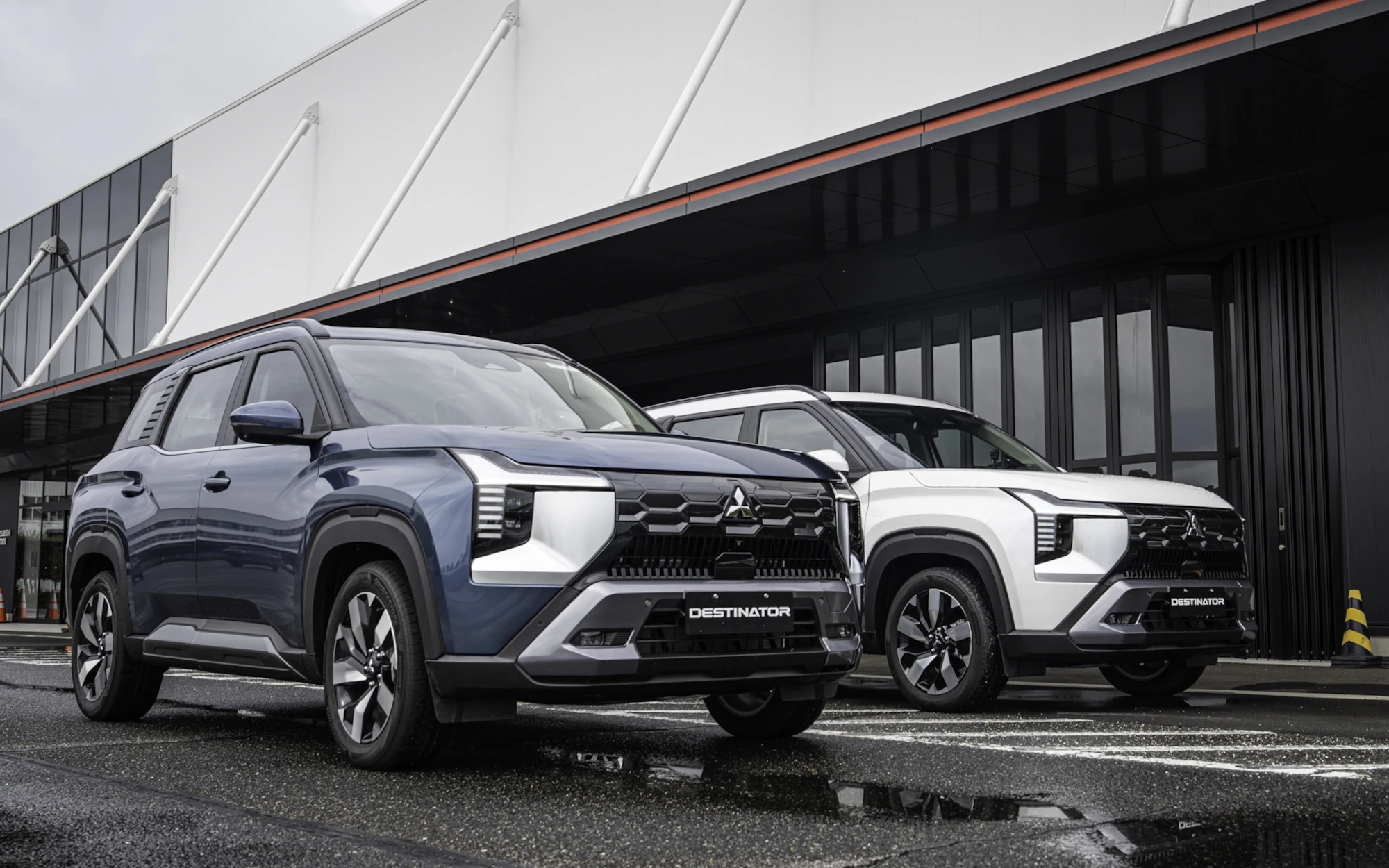
The all-new Destinator is the most exciting Mitsubishi we’ve seen in quite a while

by Leandre Grecia | Nov 20, 2025

“This is, by far, one of the most properly engineered mass-market cars I’ve seen in a while.”

As storied and iconic as Mitsubishi is, it’s no secret the brand has yet to build something in recent memory that really excited the automotive world.

The Lancer Evolution has been gone for quite some time now, while talks about the next-generation Pajero have been nothing more than just talks. Sure, Mitsubishi’s kei cars almost always seem to go viral whenever we make content on them—especially the Delica Mini—but at the end of the day, they’re Japan-specific models that aren’t really that relevant to most of us in the region.

The Triton is there, yes, but as good as it is, it’s a pickup—a workhorse, not a people-hauler. There’s also the XForce, which is easily the freshest-looking Mitsubishi we’ve seen in the past decade, but it also has its flaws—specifically, its price tag. Everywhere else you look in the lineup, it’s just full of aging nameplates built on dated platforms. Not really all that exciting, if we’re being honest. At some point, you’d start asking: When does Mitsubishi plan to shake things up?

Apparently, the answer was now, and Mitsubishi started with a shakedown of the all-new Destinator at the automaker’s proving grounds in Okazaki, Japan.

Launch Pad: 2026 Mitsubishi Destinator

ALSO READ:
Variants, prices, specs: Everything you need to know about the all-new Mitsubishi Destinator
The Mitsubishi Destinator gets a certified five-star ASEAN NCAP safety rating

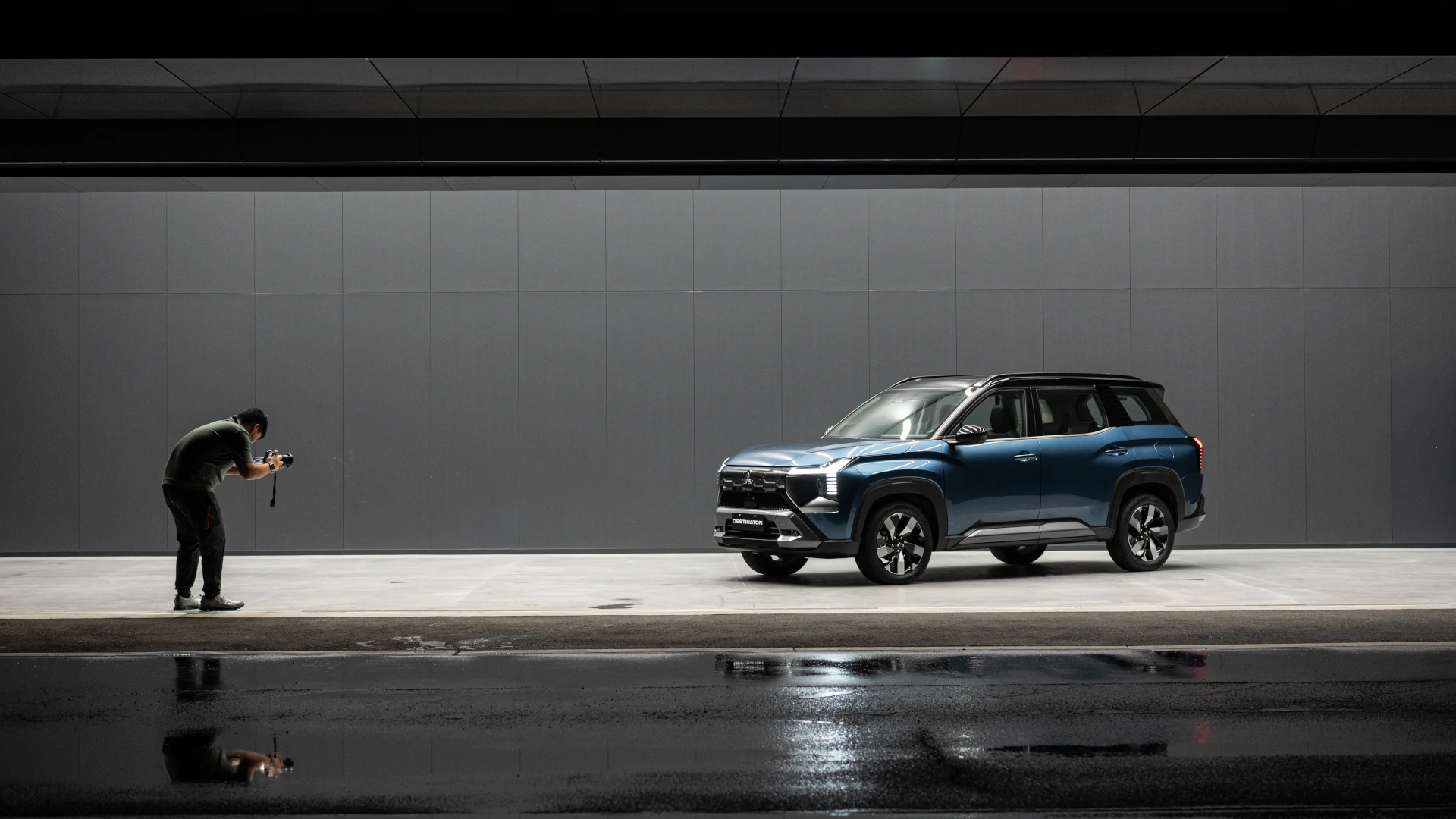
To say that Mitsubishi Motors Philippines (MMPC) has put utmost importance on this drive would be an understatement. For starters, shooting photos and videos at the Okazaki plant was usually prohibited. Yet there we were, ready for a full day of content creation inside the facility—with a few restrictions, but with a lot of freedom nonetheless.

The carmaker also had to ship units to Japan just for this test drive, as the Destinator isn’t exactly built and sold in Mitsubishi’s home market. These were but a few things that MMPC executives didn’t forget to remind us about, and it all the more emphasized how big a deal this is for the brand.

I got a sense of it from the get-go, but it was only after a full day of driving around that I truly understood why. This is, by far, one of the most properly engineered mass-market cars I’ve seen in a while—from Mitsubishi or otherwise.
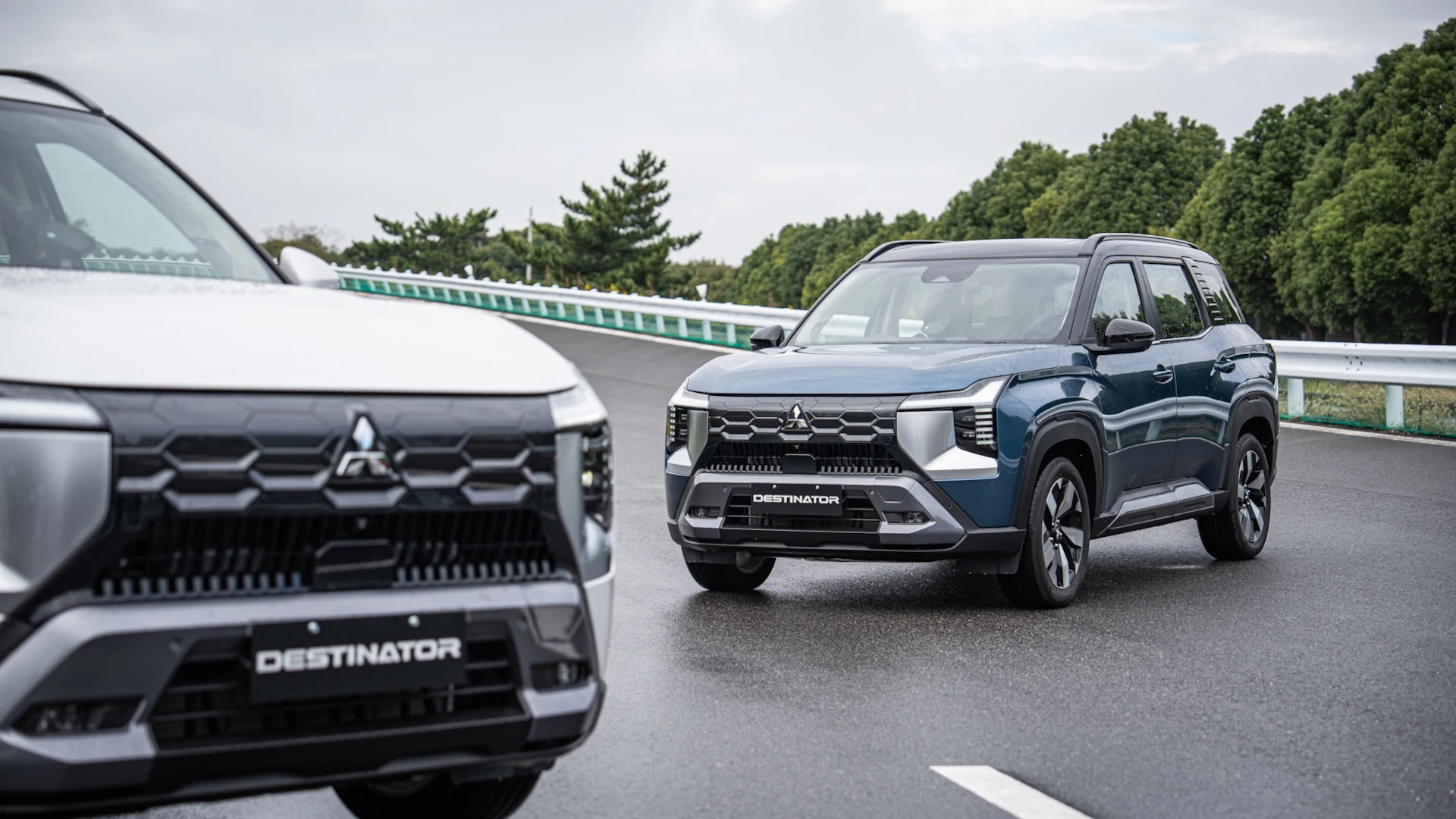
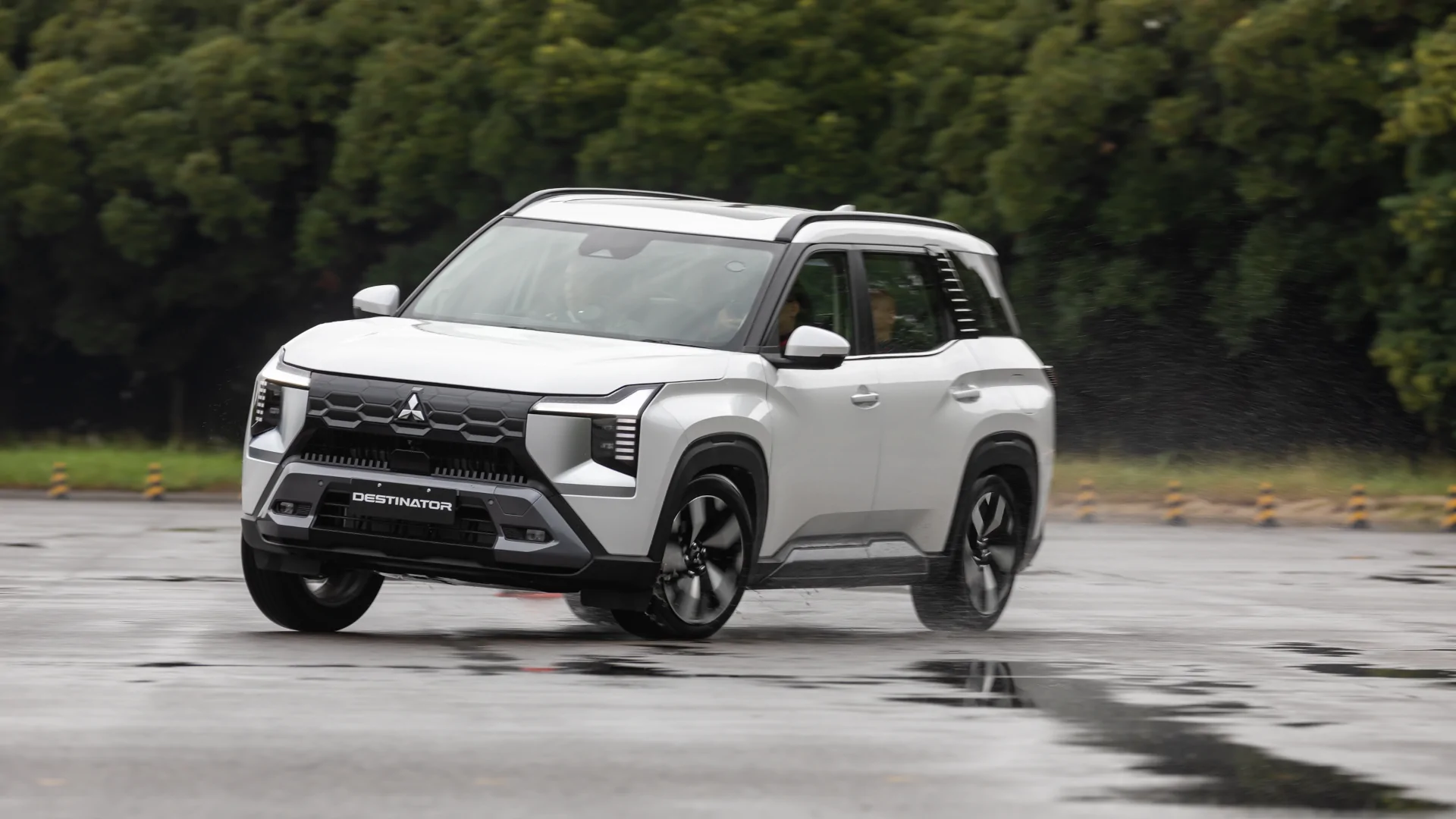
PHOTO: Leandre Grecia

They had a few courses lined up for us, all of which would highlight important aspects of the Destinator. Things kicked off with a suspension test, where a part of the track was purposely imperfect, and the poorly paved roads served as the proper test bench. The SUV’s rear shock absorbers were derived from the Montero Sport, and the suspension setup was tuned “specifically for the ASEAN market.” Basically, what they were trying to tell us was that the Destinator was built to conquer EDSA.

True enough, while we hadn’t tested that out yet, it just might. The vehicle’s ride is quite supple, and even the bigger bumps on the road are absorbed with ease. Granted, there are vibrations and some undulations felt inside the cabin, but whether you’re behind the wheel or seated in the second row, they’re far from bothersome. There’s also added comfort from the plush seats, which is something Mitsubishi has always done right—if you’ve sat in the XForce or even the Xpander, you’ll know what I mean.

photo of the mitsubishi destinator 2026

Another test consisted of driving through varying wet roads. It started with a roundabout, through which the vehicle understeered a lot. But after switching to Wet—there are different drive modes, by the way—the Destinator’s behavior drastically changed. Active Yaw Control was more aggressive, and it provided more grip and better handling through corners.

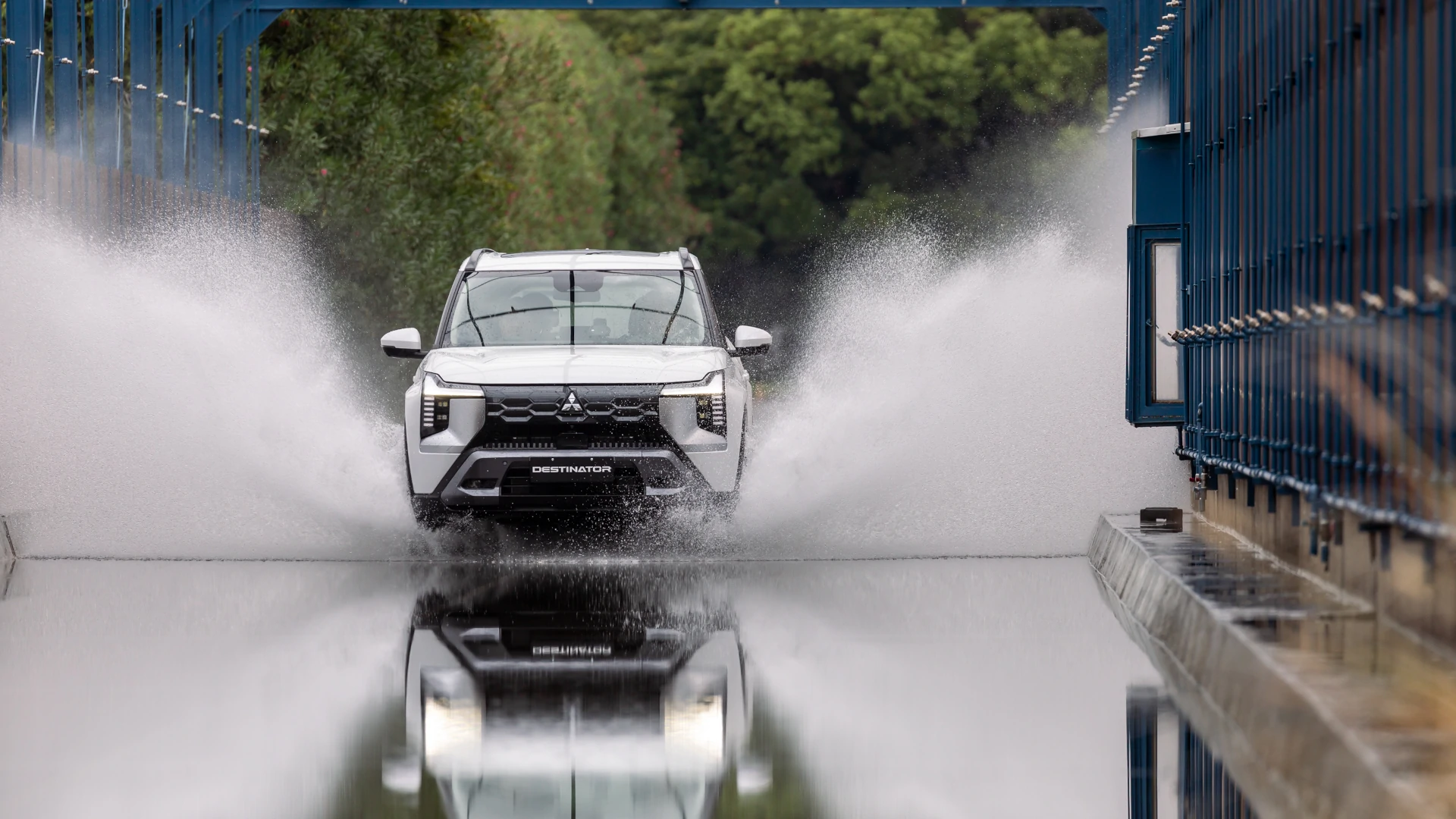
The instructors also had us speed into and through a flood. For context, it was deep enough to maybe drown a regular sedan driving too fast into it. The Destinator not only has 214mm of ground clearance, its air intake is also positioned high inside the engine bay, so it’ll survive accidental dives into water like what we did. It was also able to sprint through the water up to 70kph, and not once did it feel unstable or unsafe.

“Tuned for ASEAN” was the operative phrase, and it turns out it wasn’t just for the suspension. All of this is the result of years of R&D, and ultimately, they’re aimed toward improving safety for both the car and the passenger. These aren’t even reflected in ASEAN NCAP safety ratings and the like, but they’re things Mitsubishi constantly focuses on.

PHOTO: Mitsubishi Motors Philippines

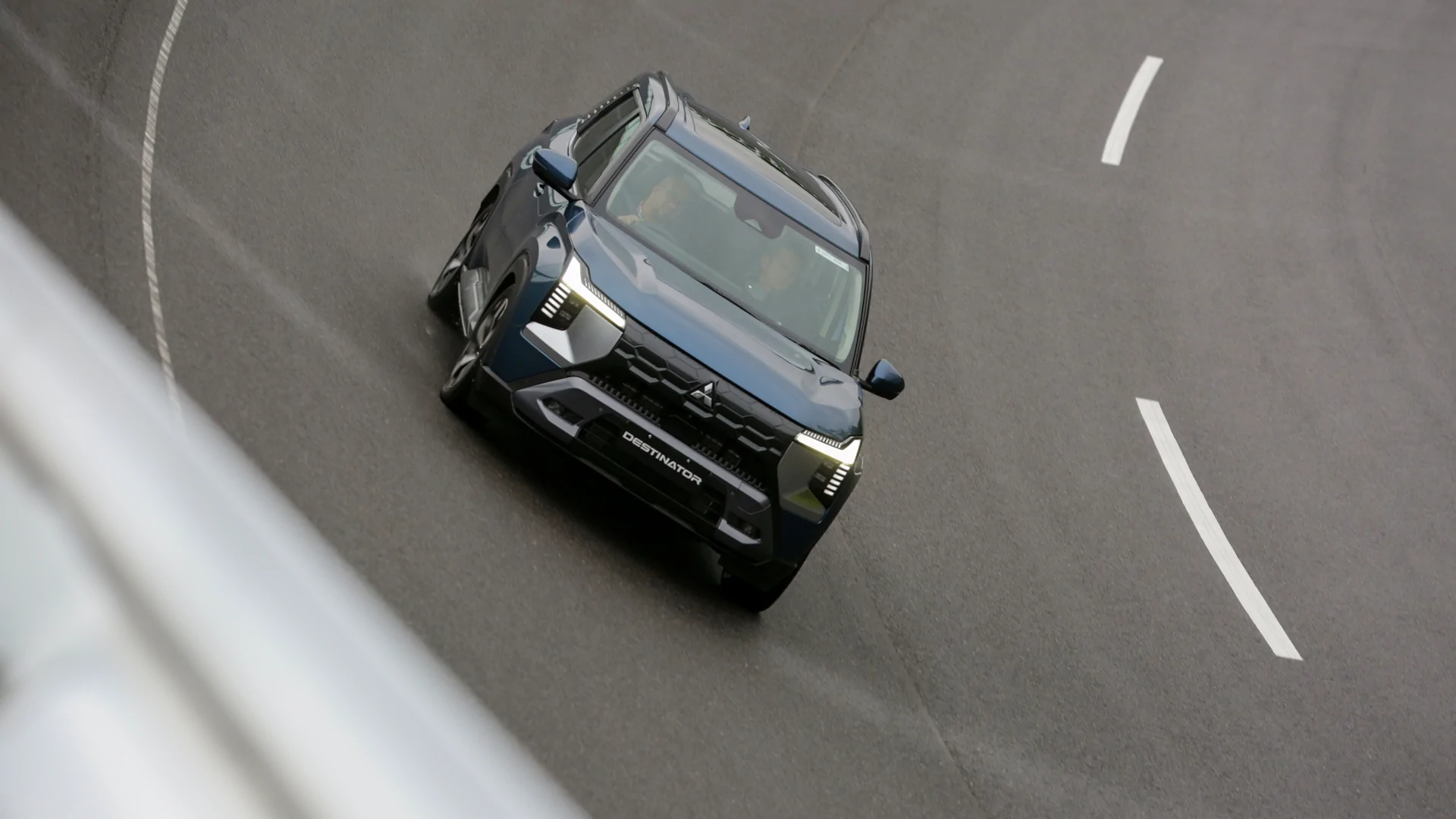
We also drove through a high-speed ring, where we hit about 120kph without any problems whatsoever. The vehicle remained steady and planted even beyond legal highway speeds. Surprisingly, despite the relatively smaller displacement, its 1.5-liter turbopetrol also packs a punch. It puts out 161hp at 5,000rpm and 250Nm of torque at 2,500-4,000rpm and is mated to a CVT. It cruised easily at 3,000rpm, even north of 100kph. Throttle response is also excellent for a small turbocharged powertrain—credit that to the second-generation 4B40 engine’s water-cooled intercooler and the system’s shorter pipes and tubes, and most important, drive-by-wire technology.

The Destinator’s performance figures are a stark contrast to those of the XForce and the Xpander, and it’s quite evident when you’re behind the wheel. Actually, those numbers are already nearing Montero Sport territory, which makes it all the more impressive.

photo of the mitsubishi destinator 2026

We also had a ‘cross-country drive,’ which was basically a driving course with varying road conditions. Some parts had puddles, while an entire segment was incredibly slippery with mud and rocks scattered all over. There was also an open straight where we could gun it, and bumpy portions where we had to slow down. It was the true test of suspension and handling, and the Destinator excelled. It behaved properly, and for good measure, Mitsubishi had us drive another car from a rival brand through the same course. While I won’t name names, let’s just say I didn’t have fun, nor was I comfortable with it in that test.

Speaking of driving a rival model, we did the same through a racetrack-like course. Mitsubishi had us go flat-out and push a rivaling crossover to its limits and tail (or at least try to) a Lancer Evolution IX driven by one of the engineers. Unsurprisingly, I couldn’t catch up. Afterwards, we took on the same task using the Destinator, and the difference in handling was night and day.

photo of the mitsubishi destinator 2026

What was shocking, however, was when I was told to switch to Tarmac mode during my second lap. It drastically changed the driving dynamics of the Destinator, and it felt like I was driving a different vehicle altogether. The gas pedal was more responsive, the vehicle cornered better and had significantly more grip, and it felt safer and more stable through the track.

As a sweet surprise, we were also allowed to drive the Evolution X for a couple of laps through the short track. It wasn’t for anything other than to showcase Mitsubishi’s rally know-how and how it’s trickled down to the everyday cars. It also showed us that the Evo lives on in the Mitsubishis of today—even in the Destinator—just not in the way we’d imagine.

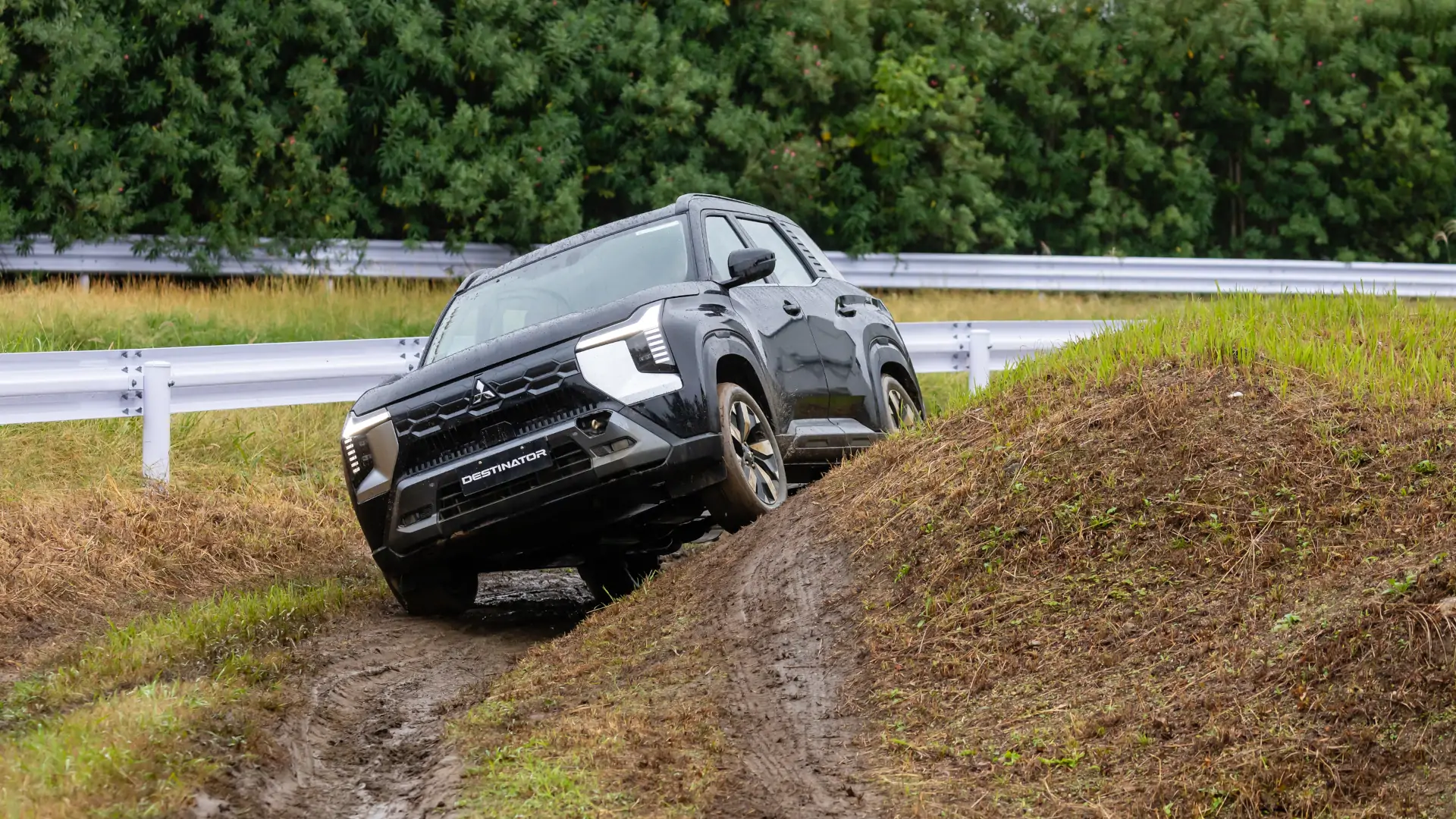
Even more shocking than driving the Destinator alongside Evos, however, was the off-road driving portion. This SUV is front-wheel-drive and doesn’t have Super-All Wheel Control, yet it somehow managed to go through the same course where Mitsubishi tests some of its other 4x4s. I simply switched to Gravel mode and let the computer do its work. I was able to get through deeper-than-usual floods, soft mud, and slippery uphill climbs—none of which I would’ve even tried driving across in a typical 4x2 road car. Make no mistake, the Destinator still isn’t a hardcore off-roader, and it never will be, but through light trails or shallow river crossings, this will be perfectly fine.

PHOTO: Mitsubishi Motors Philippines

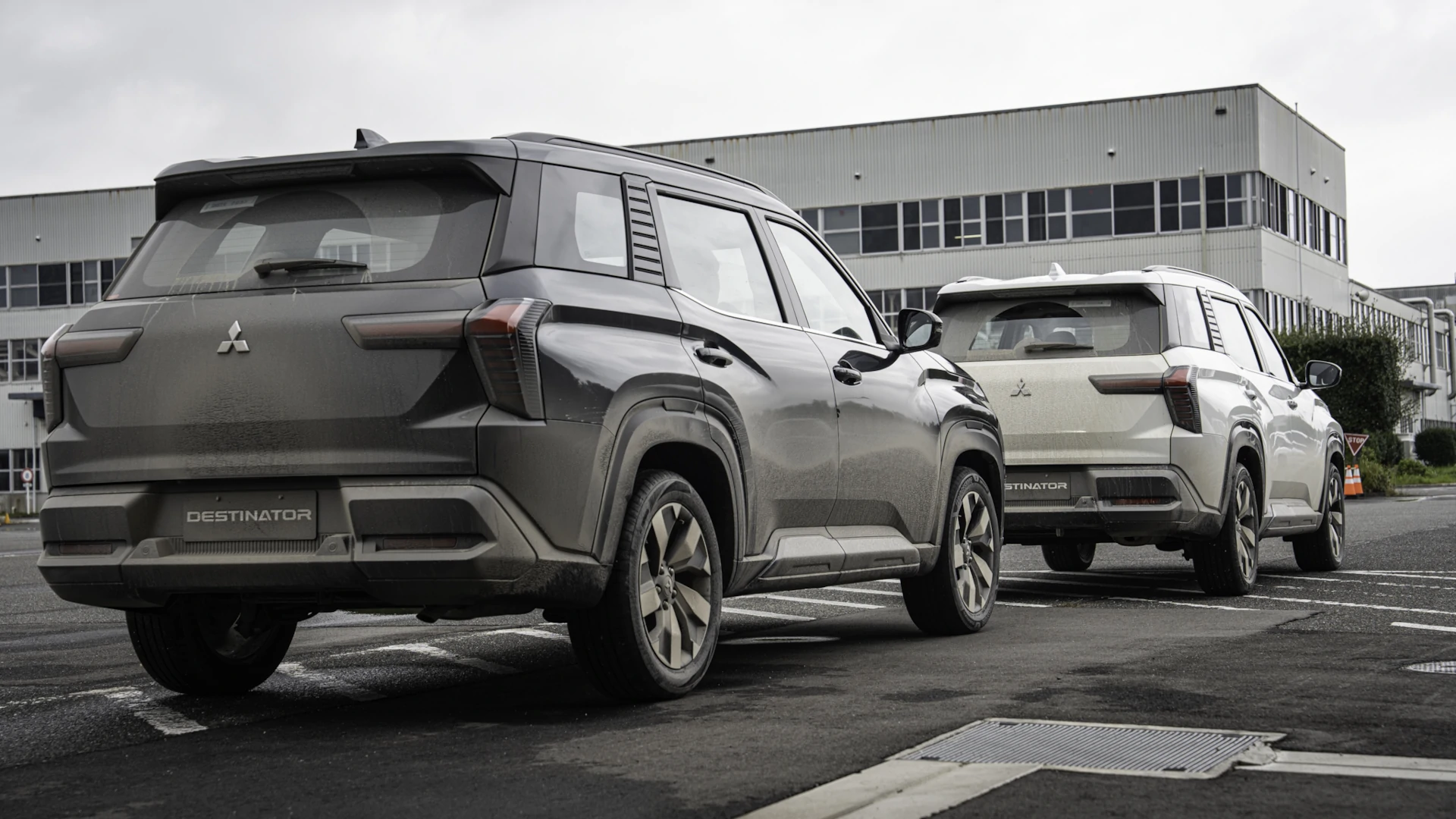
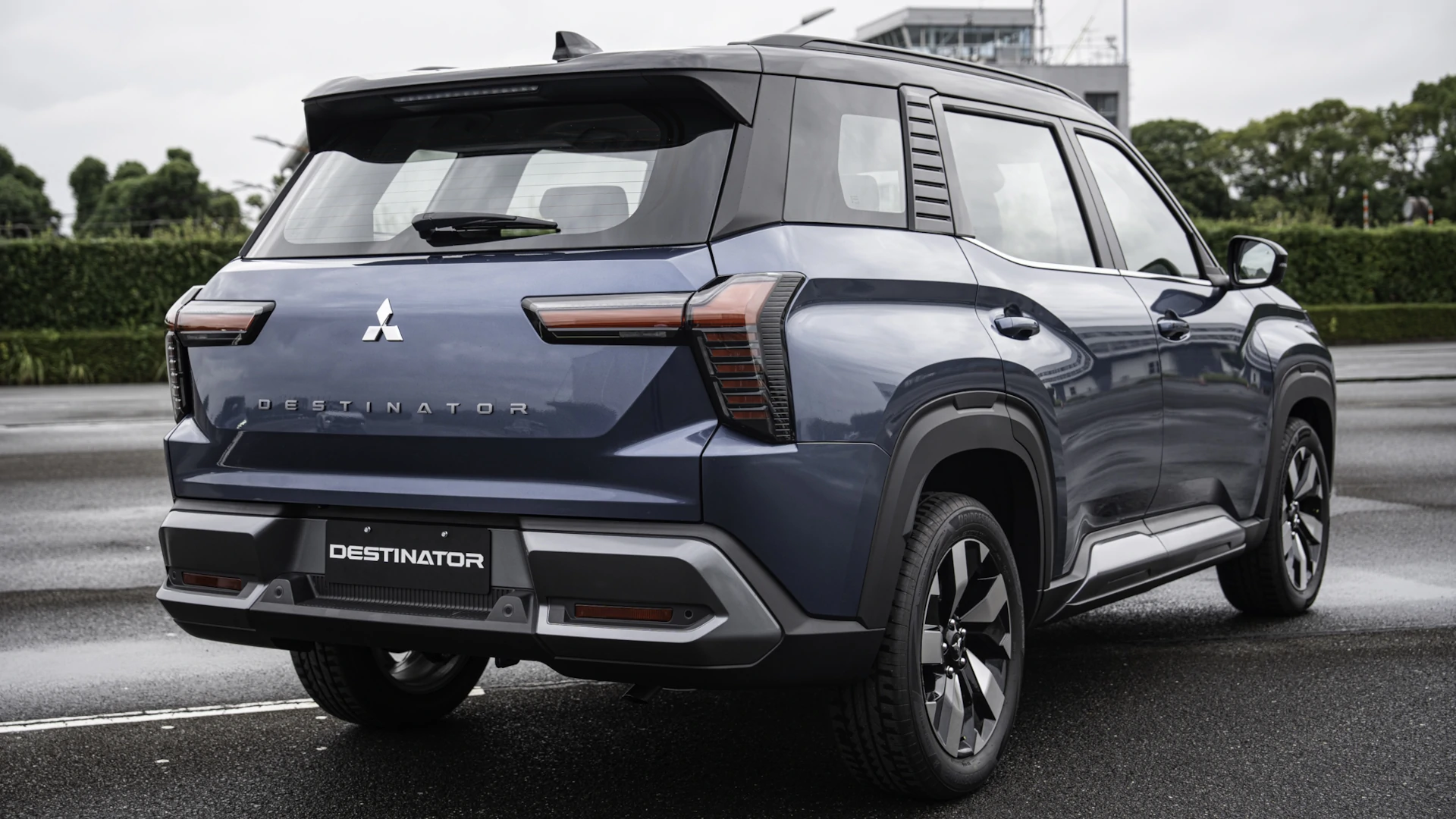
We ended our test-drive experience with a proper tour of the Destinator. It was at this point that I was able to digest the design properly, and I realized I unapologetically liked it. The front end looks like a more macho XForce, with the T-shaped headlights flanking the large, gloss-black plastic panel on the grille. The underbody claddings, the gray trim on the doors, and the accent on the C-pillar complete the rugged look. The rear, meanwhile, matches the front end quite nicely. I like how the tailgate looks clean with the embossed Destinator badging and how the bulky rear bumper appears to add more muscle to the look.

The inside feels familiar, if not too familiar. It’s a parts-bin special, and it’s forgivable. Mitsubishi has taken bits from the XForce and even the Triton to build this interior, and I’m not even complaining. I’m a fan of the buttons on the center console, and I like the front row’s ergonomic layout. There’s plenty of space for all seven passengers, and there are amenities to go around like dedicated rear A/C controls and vents as well as the foldable trays in the second row. The rear seats also all fold flat to unlock more cargo area as needed. Plus points to Mitsubishi for not putting the unergonomic, downright unusable folding mechanism in the Montero Sport’s third row here.

PHOTO: Leandre Grecia

Admittedly, I still had a few questions after spending an entire day with the Destinator. The most glaring one was this: Why didn’t Mitsubishi use a hybrid engine? I was worried this would be just another XForce—a very impressive vehicle that couldn’t quite penetrate the market. But when prices were announced, it started to make sense. That’s when I knew this was really going to be the next exciting Mitsubishi.

With an introductory price range of P1.289 million to P1.799 million, this has the potential to disrupt the market. At this price point, it doesn’t need to be a hybrid, or at least not yet. Fuel-economy figures are still unavailable, but this powerful engine should be relatively more frugal considering all the new tech it’s been built with.

It also slots in as a more affordable alternative to the Montero Sport and a more premium one to the Xpander—neither of which has electrified powertrains. For would-be buyers, it shouldn’t be a deal breaker.

photo of the mitsubishi destinator 2026

But I have to go back to that sticker price—it’s what can really make this a breakout model for Mitsubishi. It has the potential to be what the XForce was supposed to be, which is a crossover that fills in the gap in the Mitsubishi lineup, but with not just a reasonable but a very competitive price tag at that. Does this mean the XForce is dead? In the eyes of the buying public, it might be. You’d be hard-pressed to find anyone who’ll say that a more expensive five-seater crossover is the better option over a value-for-money seven-seater with more power under the hood and more tech in its arsenal.

Now, I know it isn’t a Pajero nor an Evo, but it’s easily the most exciting Mitsubishi we’ve seen in recent years—because of both what it’s capable of and how much it’s priced. The Destinator is the best value-for-money car Mitsubishi has launched since God knows when, and it’ll be interesting to see how this will compete against the hybrids currently dominating the market. It might be premature, but I have a good feeling about this. Let’s just revisit this conversation a year from now, shall we?

PHOTO: Leandre Grecia

See Also

[bg_related:0]
ILLUSTRATION: Echo Antonio
  • TGP Rating:
    /20

    Starts at ₱

    TGP Rating:
    /20
    Starts at ₱