The motorcycle industry is stacked and filled to the brim. Be it big bikes, maxi scooters, or adventure bikes, Filipino riders are spoiled for choice. While that’s all well and good, that also makes every new launch a little less exciting and feel somewhat less special with a market as saturated as this.
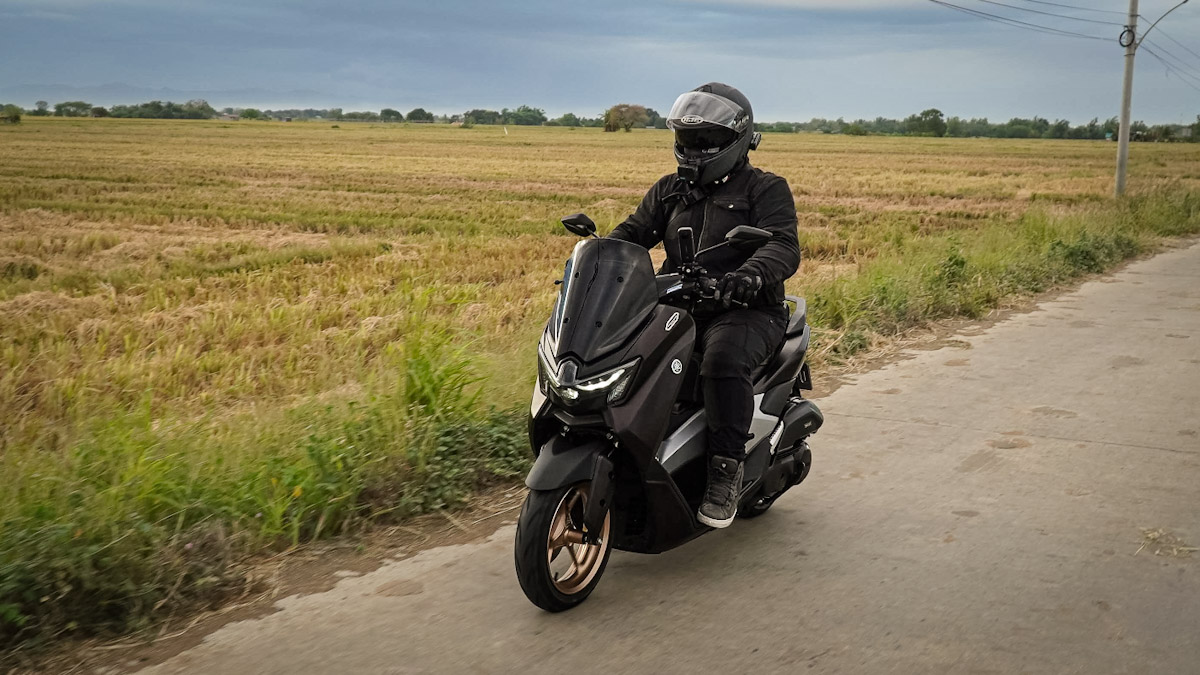
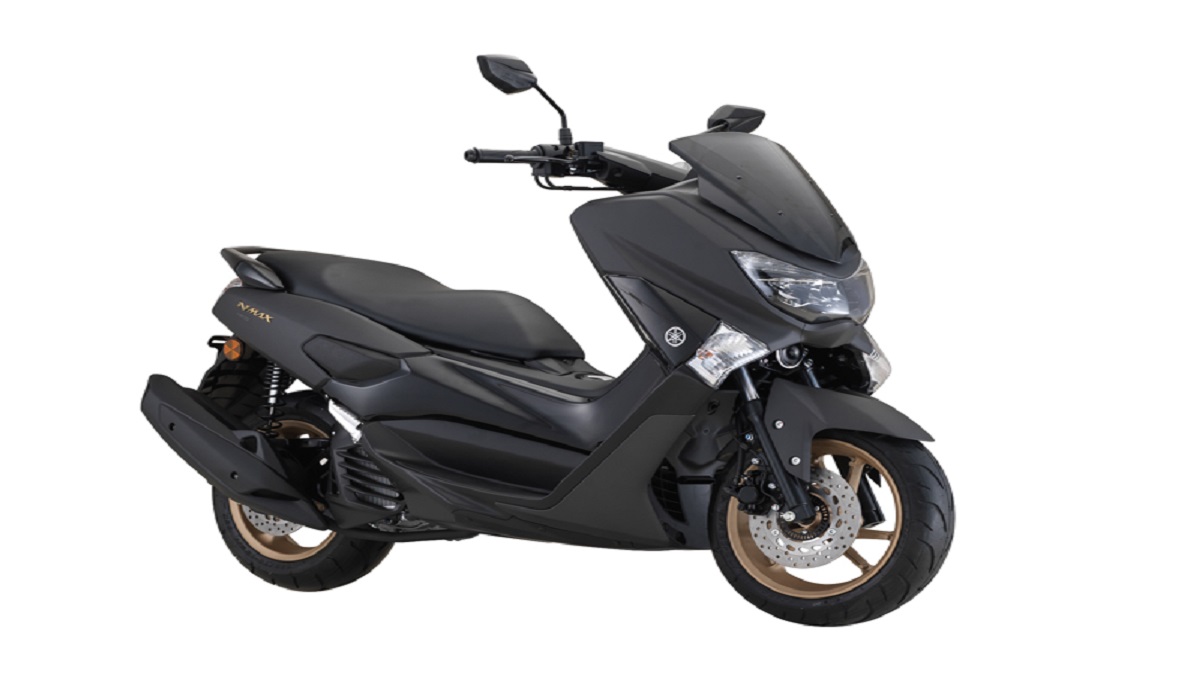
But Yamaha Motor Philippines’ newest model feels anything but–I’m talking about the all-new NMax Tech Max. YMPH recently let us try out the new NMax on a whole-day, 200km+ ride to Baguio City, and all I can say is that it’s an absolute game-changer. Interestingly enough, the last scooter I felt this excited about was the PG-1 from about a year ago. But I digress.
What’s with the new NMax Tech Max that you’re raving so much about?
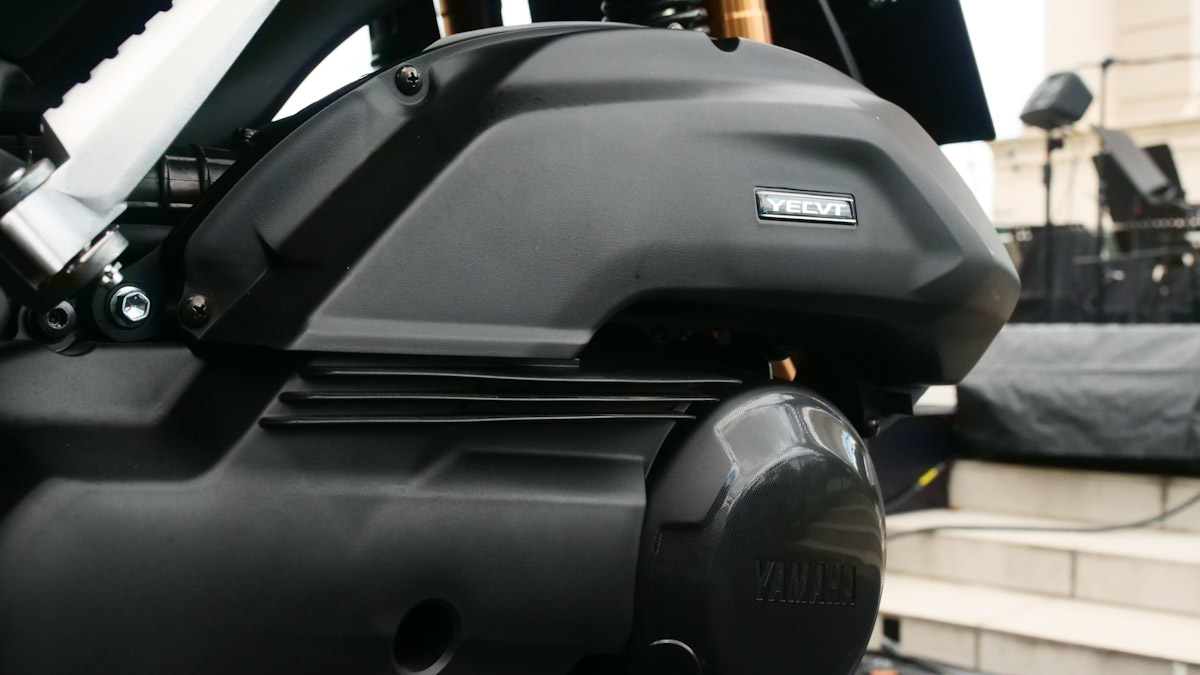
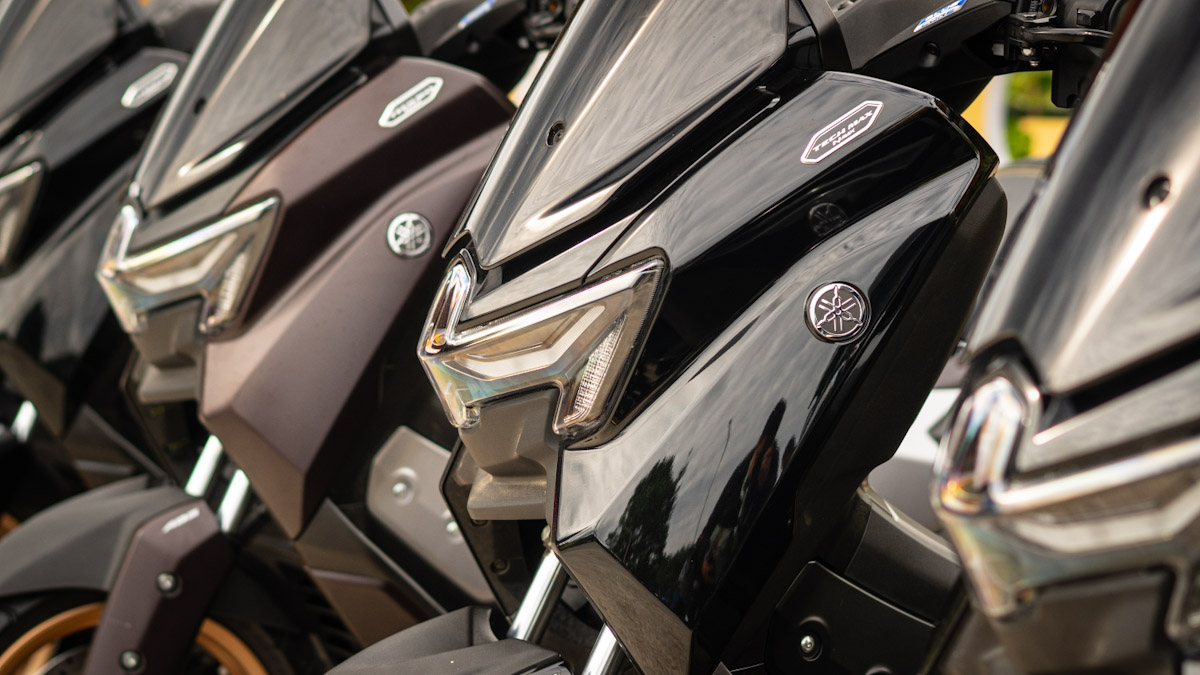
There are a lot of things. The looks are subjective, of course. I like the fresh styling of the front clip with the crest on the headlamp, but I’ve still yet to decide whether or not I like the rear.
But the design is honestly the least of my concerns. The scooter’s performance is really what I’m head over heels about. It still packs a familiar 155cc liquid-cooled, four-valve, single-cylinder engine that puts out 15.19hp at 8,000rpm and 14.2Nm of torque at 6,500rpm, but it just pulls so much more now. Torque is ever so slightly up, but it’s the new Yamaha Electronic Continuously Variable Transmission (YECVT) that makes the difference.
How does the new YECVT work?
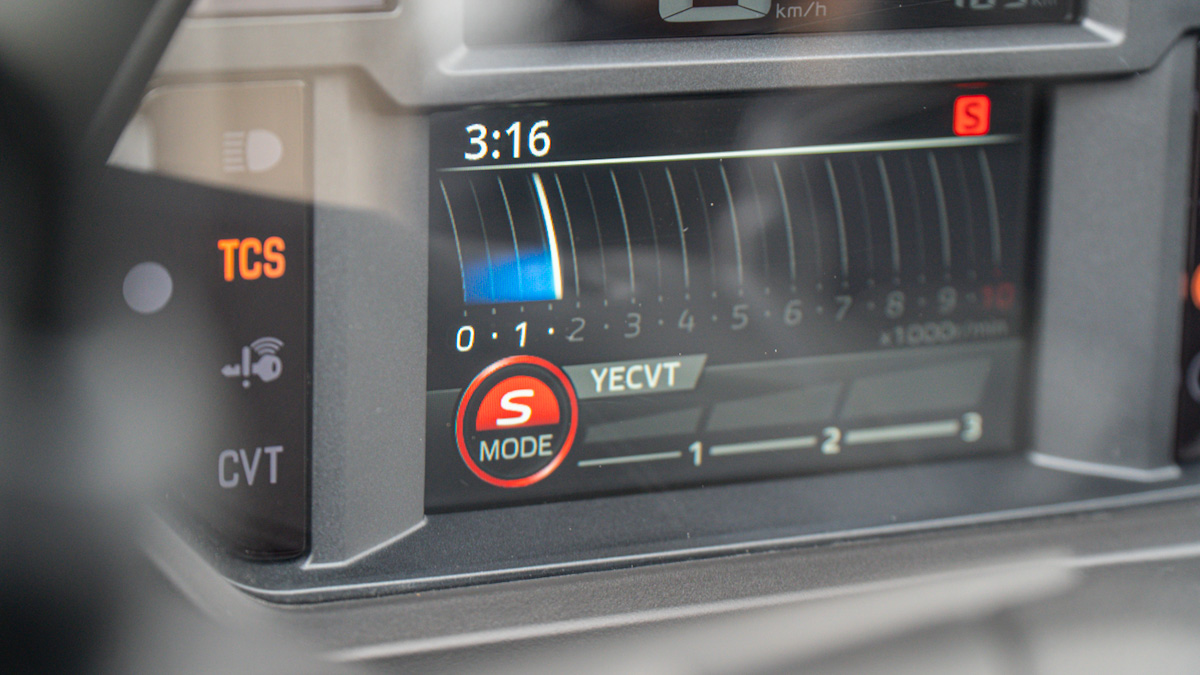
If you’re familiar with scooters, then you know the transmission has flyballs or what pinoy riders like to call ‘bola’ that’s part of the ‘pang-gilid.’ Basically, the YECVT facilitates the work of the flyball and makes everything electronic, so that means there’s fewer moving parts and maintenance should be easier.
It affects performance because it enables the use of multiple downshift controls. There are three levels, and the higher the level, the better the acceleration or deceleration. It was hard to understand it from writing, but when we got to try it out, it made more sense and was actually very intuitive to use.
It functions similar to a manual transmission, but only for downshifting. When you’re going uphill or you’re overtaking, you can flick the lever all the way to ‘Level 3’ to kick the revs up and open up more power. The moment you let go of the throttle, though, it’ll disengage and reset to ‘0.’
The other use case is when you’re going downhill or you’re decelerating before hitting a corner–it’s just the same as engine braking. Our route to Baguio City from Revzone Cabantuan was filled with twisties and several elevation changes. Every time we had to descend steep slopes, I simply downshifted to 3 (you can also use 1 or 2) and let go of the throttle. In a typical scooter with a CVT, letting go would have you dangerously freewheeling in no time. In the NMax Tech Max, the revs are maintained and will prevent you from shooting downhill, and you can apply brake pressure as needed. It not only made going downhill safer, but it also relieved supposed wear and heat from the braking system on a long ride such as ours.
As for approaching corners, I simply combined braking with the downshifting to decelerate, essentially letting me brake a bit later because I could get more stopping power with the push of a button. It was plenty helpful through the mountain passes, and it makes me wonder how it coud be applied, say, on track. Or heck, even on a sportier motorcycle like the Mio Aerox.
We heard the NMax Tech Max also has multiple ride modes. Care to elaborate?
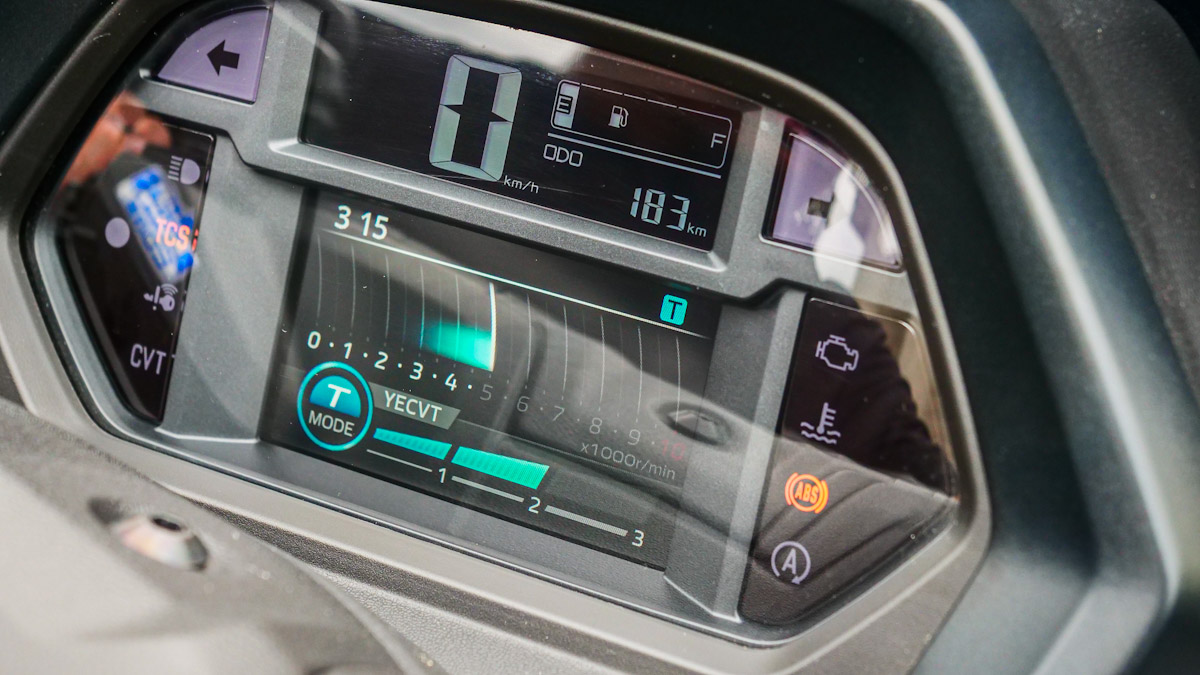
There’s Sport (S) and Touring (T) mode available. By default, Touring is activated–consider it like ‘Eco’ mode in other vehicles. The throttle is a bit more suppressed, there’s better fuel economy, and power output feels just about right for city riding. Sport, meanwhile, opens up more power and keeps the revs high. When used in conjunction with the downshift controls, it makes for better control of the bike during spirited rides.
How does the NMax Tech Max handle?
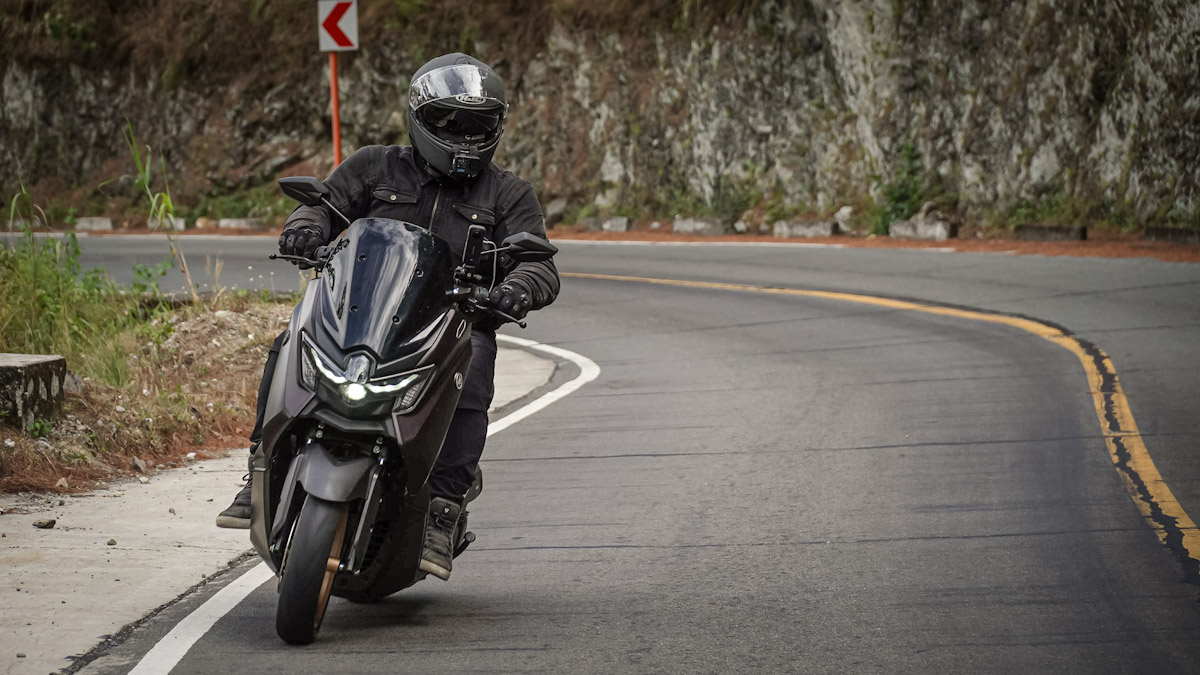
Just as well as before. It’s agile and very nimble and weaves through corners with ease. It banks on command, at least up to the point where your boots start scraping the ground. Because my shoes do stick out from the foot boards. Larger individuals might find this a hassle.
The seat somewhat enhances handling as well, now with better grip thanks to the new material on the cover.
What other new features did you find useful during your ride?
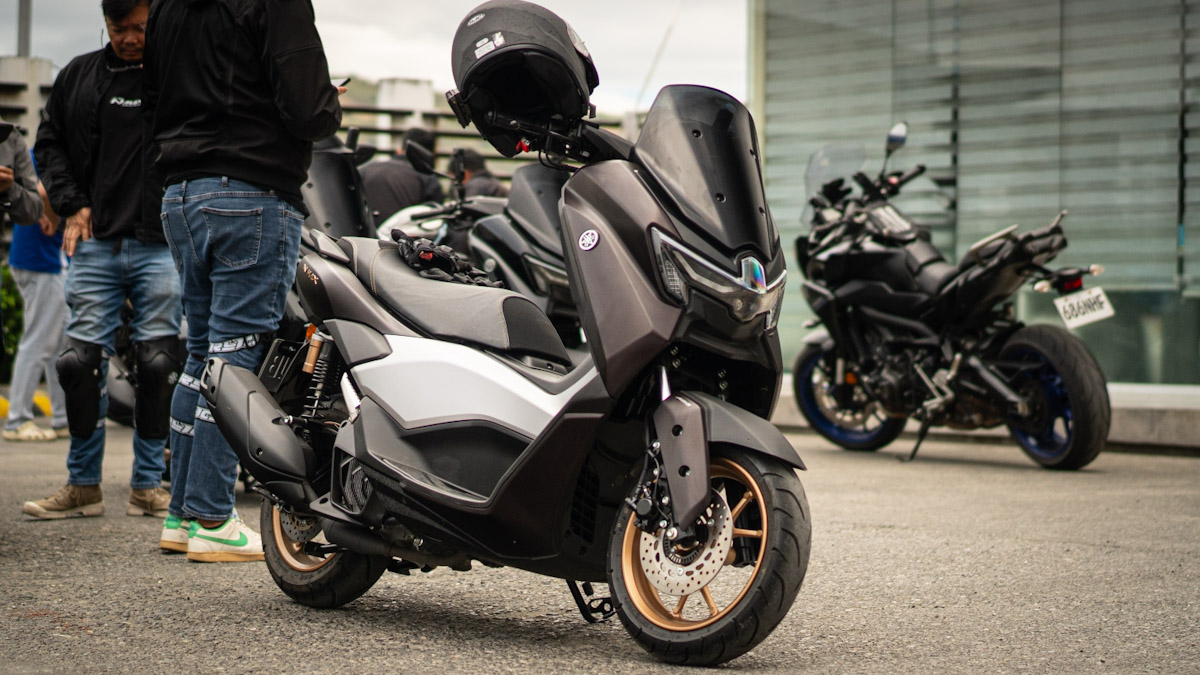
There are the usual storage compartments, with one of them housing the new USB-C charging ports, which came in very handy for charging my gear on the go.
But that’s minor. The highlight here is the new infotainment system. It still has Yamaha Connect features, but it now comes with a built-in connectivity via the StreetCross app. This Garmin-powered software lets riders use the head unit for navigation. Simply pin destinations on the app and it’ll appear seamlessly on the cluster. And it doesn’t get in the way of the information display, because the NMax Tech Max has a small LCD cluster up top that houses the speedometer, fuel gauge, and trip/odometer.
The new head unit can also track a lot of information including current trip duration and average fuel economy, as well as monitor the coolant temperature and battery voltage. It’s perhaps the best multifunctional cluster I’ve tried out in a non-premium motorcycle.
Has fuel economy improved from the old NMax?
You know what? It has. The last time I rode an NMax, I got 33-34km/L. Here, I got highs of 40-41km/L during the more level parts from Cabanatuan City and an overall average of 37km/L after the mountain passes head up towards Baguio City. For good measure, I did a manual computation in between full tanks during the first portion of our ride to make sure the gauge was accurate, and it pretty much was.
After I got the hang of enjoying the new YECVT, I said that if the new NMax at least matches the fuel economy of the old one, then that’s already a win considering the jump in performance. But no, it even got better. Note, however, that some of my companions got a final average of 32-34km/L. What’s weird was that I was pushing harder than they were and was in front of the convoy, so it really didn’t make sense. Anyway, once we try this out for a full review, we’ll find out more.
Is there anything you don’t like in the all-new NMax Tech Max?
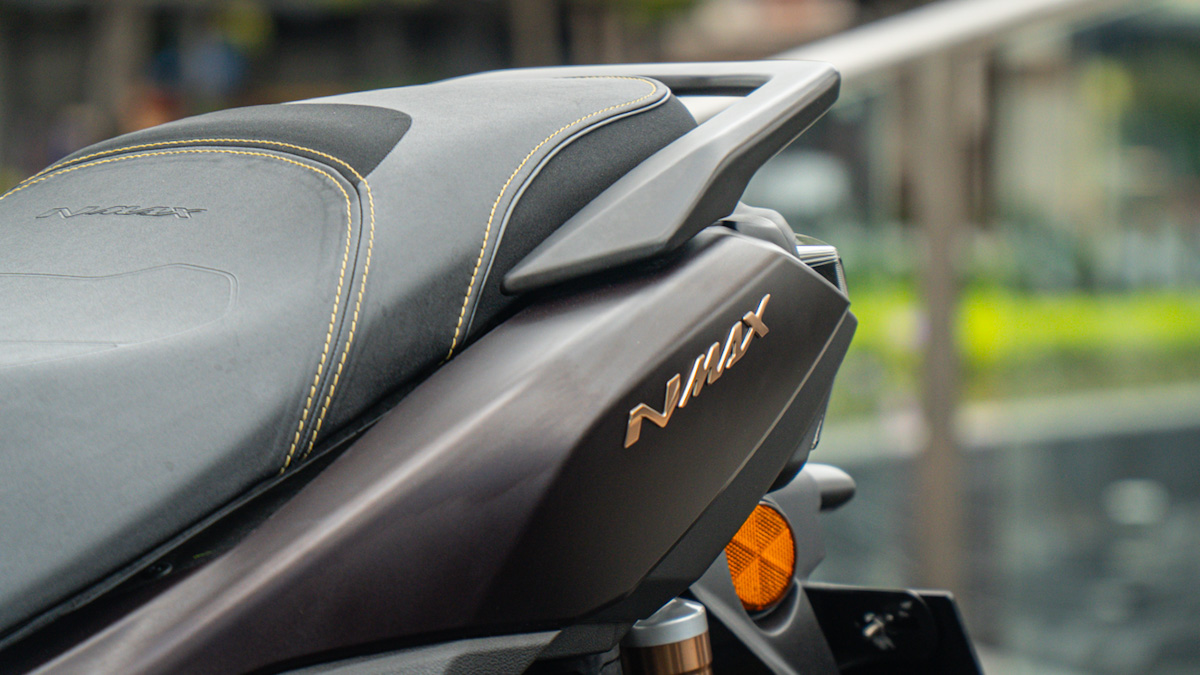
Ride comfort. Plain and simple. It should’ve been improved with the new sub-tank on the rear shock absorbers, but it’s still a bit stiff on poorly paved surfaces. On asphalt, it’s perfectly fine–it’s fun to ride and it handles well–but on improperly maintained provincial highways, it’s a pain in the butt. Literally.
Then again, it’s nothing a good aftermarket upgrade can’t fix. I’ll take it.
What’s the difference between the NMax Tech Max and the NMax Turbo?
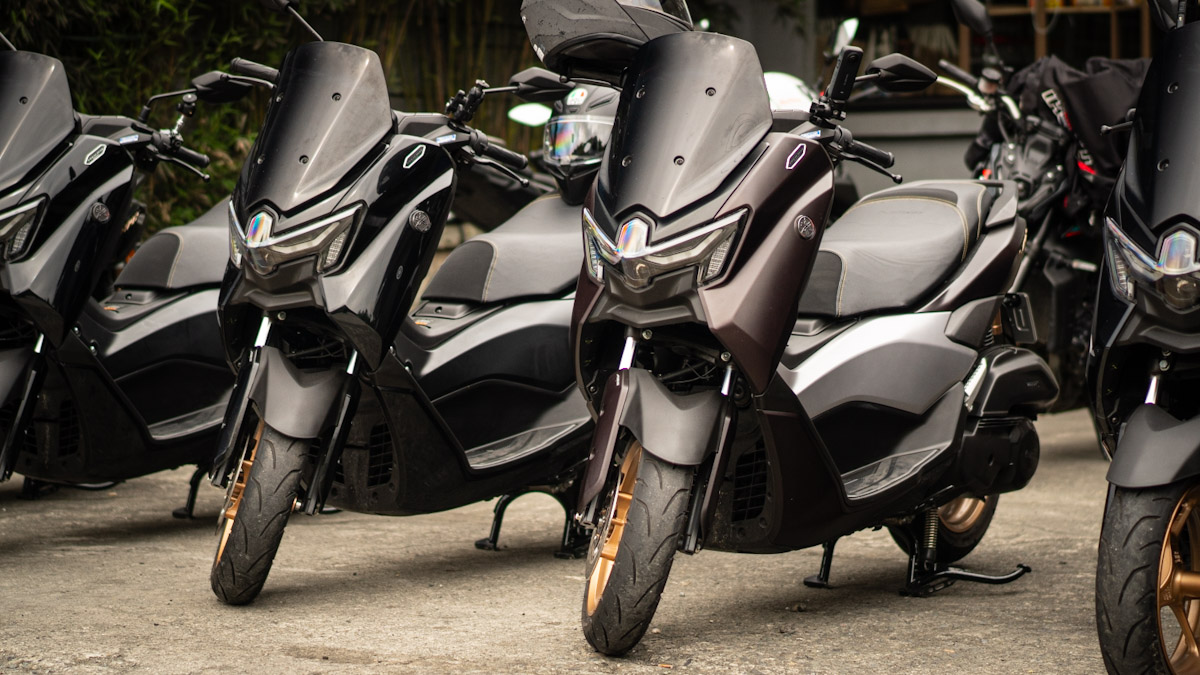
Don’t be confused by all those terminologies. They’re the same bike, but YMPH decided to drop the ‘Turbo’ from the name. And I think it was the right move, because that would’ve had customers coming into dealerships asking about the turbocharger on the all-new NMax.
True enough, though, Yamaha claims this new generation of the NMax provides the sensation of operating a motorized vehicle with a turbocharger–with both the ride modes and the downshift control feature, it feels exactly like that. It’s like you have this ‘boost’ but only it’s activated with the push of a button and not by going harder on the throttle or pedal to have it kick in, or in the case of an actual turbo, spool.
Would you say it’s worth the price tag?
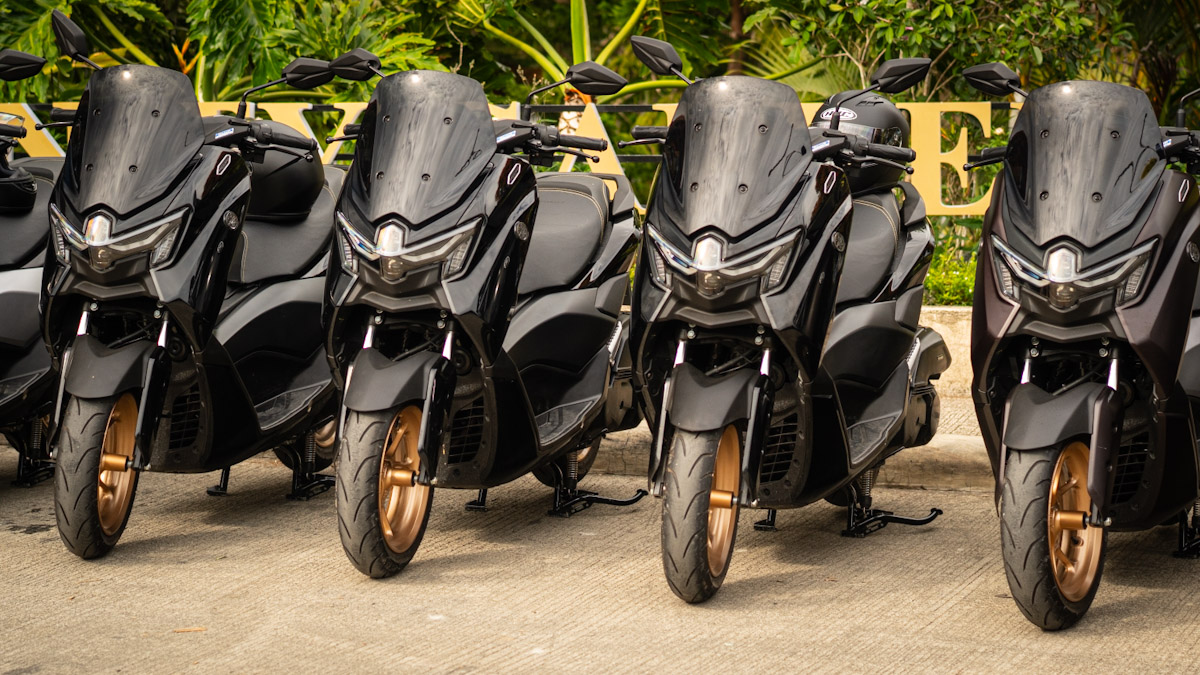
I wouldn’t just say it’s worth the P175,900 sticker price–I’d say this is a game-changer for the segment. It’s already the most popular scooter in the Philippines, but with this launch, it becomes a scooter that’s unmatched in the market.
Where can you find a scooter that has something like the YECVT that lets you downshift like this? That lets you safely go downhil without any fuss? That lets you push harder through mountain roads just because you have extra deceleration? That gives you a ‘boost’ on overtakes or through uphill climbs? I doubt there’s an answer.