How best to follow-up one of the most successful Lamborghini supercars ever built? Ditch its key USP. Make it more… comfortable. Spin the Random Fighting Bull Name Generator wheel.
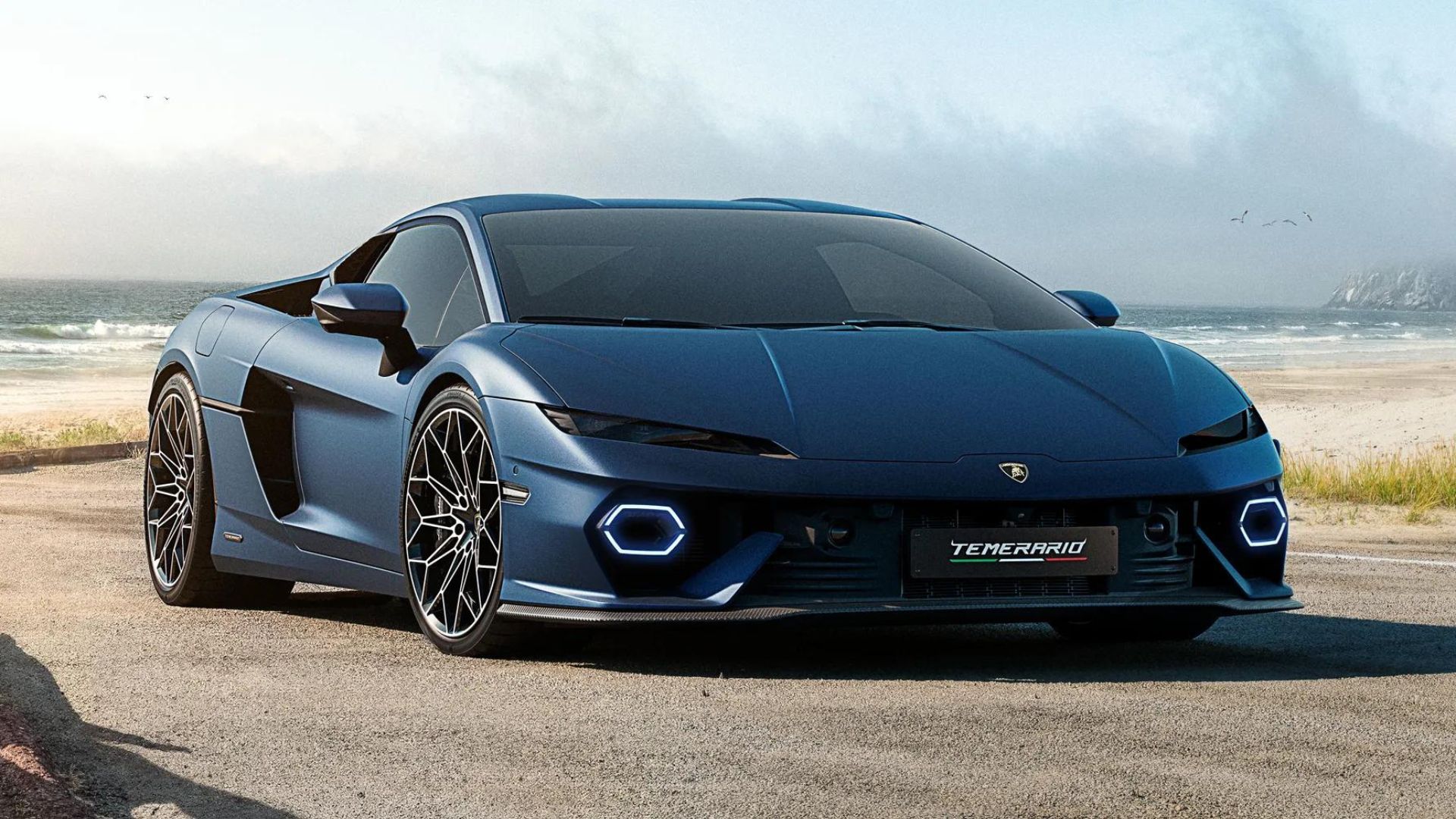
This, ladies and gentlemen, is the follow-up to the Huracán: Welcome the new Lamborghini Temerario, a car that replaces the transcendental, naturally aspirated V10 for [shudders] a battery, three electric motors and a turbo V8. It’s also a car that claims a new-found focus on comfort.
OTHER STORIES YOU MIGHT HAVE MISSED:
Check-in #1: 2024 Subaru Outback XT long-term review
Formula 1 midseason rankings: How’s your favorite driver doing so far in 2024?
Perhaps it should have been named The Tempest, because swapping one of the finest free-breathing V10s of the modern age for a hybrid V8 and more comfort suggests hell truly is empty, and all the devils are here. At least if you’re a Lamborghini enthusiast.
One of whom is the boss, of course. “The Revuelto is a big success,” Stephan Winkelmann said. “We have three years of orders in house. The fact it’s a plug-in hybrid is very much accepted.” He points to this new Temerario – that follows the Urus SE V8 hybrid – as “closing the circle of hybridizing all the line-up”.
Though the V10 ‘twas such stuff as dreams are made on. “I have to admit I loved the car because of the engine,” he said about the Huracán’s banshee-wail 5.2-litre that originally started its service in 2003’s Gallardo (another hugely popular Lambo). So why ditch one of its key USPs, especially now the Audi R8 has departed leaving the ten-cylinder all to Lambo’s bullfighting hands and, as Winkelmann admits, having already done ‘an outstanding job’?
“We had to decide years ago, from scratch, to do something exceptional, completely new,” he added, noting how the Temerario’s ambitions for outright power wouldn’t have “been feasible” with the old nat-asp V10.
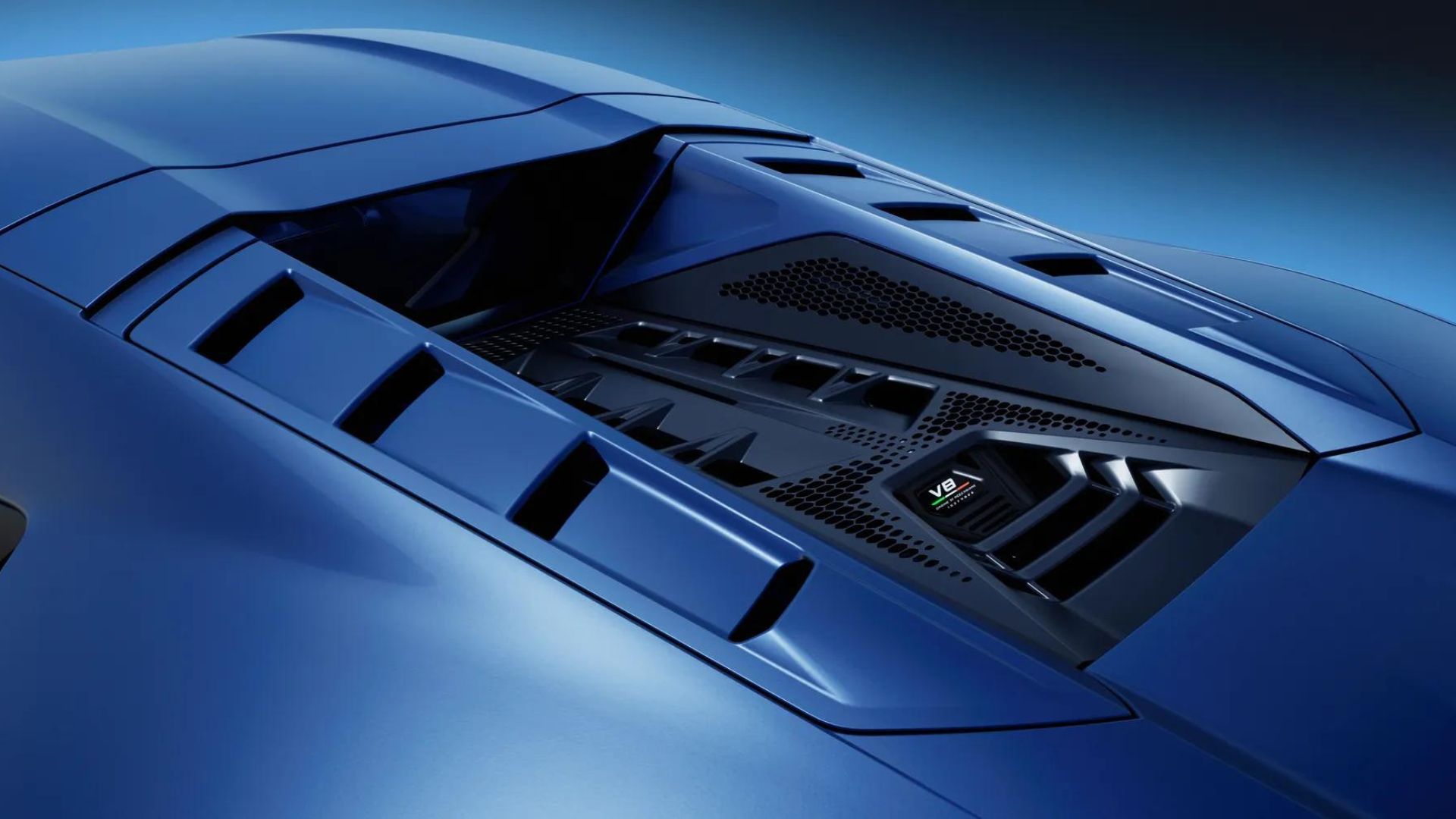
What’s past then, is prologue. At the Temerario’s heart sits a new – like, completely fresh, from the ground-up, not-pinched-from-The-Empire – twin-turbo 4.0-liter, flat-plane-crank V8. And lo, at least according to Lamborghini, this V8’s tale would cure deafness. For this completely fresh, from the ground-up, not-pinched-from-The-Empire twin-turbo V8 produces 789hp on its own, between 9,000rpm and 9,750rpm, on its way to a 10,000rpm redline. Ten. Thousand. RPM. From a turbo V8.
Add said turbo V8 to the three electric motors – one betwixt engine and gearbox, two on the front axle – a 3.8kWh lithium-ion battery and an eight-speed dual-clutch gearbox, and you’re looking at the scary end of 907hp and 800Nm of torque. A fair whack over what the V10 Huracán in Evo guise could manage (631hp). 0-100kph? 2.7s. Top speed? 340kph+. Noise? Well, Lamborghini reckons it’s ‘immense’.
There’s a ‘special connection’ between the V8’s banks that enhances the sound depending on engine speed, and a ‘smoothed pipe routing’ from manifold to tailpipe, the latter positioned in such a fashion to add sharpness. The result? Well, over to the boss.
“The sound is incredible,” Winkelmann said. “It has to be recognisable as a Lambo,” he adds, pointing to the distinctive shrieks given off by the Aventador and then Revuelto’s V12, and of course, that old V10. Lamborghini reckons the vibrations sent to the frame by the eight-pot’s flat-plane crank “creates a complete, all-embracing sensory experience”; vibrations that ratchet up with intensity depending on your chosen velocity.
Not a thousand twangling instruments humming about thine ears, then, but 907 horsepowers rattling your very bones. On purpose. “It should always be raw and noisy, and you should feel the vibration of the steering wheel. This is what we want. This is the emotional part.”
It also promises to maintain the ‘high-progression linearity that made the Lamborghini V10 famous’, while also capitalising on the bounteous torque and top end punch that comes from modern turbocharged powerplants. Such force, reckons Lamborghini, “is usually only seen in racing engines”. They reckon this new heart is without equal in the world of street-legal supercars.
So it is not, by any stretch, a slow, ponderous limousine posing as a supercar. “We will not compromise on the sportiness,” Winkelmann said. But though this particular isle is full of noises, sounds and sweet airs, be not afeard. For Lamborghini is adamant that while the Temerario’s V8 will give delight and do its best to shake your dentures free, it will hurt… not.
The spaceframe is now less complex, allowing weight to be what Lamborghini deems ‘optimized’. Though, while it’s some 20% stiffer than the outgoing spaceframe of the Huracán, it’s also unsurprisingly heavier – Lamborghini claims a dry weight of 1,690kg.
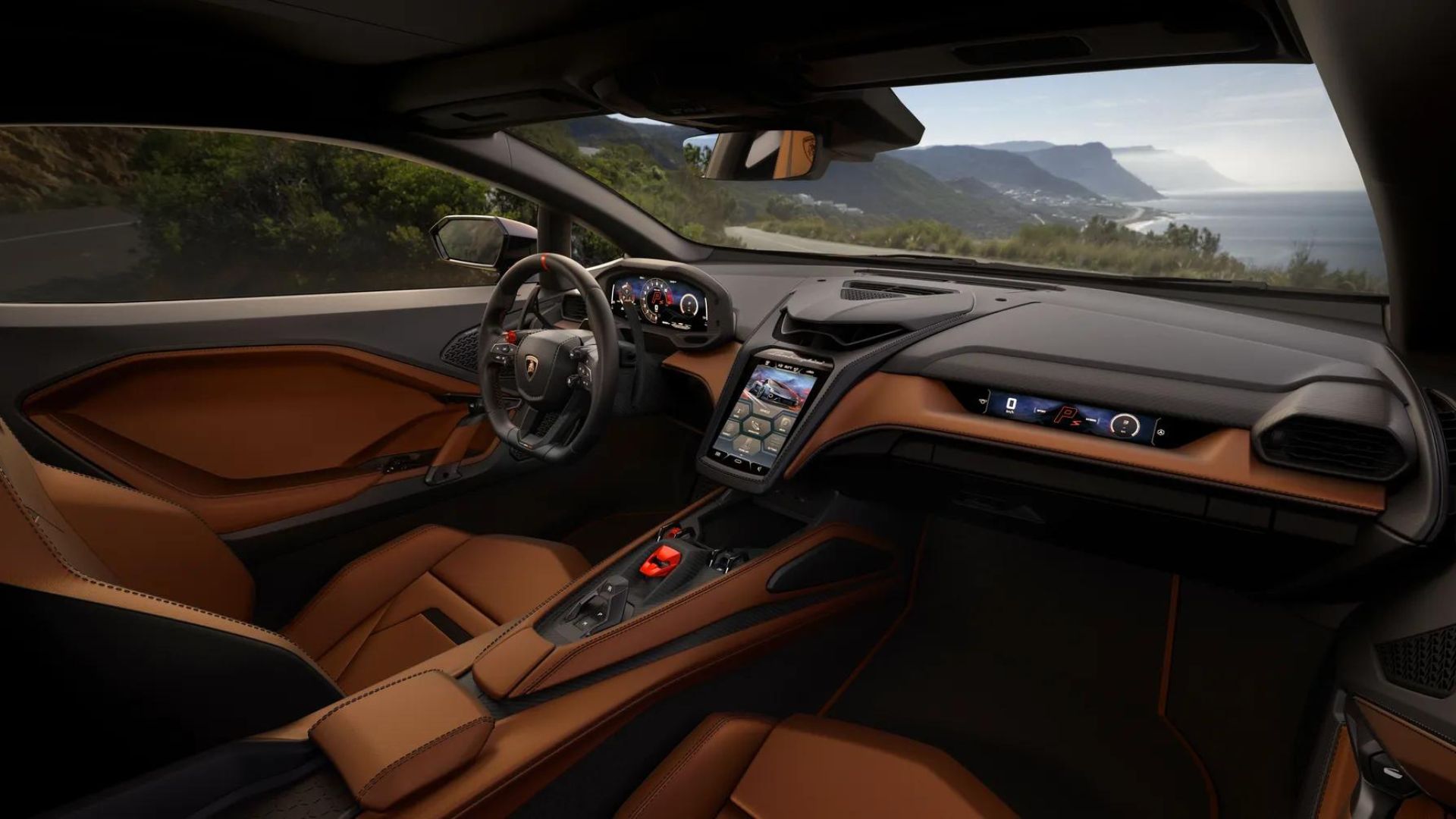
Into this longer aluminium spaceframe comes a brand-new cabin said to provide ‘unprecedented levels of comfort’, beginning with the headline act: more headroom, both to accommodate taller drivers but also if you want to wear a racing helmet. There’s more luggage space (112 liters). Then come a pair of low-slung, 18-way adjustable ‘comfort’ seats that are heated and ventilated (there’s the option of carbon fibre double shell items that wrap around ‘like a glove’), and the use of carbon, leather and Corsatex microfibre.
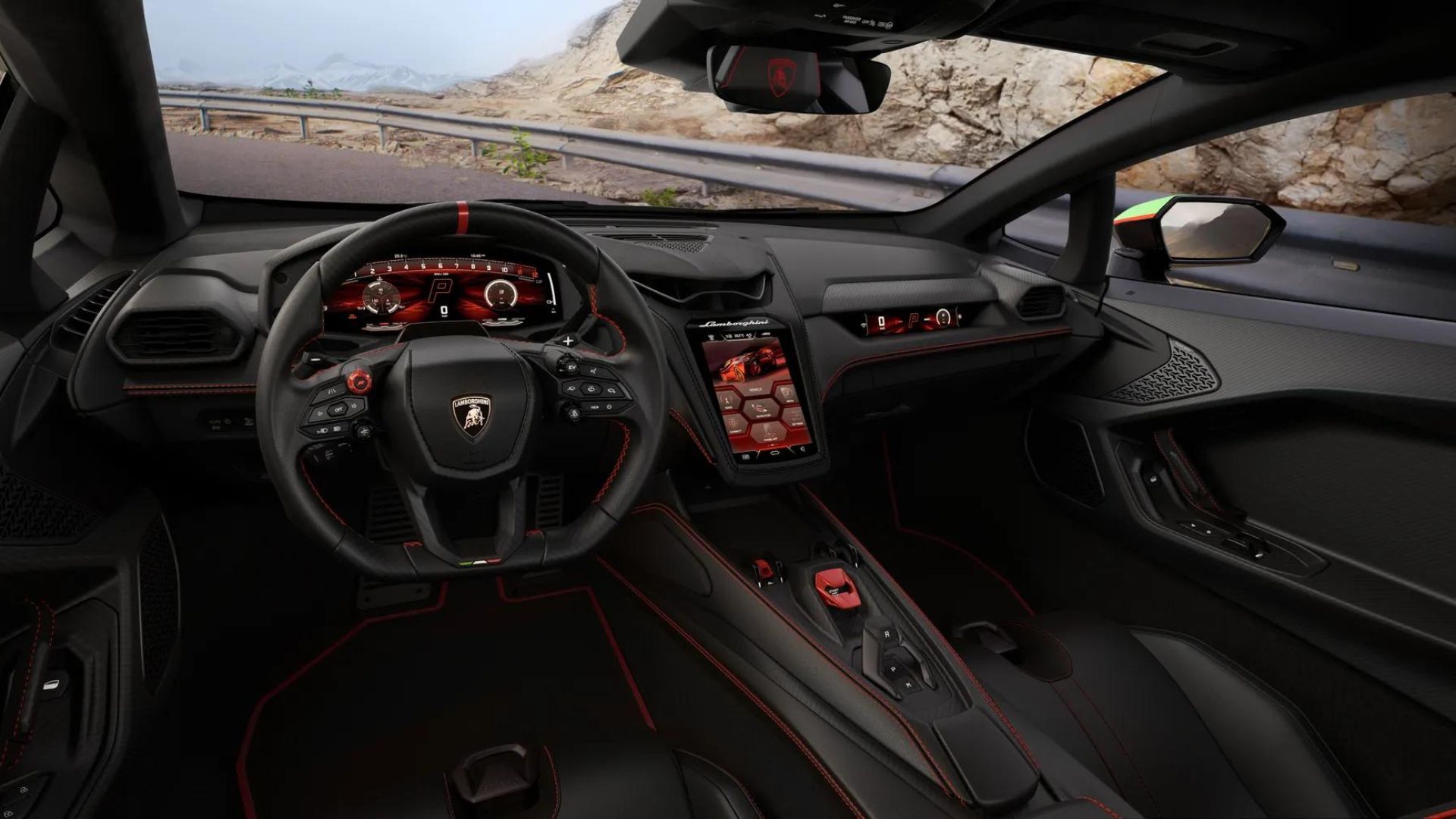
It's all built around a ‘pilot interaction’ philosophy, offering a 12.3in digital instrument cluster for the driver, a 9.1in display for the passenger, and a central 8.4in display. Even the graphics were designed specially by Lamborghini.
Managing this delicate balancing act betwixt hardcore Nürburgring charger and city slicker is a raft of different modes that change the Temerario’s personality, from Città (FWD, fully electric), Strada, Corsa and a new Drift mode. Indeed, there’s onboard telemetry, a dashcam, augmented reality navigation and something called a ‘Memories Recorder’.
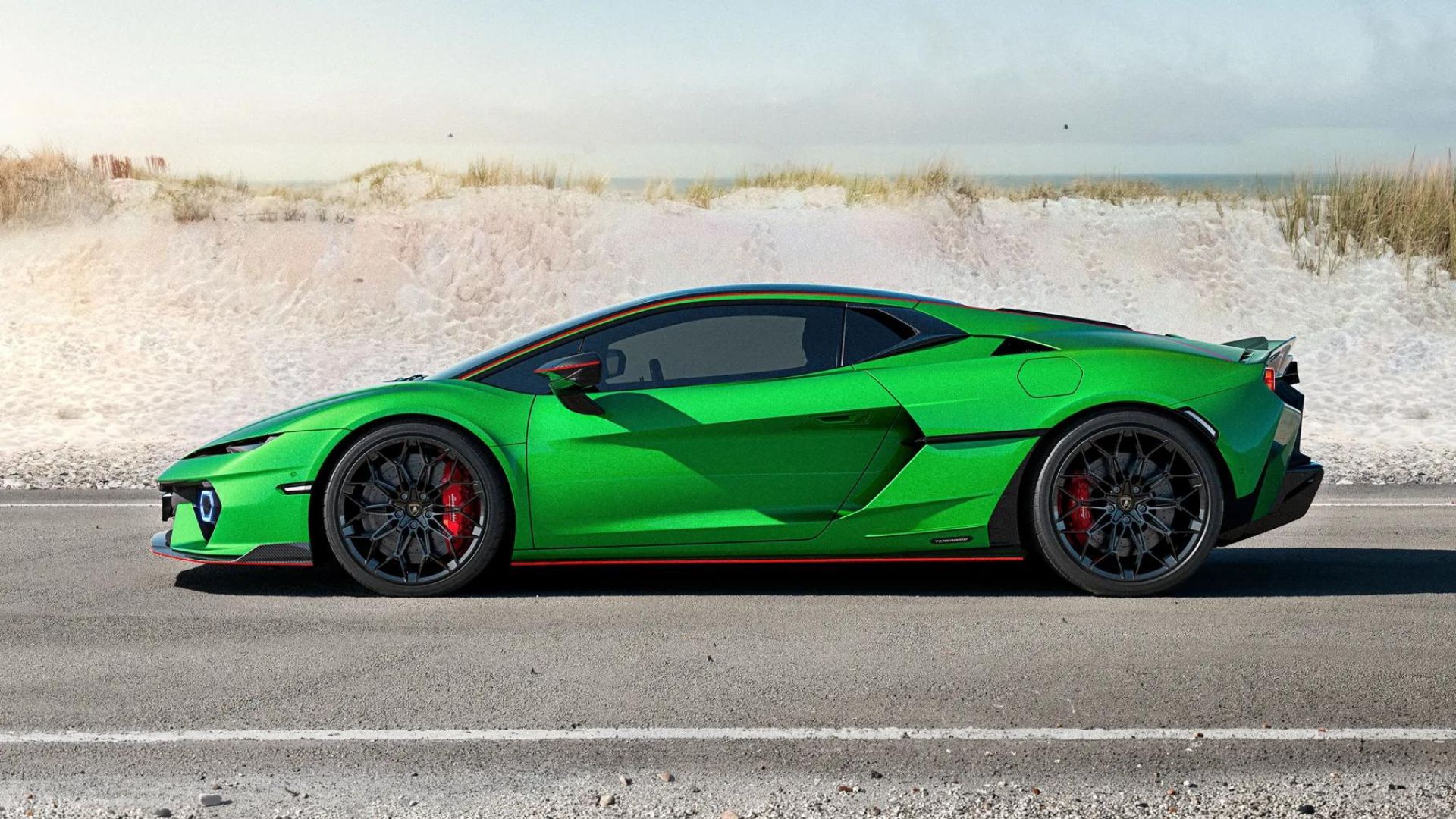
Another key of course, is its cloud capp’d towers, its gorgeous palaces, its solemn temples and its great globe: Basically, it needs to look like a proper Lamborghini. And you’d be hard pushed to apply any other badge on the bonnet of the Temerario. Lamborghini is unsurprisingly immensely happy with its achievements, pointing out the ‘unmistakable character lines’ that pay homage to its earlier cars.
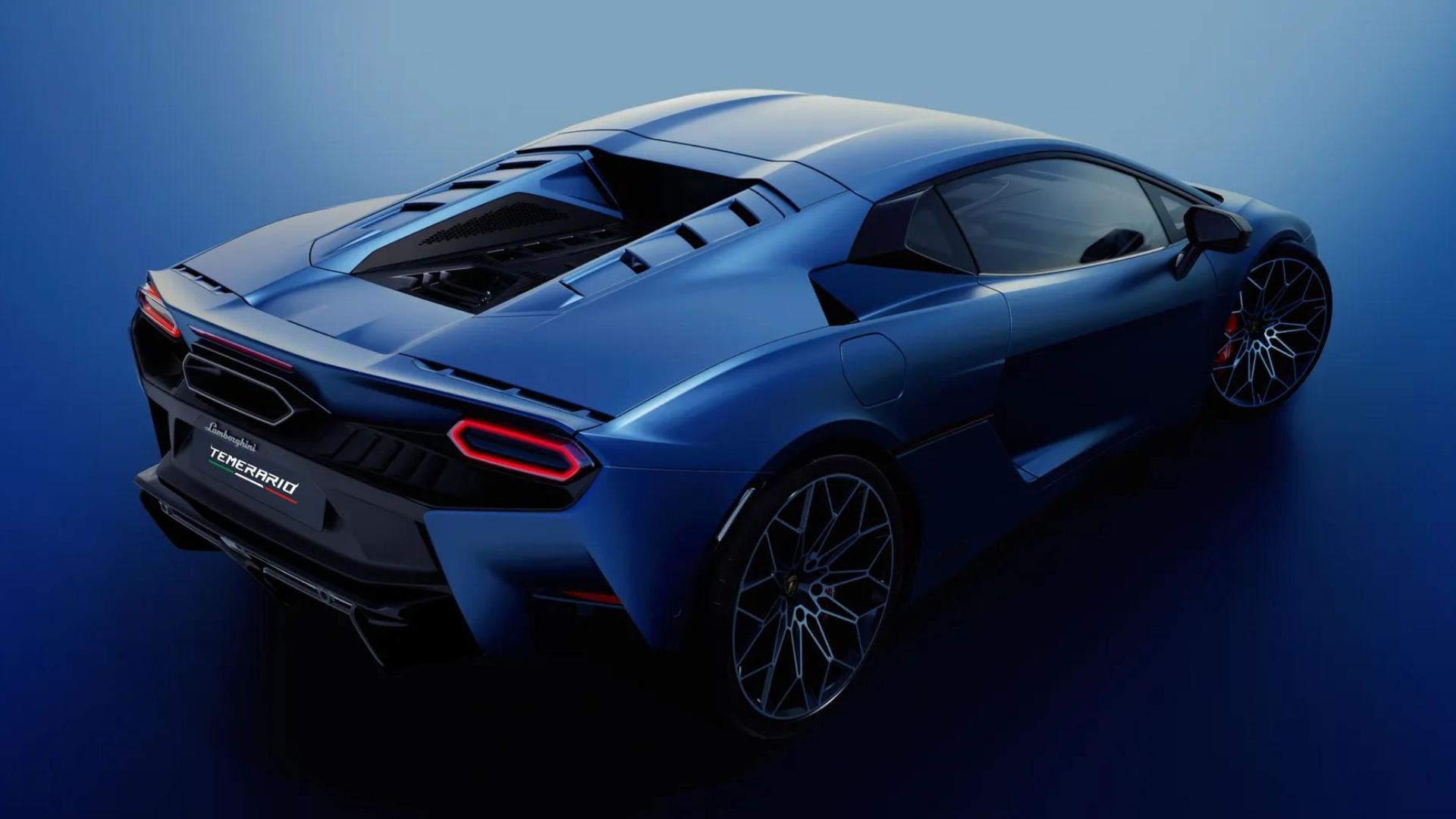
Though it’s a proper ‘clean sheet’ design, it certainly pays homage to the Huracán and Gallardo before it, while a new set of hexagon daytime running lights meld both olde worlds and new. Sweep back across the body and you’ll fall into the exposed engine bay, before being lifted right back to that spoiler that of course, plays a fundamental role in the Temerario’s aero.
From the company that pioneered novel new ways of directing air over, under and around its cars, there’s naturally a ton (not literally) of work going on here, all working towards ‘high-speed stability, increased cooling performance and maximum braking efficiency’.
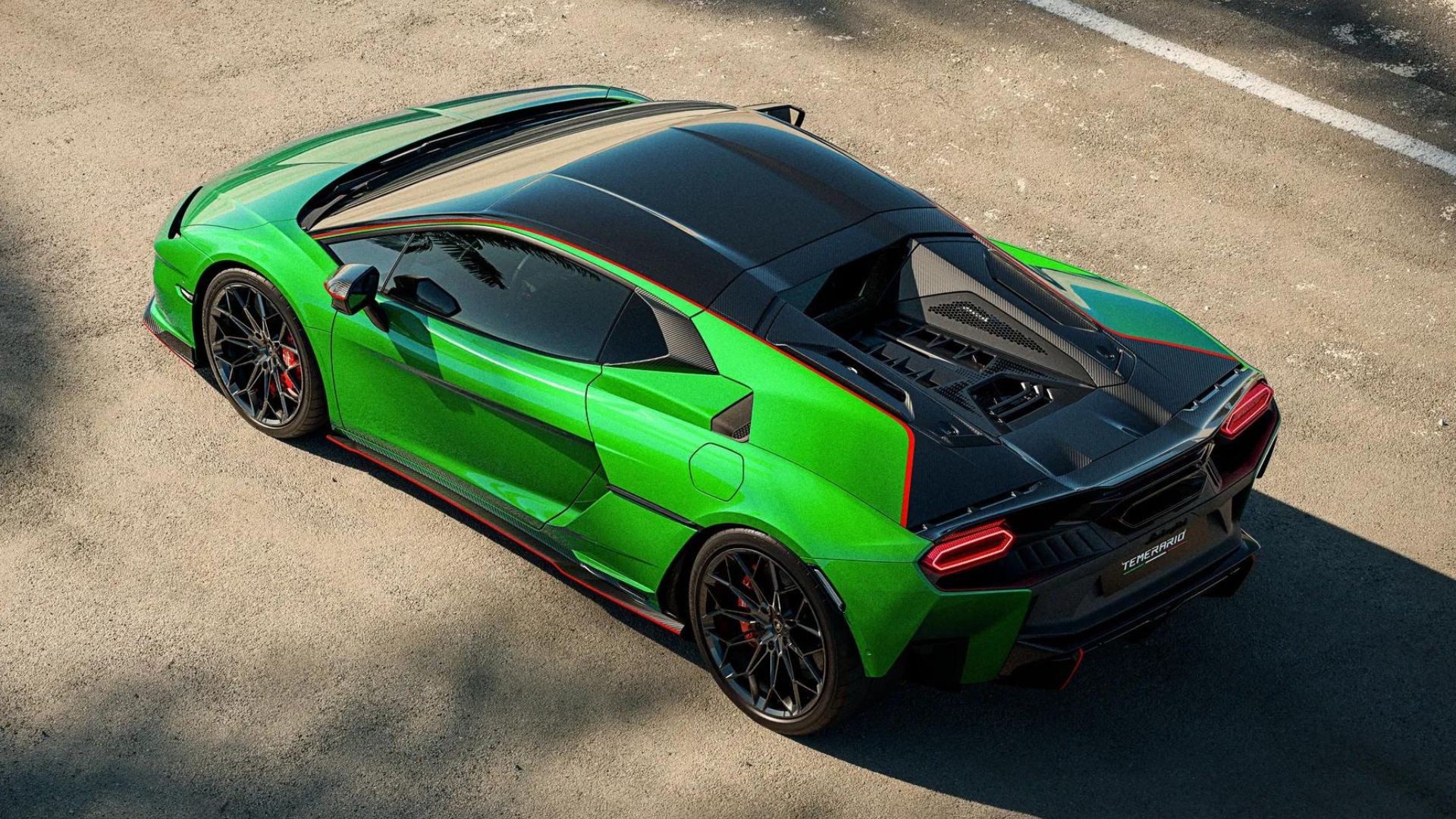
Those DRLs are in fact aero elements. The roof has a concave profile that directs air towards the rear spoiler. The underbody gets vortex generators for ‘optimum’ flow towards the diffuser. Overall, it’s said to be 103% more aero efficient than the Huracán Evo, and 158% more with the ‘Lightweight Pack’.
Yup, it’s being offered in two guises, with the LW pack geared more towards circuit driving. It’s as you’d expect of such an option: a carbon fiber splitter, carbon fibre underbody panels, CFRP side skirts, CFRP rear hood, Gorilla Glass, and a further ‘Carbon Pack’ that sees the rear diffuser, mirror caps and air-intake covers in… carbon. All in, this sheds 12.65kg and increases the aero load by 56%.
“The power and the numbers are one insight,” Winkelmann said, “but the emotional feeling is important.” Indeed. Even the name is weighted with it. “Temerario is the name of a fighting bull that fought in 1875, and Temerario means fierce, courageous.”
Such fierce, courageous indulgence will be set free in the second half of 2025.
NOTE: This story first appeared on TopGear.com. Minor edits have been made.