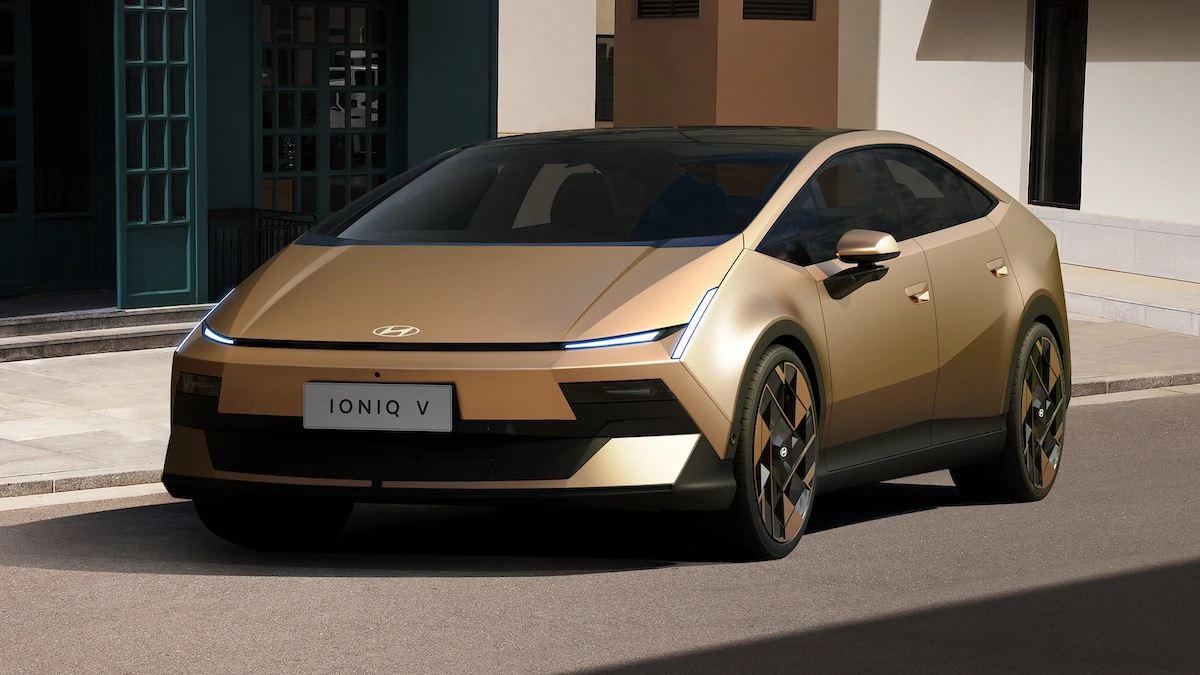

Like its competitors, Hyundai has identified China as a key market for its business. After all, Chinese brands have rallied in recent years to establish a strong presence in international markets with its strong emphasis on electrification and technology. To that end, Hyundai Motor president and CEO José Muñoz has announced the Korean carmaker’s intent to “triple down” on its efforts in the Chinese market.
Along with local partner BAIC, Hyundai has invested 8 billion Chinese yuan (around P71.1 billion) to reach its goal: 500,000 units in annual sales by introducing over 20 new models to China in the next five years. The first of these models, the Hyundai Ioniq V, was unveiled today at Auto China 2026.
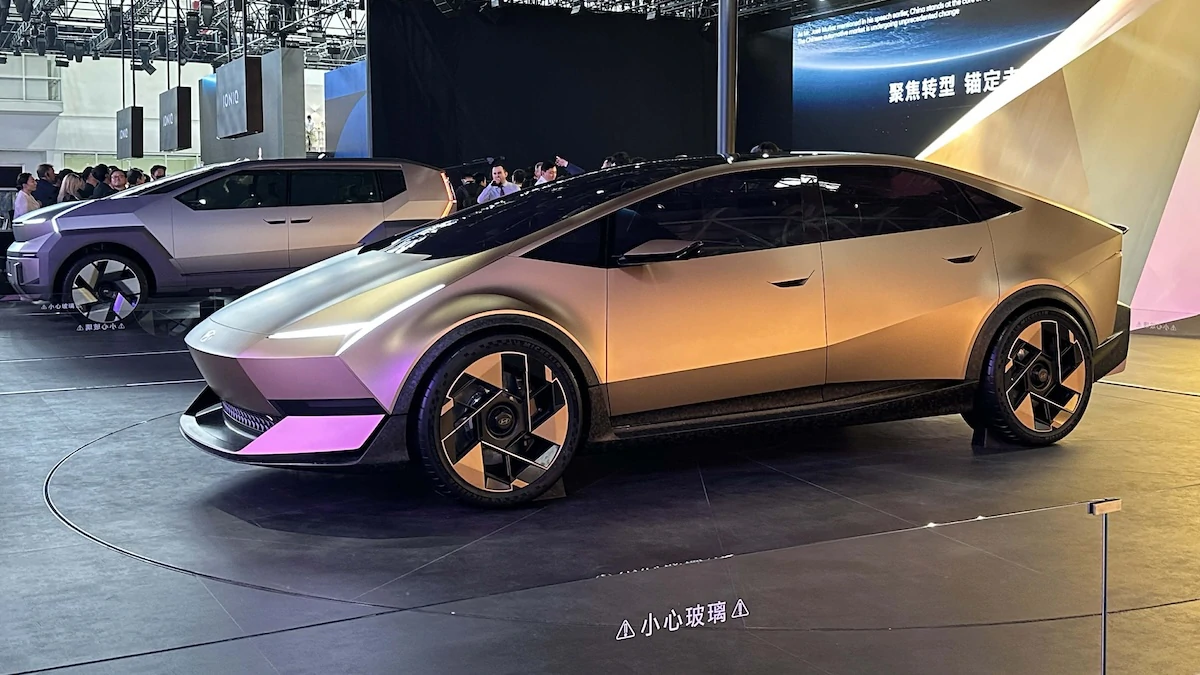
This model represents the formal launch of Hyundai’s Ioniq sub-brand for China. While the manufacturer is moving forward with its ‘Art of Steel’ design language for global models, its Chinese cars will use a different approach called ‘The Origin.’ This was first seen in the Venus and Earth concepts earlier in April, with the Ioniq V progressing from the Venus as a production model.
The V appears almost identical to the Venus concept, retaining its wedge-shaped body and “single-curve silhouette.” The headlights also keep their characteristic look of appearing embedded into the car’s seams. The show car on display at Auto China appears to be in the Venus concept’s Radiant Gold exterior, but it’s unconfirmed if customers can spec this metallic finish.
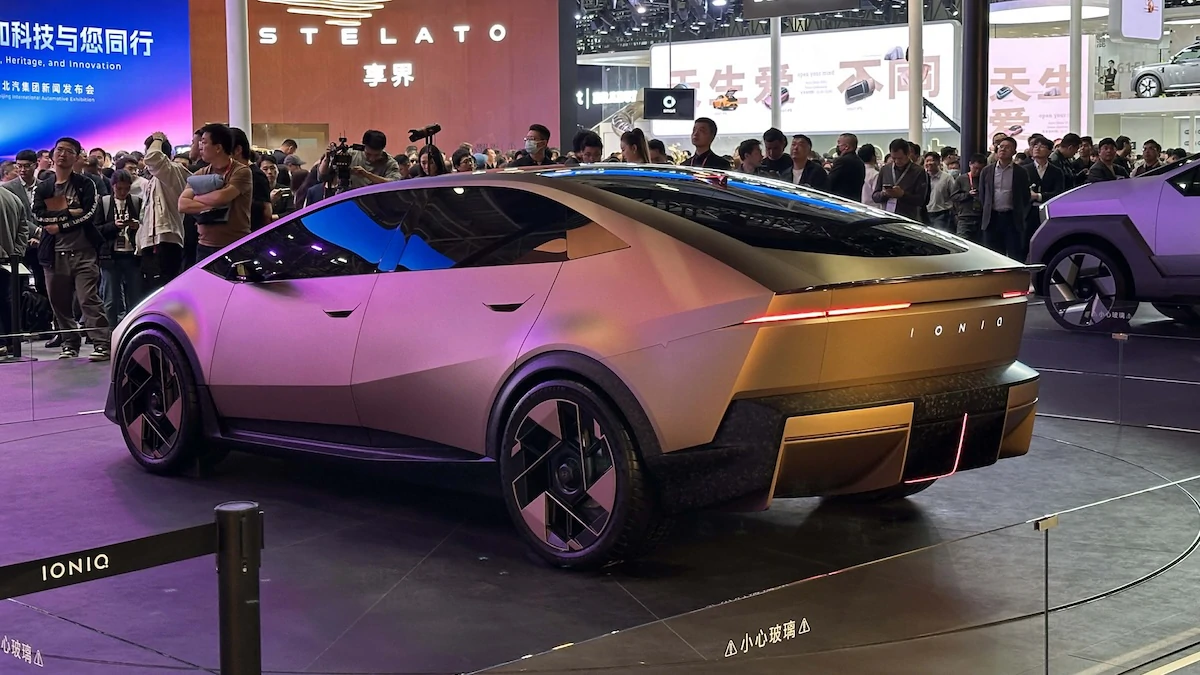
While power and battery figures haven’t been made available yet, Hyundai has claimed the Ioniq V to be capable of 600km of CLTC range.
OTHER STORIES YOU MIGHT HAVE MISSED:
Hyundai debuts new design language and tech with the Ioniq 3 at Milan Design Week
Honda to stop selling cars in South Korea at the end of 2026
Hyundai describes the interior of the Ioniq V as a wraparound, versatile, and user-centric space. In the cockpit, a massive 27-inch panoramic display houses infotainment and system functions. There’s also the Horizon head-up display or ‘H-HUD’ that focuses on projecting key information to the driver’s natural field of view while on the road.
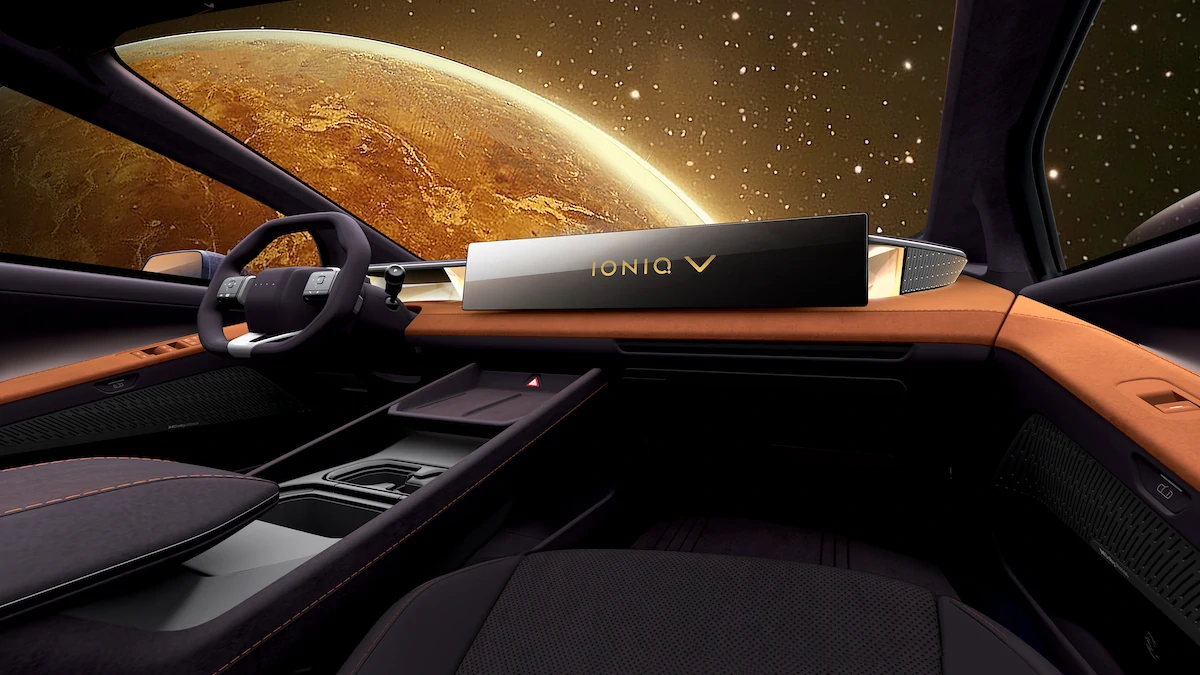
Another highlight is the class-leading amount of interior space available: 1,078mm of legroom and 1,502mm of shoulder space for the front row, and 1,019mm of legroom and 1,473mm of shoulder space for the rear passengers. Rounding out the interior refinements are an eight-speaker Dolby Atmos audio system and “enhanced noise-reduction measures.”
Hyundai has made it clear that it sees the Ioniq V as a cornerstone to its ‘In China, For China, To Global’ strategy. That said, the strategy also involves using China as a springboard for other markets Hyundai competes in—so could we see this EV on our roads one day?