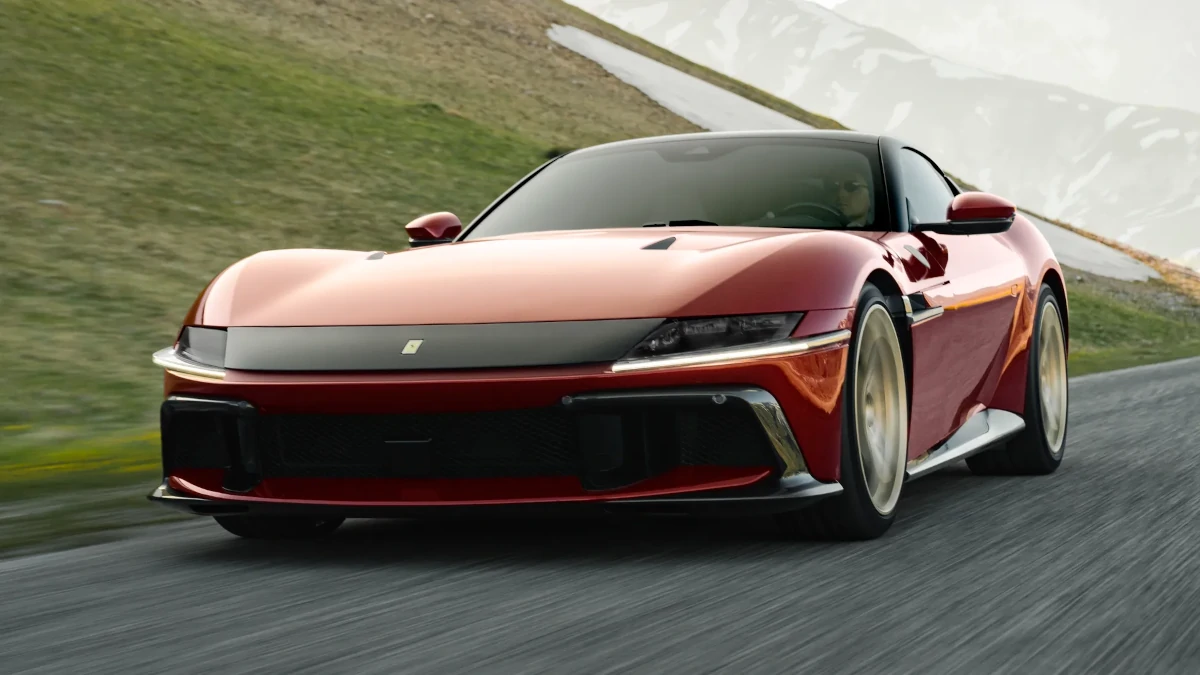
You’re looking at a new-slash-old kind of Ferrari—the Ferrari 12Cilindri Manuale. As the name suggests, a naturally aspirated V12 with rear-wheel-drive and an iconic, open-gated six-speed manual. A rosy glimmer of simpler times. What they used to call ‘the good old days.’ Except it isn’t, because this car also has the use of a more usual eight-speed dual-clutch transmission with the paddles lopped off the wheel. Which sounds odd, but the reality is almost stranger than fiction.
Let’s get the big stuff out of the way first. The 12Cilindri Manuale is a car that features multiple strata of operation. From the inside, it simply looks like a manual, the click-clack gated version that fueled many a Rosso Corsa pipedream back when paddle shifters were an anomaly in cars, let alone Gran Turismo. There’s a clutch pedal nestled in position in the footwell, an anachronism in 2026, but somehow a glorious sign of the times. It’s not ‘retro,’ it’s just more fun.
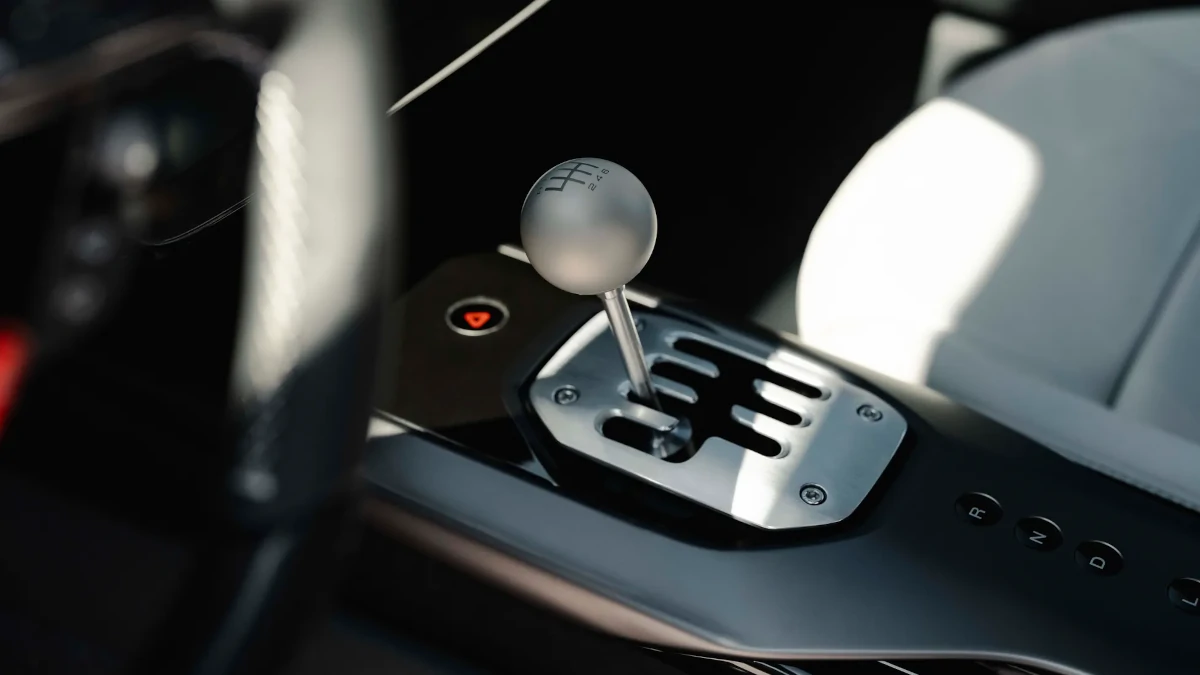
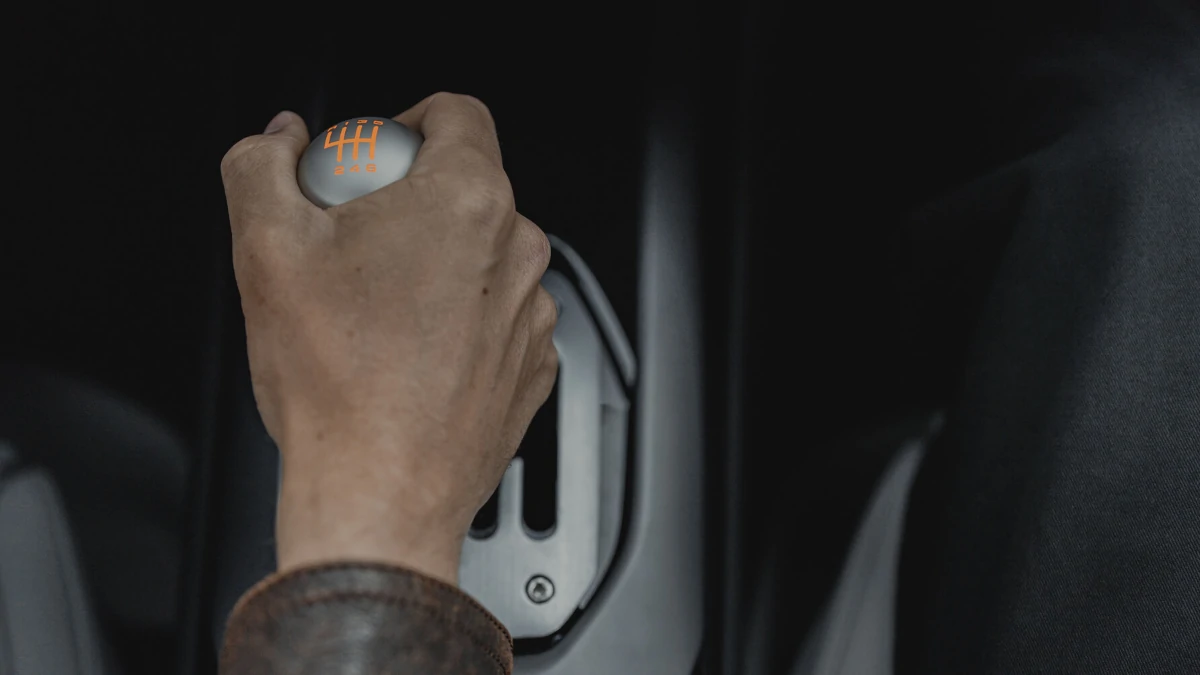
And that’s exactly what Ferrari is reaching for here—not more power and speed, but more involvement for those people who like a bit more interaction when they want it. But not when they don’t, because all is not as it seems. There are automatic buttons behind the shift plate—the usual PRND, and it’s a simple button press to switch from manual to auto, and the top of the gearshifter’s engraved six-speed logo goes from amber (manual) to white (auto). At which point this car becomes an eight-speed double-clutch automatic without the paddles behind the wheel.
OTHER STORIES YOU MIGHT HAVE MISSED:
First drive: The Porsche Taycan joins the ‘fake gear’ club with E-Shift
NSX, reincarnated: The JAS Tensei restomod will be a 35-unit limited release
All the usual driving modes apply, in either mode, and the ‘manual’ essentially uses the first six gears of the DCT—the last two being for cruising and efficiency, which you presumably don’t need the self-shifting for. So you get an auto when you need it, and a manual when you want it. Sounds like the best of both worlds.
The interesting thing is that neither the clutch pedal nor the gearshifter is attached to anything mechanical past their respective housings—they are merely the actuators for the DCT. But contained in both are the precise feedback associated with the operation of a manual gearbox. And it feels weirdly perfect.
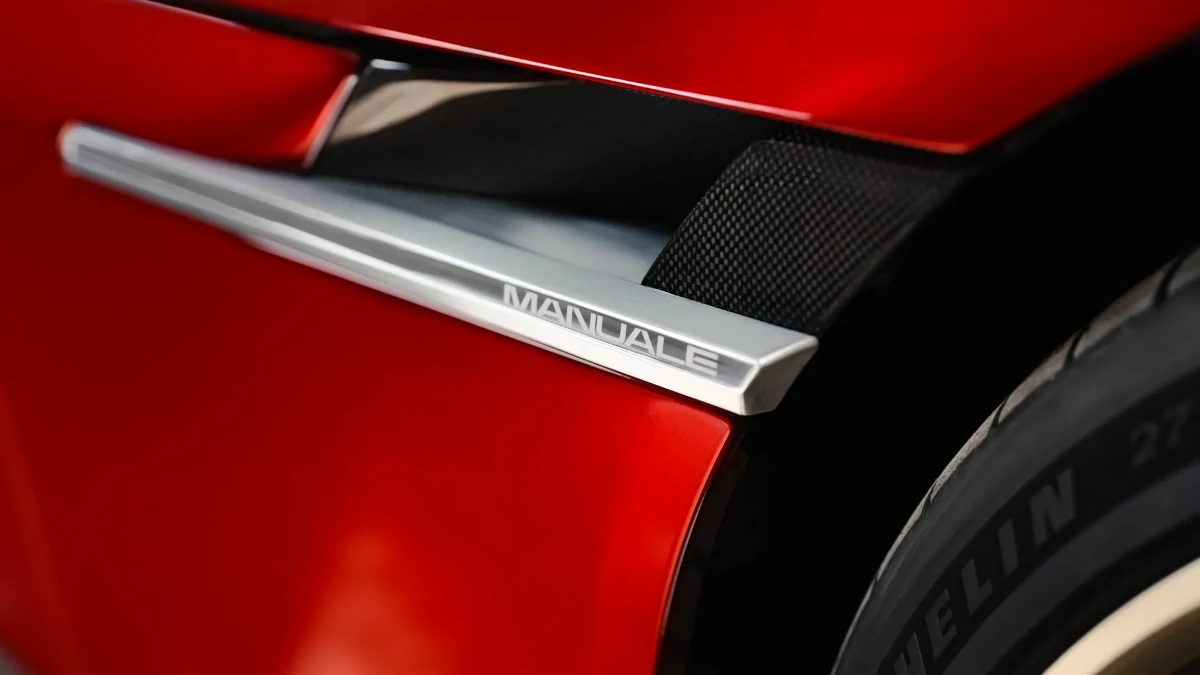
The tactility is the thing that reinforces the impression—there’s a familiar weight to the clutch (turns out it’s 15kg, the same as the last manual Ferrari, the 599), the same self-centered springing to the gearshift, itself the usual aluminum cylinder atop a slim wand of Ferraris of yore. The mechanical feedback feels exactly—and we mean precisely—as they should. And yet, that mechanical feeling is purely that—a system designed from the core block of machined billet steel to replicate the sensations of a manual while being connected by nothing but electricity.
It’s a true ‘by-wire’ system, so the gearshift and clutch only provide signals for the actuation of those first six gears of the DCT, plus reverse. And yet there’s such sophistication here that there’s almost force feedback from the pedal and stick. So precise are the algorithms that if you’re wonky with the inputs, you’ll be rewarded with a jerky start or even a stall—all part of the experience, says Ferrari.
The gearshift itself will pass into any gear that the engine has the range for, but try shifting into second at 160kph and a locking mechanism prevents engagement, much like trying to slot second in a manual car might offer massive resistance. And if you preselect a gear when switching from auto to manual mode, the dash will show you what the revs are going to do once you engage. Static, playing with the control surfaces, you really would never know that this clutch and gearshift weren’t actually connected to the bits that make the car go. It’s the world’s most realistic sim rig.
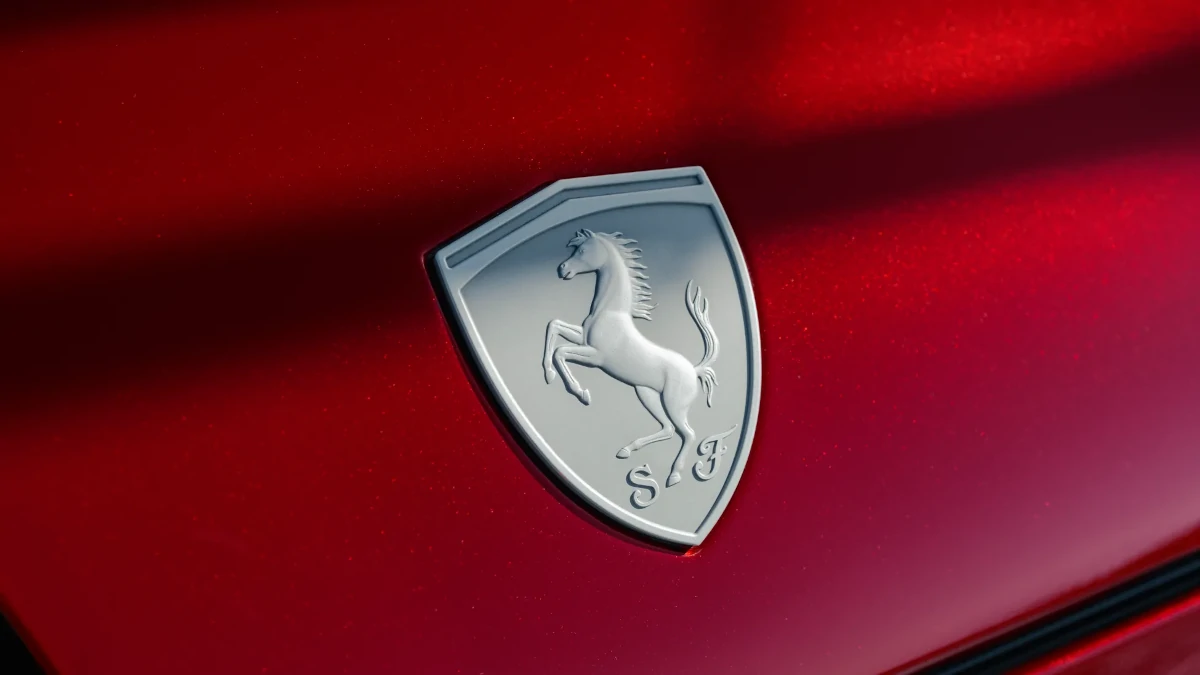
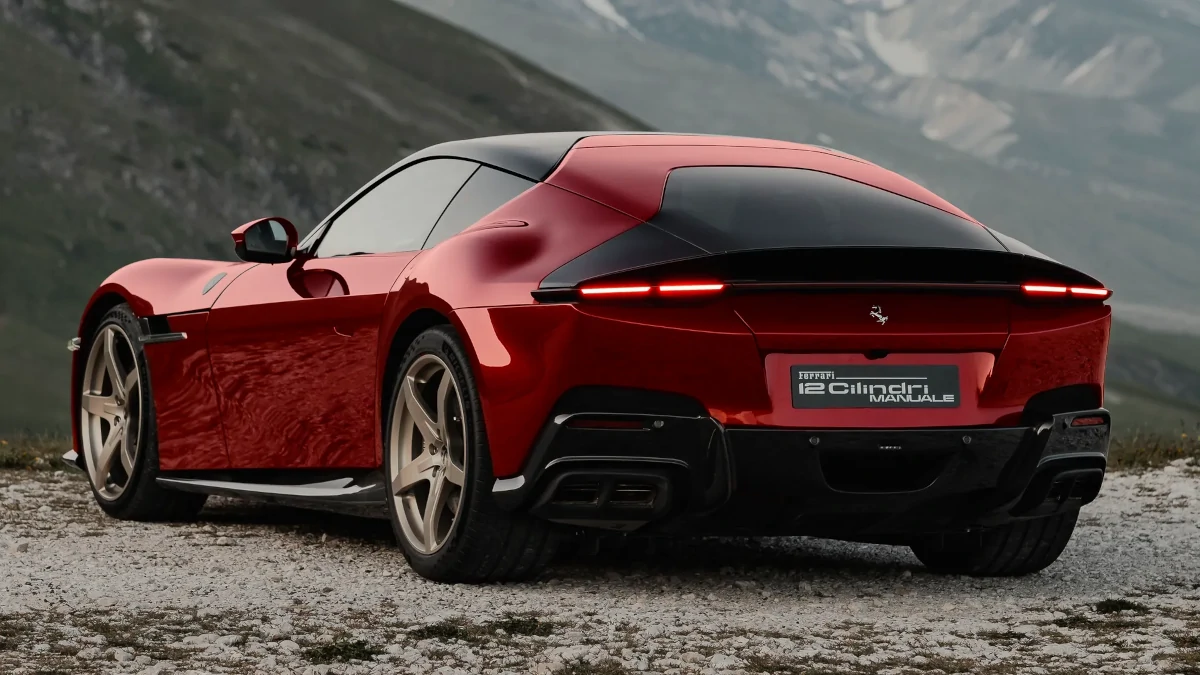
As far as the external mods go, it’s very much for those who know. All 1,499 cars go through the ‘Tailor Made’ program, so no car will be identical, and there are liveries that pay homage to the six-speed manual. Not into that? The 25 optional colors should make this car stand out, and the model-specific five-spoke wheels are a dead giveaway, no matter what finish—even the shiny chrome versions, although very Los Angeles, are handsome.
After that, the ‘Scudetto’ (literally ‘little shield’) on the 12Cilindri’s front wheel arches is laser-etched using the same process as the carving of valuable coins, and there are pinstripe elements in the front black mask and on the rear active spoilers that bracket the rear windscreen. There are also the more obvious badges on the sill kickplates (either engraved on aluminum or painted on the carbon optional trim), and on the interior. The inside gets the aforementioned badges, seats with six stripes embroidered into the backrests, as well as that bespoke center console that resembles a giant tuning fork. Nothing looks unnatural or out of place, almost as if it were the original design.
Interestingly, Ferrari reckons that with a ‘skilled driver,’ the performance figures are the same as the DCT (0-100kph in 2.9sec), which inevitably begs the question as to whether the DCT is actually fast enough, seeing as the justification for DCT across the board was that it was always faster than a self-shifter. Or perhaps the accuracy of the by-wire means you can shift with a level of mechanical unsympathy not possible with traditional gears. Power and torque remain the same from the 6.5-liter naturally aspirated V12 at 820hp and 677Nm.
There’s something going on here, though. If you’re being cynical, you might think that Ferrari’s keenness to launch the Manuale just after the controversial launch of the all-electric Luce feels like the PR department making the point that Ferrari still knows how to burn dinosaurs with the best of them. But the Manuale was planned—and apparently comes from customer demand.
When questioned, Ferrari says that a manual system wasn’t previously capable of handling the power and torque of its engines—and so wasn’t considered—until it started work on this new variant. A gearbox option that could be applied to pretty much any of its cars. A 296 without the heavy hybrid and a Manuale application? Now that would be a thing.
The only real red flag is the fact that the pseudo-manual gearbox commands a premium of €190,000 (around P13.4 million; prices are still a little TBC regarding local taxes and the like) over the standard €400,000 (roughly P28.1 million before taxes) 12Cilindri with the normal ’box. Although they will all be Tailor Made and technically Special Series cars, so that might explain a little of that away.
Still, this is Ferrari making fascinating retro-technological leaps to add involvement and convenience at the same time, which we applaud. But as ever, the proof will be in the driving.
NOTE: This article first appeared on TopGear.com. Minor edits have been made.