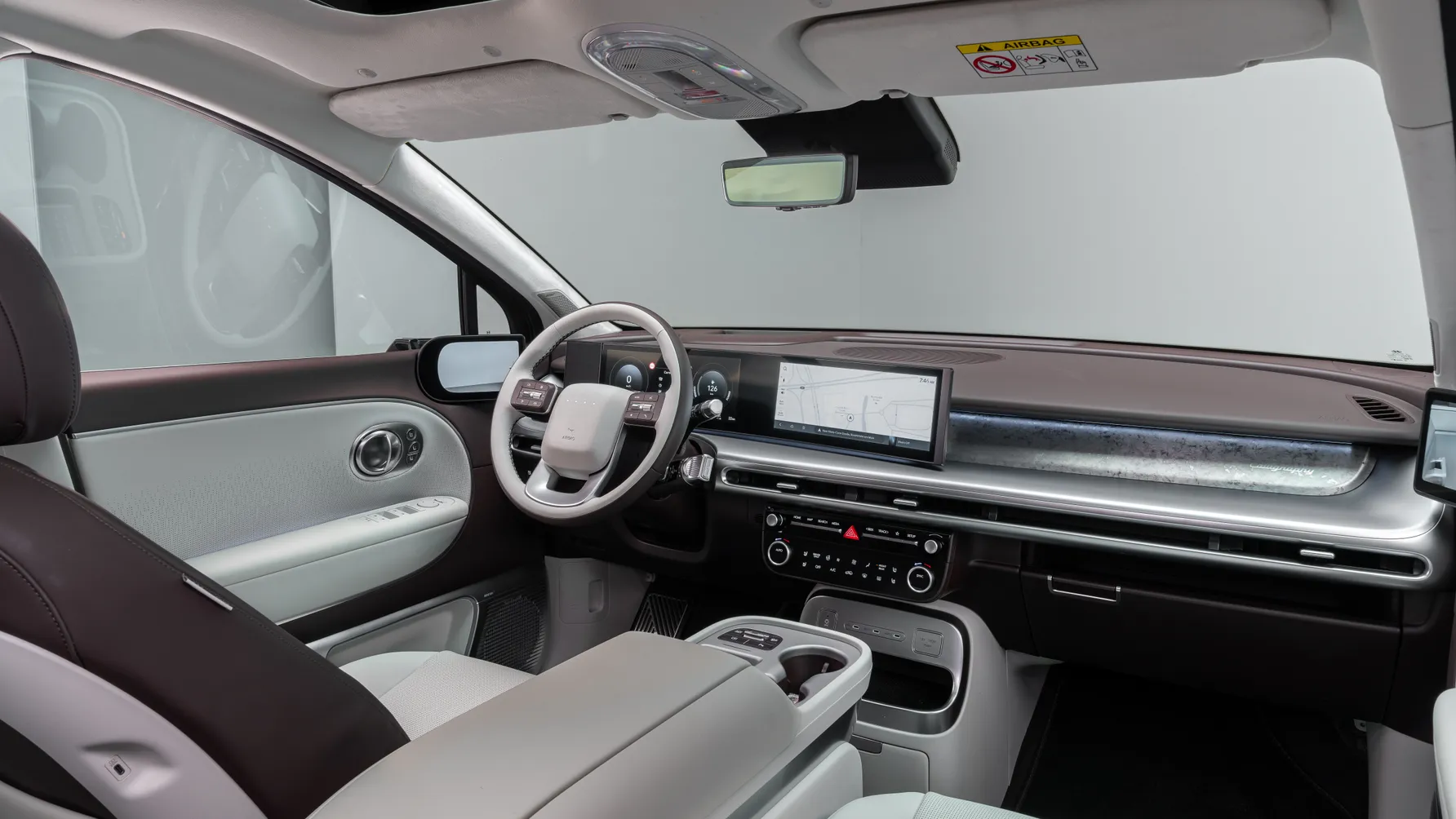
The boss of Hyundai design believes in real, physical buttons inside a car that adjust the fan speed, turn the air-conditioning on, change the volume, and adjust the temperature. Just like ye good old days before...touchscreens took over.
Of course, his latest missive—the rather massive Hyundai Ioniq 9—does have a touchscreen. But there are also real buttons and dials.
“It’s a safety issue,” SangYup Lee told us. “Okay, we’re talking about connected cars and digital content, but what is most important is safety. When you have your eyes on the road and your hands on the wheel, and you get into this [touchscreen] one layer, second layer, third layer...it’s dangerous.
“Having HVAC controls [on the touchscreen] doesn’t really make sense. It’s perfectly fine when the car is stationary, but when it’s driving you should be able to grab it without noticing it.”
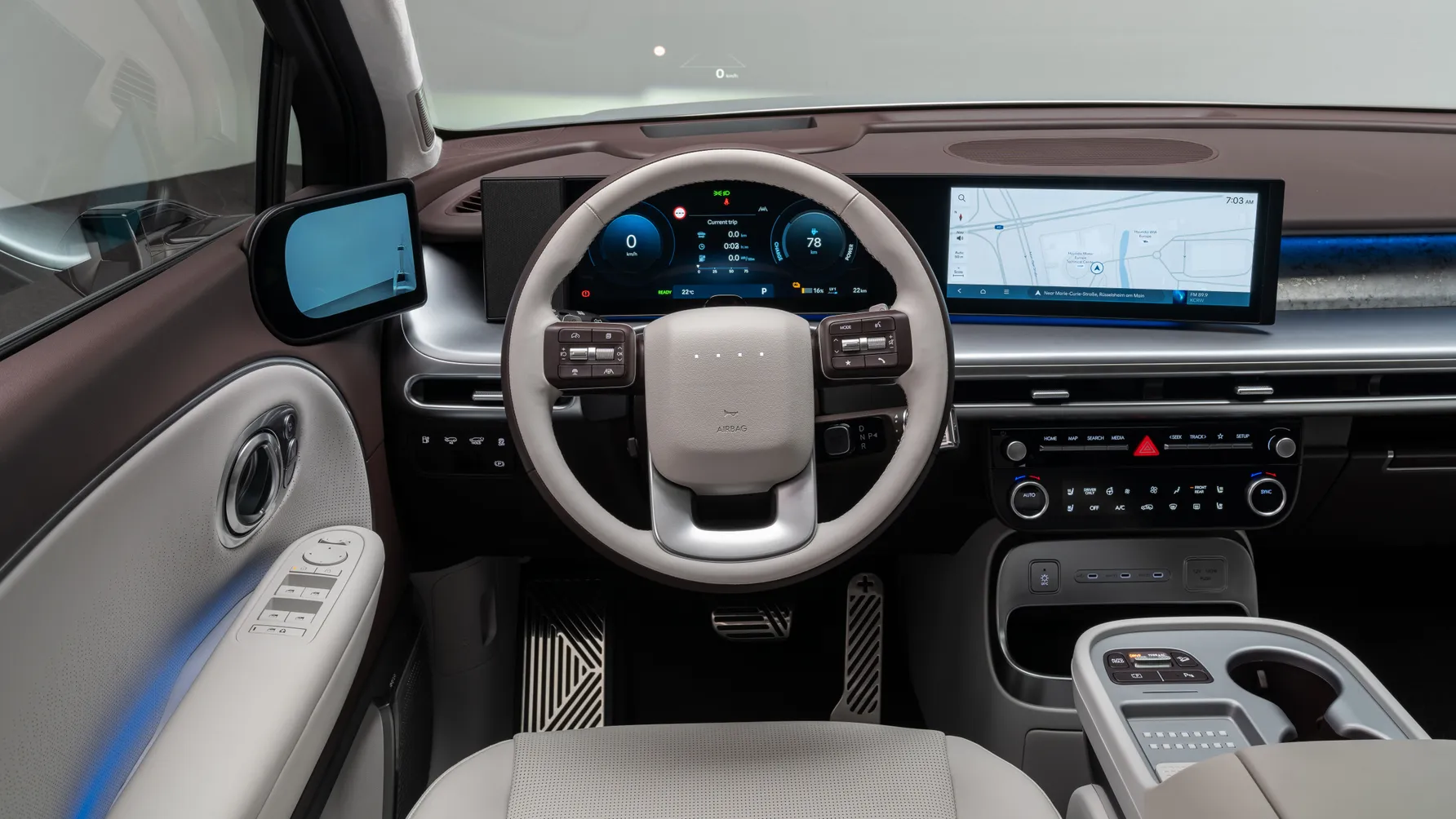
Simon Loasby, who works under Lee and heads the Hyundai design center, said the same thing: “All those major functions, without looking away and from a tactile perspective, you find it and don’t have to look away from the road. At a maximum, it’s a glance away. We try and keep the eyes on the road as much as possible. You’ll see that develop in the future as well.”
OTHER STORIES YOU MIGHT HAVE MISSED:
First drive: The new Honda Civic is proof you shouldn’t count out sedans
Confirmed: Ford Ranger Super Duty to get F-250 goodies
Loasby notes the Ioniq 9’s AI-optimized voice interaction, but notes that not everyone is on board with that. “The backup is physical buttons so you can just find what you need. That’s our approach across all of our Hyundai products.”
Lee extrapolates this micro into the macro: “It’s not really about styling—it’s about form following function.” And he’s got a novel way of discovering this form. Time for an anecdote.
When he’s in England, he likes a quick pop down to a massive supermarket carpark to see how shoppers interact with their cars. “We don’t really utilize the power of customer needs in automotive design that much. Whenever I go to London, I always stop by Tesco.”
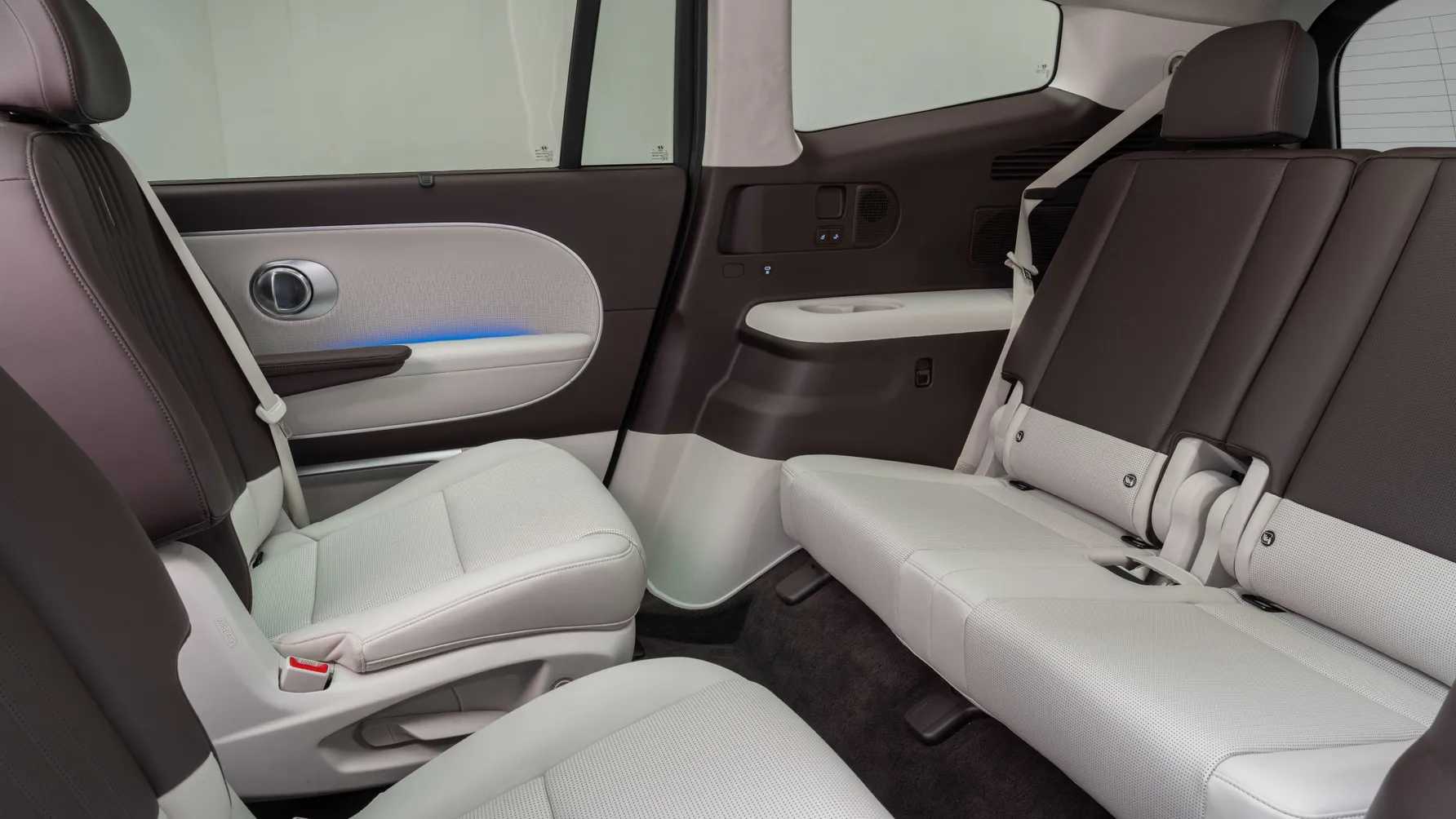
Speaking of which, the ‘universal island’ center console can slide right the way back, so if the Ioniq 9 is in a narrow spot in said supermarket, the driver can easily cross over to the other side to get out.
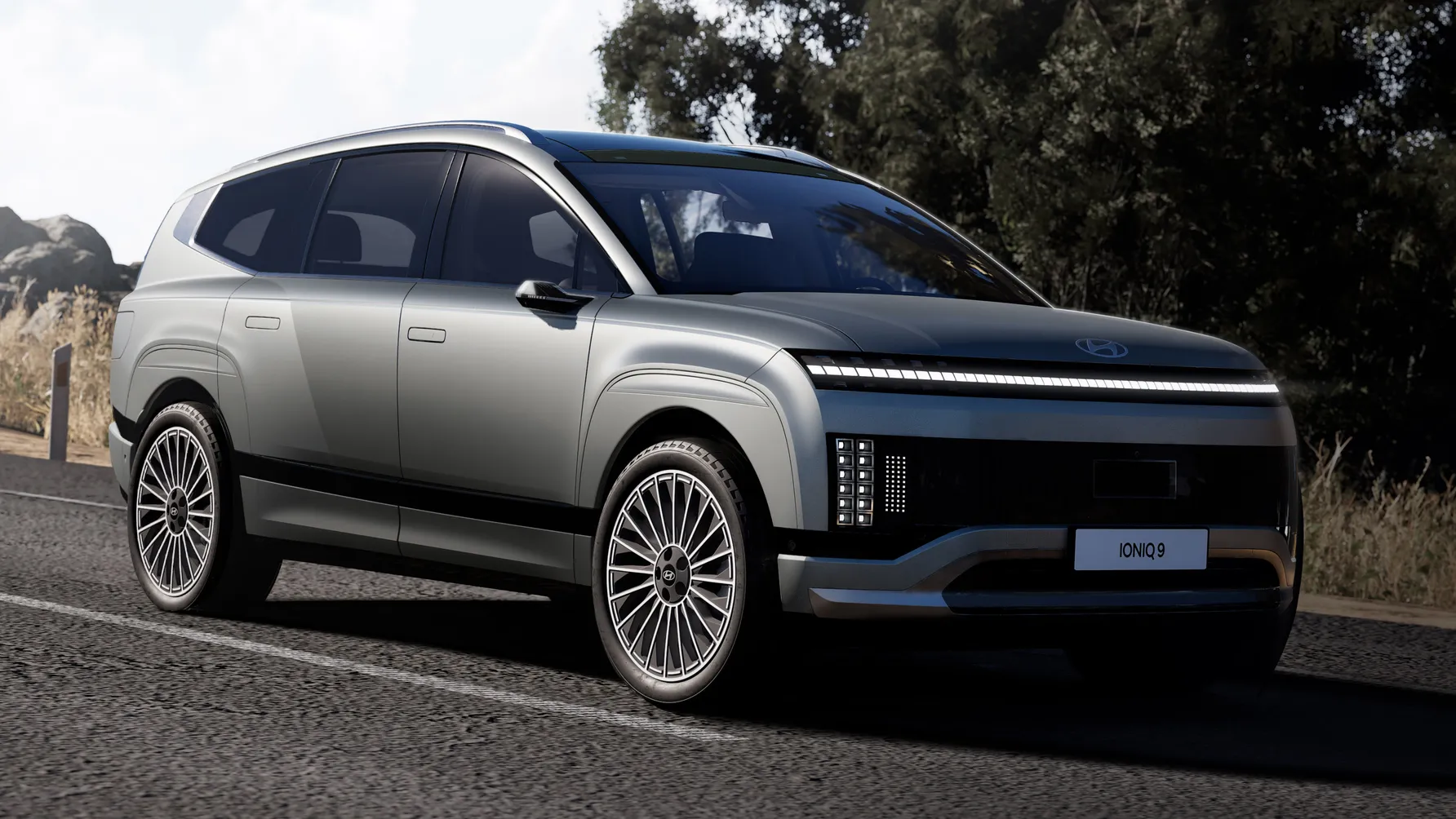
It’s the biggest Hyundai yet—more than five meters long, extremely tall, wide—so how did Lee hide its bulk? “It’s a big car, yes. Definitely has a presence,” he agreed. “But I didn’t want to create a waste of space and material.”
Time for another anecdote. About buttons: “Whenever I go to London, I always stop by my good friend Thomas Heatherwick’s studio, and we talk about this—we talk about ‘human scales.’
“He creates amazing buildings, but who’s going to see that building from the top down? At the end of it, people get more friendly with the buttons on the elevator. He spent quite a bit of time on the elevator buttons, because we’re human.
“So if the building is too big, we get intimidated because we are human, and we are more comfortable on a ‘human scale.’ So a big car has presence, but for the user, it’s about the human scale, the attention to detail. We’re not only looking at design by seeing it, but you smell it, you touch it, haptics, every sense of it.”
And what about a sense of aggression that’s crept into modern car design? “Design is subjective. At the end of it, I don’t judge the design.” Another anecdote incoming.
“When Patrick Le Quément first designed the Renault Twingo, they did a clinic and people hated it,” he said. “Only 20% of people liked it. Marketing got panicked. Like, 80 people hated it, 20 people liked it. And they asked Patrick what market share they had in that segment.
“It was 12%, so he said, ‘Then I’ve doubled it.’
“The responsibility on the designer is to help others. Polarizing design, customers like it, very strong character, but at the same time what is the value that we’re creating for the customer?
“The lifestyle of ‘Gen Z’ versus ‘Boomer’ is completely different. So how can you have the same design to appeal to both generations? That’s not how I like to do it.”
NOTE: This article first appeared on TopGear.com. Minor edits have been made.