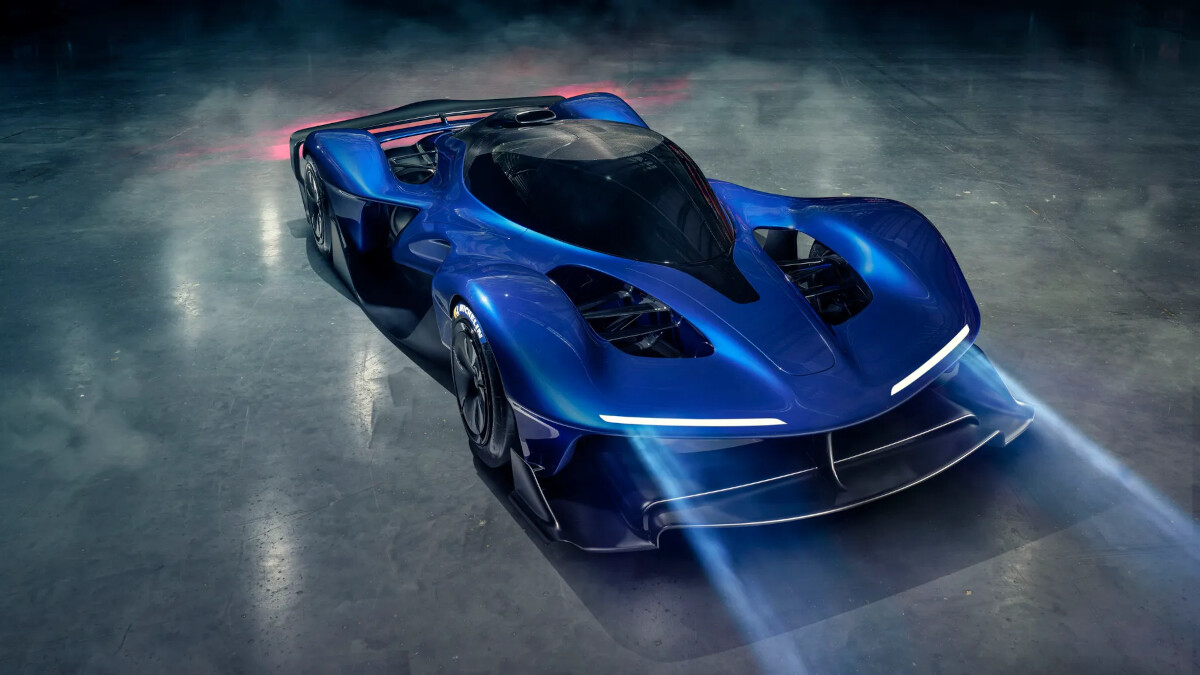
Turns out the Aston Martin Valkyrie was just the warm-up act. The Red Bull RB17 is Adrian Newey’s long-awaited non-Formula 1 car, a track-only hypercar into which he’s poured the contents of his planet-sized brain. It’s powered by a Red Bull-spec, Cosworth-made 1,000hp 4.5-liter V10 that can rev to 15,000rpm, aided and abetted by a 200hp e-motor. The name? When the pandemic stopped the world from turning, Red Bull didn’t run an F1 car called RB17. Now the lonesome badge has a home.
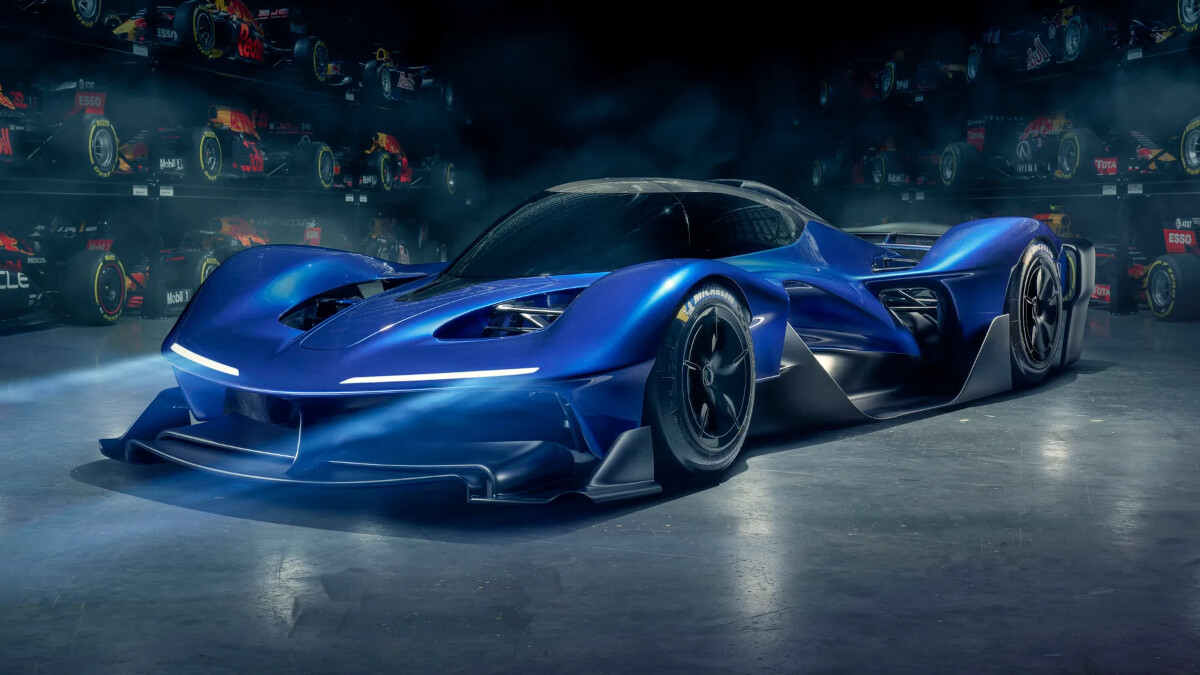
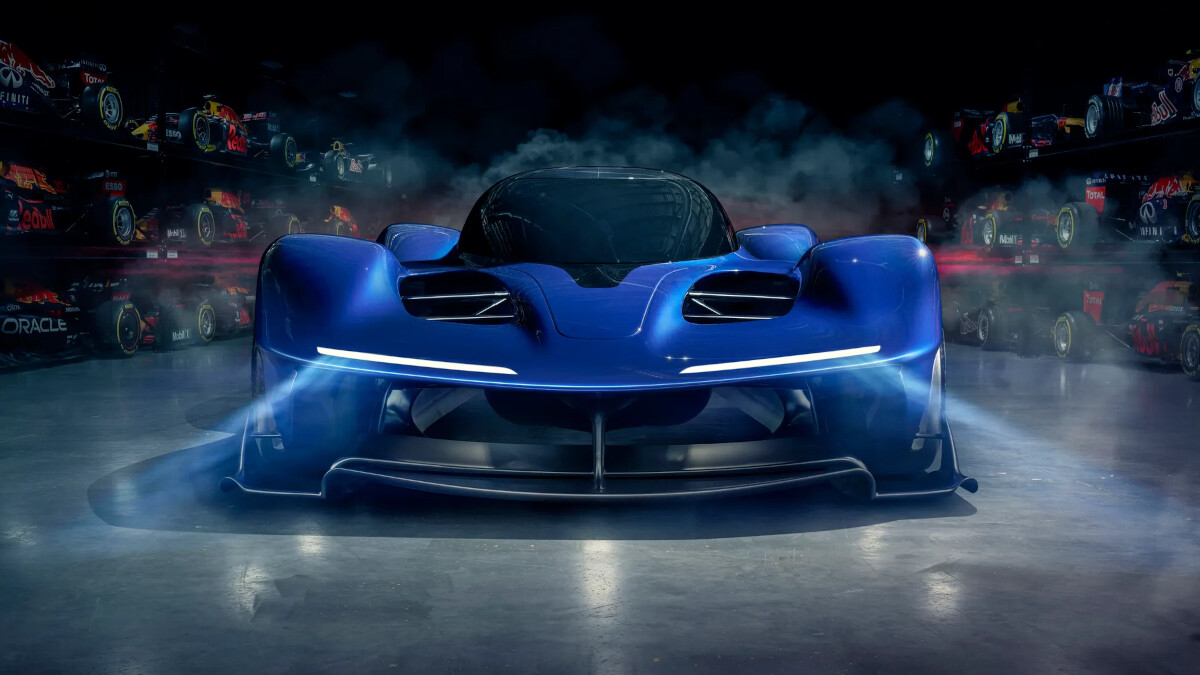
The target weight is somewhere below 900kg. Nonetheless, this is a big and imposing machine in the flesh, more than five meters long and two meters wide. It has side pods, an eyeball-hoovering detail on a shape that’s defined more by what’s missing than what’s actually there. Porosity: That’s the keyword, indicating lots of open spaces for hustling air to and from significant destinations.
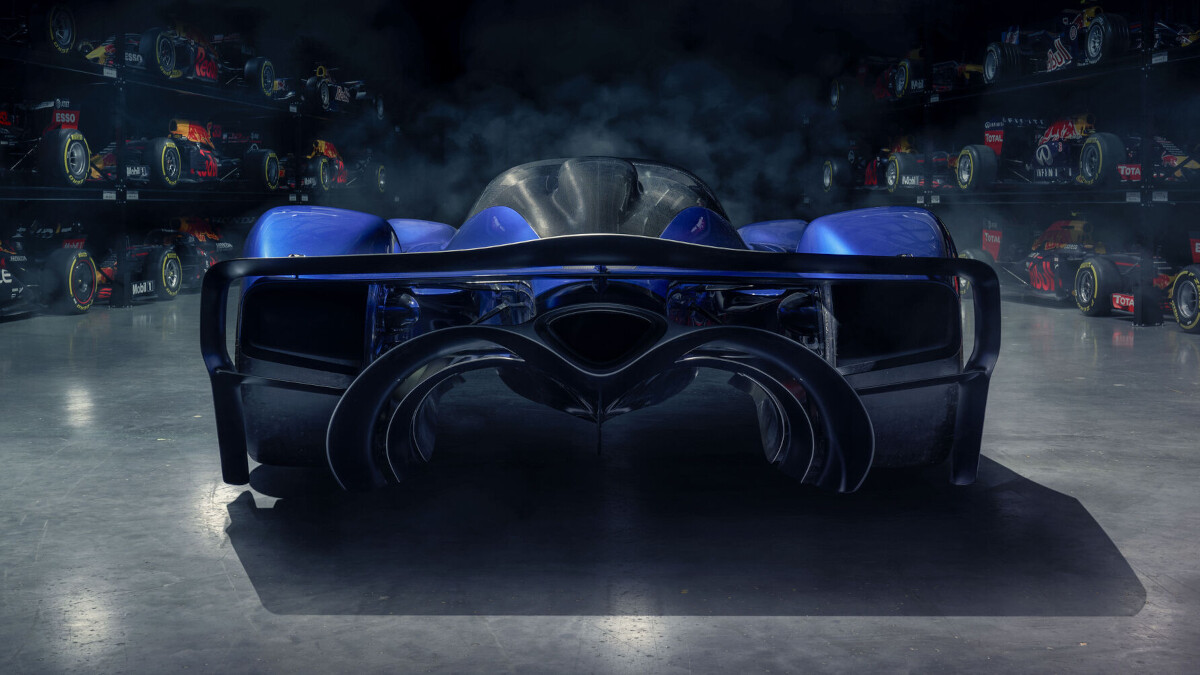
Even at rest, it looks busy. You can visualize the turbulent air around the front wheel arches being tidied up, before being redirected under the car and into a floor and tunnel of Byzantine complexity. There are two fans in there somewhere, too, transforming all this energized air into pure aero magic. Then there’s the full-width rear wing, there primarily to extract the air from the diffuser.
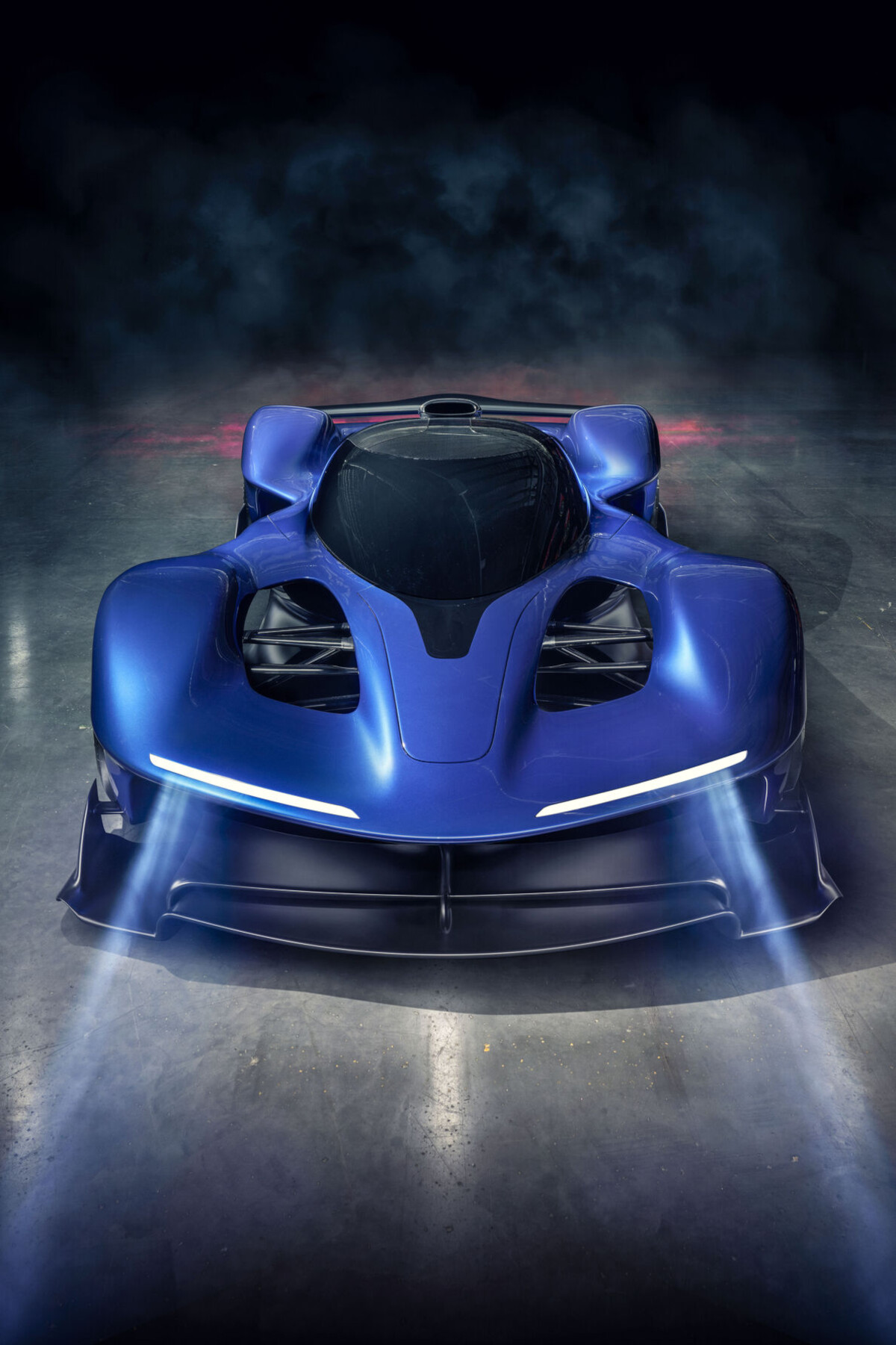
Unlike the superficially similar Valkyrie, the RB17’s singular focus has given its principal creator enviably free rein. The ultimate goal is to deliver F1-fast lap times and outrageous levels of driver engagement around the world’s best circuits, Silverstone, Spa, and Suzuka. And there’s room for two people in there, too.
OTHER STORIES YOU MIGHT HAVE MISSED:
Cyberster coupe-fied: Should MG go ahead and build the Cyber GTS Concept?
Gas-powered Porsche Boxster, Cayman to wave goodbye by mid-2025
The new car has some important antecedents. Remember the Red Bull X1, the car Newey designed for Gran Turismo 5 and Gran Turismo 6, back in 2010? A seed was most definitely sown, as he tells Top Gear: “It was a fantasy car. It didn’t have any CFD (computational fluid dynamics) or internal work. It was a first sketch that got turned into a styling model for a computer game. But it had the basic thought behind it, and it’s been gently ticking away in the back of my mind since then.”
The real thing moved center stage in the Newey cerebrum during Christmas 2019. Frustrated by the lack of decent snow during a ski break, he began drawing a hypercar. Perhaps surprisingly, aesthetics were high in the mix. “It’s my belief that cars at this level should be something you can treat as a piece of art or sculpture,” he explains.

“My career has always been performance-oriented, so when it comes to aerodynamics, you always go with what makes the car faster. With this, we wanted it to be a more rounded product in terms of the look, the sound, and the driving experience. The intent is the most important thing to start with. And that was to create a car that was capable of F1 lap times but at the same time be accessible to people—two people at that.”
About that configuration. Newey is unrepentant—he wants to share the love. “I do track days from time to time and it’s nice to be able to give passenger rides. With this car, you’ve got proper visibility, and the passenger seat is slightly staggered. Makes sense to do it that way and it’s an elegant solution. The wider cabin has weight and aerodynamic implications, but it was a penalty I felt we should take.” There’s even luggage space at the front, space for two sets of overalls, and room for a pair of helmets behind the cockpit.
The chassis is made of the most extreme carbon composite, as you’d expect. The car also uses active suspension, banned in F1 since 1994, but core to the RB17’s amazing capability because it offers such precise control over the vehicle dynamics. Simulations determined the minimal chassis stiffness that provided the best response on the suspension system. RBAT could have made the car stiffer, but that wouldn’t have made it any faster and risked making it heavier. The development team hit their dynamic and performance targets and were happy with the structural integrity—and the lateral bending stiffness.
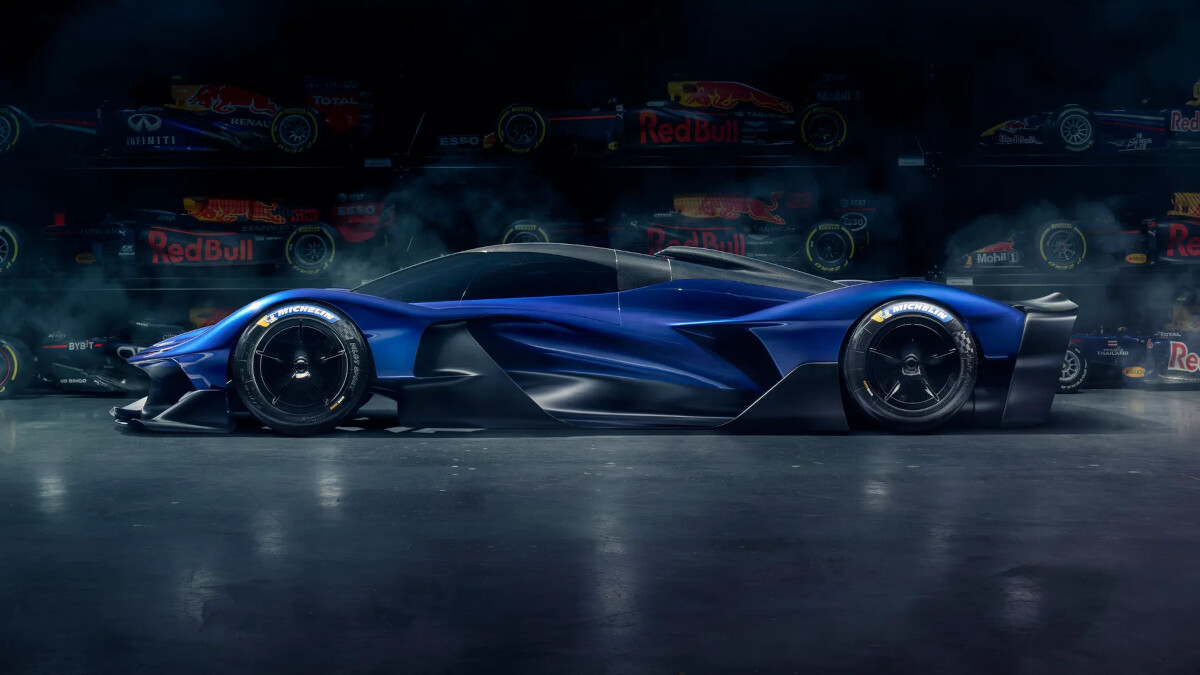
Safety is also a vital component. The RB17 takes its cues here from LMPH regulations not just in terms of stiffness, but also in what’s called the ‘overturning moment.’ The car shouldn’t suffer from such an acute degree of lift in the event of an accident or impact that it becomes fully airborne (YouTube is full of ’90s and early ’00s endurance racing cars doing exactly this). The team has managed to comply with these restrictions without ruining the car’s visuals.
“On the parts of the F1 car I’ve drawn—and that’s by no means all of it these days—part of the aesthetic brain does kick in, maybe even subconciously,” says Newey, who drew the aerodynamic surfaces by hand, in his usual old-school way. These were then transferred into CFD to visualize the airflow and understand the loads that were being generated. At that point, Red Bull hired a couple of RCA automotive design graduates to flesh out the surfaces, before submitting their proposals for more CFD analysis. If downforce had been sacrificed during the styling process, the aero guys could suggest ways of recovering it. Not a process that happens in F1.
So the RB17 is more of a looker than it could have been. But how do you make something capable of contemporary F1 lap times accessible to people lacking Max Verstappen’s insane reaction responses? The active suspension is key here, as is a graduated traction control system and a range of chassis modes. The software in that domain is still a work in progress, but active suspension is clearly a major win.
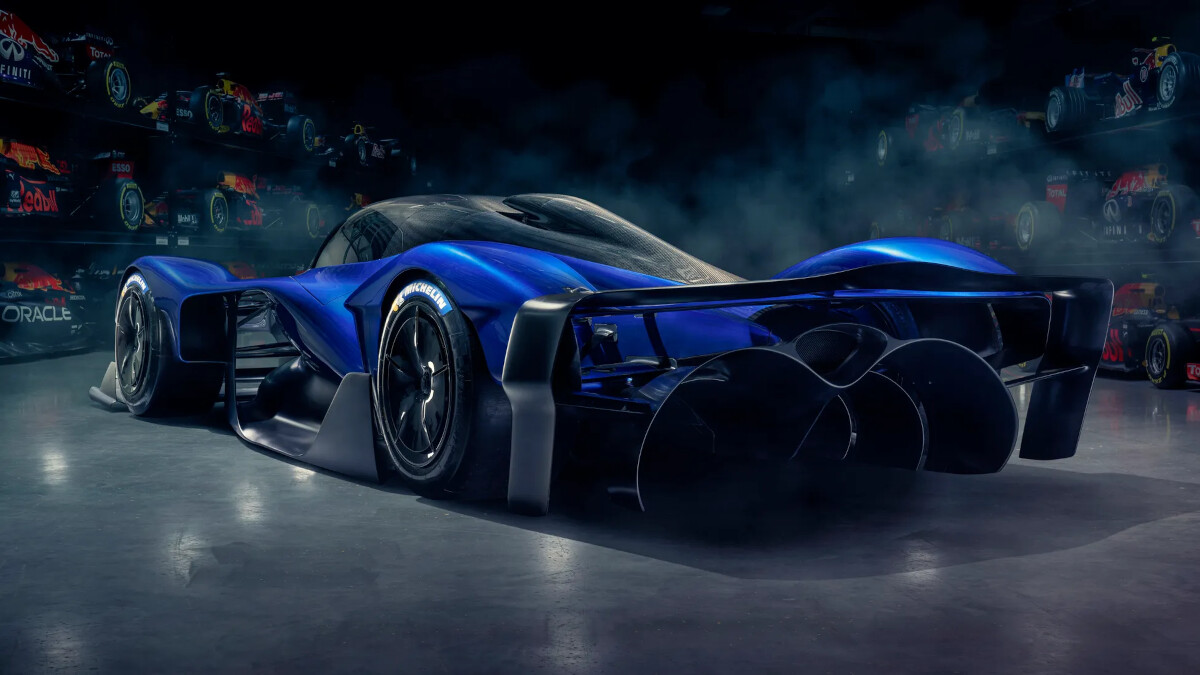
“It allows you to change the mechanical balance and your stability margin,” Newey explains. “Combined with the car’s active aero surfaces, it allows you to change the center of pressure [the ratio of front downforce versus rear downforce], which is quite far forwards in any case. And we will have knobs in the cockpit that allow you to do that on the fly, so you can have more stability on the entry to a low-speed corner or more stability at the apex of a high-speed one...it gives us tremendous flexibility.”
The RB17 is targeting 1,700kg of downforce at 240kph, and the floor is doing more of the work than on an F1 car because...no rules. And what of the tires, perhaps the limiting factor when it comes to such vast aero forces? Red Bull is working with Michelin on three different compounds. The most extreme tire is the ‘confidential,’ which is a bit peaky but offers huge grip. The standard slick serves up more slip angle and is less temperature-sensitive, and there will also be a treaded option.
A car with some bandwidth, then, but not one for drifting around in pursuit of Insta-fame. Newey is sniffy about it, although he’s not the chilly clinician he can sometimes appear to be. He’s also an accomplished historic racing driver, so he knows what oversteer feels like. “I wouldn’t suggest [the RB17] is the first car you ever drive on a race track, but if you turn out to have a lot of drive and determination, then you can get to extreme levels of performance. It has that adaptability.”
The gearbox is designed and assembled in-house, although the gears themselves are made by Xtrac. Shift times will be fast, though not as fast as the instant-shift setup in an F1 car, to avoid excessive harshness. A dual-shift setup would have been too heavy; this one uses sensors and software to learn where every gear and dog ring is, for high-power shifts without baulking or damage. The e-motor takes care of first and reverse, simplifies low-speed maneuvering, and adds 200hp and torque-filling when required.
In a similar vein, lessons have been learned from the aurally savage Valkyrie, so the V10 is a semi-stressed member rather than being bolted directly to the chassis. Compliantly mounting the engine added a small amount of weight, but it was a price worth paying. The RB17 also has to meet the noise regulations of as many circuits as possible, so it won’t exceed 105db. The exhaust is a 10-into-one setup, inspired by 2000’s Newey-designed McLaren MP4/15, a car he cites as the best-sounding F1 car of all time. Listen to the cars from that era and it’s difficult to disagree. Its steering is fully hydraulic and very similar in concept to an F1 car’s. It just took longer to get here.
“An F1 car is 12 to 18 months in development before it goes to the first test,” Newey says. “Work on the RB17 started in Christmas 2020, and we’ve been in the concept phase for three years or more. That’s allowed us to really quiz it, be self-critical, be careful on the direction we’ve taken, go off on a route, evaluate it, not be happy and change to another.”
This sort of gestation is not the norm in F1, and it means that the car you see here is effectively the third iteration before it’s even gone live. “It’s had three different engines, and it started off being all-wheel-drive, with the e-motor on the front axle rather than the rear,” Newey says. “Until our simulations showed it was better to be rear-drive, once you’re free of a weight limit. I was happy about that. Rear drive is easier to manage.”
Work on the interior is ongoing, although the seating configuration was frozen early on: “That was all part of the basic package. The available structural space is now fixed, and we’re working on the ergonomics, where we put the screens and switchgear. The interior is an important factor. We don’t want it to be a spartan race-car cabin. Physical buttons, definitely, especially on a car with this level of performance. Then there will be interior options.”
The powertrain is on the dyno, with development work gathering pace throughout the rest of the year. All the subsystems will have been proven out before coming together in the first few test cars, ahead of a track debut in summer 2025. Production is limited to 50 cars, all of which will be made at Red Bull’s ever-expanding technology campus near Milton Keynes. The manufacturing processes mirror those of an F1 car—another thing that underpins the RB17’s unique selling proposition. It will cost £5 million (P378 million before taxes).
Some will whine about the very existence of a car like this. Ferrari’s XX and Corse Clienti program is well-established now, including a version of the double Le Mans-winning 499 P, and Aston Martin, Brabham, Lamborghini, and McLaren have all had a go. Yes, some wealthy motorsports fans prefer classic racing cars, and there are numerous high-end single-make racing series for latter-day gentlemen and women racers. (NB: The first person to put their name down for an RB17 is female.)
But this car exists in its own space: a clean sheet, no-rules design from arguably the most influential technical guru in the history of motorsport. “This is the next level—several levels to be honest—on from [the Valkyrie] in terms of its performance,” Newey says. The main event has begun.
NOTE: This article first appeared on TopGear.com. Minor edits have been made.