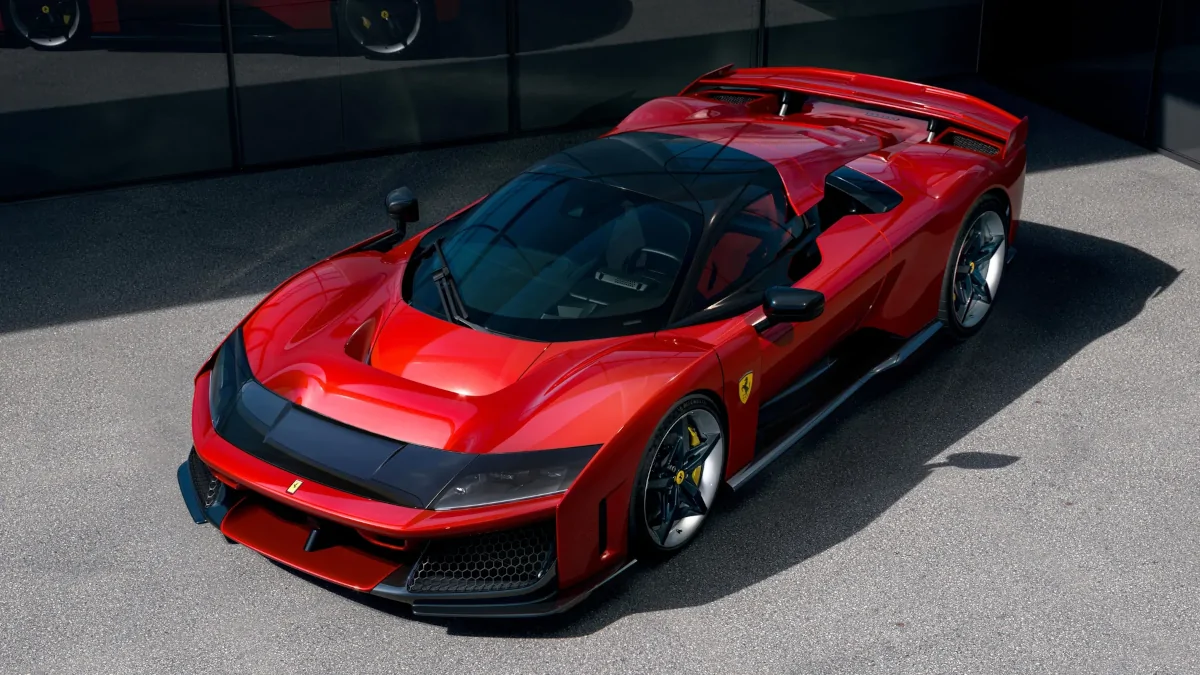
How the hell do you follow a 40-year bloodline that’s a rollcall of hypercar royalty? Let’s see...288 GTO, F40, F50, Enzo, LaFerrari, and now, F80. Yep, Ferrari bosses completely ignored Top Gear’s hypercar name generator and went with something sensible instead. The Ferrari F80 is a name that celebrates the company’s 80th anniversary, occurring in 2027, by which time they’ll be pumping out these £3.1-million (P233 million) hypercars to the 799 lucky owners who got the nod.
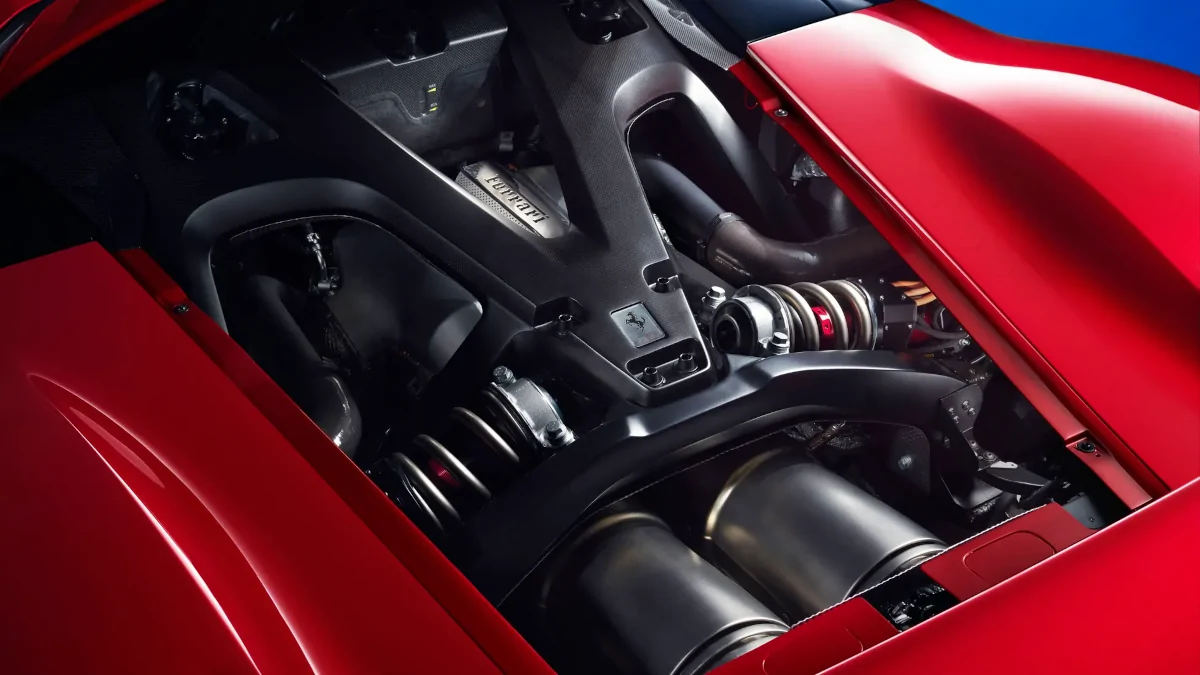
It is motivated not by a soaring naturally aspirated V12 like the LaF, but by a twin-turbo V6 hybrid powertrain, which is a bit disappointing, but the rationale is clear: This 120-degree 3.0-liter V6 is a heavily modified version of the one that took the 499P to back to back wins at the 24 Hours of Le Mans. It’s the configuration also used in Formula 1. Boxes ticked. It’s also more compact, power-dense, and lighter than a V12, and thanks to a pair of e-turbos (bigger blowers for more power at higher revs, but with electric motors to spool them up instantly), it produces 888hp on its own—that’s 234hp more than the 296 GTB’s V6, despite weighing the same.
The other 295hp—for a total of 1,183hp, making it the most potent Ferrari road car ever—comes from a trio of electric motors designed, engineered and built in-house. Two live on the front axle (meaning this is 4WD while the freshly minted and even more powerful McLaren W1 is RWD) and the third is bolted to the bottom of the engine and can deliver 70kW to the battery in regen mode, or an extra 80hp of forward thrust. The 800V battery is a 2.3kWh unit tucked behind the seats, infused with F1 tech for rapid charging and discharging—there’s no electric-only mode here. In fact, while gawping at the rolling chassis, we counted no fewer than 13 e-motors: two more on the 48V e-turbos, one at each corner for the 48V active suspension and four more 12V units in the wing to enable all that lift and tilt.
The performance is...strong: 0-100kph in 2.15sec, 0-200kph in 5.75sec, and a top speed of 350kph. Faster on both sprints than the McLaren W1 (although the W1 is closing the gap by 200kph), and with an identical top speed. Oh, and it’s posted a new Fiorano lap record of 1min 15.3sec—that’s 2sec faster than an SF90 XX Stradale and 4.4sec quicker than the LaFerrari.
The F80 shall not be short of puff, and clearly has the ability to bring racetracks to their knees, but Ferrari is adamant this isn’t just a track toy with numberplates. “Our philosophy is that even the most extreme and special cars have to be experienced beyond the race track, and not be kept in the garage,” Enrico Galliera, Ferrari’s chief marketing officer explained. We look forward to a lengthy F80 road trip.
OTHER STORIES YOU MIGHT HAVE MISSED:
Track drive: Lexus let us test its cars on the Shimoyama proving grounds
Is the Baja-inspired ‘Stroppe’ the best Ford Bronco special edition yet?
And what of the sound? Not as operatic as a nat-asp V12, sure, but Gianmaria Fulgenzi, chief product development officer offered assurances: “You might doubt me, given it’s a V6, not a V12, but trust me: The iconic Ferrari soundtrack remains.
“The e4WD system can masterfully manage and even encourage playful slides at the limit.” We’ve got the latest SSC 9.0 (Side Slip Control) software to thank for that.
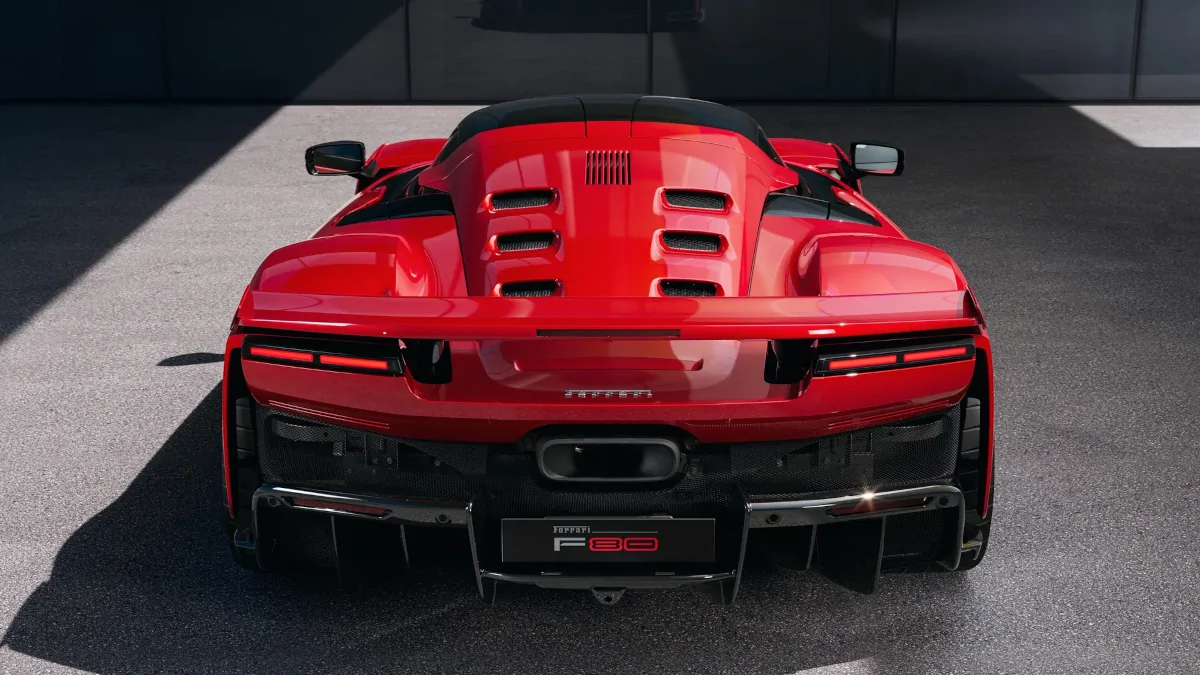
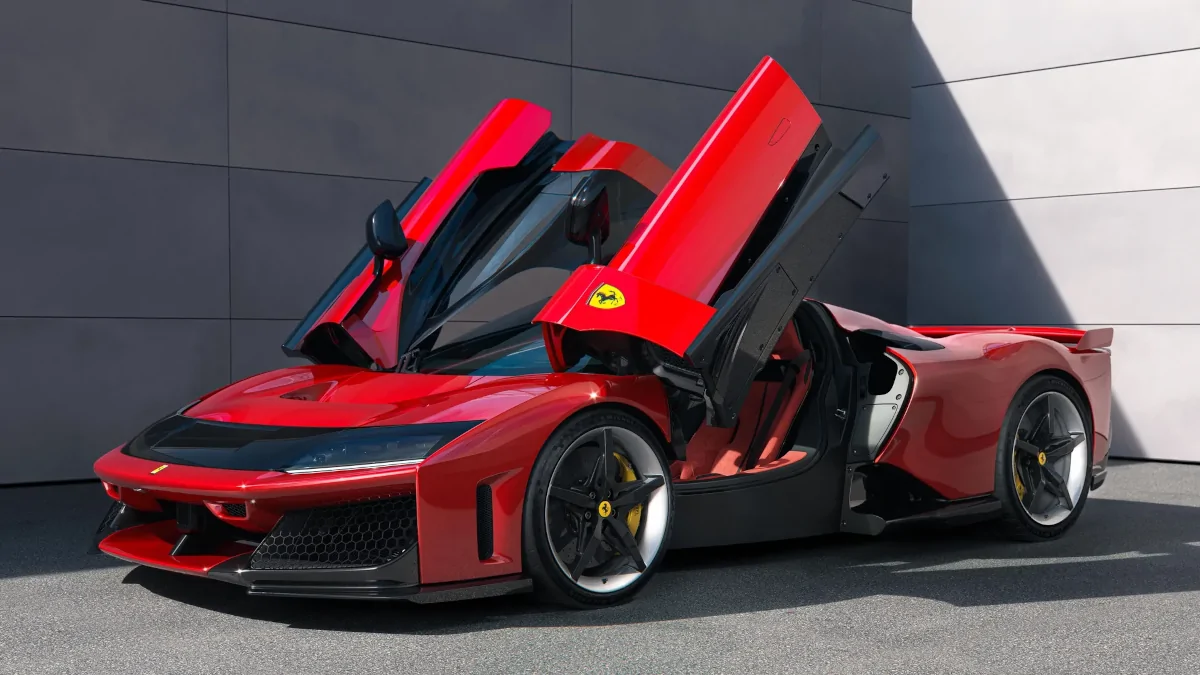
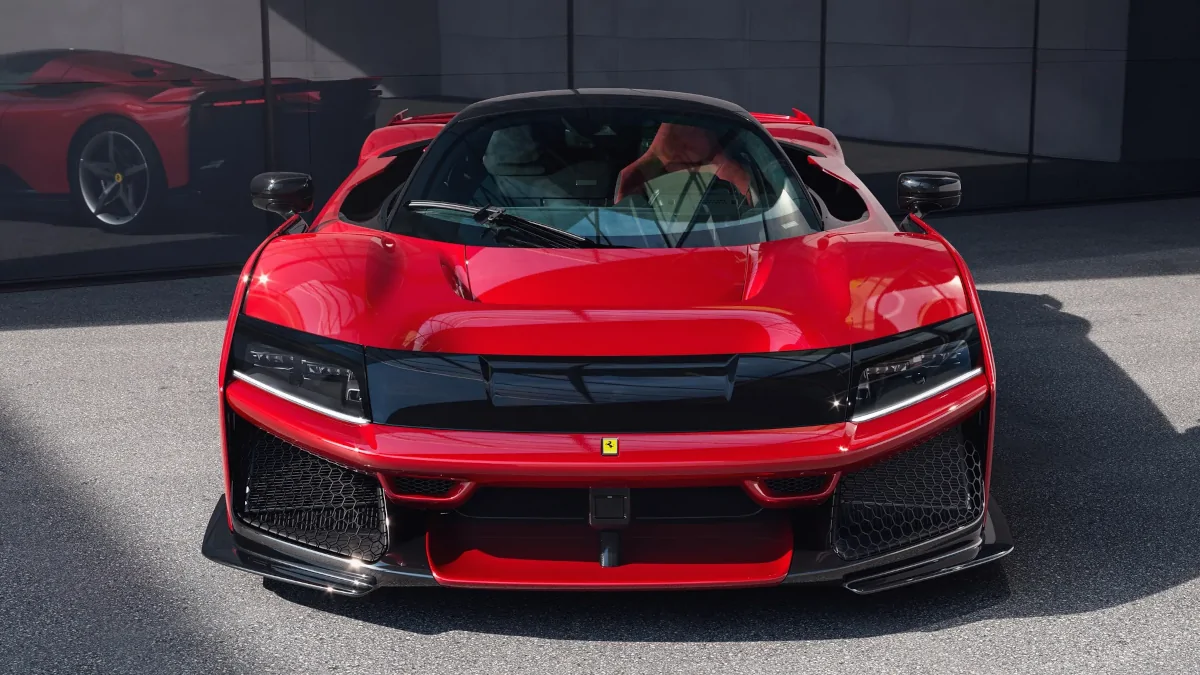
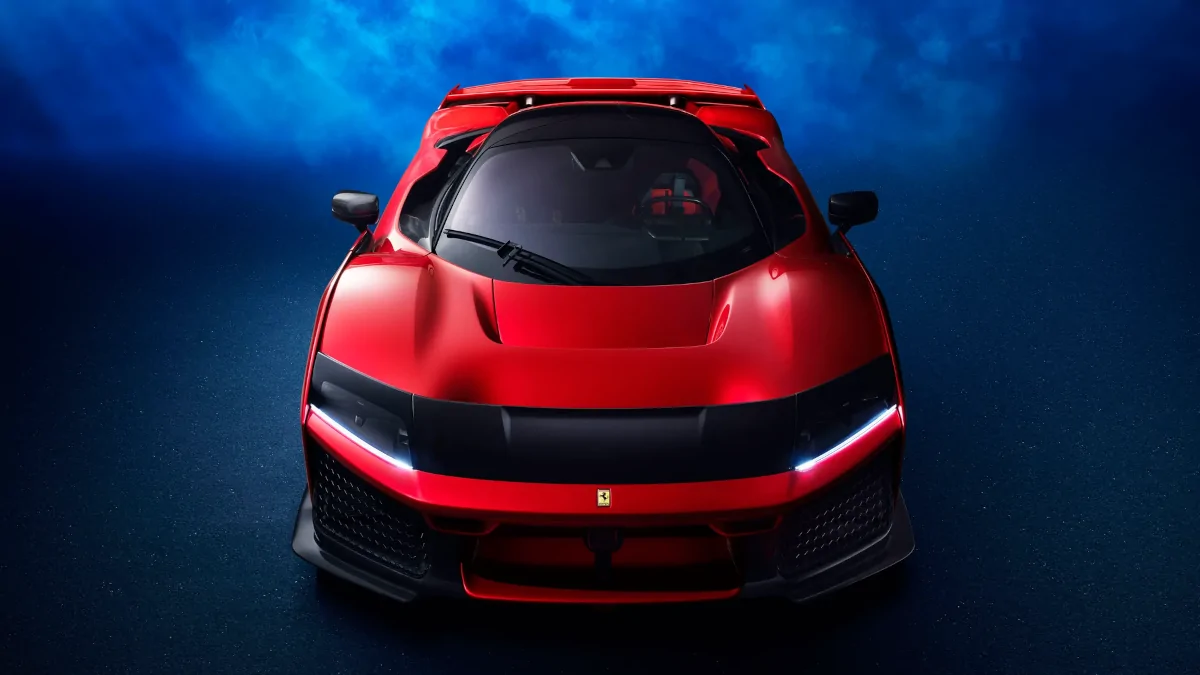
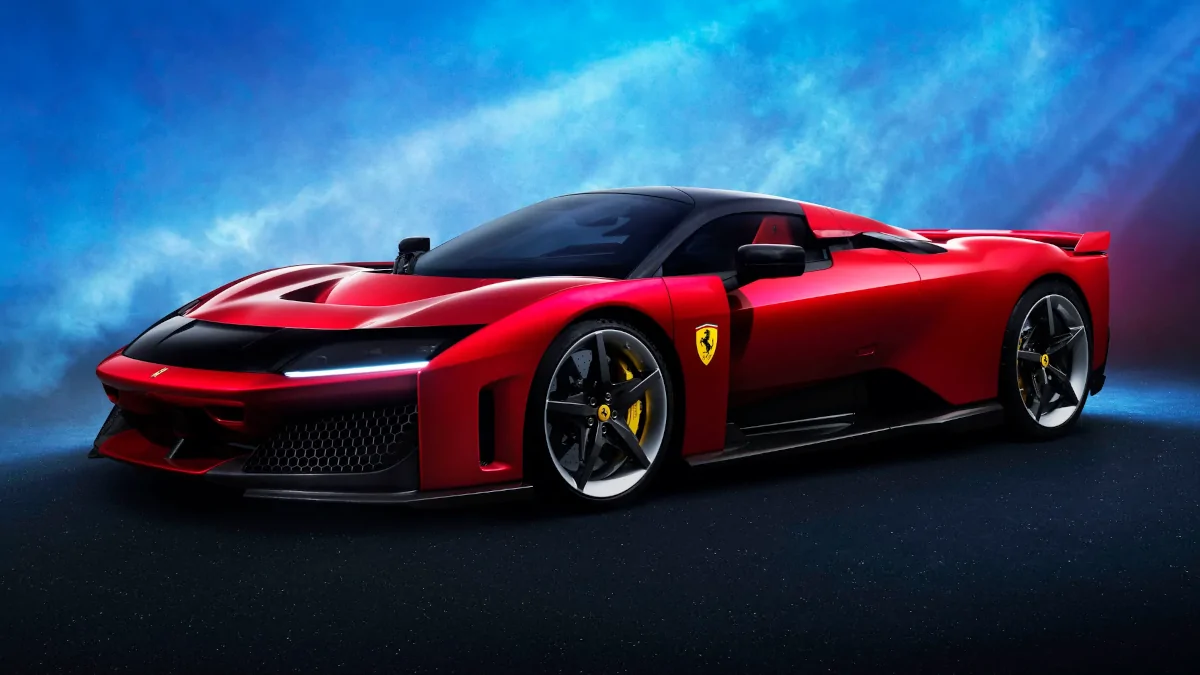
You’ll probably be scrolling through the photos right now, deciding whether you’re a fan of the F80’s aero-driven brutalism, 12Cilindri-style blacked-out nose, and monster active rear wing. It’s not necessarily a love-at-first-sight kind of shape, but one that makes more sense the deeper you dive into the tech going on underneath...especially the downforce, the new hypercar battleground, that defines and shapes every one of the F80’s surfaces.
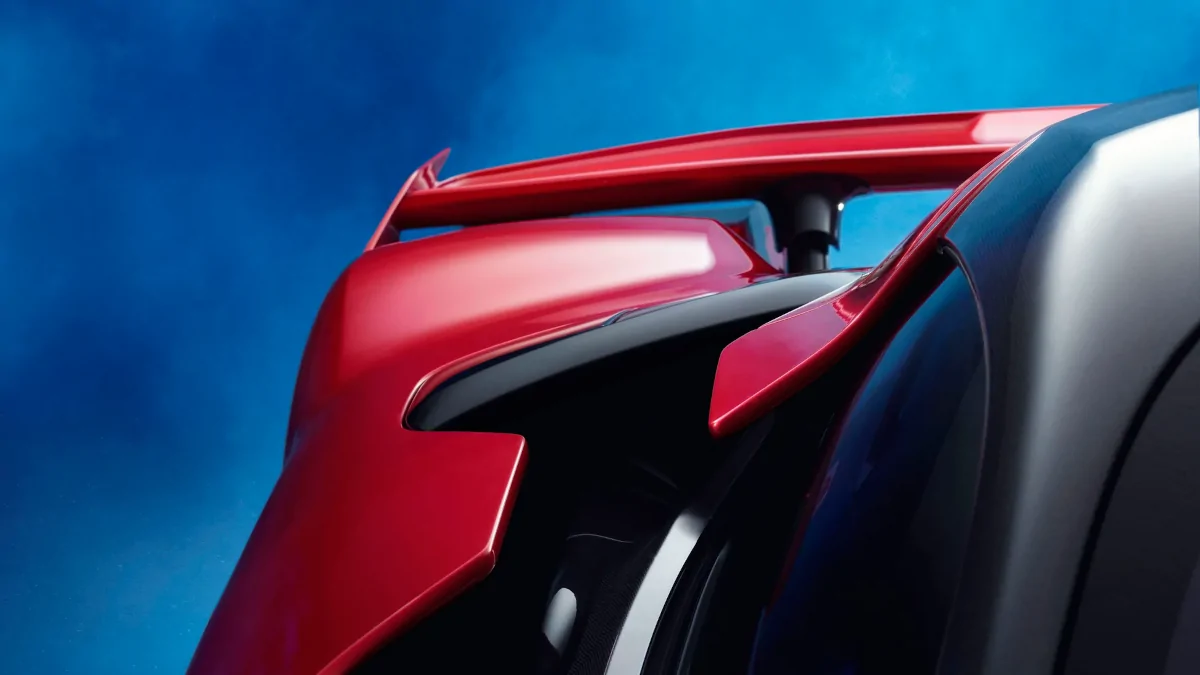
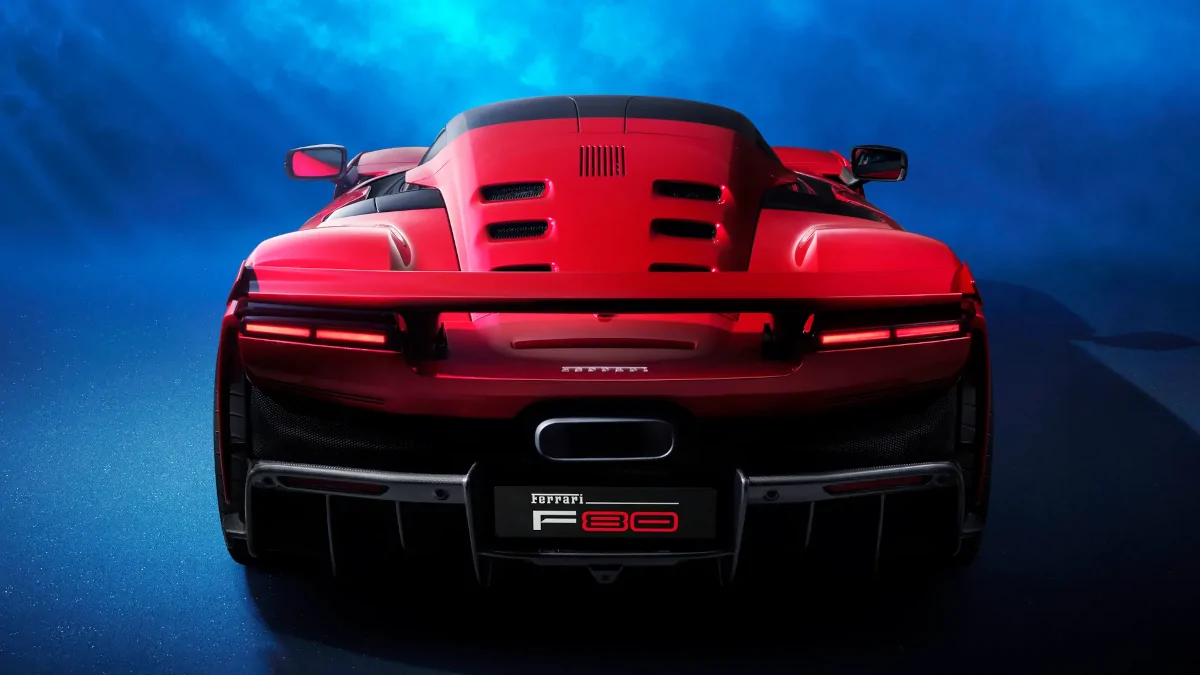
The raw numbers are impressive—1,050kg of downforce at 250kph—but how it gets there that’s the fun part. The underbody is laced with bargeboards at the front, a deployable flap under the front splitter to stall the air and reduce drag when required, and a whacking great diffuser at the rear that starts rising somewhere around the car’s midriff. On top, the familiar S-duct sucks air from under the car up and over it, while the rear wing can rise up by 200mm and tilt dramatically to act as an air-brake, or lie down for low drag. The result is a true ground effect car with 460kg of downforce delivered by the front end and 590kg at the rear.
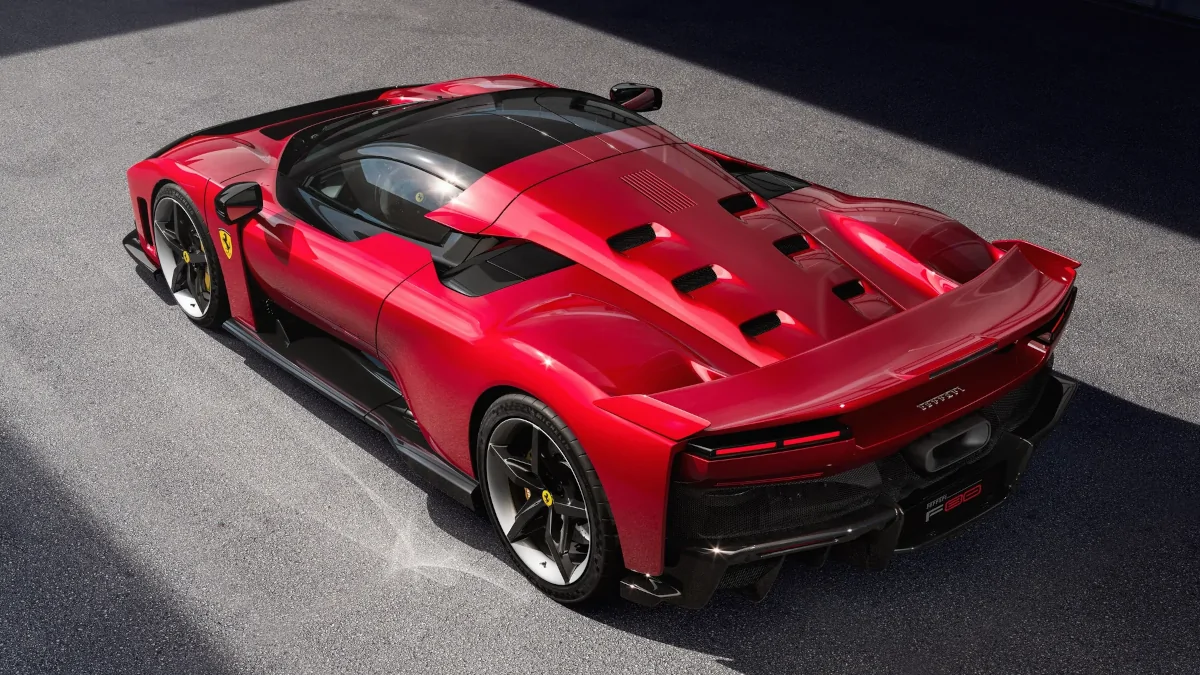
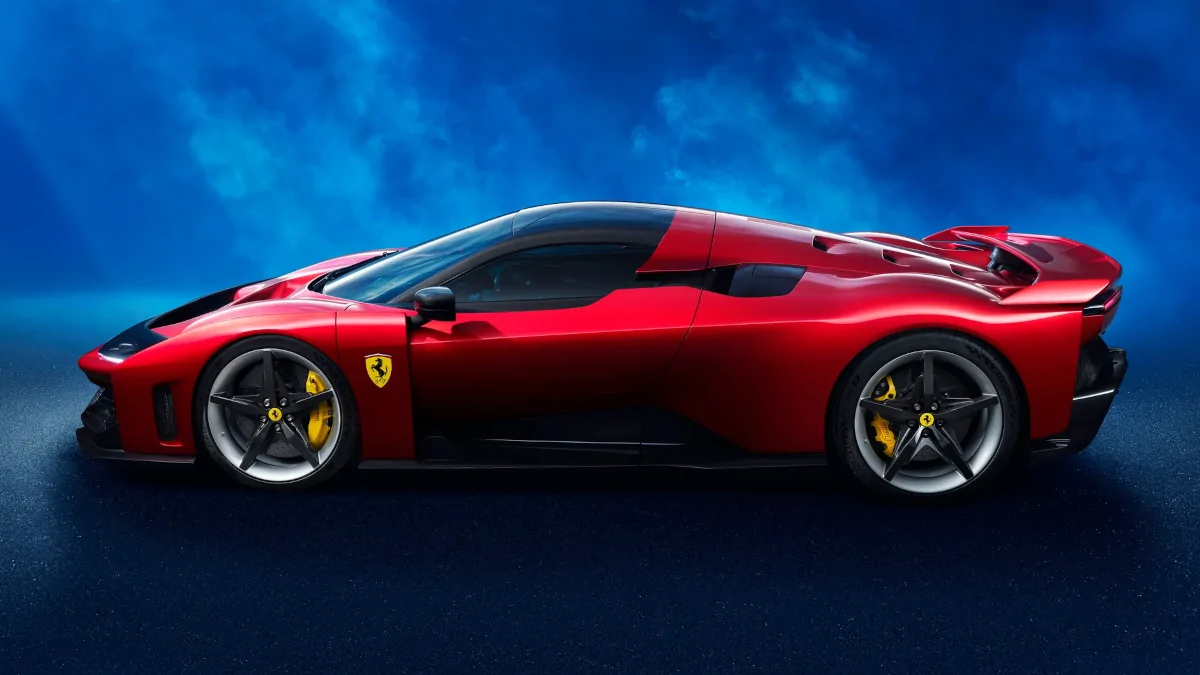
This is all made possible by an active suspension system that not only mitigates squat, dive, and roll, but also keeps a consistent ride height so the underbody can do its thing. It’s also a thing of beauty with in-board springs, dampers, motors, and actuators for the Multimatic setup all tightly packaged behind the stunning in-house 3D-printed wishbones. The gearbox is an eight-speed dual-clutch, the wheels are the first five-spoke carbon rims Ferrari has made, and the tires are Michelin Pilot Sport Cup2 or Pilot Sport Cup2Rs.
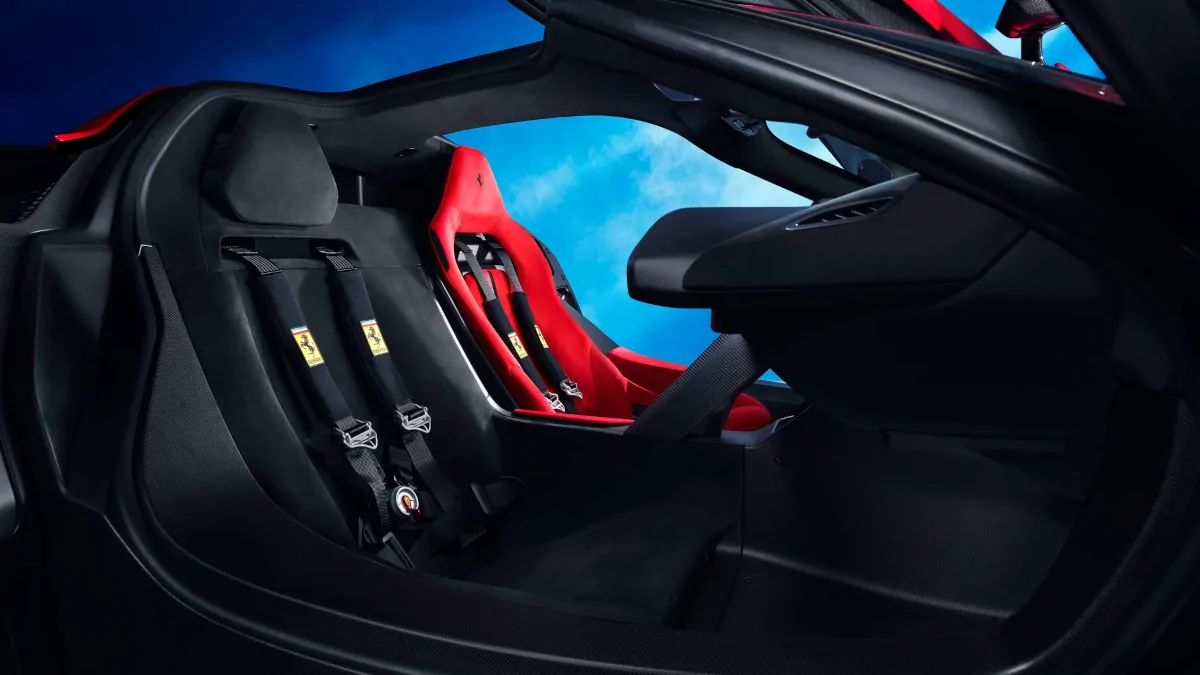
The carbon tub itself is asymmetric, to enable the passenger seat to be a little further back—a requirement to keep it narrow and with feet lifted so the aero can do its thing underneath. The result is a tub 5% lighter than the LaFerrari’s, with 50% more torsional rigidity. Overall, the 4WD F80 weighs 1,525kg dry, or 125kg more than the McLaren W1.
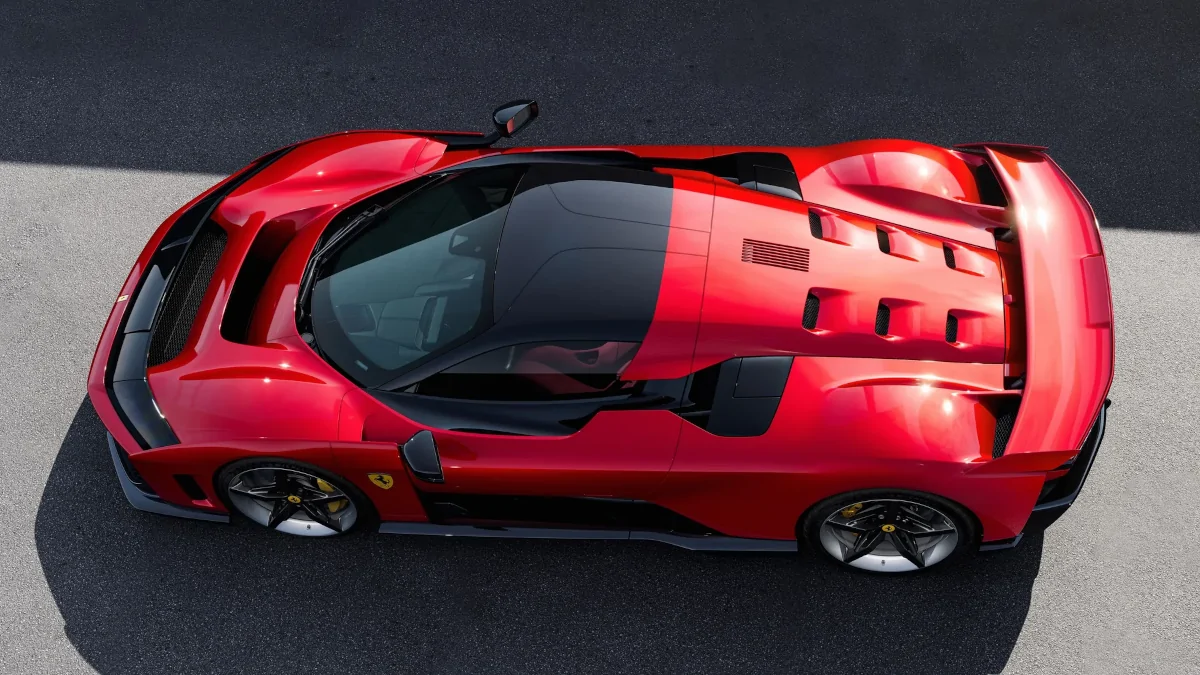
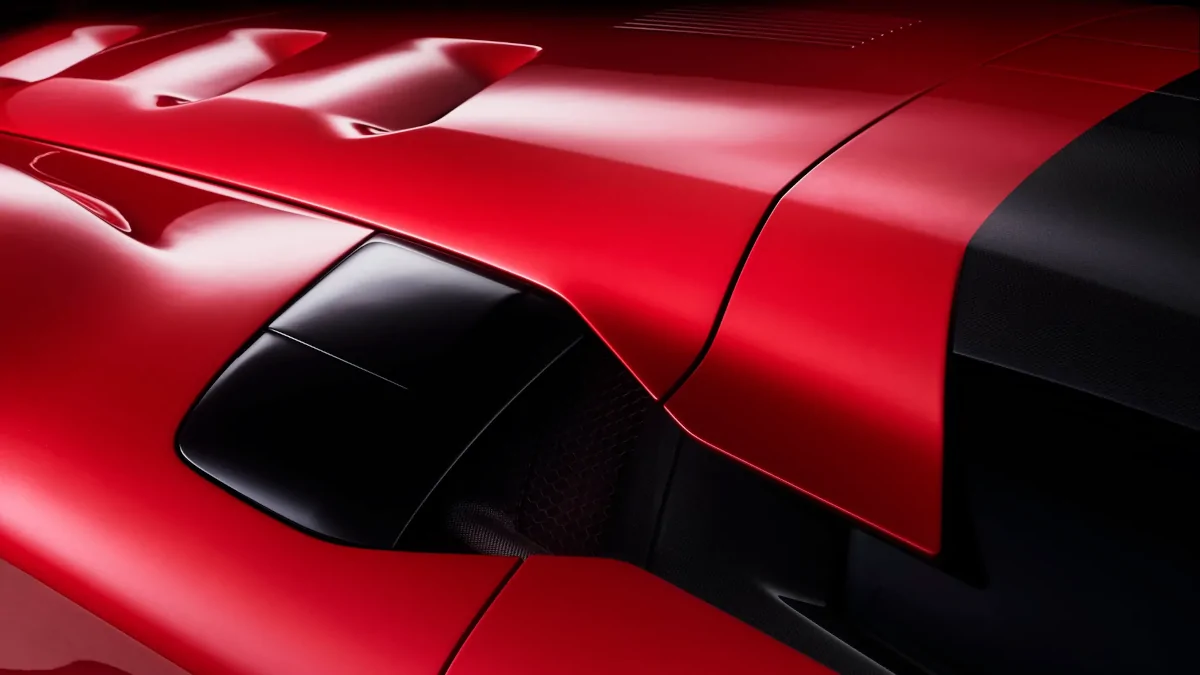
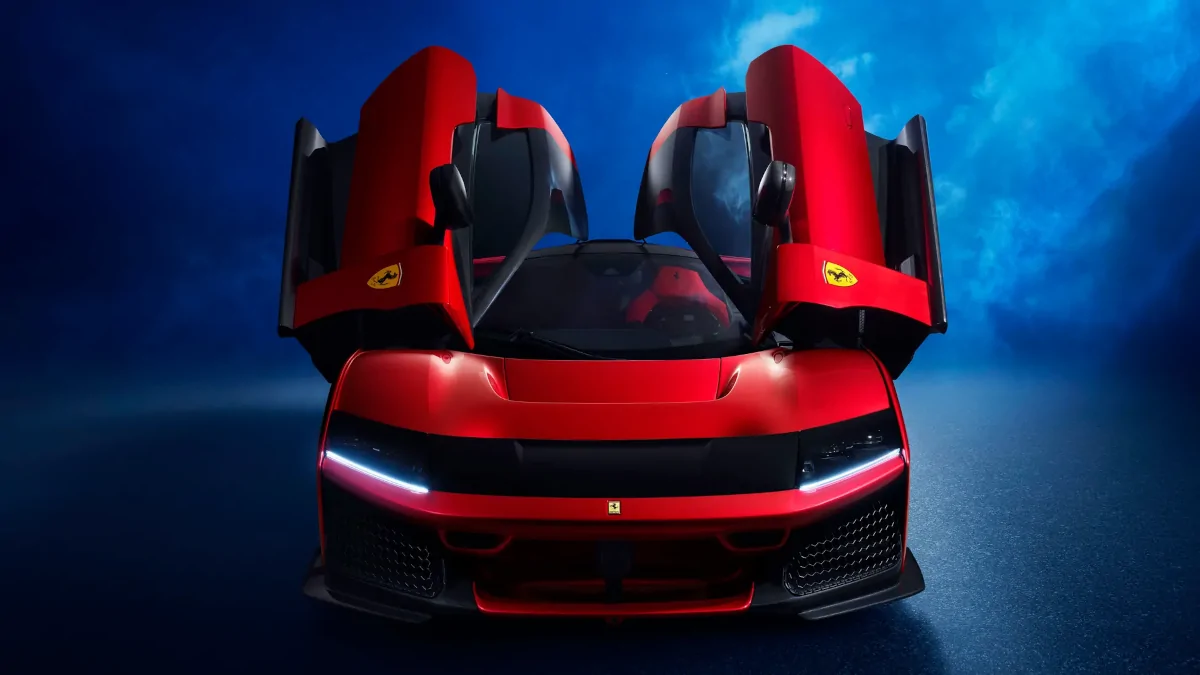
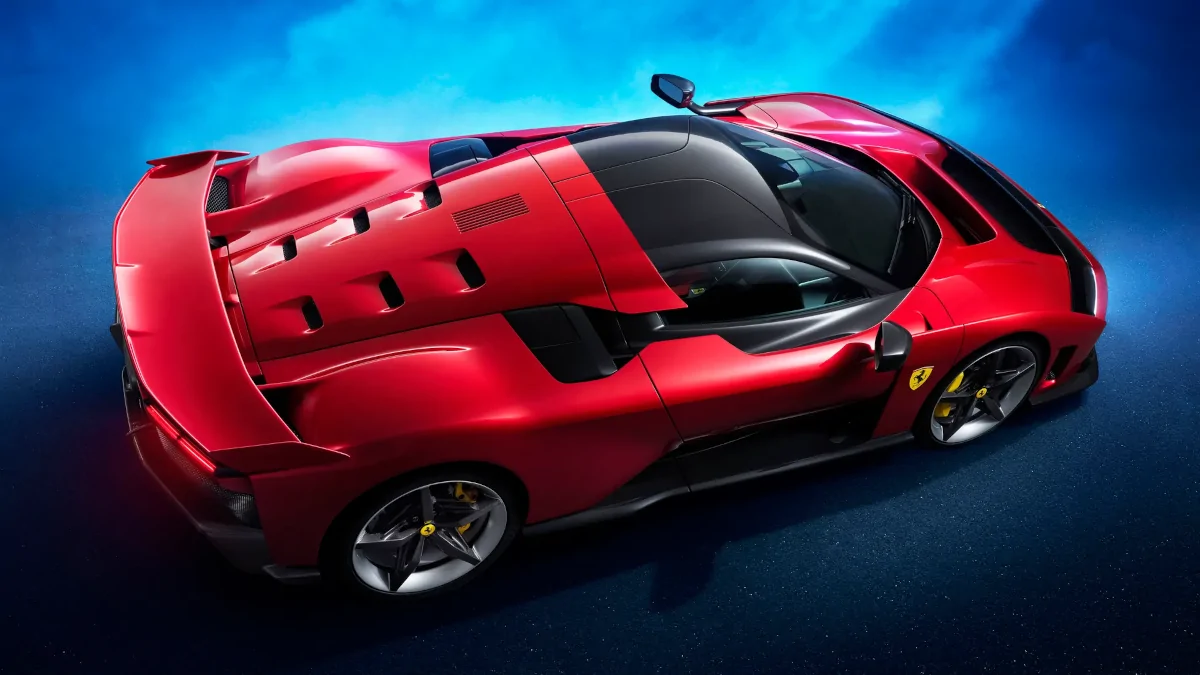
Then there’s the ‘Impluvium’—a name given to the NACA duct-shaped intakes on the car’s shoulders, that look like the bodywork is being peeled away from the tub, to feed the engine intake and intercoolers. They’re possible because the cockpit is so narrow, leaving this square, flat shoulder surface to run the length of the car. The F80’s most striking angle is definitely dead front. From there you’ll also note the car’s ‘nostrils,’ two intakes that channel air through the front subframe extrusions to cool the Brembo CCM-R Plus brakes.
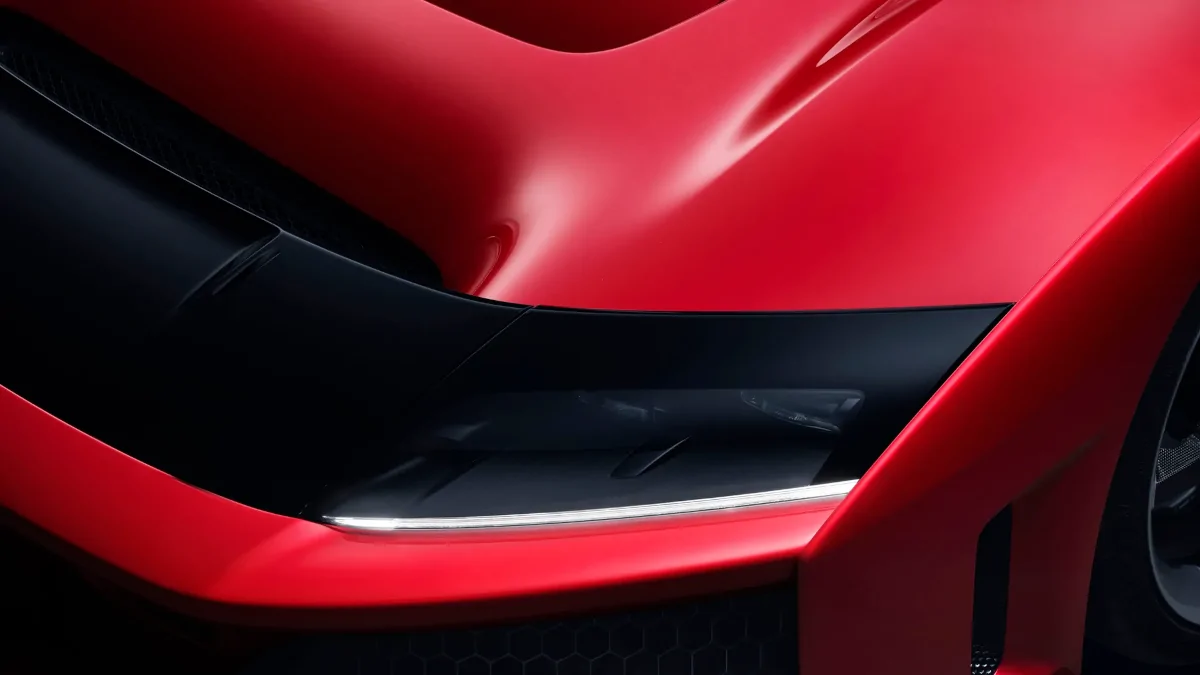
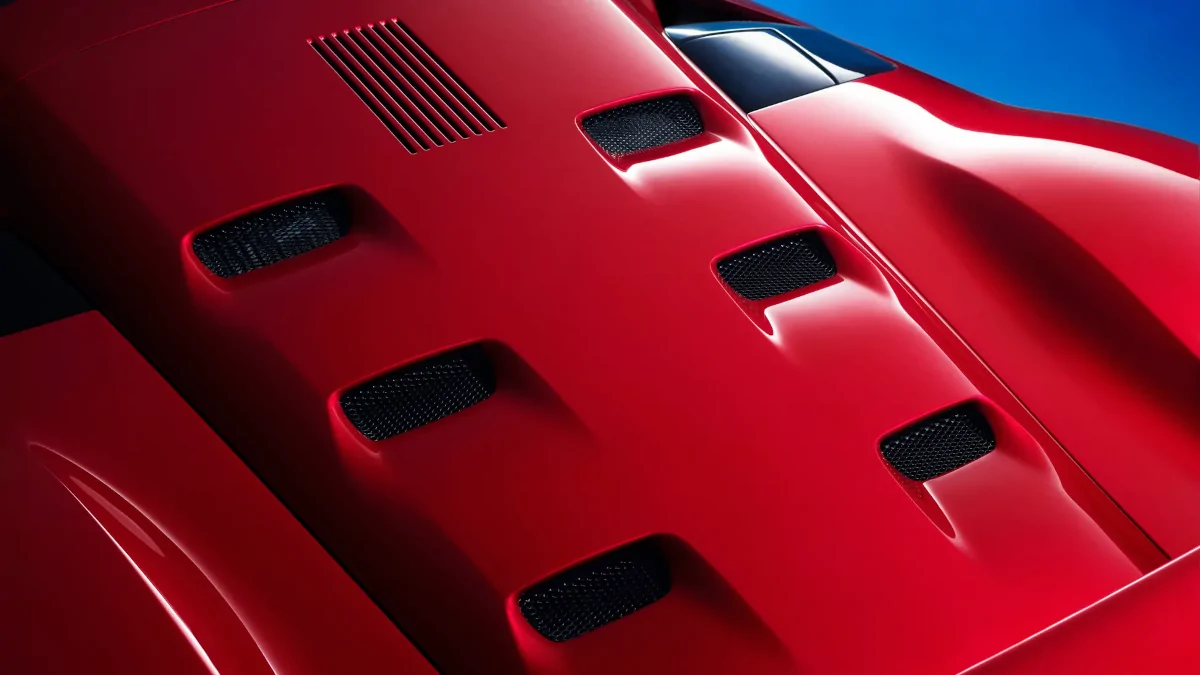
You might even get a glimpse of the solid engine cover punctured with six louvers, one for each cylinder beneath. That nose ‘visor’? “I didn’t want to have this typical layout with two eyes and a mouth, this makes it cleaner and a little more mysterious,” chief design officer Flavio Manzoni told us. “The visor immediately connects you to the world of sci-fi.”
Pull a low-mounted physical handle and the butterfly door rises up, taking the sill with it. A perfect chance, then, to appreciate the narrowness of the tub, the way it tapers dramatically between the front wheels and how high the driver’s feet are, to make room for those aero shenanigans underneath. Apparently, the first time Charles Leclerc drove it around Fiorano, he leaped out shouting ,“At last, you’ve made a car with a correct driving position.”
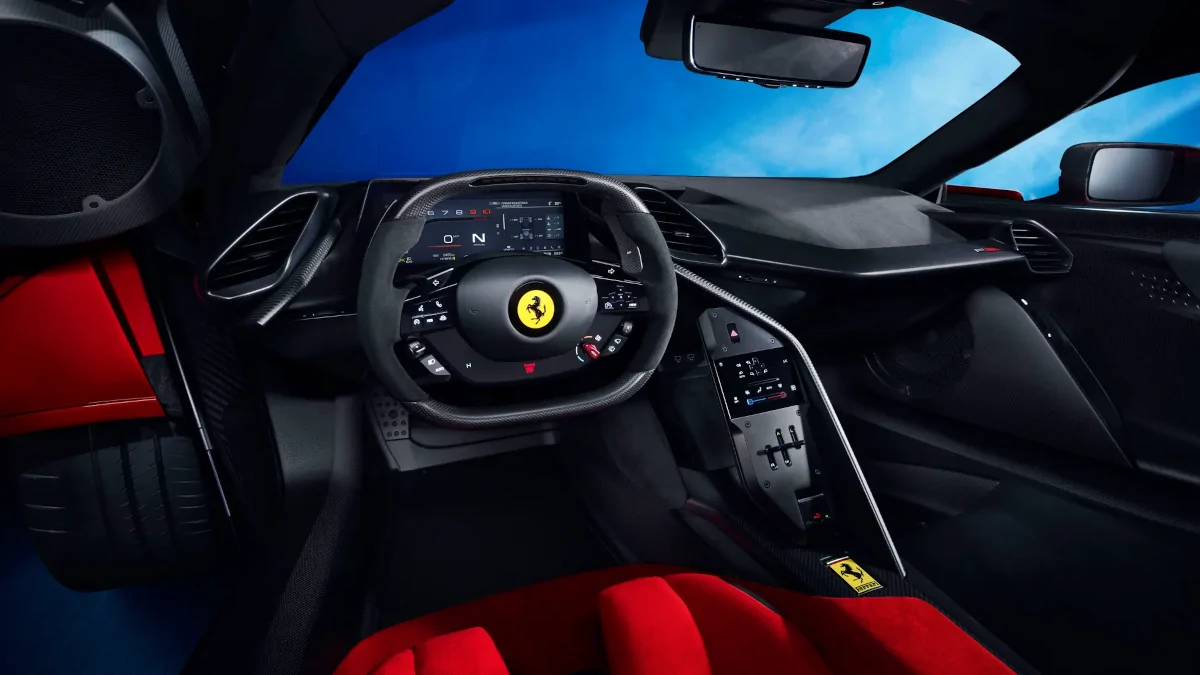
Inside, Ferrari is claiming a 1+1 seating layout, which is a bit far-fetched. The passenger is staggered slightly further back than the driver which allows the cockpit width to be reduced by 50mm, but there’s plenty of space for two grown-ups. The passenger seat is fixed to the tub though and finished in black, whereas the driver gets all the control tilted toward them, seat adjustment back and forth, and rosso Alcantara. The boss is behind the wheel.
That wheel is a squircle, with physical buttons making a welcome return, and all your usual drive mode controls—Mannetino on the right for Wet-Sport-Race-CT Off-ESC Off and three modes for the powertrain on the left—Hybrid (maximum efficiency for general road driving), Performance (faster road and track driving, battery kept above 70%), and Qualify (to hell with it, use every last ounce of e-juice for maximum speed). Plus one more party trick—a boost optimization mode. Drive around a track to show the computers where the corners and straights are, and it will store that information and automatically deliver an extra power boost in the sections of the circuit where it is most needed. Neat. There’s a floating center console with exposed screw heads, a camera for a rearview mirror, and nowhere to put your stuff.
If you’re reading this, close to tears, having dutifully bought a brace of Romas, Purosangues, and every other ‘regular’ Ferrari in hope of an F80 allocation but didn’t get one, commiserations. Ferrari said the process is less shady than it used to be and cars go to customers that, yes, buy everything but also go racing with them, attend events, and generally wax lyrical about the brand. Better luck in 10 years’ time, or console yourself with the millions you’ve saved. Better still—bide your time, wait for our verdicts to come in, and go ‘used’, because there’s a hell of a head-to-head with the McLaren W1 brewing.
Who knows, if Porsche finds a way to stuff an engine into its Mission X concept, we might even have a Hypercar Holy Trinity part II.
More photos of the Ferrari F80:
NOTE: This article first appeared on TopGear.com. Minor edits have been made.