
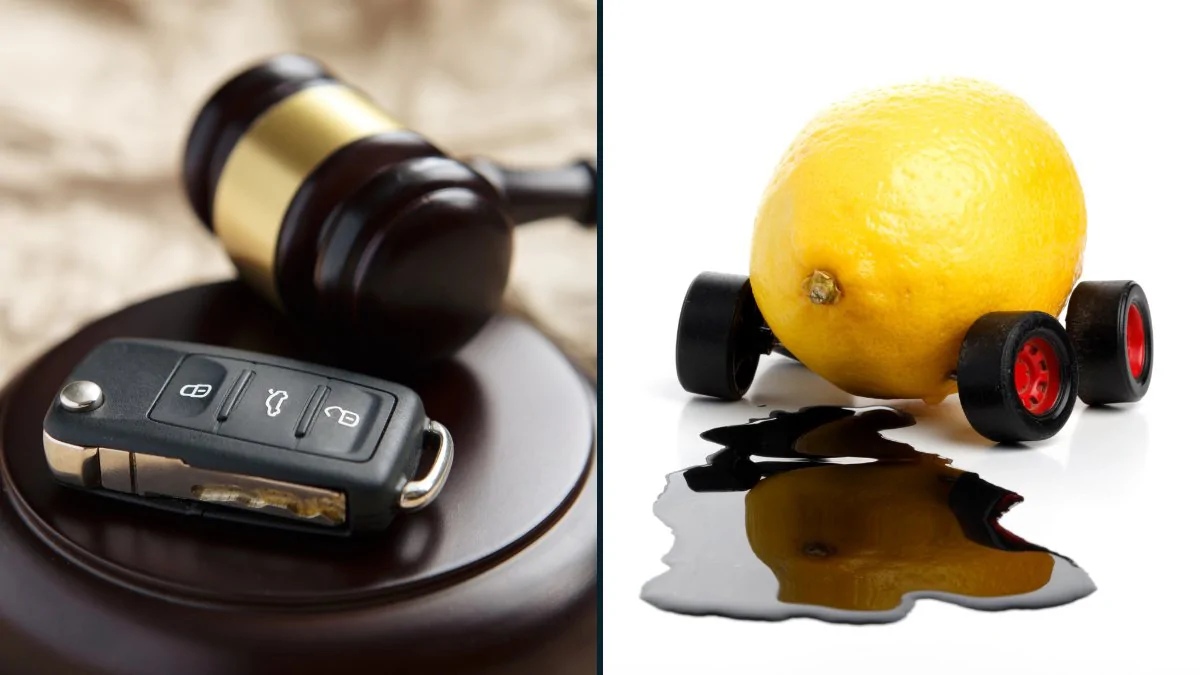
The Philippines’ Lemon Law, or Republic Act No. 10642, was signed into law a decade ago. Covering defects that cannot be rectified in new vehicles, its signing was celebrated by consumers, but was also chided by some as having too many hoops to jump through just to apply its provisions.
Yes, the law is pretty clear, but if you take a read, manufacturers or dealers have four separate attempts at repairing a vehicle for the same complaint before it “qualifies” under our Lemon Law and a consumer can invoke their rights. Worse still, these shall all be within 12 months from the date of delivery, or 20,000km of operation after delivery.
The new Supreme Court ruling

It is no wonder, then, that we seldom hear a car buyer has successfully invoked the law for their vehicle. Which brings us to the Supreme Court decision in the case of DTI v. Toyota Balintawak, Inc. And Toyota Motor Phils. Corp. (G.R. Nos. 254978-79, Oct. 11, 2023).
A case starring spouses Marilou and George Tan and their 2016 Toyota Fortuner. They decided on a novel approach, opting not to even use the Lemon Law, and instead choosing to use an older law: Republic Act No. 7394, the Consumer Act of the Philippines.
OTHER STORIES YOU MIGHT HAVE MISSED:
TRB to ban placing Autosweep, Easytrip RFID stickers on headlights
5 Essential car insurance facts every car owner should know
The Fortuner issue

First, the problem: Upon taking home their new Fortuner from Toyota Balintawak on May 17, 2016, George noticed there was a “jerky movement” whenever the automatic transmission shifted gears. After the back-and-forth between the dealer and the Tans seemed to be going nowhere, they demanded their vehicle be replaced, or the money be refunded. Toyota Balintawak refused their claim on the ground that the Lemon Law provided they had four repair attempts before there was an obligation to replace the vehicle.
Instead of waiting, the Tans filed a complaint with the Department of Trade and Industry (DTI), citing the Consumer Act of the Philippines instead of the Lemon Law.
Lemon Law vs. Consumer Act

So what was the advantage of opting for the older law? Well, under the Consumer Act, if a product imperfection is not corrected within 30 days, the consumer may demand the replacement of the product, immediate reimbursement of the price paid, or a price reduction. This meant there was no requirement for the manufacturer or the dealer to unsuccessfully attempt to repair the vehicle four times.
Toyota argued that because the Lemon Law is a more specific law covering only newly purchased vehicles, this should apply, and not the Consumer Act. This would generally be a good argument, except for one caveat distinctly pointed out by the Court: Section 7 of the Lemon Law provides that “nothing herein shall be construed to limit or impair the rights and remedies of a consumer under any other law.”
Basically, the consumer may opt to use the Lemon Law to address an issue with a newly purchased vehicle—but this is an alternative, not an exclusive remedy granted to the consumer. The consumer is free to choose whether to enforce their rights under other laws—in this case, the Consumer Act.
Conclusion: Use whichever applies to you

Because of this case, it is now clear as day: If you don’t qualify for the application of the Lemon Law but you do qualify under the terms of the Consumer Act, you can use the latter or any other remedy available under any other law, and forego needing to worry about the strict-ish requirements under the Lemon Law. Use whatever is most convenient for the redress of your rights.
Lemon Law frequently asked questions:
Is there a Lemon Law in the Philippines?
Yes. Republic Act No. 10642, also known as the Philippine Lemon Law or ‘An Act Strengthening Consumer Protection in the Purchase of New Vehicles,’ was signed into law in 2014.
What defects are covered by the Lemon Law?
The Lemon Law covers nonconformity, which refers to any defect or condition that substantially impairs the use, value, or safety of a brand-new motor vehicle, in turn preventing it from conforming to the manufacturer’s or distributor’s standards or specifications. This nonconformity cannot be repaired.
Which is not covered by the Lemon Law?
The Lemon Law excludes conditions resulting from:
- Noncompliance by the consumer of his or her obligations under the warranty;
- Modifications not authorized by the manufacturer or distributor:
- Abuse or neglect; and
- Damage due to accident or force majeure
Why is Lemon Law called a ‘lemon’ law?
in the early 1900s, Americans coined the term ‘lemon’ to mean something worthless. This was eventually applied to cars with defects that could not be rectified around the time of the popularization of the automobile post World War II.
What is the Consumer Act of the Philippines?
The Consumer Act of the Philippines, or Republic Act No. 7394, is the law that protect the interests of the consumer and defines standards for the conduct of business.
What is the refund provided by RA 7394, the Consumer Act of the Philippines?
Article 100 of RA 7394 provides that if there is an imperfection that is not corrected within 30 days, the consumer may alternatively demand at his/her option:
- Replacement of the product by another of the same kind, in a perfect state of use;
- The immediate reimbursement of the amount paid, with monetary updating, without prejudice to any losses and damages; or
- A proportionate price reduction
What are the objectives of the Consumer Act of the Philippines?
The law’s objectives are as follows:
- Protection against hazards to health and safety;
- Protection against deceptive, unfair and unconscionable sales acts and practices;
- Provision of information and education to facilitate sound choice and the proper exercise of rights by the consumer;
- Provision of adequate rights and means of redress; and
- Involvement of consumer representatives in the formulation of social and economic policies